Gentoo Penguin
Gentoo Penguin: The Fastest Swimmer of All Penguins
The gentoo penguin is the fastest swimmer of all penguins — a white-bonneted bird that can reach 36 kilometres an hour underwater, outswimming everything else in its family. It is also the most widespread Antarctic penguin, nesting from the Antarctic Peninsula to the Falkland Islands.
By Emily Carter · Reviewed by our vet team · Updated 10 November 2026 · 9 min read
Fastest penguin swimmer36 km/h underwaterWhite bonnet stripe
At a Glance
The gentoo penguin is the third penguin in the brush-tailed group, beside the Adélie and the chinstrap — and it is the one that got the speed. Its white bonnet stripe is the easiest field mark in the penguin world, a white patch over the eye that runs across the top of the head like a cap. Wherever you see a penguin with a white bonnet and a bright orange bill, you are looking at a gentoo.
The Fastest Penguin in the Water
The gentoo penguin swims at up to 36 kilometres an hour — the fastest of all penguins, and faster than any other flightless bird in the water. The speed is not a sprint for show; it is the hunting method. Gentoos chase krill and fish in open water, and the fastest bird catches the most food. A gentoo at full speed is a torpedo with flippers, and the burst lasts only seconds — but seconds are enough.

The speed comes from the body. Gentoos are long and streamlined, with a tail that sticks out behind them like a rudder — the longest tail of any penguin, which is how the group got its name, the brush-tailed penguins. The flippers are long and powerful, and the bird porpoises out of the water at speed, leaping clear in an arc before plunging back in.
No other penguin matches it. The emperor dives deeper and the Adélie is tougher, but neither can match the gentoo’s top speed in the water. The record is measured, not guessed: researchers tracking gentoos with speed sensors have recorded bursts of 36 kilometres an hour, and the birds sustain half that speed for minutes at a time on a foraging trip.
Gentoo Penguin Size and Looks
A gentoo penguin stands 75 to 90 centimetres tall and weighs 4.5 to 8.5 kilograms — a large penguin, third in size after the emperor and the king. The back is black, the belly is white, and the head is black with the white bonnet stripe and a bright orange-red bill. The feet are orange-pink, and the tail is long and stiff, sticking out behind the bird when it stands.
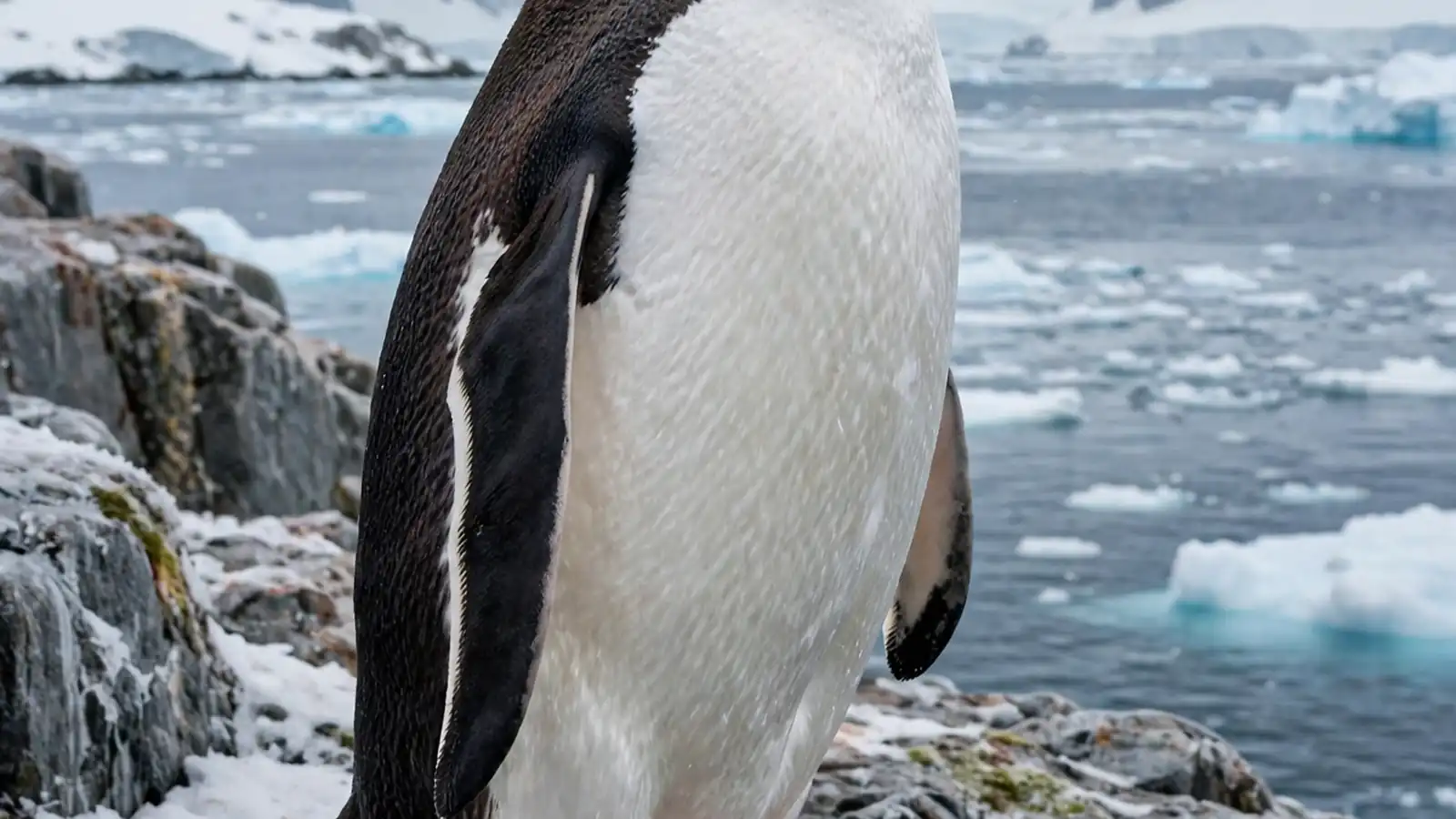
Males and females look alike, though males are slightly larger and heavier. Young birds are duller, with a grey wash on the back and a less distinct bonnet, and they take two or three years to grow into the full adult colours. The chicks are grey and fluffy, with a dark head, and they gather in crèches while the parents are at sea.
The size varies by island, like the marine iguana’s. The gentoo penguins of the Antarctic Peninsula are smaller than those of the sub-Antarctic islands, and the differences are large enough that researchers now recognise up to four subspecies — four population groups, each tied to its own region, each with its own size and habits.
The White Bonnet
The gentoo’s white bonnet is the easiest field mark in the penguin world. It is a white patch over each eye that joins across the top of the head, like a cap or a bonnet, and it is visible from a long way off — the first thing you see when a gentoo walks toward you on the beach. No other penguin has it: the Adélie has a white eye ring, the chinstrap has a black chin strap, and the gentoo has the bonnet.
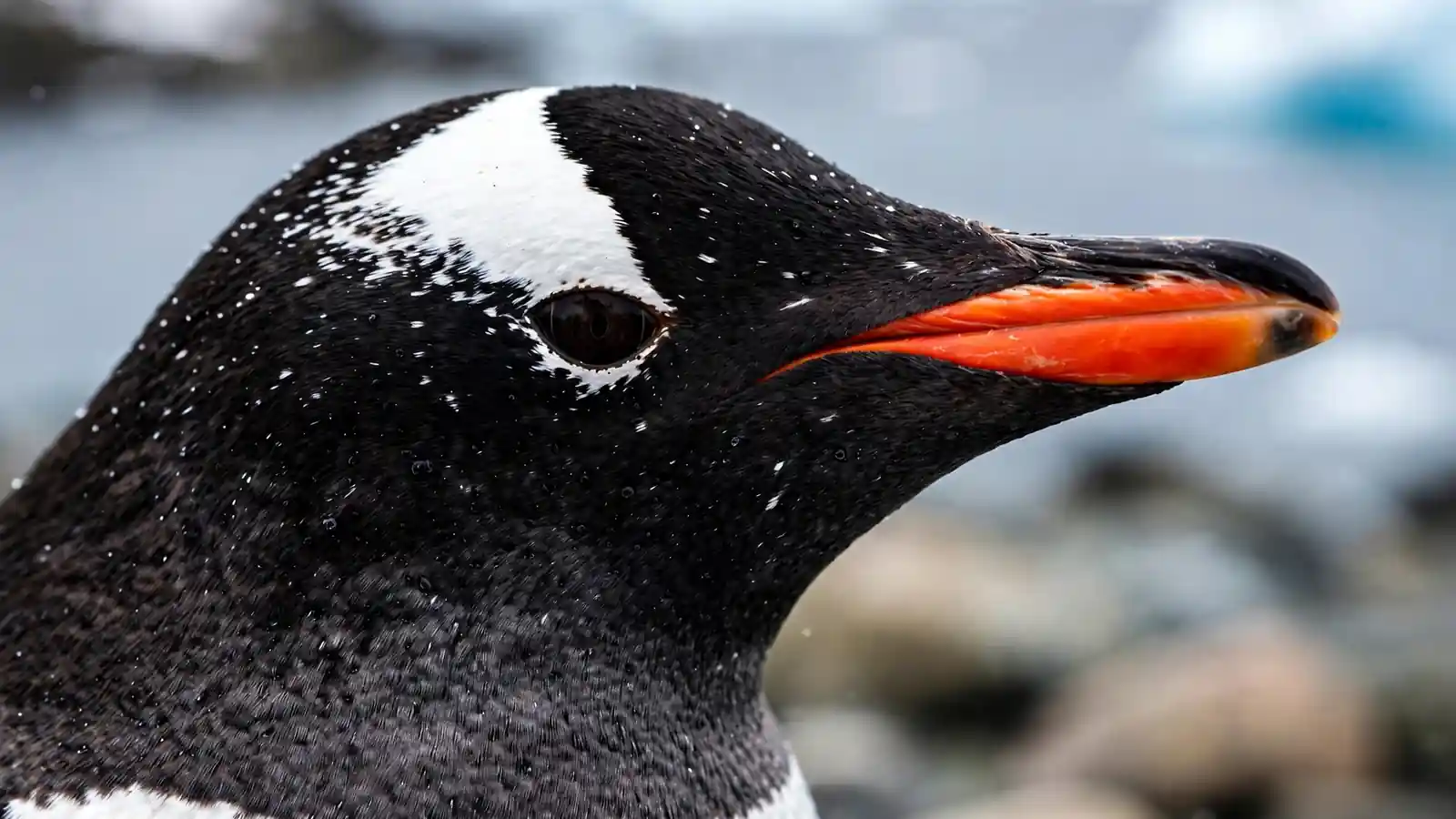
The bonnet is not just a mark — it is the name. The species name, Pygoscelis papua, comes from an old confusion: the first naturalists thought the bird came from Papua, in New Guinea, and the name stuck even after the mistake was found. The common name, gentoo, is older still, from the Portuguese word for a Hindu — a name given by sailors who thought the white head stripe looked like a turban.
The bonnet varies slightly between the subspecies, wider in some populations and narrower in others, and it is one of the clues researchers use to tell the four groups apart. But in the field it is enough to know the rule: a penguin with a white bonnet and an orange bill is a gentoo, and there is nothing else it can be.
Where Gentoo Penguins Live
Gentoo penguins live around the Antarctic Peninsula and the sub-Antarctic islands — the Falkland Islands, South Georgia, the Kerguelen and Crozet archipelagos, and the islands off the Peninsula itself. They are the most widespread of the Antarctic penguins, and the only one that breeds both on the Antarctic continent and on the islands north of it.

The habitat is the shore: rocky beaches, grassy slopes and the edges of the ice, with the sea always close. Gentoos nest on the ground, in colonies that range from a few dozen pairs to thousands, and they return to the same colony year after year. The Falkland Islands hold one of the largest populations, over 100,000 pairs, and the birds there live among the sheep and the tussock grass.
Gentoos are the penguins most likely to benefit from a warming Antarctic. As the sea ice retreats, the gentoo’s range is expanding southward along the Peninsula, into places that were once too icy for it, while the ice-dependent Adélie retreats. The gentoo is the penguin of the warming south — and its expansion is one of the clearest signs of how fast the Antarctic is changing.
What Do Gentoo Penguins Eat?
Gentoo penguins eat krill, fish and squid, in proportions that change with the season and the island. In the Antarctic summer, krill dominates — the small, shrimp-like crustaceans that swarm in the cold water. In the winter, when the krill are scarce, the birds switch to fish, and the fish they take are the small, silver lanternfish and icefish of the Southern Ocean.

The hunting is done by diving, and gentoos dive to 100 or 200 metres, deeper than most penguins their size. A dive lasts three or four minutes, and a bird may make hundreds of dives in a day, chasing the krill swarms and the fish schools with quick, darting turns. The speed that makes the gentoo famous is the hunting tool: the fastest bird catches the most food.
What the penguins eat is set out in detail in the gentoo penguin species account, which also covers the colonies and the subspecies. The diet is the reason the gentoo is doing better than its neighbours: krill and fish are abundant where the gentoo lives, and the bird is flexible enough to switch between them when one runs short.
Nests of Pebbles
A gentoo penguin’s nest is a ring of pebbles. The birds collect small stones from the beach, carry them in their bills, and build a low circular nest on the ground, with a shallow hollow in the middle for the eggs. The pebbles keep the eggs off the wet ground and out of the meltwater, and a good nest is a prized possession — so prized that the birds steal pebbles from each other.

The pebble stealing is famous. A gentoo will wait until its neighbour is away, snatch a pebble from the neighbour’s nest, and carry it back to its own — and the neighbour, returning, will do the same. The behaviour is so common that researchers use it as a measure of colony life: the more pebbles move, the busier the colony. Males also offer pebbles to females as a courtship gift, and a female that accepts the pebble accepts the mate.
The clutch is two eggs, laid a few days apart and incubated for about 35 days by both parents in turn. The chicks hatch covered in grey down and are fed by both parents, who commute to the sea and back with krill. At about 85 to 105 days the chicks are fully feathered and leave for the sea — and the pebble nests, abandoned, wait for the next spring.
Fun Facts
- The gentoo penguin swims at up to 36 kilometres an hour — the fastest of all penguins.
- Its white bonnet stripe is the easiest field mark in the penguin world.
- Gentoos steal pebbles from each other’s nests — and males offer pebbles to females as a courtship gift.
- The species name, Pygoscelis papua, comes from a mistake: the first naturalists thought the bird came from Papua.
- Gentoos are the penguins most likely to benefit from a warming Antarctic, expanding south as the ice retreats.
- The gentoo has the longest tail of any penguin, which is how its group got the name ‘brush-tailed penguins’.
Frequently Asked Questions
How Fast Can Gentoo Penguins Swim?
Up to 36 kilometres an hour — the fastest of all penguins. The speed is the hunting method: gentoos chase krill and fish in open water, and the fastest bird catches the most food. They sustain half that speed for minutes at a time on a foraging trip.
What Is the White Stripe on a Gentoo Penguin?
It is called the bonnet — a white patch over each eye that joins across the top of the head, like a cap. No other penguin has it, and it is the easiest field mark in the penguin world: a penguin with a white bonnet and an orange bill is a gentoo.
Are Gentoo Penguins Endangered?
They are listed as Least Concern under a 2016 assessment, but some sources list the species as Near Threatened, reflecting declines in some populations. The species as a whole is doing better than its neighbours — the gentoo is expanding south along the Antarctic Peninsula as the sea ice retreats, while the ice-dependent Adélie retreats.
Where Do Gentoo Penguins Live?
Around the Antarctic Peninsula and the sub-Antarctic islands — the Falkland Islands, South Georgia, the Kerguelen and Crozet archipelagos, and the islands off the Peninsula. They are the most widespread of the Antarctic penguins, and the only one that breeds both on the Antarctic continent and on the islands north of it.
What Do Gentoo Penguins Eat?
Krill, fish and squid, in proportions that change with the season and the island. In the Antarctic summer, krill dominates; in the winter, when the krill are scarce, the birds switch to fish. They dive to 100 or 200 metres and can make hundreds of dives in a day.
Why Do Gentoo Penguins Collect Pebbles?
To build their nests. A gentoo nest is a ring of pebbles with a shallow hollow for the eggs, and the pebbles keep the eggs off the wet ground. The birds steal pebbles from each other’s nests, and males offer pebbles to females as a courtship gift — a female that accepts the pebble accepts the mate.
How Many Gentoo Penguin Subspecies Are There?
Up to four are recognised. The gentoo penguins of the Antarctic Peninsula are smaller than those of the sub-Antarctic islands, and the differences in size, bonnet width and habits are large enough that researchers now split the species into four population groups, each tied to its own region.
How Big Are Gentoo Penguins?
A gentoo penguin stands 75 to 90 centimetres tall and weighs 4.5 to 8.5 kilograms, making it a large penguin — third in size after the emperor and the king.
What Is the Difference Between a Gentoo and an Adélie Penguin?
The gentoo is the brush-tailed penguin with the white bonnet stripe over the eye and a bright orange-red bill, and it is the fastest swimmer of the penguins at 36 kilometres an hour. It stands 75 to 90 centimetres tall — a large penguin, third in size after the emperor and the king.
Why Are They Called Gentoo Penguins?
The name gentoo is older still, from the Portuguese word for a Hindu — a name given by sailors who thought the white head stripe looked like a turban.
Similar Species Worth Exploring
Keep Exploring
Meet the king penguin, the second-largest of the family, then the Adélie penguin, the gentoo’s brush-tailed cousin, and browse the whole family in our types of penguins hub — then come back to the fastest swimmer of them all, the white-bonneted gentoo penguin.