Isopod
Isopod: one crustacean clan from garden soil to the deep sea floor
The isopod in your garden and the giant on the deep sea floor are the same kind of animal. More than 11,000 species of these fourteen-legged crustaceans live on land, in fresh water and in every ocean on Earth, and this guide follows them from the roly poly under a plant pot to the deep-sea giant that can go years between meals.
By Emily Carter · Reviewed by our vet team · Updated 10 November 2026 · 8 min read
11,000+ species describedFourteen legs in seven pairsGiants fast for years at a time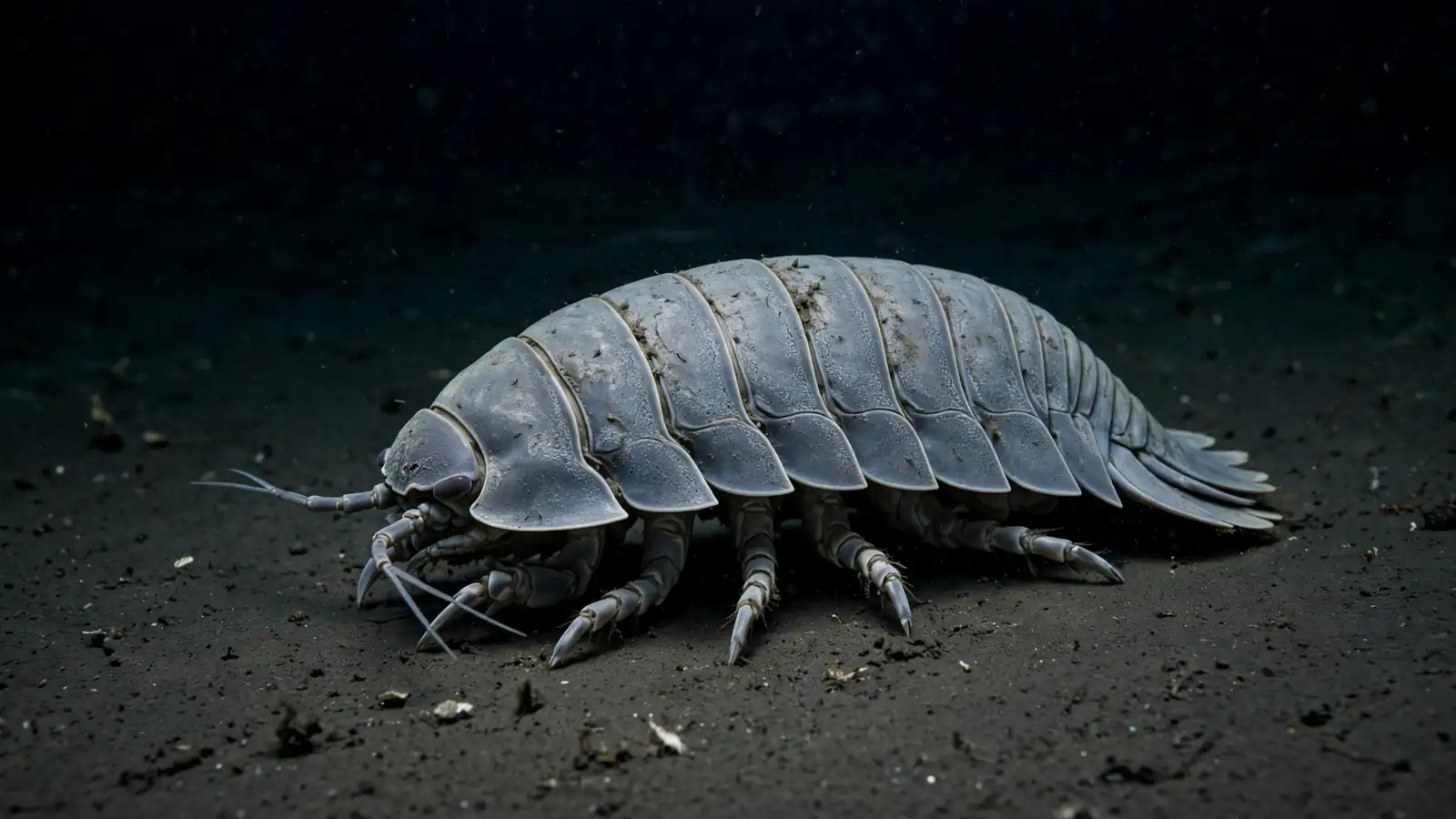
At a Glance
An isopod is probably living within a few metres of you right now. It might be a roly poly under a stone, a water slater in a pond, or a pale scavenger under a beach rock; and far below the light, its cousins grow to the size of a cat. Few animal groups cover so much of the planet with a single body plan.
Isopod Size and Species
More than 11,000 species have been described, and the size range inside the order is startling. The smallest marine species are under a millimetre long, specks drifting between grains of sand. The largest, the deep-sea giants, reach about 50 centimetres. Between the extremes sits the shared blueprint: a segmented body armoured in overlapping plates, two pairs of antennae, and seven pairs of similar walking legs, the equal feet that give the group its name.
That one kit has been fitted to almost every habitat on Earth. Isopods are crustaceans, relatives of crabs and shrimp, and like their cousins the females carry their eggs protected, in their case in a brood pouch under the body, so the young hatch as miniature adults. From there the group spreads everywhere: soil, leaf litter, rivers, rockpools, the open ocean floor and the abyss. The full group reference maps the major families and their ranges in detail.
From Roly Polies to Tongue-Eating Parasites
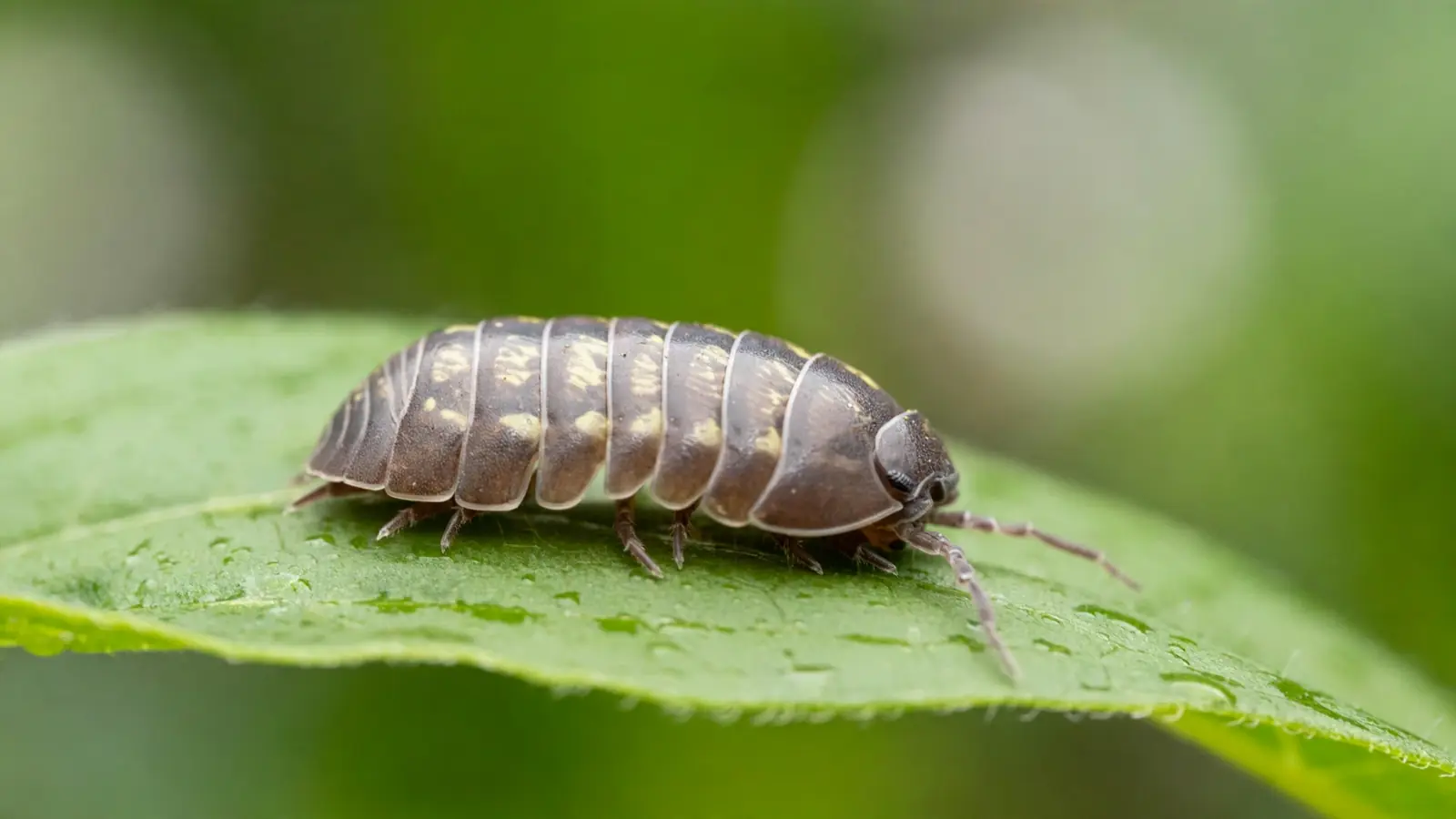
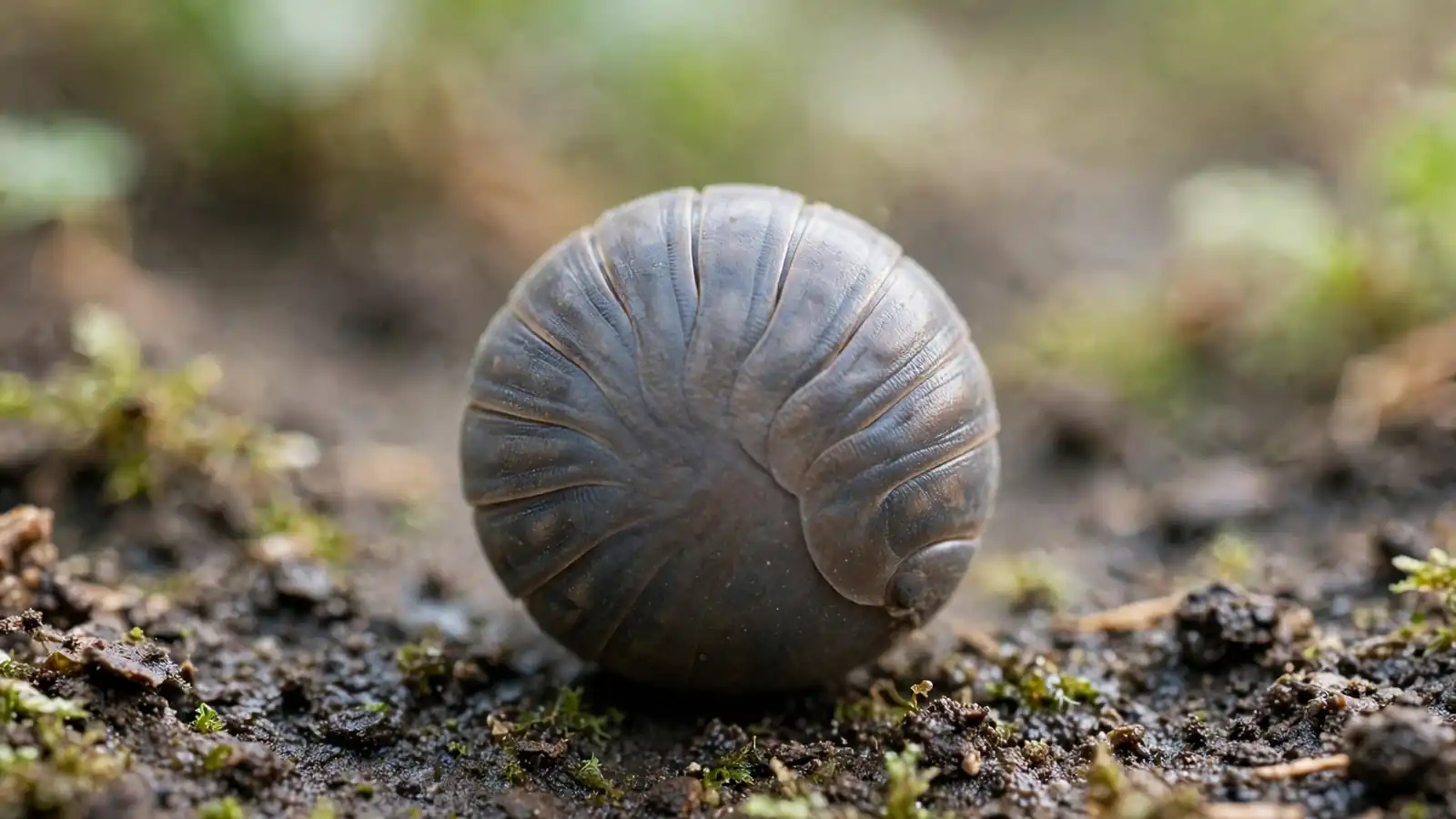
The kind most people know never goes near the sea. Woodlice, the roly polies and pill bugs of gardens and log piles, are isopods that completed the move onto land, the only crustaceans to manage it fully. They still breathe through feathery gill plates that must stay moist, which is why they hide under stones by day, and the pill woodlice roll into a perfect armoured ball when threatened, a trick no insect can match.
Water holds the stranger forms. Freshwater ponds have the water slater, a flattened grazer of dead leaves. The sea has parasitic isopods that ride on fish and drink blood, and it has the most infamous of all: the tongue-eating louse, Cymothoa exigua, which enters a fish through its gills, severs its tongue, and then attaches itself in the tongue’s place, living as the organ it replaced. Between the garden and that horror story lies almost every lifestyle a crustacean has ever tried.
The Giant Isopod and Deep-Sea Gigantism
Take the garden woodlouse, scale it up thirty times and sink it a kilometre, and you have the giant one, Bathynomus giganteus. It patrols the deep Atlantic floor on plated legs, sweeping the sediment with long antennae, waiting for the falls of dead fish and squid that rain from above. Everything about it reads as a woodlouse, the same plates, the same legs, the same face, rebuilt at the size of a house cat.
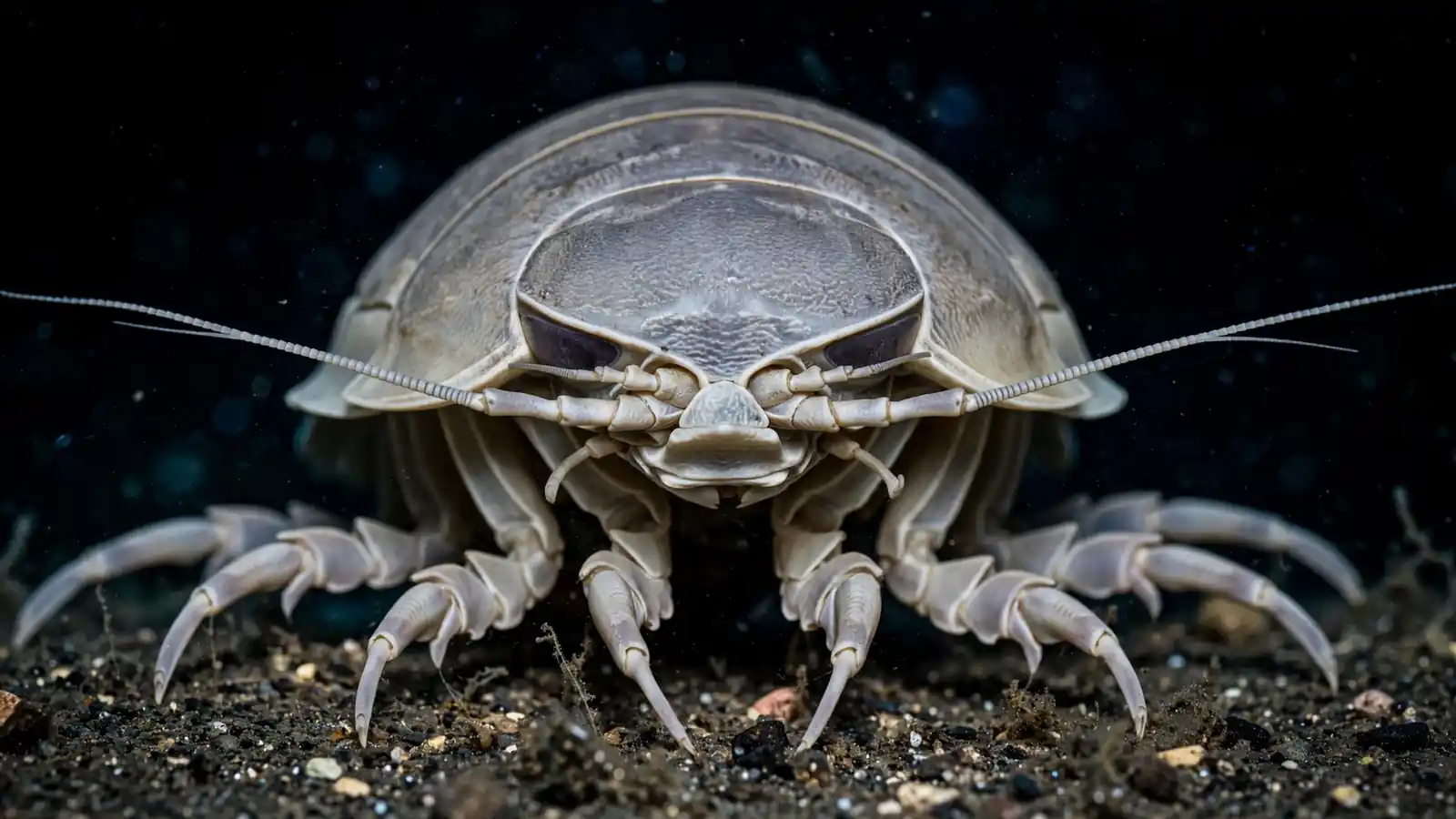
Why so big? The deep sea rewards it. Cold water holds more oxygen, food arrives in rare feasts separated by long famines, and life runs slowly, so animals that keep growing can reach sizes their shallow-water cousins never approach. Scientists call the pattern deep-sea gigantism, and the giant species is its textbook case, sharing the honours with another famous graduate of the same school, the colossal squid. New giants are still being found: a species with a helmet like a movie villain’s, Bathynomus vaderi, was formally described in 2025.
How a Giant Survives Years Without Food
Fame came to the giant animal through an empty stomach. A captive specimen in Japan, kept in an aquarium and offered food regularly, simply declined to eat, and kept declining, for more than five years, the longest fast ever recorded in a marine animal. It was not sick; it was doing what its species evolved to do. On the deep floor, meals arrive as rare windfalls, and the winners are the animals that can gorge once and then wait, almost motionless, for years.
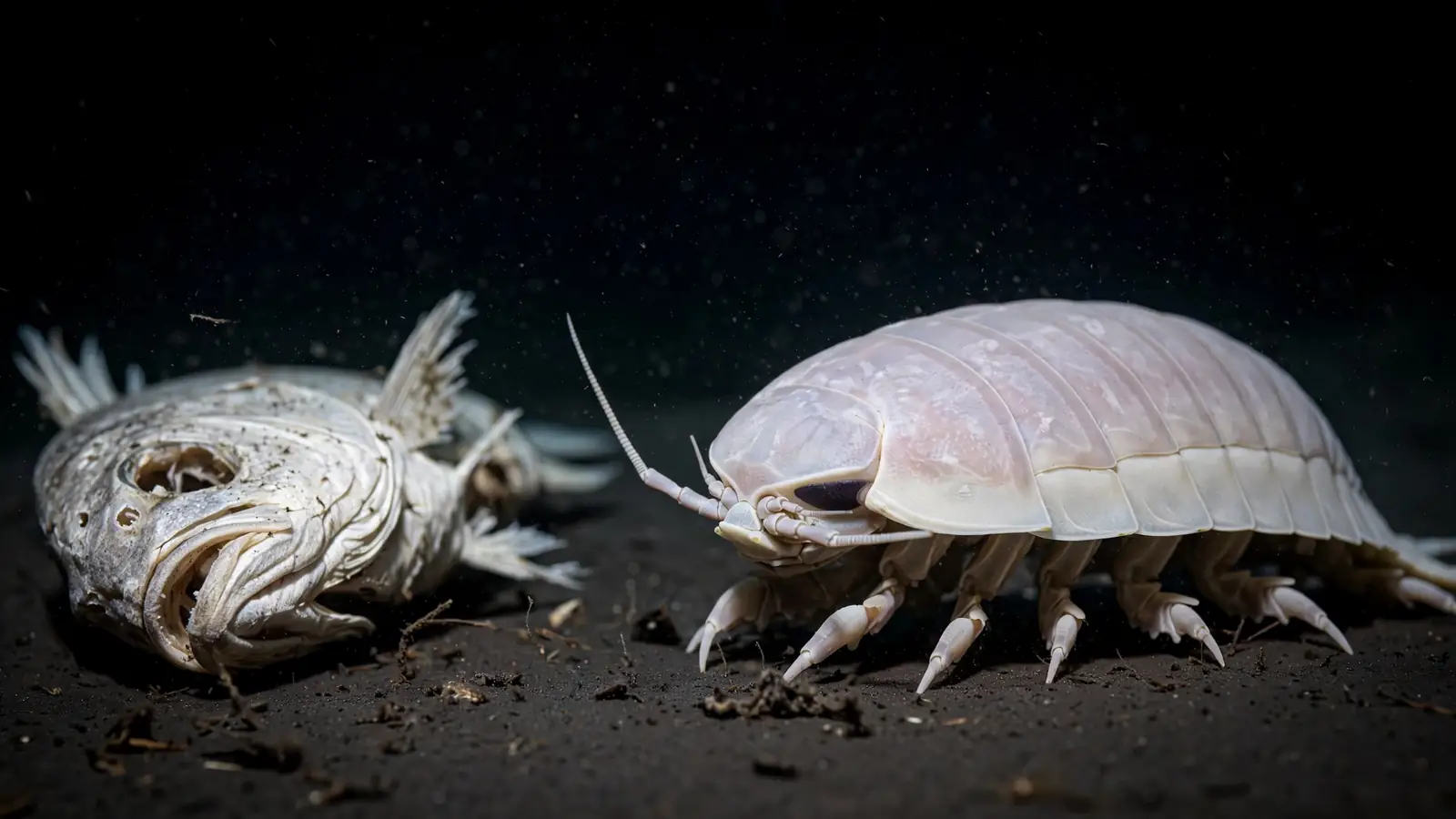
In 2026 researchers reported two adaptations behind the trick. The first is hardware: the giant animal’s stomach is enormous and can stretch to hold a meal out of all proportion to the animal, a pantry carried inside the body. The second is software: a gene for managing metabolism that the animal’s lineage appears to have acquired from bacteria some 16 million years ago, helping it idle its body through famine. Add near-freezing water, where everything chemical runs slowly, and starvation becomes a waiting game the animal is built to win.
What Do They Eat? Scavengers, Grazers and Parasites
The typical member is a cleaner. On land, woodlice chew through dead leaves, rotting wood and fungal threads, returning the nutrients to the soil. In the sea, their cousins graze algae, sift detritus and gather in swarms on carrion, stripping a dead fish to the bone in the dark. A giant one’s famous fast begins at exactly such a feast, when a fall of food lets it eat a large share of its own body weight in one sitting.
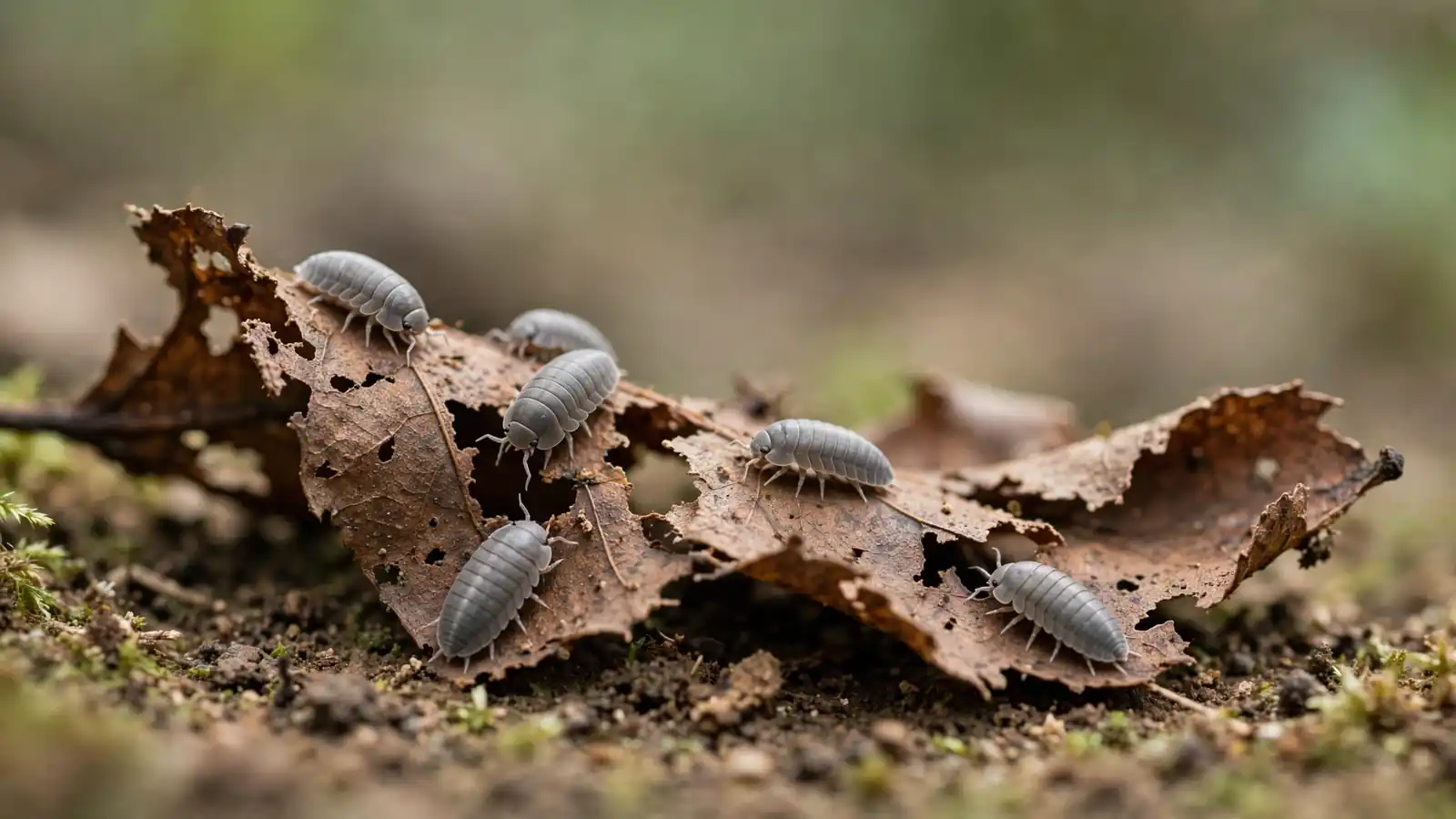
Not all of them wait politely. Some marine species are hunters of slow prey, some gribbles bore into harbour timbers and boat hulls, and the parasites, as the tongue-eating louse shows, have turned other animals into both food and housing. But the centre of gravity of the order is recycling: a world without the cleaners would be a world buried in its own dead, on the forest floor and the abyssal plain alike.
A Lineage Older Than the Dinosaurs
The group’s body plan is not a recent experiment. The first recorded fossils are more than 300 million years old, from the Carboniferous, when the group was already segmented, plated and fourteen-legged, 150 million years before the first dinosaurs. Through every mass extinction since, some isopods have kept crawling, in the sea first and later, when the woodlice came ashore, in the soil of every continent.

That durability has a modern edge. Deep-sea isopods live in exactly the zones now eyed for seabed mining and are worked over by deep trawls, and slow-growing giants replace themselves slowly. Most species have never been assessed, and the honest summary is that the group as a whole, spread across every habitat, is in no danger, while particular deep populations deserve watching. After 300 million years, the design is not the problem; the speed of change around it might be.
Fun Facts
- Every member has exactly fourteen walking legs, in seven pairs, which is how the group gets its name: isopod means “equal feet”.
- The roly poly is a crustacean, not an insect: it breathes through gill-like structures and must stay damp to survive on land.
- One captive giant specimen in Japan went more than five years without eating a single recorded meal.
- The tongue-eating louse is an animal that enters a fish through its gills, severs the fish’s tongue and then lives in its place.
- Female isopods carry their eggs in a brood pouch beneath the body, so the young hatch as miniature adults rather than larvae.
- Their fossils more than 300 million years old already show the segmented, plated body plan the group still uses today.
Frequently Asked Questions
What Is an Isopod?
An It is a crustacean of the order Isopoda, one of more than 11,000 described species. Isopods have segmented, often flattened bodies with seven pairs of walking legs, and they live on land, in fresh water and in every ocean, from garden soil to the deep sea floor.
Are Roly Polies Isopods?
Yes. The roly poly, or pill woodlouse, is a land-living one, which makes it a crustacean rather than an insect. Woodlice are the only crustaceans fully adapted to life on land, though they still breathe through gill-like structures and need damp places to survive.
How Many Species of Isopods Are There?
More than 11,000 species have been described, and the true total is certainly higher, with new deep-sea and soil species named every year. The count makes Isopoda one of the largest orders of crustaceans, rivalling the diversity of the crabs and shrimps.
How Big Do Isopods Get?
At the bottom of the range, some marine isopods are under a millimetre long. At the top, the deep-sea giant isopods reach about 50 centimetres, roughly the size of a house cat. Most familiar species, the woodlice and water slaters, sit comfortably between 1 and 2 centimetres.
What Do Isopods Eat?
Most isopods are cleaners. They eat detritus, dead animals, decaying leaves, algae and rotting wood, recycling nutrients wherever they live. Some deep-sea species swarm carrion falls, a few are active predators, and a minority are parasites of fish, including the famous tongue-eating louse.
How Long Can a Giant Isopod Go Without Food?
Years. A captive giant specimen in Japan went more than five years without a recorded meal. A study published in 2026 pointed to two adaptations behind the feat: an enormous stomach that stretches to hold a huge meal, and a metabolism gene acquired from bacteria millions of years ago that helps the animal endure famine.
Are Isopods Dangerous to Humans?
No. No species can seriously harm a person. The parasitic species target fish, not humans, woodlice are harmless garden recyclers, and even the giant deep-sea species are sluggish scavengers. At worst, a large marine isopod might give a handler a harmless nip.
Similar Species Worth Exploring
Keep Exploring
Keep exploring the crustacean clan: browse the full family tree in our guide to the types of crustaceans, or meet another graduate of the deep-sea gigantism school, the colossal squid. Then come back to the fourteen-legged original, at home in your garden and in the abyss alike: the isopod.