Giant Pacific Octopus: Size, Lifespan and Intelligence
Giant Pacific Octopus: The Largest Octopus on Earth
The giant Pacific octopus is the largest octopus on Earth — a 15 kg puzzle-solver that recognises its keepers and lives just 3 to 5 years.
By Emily Carter · Reviewed by our vet team · Updated 10 November 2026 · 9 min read
Largest octopus on Earth71 kg recordLives 3–5 years
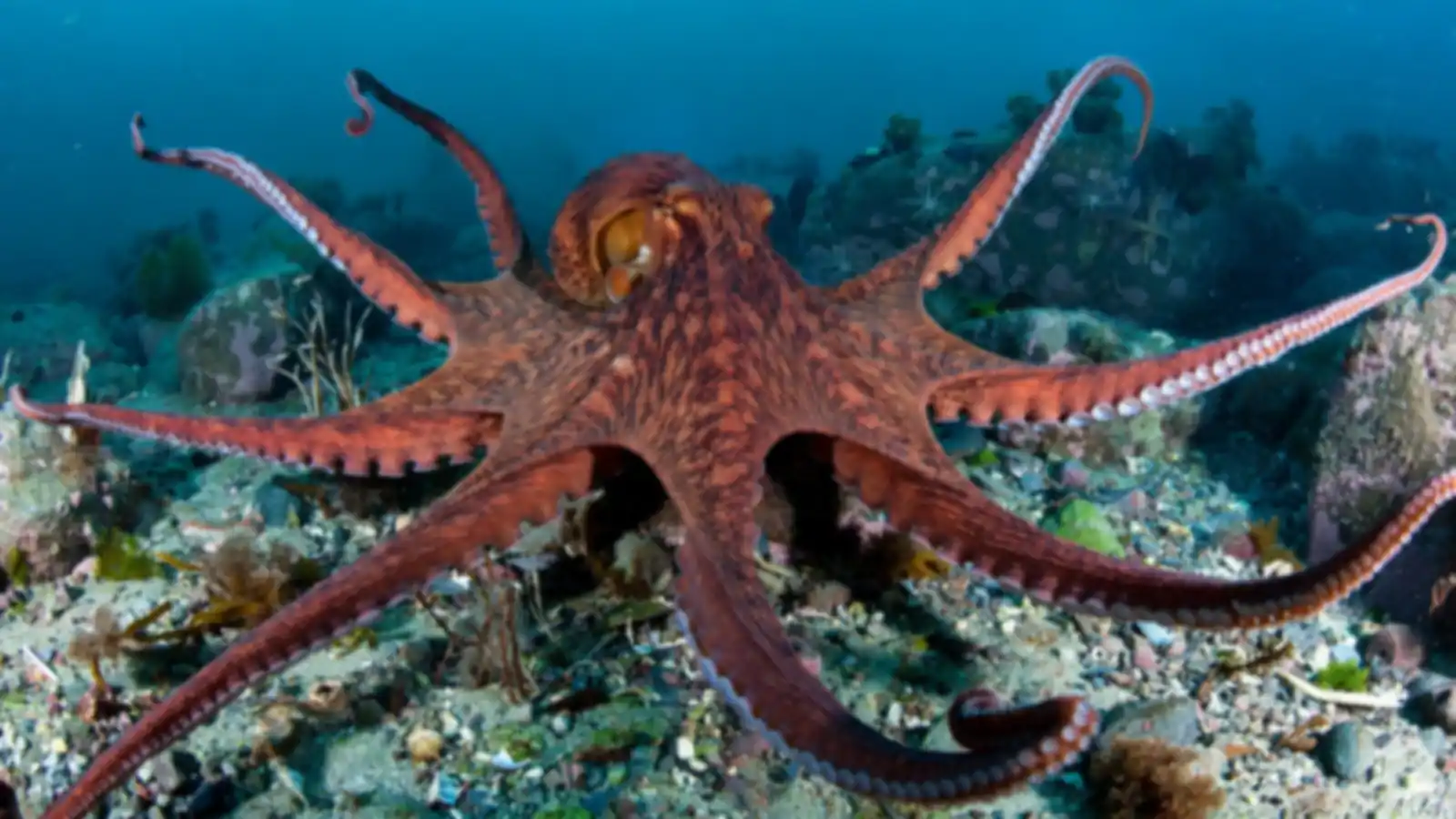
At a Glance
The giant Pacific octopus is the largest and longest-lived octopus on Earth — a 15 kg puzzle-solver that recognises its keepers, opens jars, escapes tanks, and lives just 3 to 5 years. It hunts at night from a rocky den, and the female dies after brooding her eggs for six months without eating. This guide covers its verified size record, its den, its night hunting, its intelligence, its escapes, and its short, extraordinary life.
Giant Pacific Octopus Size: The Verified Record

A typical adult weighs about 15 kg, with an arm span of about 4.3 metres — the largest octopus on Earth. The verified record is 71 kg, weighed live by Canadian researchers. Larger figures are anecdotal: one famous account claims 136 kg, and another claims 270 kg, but neither has been verified, and this guide does not print them as fact.
Size is not the whole story. It is also the longest-lived octopus, at 3 to 5 years, and one of the most intelligent animals in the sea. It is a soft-bodied animal that can squeeze through a gap the size of a coin, and it can change colour in a blink. For the full species record, see the giant Pacific octopus animal page.
Where They Live: Dens on the Northern Pacific Shelf

Giant Pacific octopuses live in the northern Pacific, from Alaska and Japan to California, in rocky dens on the continental shelf to about 1,500 metres deep. They prefer cold water and a den with a narrow entrance they can defend — a crevice in the rock, a hollow under a boulder, or an abandoned shell. They are homebodies: an individual will live in the same den for months, leaving only to hunt.
The den is the octopus’s castle. It lines the entrance with shells and stones, and it defends it against anything that comes too close. By day it rests in the den, and by night it hunts — and it always comes home. A den is easy to spot: look for a pile of shells and crab parts outside a crevice, and you have found its front door.
What Do They Eat? Night Hunters

Giant Pacific octopuses eat crabs, shrimps, molluscs and small fish, and they hunt at night. They feel their way along the seabed with their arms, tasting and touching as they go, and when they find a crab they pounce — wrapping it in their arms and biting it with their beak. They return to their den by day to eat in safety, and the pile of shells outside the den is the evidence of their meals.
They are patient hunters. It will wait for a crab to come within reach, or it will chase it across the seabed, and it can catch fish by wrapping them in its arms. It is a powerful animal for its size, and it can overpower prey much larger than itself — but it prefers crabs, and it eats a lot of them.
How Smart Are They? Brains in the Arms

It has about 300 million neurons, two-thirds of them in its arms, and it is one of the most intelligent animals in the sea. It can open jars, solve puzzles, recognise individual humans and escape from tanks. Each arm can taste, touch and act almost on its own — the arms are like eight small brains, each with its own sense of what to do.
The intelligence is not just a trick. It can learn, remember and solve problems, and it can tell people apart by sight. Keepers report that their octopuses recognise them — approaching keepers they like, and squirting water at keepers they do not. It is an animal that thinks, and it thinks with its arms as much as with its head.
The Escape Artist: Jars, Lids and Tank Breakouts
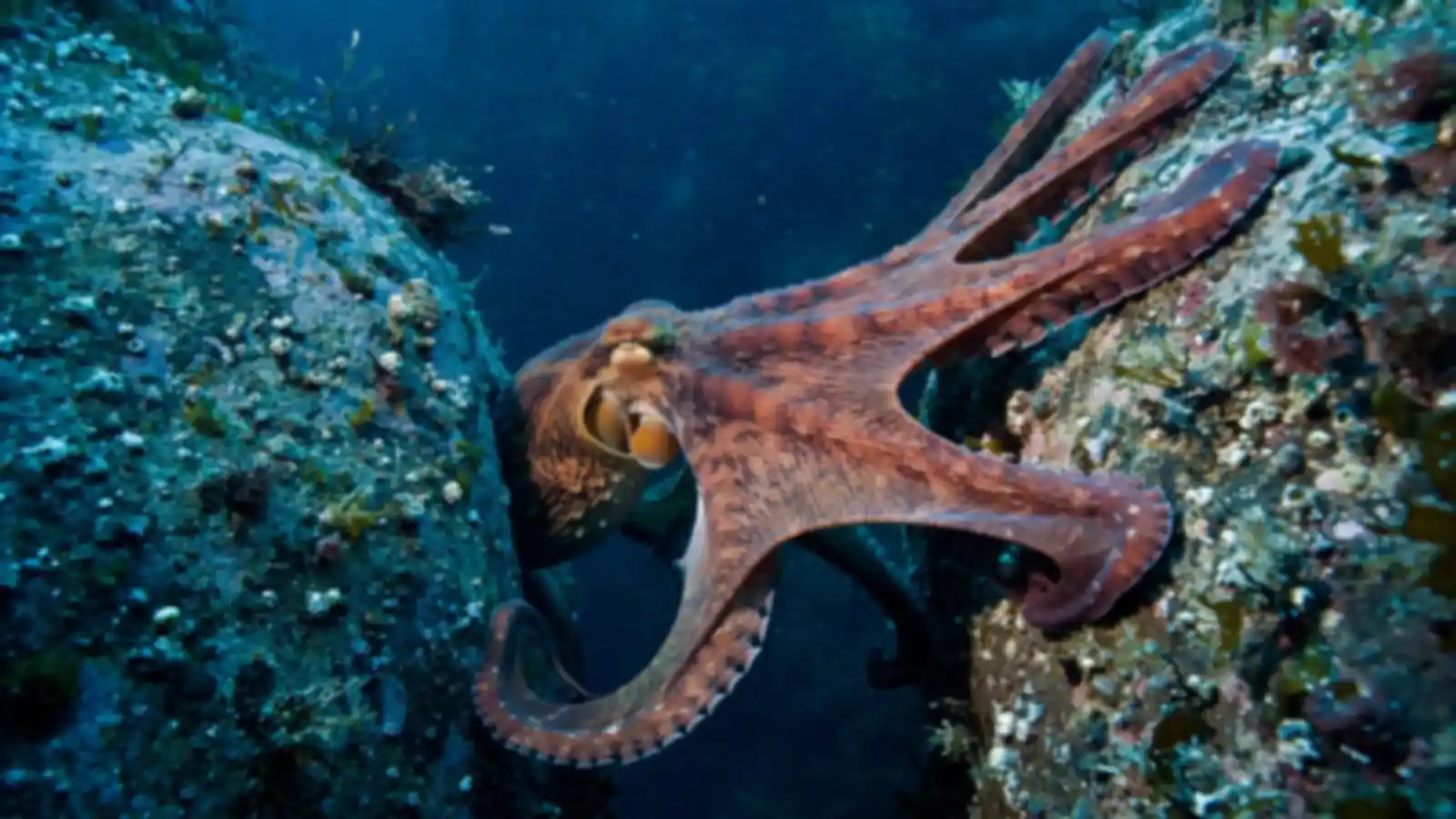
It is a famous escape artist. It can open jars, unscrew lids and squeeze through gaps the size of a coin, and it has escaped from tanks in aquariums around the world. One octopus in Seattle famously escaped its tank at night, ate the fish in the next tank, and returned to its own tank before morning — leaving only a trail of water and a few empty shells.
The escapes work because an octopus has no bones. It can flatten its body to fit through any gap larger than its beak, and it can change colour to match its surroundings as it goes. Aquariums now use weighted lids, locked tanks and escape-proof seals — and the octopuses still find a way out. Like the Dumbo octopus, it is a record-holder that refuses to be contained — but where the Dumbo lives in the deep, the giant Pacific lives in a tank, and it wants out.
A Short Life: Brooding, Starving and Death

It lives just 3 to 5 years — the longest life of any octopus, and still a short one. The female’s life ends with her eggs: she lays up to 100,000 eggs in her den, then broods them for about six months without eating, guarding them and fanning them with water until they hatch. When they hatch, she dies.
The male dies soon after mating, and the female dies after her eggs hatch — so a giant Pacific octopus’s whole life is a race to reproduce. It is a short, extraordinary life: three to five years of hunting, learning and escaping, and then a final act of devotion that costs the mother everything. The eggs hatch into tiny octopuses, each no bigger than a grain of rice, and the cycle begins again.
Are They Endangered? Not Evaluated
Giant Pacific octopuses have not been evaluated for the Red List, so there is no official status. They are fished in some places — for food, and for the aquarium trade — but they are widespread and abundant in the northern Pacific, and they are not thought to be in trouble. Their short life and high reproductive rate make them resilient: a female can lay 100,000 eggs, and the population can recover quickly.
The risk is not fishing, but the ocean itself. Giant Pacific octopuses need cold, clean water and rocky dens, and they are sensitive to warming seas and pollution. Like the giant squid, they are a giant cephalopod that depends on a healthy ocean — and like the giant squid, they are a reminder that the largest animals in the sea are often the most vulnerable. For now, the giant Pacific octopus is safe — but it needs the northern Pacific to stay cold.
Fun Facts
- The giant Pacific octopus is the largest octopus on Earth.
- Its verified record is 71 kg — the bigger numbers are anecdotal.
- It has about 300 million neurons, two-thirds of them in its arms.
- It can open jars, solve puzzles and escape from tanks.
- A female broods her eggs for six months without eating — then dies.
- It can recognise individual humans, and squirt water at the ones it dislikes.
- It lives just 3 to 5 years, the longest life of any octopus.
Frequently Asked Questions
How big do giant Pacific octopuses get?
A typical adult weighs about 15 kg with an arm span of about 4.3 metres. The verified record is 71 kg, weighed live by Canadian researchers. Larger figures are anecdotal: one famous account claims 136 kg, and another claims 270 kg — neither has been verified.
How long do giant Pacific octopuses live?
Just 3 to 5 years — the longest life of any octopus, and still a short one. Females die after brooding their eggs for about six months without eating, and males die soon after mating.
How intelligent is the giant Pacific octopus?
Very. It has about 300 million neurons, two-thirds of them in its arms, and it can open jars, solve puzzles, recognise individual humans and escape from tanks. Each arm can taste, touch and act almost on its own.
What do giant Pacific octopuses eat?
Crabs, shrimps, molluscs and small fish. They hunt at night, feeling their way along the seabed with their arms, and they return to their den by day to eat in safety.
Where do giant Pacific octopuses live?
In the northern Pacific, from Alaska and Japan to California, in rocky dens on the continental shelf to about 1,500 metres deep. They prefer cold water and a den with a narrow entrance they can defend.
Can a giant Pacific octopus recognise people?
Yes. Keepers report that giant Pacific octopuses recognise individual humans — approaching keepers they like and squirting water at keepers they do not. They can tell people apart by sight, and they remember them.
Are giant Pacific octopuses endangered?
They have not been evaluated for the Red List, so there is no official status. They are fished in some places, but they are widespread and abundant in the northern Pacific, and they are not thought to be in trouble.
Similar Species Worth Exploring
Keep Exploring
Still marvelling at the arms? Meet the other famous octopus in our Mimic Octopus guide, compare the other record-holder in our Dumbo Octopus guide, and size up the whole family in the Types of Cephalopods hub — then look for the den of the giant Pacific octopus.