Brine Shrimp
Brine Shrimp: the tiny salt-lake crustacean that can sleep for years and wake up in a day
The brine shrimp is a creature the size of a grain of rice that lives in water saltier than the sea, survives being dried, frozen and boiled as an egg, and is sold in toy shops as a pet. It is also the most important live food in fish farming on Earth.
By Emily Carter · Reviewed by our vet team · Updated 10 November 2026 · 9 min read
Eggs survive years dry, then hatch in a daySold as pets since 1957The fish-farming world’s live food
At a Glance
The brine shrimp is a tiny crustacean of the genus Artemia, seven to nine recognised species, that lives in salt lakes and salt pans around the world — water so salty that almost nothing else can live in it. It is the animal behind the Sea-Monkeys of toy-shop fame, and it is also the standard live food of fish and shrimp farming, with thousands of tonnes of its eggs sold every year.
What Is a Brine Shrimp?
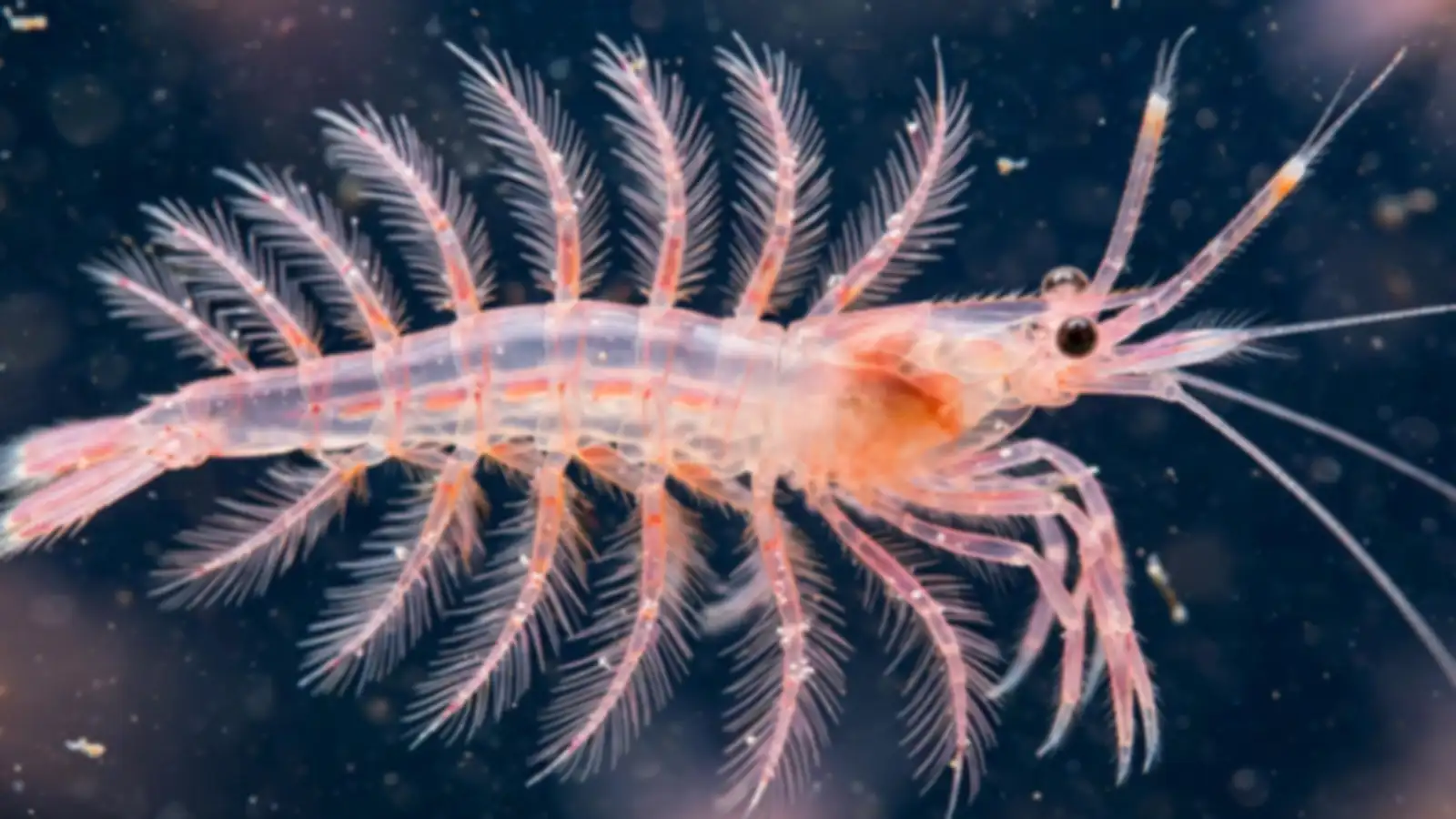
It is a small, translucent crustacean, usually 8 to 15 millimetres long, with a slender pinkish body, stalked eyes, eleven pairs of feathery, leaf-like legs, and a forked tail. It swims on its back, beating its legs in a slow, rhythmic wave, and it filter-feeds as it goes, straining algae, bacteria, yeast and detritus from the water. It is not a shrimp in the kitchen sense — it is a fairy shrimp, a relative of the freshwater fairy shrimps, adapted to water saltier than the sea.
They live where almost nothing else can: salt lakes, salt pans and coastal lagoons with salt concentrations far above seawater, from the Great Salt Lake in Utah to the salt flats of Central Asia and Australia. The salt is their protection — fish cannot live in water that salty, so their lakes are free of predators, and the shrimp can feed and breed in the open without hiding.
Life Cycle: Cyst to Adult
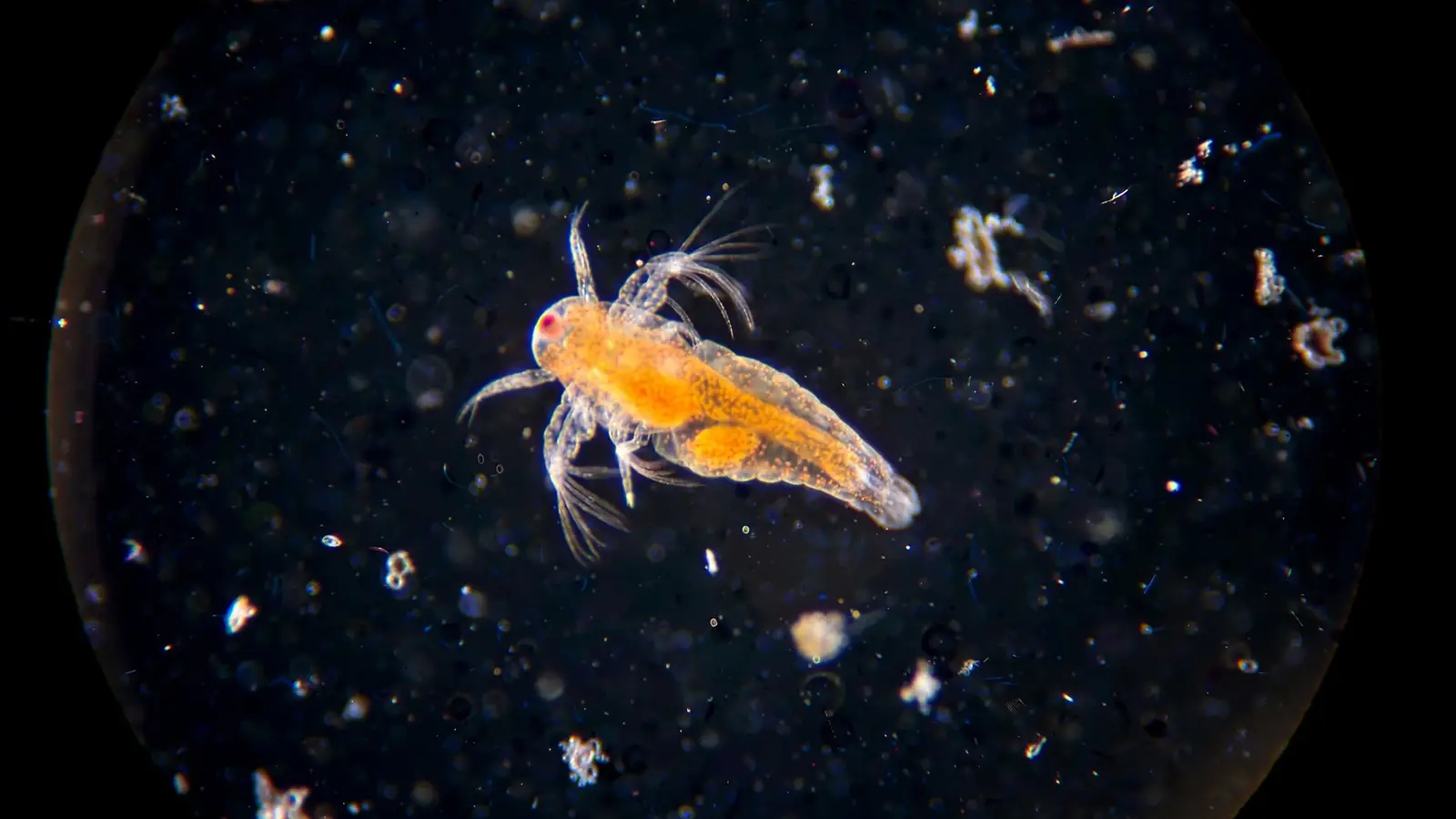
Its life begins as a cyst, a dormant egg, which hatches in brine water in about 24 hours into a tiny orange larva called a nauplius, with a single eye and three pairs of limbs. The nauplius grows fast: in warm water it becomes an adult in about eight days, adding segments, legs and eyes as it moults, until it is a fully formed adult, swimming upside down and filter-feeding in the open water.
Adults do not live long: females live up to about six months, males about a month, and in that time a female can produce hundreds of offspring, either as live young when conditions are good or as cysts when the lake starts to dry up or turn too salty. The choice is the species’ survival strategy — live young for a good season, cysts for a bad one.
The Cyst Trick: Years Without Water
Its cyst is one of the toughest eggs in the animal kingdom. Dried, it can survive for years without water, and it has survived boiling, freezing, and even a trip into space, in experiments that tested its limits. The cyst is in suspended animation — its metabolism all but stopped — waiting for the one thing that wakes it: a return to brine water, where it hatches in about a day.
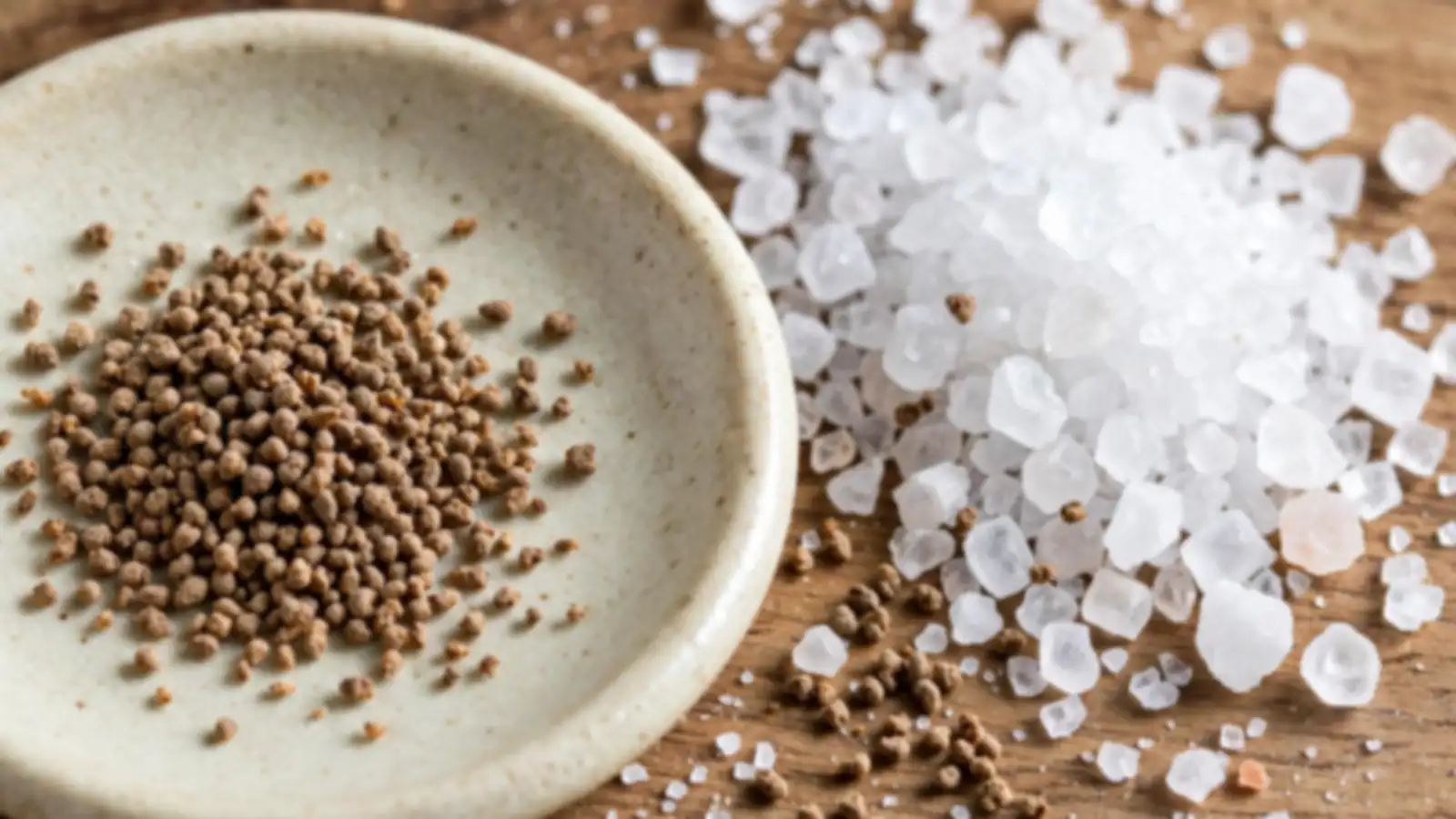
The trick is what made it famous, and what made it useful. Cysts can be harvested, dried, stored and shipped around the world, then hatched on demand in a tank of salt water, which is why fish farms can buy live food by the tonne and hatch it the day they need it. A cyst is a shrimp in a time capsule, and the capsule keeps for years.
The Sea-Monkey Story
Yes. Sea-Monkeys are these animals — a hybrid, Artemia nyos, sold as pets under the Sea-Monkeys brand name since 1957, in a kit with a tank, a packet of cysts and a packet of food. The advertising promised a family of tiny, smiling sea creatures that would hatch before your eyes, and the reality is a tank of small, pink, upside-down crustaceans that swim, eat and breed — which is, honestly, more interesting than the cartoon.
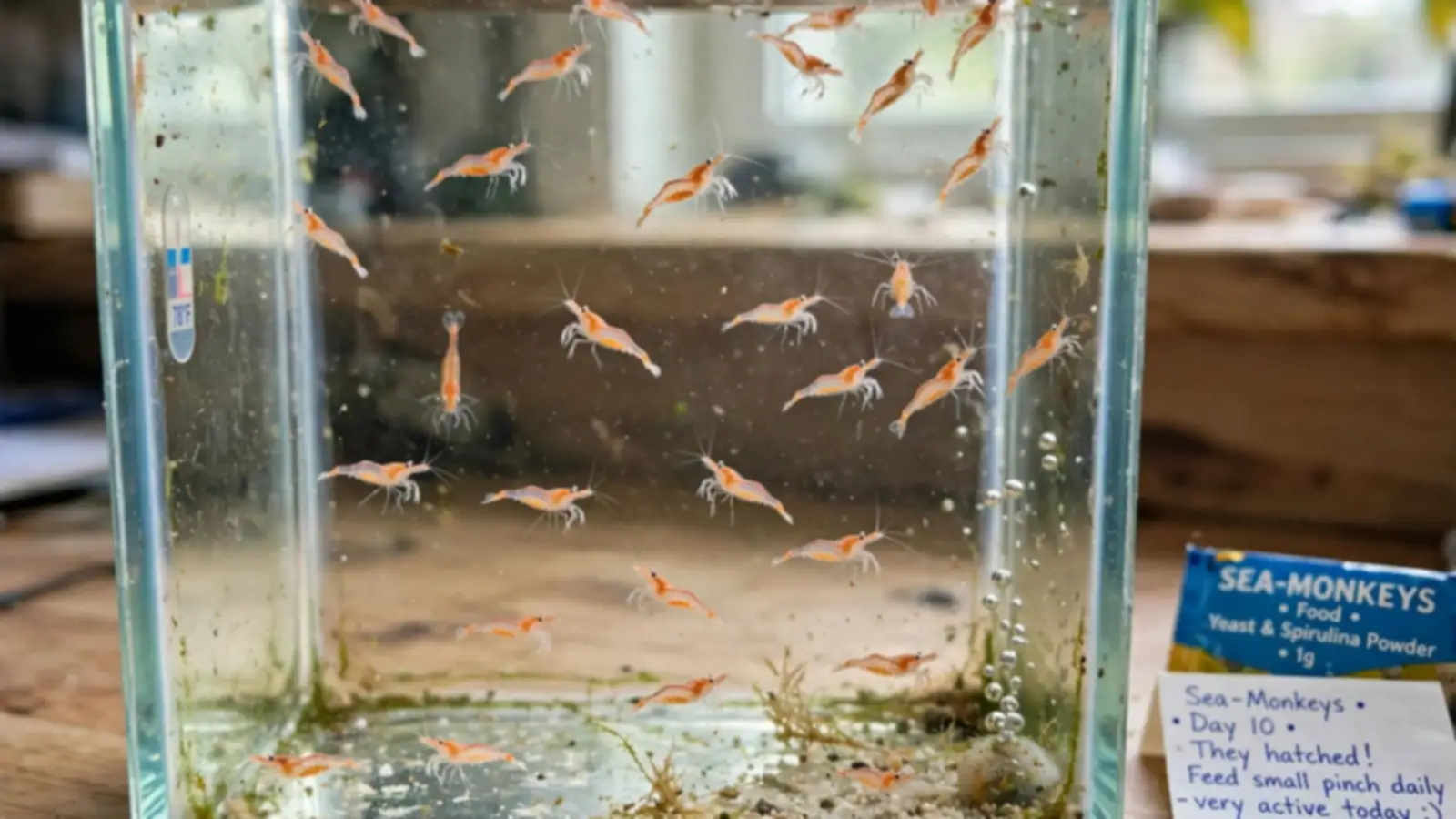
The pets are real animals with real needs: salt water, not tap water; gentle aeration; and food in small amounts, or the water fouls and the shrimp die. Kept well, a Sea-Monkey colony can live for months, and the shrimp will breed in the tank, producing new cysts that hatch when the water is right. The brand name is a toy; the animal is a genuine salt-lake crustacean.
What Do They Eat?
They eat by filter-feeding: they beat their feathery legs to draw water past their bodies, and they strain out phytoplankton, algae, bacteria, yeast and detritus, the tiny particles that drift in salt-lake water. They are not fussy — almost any small, edible particle will do — and they eat constantly, sweeping the water clean as they swim.
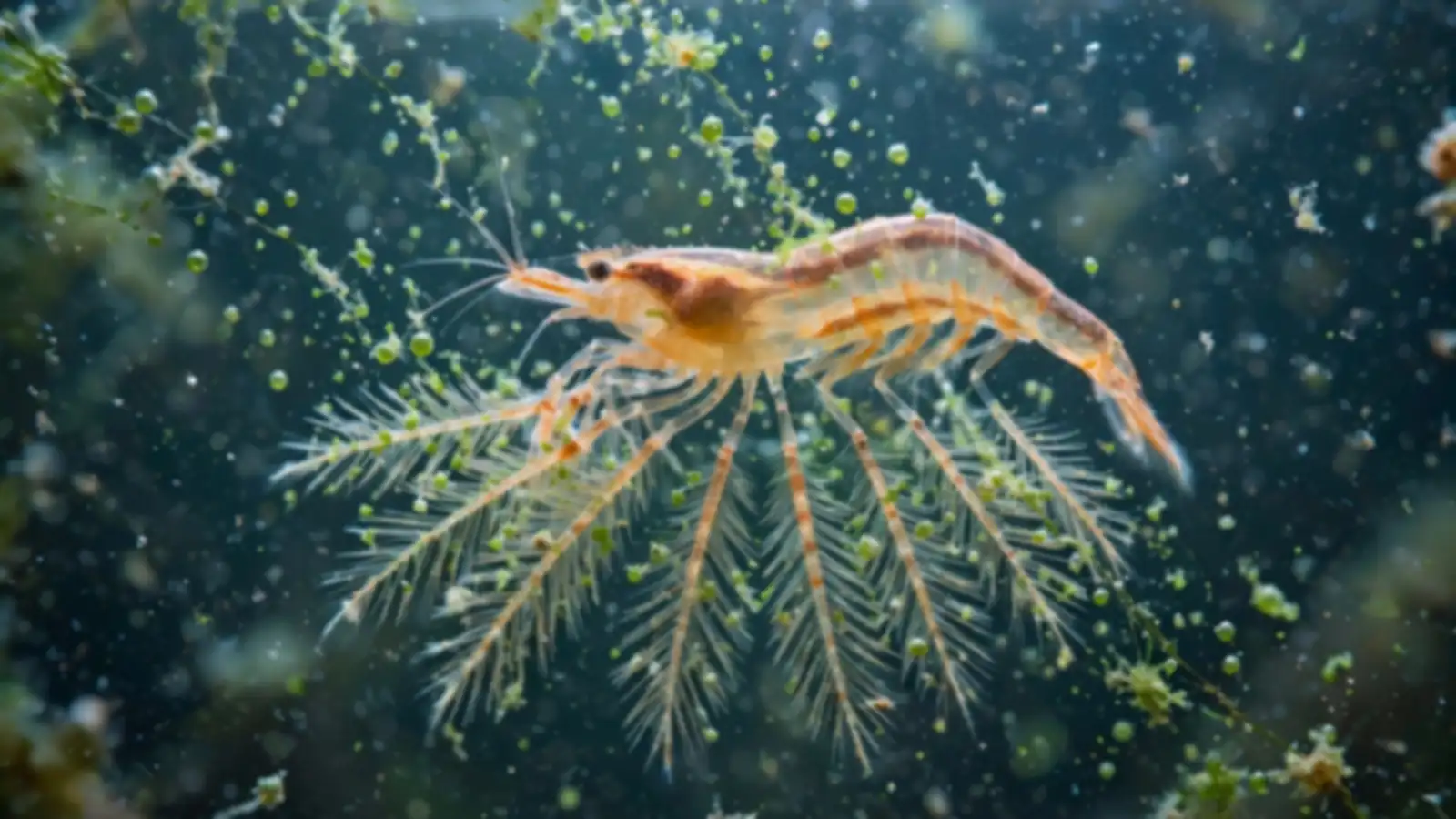
The diet is what makes them valuable as fish food: one is a packet of protein, fat and the pigments that colour a fish, and it is the right size for a baby fish or shrimp to swallow whole. Fish farms raise their nauplii by the billion, feeding them to larval fish and shrimp that cannot yet eat anything bigger, and the whole aquaculture industry depends on them.
In Fish Farming: The Live-Feed Staple
Their nauplii are the standard live feed for fish and shrimp larvae in aquaculture, and the industry runs on their cysts: over 2,000 tonnes of dry cysts are sold every year, most of them harvested from the Great Salt Lake in Utah, where the shrimp are so numerous that the lake’s pink water is coloured by them. The cysts are hatched in tanks, and the nauplii are fed to baby fish and shrimp within hours of hatching, when they are at their most nutritious.
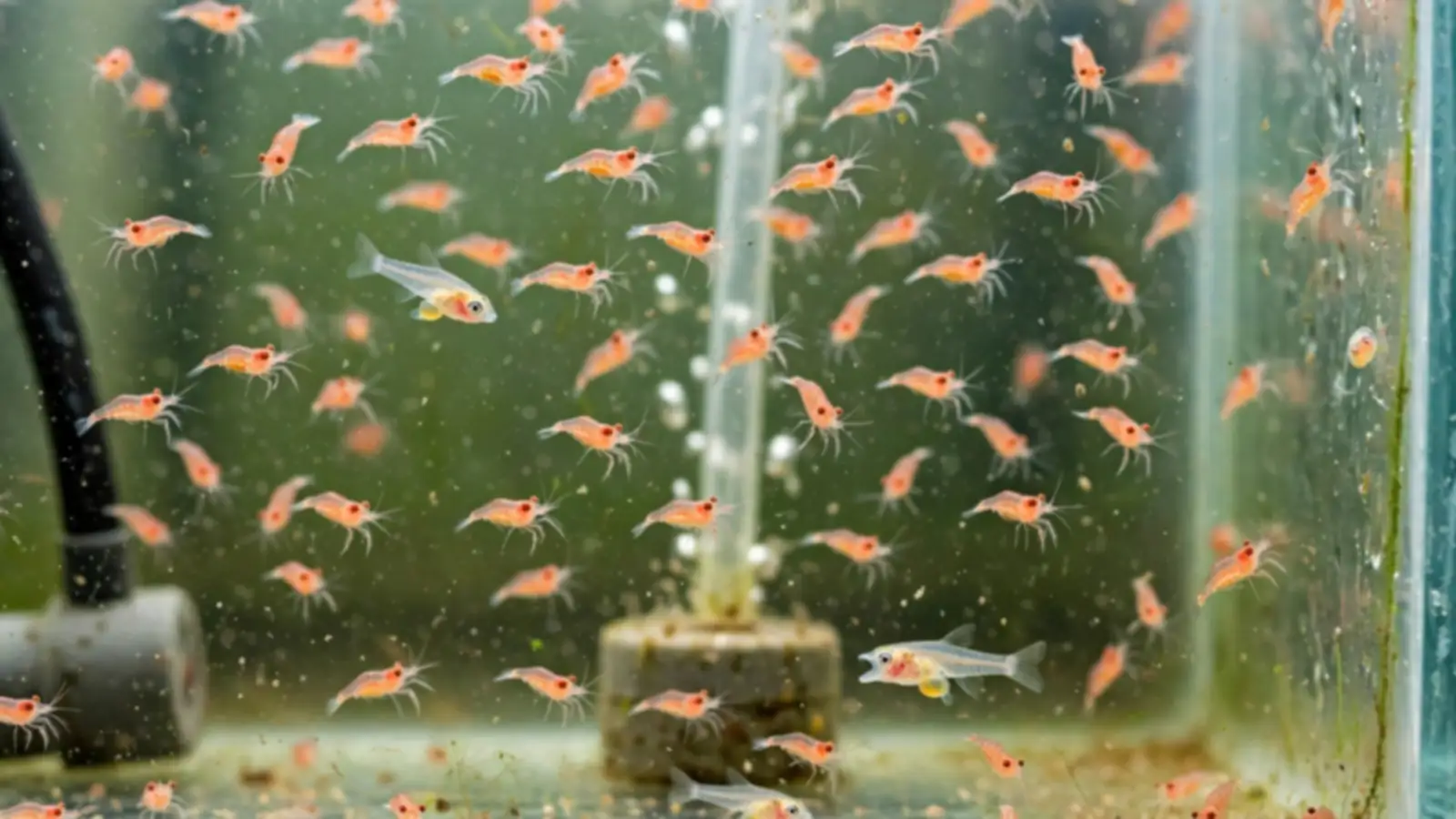
The role is invisible to most people who eat farmed fish, but it is fundamental: without them, hatcheries could not raise the larvae of most farmed fish and shrimp, and the aquaculture industry would not exist in its present form. The genus account records the species count, the life-cycle figures and the cyst facts behind this guide, and the tiny copepod, another planktonic crustacean of the same waters, is told in our copepod guide, where the animal is wild, not farmed.
Fun Facts
- Their cysts can survive for years dry, and have survived boiling, freezing and a trip into space.
- One hatches from its cyst in about 24 hours in brine water, and becomes an adult in about eight days.
- Sea-Monkeys are these crustaceans, sold as pets under that brand name since 1957.
- Over 2,000 tonnes of dry cysts are sold every year, mostly from the Great Salt Lake.
- They swim upside down, beating eleven pairs of feathery legs in a slow, rhythmic wave.
- Females live up to six months, but males live only about a month.
Frequently Asked Questions
What Is a Brine Shrimp?
It is a tiny crustacean of the genus Artemia, seven to nine recognised species, that lives in salt lakes and salt pans around the world. It is usually 8 to 15 millimetres long, with a translucent pinkish body, stalked eyes and eleven pairs of feathery legs, and it swims upside down while filter-feeding on algae and bacteria.
Are Sea Monkeys Brine Shrimp?
Yes. Sea-Monkeys are these animals — a hybrid, Artemia nyos, sold as pets under the Sea-Monkeys brand name since 1957. The kit contains a tank, a packet of cysts and food, and the shrimp hatch in salt water within a day. They are real animals, not toys, and they need salt water, gentle aeration and small amounts of food.
How Long Do Brine Shrimp Live?
Females live up to about six months, and males live about a month. The life cycle is fast: a cyst hatches in about 24 hours, and the nauplius larva becomes an adult in about eight days in warm water. The cyst stage, by contrast, can survive for years in suspended animation.
What Do Brine Shrimp Eat?
They eat by filter-feeding: they strain phytoplankton, algae, bacteria, yeast and detritus from the water with their feathery legs. They are not fussy eaters, and they feed constantly as they swim, sweeping the water clean of tiny particles.
How Do Brine Shrimp Eggs Survive Drying?
Their eggs are cysts, dormant eggs in suspended animation with their metabolism all but stopped. Dried, a cyst can survive for years without water, and it has survived boiling, freezing and spaceflight in experiments. When it returns to brine water, it hatches in about 24 hours.
Where Do Brine Shrimp Live?
They live in salt lakes, salt pans and coastal lagoons around the world, in water far saltier than the sea — from the Great Salt Lake in Utah to the salt flats of Central Asia and Australia. The salt protects them, because fish cannot live in water that salty, so their lakes are free of predators.
Why Are Brine Shrimp Used in Fish Farming?
Their nauplii are the standard live feed for fish and shrimp larvae: they are the right size for a baby fish to swallow whole, they are rich in protein and fat, and their cysts can be stored dry and hatched on demand. Over 2,000 tonnes of dry cysts are sold every year, most from the Great Salt Lake.
Similar Species Worth Exploring
Keep Exploring
Keep exploring the tiny crustaceans through the copepod, the wild planktonic cousin of the open ocean, the krill, the great swarm that feeds the whales, and the wider world of the types of crustaceans. Small, salty and tougher than almost anything its size, the most useful tiny crustacean in the world is the brine shrimp.