Copepod
Copepod: the tiny crustacean that feeds the ocean
The copepod is a crustacean the size of a grain of rice, and it is the most abundant animal on Earth. Trillions of them drift in every ocean, eating phytoplankton and feeding everything from herring to blue whales, and the ocean’s food web runs on their tiny bodies. This guide covers its size, its diet, its life cycle, and the parasitic cousins that feed on fish.
By Emily Carter · Reviewed by our vet team · Updated 10 November 2026 · 9 min read
Most abundant animal on Earth1–2 mm longFeeds whales and fish
At a Glance
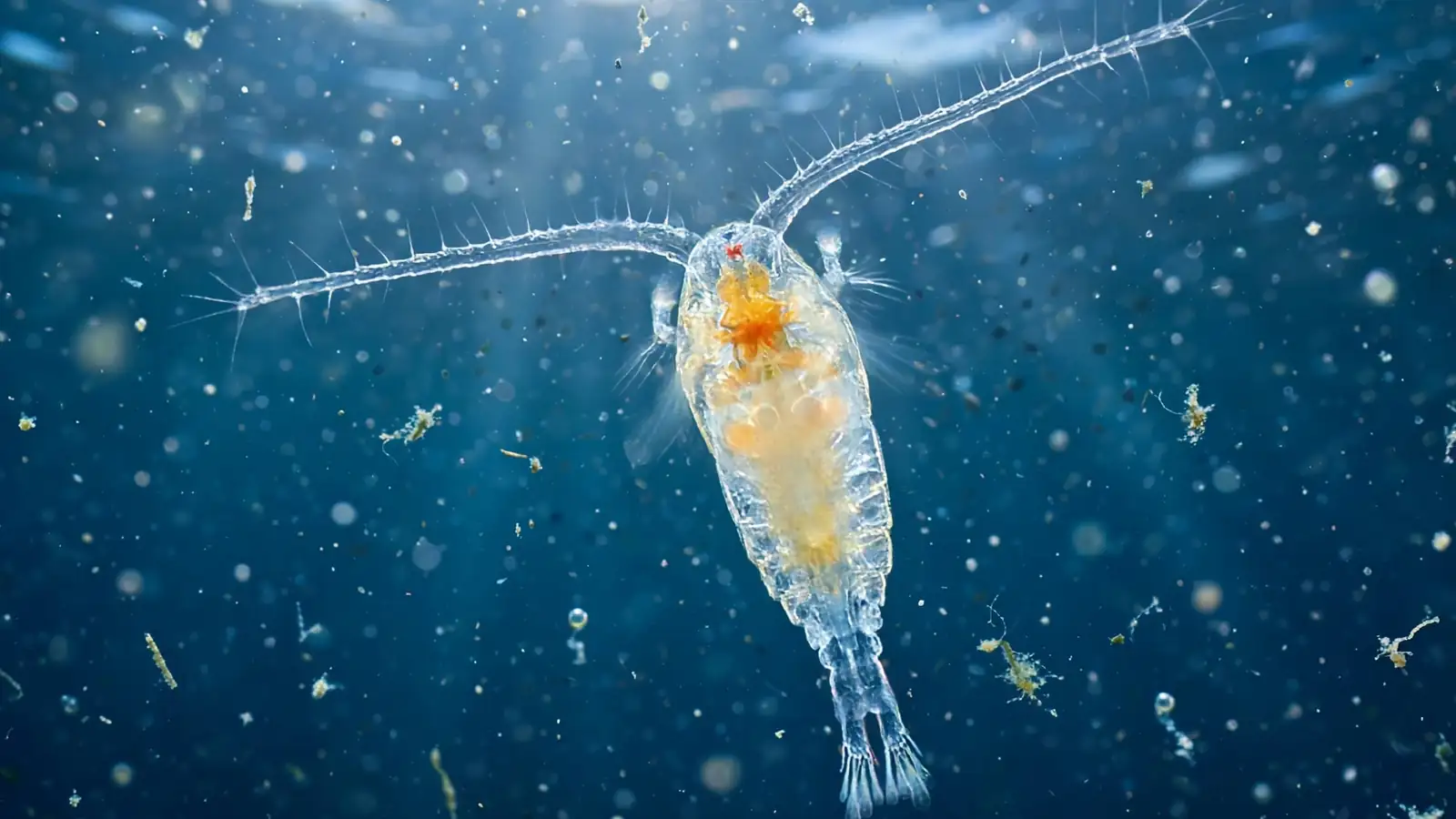
A copepod is a tiny crustacean with a teardrop body, long antennae and a single eye as a larva, and it is the most abundant animal on the planet. Most are 1 to 2 millimetres long, and they drift in every ocean, from the sunlit surface to the deep sea, eating phytoplankton and being eaten by nearly everything larger. Here it is at a glance.
Size and Anatomy
It is typically 1 to 2 millimetres long, a speck in the water, and its body is a teardrop with long antennae, a segmented trunk and a tail that carries the eggs in many females. Some polar species reach a centimetre, and a few parasitic species can exceed 30 centimetres on their hosts, but the free-living copepods that fill the ocean are all tiny, and their size is the reason they are the ocean’s foundation.
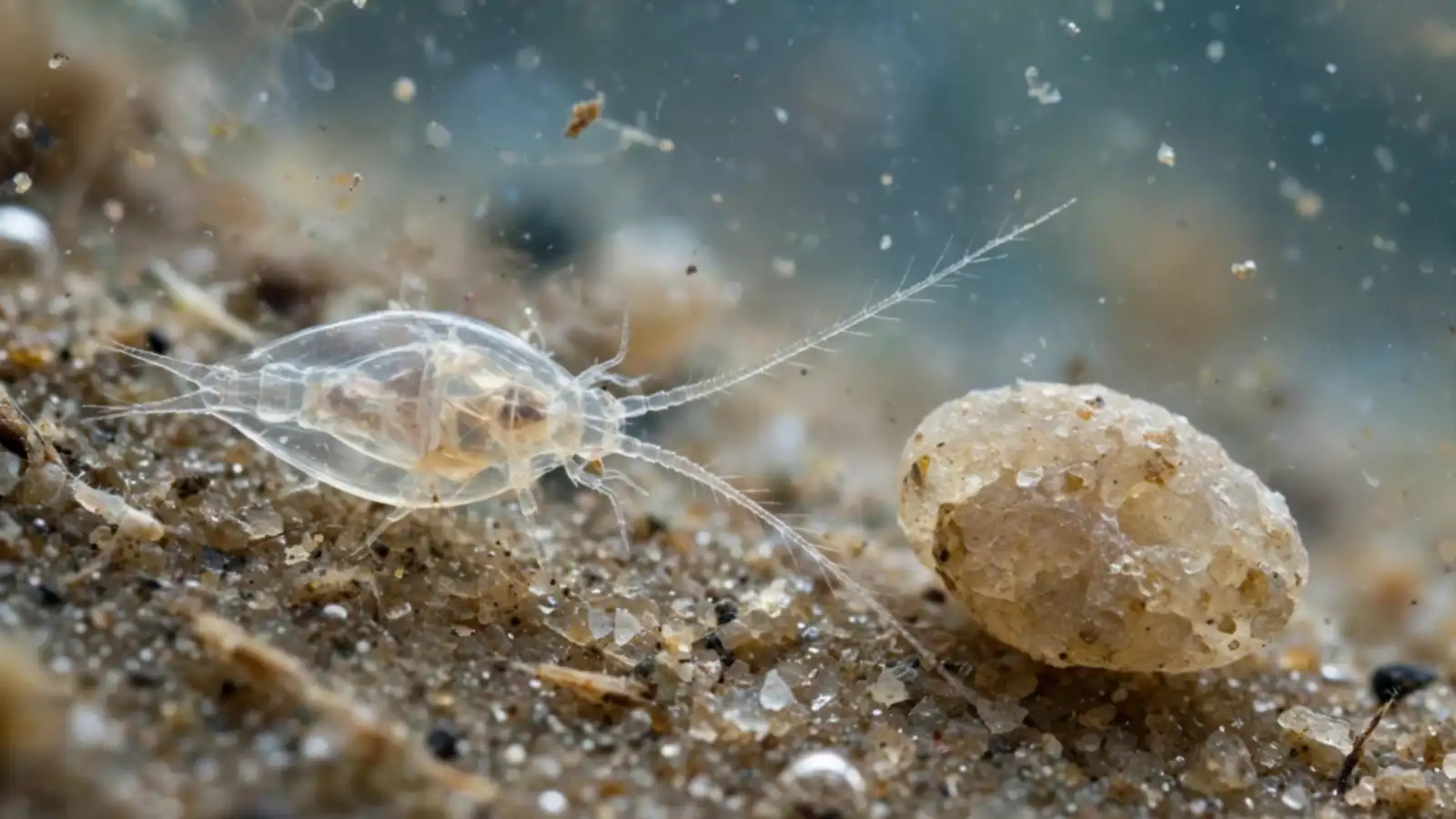
The anatomy is built for drifting and feeding. The antennae are long and feathery, sensing the water and helping the animal stay afloat, and the mouthparts are a set of fine combs that sweep food from the water. The body is transparent in many species, and the single red eye of the larva gives way to paired eyes in the adult, though the animal sees little more than light and shadow.
Copepods also move in a distinctive hop-and-sink rhythm, flicking their antennae and tail to dart forward, then sinking slowly while they feed. The dart is an escape response as much as a way of travelling: it can sense the pressure wave of an approaching fish and jump clear in a fraction of a second, and the jump is one of the fastest movements in the plankton for an animal of its size. The antennae are the oars, the tail is the rudder, and the whole body is built for a life spent dodging in open water. For the full detail, see the species account.
What Do Copepods Eat?
Copepods eat mostly phytoplankton, the tiny plants that bloom in sunlit water, and one copepod can eat up to 373,000 phytoplankton cells a day. The figure comes from its feeding studies, and it shows the scale of the work: a single animal filtering hundreds of thousands of cells, day after day, and a whole ocean of copepods filtering the sea clean.
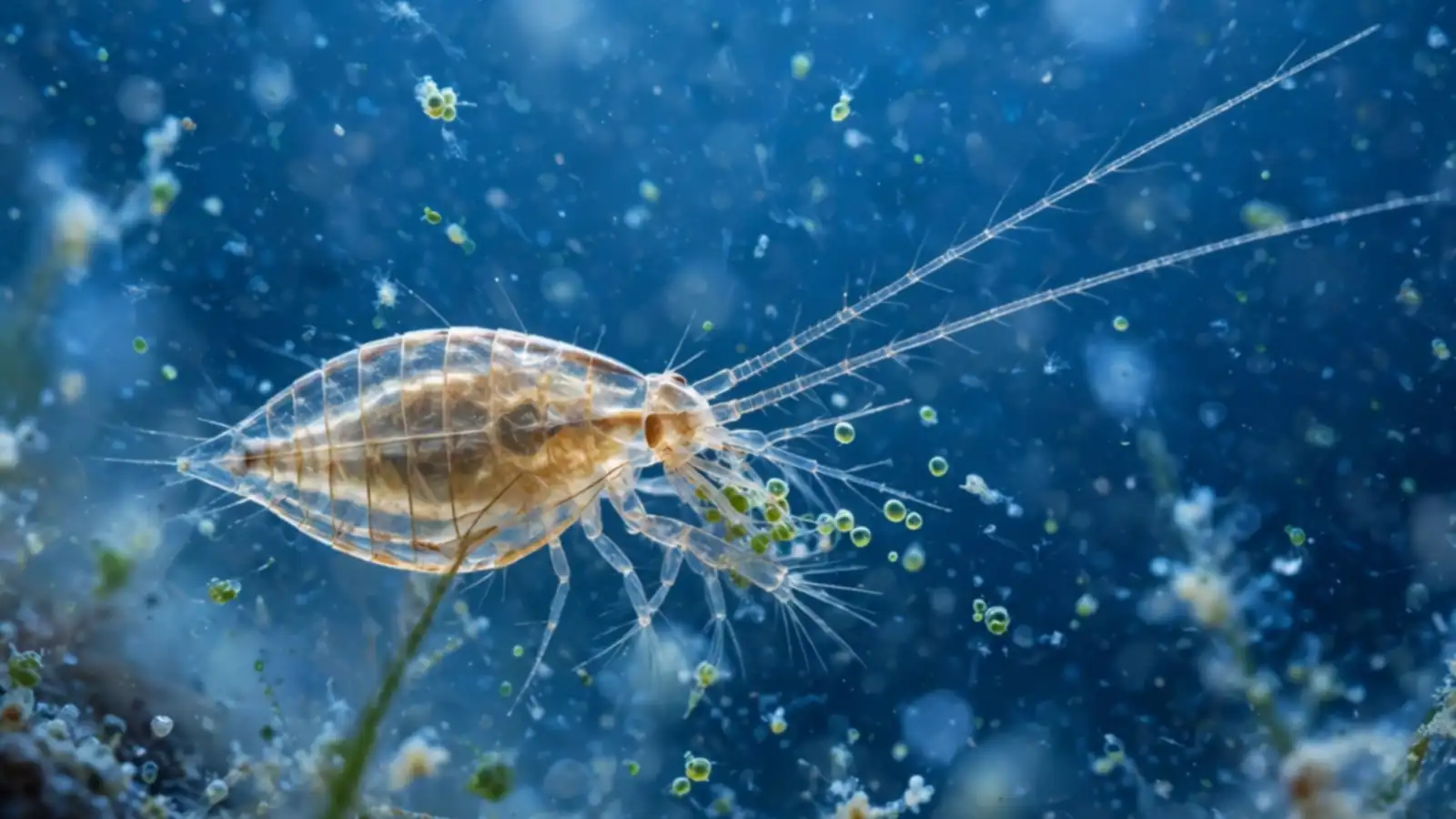
The diet varies by species. Some copepods are hunters, catching smaller animals with their mouthparts, and some are scavengers, eating detritus and dead matter as it sinks. But the great majority are grazers, and their grazing is the link between the sun’s energy, captured by phytoplankton, and the animals that eat copepods, from herring to whales.
Copepod Life Cycle: From Nauplius to Adult
It hatches as a nauplius larva, a tiny oval with a single simple eye and three pairs of limbs, and it moults through a series of stages before reaching adulthood. The nauplius is a plankton animal in its own right, feeding and growing in the surface water, and each moult adds segments and limbs until the adult form appears.
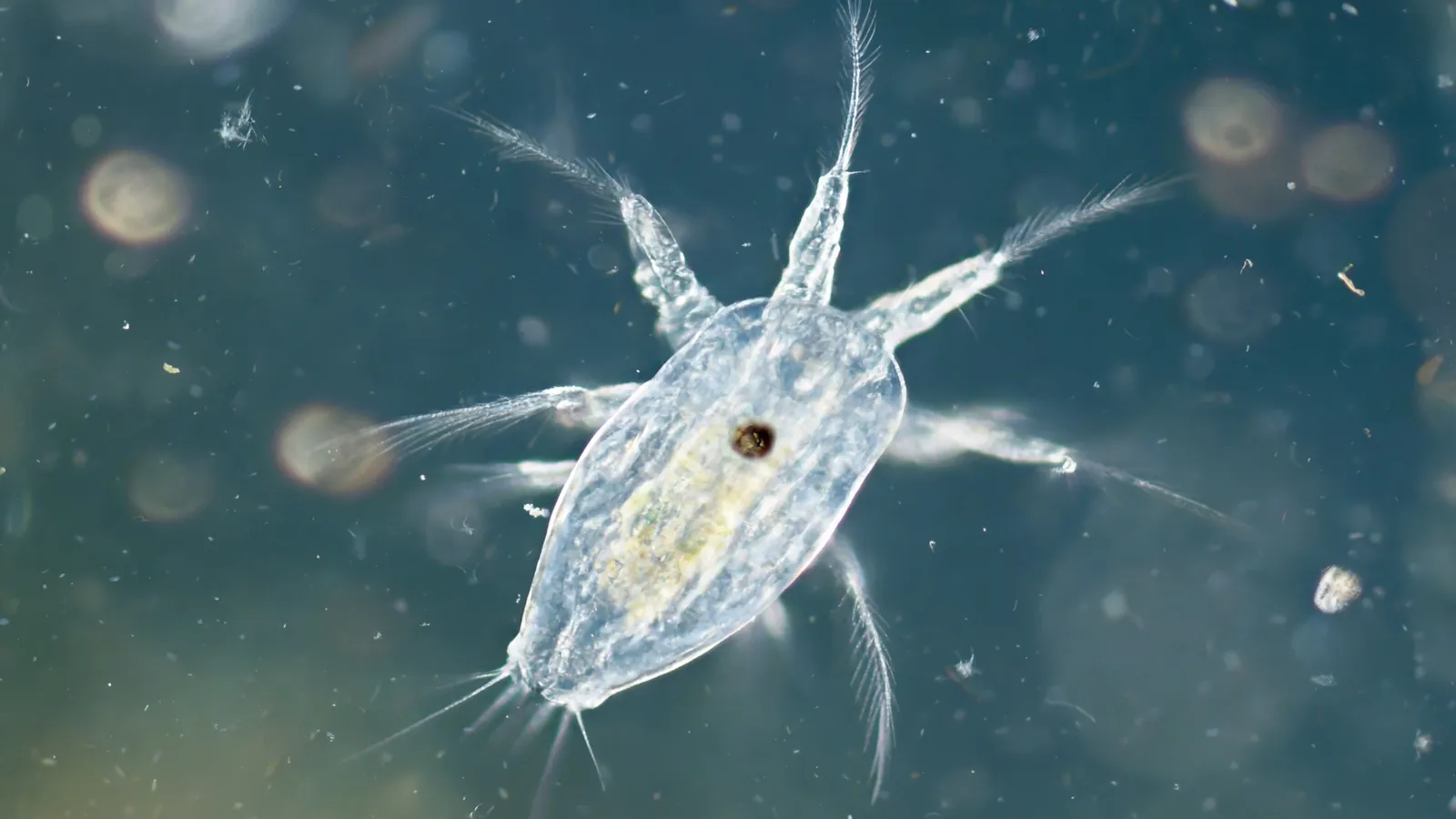
Most copepods stay planktonic for life, a condition called holoplanktonic, and they never settle on the bottom. The females carry their eggs in sacs on the tail, or release them into the water, and a single female can produce hundreds of eggs in a season. The life is short, weeks to months, but the numbers are so large that the population never falters.
Some copepods also overwinter in a resting state called diapause, sinking to deep water in autumn and waiting out the winter in a torpor, living off stored fat until the spring bloom returns. The resting animals can survive for months without feeding, and the spring awakening is timed to the phytoplankton bloom, so the new generation hatches into a sea full of food. The diapause is its way of surviving a season with nothing to eat, and it is one of the reasons the group is so successful.
Types and Kinds
The copepods split into orders, and three free-living orders structure the group. The calanoids are the open-water grazers, the commonest copepods of the surface ocean, with long antennae and a teardrop body. The cyclopoids are smaller and rounder, common in fresh water as well as the sea, and the harpacticoids are bottom-dwellers, living on sand and algae rather than drifting.

Beyond the free-living orders sit the parasitic copepods, a large and varied group that lives on fish and other animals. The free-living orders are the ones that feed the ocean, and the parasitic ones are the ones that trouble it, and the two together make the copepods the most diverse crustacean group in the sea.
Copepods in the Food Web
Copepods are the link between phytoplankton and everything larger. They eat the tiny plants, and they are eaten by fish, by seabirds, by whales and by larger plankton, and the energy of the sun flows through them into the whole ocean. The framing recurs in the sources: copepods carry the largest animal biomass on Earth, and the ocean’s food web runs on their bodies.
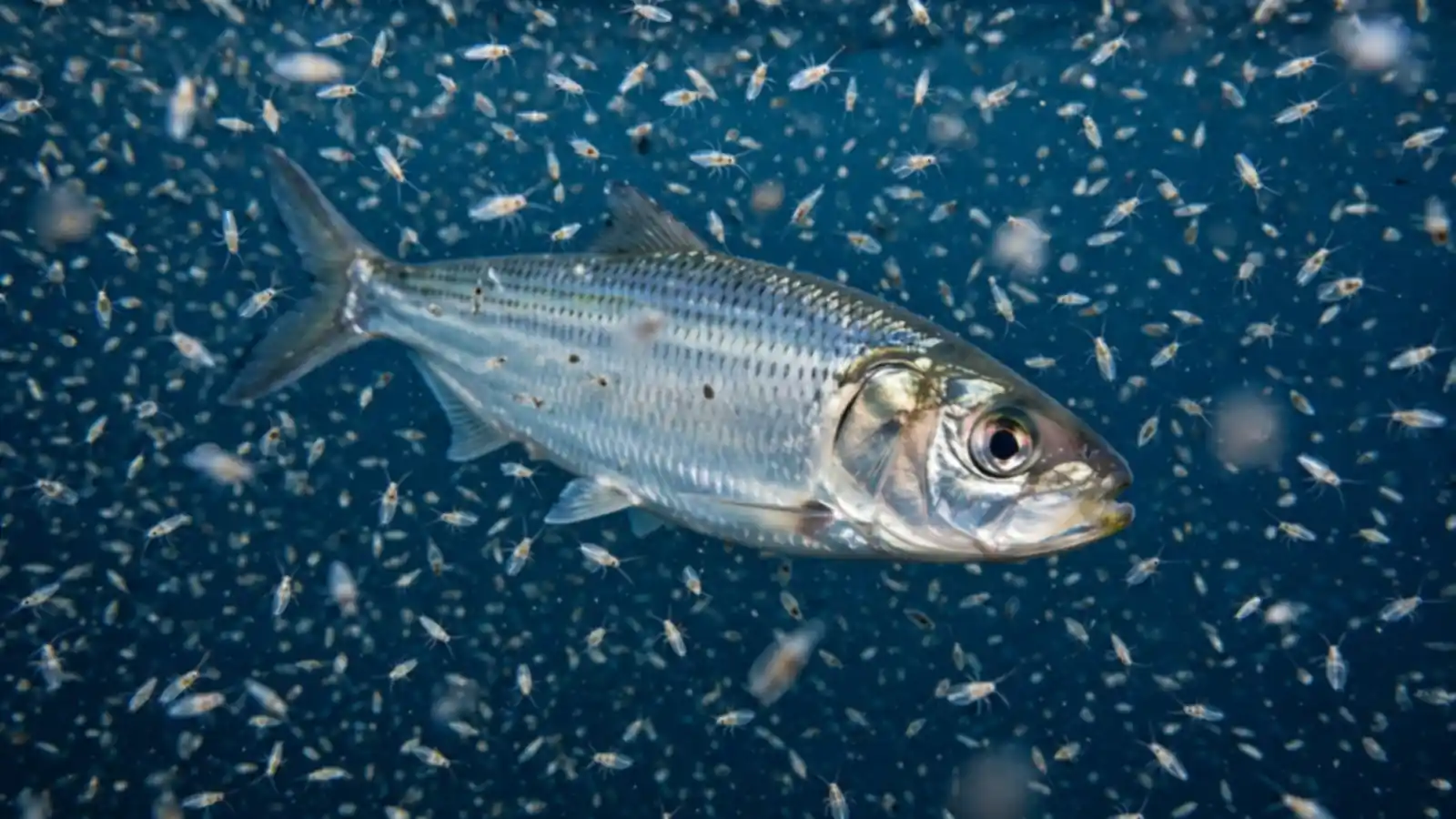
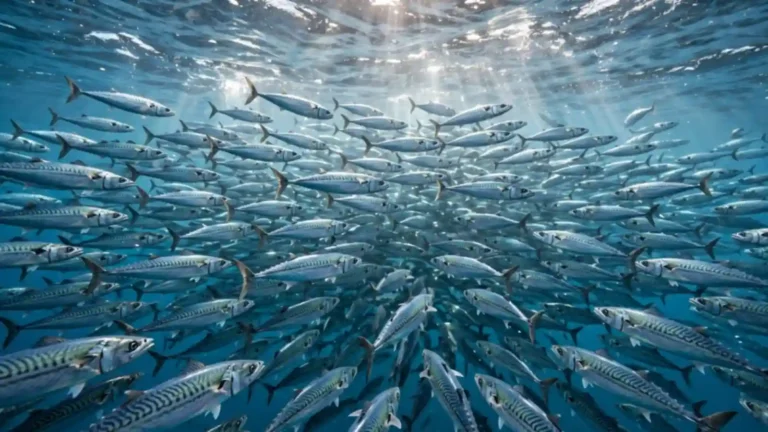
The link is visible in the great migrations. Herring, sardines and anchovies follow these blooms, and the whales follow the fish, and the whole food web pulses with the seasons of the plankton. A blue whale can eat tonnes of krill in a day, and krill eat copepods, and the copepods eat the phytoplankton that bloomed in the spring sun. Remove the copepods and the web collapses.
Copepods also drive the ocean’s carbon pump. They rise to the surface at night to feed, sink back down by day, and their faecal pellets sink fast, carrying carbon from the surface to the deep sea, where it can stay for centuries. The daily migration of trillions of copepods is the largest animal migration on Earth by biomass, and the carbon they carry down is a measurable part of the ocean’s climate work. It is small, but its daily commute moves the planet’s carbon.
Parasitic Copepods
Not all copepods are free-living grazers. The parasitic copepods live on fish and other animals, feeding on host flesh and fluids, and the best-known are the fish lice, the sea lice that plague salmon farms. A sea louse attaches to a salmon’s skin, feeds on mucus and blood, and weakens the fish, and a heavy infestation can kill it.
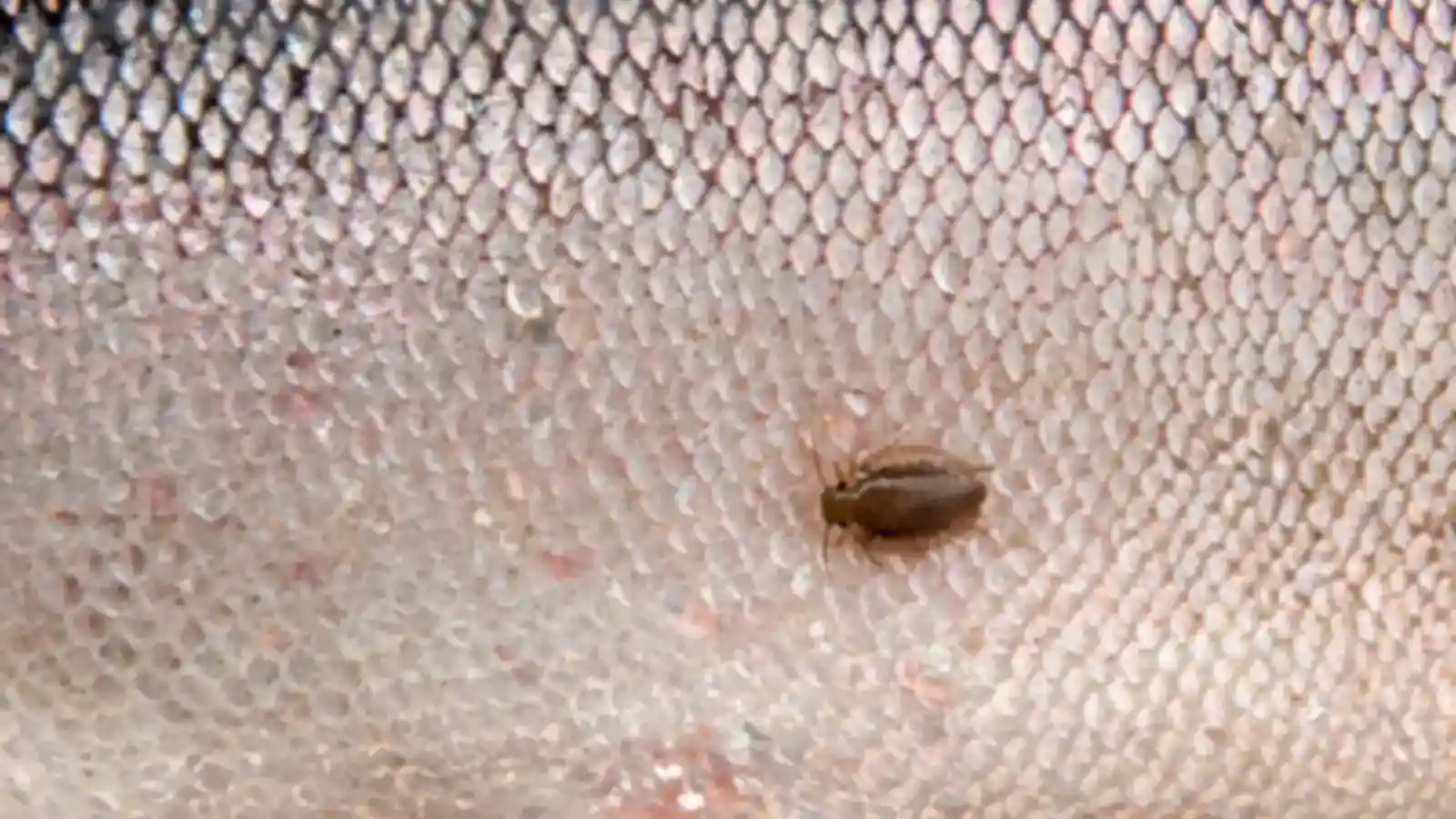
The parasites are the contrast to the grazers. Where the free-living copepods feed the ocean, the parasitic ones take from it, and the two groups show the range of a single body plan. The parasites are a real problem for fish farming, and their control is a whole industry, but they are a small part of this story beside the trillions of grazers that run the food web.
Fun Facts
- Copepods are the most abundant animals on Earth, with trillions drifting in every ocean.
- One can eat up to 373,000 phytoplankton cells in a day.
- It hatches as a nauplius larva with a single simple eye.
- Most copepods are 1 to 2 millimetres long, though some polar species reach a centimetre.
- There are about 13,000 described species.
- Copepods carry the largest animal biomass on Earth, feeding fish, seabirds and whales.
Frequently Asked Questions
What is a copepod?
A copepod is a tiny crustacean of the class Copepoda, with a teardrop body, long antennae and a segmented trunk. Most are 1 to 2 millimetres long, and they drift in every ocean, eating phytoplankton and being eaten by nearly everything larger. There are about 13,000 described species.
How big are copepods?
Most copepods are 1 to 2 millimetres long. Some polar species reach a centimetre, and a few parasitic species can exceed 30 centimetres on their hosts, but the free-living copepods that fill the ocean are all tiny.
What do copepods eat?
Copepods eat mostly phytoplankton, the tiny plants that bloom in sunlit water, and one copepod can eat up to 373,000 phytoplankton cells a day. Some species hunt smaller animals, and some scavenge detritus, but the great majority are grazers.
What eats copepods?
Nearly everything larger eats copepods: herring, sardines and anchovies, seabirds, larger plankton, and whales. Copepods are the link between phytoplankton and the rest of the ocean, and the energy of the sun flows through them into the whole food web.
How many copepod species are there?
There are about 13,000 described copepod species in the class Copepoda. The three free-living orders that structure the group are the calanoids, the cyclopoids and the harpacticoids, and beyond them sit the parasitic copepods.
Are copepods good for aquariums?
Yes, copepods are valued in aquariums as live food. They are a natural food for small fish and corals, and many aquarists culture them in refugiums, where they breed and provide a steady supply of live feed. They also help clean the tank by eating detritus and algae.
Do copepods bite humans?
No, free-living copepods do not bite humans. They are far too small, and their mouthparts are built to sweep plankton from the water, not to bite. The parasitic copepods feed on fish, not people, and a swimmer will never notice the copepods drifting past.
Similar Species Worth Exploring
Keep Exploring
Keep exploring the crustaceans: meet the krill, a shrimp-like giant of the plankton that feeds the whales, or browse the whole family in our guide to the types of crustaceans. Then come back to the smallest animal that runs the ocean, the copepod.