By The Wind Sailor
By The Wind Sailor: The Jelly That Sails the Seas
The by the wind sailor is a blue hydrozoan colony with a stiff little sail on its back — and the wind decides where it goes. Whole fleets of them wash up on beaches, thousands at a time.
By Emily Carter · Reviewed by our vet team · Updated 10 November 2026 · 9 min read
3–4 in longStiff little sailHarmless sting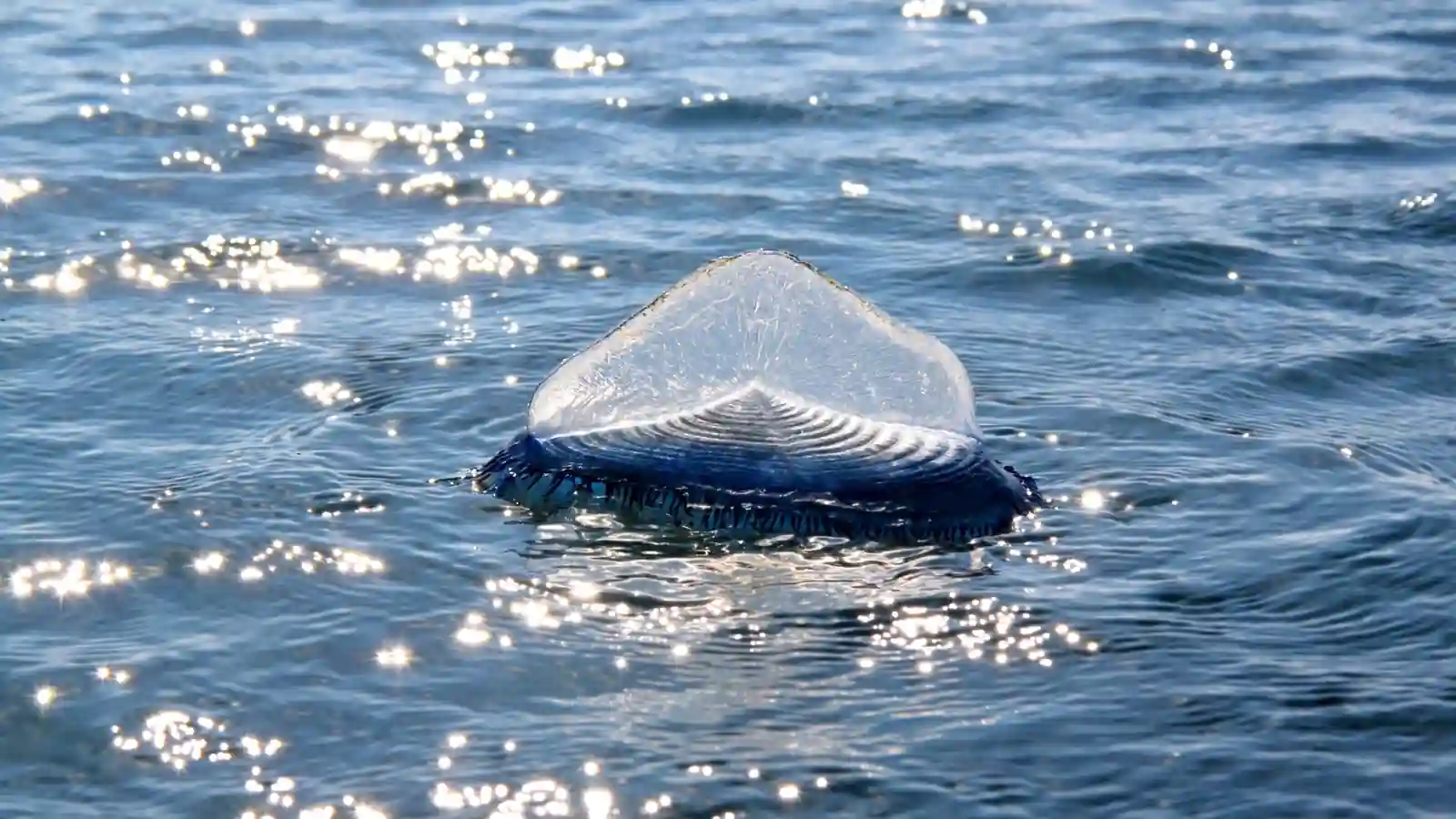
At a Glance
The by the wind sailor is a small blue animal that floats on the open ocean with a stiff sail on its back, and it goes wherever the wind sends it. It is not a jellyfish — it is a colony of polyps, like its cousin the blue button — and it is famous for washing up on beaches in fleets of thousands.
By The Wind Sailor Size: Three Inches of Blue
It grows three to four inches long — usually under seven centimetres — a small blue oval with a clear sail standing up from its back. The body is a flat, blue disc, and the sail is a stiff, triangular fin about two inches high, set diagonally across it.
It is a small animal with a big presence: a single sailor is easy to miss, but the fleets are not. Thousands of them drifting together turn the surface blue, and when they strand, they turn the beach blue too.
The Sail: How the Wind Decides Where It Goes
Its sail is a stiff, triangular fin about two inches high, set diagonally on the body — and it is the animal’s only engine. The sailor cannot swim. It floats, and the wind pushes the sail, carrying it across the ocean at an angle to the wind.

The sail is not a fin for steering but a rigid membrane that catches the air, and the animal has no say in the direction. It goes where the wind goes, for as long as the wind blows, and when the wind turns toward shore, the whole fleet goes with it.
Left-Handed or Right-Handed: Two Mirror Forms
It comes in two mirror forms: left-handed and right-handed, and the difference is the angle of the sail. A left-handed sailor’s sail leans one way; a right-handed sailor’s leans the other — and the two forms sail in different directions in the same wind.
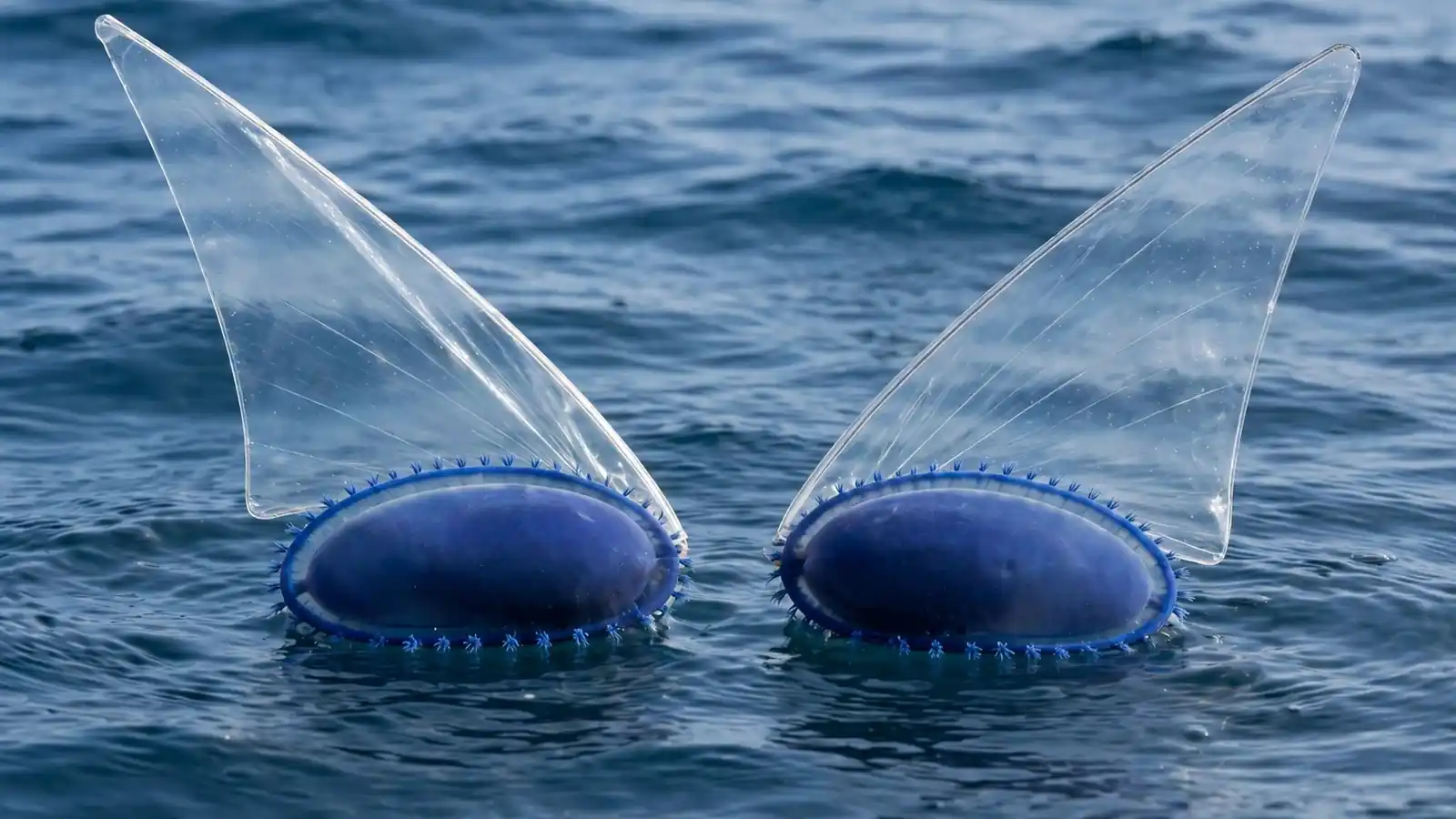
Usually, left-handed sailors are the northern form and right-handed sailors the southern one, but that is the usual case, not a rule. Both forms occur in both hemispheres, and a single stranding can contain both — the fleet splits by the wind, and the two hands of Velella go their separate ways.
Mass Strandings: Thousands on the Beach
It strands in its thousands. Storms drive the fleets onto beaches, where the animals die and dry out in the sun, and the sand turns blue and then pale as they decay. On the west coast of North America, strandings of millions have been recorded in a single season.
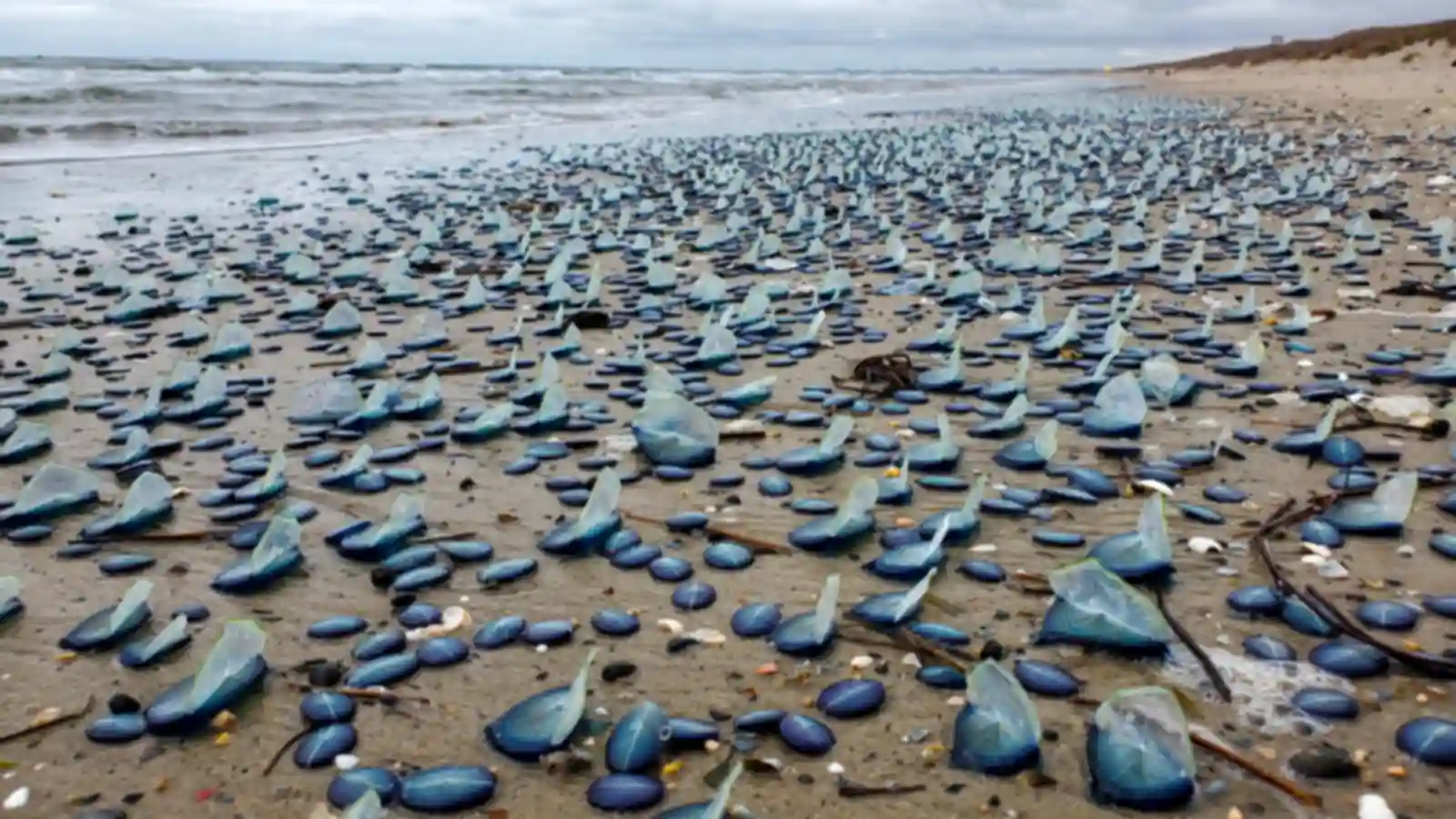
The strandings are not a disaster for the species — they are the price of sailing. The fleets that strand are the ones the wind carried ashore, and the fleets that stay at sea carry on. Beachgoers who find them should look and leave them: the dried sailors crumble to the touch, and the living ones cannot get back to the water. For more on the strandings and the sail, see this guide to Velella strandings.
The strandings follow the wind, and the wind follows the season: the great strandings come in spring, when the winds turn and the fleets are driven ashore in their millions. The dried sailors bleach white in the sun and crumble to dust, and the beach is blue one week and bare the next — a reminder that the sailor’s whole life is at the mercy of the weather.
What Do They Eat? Copepods and Plankton
It eats planktonic crustaceans, mostly copepods — the tiny animals that fill the surface water. Its tentacles dangle below the float, stinging the copepods that bump into them, and the colony shares the catch.
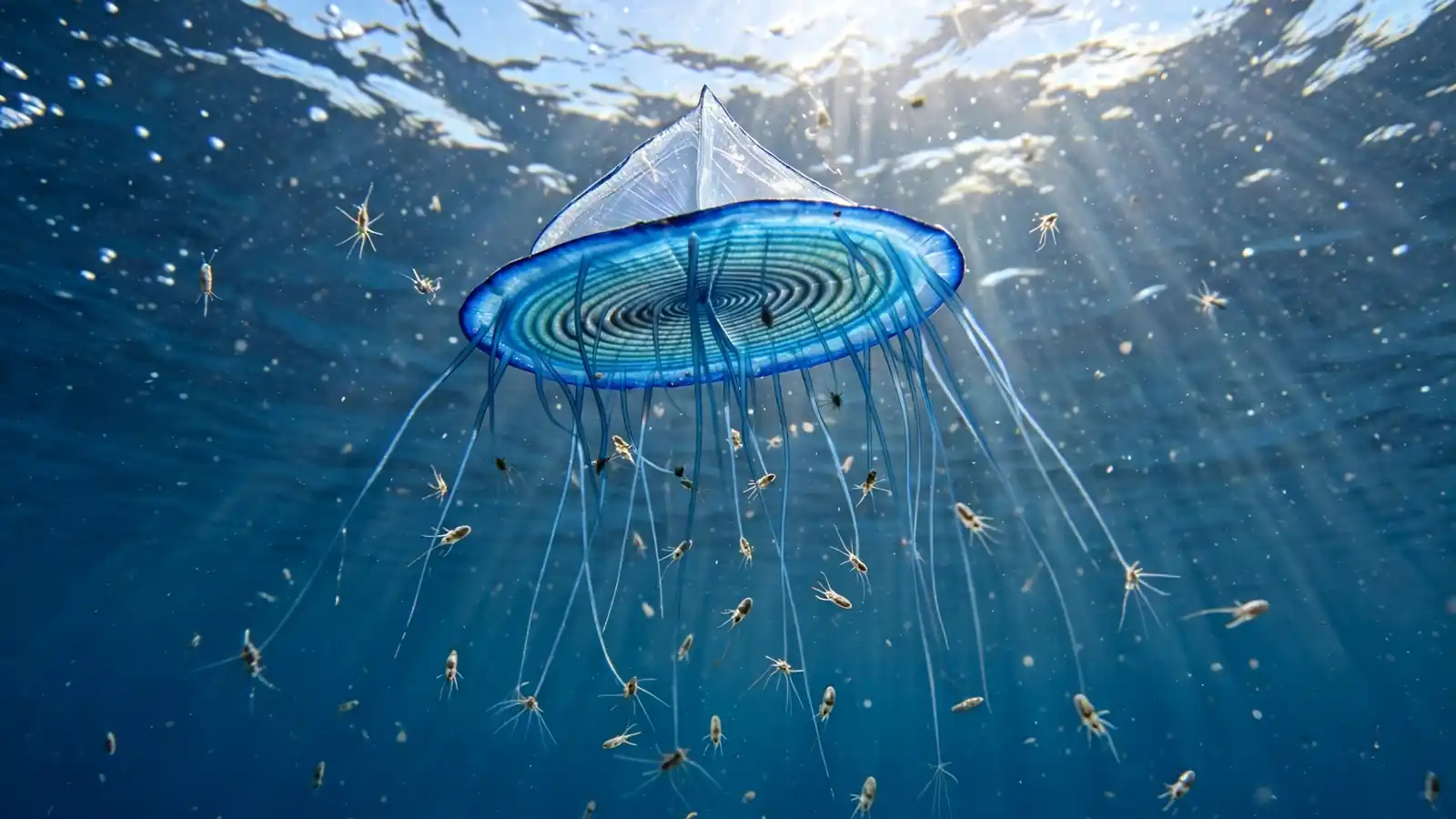
It is a passive feeder, like all the sailing colonies: it does not chase food, it drifts through it. In rich water the fleet feeds well; in poor water it sails on, carried by the same currents as its prey.
The Sting: Harmless to Humans
Its sting is harmless to humans — mild irritation at most, and usually nothing at all. The stinging cells are tuned for copepods, not for people, and a child who picks one up on the beach is in no danger from it.

Still, it is a stinging animal, and the polite rule is hands off: look at the sail, admire the blue, and leave it where it lies. A stranded sailor is already dying, and handling it only breaks it apart.
By The Wind Sailor vs Blue Button: Sail or Disc
It and the blue button are often confused, and they wash up on the same beaches, but the difference is visible at a glance: the sailor has a stiff triangular sail, and the button has a flat round disc. Sail or disc — that is the whole difference.

Both are hydrozoan colonies, both float at the surface, and both strand in their thousands. But the sailor’s sail stands up and catches the wind, while the button’s disc lies flat and rides the currents. If it has a sail, it is a sailor; if it is a flat blue disc, it is a button.
Fun Facts
- It cannot swim — the wind pushes its sail and decides where it goes.
- It comes in left-handed and right-handed forms, with the sail leaning opposite ways.
- A single stranding can put thousands — sometimes millions — of sailors on one beach.
- It is not a jellyfish but a colony of hydrozoan polyps, like its cousin the blue button.
- Its sting is harmless to humans — mild irritation at most.
- The sail stands about two inches high on a body only three to four inches long.
Frequently Asked Questions
What Is a By-The-Wind Sailor?
A small blue hydrozoan colony, Velella velella, that floats on the open ocean with a stiff triangular sail on its back. It is three to four inches long, and it goes wherever the wind sends it. The by the wind sailor is a colony, not a single animal — many tiny polyps sharing one float.
Is a By-The-Wind Sailor a Jellyfish?
No. Like the blue button, it is a colony of hydrozoan polyps sharing one float — not a single animal with a bell and a mouth. A jellyfish is one animal; a by-the-wind sailor is a colony with a sail.
How Does a By-The-Wind Sailor Move?
It does not swim. The stiff sail on its back catches the wind, and the wind pushes the animal across the ocean at an angle. The sailor has no say in the direction — the wind decides.
Why Do By-The-Wind Sailors Wash Up on Beaches?
Because the wind drives them there. Storms push whole fleets ashore, where the animals die and dry out in the sun. On the west coast of North America, strandings of millions have been recorded in a single season.
Do By-The-Wind Sailors Sting?
Their sting is harmless to humans — mild irritation at most, and usually nothing at all. The stinging cells are tuned for copepods, not for people. It is still polite to look and not touch.
What Do By-The-Wind Sailors Eat?
Planktonic crustaceans, mostly copepods. Their tentacles dangle below the float, stinging the copepods that bump into them, and the colony shares the catch.
What Is the Difference Between a By-The-Wind Sailor and a Blue Button?
The float. The by-the-wind sailor has a stiff triangular sail that stands up and catches the wind; the blue button has a flat, round gas disc. Both are hydrozoan colonies, both strand in their thousands, but sail or disc tells them apart at a glance.
Similar Species Worth Exploring
Keep Exploring
Meet the blue button, the by-the-wind sailor’s disc-shaped cousin, then the Portuguese man o’ war, its famous and far more dangerous sailing relative, and browse the whole family in our types of jellyfish hub — then come back to the jelly that sails the seas, the by the wind sailor.