Blue Spotted Ribbontail Ray: Spots, Sting and Reef Life
Blue Spotted Ribbontail Ray: The Reef’s Electric Jewels
The blue spotted ribbontail ray is one of the most photographed rays on any reef — a small yellow disc scattered with electric blue spots, a tail striped in blue, and two venomous spines it never wants to use.
By Emily Carter · Reviewed by our vet team · Updated 10 November 2026 · 7 min read
Electric blue spots35 cm discNear Threatened
At a Glance
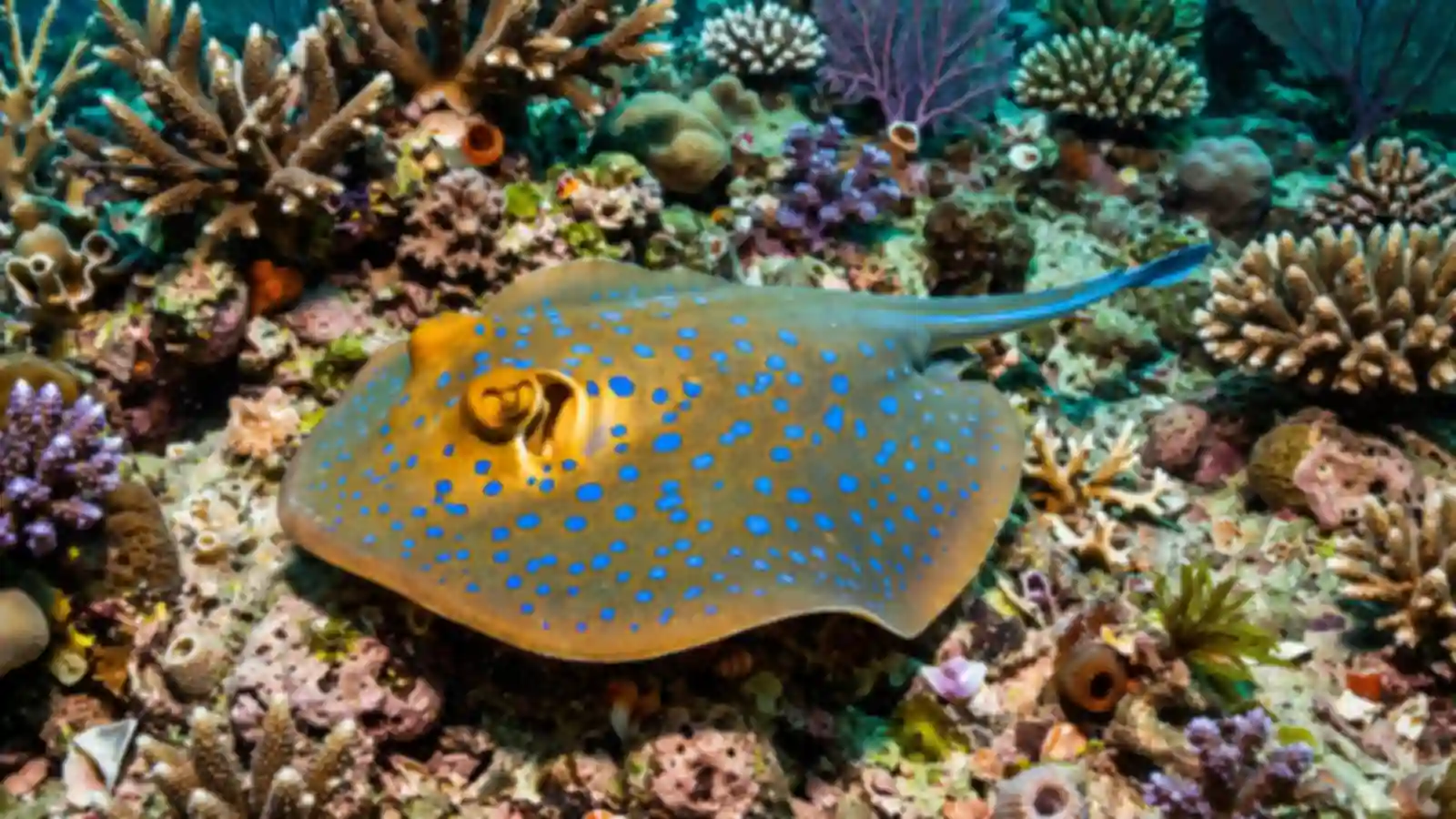
The blue spotted ribbontail ray is the jewel of the reef flat: a small ray, only 35 cm across the disc, wearing a yellow-brown back scattered with bright blue spots and a tail striped in blue. It is one of the most photographed rays in the Indo-Pacific, and one of the most harmless-looking — but the blue is a warning, and the tail carries two venomous spines. This guide covers the spots, the tide-following feeding, the sting, and why a ray this beautiful is now listed as Near Threatened.
Blue Spotted Ribbontail Ray Size: A Small Reef Ray
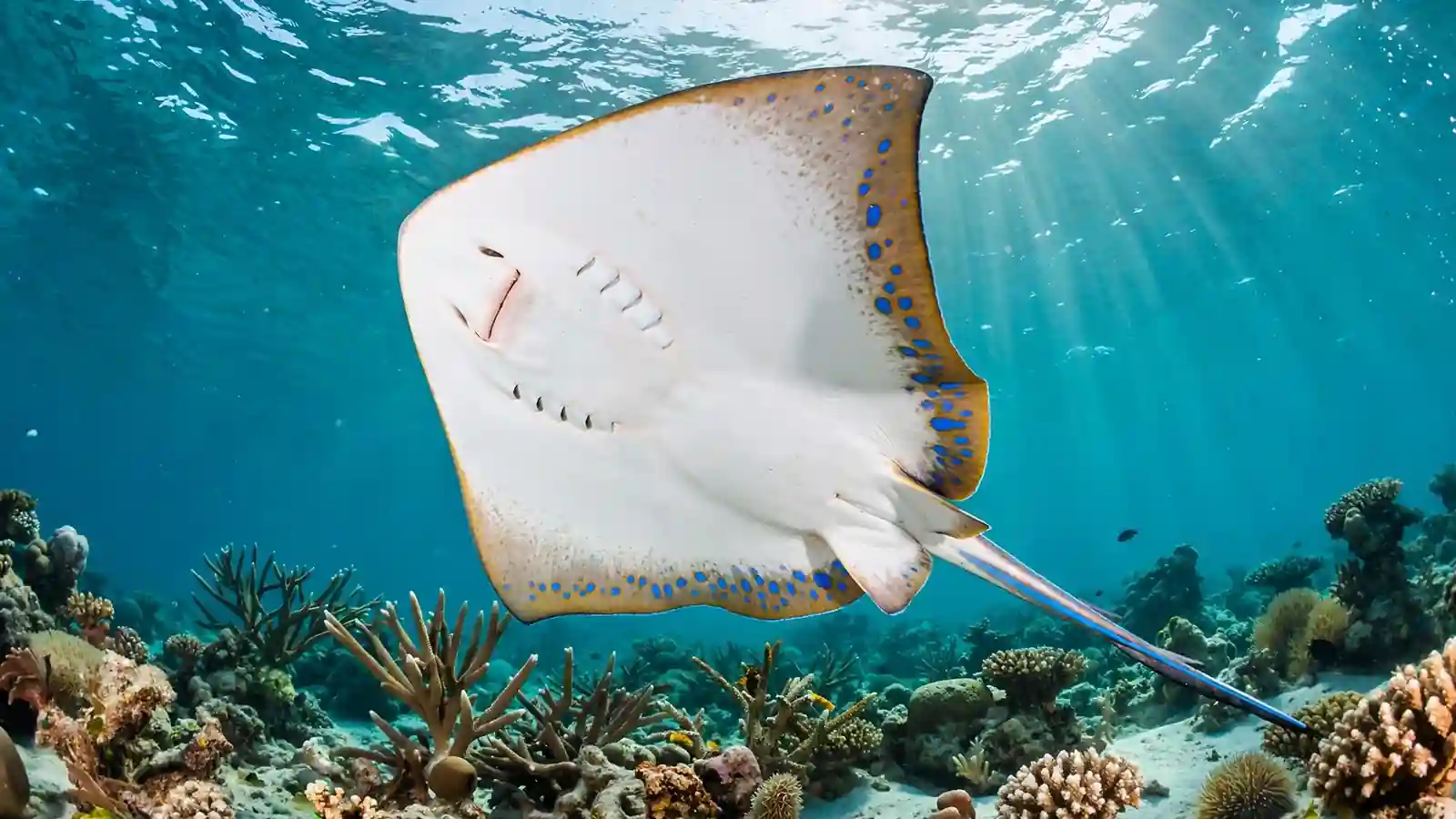
It is a small ray: the disc measures only 35 cm across, the total length runs to 70 to 80 cm, and the weight reaches about 5 kg. That makes it one of the smallest rays on the reef — a pocket-sized animal next to the two-metre southern stingray, and all the more striking for it. For the full species record, see the ray profile.
Small as it is, it is unmistakable. No other reef ray combines the yellow-brown disc, the electric blue spots and the blue-striped tail, and the pattern is the same on every animal — the spots are a species mark, not a decoration. One source claims a total length of 2.4 metres for this species; that figure is an error and is not used here.
The Blue Spots: Warning Colour on a Yellow Disc
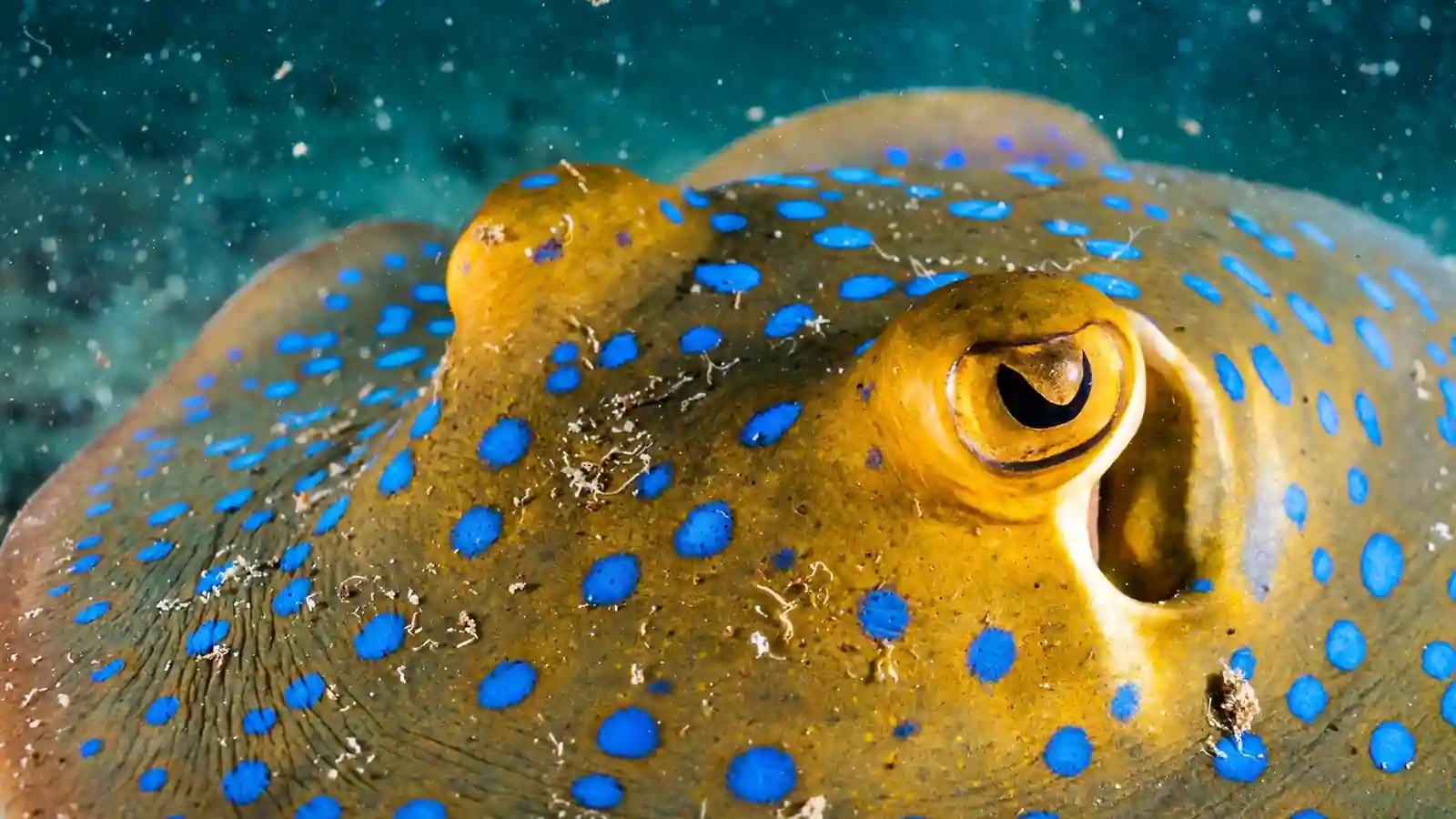
The blue spots are its signature. Bright electric-blue dots are scattered across a yellow-brown disc, and blue stripes run along the tail — a colour scheme that looks decorative but is almost certainly a warning. In the sea, bright blue is a colour that says: I am not worth eating.
The spots work with the ray’s large, protruding eyes, which can see behind the animal as well as in front of it. A ray buried in the sand is watching in all directions at once, and the blue spots tell any predator that looks twice to think again.
Where Blue Spotted Ribbontail Rays Live: Coral Reefs
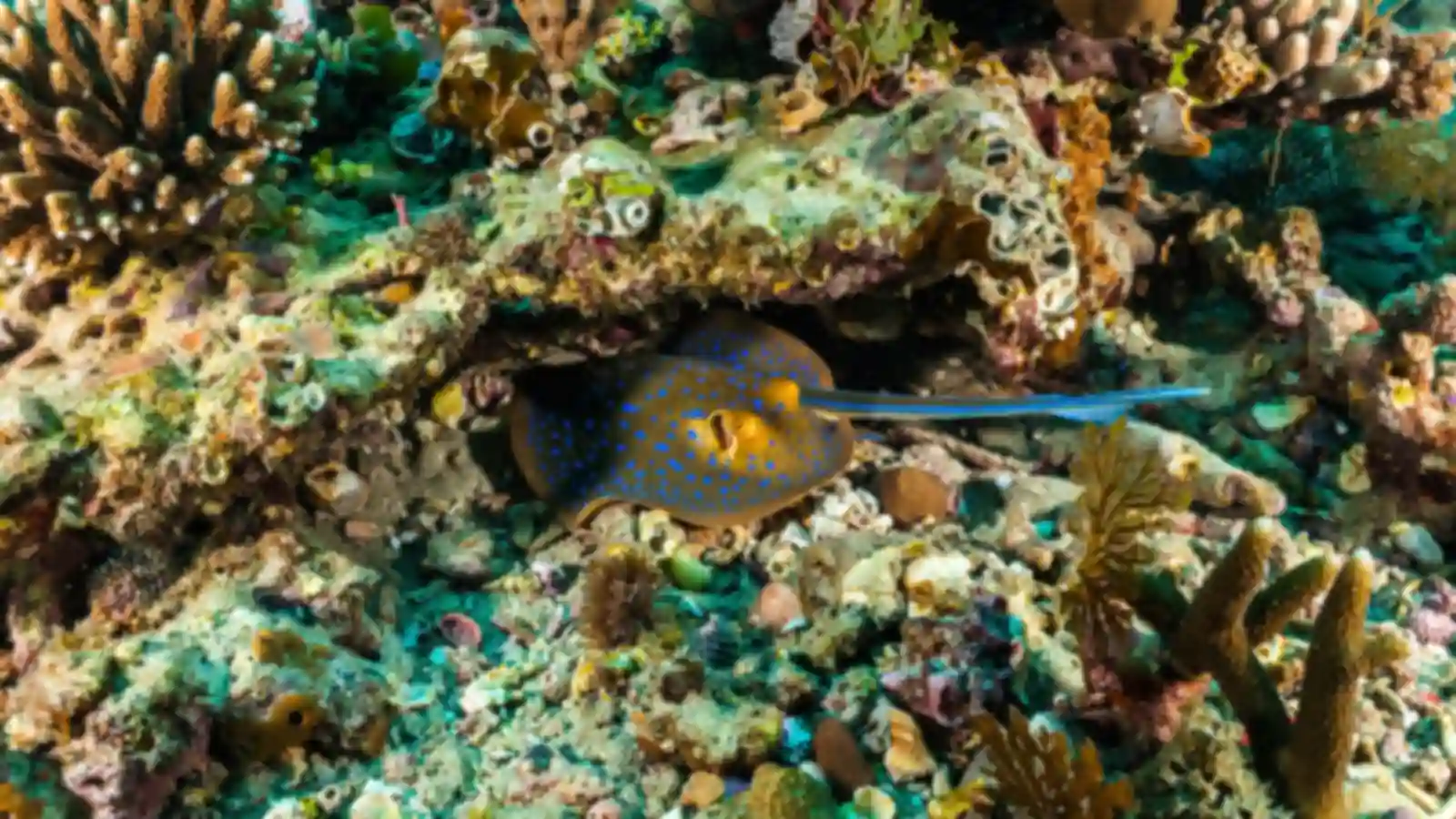
Blue spotted ribbontail rays live on coral reefs and sandy flats across the Indo-West Pacific, from the Red Sea and East Africa to Australia and Japan. They are shallow-water animals, rarely found deeper than 30 metres, and they favour the reef flat and the lagoon — the warm, bright shallows where the sand is soft and the food is buried close to the surface.
They are strongly tied to particular reefs, and individuals return to the same crevices and flats day after day. At low tide they shelter in reef crevices; at high tide they come out onto the sand to feed. The reef is not just a place to live — it is a timetable, and the ray keeps it.
What Do Blue Spotted Ribbontail Rays Eat? Sand-Dwelling Prey
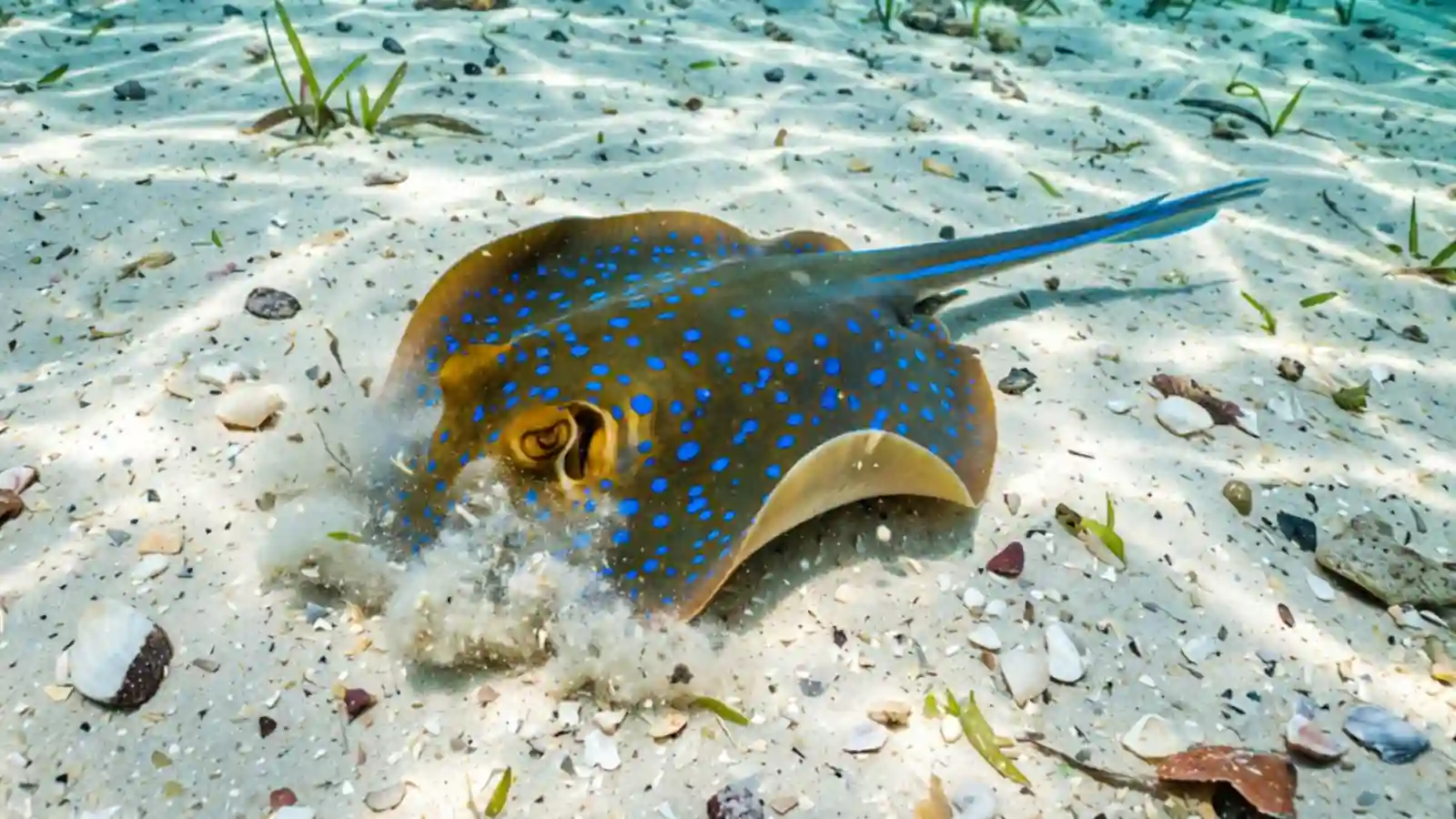
It eats molluscs, worms, shrimps, crabs and small fishes, all taken from the sand. It finds them with the sensitive pores on its snout, then digs with its fins and sucks the prey up with a mouth set underneath its body.
The hunting style is unhurried and methodical. The ray cruises slowly over the sand, sensing for buried prey, and when it finds a clam or a worm it digs it out with a flick of its fins. A single tide’s feeding can take it across a whole sand flat, and by the time the water falls it is back in its crevice, digesting.
Following the Tide: Feeding on the Rising Water
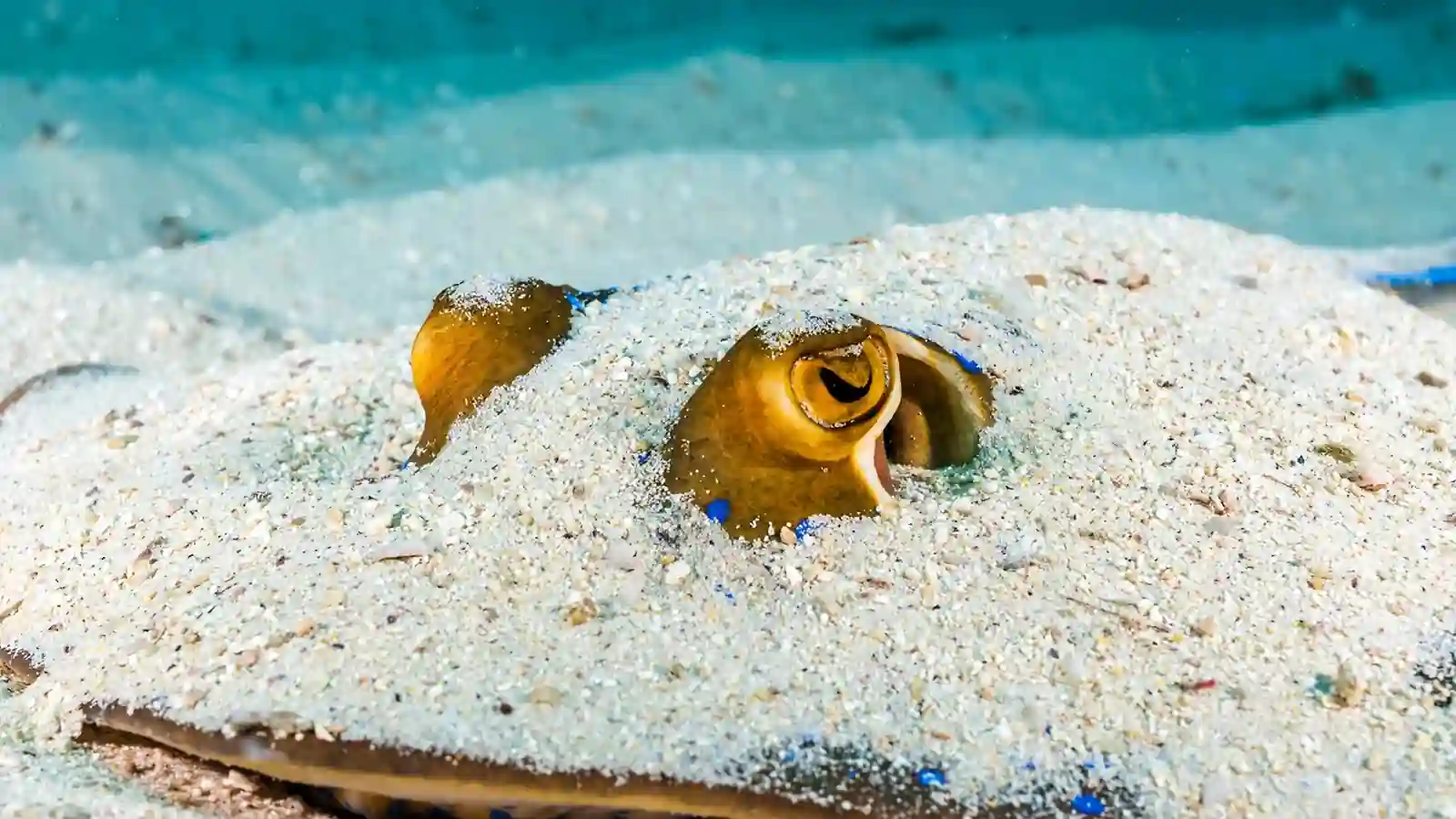
It follows the tide. As the water rises it moves onto the shallow sand flats to feed, hunting the molluscs and worms that the incoming tide has stirred up, and as the water falls it retreats to shelter in reef crevices, where it waits out the low tide buried in the sand.
The tide-following habit is one of the species’ most distinctive behaviours, and it is why the ray is so often seen at the same time of day on the same flat. Divers who know a reef know the pattern: the ray arrives with the rising water and leaves with the falling tide, as regular as the moon.
The Sting: Two Venomous Spines on the Tail
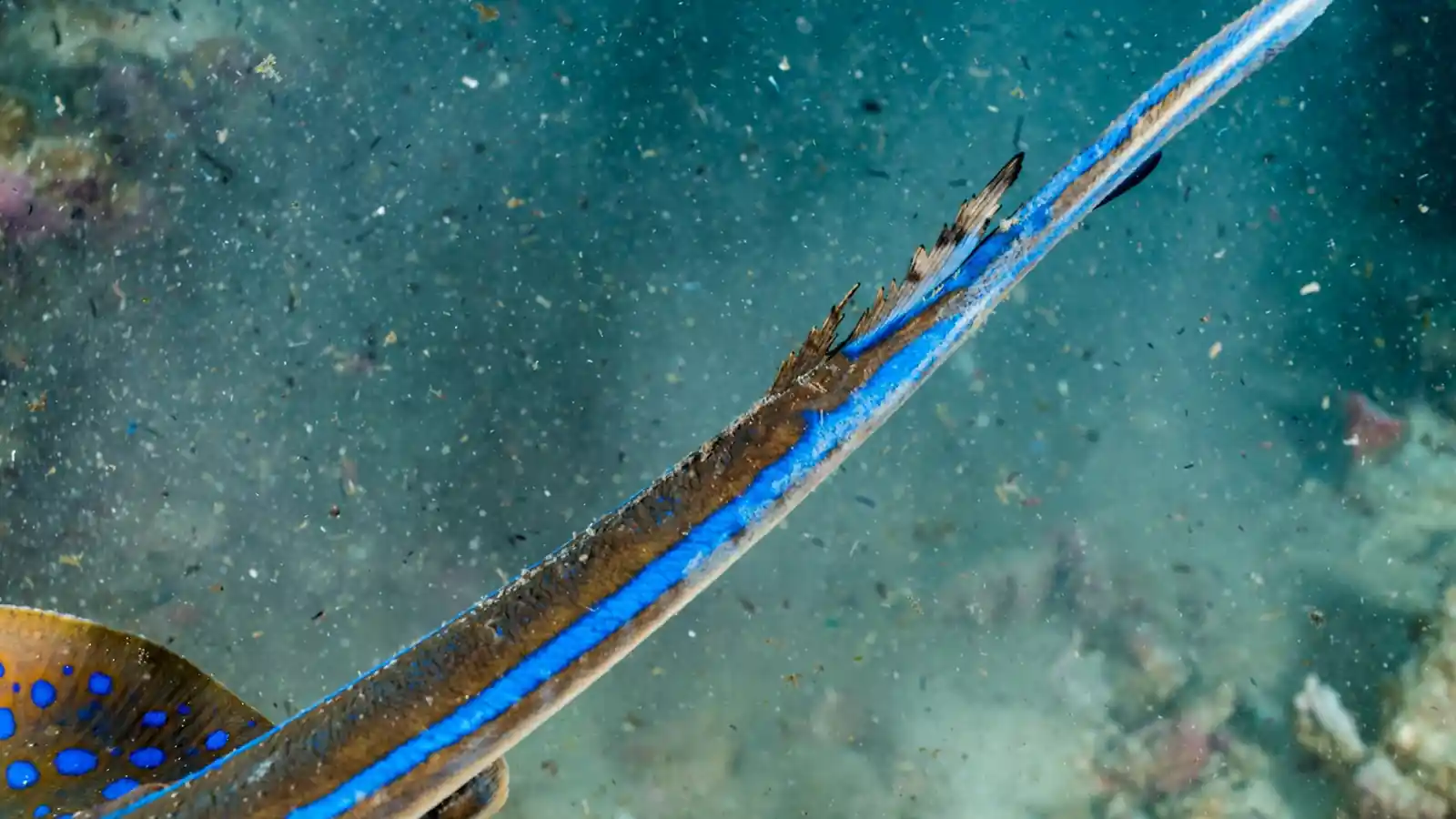
It carries two venomous spines on its tail, and the blue spots are the warning that goes with them. The spines are used only in defence — the ray lashes its tail upward when something presses down on it — and a ray that is given warning will always flee rather than fight.
The sting is painful but rarely dangerous, and it is easily avoided: shuffle your feet as you wade, and give any ray you see plenty of space. It is a gentle animal that wants to be left alone, and its spines are a last resort, not a weapon of choice.
Conservation: A Near Threatened Reef Ray
It is listed as Near Threatened. Older guides still list it as Least Concern, but that assessment no longer reflects what is happening on the reefs: coastal fishing, bycatch in trawls and the loss of coral habitat have all taken a toll on a small, shallow-water ray that lives its whole life within reach of nets.
What it needs most is what every reef ray needs — healthy coral, limits on inshore catch, and the reef flats left intact. It is still a common sight on Indo-Pacific reefs, which makes its decline easy to miss. A ray that is everywhere today can be gone tomorrow, and it is the proof.
Fun Facts
- Its disc is only 35 cm across — one of the smallest rays on the reef.
- Its electric blue spots are a warning: the tail carries two venomous spines.
- It follows the rising tide onto the sand flats to feed, and retreats to crevices at low tide.
- Its large, protruding eyes can see behind the ray as well as in front of it.
- It is one of the most photographed rays in the Indo-Pacific.
- The 2.4-metre length claimed by one source is an error — the real maximum is 70 to 80 cm.
Frequently Asked Questions
How Big Do Blue Spotted Ribbontail Rays Get?
Blue spotted ribbontail rays grow to only 35 cm across the disc and 70 to 80 cm in total length, weighing up to 5 kg.
Where Do Blue Spotted Ribbontail Rays Live?
Blue spotted ribbontail rays live on coral reefs and sandy flats across the Indo-West Pacific, rarely deeper than 30 metres.
What Do Blue Spotted Ribbontail Rays Eat?
The blue spotted ribbontail ray eats molluscs, worms, shrimps, crabs and small fishes, all dug from the sand.
Are Blue Spotted Ribbontail Rays Dangerous?
Blue spotted ribbontail rays carry two venomous tail spines used only in defence. They are gentle animals that flee when warned, and stings are easily avoided by shuffling your feet.
Why Are Blue Spotted Ribbontail Rays Blue?
The electric blue spots and blue tail stripes are warning colour: they advertise the two venomous spines on the tail and tell predators the ray is not worth eating.
Do Blue Spotted Ribbontail Rays Follow the Tide?
Yes. Blue spotted ribbontail rays move onto the sand flats to feed as the tide rises, and retreat to reef crevices as it falls.
Are Blue Spotted Ribbontail Rays Endangered?
The blue spotted ribbontail ray is listed as Near Threatened, driven by coastal fishing, bycatch and coral habitat loss.
Similar Species Worth Exploring
Keep Exploring
Still exploring reef-ray country? Watch the Spotted Eagle Ray fly through the water, meet the big diamond of the sand flats, the Southern Stingray, browse the family in the Types of Rays and Skates hub, and then come back to the reef to meet the blue spotted ribbontail ray.