Maine Coon Cat: Personality, Care, Health, History & Breed Guide
Maine Coon: the gentle giant of the cat world
The Maine Coon cat is America’s native longhair: big, shaggy, and dog like in devotion. Sweet tempered, gentle, and famously chatty, it is one of the largest and most beloved domestic breeds.
By Emily Carter · Reviewed by our vet team · Updated 21 October 2026 · 10 min read
Lifespan 12–15 yrsWeight 10–18 lbGentle giant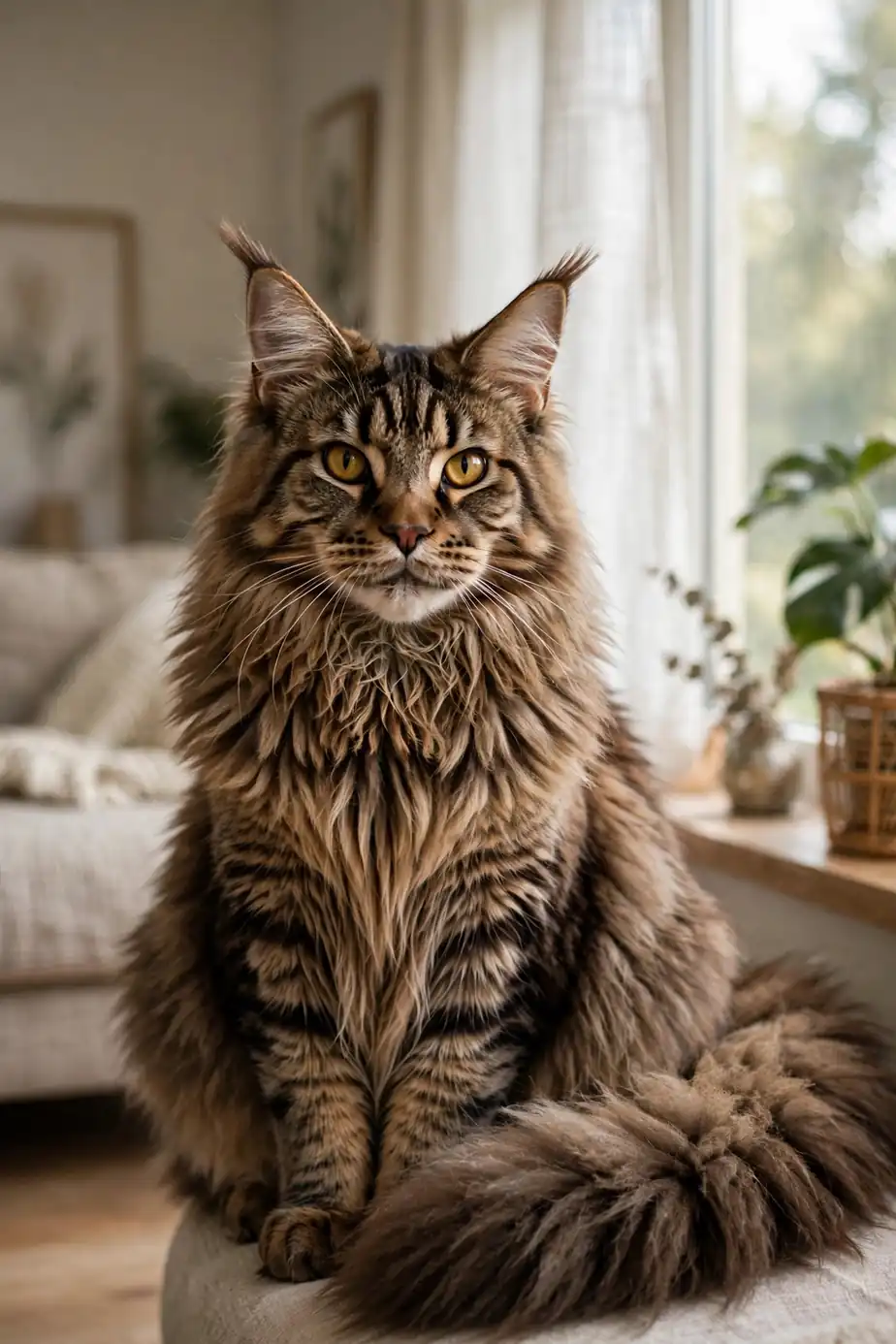
America’s native longhair and the gentle giant of the cat world: big, shaggy, dog like in devotion, and famous for chirping instead of meowing. This guide covers the Maine Coon cat in full: size, coat, character, daily care, health, and finding a kitten.
At a Glance
Size and Weight
One of the largest domestic breeds: adults stand tall with a long, rectangular, hard muscled body, a broad chest, and substantial bone. Males average 13 to 18 pounds and can reach 25, while females run 8 to 15 pounds; expect a typical range of 10 to 18 pounds for most adults. They look even bigger than they weigh thanks to the shaggy coat, and full size takes three to five years.
Coat and Colors
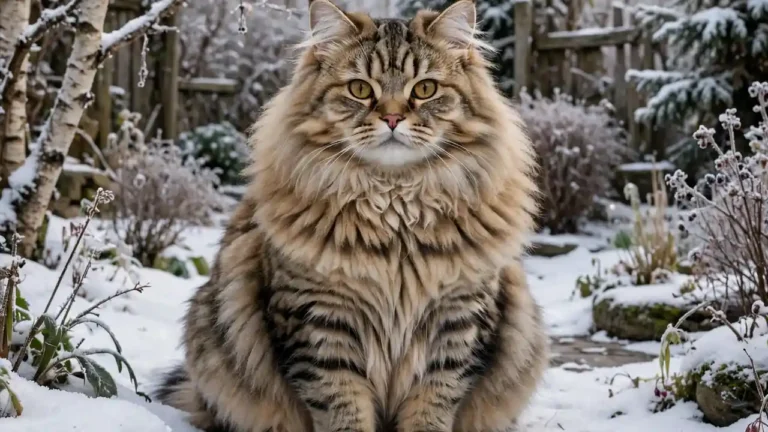
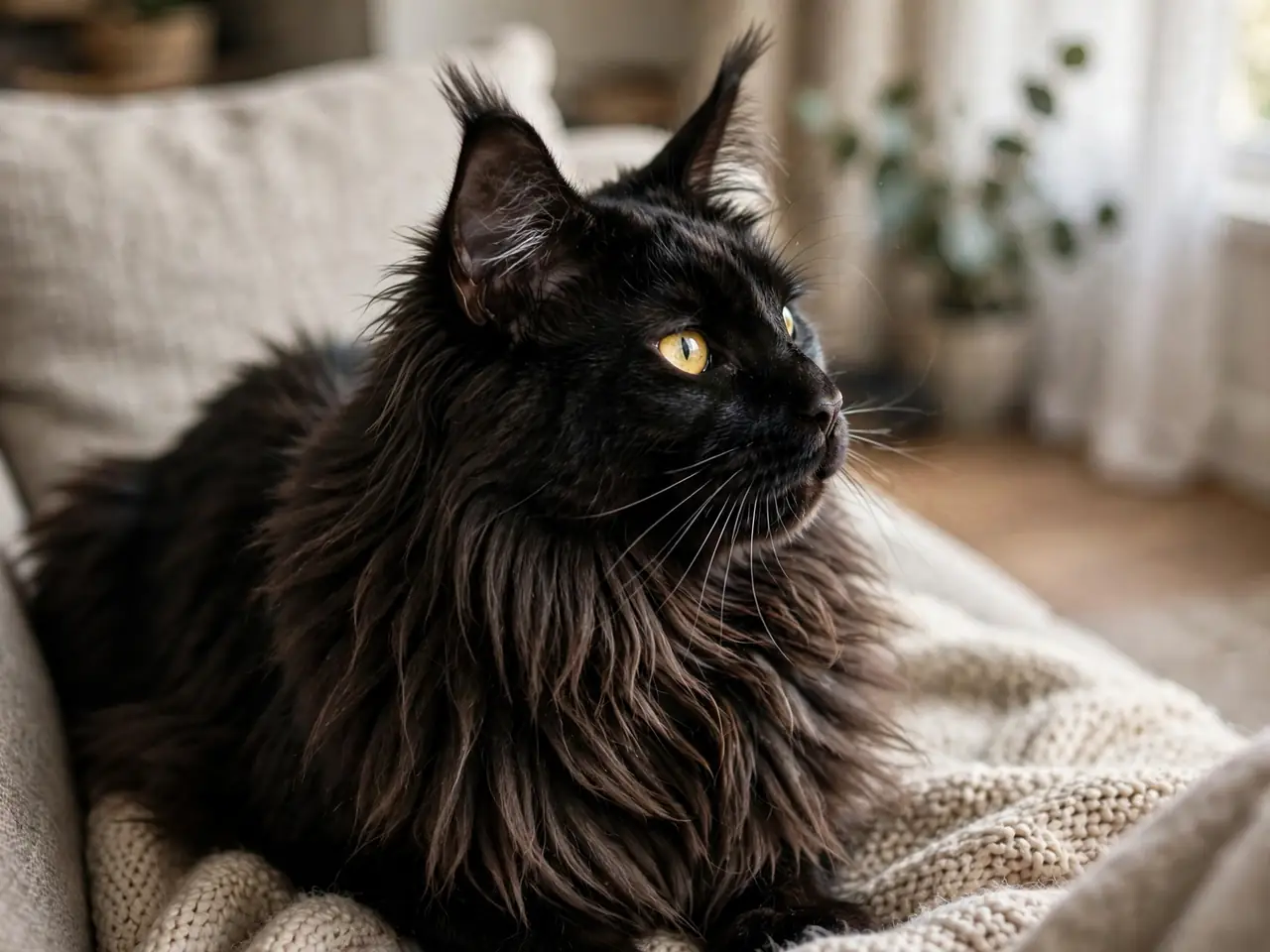
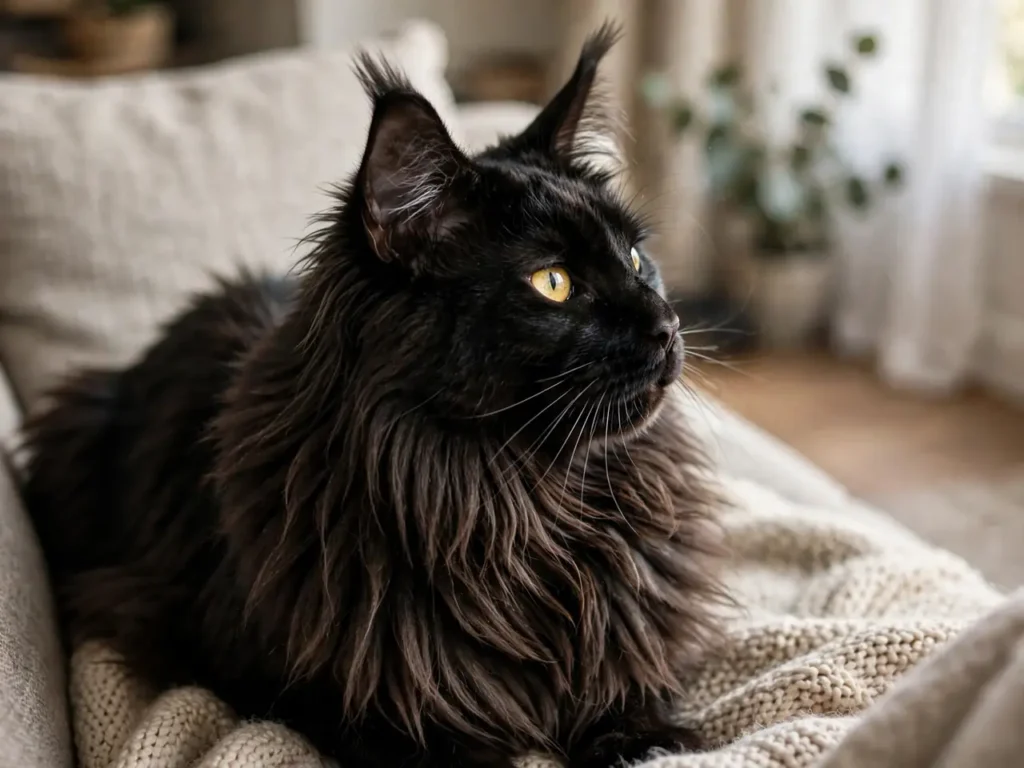
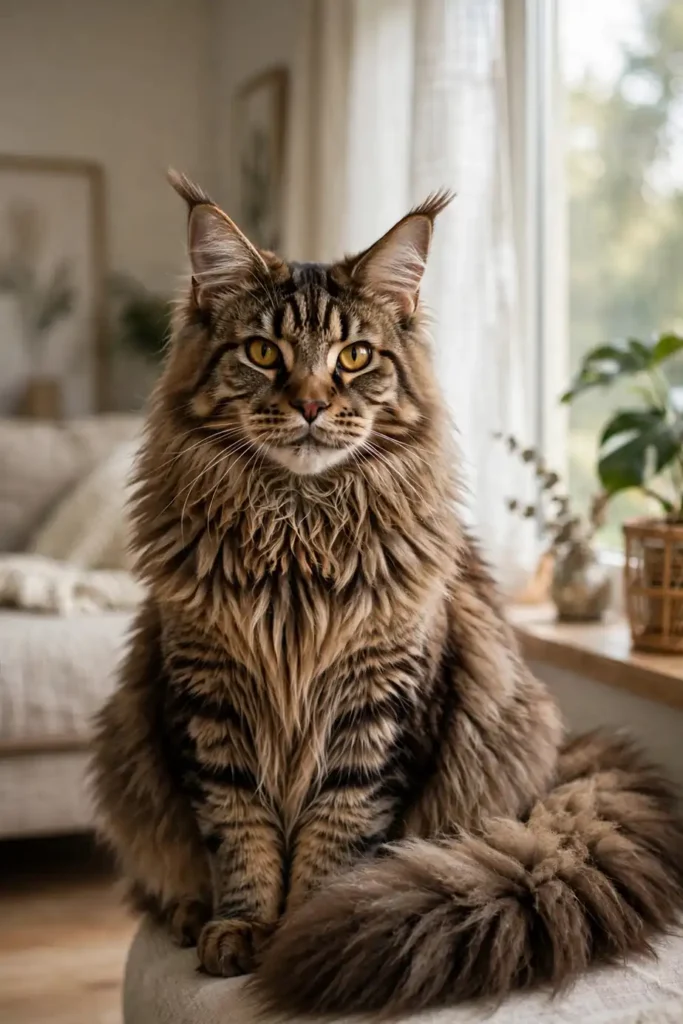
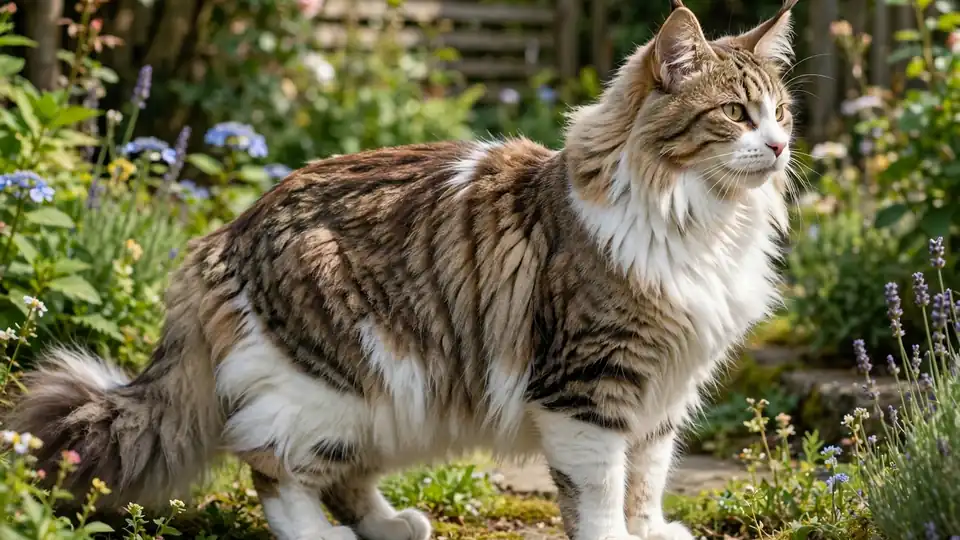
Long, shaggy, heavy, and water resistant, with a glossy top coat over a soft undercoat: longer on the ruff, stomach, and britches, shorter over the shoulders. Ear tufts, paw tufts, and a spectacular bushy tail complete the look. Nearly every color and pattern appears except pointed patterns: brown, red, and silver tabbies are the classics, plus solids, tortoiseshell, bicolor, and smoke.
History and Origins
Maine Coons were established as working barn cats in New England by the 1800s, valued mousers on farms and ships, and they starred in the early American cat shows.
Most breeders believe the Coon developed from matings between native shorthaired cats and longhaired cats brought by seamen to New England, possibly as early as the 1600s. Natural selection in harsh Maine winters shaped the big, hardy, water resistant cat.
Few breeds have a backstory this colourful, mixing documented show history with legends involving raccoons, a French queen, and Viking ships.
However the breed began, the result is a cat shaped by cold winters and farm work: big, tough, and famously good natured.
Physical Characteristics
Built like a small lynx and finished like a showpiece: every feature serves the breed’s cold climate heritage. The body is long, hard muscled, and rectangular, with a broad chest and substantial boning, and males are notably larger and heavier boned than females. A large head with high cheekbones and a square muzzle, a slight dip in profile under large, expressive eyes: the overall expression is intelligent and sweet, never harsh.
Maine Coon Personality and Behavior
The famous gentle giant temperament is real: big, goofy, devoted, and endlessly entertaining without being demanding. Playful, adaptable, friendly, and clown like, Coons are highly intelligent and trainable: many play fetch, walk on a leash, and learn simple commands. Sweet tempered but not needy, they follow you room to room as companions, happy to help with your activities without pestering for attention.
Sweet tempered but not needy: they want to be near you and join in, following you from room to room.
Big, shaggy, and dog like in devotion, famous for chirping and trilling instead of meowing.
Gentle and easy going in almost everything: they get along with children, dogs, and other cats.
- Patient, playful family cat
- Highly intelligent and trainable
- Adaptable and good natured
- Weekly combing, more in shedding season
- Prone to obesity if overfed
- Needs space and daily play
Care Essentials
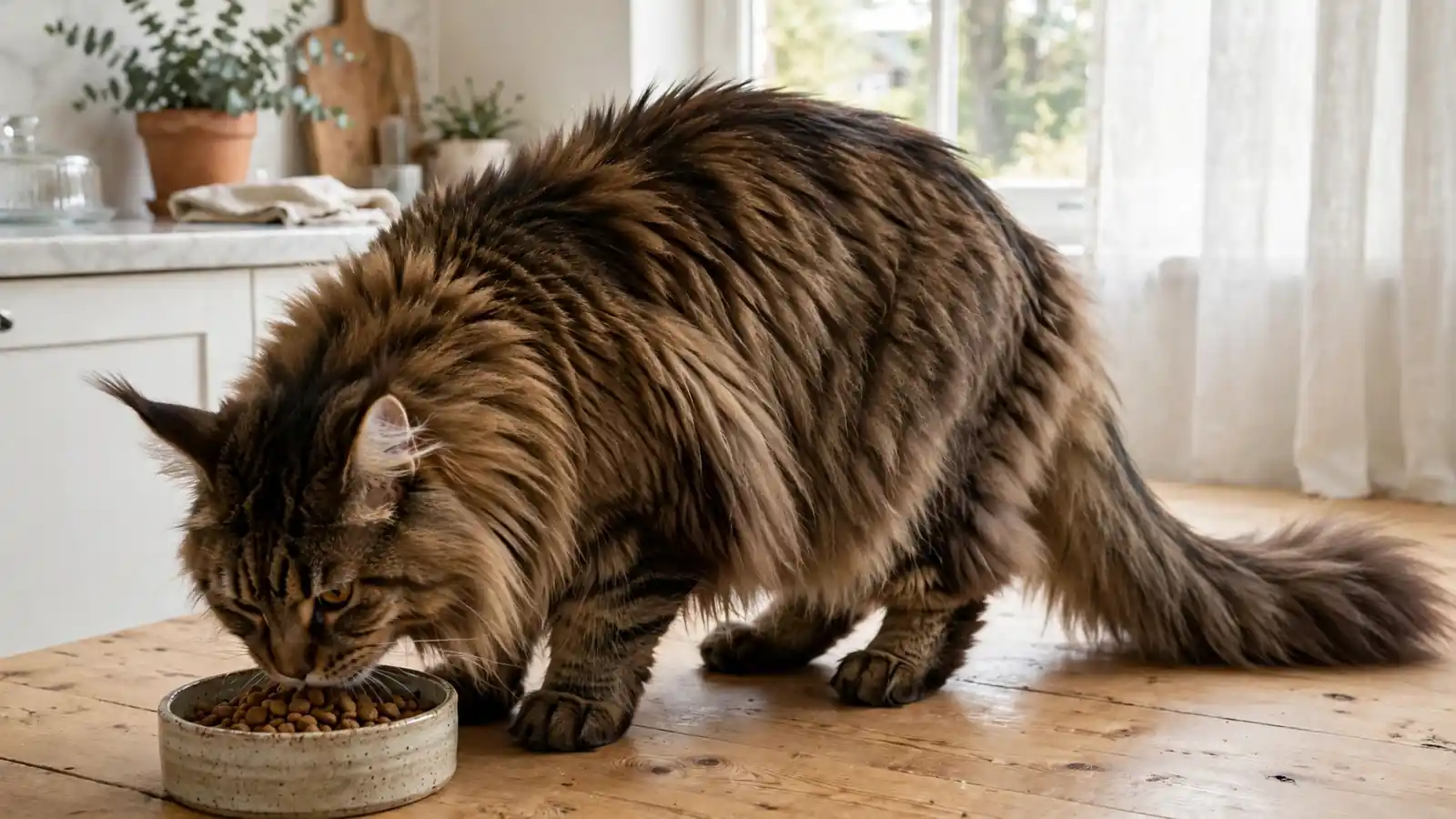
High quality animal protein as the foundation, with food weighed rather than eyeballed: obesity is the top nutritional risk.
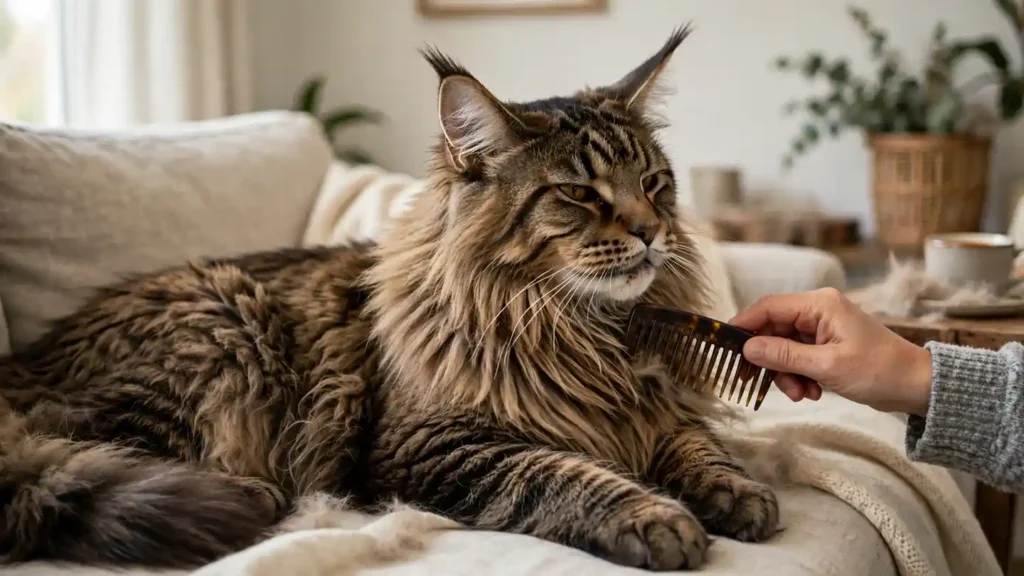
Weekly combing with a wide toothed comb through the ruff, britches, and belly; twice weekly in heavy shedding periods.
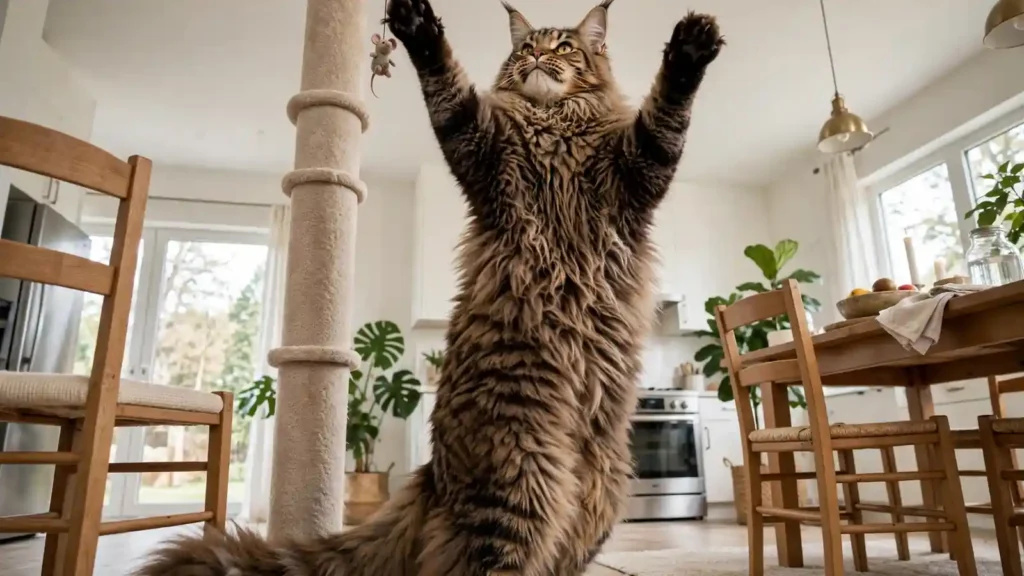
Daily interactive play sessions plus room to roam indoors: feather wands, fetch, crinkle balls, and chase toys.
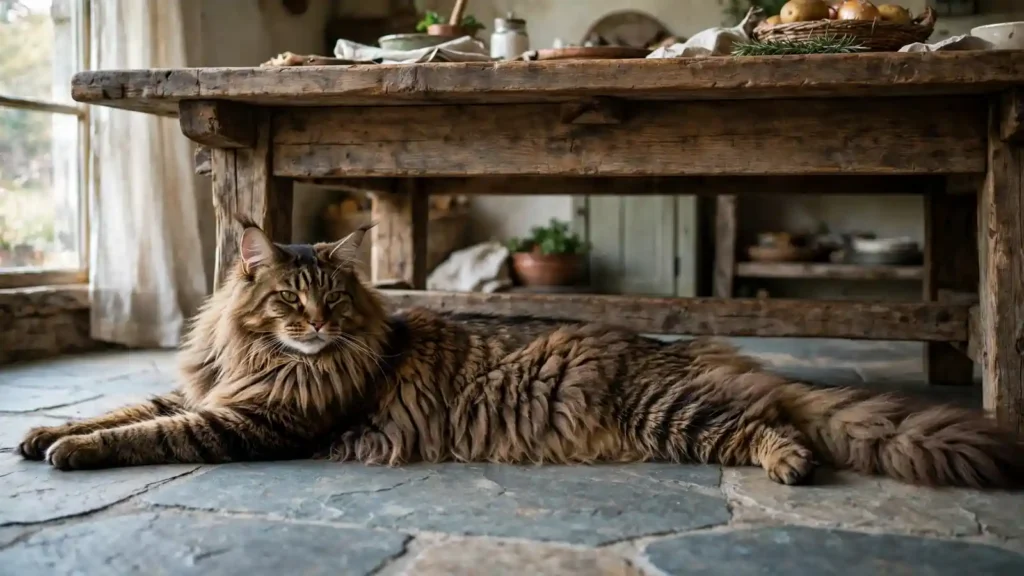
Indoor living with space to exercise and companionship; a secure catio or harness walks for outdoor time.
Nutrition and Diet
Big, muscular, and prone to softness if overfed: feed the Maine Coon cat for the athlete, not the appetite. High quality animal protein as the foundation, with balanced fats, vitamins, and minerals in a complete life stage formula. Kittens need calorie dense growth food and frequent meals through their long growth period, and ample hydration supports kidney and urinary health, so include wet food and fresh water.
Grooming
The best groomed reputation in the longhair world: weekly combing beats daily brushing for most Maine Coon cats. Comb weekly with a wide toothed comb, working through the ruff, britches, and belly where tangles start; the water resistant coat sheds dirt well and mats less than expected. Add nail trims every two to three weeks, ear checks, and regular tooth brushing.
Exercise and Enrichment
A bored Maine Coon is a mischievous Maine Coon. Energy is moderate to high: daily interactive play sessions plus room to roam indoors. They are powerful runners and enthusiastic chasers despite their size, and without exercise they trend toward obesity. Feather wands, fetch, crinkle balls, and chase toys all rank highly, and many Coons learn to walk on a harness and leash, opening up safe outdoor adventures.
Health
A generally healthy natural breed with a known short list. Responsible breeders screen for these; owners should know the signs. Choose a vet experienced with large breeds, and keep up annual wellness exams, twice yearly after age ten.
Hypertrophic cardiomyopathy, thickening of the heart muscle, is the top concern in the breed. Responsible breeders test with DNA screening for the A31P mutation plus periodic echocardiograms.
A risk in any large breed. Cardiac screening and hip X rays are worth discussing, and documented hip screening is the standard responsible breeders meet.
Spinal muscular atrophy, an inherited condition causing muscle weakness. Ask any breeder for documented HCM, hip, SMA, and PKD screening before you buy: testing both parents is the standard.
Indoor and Outdoor Living
Indoor life is the modern recommendation, and Maine Coon cats adapt beautifully provided the indoors is interesting: indoor Coons live longer, avoid traffic, predators, and disease, and their coat stays cleaner. Free roaming is risky for any cat and doubly so for a valuable, friendly giant that everyone wants to pet. If you want outdoor access, use a secure catio or harness and leash walks.
Family Suitability
The family reputation is well earned: patient, playful, and sturdy enough for real family life. Family friendliness rates 4 out of 5, and Maine Coon cats are ideal companions for large, active families: gentle with children, sociable with visitors, and famously good with dogs and other cats. Their size means accidental knocks happen, so supervise toddlers.
Finding a Breeder or Rescue
Popular means available, but popularity also attracts careless breeders, so search carefully. Visit in person if possible, meet the mother cat, and confirm documented health screening for HCM, hips, SMA, and PKD; good breeders interview you too and offer lifetime support. Kittens are often reserved months ahead, so plan ahead and join waiting lists. Maine Coon specific rescues are a wonderful route to an adult cat with a known personality.
- Ask for documented HCM, hip, SMA, and PKD screening for both parents
- Visit in person and meet the mother cat if you can
- Kittens should be raised in the home with early socialisation
- Expect vaccination records, a health guarantee, and lifetime breeder support
Quick Quiz: Is a Maine Coon Right for You?
Answer four questions. Tap yes or no.
Maine Coon vs Norwegian Forest Cat
Three large longhairs get compared constantly. Here is how the Coon stands apart from the closest of them.
Frequently Asked Questions
How big do Maine Coon cats get?
10 to 25 pounds and 30 to 40 inches long, with males larger. Full size takes three to five years.
How much do Maine Coon cats weigh?
Males 13 to 18 pounds on average, up to 25; females 8 to 15 pounds. Most adults fall between 10 and 18 pounds.
How long do Maine Coon cats live?
12 to 15 years with good care; some sources cite 9 to 13. Slow maturation gives a long, playful adulthood either way.
Are Maine Coon cats good family pets?
Excellent: gentle, playful, patient with children, and famously good with dogs and other cats. One of the most family recommended breeds.
The Maine Coon cat is ideal for someone who wants a gentle giant: clownish, devoted, and sturdy enough for real family life. Give one space, weekly combing, and daily play, and you get one of the most rewarding companions in the cat world.
Similar Breeds Worth Exploring
Related Breed Guides
- Norwegian Forest Cat Cat Breed Guide
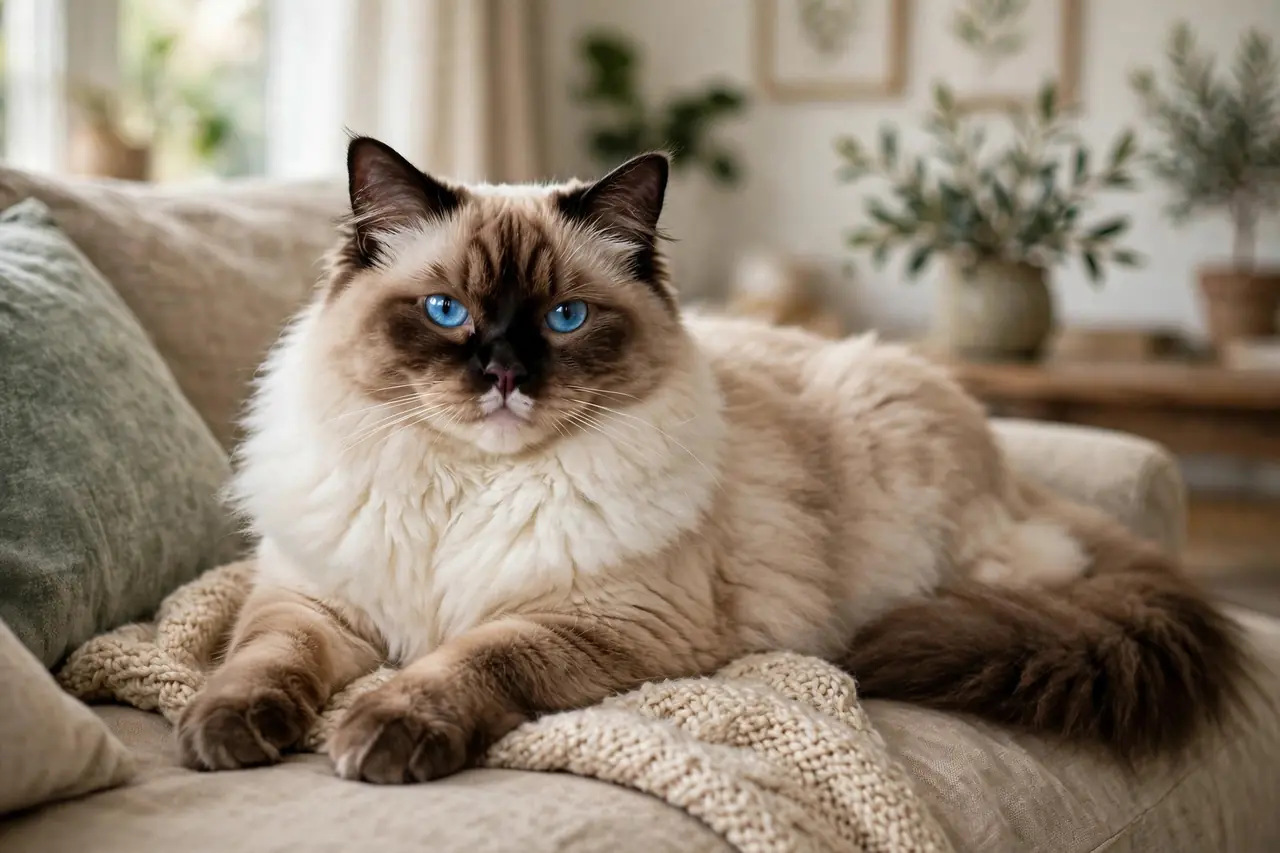
- Ragdoll Cat Breed Guide
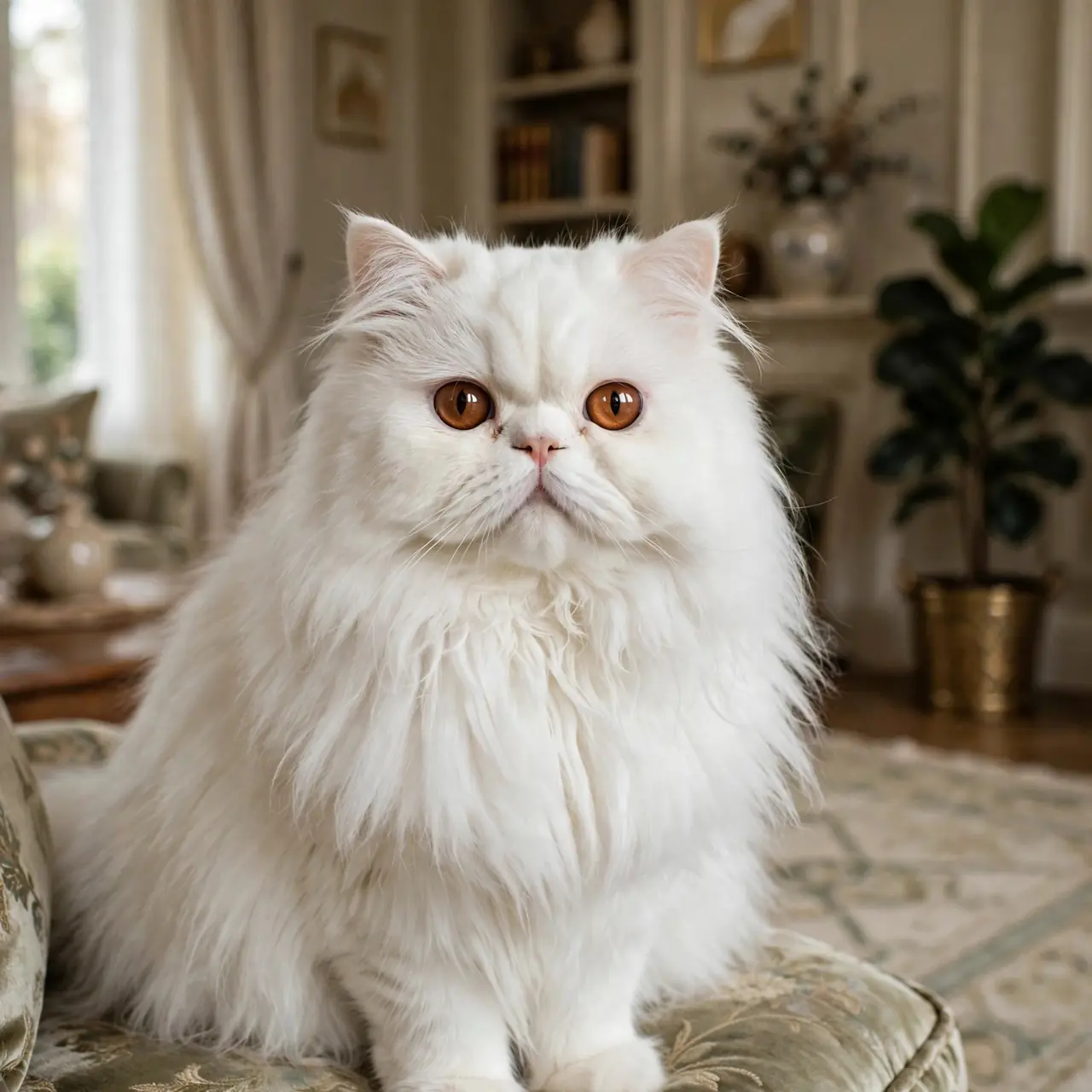
- Persian Cat Breed Guide
- Siberian Cat Breed Guide
Keep Exploring
Still deciding? Compare the wild looking Norwegian Forest Cat, or the laid back Ragdoll. Every guide on this site follows the same layout, so the facts you need are always in the same place.