European Eel
European Eel: The 5,000 km Traveller That Spawns Once and Dies
The European eel migrates 5,000 km to spawn once in the Sargasso Sea, a Critically Endangered traveller whose young have fallen by over 90%.
By Emily Carter · Reviewed by our vet team · Updated 10 November 2026 · 9 min read
5,000 km migrationSpawns onceCritically Endangered
At a Glance
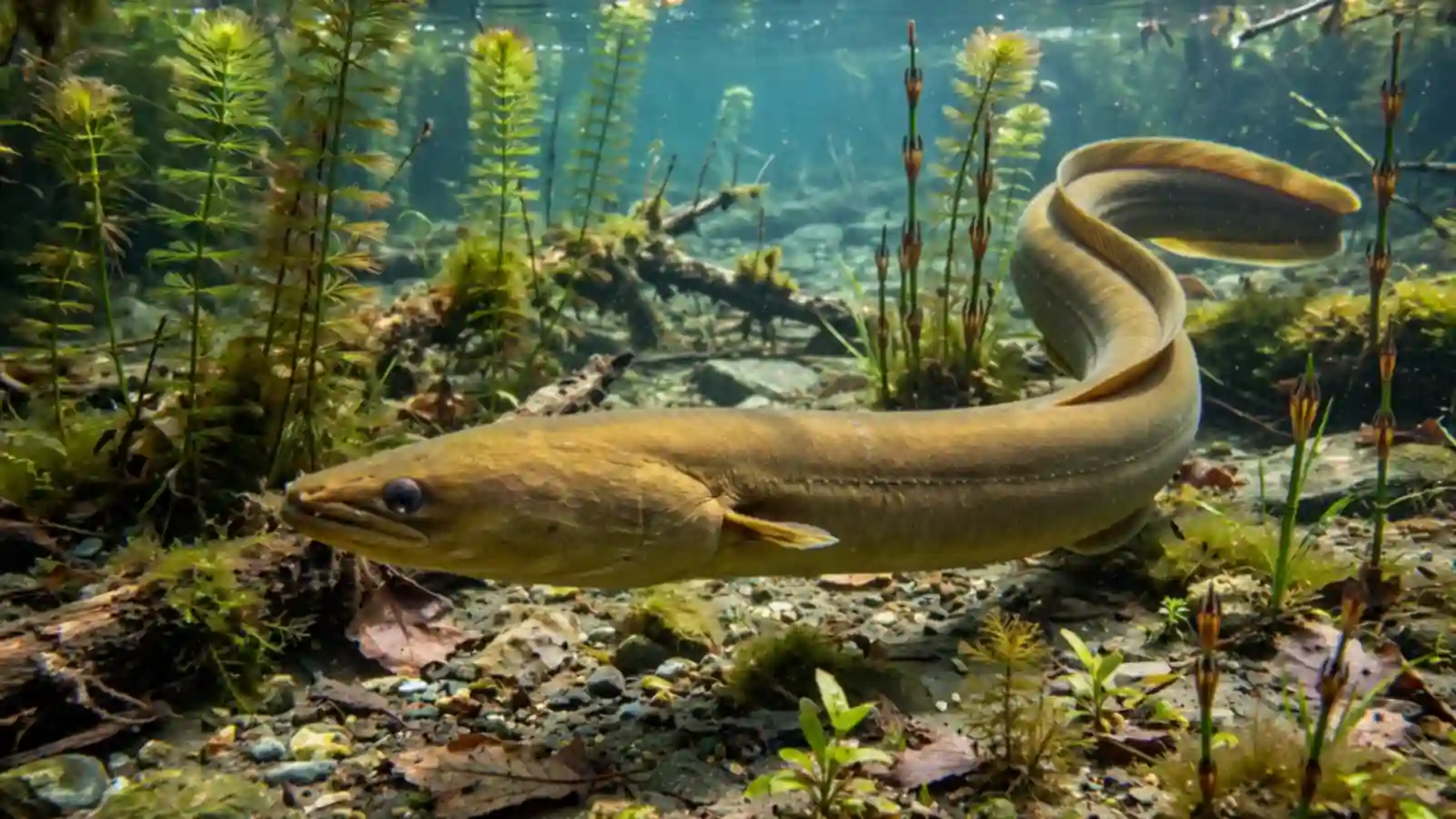
The European eel is the animal kingdom’s greatest long-distance traveller, a fish that is born in the Sargasso Sea, grows up in European rivers, and then swims 5,000 km back across the Atlantic to spawn once and die. No one has ever seen it spawn in the wild — and its young have fallen by more than 90% in a single lifetime.
European Eel Life Cycle
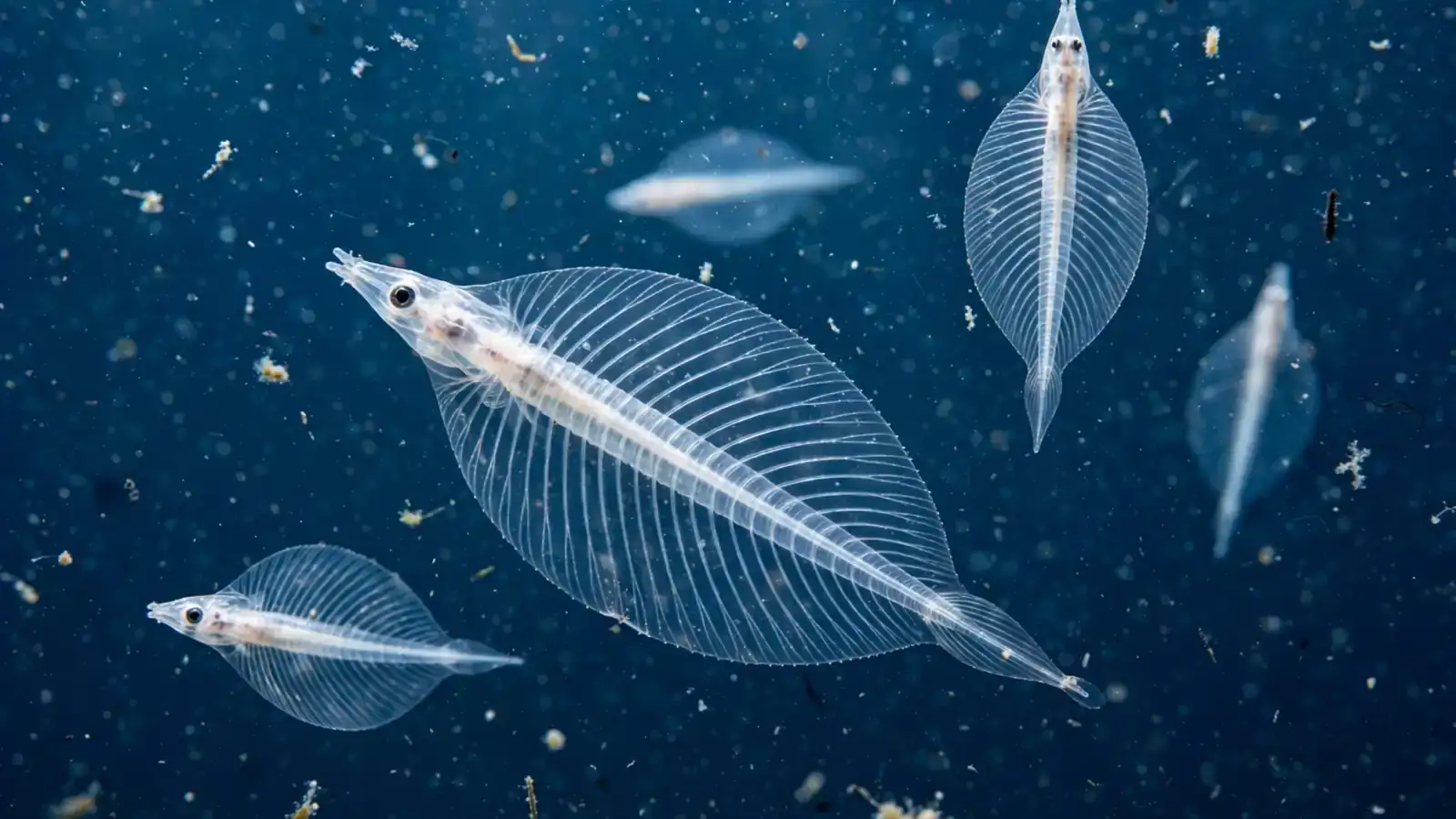
It lives its life in five stages, and each stage has its own name. It begins as a leptocephalus, a transparent, leaf-shaped larva drifting in the Atlantic. After 7 months to 3 years at sea it reaches the European coast as a glass eel, transparent and ribbon-thin. It becomes an elver as it enters fresh water, then a yellow eel, living in rivers and lakes for 6 to 20 years. Finally it becomes a silver eel, and it swims back to sea to spawn and die.
Each stage is a transformation, not just a growth spurt. The glass eel is transparent so it can slip past predators in clear coastal water. The yellow eel is camouflaged for the muddy riverbed. The silver eel develops large eyes, a silver belly, and a body built for the open ocean — a fish that has spent its whole life in fresh water, remade in weeks for a 5,000 km swim through salt water.
The Sargasso Sea
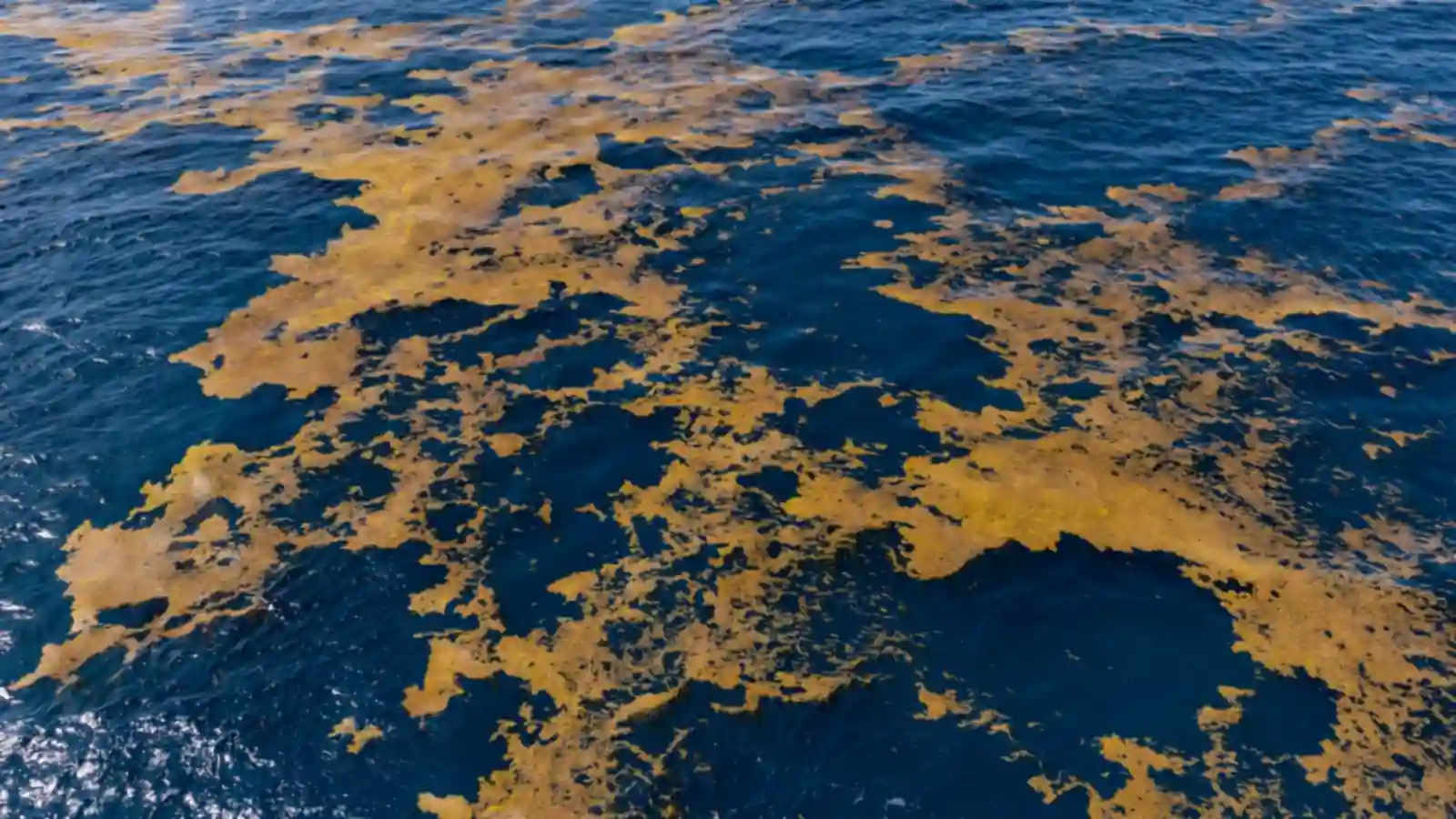
The Sargasso Sea is the only place on Earth where European eels are born — a vast, calm patch of the Atlantic, ringed by currents, where floating sargassum weed forms a golden carpet on the surface. The eels spawn somewhere in its depths, and their larvae drift away on the Gulf Stream toward Europe. For the full species spotlight, see NRWL’s spotlight.
No one has ever seen one spawn in the wild. The spawning has never been observed, the eggs have never been found, and the exact location within the Sargasso Sea is still a matter of deduction rather than observation. What is known comes from tracking silver eels with satellite tags, from catching larvae at sea, and from a century of careful inference — a mystery that has survived a hundred years of science.
Glass Eels
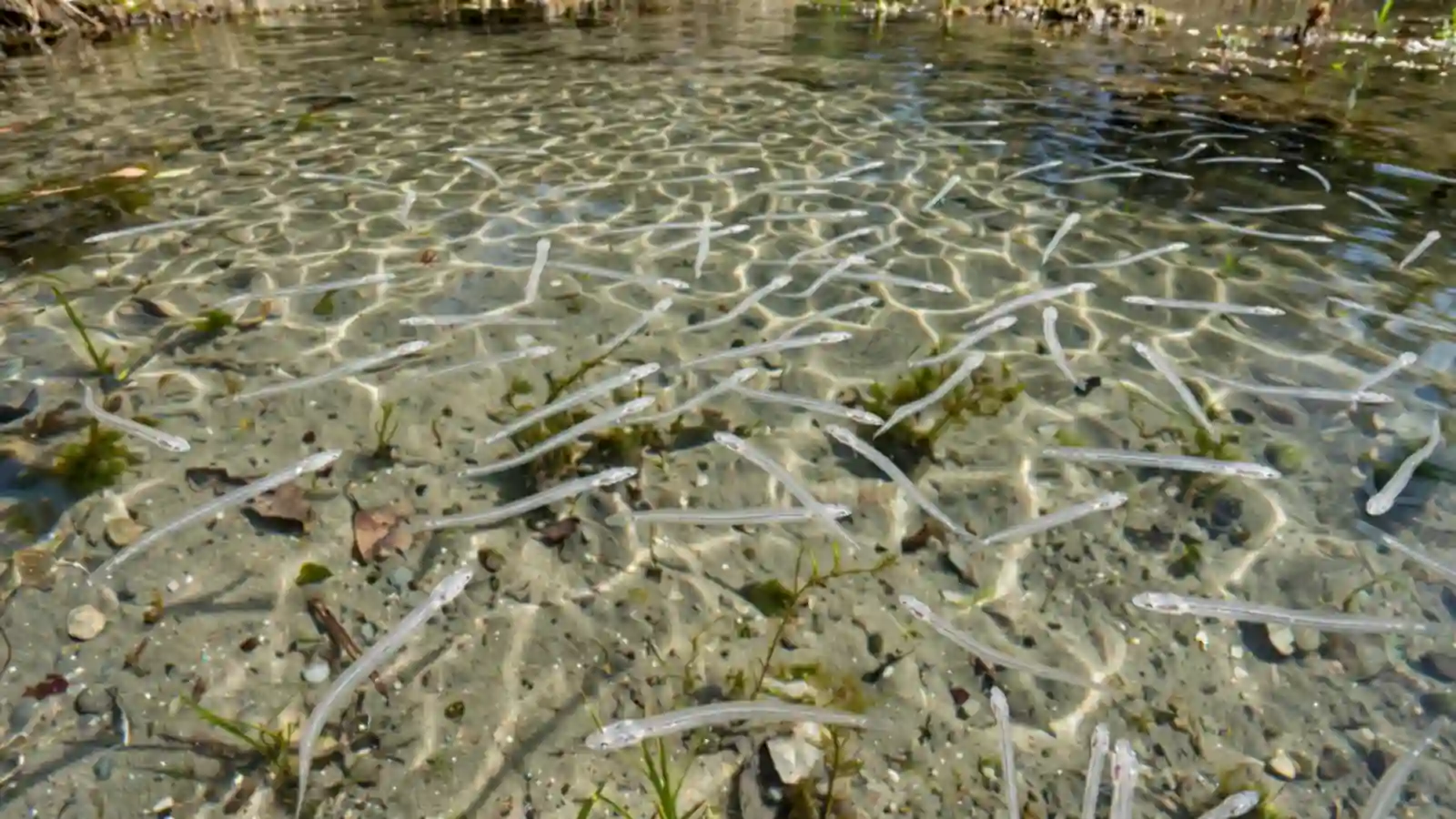
A glass eel is one at its most vulnerable and its most remarkable. It arrives at the coast transparent and ribbon-thin, a few centimetres of living glass that has drifted for months or years across the Atlantic. It enters the river mouth on the rising tide, and it begins the long climb upstream — over weirs, through culverts, and up wet grass banks, using its body like a rope to climb obstacles that would stop any other fish.
The glass eel stage is also the species’ greatest weakness. Glass eels are caught in huge numbers for food and for farming, and the illegal trade in glass eels is one of the world’s largest wildlife crimes by value. A single kilogram of glass eels can be worth thousands of euros, and the trade has emptied rivers that once ran thick with arriving young.
Yellow and Silver Eels
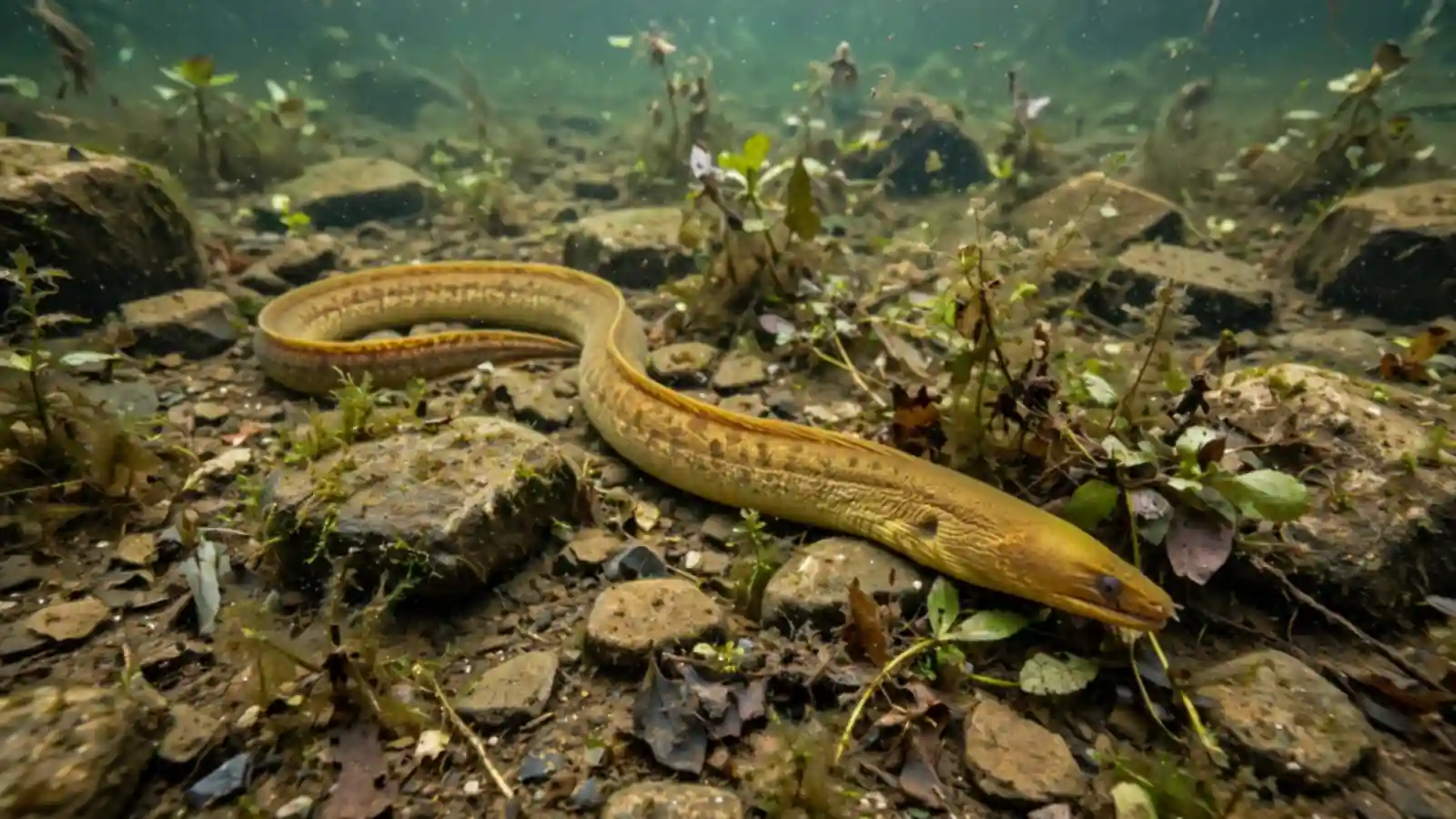
The yellow eel is the longest stage of the life, and the quietest. It lives in rivers, lakes and ponds for 6 to 20 years, hiding by day under stones and in weed beds, hunting by night for fish, crustaceans, worms and insects. Females grow larger than males and stay longer, sometimes for two decades, building the fat reserves they will need for the journey home.
The change to a silver eel is sudden and total. The eyes grow larger, the back darkens, the belly turns silver, the gut shrinks, and the fish stops feeding altogether. It is a body rebuilt for one journey: 5,000 km of open ocean, powered entirely by stored fat, with no food on the way. A silver eel that leaves its river will never eat again.
The 5,000 km Return
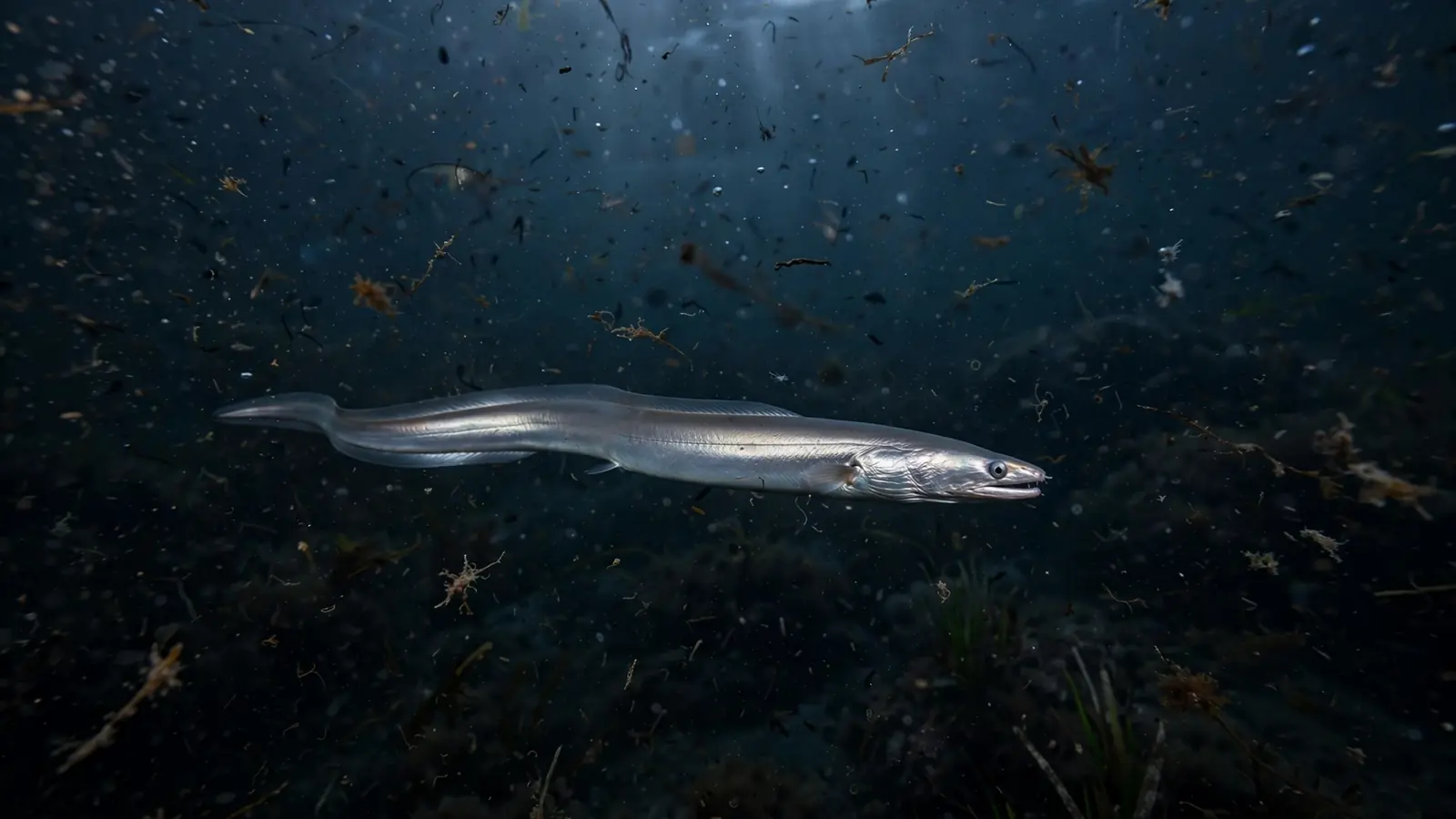
The return journey is 5,000 to 6,000 km of open Atlantic, and it is one of the longest migrations of any fish. The silver eel leaves its river in autumn, swims out to sea, and heads south-west toward the Sargasso Sea, navigating by a sense no one fully understands — the Earth’s magnetic field, the ocean’s currents, and the smell of the water are all thought to play a part. The journey takes months, and the eel does not stop to feed.
At the end of the journey, the eel spawns once and dies. It is the same for every one, and it is the reason the species’ future depends entirely on the young: there is no second chance, no repeat spawning, no reserve of old adults to fall back on. Every silver eel that leaves a river is carrying the next generation on a one-way trip.
Critically Endangered
It is listed as Critically Endangered, a status set in the 2020 assessment. The young arriving at European coasts have fallen to 1 to 5% of the 1960s to 1980s baseline — a decline of 90 to 99%, attributed across the best available studies rather than pinned to a single figure. It is one of the steepest declines of any animal in Europe, and it happened within a single human lifetime.
The causes are many, and they stack. Dams and weirs block the rivers, stopping glass eels from reaching their nursery grounds and silver eels from leaving. Overfishing takes both adults and glass eels. The parasite Anguillicola crassus, introduced from Asia, damages the swim bladder and weakens the eel for its ocean journey. And the illegal glass-eel trade takes the youngest fish before they have even begun.
European Eel Conservation
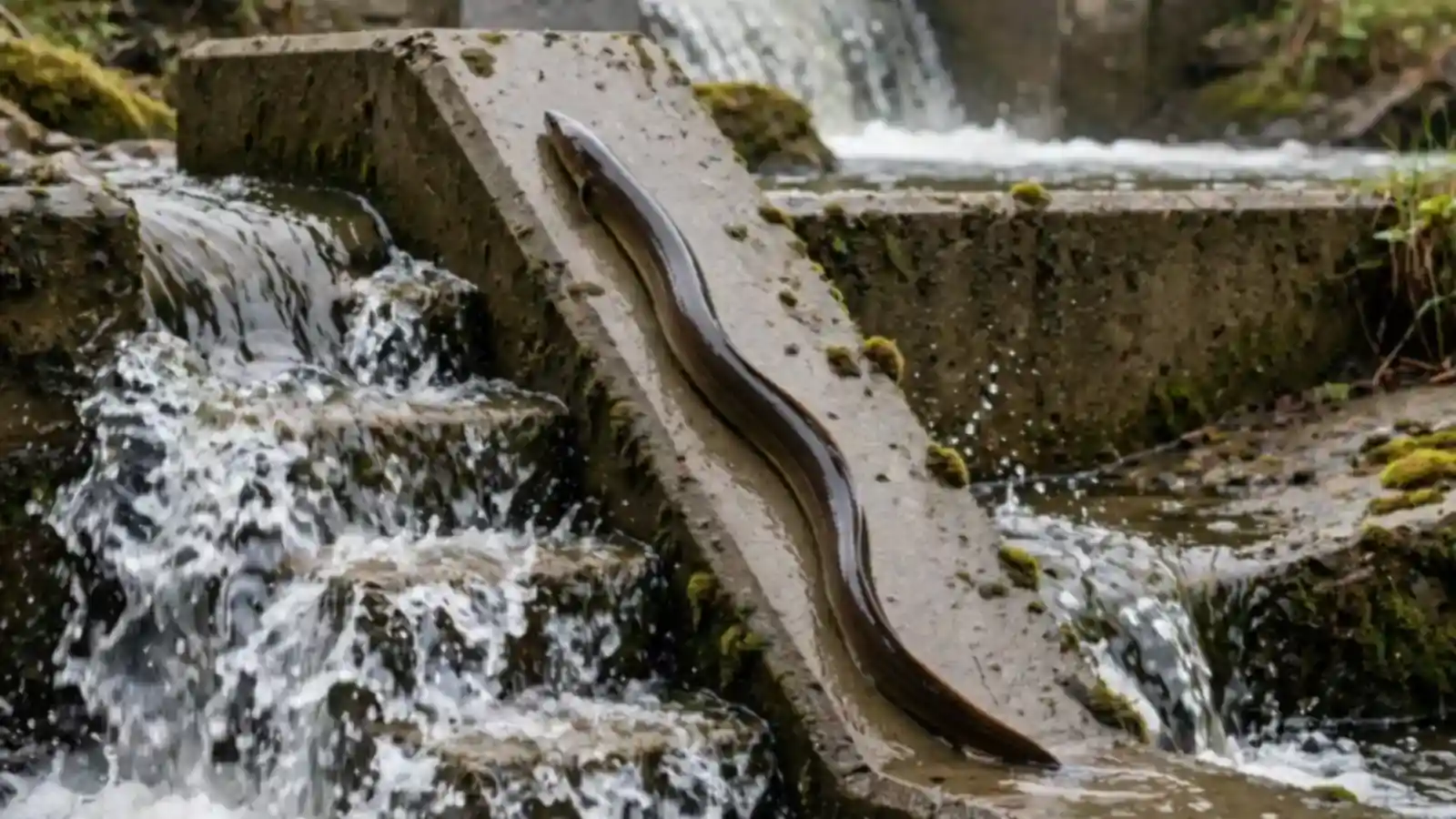
Conservation is working, but slowly. Eel passes and fish ladders are being built over dams, letting glass eels climb upstream and silver eels slip back down to sea. Fishing is limited in many countries, and glass-eel catches are restricted to licensed fisheries. Restocking programmes move young eels to rivers where they have disappeared, and enforcement against the illegal trade is growing — though the trade is still worth millions a year.
Recovery will take decades, because the eel’s life is so long. A glass eel that arrives today will not return to the Sargasso Sea for 15 to 20 years, so today’s conservation only shows up in the spawning stock a generation later. The species needs every river open, every dam passable, and every glass eel given the chance to grow — and it needs it for a long time.
Fun Facts
- No one has ever seen one spawn in the wild — the eggs have never been found.
- A glass eel drifts for 7 months to 3 years across the Atlantic before it reaches the European coast.
- The silver eel stops feeding altogether before its 5,000 km return journey, powered entirely by stored fat.
- Young European eels have fallen to 1 to 5% of their 1960s to 1980s numbers — a decline of 90 to 99%.
- The famous 155-year-old eel called Ale is unverified folklore, not a recorded fact.
- The parasite Anguillicola crassus, introduced from Asia, damages the eel’s swim bladder and weakens it for the ocean journey.
Frequently Asked Questions
Where Do European Eels Spawn?
In the Sargasso Sea, a vast patch of the Atlantic ringed by currents and covered in floating sargassum weed. It is the only place European eels are born — and no one has ever seen them spawn there in the wild.
How Far Do European Eels Migrate?
Around 5,000 to 6,000 km each way. The larvae drift from the Sargasso Sea to Europe on the Gulf Stream, taking 7 months to 3 years, and the silver eels swim back across the Atlantic to spawn once and die.
What Are the Life Stages of a European Eel?
Five: leptocephalus (a transparent, leaf-shaped larva), glass eel (transparent and ribbon-thin at the coast), elver (entering fresh water), yellow eel (6 to 20 years in rivers and lakes), and silver eel (the ocean-going adult that spawns once and dies).
Why Are European Eels Critically Endangered?
Their young have fallen to 1 to 5% of the 1960s to 1980s baseline — a decline of 90 to 99%. Dams block the rivers, overfishing takes adults and glass eels, the parasite Anguillicola crassus weakens them, and the illegal glass-eel trade takes the youngest fish.
What Is a Glass Eel?
A young European eel that has just arrived at the coast — transparent, ribbon-thin, and a few centimetres long. It enters the river mouth on the rising tide and climbs upstream, over weirs and wet grass banks, to reach its nursery grounds.
How Long Do European Eels Live?
Typically 15 to 20 years, with the yellow-eel stage in fresh water lasting 6 to 20 years. The famous 155-year-old eel called Ale is unverified folklore, not a recorded fact.
Has Anyone Ever Seen a European Eel Spawn?
No. Spawning has never been observed in the wild, the eggs have never been found, and the exact location within the Sargasso Sea is still deduced from tracking, larval catches and a century of inference.
Similar Species Worth Exploring
Keep Exploring
Still exploring great-migrant country? Meet another eel in the Moray Eel guide, watch a colony eel sway in the current in the Garden Eel guide, follow another great journey in the Atlantic Salmon guide, and then come back to the river mouth to watch the european eel.