Damselfish
Damselfish: The Tiny Farmer That Fights Fish Ten Times Its Size
The damselfish is a small reef fish that farms algae, weeding and defending turf gardens against fish far larger than itself, in a 335-species family.
By Emily Carter · Reviewed by our vet team · Updated 10 November 2026 · 9 min read
335 speciesAlgae farmerFiercely territorial

At a Glance
The damselfish is the reef’s smallest farmer and its fiercest defender, a fish of 5 to 15 cm that grows its own algae garden, weeds it daily, and attacks fish ten times its size that dare to graze there. It is a family of about 335 species — and one of them, the clownfish, is the most famous fish in the ocean.
Damselfish Size: How Big Do They Get?

Most of these fish measure 5 to 15 cm long, a small, deep-bodied fish that fits in the palm of a hand. The largest are the giant species and the Garibaldi, which reach 30 to 36 cm — a big one is still a small fish, but it is a fish with an attitude far larger than its body. Size, for such a fish, is less important than territory: a 10 cm fish will defend a square metre of reef against a fish ten times its size.
Growth is fast and the life is short, for most species. The fish settles on the reef as a juvenile, claims a territory, and spends its life defending it — weeding, chasing, and breeding in the same square metre of coral for years. The biggest fish are the oldest, and the oldest fish hold the best territories.
Algae Farming
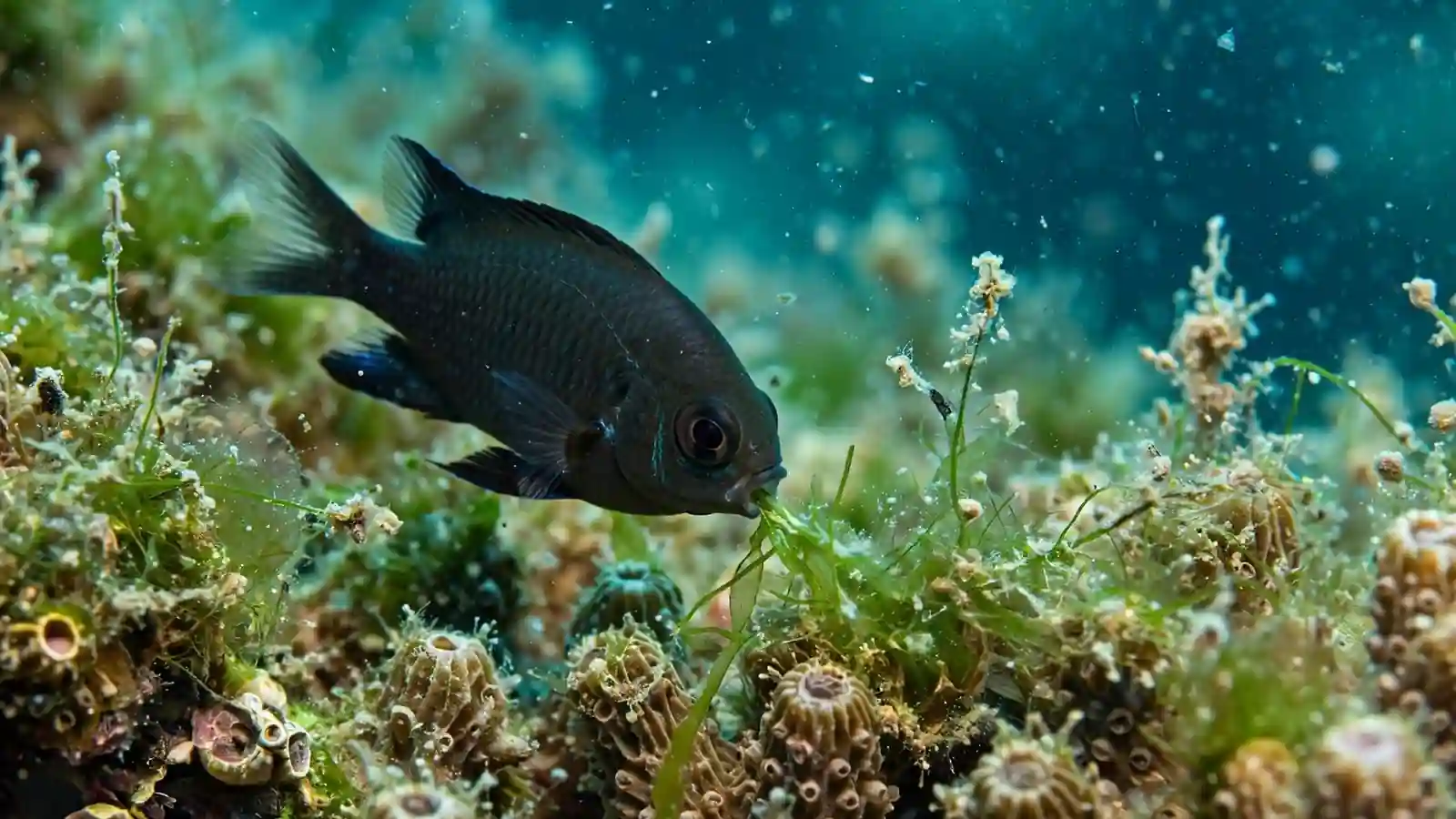
These fish are farmers. They grow turf algae in gardens of about a square metre, weeding out the species they do not want, defending the garden against grazers, and fertilising it with their waste. The garden is the fish’s food, its territory, and its life — and the fish will attack anything that enters it, from a passing parrotfish to a diver’s hand. For the full animal facts, see A-Z Animals’ species facts.
The farming is deliberate. The fish weeds its garden daily, removing the algae it does not eat and leaving the species it prefers, and it chases away the grazers that would eat the crop. The result is a garden that is more productive than the surrounding reef — a patch of algae that is richer, denser, and better defended than anything around it. It is agriculture, practised by a fish.
The Mysid Shrimp Farmers
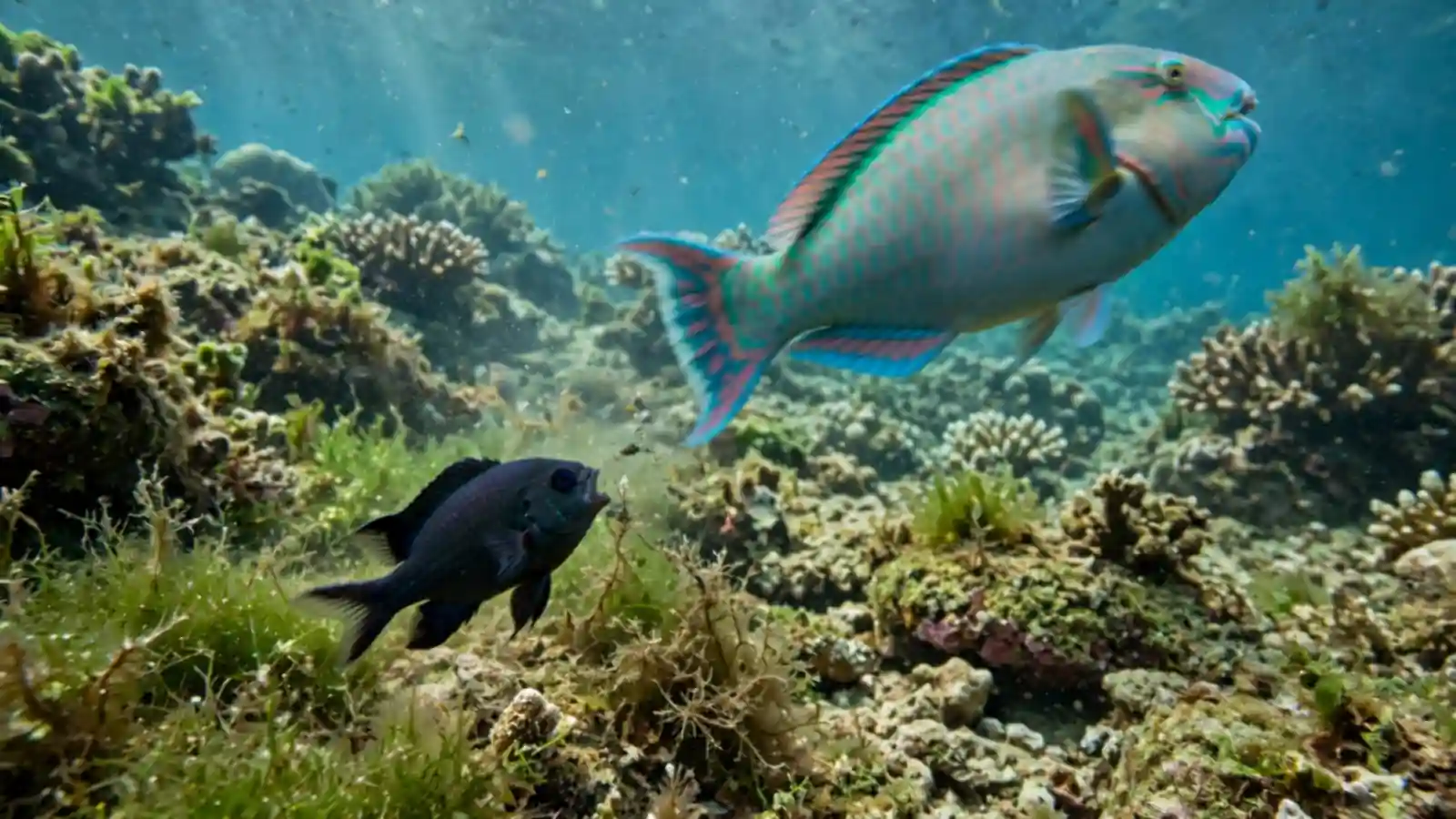
Some of these fish farm more than algae. The longfin keeps mysid shrimp in its garden — tiny, shrimp-like crustaceans that live among the algae and fertilise it with their waste. The fish protects the shrimp from predators, and the shrimp fertilise the algae, and the algae feeds the fish. It is a three-way partnership, and it is one of the closest things to domestication in the ocean.
The longfin is the reef’s most aggressive farmer, and it defends its garden — and its shrimp — against fish far larger than itself. Divers who stray into a longfin’s territory are chased and nipped, and the fish does not back down. It is a small fish with a large farm, and it defends both with everything it has.
The Plankton Pickers

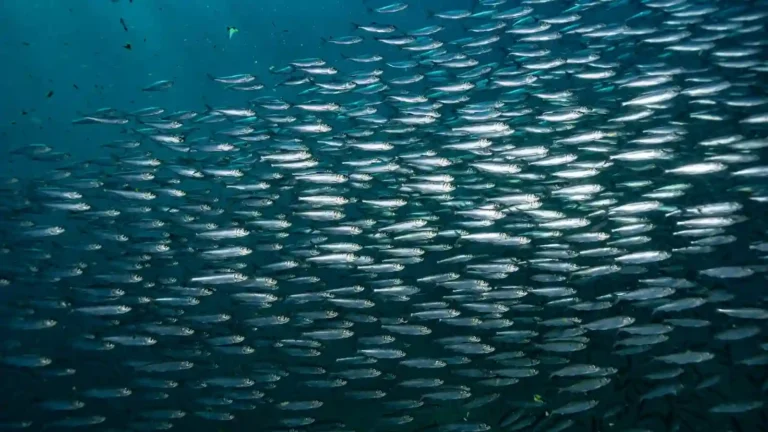
Not all of these fish farm. The chromis — the blue-green chromis, the most familiar of them — are family members that feed on plankton, forming clouds above the coral head and picking tiny animals from the water as they drift past. A cloud of chromis is one of the reef’s great sights: hundreds of small, bright fish, all facing the current, all feeding together, all darting for cover at the first sign of danger.
Chromis are members too, and they prove the family’s range. The same family that produces the fiercely territorial farmer also produces the gentle plankton-picker, and the two live side by side on the same reef — one defending a square metre of algae, the other drifting in a cloud above the coral. It is a family of opposites, and both work.
Where They Live

These fish live on tropical coral reefs worldwide, from the Atlantic to the Indo-Pacific, wherever there is coral to farm and defend. They favour reef slopes, reef flats and lagoons, living from the shallows down to around 60 metres, and they are most common where the coral is dense and the territories are small. A single reef can hold dozens of species, each in its own patch, each defending its own garden.
The territory is the fish’s life. The fish claims a coral head or a patch of reef, and it stays there — weeding, chasing, breeding, and dying in the same square metre. The threespot, the most studied of the family, holds a territory of about a square metre, and it knows every coral branch in it.
What Do Damselfish Eat?
These fish eat algae, plankton and small crustaceans, and the balance depends on the species. The farmers eat their own crop, grazing the turf algae they grow and weed. The plankton-pickers eat what drifts past, snapping at tiny animals in the water column. And the omnivores eat a little of everything — algae, plankton, and the small crustaceans they find among the coral.
Feeding is constant and it is territorial. A farmer eats from its own garden and chases away anything that tries to eat from it; a chromis eats from the open water and shares the cloud with hundreds of its own kind. The diet is the same across the family — small food, taken often — and it is what lets a 10 cm fish live its whole life on a single square metre of reef.
The Clownfish Connection

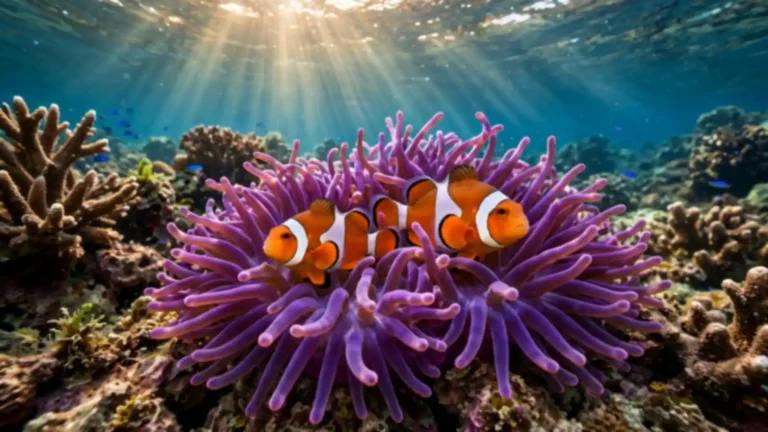
Clownfish are family members. They belong to the same family, Pomacentridae, and they share the same deep body, the same territorial temper, and the same reef life — but they have added a partnership that no other member has: they live in sea anemones, protected by the anemone’s stinging tentacles, and they defend the anemone as fiercely as any of them defends its garden.
The Clownfish guide tells that story in full — the anemone partnership, the sex change, and the life of the reef’s most famous fish — and this guide does not repeat it. What matters here is the family: the clownfish is a member that found a different way to live, and it is proof that a family of 335 species can hold a fish as different as a clownfish and a chromis, and still be one family.
Fun Facts
- The fish farms a turf algae garden of about a square metre, weeding it daily and defending it against fish ten times its size.
- The longfin keeps mysid shrimp in its garden — the shrimp fertilise the algae, and the fish protects the shrimp.
- Chromis are members, and a cloud of blue-green chromis above a coral head is one of the reef’s great sights.
- The Garibaldi, the large orange fish of California, reaches 30 to 36 cm — the family’s heavyweight.
- Clownfish are members of the same family, Pomacentridae.
- The family holds about 335 species in 28 genera, from the 5 cm plankton-picker to the 36 cm Garibaldi.
Frequently Asked Questions
What Is a Damselfish?
A member of the family Pomacentridae, a family of about 335 species in 28 genera. They are small, deep-bodied reef fish, most 5 to 15 cm, known for farming algae, defending territories, and — in the case of the clownfish — living in sea anemones.
Why Are Damselfish So Aggressive?
Because they are farmers. The fish grows a turf algae garden of about a square metre, and the garden is its food and its life. Anything that enters the garden — a parrotfish, a surgeonfish, a diver’s hand — is chased and attacked, whatever its size.
Do Damselfish Farm Algae?
Yes. They grow turf algae in gardens of about a square metre, weeding out the species they do not want, defending the garden against grazers, and fertilising it with their waste. The longfin goes further, keeping mysid shrimp in its garden to fertilise the algae.
How Big Do Damselfish Get?
Most are 5 to 15 cm. The largest are the giant species and the Garibaldi, which reach 30 to 36 cm. Its attitude is far larger than its body — a 10 cm fish will defend its garden against a fish ten times its size.
Where Do Damselfish Live?
On tropical coral reefs worldwide, from the Atlantic to the Indo-Pacific, on reef slopes, reef flats and lagoons, from the shallows down to around 60 metres. A single reef can hold dozens of species, each in its own patch.
What Do Damselfish Eat?
Algae, plankton and small crustaceans. The farmers eat their own crop, grazing the turf algae they grow. The plankton-pickers, like the chromis, eat what drifts past in the water column.
Are Clownfish Damselfish?
Yes. Clownfish belong to the family Pomacentridae, the same family as the others. They share the deep body and the territorial temper, but they have added a partnership no other member has: they live in sea anemones, protected by the anemone’s stinging tentacles.
Similar Species Worth Exploring
Keep Exploring
Still exploring reef-farmer country? Meet the family’s most famous member in the Clownfish guide, watch the night shift in the Squirrelfish guide, size up the whole family in the Types of Reef Fish hub, and then come back to the reef to watch the damselfish.