Humboldt Squid Facts: Red Devil Size, Hunting and Danger
Humboldt Squid: The Red Devil of the Eastern Pacific
The Humboldt squid is the ‘red devil’ of the eastern Pacific — a pack-hunting squid that flashes red and white as it feeds.
By Emily Carter · Reviewed by our vet team · Updated 10 November 2026 · 9 min read
Mantle up to 1.5 mHunts in packsNo human fatality
At a Glance
The Humboldt squid is the ‘red devil’ of the eastern Pacific — a pack-hunting squid that flashes red and white as it feeds, and the largest of its family. It hunts in packs of thousands, eats lanternfish and anchovies, and has never killed a human — despite its fearsome name. This guide covers its size, its red-and-white flashing, its range, its pack hunting, its diet, the danger record, and the fishery that depends on it.
Humboldt Squid Size: How Big Do They Get?

It is a big squid — a mantle up to 1.5 metres, a total length of about 2 metres, and a weight of about 50 kg. It is the largest of the ommastrephid squids — the family of flying squids — and one of the largest squids in the eastern Pacific. One is longer than a person is tall, and it is heavier than a dog.
Size is part of the story, but it is not the whole story. It is also a pack hunter, a fast grower, and a master of colour change — and it is the world’s most important squid fishery. It is a big, red, flashing squid that hunts in packs of thousands, and it is one of the most impressive animals in the eastern Pacific. For the full species record, see the overview.
The Red Devil: Why They Flash Red and White
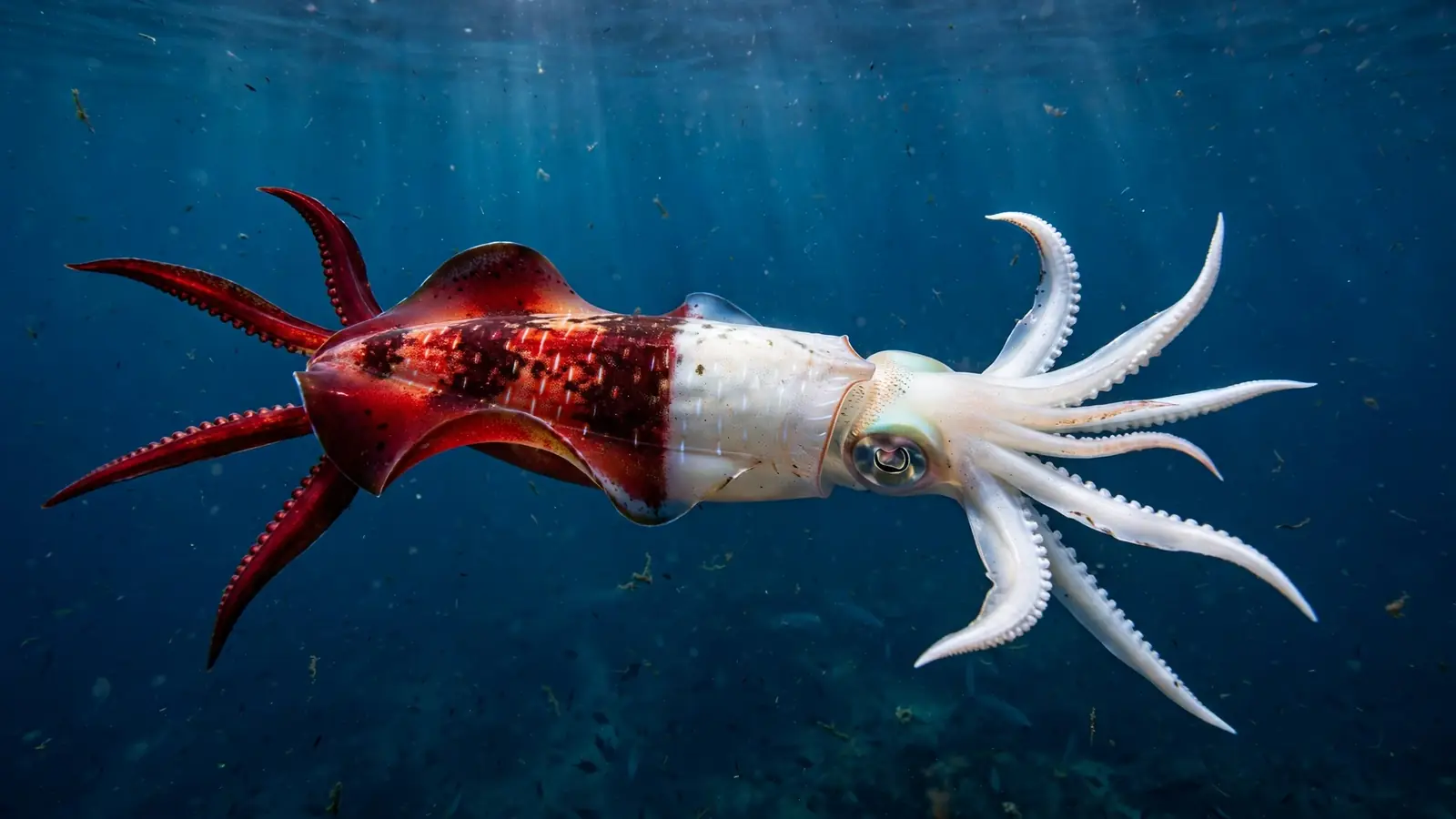
It is called the “red devil” — diablo rojo in Spanish — because of the red-and-white flashing it shows as it feeds. It can change colour in a blink, flashing red and white, and the name comes from that flashing and its aggressive feeding. It is a squid that wears its mood on its skin.
The flashing is called metachrosis, and it is how they communicate. They flash red and white to signal each other as they hunt, and they can change colour in a blink — from red to white and back again. It is a language of light, and it is one of the most impressive things about it. Like the giant squid, it is a master of colour — but where the giant squid is a solitary hunter, the Humboldt is a pack hunter that flashes to talk.
Where They Live: The Humboldt Current and Beyond
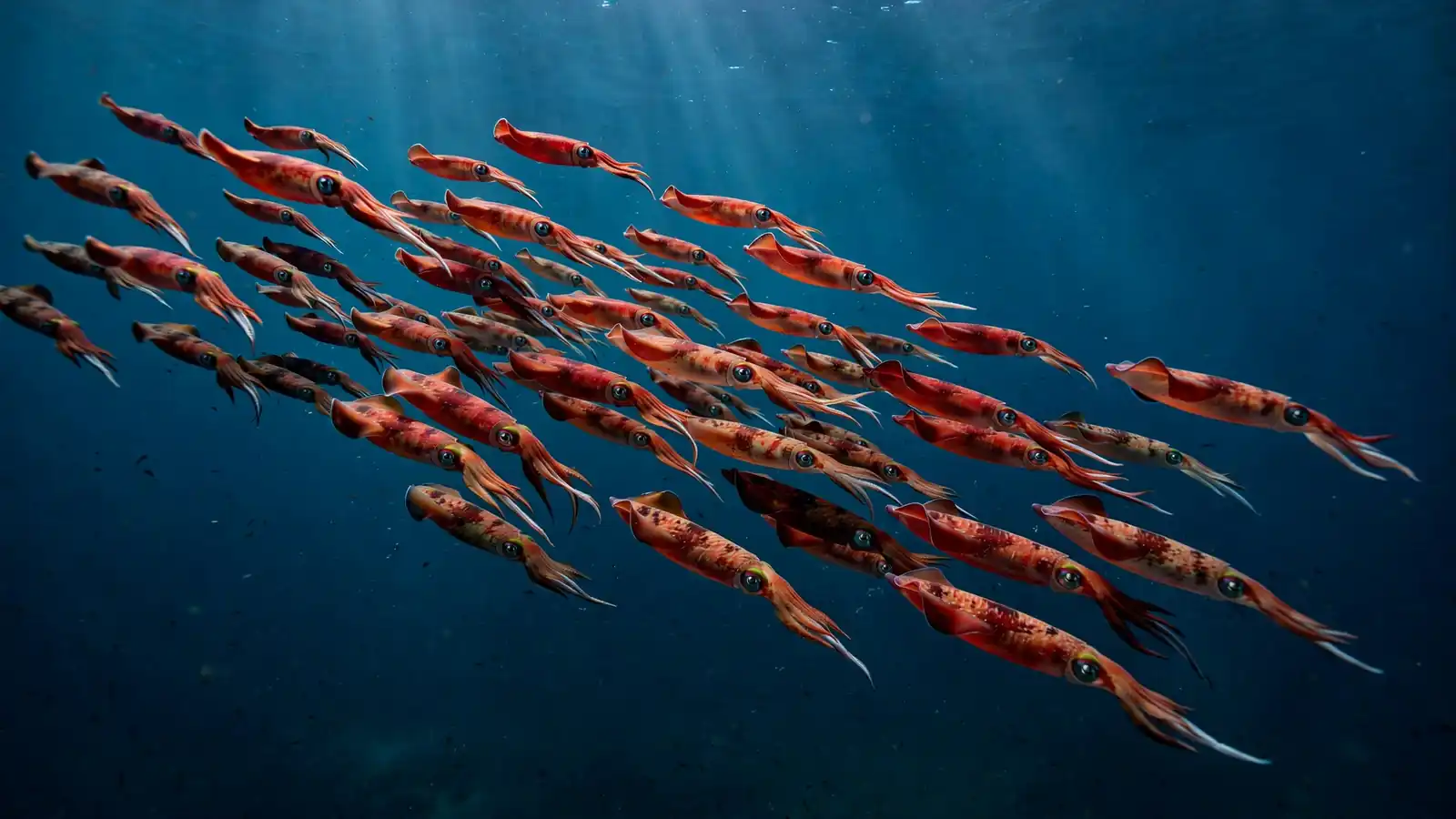
They live in the eastern Pacific, in the Humboldt Current off Peru and Chile, and north to Mexico and California. They live in deep water by day and come up at night to feed, and they follow the cold, nutrient-rich water of the Humboldt Current. They are a squid of the eastern Pacific, and they are one of its most important animals.
Warming water has pushed their range north into Alaska and Canada, and they now appear where they never used to. It is a range expansion that follows the warming sea, and it is one of the clearest signs of a changing ocean. One in Alaska is a squid out of place — and it is a sign of the times.
Pack Hunting: How They Feed Together
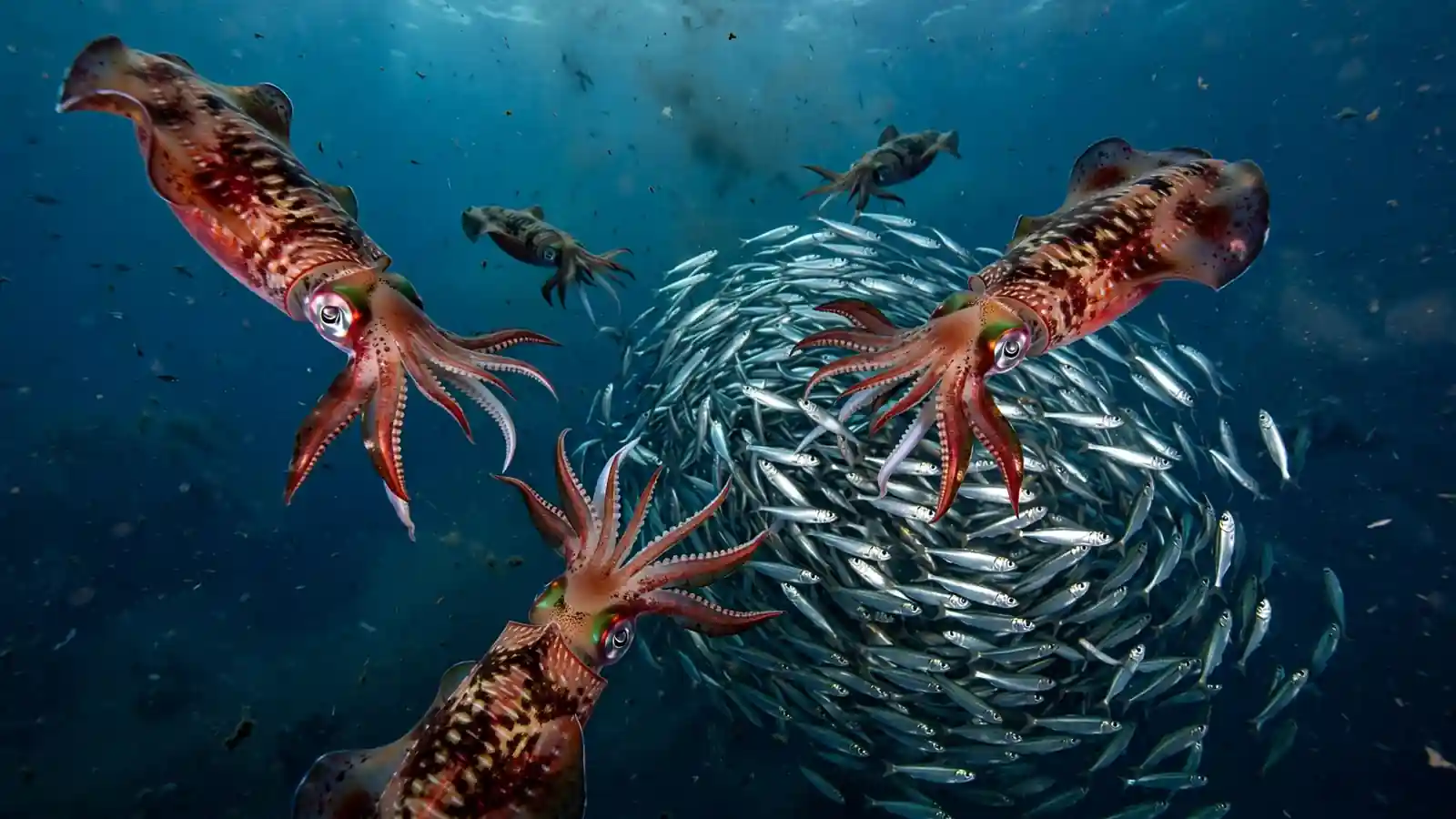
They hunt in packs of thousands, herding fish and squid into a ball and picking them off. They communicate with their flashing — red and white — and they coordinate their attacks, like wolves of the sea. A pack of them is a formidable thing: thousands of squids, flashing red and white, herding their prey into a ball.
The pack hunting is what makes it so successful. A single squid is a fast, aggressive hunter, but a pack is unstoppable — and it is why this squid is one of the most important predators in the eastern Pacific. They hunt together, they feed together, and they flash together — and they do it in packs of thousands.
What Do They Eat? Lanternfish, Anchovies and Each Other

They eat lanternfish, anchovies, squid — including each other — and krill. They are pack hunters, and they feed together in schools of thousands, herding fish and squid into a ball and picking them off. They are not picky: they eat whatever they can catch, and they catch a lot of it.
The diet is a mix of fish and squid, and it includes cannibalism. They eat each other — especially the smaller ones — and it is a normal part of their life. They are aggressive feeders, and they will eat anything that fits in their arms. Like the colossal squid, they are a giant squid that eats a lot — but where the colossal is a solitary hunter, the Humboldt is a pack hunter that feeds together.
Are They Dangerous? The Hype vs the Record

There is no documented human fatality from one. They are aggressive while feeding, and they have bitten divers and fishermen — but the danger is often exaggerated, and the “monster” framing is hype, not record. It is a big, strong animal with a sharp beak, and it should be treated with respect — but it is not a monster.
The aggression is mainly while feeding. One in a feeding frenzy will bite anything that comes too close — including a diver’s hand or a fisherman’s net — but it does not hunt people. It hunts fish and squid, and it leaves people alone. The “red devil” name is a story, not a record — and the record says no one has ever been killed by one.
The World’s Most Important Squid Fishery
It is the world’s most important squid fishery, and it supports a huge industry in Peru, Chile and Mexico. It is caught in large numbers — for food, and for the bait trade — and it is one of the most valuable squids in the world. The fishery is worth billions, and it employs thousands of people.
The fishery is a double-edged sword. It is a livelihood for thousands, and it is a food for millions — but it is also a pressure on a squid that lives only 1 to 2 years and breeds once. Like the giant squid, the Humboldt is a giant cephalopod that depends on a healthy ocean — and like the giant squid, it is a reminder that the largest animals in the sea are often the most vulnerable. For now, it is abundant — but it needs the eastern Pacific to stay healthy.
Fun Facts
- It is the “red devil” of the eastern Pacific.
- It can flash red and white in a blink.
- It hunts in packs of thousands.
- It is the largest of the flying squids, with a mantle up to 1.5 metres.
- It has never killed a human — despite its fearsome name.
- Warming water has pushed its range north into Alaska and Canada.
- It is the world’s most important squid fishery.
Frequently Asked Questions
Why are Humboldt squid called red devils?
Because of the red-and-white flashing — metachrosis — that they show as they feed. They can change colour in a blink, flashing red and white, and the name “red devil” (diablo rojo in Spanish) comes from that flashing and their aggressive feeding.
How big do Humboldt squid get?
A mantle up to 1.5 metres, a total length of about 2 metres, and a weight of about 50 kg. They are the largest of the ommastrephid squids — the family of flying squids — and one of the largest squids in the eastern Pacific.
Are Humboldt squid dangerous to humans?
There is no documented human fatality. They are aggressive while feeding, and they have bitten divers and fishermen — but the danger is often exaggerated, and the “monster” framing is hype, not record. Treat them with respect, and they will leave you alone.
Where do Humboldt squid live?
In the eastern Pacific, in the Humboldt Current off Peru and Chile, and north to Mexico and California. Warming water has pushed their range north into Alaska and Canada, and they now appear where they never used to.
What do Humboldt squid eat?
Lanternfish, anchovies, squid — including each other — and krill. They are pack hunters, and they feed together in schools of thousands, herding fish and squid into a ball and picking them off.
Do Humboldt squid hunt in packs?
Yes. They hunt in packs of thousands, herding fish and squid into a ball and picking them off. They communicate with their flashing — red and white — and they coordinate their attacks, like wolves of the sea.
How long do Humboldt squid live?
About 1 to 2 years. They grow fast, breed once, and die — a short, intense life that ends with a single spawning. They are one of the fastest-growing squids in the sea.
Similar Species Worth Exploring
Keep Exploring
Still watching the red devil? Meet the other giant squid in our Colossal Squid guide, compare the other giant in our Giant Squid guide, and see the whole family in the Types of Cephalopods hub — then look for the flashing of the Humboldt squid.