Acorn Barnacle
Acorn Barnacle: The Animal That Lives Upside Down, Glued to a Rock
The acorn barnacle spends its whole life glued to a rock by its head, filtering plankton with feathery legs through a six-plate shell. It is a crustacean, not a mollusc — a crab’s cousin that decided to stay put forever.
By Emily Carter · Reviewed by our vet team · Updated 10 November 2026 · 9 min read
Cone of six plates6–12 mm acrossGlue among the strongest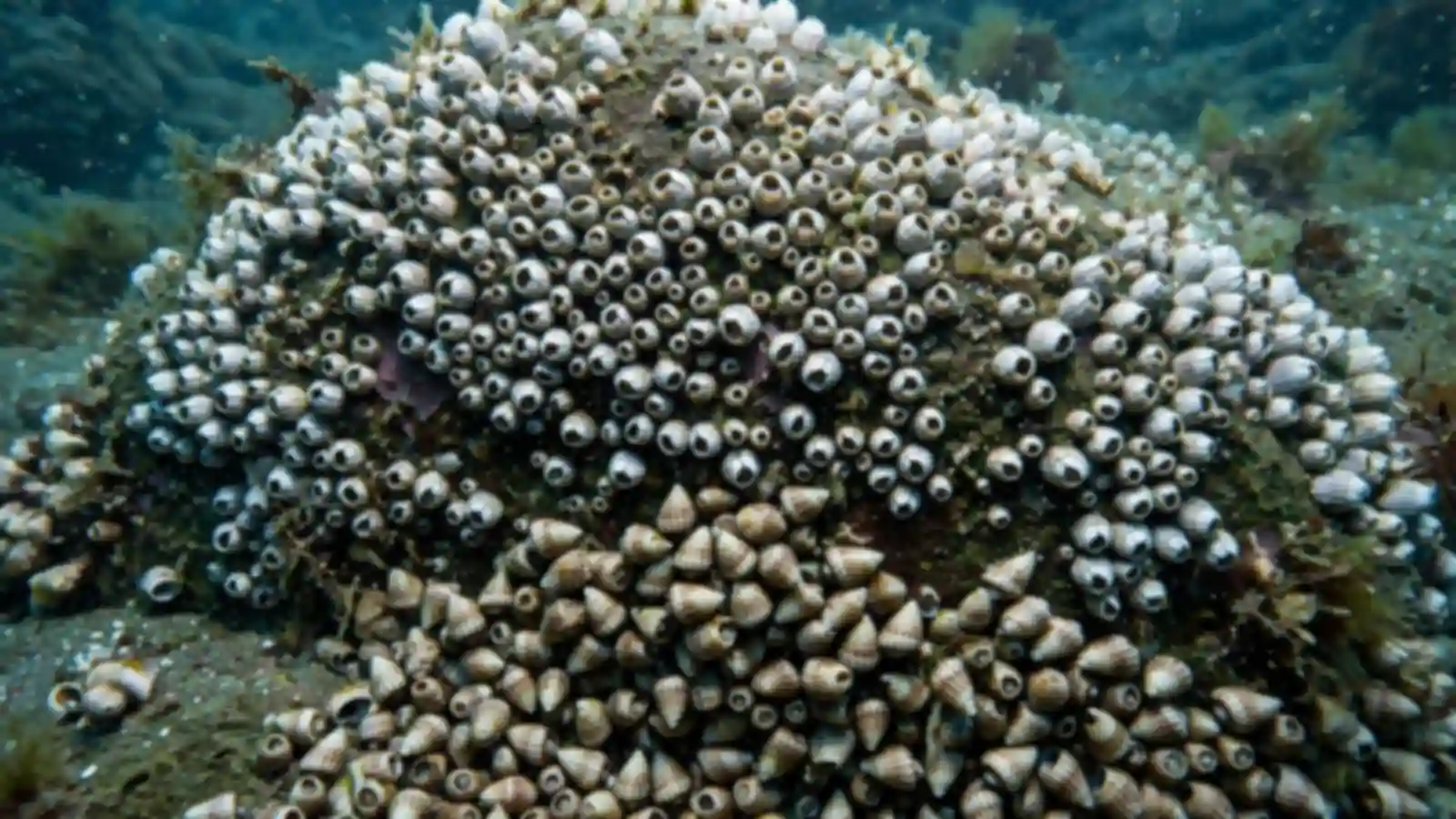
At a Glance
The acorn barnacle is a sessile crustacean of the family Balanidae — an animal that lives upside down, glued to a rock by its head, inside a cone of six fused plates. It is related to crabs and shrimp, not to molluscs, and it spends its whole adult life in one place, filtering plankton with feathery legs.
Acorn Barnacle Habitat: Rocky Shores Worldwide
It lives on intertidal rocky shores worldwide, in densities up to 2,800 per square foot — a crust of living cones covering the rock from the high tide line to the low. It lives where the waves break and the tides rise and fall, and it is at home on any hard surface: rock, pier pilings, boat hulls, even the skin of a whale.

The colony is the habitat. A rock covered in acorn barnacles is a reef in miniature, sheltering small animals among the cones and changing the shore itself. One barnacle is a speck; a thousand barnacles are a landscape, and the shore is theirs.
Acorn Barnacle Size: A Cone of Six Plates
It is a cone of six fused plates, typically 6 to 12 mm across — about the size of a pea, and shaped like a tiny volcano. The cone has a kite-shaped opening at the top, through which the feathery legs emerge to feed, and the plates grow as the animal grows, adding rings like a tree.

The six plates are the identification. Count them and the barnacle gives itself away: six plates, one kite-shaped opening, no stalk. It is a small animal with a precise architecture, and the cone is both its house and its armour.
How Acorn Barnacles Filter Feed
It eats by extending feathery cirri — modified legs — through the opening of its shell to filter plankton from the water. The cirri wave back and forth in the current, trapping plankton on their hairs, and then they fold back inside, carrying the food to the mouth. It is filter feeding on a tiny scale, done by an animal that never moves.
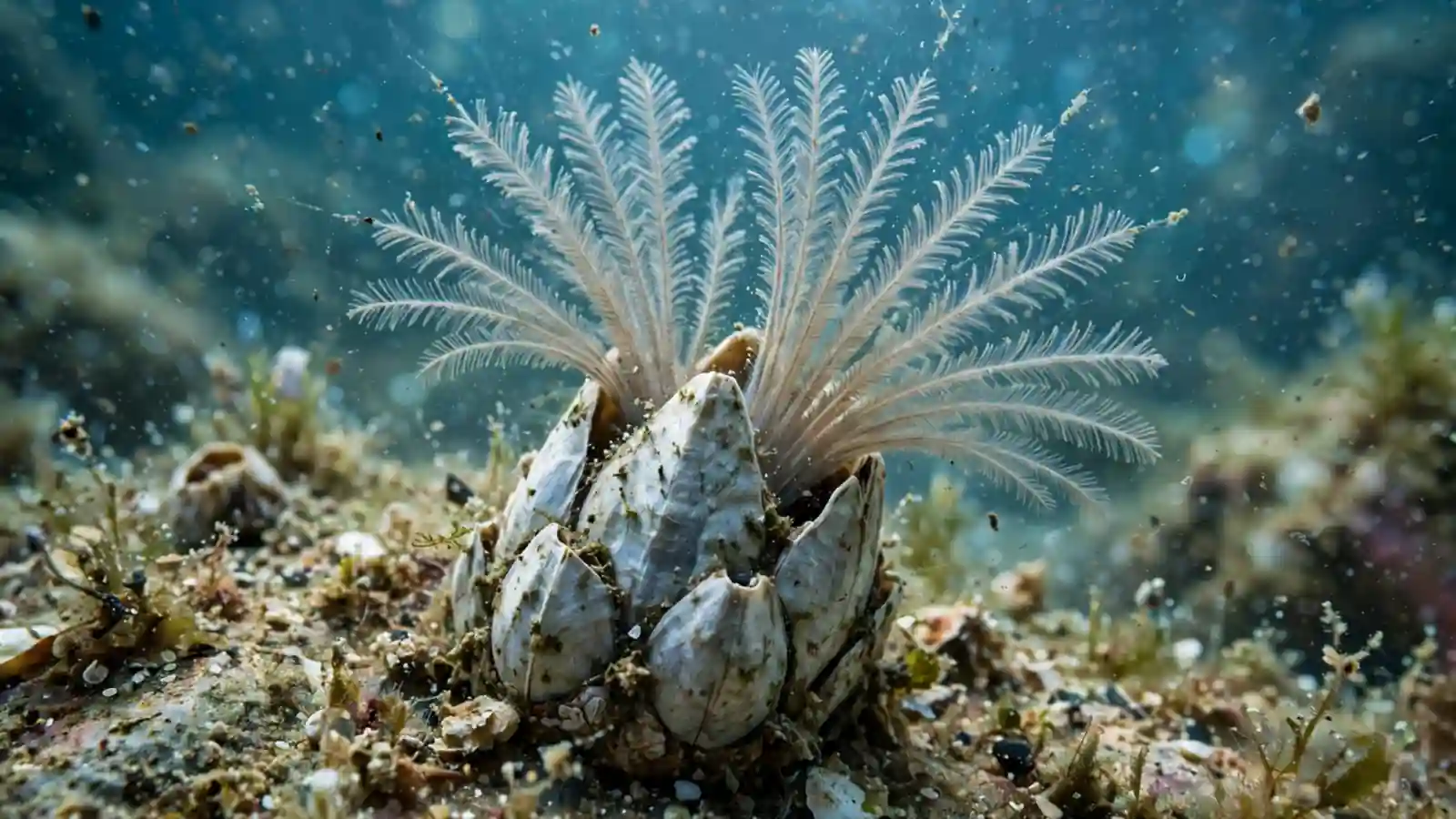
The feeding is timed to the tide. At high tide the barnacle opens and feeds; at low tide it closes tight, sealing itself against drying out and against predators. It is a life run by the tide, and the barnacle has no choice in it — it opens when the sea returns, and it closes when the sea leaves.
Life Cycle: Swimmer to Settler
It begins life as a free-swimming nauplius larva, drifting in the plankton, and then it becomes a cyprid larva — a tiny, shelled swimmer that searches for a place to settle. When it finds a rock, the cyprid cements its head to the surface with glue, grows its six-plate shell, and never moves again. It is a swimmer that becomes a settler, and the settlement is permanent.
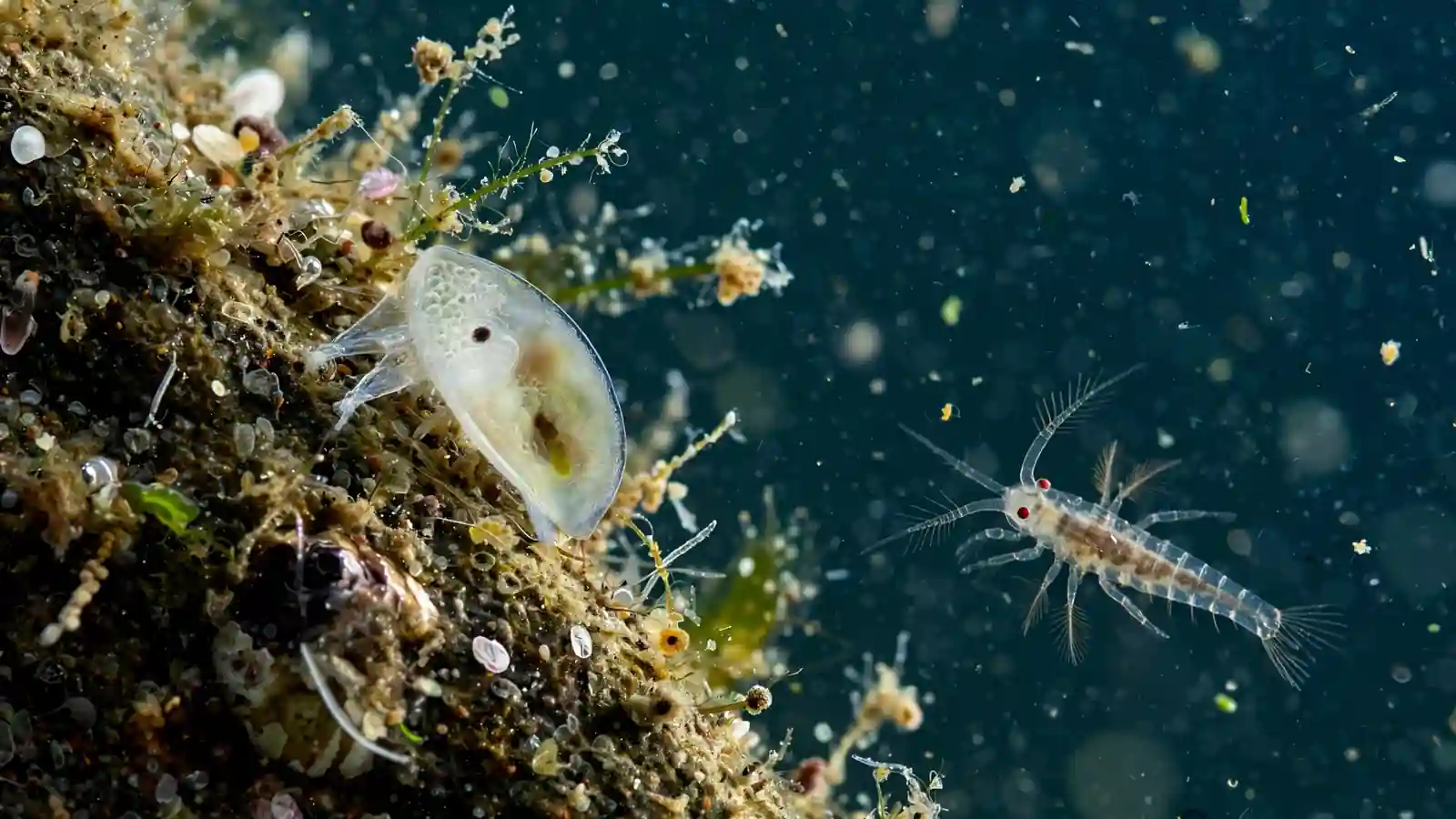
The glue is the commitment. For the full facts, see this barnacle facts guide from ThoughtCo. Once the cyprid cements itself down, it cannot move, cannot change its mind, and cannot leave — it is glued to that rock for the rest of its life. The choice of rock is the most important decision the barnacle ever makes, and it makes it once, as a larva, in the dark.
Barnacle vs Goose Barnacle
It and the goose barnacle are both barnacles, but they live differently: it has no stalk and sits flat on the rock, a cone glued directly to the surface, while the goose barnacle hangs from a stalk, dangling in the water like a goose’s neck. It is the one on the rocks at low tide; the goose barnacle is the one on driftwood and hulls, hanging in the sea.

The difference is the stalk. It is a cone on a rock; a goose barnacle is a cone on a stalk, and the stalk lets it reach the water from a floating object. Both are crustaceans, both filter-feed with cirri, but the barnacle stays put and the goose barnacle goes where the wood goes.
The Strongest Natural Glue
Its glue is among the strongest natural glues known — a protein cement, attributed in the sources as one of the strongest natural adhesives, that holds the animal to the rock through storms, waves and tides. It sets underwater, it holds for years, and it is the reason a barnacle can live on a rock that the sea tries to strip bare twice a day.
The glue is the barnacle’s whole life. It is laid down once, by the cyprid larva, and it must hold for the animal’s entire life — one to seven years, sometimes ten. No second chance, no repair: the glue either holds, or the barnacle is gone. It holds.
Predators and Lifespan
It is eaten by dog whelks, which drill through its shell, and by starfish, crabs and birds — and it lives one to seven years for Semibalanus balanoides, per ThoughtCo, while Balanus glandula can reach about ten years. No single figure is printed for the group, because the two exemplars differ, and this guide prints both.
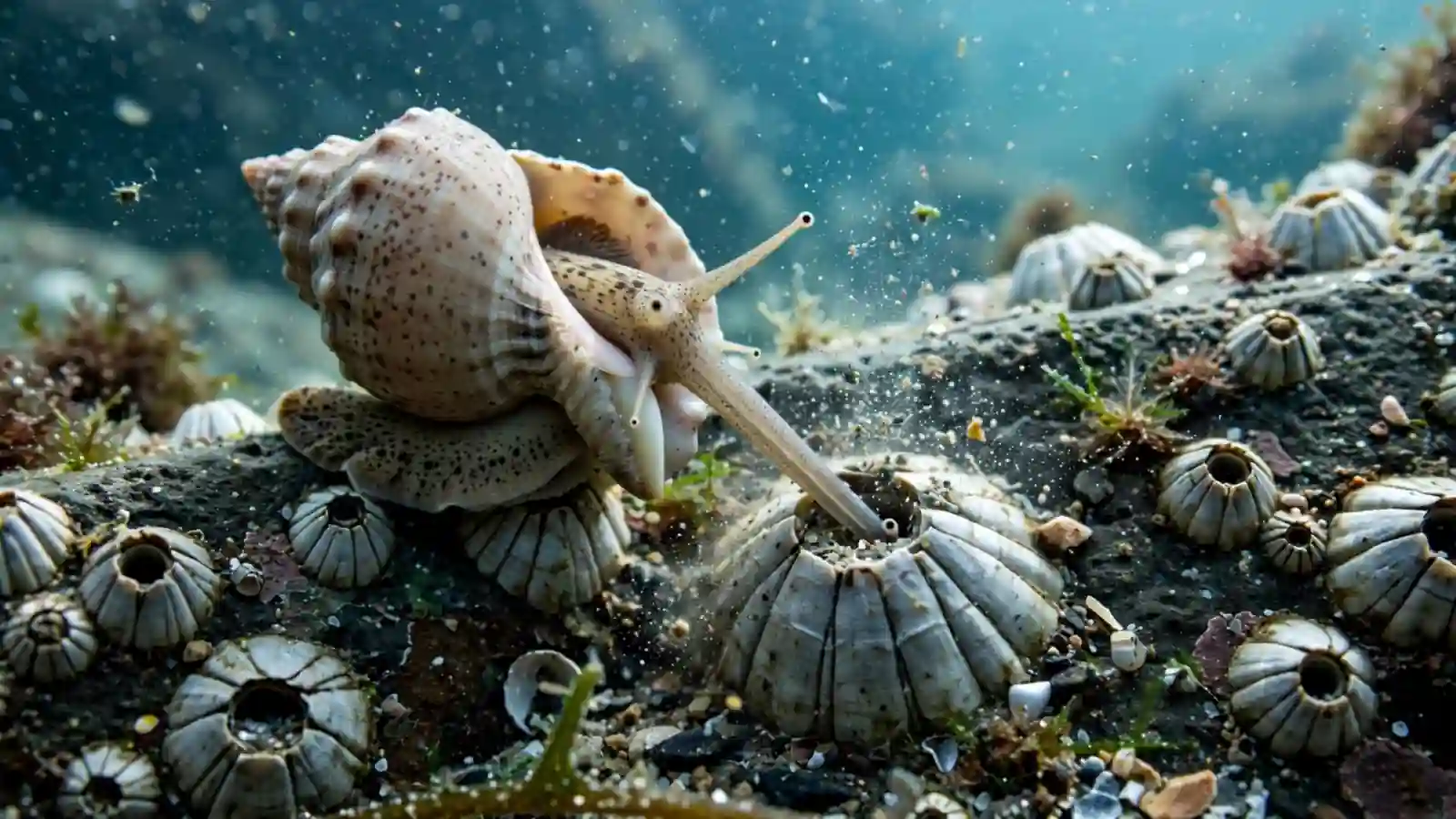
The dog whelk is the specialist. It drills a neat hole through the barnacle’s plates with its radula, softens the flesh inside, and eats it — a slow, precise predator against a prey that cannot run. The barnacle’s defence is its shell and its numbers: one barnacle is food, but a thousand barnacles are a wall, and the whelk can only drill one at a time.
Fun Facts
- It is a crustacean, not a mollusc — a crab’s cousin that stays put.
- It lives upside down, glued to a rock by its head, for its whole adult life.
- Its shell is a cone of six fused plates with a kite-shaped opening.
- Its glue is among the strongest natural glues known.
- Densities reach 2,800 barnacles per square foot of rock.
- The dog whelk drills through its shell with its radula to eat it.
Frequently Asked Questions
Are acorn barnacles animals?
Yes. Acorn barnacles are sessile crustaceans, related to crabs and shrimp — not molluscs, despite the shell. An acorn barnacle is an animal that lives upside down, glued to a rock by its head, inside a cone of six fused plates.
How do acorn barnacles attach to rocks?
With glue. The cyprid larva cements its head to the rock with a protein adhesive — among the strongest natural glues known — grows its six-plate shell, and never moves again. The glue is laid down once and must hold for the animal’s entire life.
What do acorn barnacles eat?
Plankton. The acorn barnacle extends feathery cirri — modified legs — through the opening of its shell to filter plankton from the water. The cirri wave in the current, trap plankton on their hairs, and fold back inside carrying food to the mouth.
How do acorn barnacles reproduce?
They release eggs and sperm into the water, where fertilisation happens, and the larvae drift as free-swimming nauplii. The larvae become cyprid larvae, search for a rock, cement themselves down, and grow into adult barnacles. Acorn barnacles are hermaphrodites, so neighbours can fertilise each other.
How long do acorn barnacles live?
One to seven years for Semibalanus balanoides, per ThoughtCo, and Balanus glandula can reach about ten years. No single figure is printed for the group, because the two exemplars differ — this guide prints both.
Acorn barnacle vs goose barnacle: what’s the difference?
The stalk. The acorn barnacle has no stalk and sits flat on the rock, a cone glued directly to the surface. The goose barnacle hangs from a stalk, dangling in the water like a goose’s neck. Both are crustaceans and both filter-feed with cirri.
What eats acorn barnacles?
Dog whelks, which drill through the shell with their radula, and starfish, crabs and birds. The acorn barnacle’s defence is its shell and its numbers: one barnacle is food, but a thousand barnacles are a wall, and a whelk can only drill one at a time.
Similar Species Worth Exploring
Keep Exploring
Meet the goose barnacle, the stalked contrast to this flat cone, then the barnacle group guide, the whole family at once, and browse the whole family in our types of crustaceans hub — then come back to the animal that lives upside down, glued to a rock, the acorn barnacle.