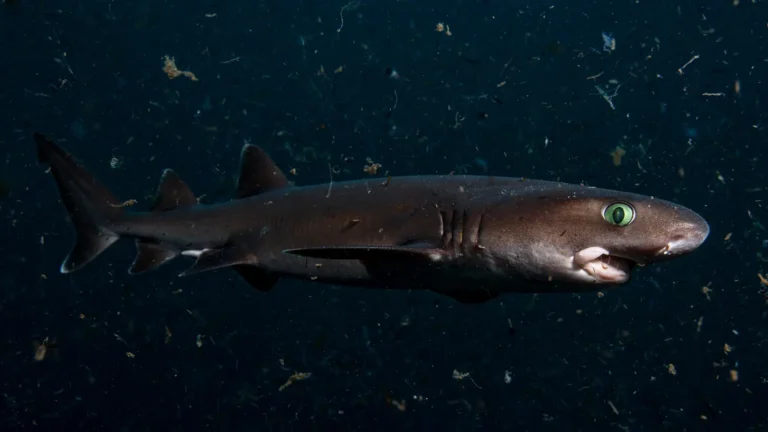
Whitetip Reef Shark Facts: Size, Habitat and Night Hunts
Whitetip Reef Shark: The Shark That Stops to Rest
The whitetip reef shark rests in caves by day and hunts in groups at night, a small Indo-Pacific reef shark that can breathe without swimming.
By Emily Carter · Reviewed by our vet team · Updated 10 November 2026 · 7 min read
Rests in cavesUsually up to 1.6 mVulnerable
At a Glance
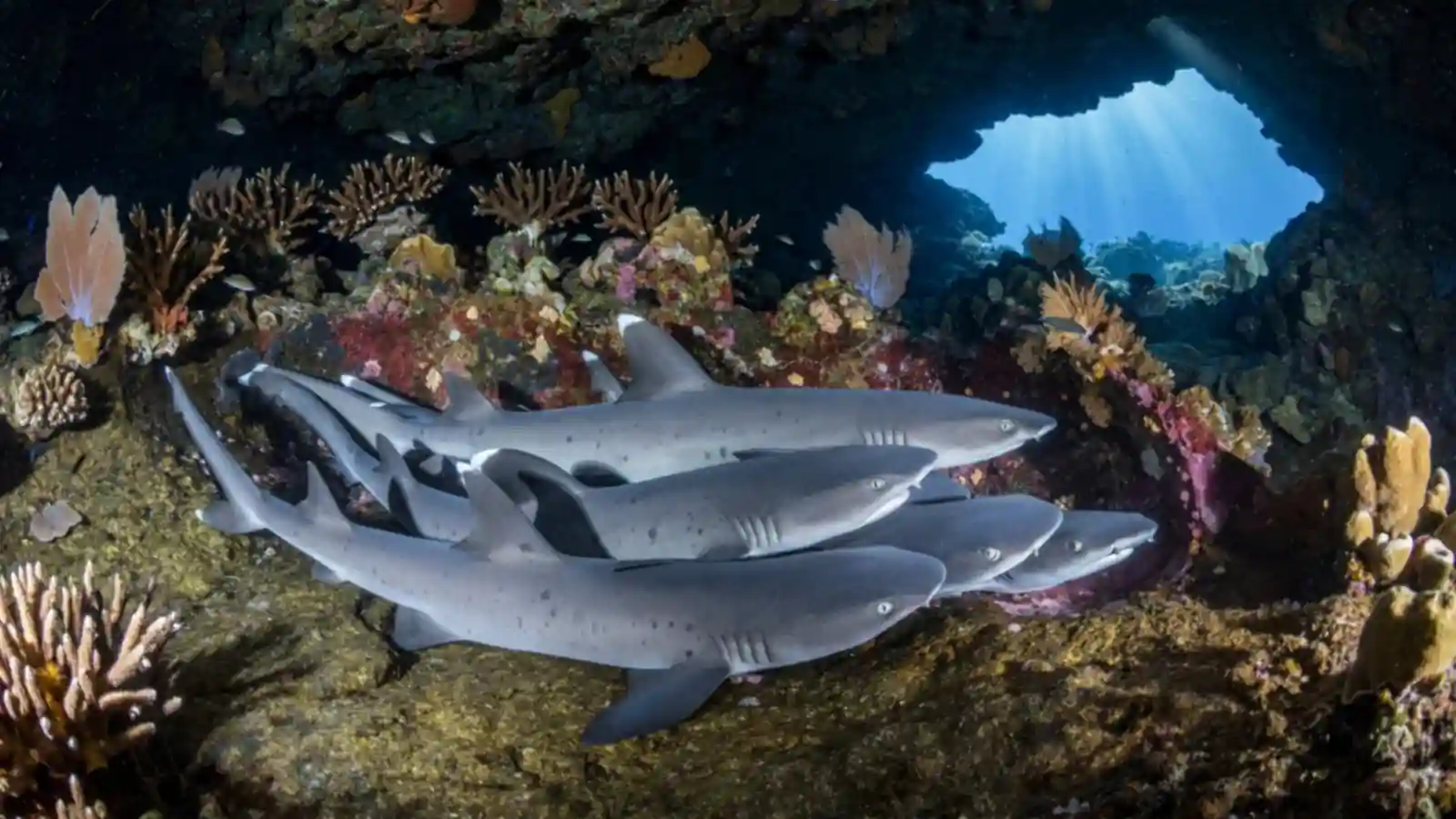
The whitetip reef shark breaks the first rule of sharks: it stops. By day it lies motionless in a reef cave, stacked beside other whitetips, breathing without swimming — something most sharks cannot do. By night it hunts in groups, forcing prey into crevices with a teamwork rare among sharks. This guide covers the cave rest, the night hunts, and the tiny home range this reef shark never leaves.
Whitetip Reef Shark Size: A Small Reef Hunter

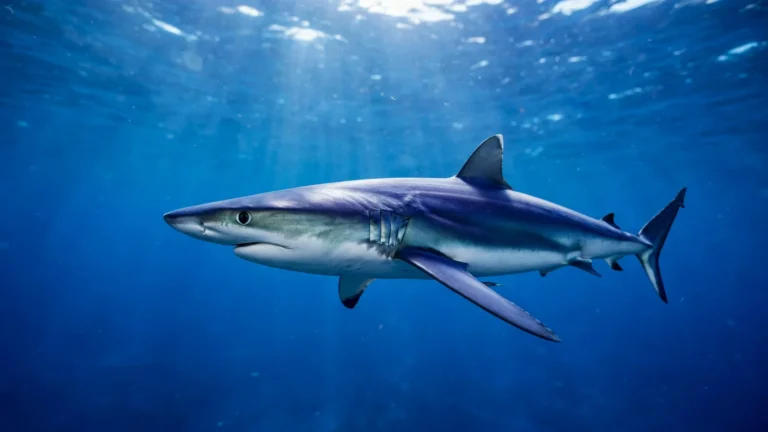
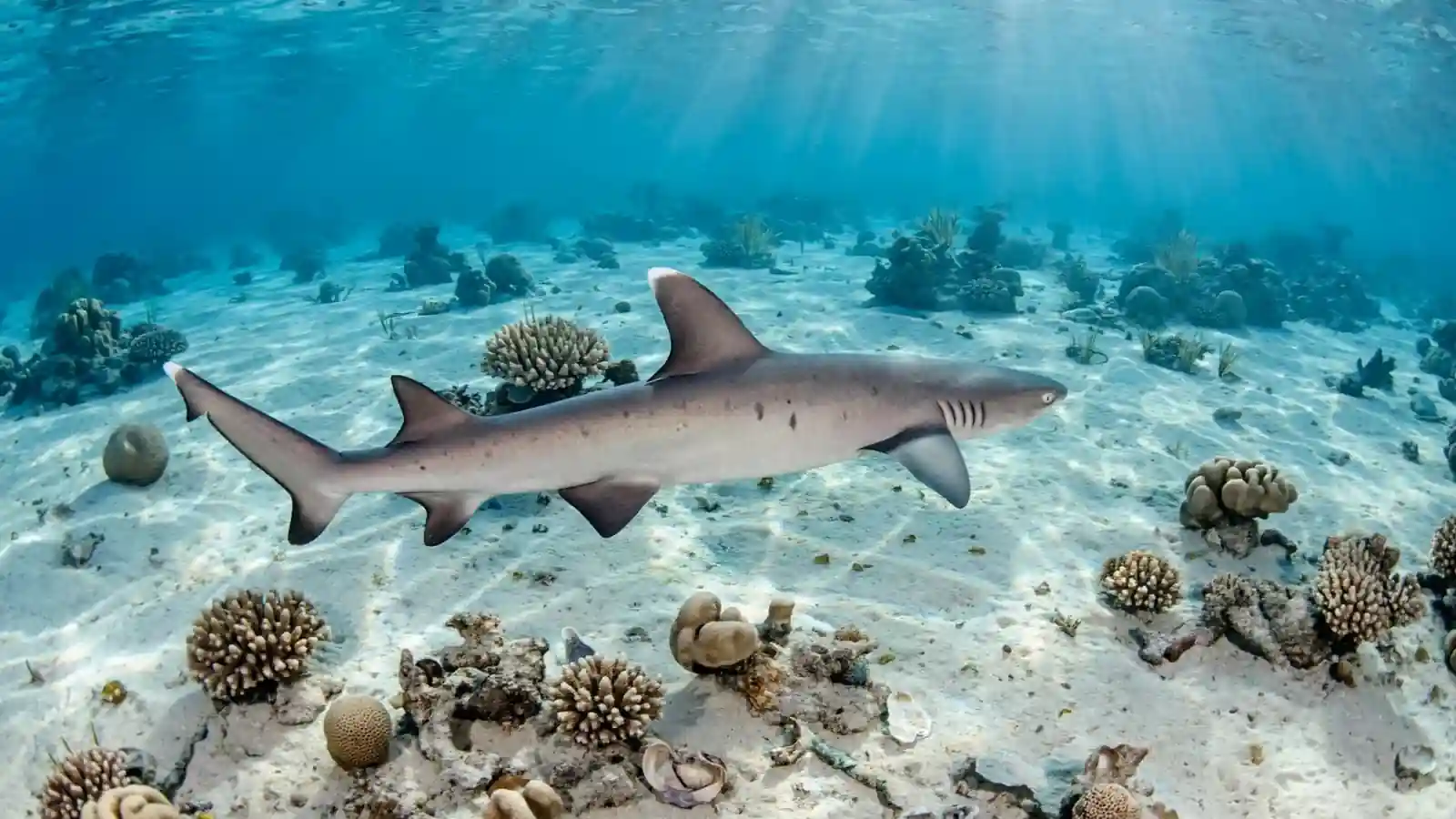
Whitetip reef sharks usually grow to about 1.6 metres, and the maximum published weight is 18.3 kg. Some pages claim 2.1 metres, but that figure is dubious — 1.6 metres is the reliable size for an adult. It is a slender, grey-brown shark with a short, blunt snout and the white tips on its dorsal and tail fins that give it its name.
The white tips are the identification mark, and they are also the source of the confusion with the oceanic whitetip — a different species entirely, covered in the section below. The reef shark’s white is confined to the tips of the first dorsal and the upper tail lobe; the rest of the shark is plain grey-brown. For the full species record, see the full whitetip reef shark species profile.
Resting in Caves: The Shark That Stops Swimming

Most sharks must keep swimming to push water over their gills, or they suffocate. It can pump water over its gills while lying still, so it can rest — and it does, for hours at a time, lying motionless in reef caves and under ledges, often stacked in groups with other whitetips.
The cave rest is the species’ signature behaviour. Divers find them piled together in the same caves day after day, the same animals returning to the same resting spots. The shark’s metabolism slows, its breathing steadies, and it waits out the daylight in the dark.
Where Whitetip Reef Sharks Live: Indo-Pacific Reefs

Whitetip reef sharks live on coral reefs across the Indo-Pacific, from the Red Sea and East Africa to Hawaii and the eastern Pacific, in water 8 to 40 metres deep. They are reef sharks in the truest sense: they rarely leave the reef, and many spend their whole lives on a single stretch of coral.
The reef is everything to this shark — hunting ground, resting place and nursery. A whitetip’s home range is tiny by shark standards, and it knows every cave and crevice in it.
Night Hunting in Groups: Forcing Prey Into Crevices
At night, whitetip reef sharks hunt in groups. They work together to corner reef fish, octopus, crabs and lobsters, forcing prey into crevices where it cannot escape — a cooperative hunt that is rare among sharks and one of the species’ most studied behaviours.
The hunt is patient rather than fast. The sharks move slowly along the reef, flushing prey from holes and sharing the catch, and they return to the same caves to rest when the night is done.
A Tiny Home Range: Life on One Reef

Its home range is about 0.05 square kilometres by day and about 1 square kilometre at night — tiny for a shark, and a measure of how completely this species belongs to its reef. It does not migrate, it does not roam, and it returns to the same caves night after night.
That fidelity makes the species easy to study and easy to protect — but also easy to overfish. A reef’s whitetips can be wiped out locally without any other reef’s sharks moving in to replace them, which is why reef protection matters so much for this shark.
Whitetip Reef Shark vs Oceanic Whitetip
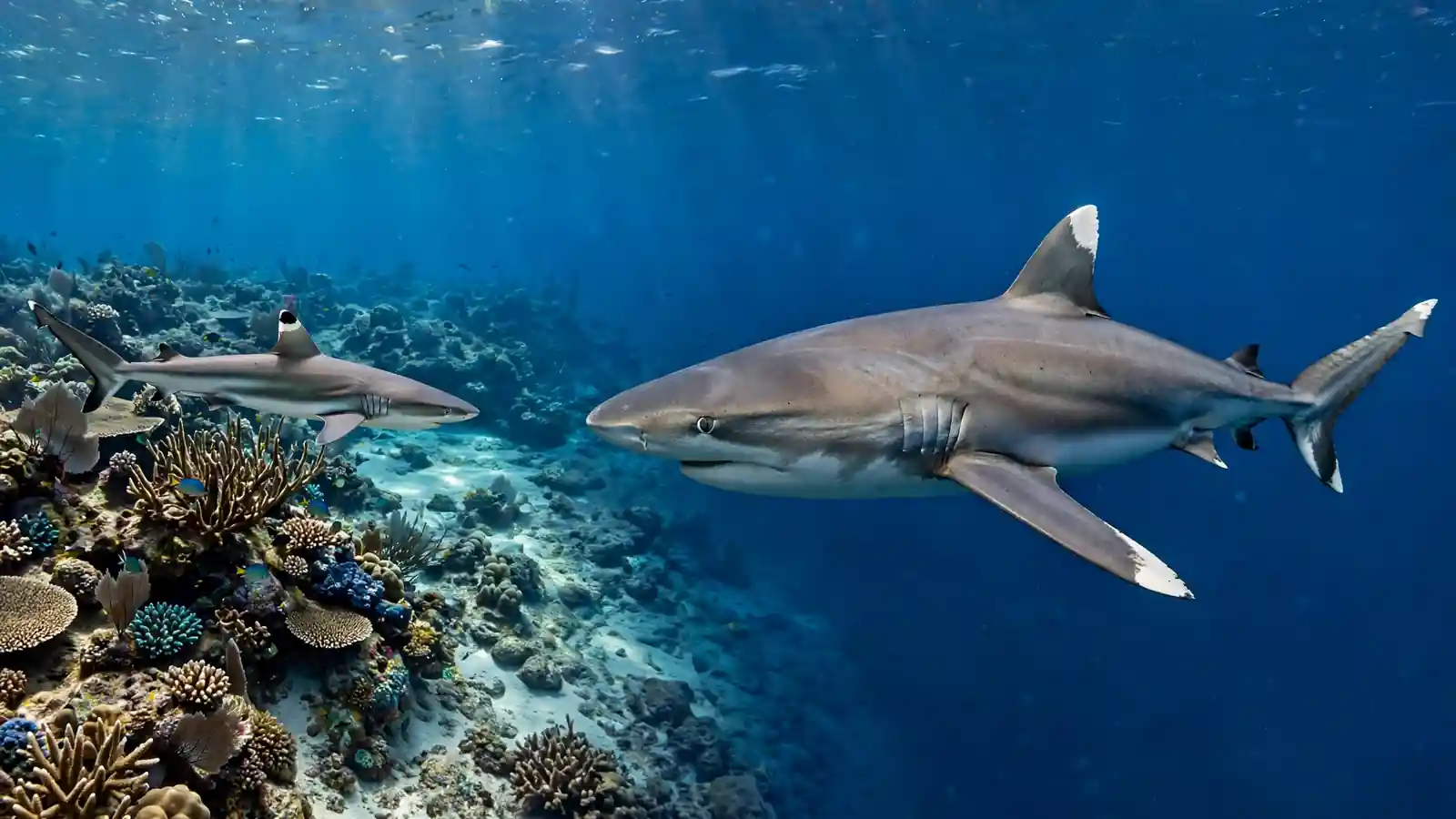
This shark and the oceanic whitetip share a name and white-tipped fins, but they are different species in different worlds. The reef shark is a small, slender cave-rester of Indo-Pacific coral reefs; the oceanic whitetip is a large, stocky open-ocean hunter with very long, rounded, white-tipped pectoral fins.
The difference is habitat first and size second. If the shark is lying in a reef cave, it is a whitetip; if it is circling far out in blue water, it is an oceanic whitetip. The two almost never meet, and confusing them is the most common identification mistake in the whitetip name.
Conservation: A Vulnerable Reef Shark
It is listed as Vulnerable. The Florida Museum page and other older sources still show the 2009 Near Threatened assessment, but the current assessment is Vulnerable — reef fishing and habitat loss have taken a toll on a shark that never leaves its reef.
Because whitetips stay put, local protection works. Marine reserves that cover a reef protect its whitetips completely, and populations inside reserves are measurably healthier than those outside. The shark’s tiny home range, once a weakness, is now its best defence.
Fun Facts
- Whitetip reef sharks can breathe without swimming, so they can rest in caves.
- They hunt in groups at night, forcing prey into crevices together.
- A whitetip’s daytime home range is about 0.05 square kilometres — tiny for a shark.
- The same sharks return to the same caves to rest, day after day.
- The 2.1-metre maximum size sometimes quoted is dubious — 1.6 metres is the reliable figure.
- Whitetip reef sharks are not oceanic whitetips — the two species live in different worlds.
Frequently Asked Questions
How Big Do Whitetip Reef Sharks Get?
Usually up to 1.6 metres, with a maximum published weight of 18.3 kg. The 2.1-metre maximum sometimes quoted is dubious — 1.6 metres is the reliable figure.
Why Do Whitetip Reef Sharks Rest in Caves?
They can pump water over their gills while lying still, so they do not need to keep swimming to breathe. They rest in caves by day, often stacked in groups, and hunt at night.
Do Whitetip Reef Sharks Need to Keep Swimming to Breathe?
No — the whitetip reef shark can pump water over its gills while resting, which is why it can lie motionless in a cave for hours. Most sharks cannot do this.
Where Do Whitetip Reef Sharks Live?
On coral reefs across the Indo-Pacific, from the Red Sea and East Africa to Hawaii and the eastern Pacific, in water 8 to 40 metres deep.
What Do Whitetip Reef Sharks Eat?
Reef fish, octopus, crabs and lobsters, hunted in groups at night and forced into crevices where they cannot escape.
Are Whitetip Reef Sharks Dangerous?
No. Whitetip reef sharks are small, shy reef dwellers that rest in caves by day and hunt small reef animals by night. They pose no danger to people.
What Is the Difference Between a Whitetip Reef Shark and an Oceanic Whitetip?
The reef shark is a small, slender cave-rester of Indo-Pacific coral reefs; the oceanic whitetip is a large, stocky open-ocean hunter with very long white-tipped pectoral fins. Different species, different size and behaviour.
Similar Species Worth Exploring
Keep Exploring
Still exploring reef sharks? Meet the open-ocean namesake, the Oceanic Whitetip Shark, compare the Caribbean’s cave-sleeper, the Caribbean Reef Shark, and then browse the whole reef community in the Types of Reef Fish hub, and then come back to the reef cave to meet the whitetip reef shark.