Purple Sea Urchin Facts: Kelp, Barrens and Long Spines
Purple Sea Urchin Facts: Kelp, Barrens and Long Spines
The purple sea urchin is a spiny purple ball that grazes kelp with a five-toothed mouth called Aristotle’s lantern — and when its predators vanish, it can turn a whole kelp forest into a bare, rocky urchin barren.
By Emily Carter · Reviewed by our vet team · Updated 10 November 2026 · 9 min read
The kelp grazerFive-toothed lantern mouth70+ years old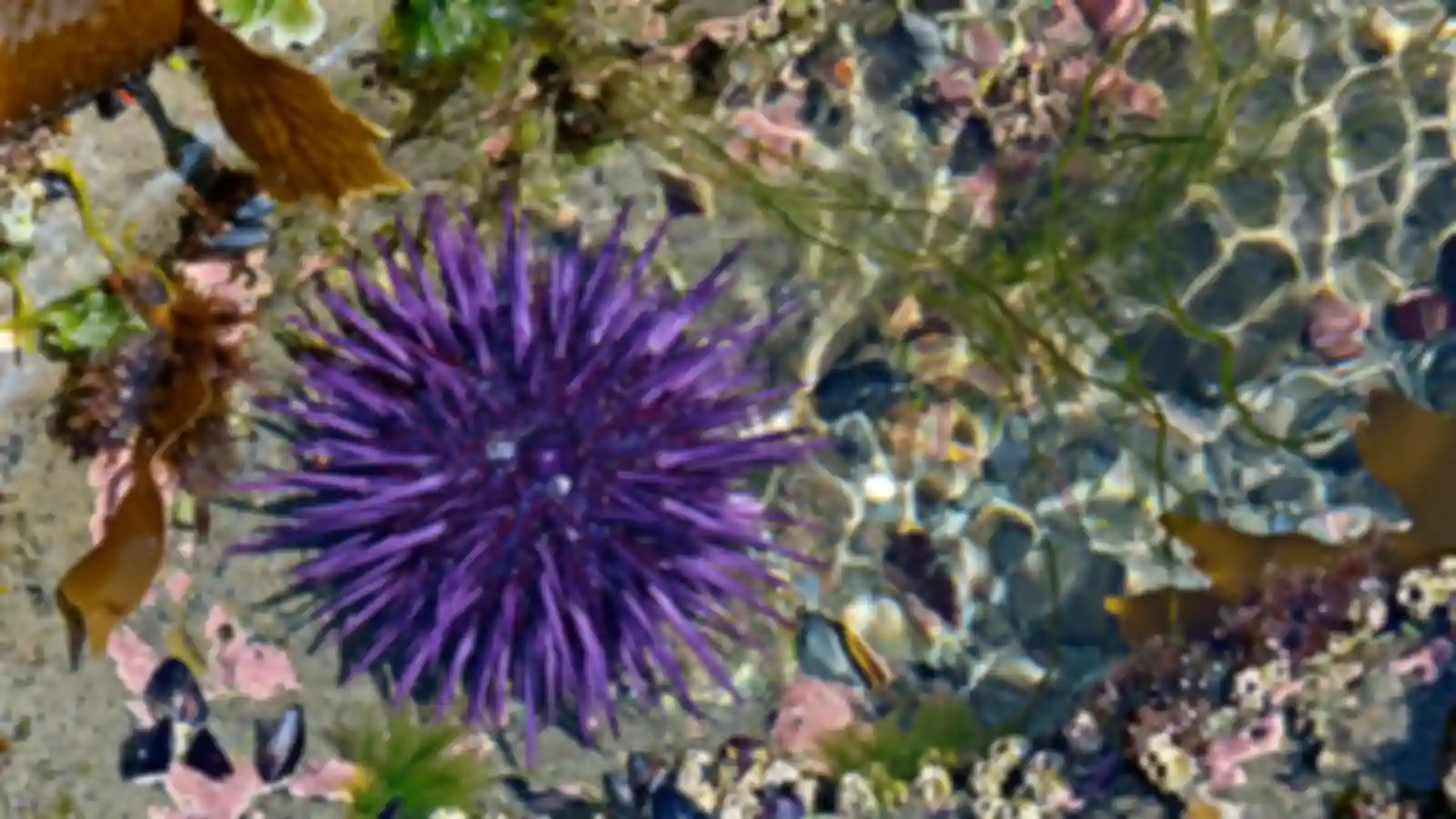
At a Glance
The purple sea urchin is one of the most consequential animals on the Pacific coast of North America. Strongylocentrotus purpuratus is a spiny purple ball, five to ten centimetres across, that lives from Alaska to Baja California in tidepools and on rocky reefs down to 160 metres. It eats kelp, and when its predators are healthy it eats just enough kelp to keep the forest in balance. When its predators vanish, it eats the forest itself.
Purple Sea Urchin Size: Test, Spines and Colour
Its body, the test, is five to ten centimetres across — a round, hard shell of fused plates, covered in spines two and a half to six centimetres long. The spines are purple, sometimes with a greenish tint at the base, and they give the animal its name and its defence: a spiny ball is hard to bite, hard to grip and hard to swallow.
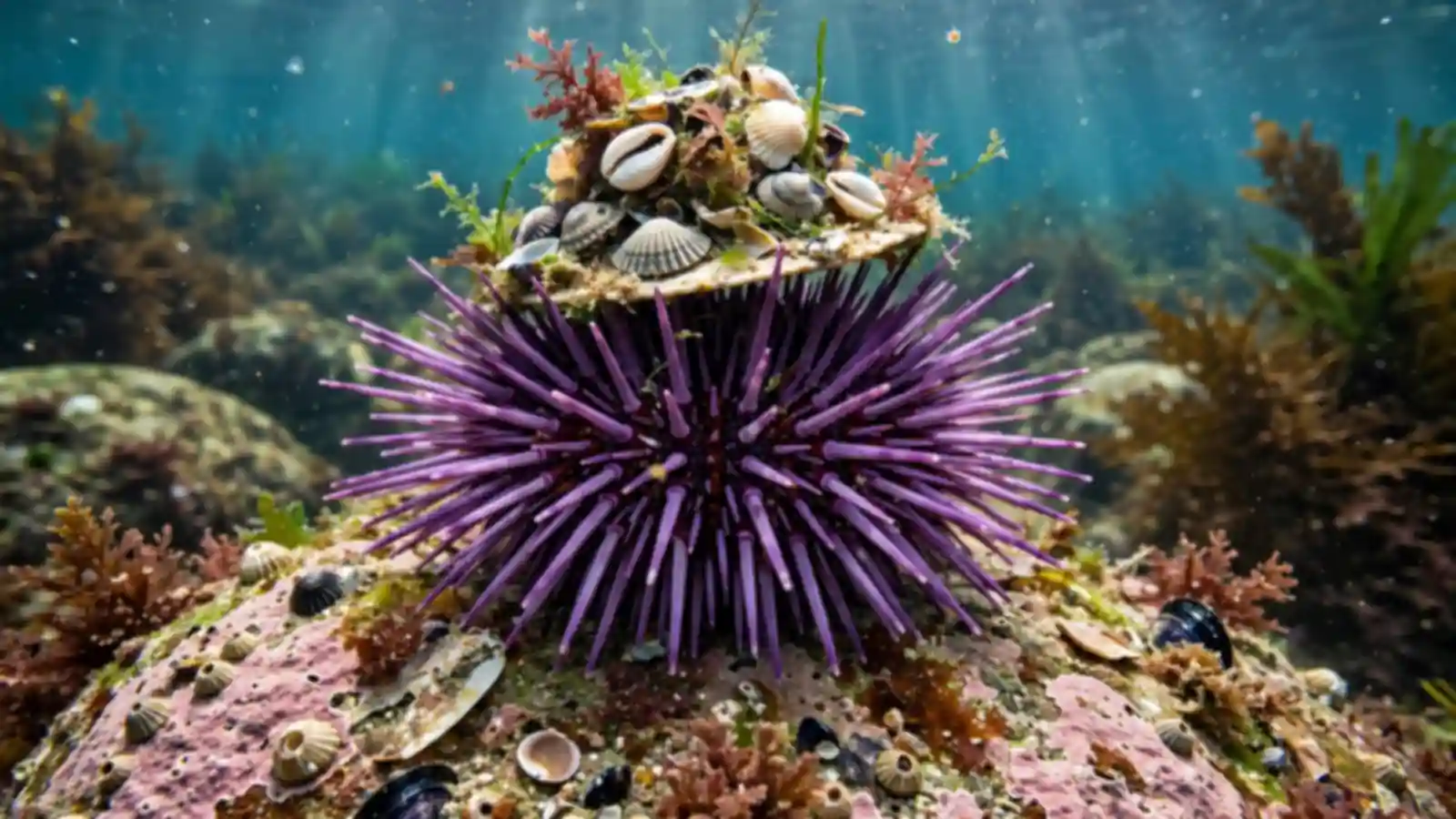
The test is the animal’s skeleton and its armour at once. It is made of calcium carbonate plates, fused into a rigid sphere, and it protects the soft organs inside from predators and from the surge. The spines sit on ball-and-socket joints on the test, and they can move — tilting toward a threat, or sweeping aside to let the animal crawl.
The colour varies a little by individual and by depth, from deep purple to reddish, and it can fade in a stressed or starving animal. A healthy urchin is a vivid purple ball on the reef, and its colour is one of the ways divers recognise it at a glance. The spines are not venomous — the sting, if any, comes from the tiny pincer-like pedicellariae between the spines, which carry a small amount of venom.
Purple Sea Urchin Habitat: Alaska to Baja
It lives along the Pacific coast of North America, from Alaska to Baja California, in tidepools and on rocky reefs from the intertidal zone down to 160 metres. It is the urchin of the kelp forest, the one divers see clustered on the rocks beneath the kelp canopy, and it is at home in cold, nutrient-rich water where kelp grows fast and the current runs strong.
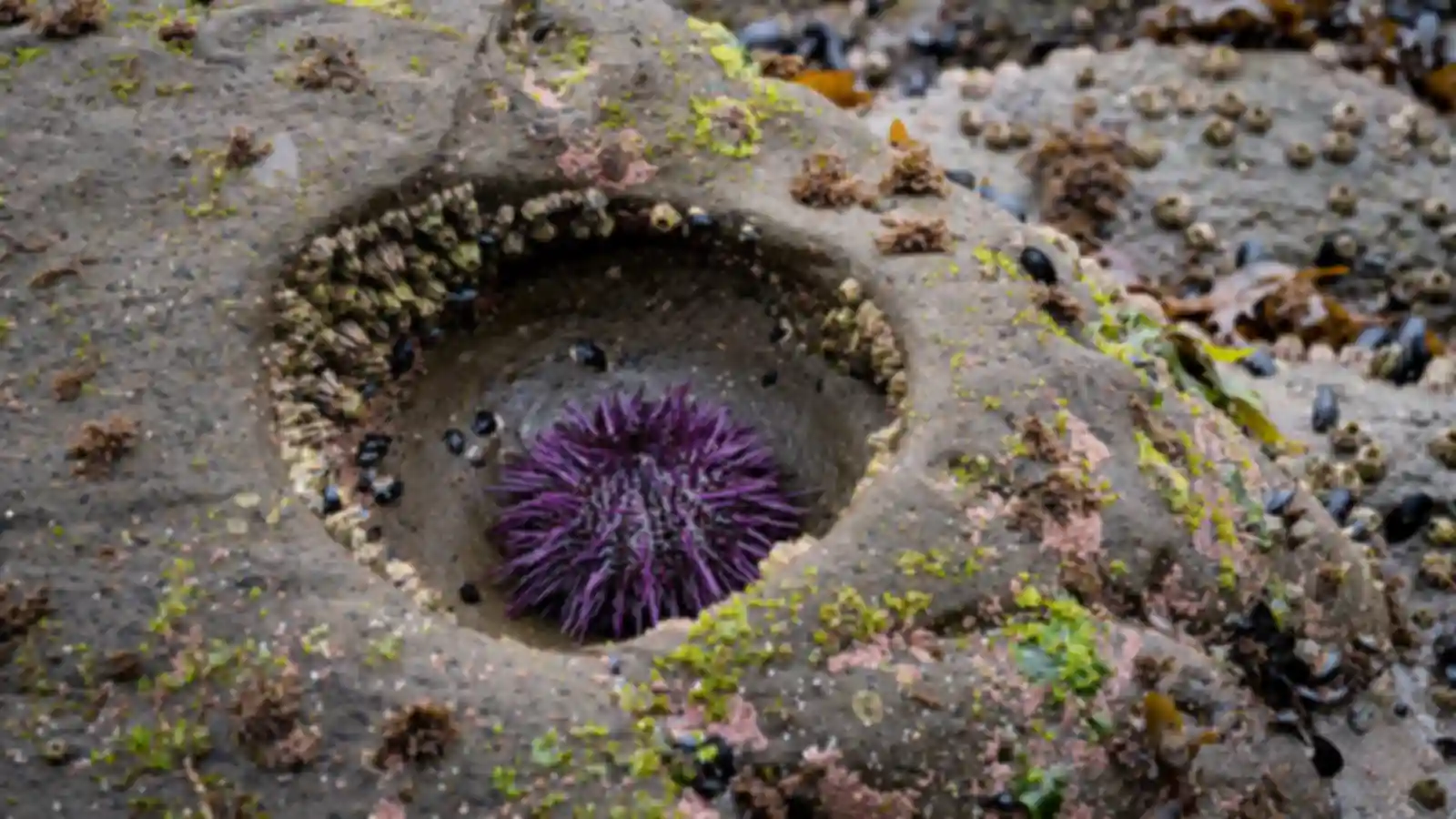
The habitat is defined by kelp. Where kelp forests are healthy, purple sea urchins live in the understorey, grazing the kelp that drifts down and the algae that grow on the rocks, and their numbers are held in check by their predators — sea otters, sunflower sea stars and California sheephead. Where the predators vanish, the urchins multiply and the forest becomes a barren.
The Aquarium of the Pacific’s urchin facts page covers the animal’s Pacific coast range and its tidepool habitat, and it is worth remembering that this is a cold-water animal. It thrives in the cold, upwelling water of the California Current, and it struggles where the water warms.
Aristotle’s Lantern: The Five-Toothed Mouth
It eats with a structure called Aristotle’s lantern — a complex jaw of five teeth, arranged in a ring on the underside of the animal, that can scrape algae from rock and bite through kelp. The name comes from Aristotle, who described the urchin’s mouth in his History of Animals and compared it to a lantern, because the five teeth frame a hollow centre that reminded him of a lamp.
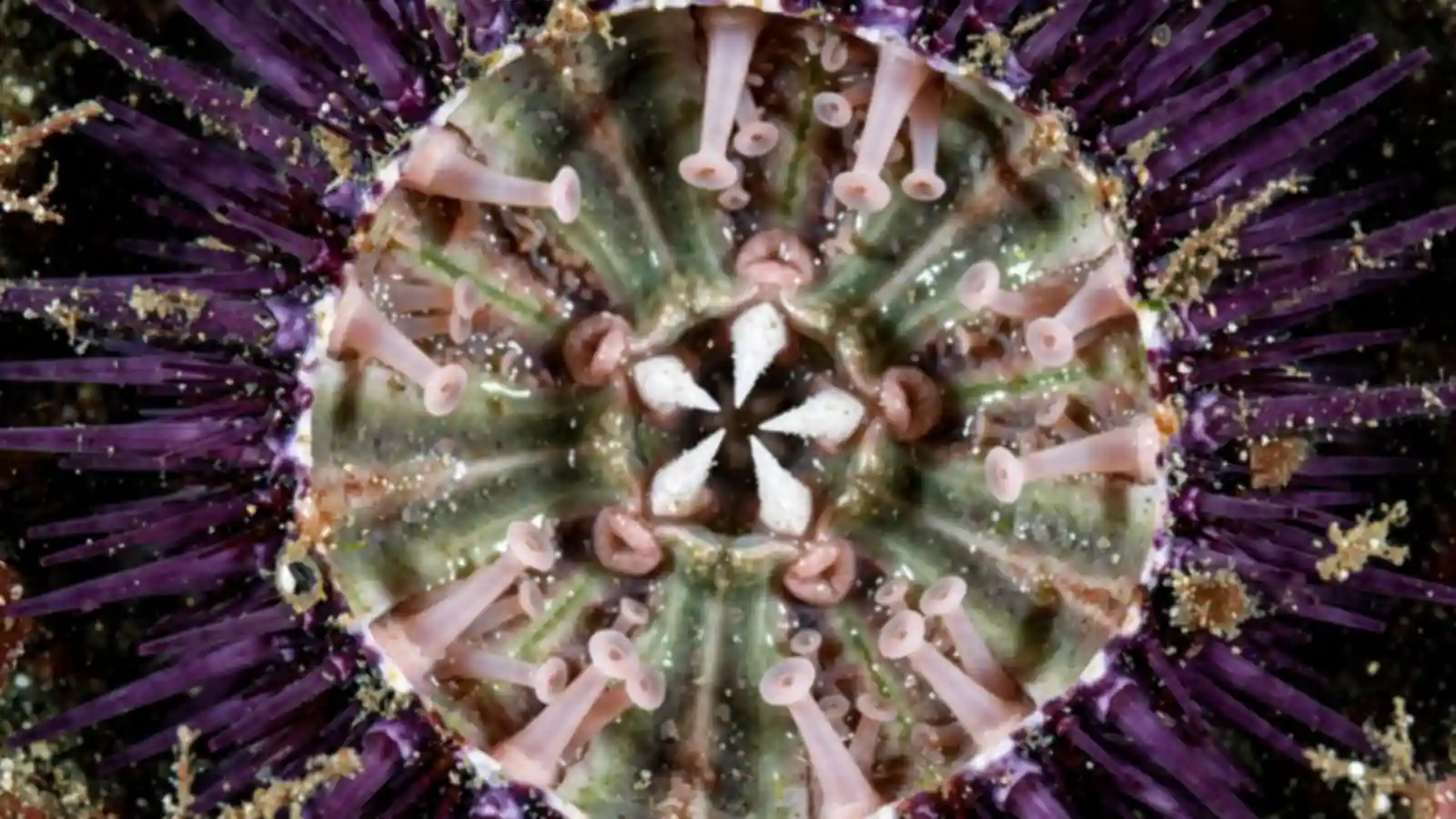
The lantern is a marvel of engineering. Five teeth, each made of a single crystal of calcite, are held in a frame of muscles and plates, and they can move independently — scraping, biting and grinding in turn. The teeth grow continuously, like a rodent’s incisors, because they wear down as they work, and a sea urchin that loses a tooth grows a new one. The lantern lets the urchin eat kelp, scrape rock and even bore into the seabed.
The lantern is also the key difference between a sea urchin and a heart urchin. It has a lantern and uses it to graze; the heart urchin, which burrows in the sand, has no lantern at all, because it feeds on organic particles instead of biting kelp. The lantern is the mark of a grazer, and it is one of the sea’s most effective grazers.
Urchin Barrens: When Kelp Forests Become Bare Rock
An urchin barren is what a kelp forest looks like after the urchins have won. The kelp is gone, eaten to the stubble, and the rocks are bare except for the urchins themselves, clustered in their thousands, grazing the last algae and waiting for the kelp to return. A barren is not a desert — it is a forest that has been eaten, and it can stay barren for years, even decades, because the urchins eat every kelp seedling that tries to grow.
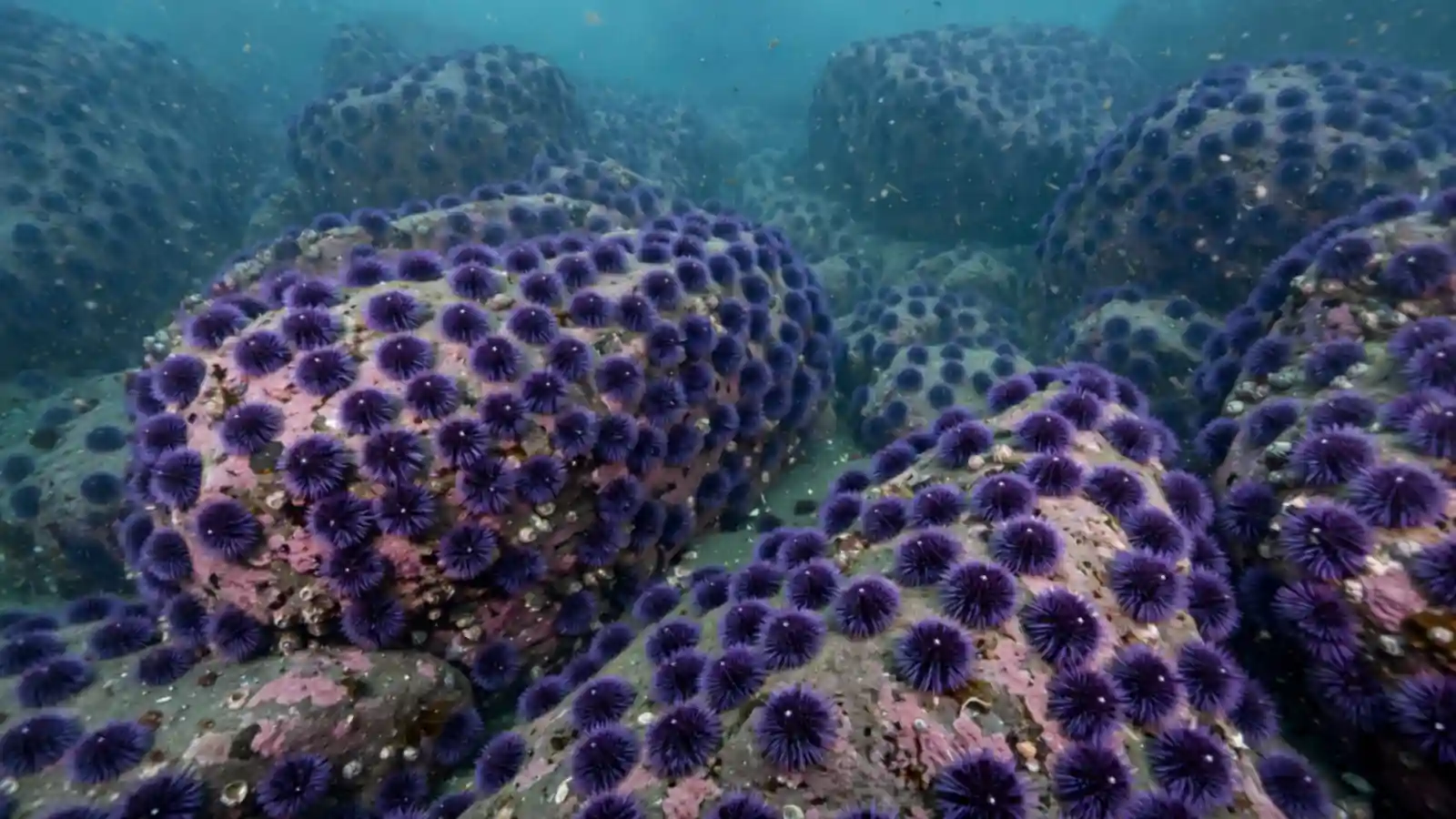
The barrens of the Pacific coast have a specific cause. The sunflower sea star, its main predator, was wiped out by sea star wasting disease starting in 2013 — about 90% of the sunflower stars died — and with the predator gone, the urchin population exploded. In some areas urchin numbers rose by more than 1,000%, and the kelp forests that had stood for decades became barrens within a few years. The figures come from the monitoring that followed the die-off, and they are the measure of what one predator’s loss can do.
The barren is also a trap. The urchins in a barren are starving — there is almost nothing to eat — but they can survive for years on almost nothing, waiting for the kelp to return. And while they wait, they eat every seedling that settles, so the forest cannot regrow until the urchins are gone. The only way out is for the predators to return, or for the urchins to be removed, and until one of those happens the barren stays barren.
Purple Sea Urchin Predators: Otters, Stars and Sheephead
Its predators are the kelp forest’s guardians. The sea otter is the most famous: an otter can eat dozens of urchins a day, cracking them open with a stone and eating the soft roe inside, and a healthy otter population keeps the urchin numbers low and the kelp forest standing. The sunflower sea star is the second guardian, prying urchins off the rock and eating them whole — and it was the loss of the sunflower star, not the otter, that let the barrens form.

The California sheephead is the third guardian, a large wrasse with powerful jaws that can crush an urchin’s test. Sheephead eat urchins throughout the kelp forest, and their numbers matter: where sheephead are fished out, urchin numbers rise, and where sheephead are protected, the forest holds. The three predators work together, each taking urchins in a different way, and the forest depends on all three.
The predators are also the reason it is spiny. The spines are not venomous, but they are sharp, and they make the urchin hard to grip and hard to swallow. An otter learns to handle the spines; a sheephead crushes through them; a sunflower star simply swallows the animal whole, spines and all. The spines slow the predators down, but they do not stop them — and the urchin’s real defence is not its spines, but its numbers.
Purple Sea Urchin Lifespan: 70 Years and Counting
It can live more than 70 years, which makes it one of the longest-lived animals on the reef — and also one of the most patient. The animal grows slowly, a few millimetres a year, and it can survive for years on almost no food, waiting in a barren for the kelp to return. A 70-year-old urchin is a veteran of the kelp forest, and it has survived by being tough, spiny and almost impossible to kill.
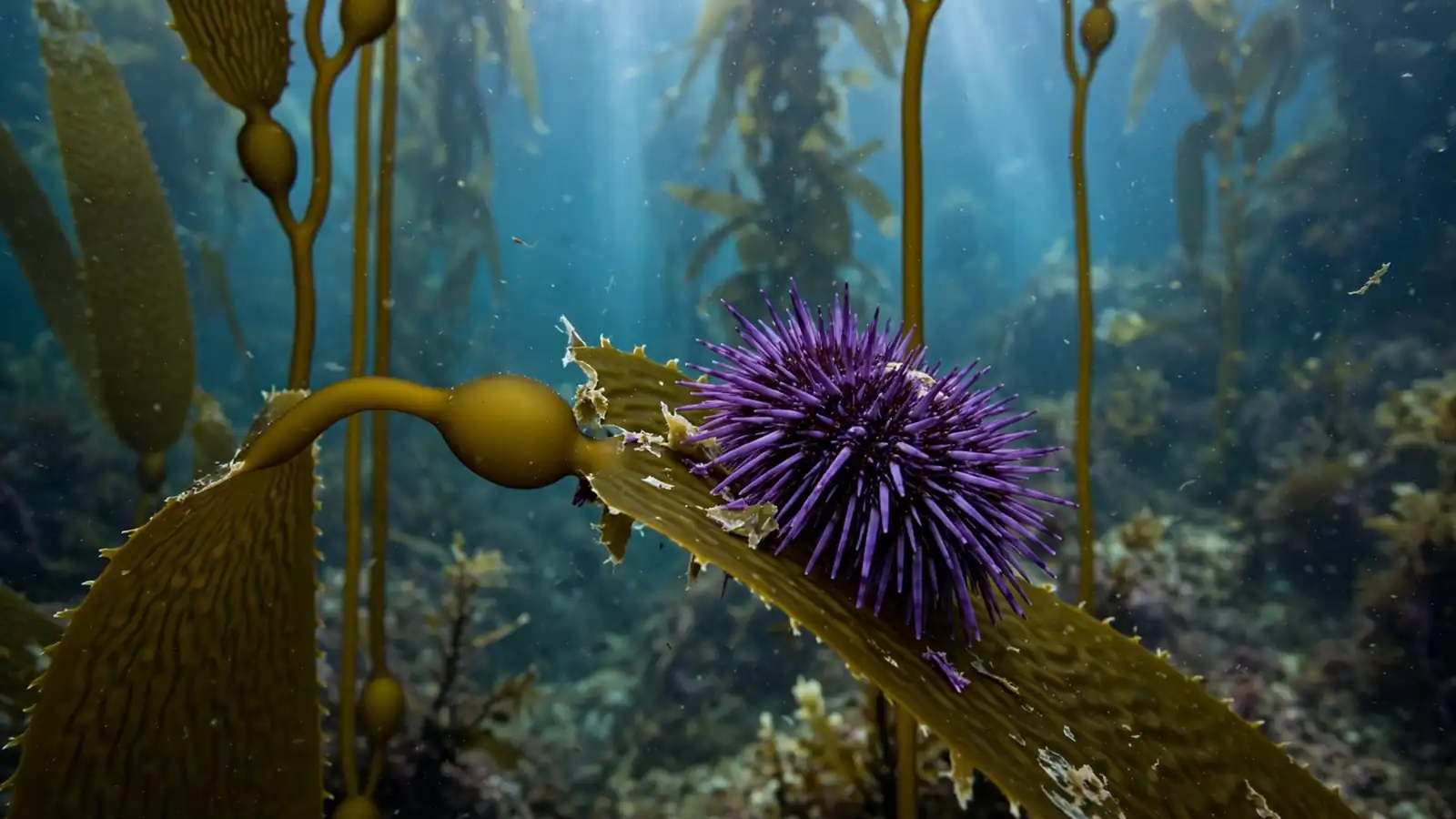
Most purple sea urchins do not reach 70. They are eaten by otters, stars and sheephead, and most are gone by the time they are about 20 years old. The 70-year figure is the maximum, not the average, and it belongs to the lucky few that dodge the predators and find a patch of reef with enough food to keep growing. The long life is a measure of what the animal can do, not what it usually does.
The long lifespan is also why the barrens last so long. An urchin that can live 70 years can wait out a decade of starvation, and a barren full of long-lived urchins is a barren that will not recover on its own. The kelp forest’s recovery depends on the urchins dying or being eaten, and the urchins are in no hurry to do either.
Fun Facts
- It can live more than 70 years.
- Its mouth is called Aristotle’s lantern — five teeth in a ring, named by Aristotle himself.
- When sunflower stars died off from 2013, urchin numbers rose over 1,000% in some areas.
- Its spines are not venomous — the sting comes from tiny pincers between the spines.
- A sea otter can eat dozens of purple sea urchins a day.
- Urchins in a barren can survive for years on almost nothing, waiting for the kelp to return.
Frequently Asked Questions
What is a purple sea urchin?
The purple sea urchin is Strongylocentrotus purpuratus, a spiny purple ball five to ten centimetres across that lives along the Pacific coast of North America, from Alaska to Baja California. It grazes kelp with a five-toothed mouth called Aristotle’s lantern, and it can live more than 70 years.
What is Aristotle’s lantern?
Aristotle’s lantern is the sea urchin’s mouth: a complex jaw of five teeth, each a single crystal of calcite, arranged in a ring on the underside of the animal. The name comes from Aristotle, who compared the structure to a lantern. The teeth grow continuously because they wear down as they work.
What is an urchin barren?
A barren is what a kelp forest looks like after urchins have eaten it: the kelp is gone, the rocks are bare, and the urchins cluster in their thousands, eating every kelp seedling that tries to grow. Pacific coast barrens formed after sea star wasting disease from 2013 wiped out about 90% of the sunflower sea stars, the urchins’ main predator, and urchin numbers rose over 1,000% in some areas.
Are purple sea urchin spines venomous?
No, the spines themselves are not venomous. The sting, if any, comes from the tiny pincer-like pedicellariae between the spines, which carry a small amount of venom. The spines are sharp and make the urchin hard to grip, but they are a mechanical defence, not a chemical one.
How long do purple sea urchins live?
More than 70 years at the maximum, which makes them one of the longest-lived animals on the reef. Most are eaten by otters, sunflower sea stars or California sheephead by the time they are about 20 years old. The long life is the maximum, not the average.
What eats purple sea urchins?
Sea otters, sunflower sea stars and California sheephead are the main predators. Otters crack them open with stones, sunflower stars swallow them whole, and sheephead crush the test with powerful jaws. A healthy population of all three keeps urchin numbers low and the kelp forest standing.
Do purple sea urchins eat kelp forests?
Yes, when their predators vanish. In a healthy forest they graze just enough kelp to keep the balance, but when otters, sunflower stars or sheephead decline, urchin numbers explode and they eat the forest to the stubble, turning it into a bare urchin barren that can last for years.
Similar Species Worth Exploring
Keep Exploring
A spiny purple ball, a five-toothed lantern, and a kelp forest that hangs in the balance — keep exploring the purple sea urchin.