Sea Hare
Sea Hare: the giant sea slug with purple ink and a Nobel Prize
The sea hare is a giant sea slug with rabbit-ear tentacles and purple ink, and it is the animal that won a Nobel Prize for the science of memory. The California one’s simple nervous system let researchers trace how memories are stored, cell by cell, and the work earned the 2000 Nobel Prize. This guide covers its ink, its ears, and the science that made it famous.
By Emily Carter · Reviewed by our vet team · Updated 10 November 2026 · 10 min read
Purple ink escapeRabbit-ear rhinophoresWon a Nobel Prize
At a Glance
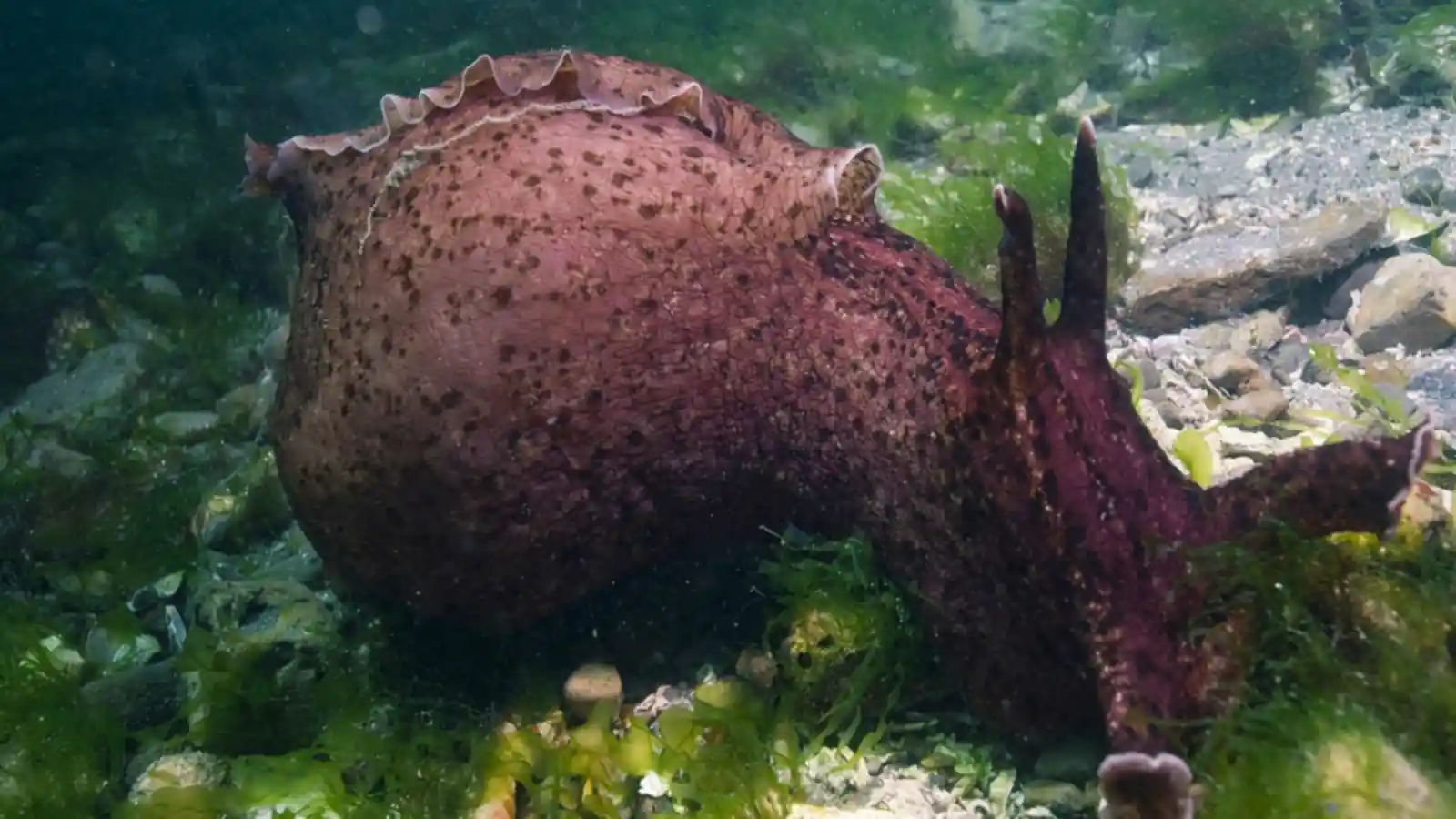
A sea hare is a large, soft sea slug that glides over rocks and tide pools, with two rolled tentacles on its head that look like a rabbit’s ears. It has no shell to hide in, so it defends itself with ink, and its nervous system is so simple that it taught scientists how memory works. Here it is at a glance.
Sea Hare Size: From Fingernail to 75 cm
Sea hares range from a few centimetres to three-quarters of a metre. The black, Aplysia vaccaria, is the largest, growing to 75 centimetres long and weighing up to 14 kilograms, and it is among the largest gastropods in the world — though the honest wording is among the largest, not the largest, because the claim is disputed. The California, the famous one, is smaller, usually 20 to 40 centimetres.

The size is its defence as much as its distinction. A big one is too large for most small predators to tackle, and its soft body can squeeze into crevices that a shelled snail could not enter. The young start life tiny, grazing algae in the tide pools, and grow fast on a rich diet, reaching full size in a single season.
Why Is It Called a Sea Hare? The Rabbit Ears
It is named for its ears. Two rolled tentacles, called rhinophores, stand on its head like a rabbit’s ears, and they give the animal its name in English and in several other languages. The rhinophores are sense organs: they taste the water for chemicals, tracking algae, mates and danger, and they can be withdrawn into pockets when the animal is disturbed.
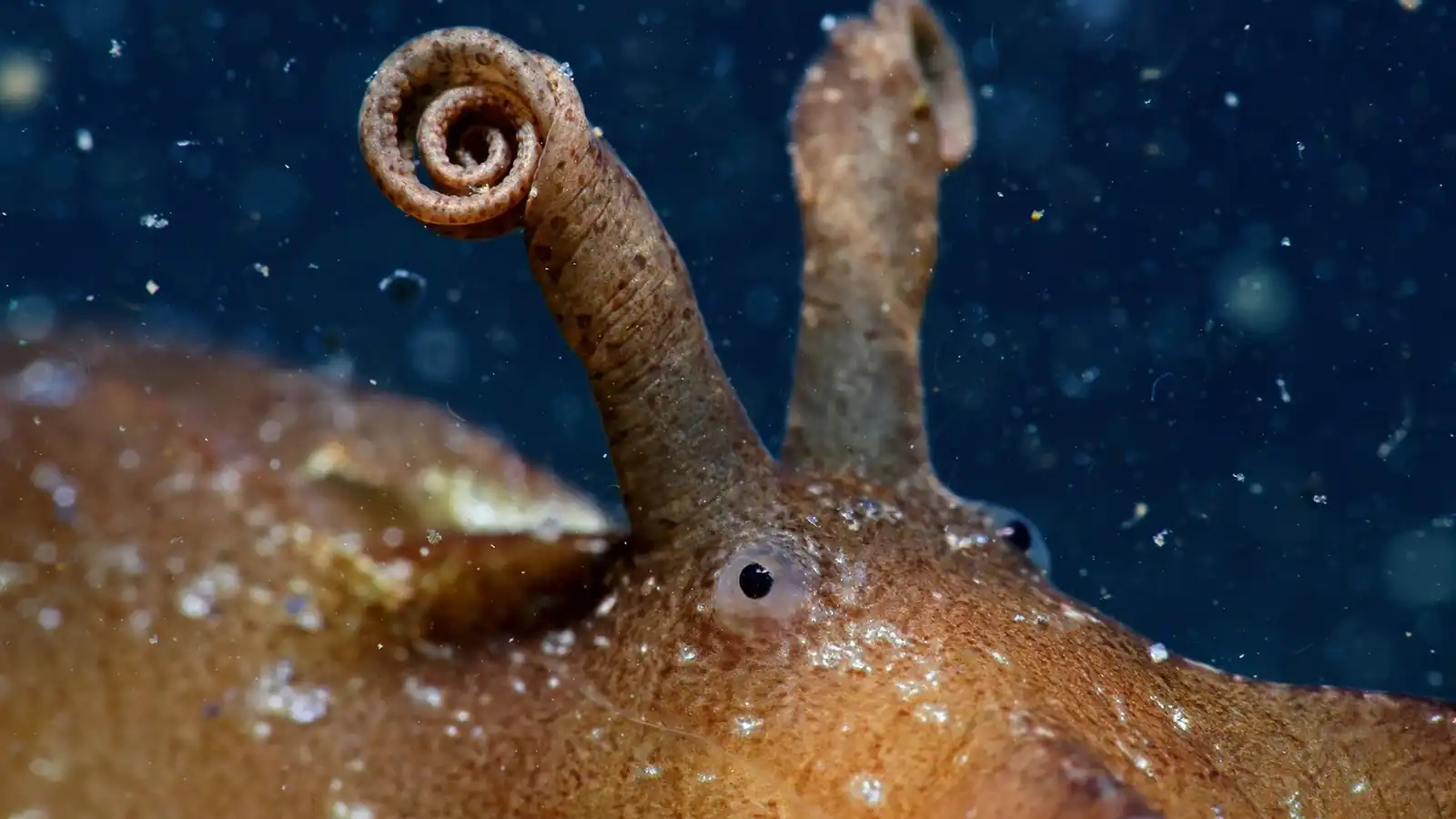
The ears are its most recognisable feature, and they are the reason it looks like a rabbit at a glance. The body behind them is soft and slug-like, with a small internal shell hidden under the skin, and two flaps on the sides that the animal uses to swim in short bursts. The rabbit ears are the giveaway, and once you have seen them you will not mistake it for any other slug.
Purple Ink: How It Escapes
It escapes in a cloud of purple ink. When a predator grabs it, the animal releases ink from a gland near its gills, and the cloud is purple, not black, because the colour comes from the red algae it eats. The ink also carries a second secretion, a milky opaline fluid that jams the predator’s sense of smell, so the attacker loses the scent of its prey in the cloud.
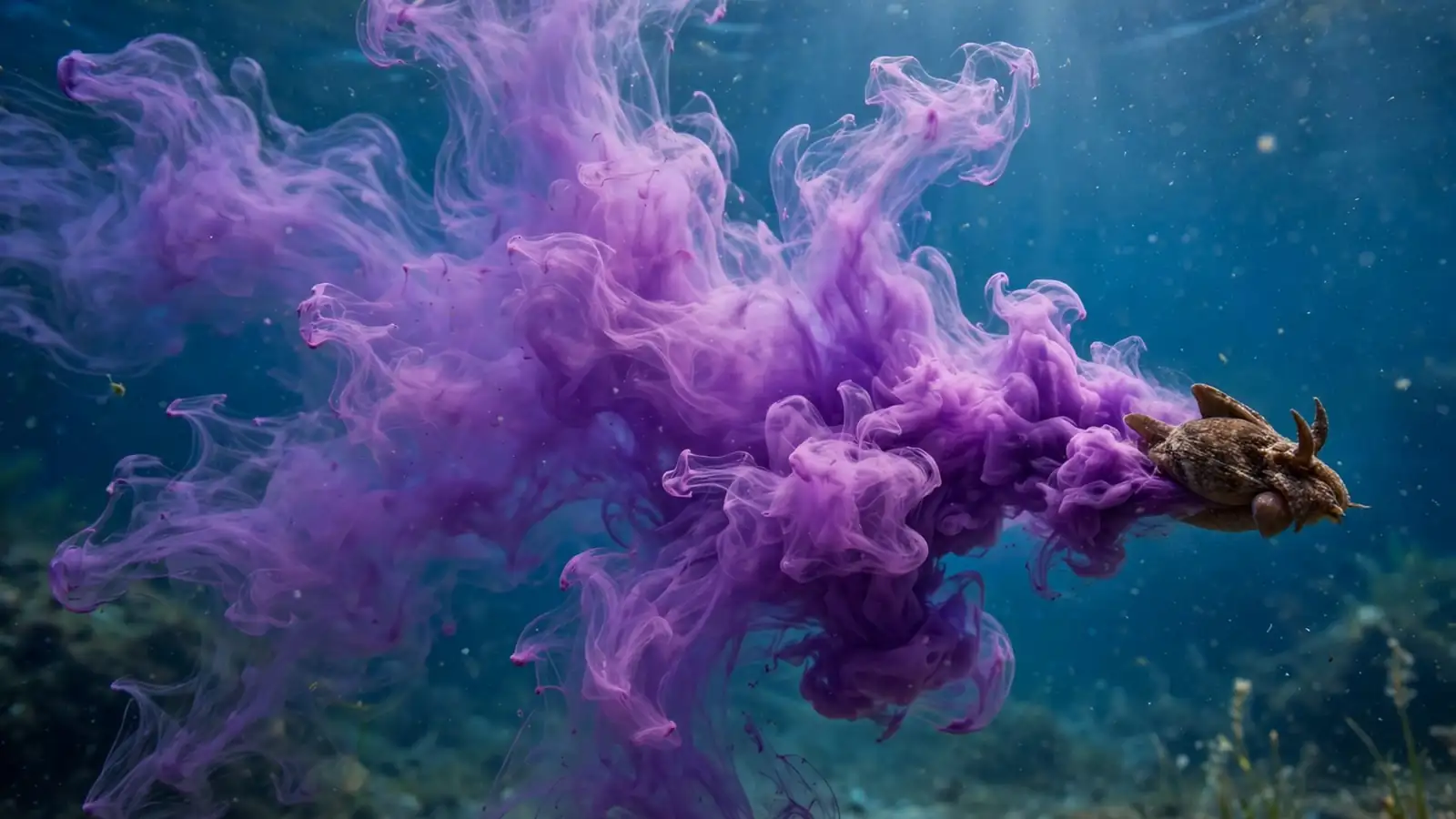
The ink is harmless to humans, despite an old note by Charles Darwin in the 1830s that described a stinging sensation. Modern sources say the ink is harmless to people, and Darwin’s note is best read as a historical curiosity, not a fact. The ink’s job is to confuse predators, and it works: a fish that grabs one often drops it in the cloud and swims away, and the hare glides off to safety. For the full detail, see the national park guide to sea hares.
What Do Sea Hares Eat? Algae and the Colour of Ink
Sea hares eat algae, above all red algae, and the diet decides the colour of the ink. One that has been eating red algae produces purple ink, while one that has been eating green algae produces a paler ink, and the colour tracks the menu exactly. The algae also supply the pigments that colour the animal’s body, so its colour is a record of what it has been eating.
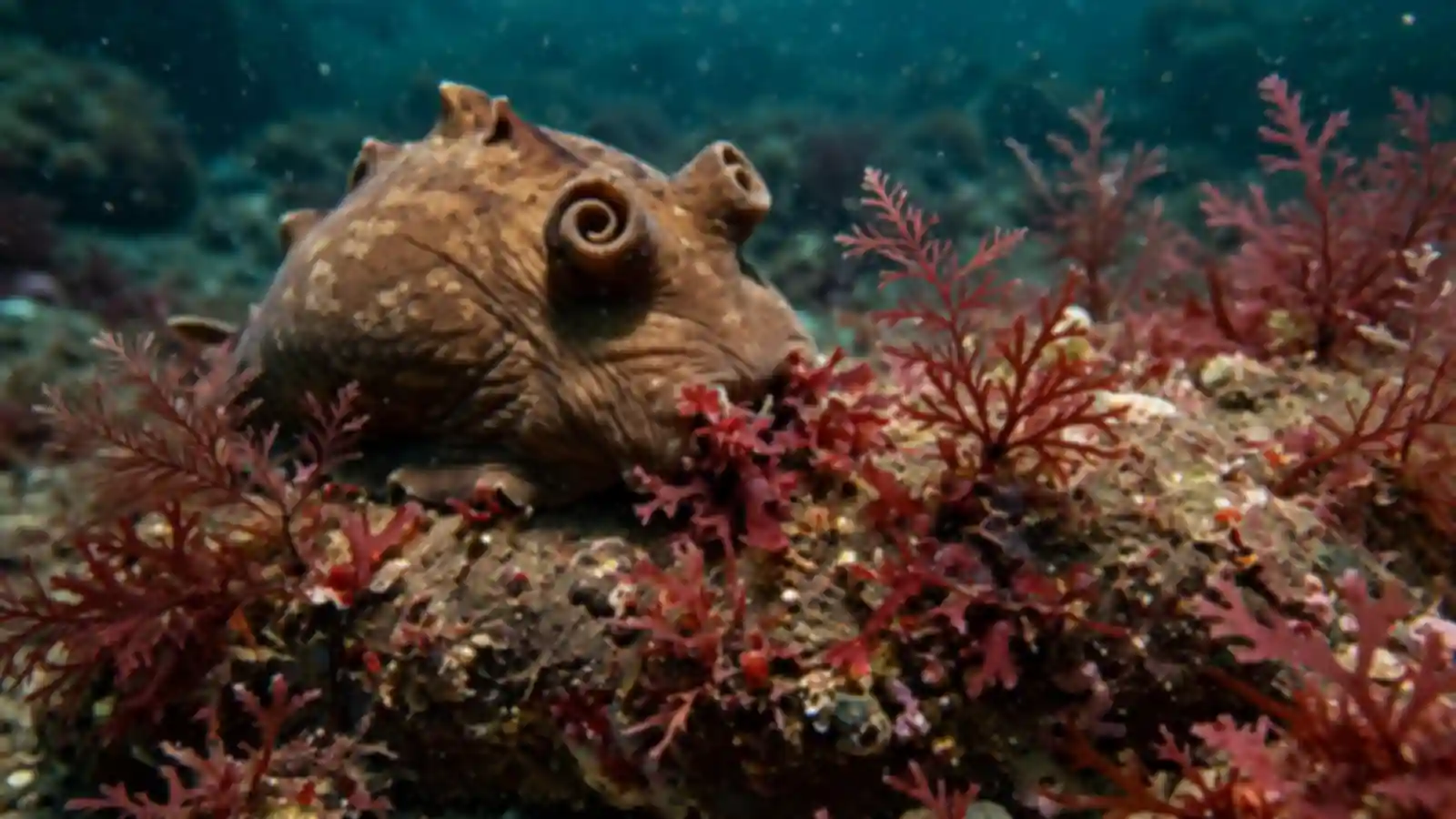
The feeding is done by rasping, like the limpet’s grazing, and one can clear a patch of algae quickly. The animals gather where the algae are thick, and in a good season a tide pool can hold dozens of them, all grazing the same rock. The diet is simple, but it powers the animal’s fast growth and its famous ink.
The California One and the Nobel Prize
The California, Aplysia californica, is the animal that won a Nobel Prize. In the 1960s, the neuroscientist Eric Kandel chose it for memory research because its nervous system is simple: a few thousand large neurons, each one identifiable, doing the work that billions of neurons do in a human brain. By studying how it learns, Kandel traced the cellular basis of memory, and the work earned the Nobel Prize in Physiology or Medicine in 2000.

Its simplicity is its gift to science. A single neuron can be watched as it changes during learning, and the molecules that store a memory in it are the same molecules that store a memory in a person. The work is still going on, and the California is still the laboratory animal of choice for the study of memory, a giant sea slug that taught us how we remember.
Mating Chains: Hermaphrodites in a Line
Sea hares are hermaphrodites, each animal carrying both male and female organs, and they mate in chains. A line of sea hares forms head to tail on the seabed, each animal mating as a male with the one in front and as a female with the one behind, and a chain can hold dozens of animals. The chains are a common sight in the breeding season, when the animals gather in the tide pools to spawn.
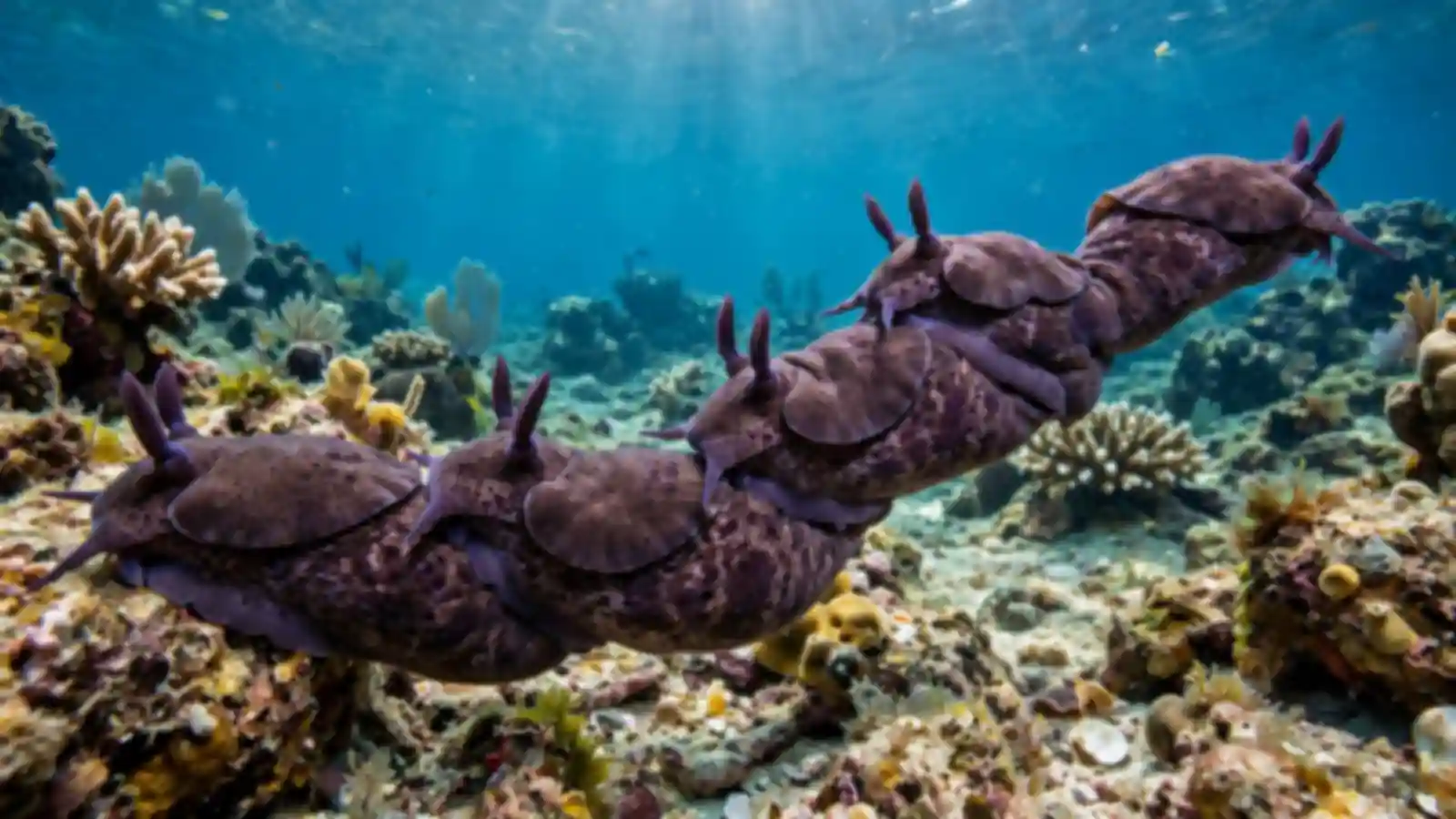
After mating, each animal lays long pink ribbons of eggs, tangled like noodles on the rocks, and a single animal can lay millions of eggs in a season. The eggs hatch into tiny swimming larvae, and most are eaten, but the few that survive settle on the rocks and grow into the next generation. Its life is short, about a year, and the chains are its way of making the most of it.
The Bubble Snail: A Related Opisthobranch
The bubble snail is a related opisthobranch, not one of these, and it earns its own section here as a dataset fold. It is a small animal with a thin, translucent, bubble-shaped shell, and it lives on sandy bottoms, burrowing just under the surface. Its name comes from the shell’s shape, a fragile bubble that looks too thin to protect anything.

The bubble snail shares its group, the opisthobranchs, but it is a different animal in a different family, and its facts should not be merged with this animal’s. It is smaller, it burrows rather than glides, and its shell, though thin, is a real shell, where this one’s is hidden inside. The two are cousins, and the bubble snail is the small, quiet relative of the famous family.
Fun Facts
- Its ink is purple, not black, because its colour comes from red algae.
- The California one’s nervous system earned Eric Kandel the 2000 Nobel Prize.
- The black grows to 75 centimetres and is among the largest gastropods in the world.
- Sea hares mate in chains, each animal acting as male to the one in front and female to the one behind.
- A single animal can lay millions of eggs in pink ribbons on the rocks.
- Its ink is harmless to humans, despite Charles Darwin’s old note about a sting.
Frequently Asked Questions
Why is it called a sea hare?
The sea hare is named for the two rolled tentacles, called rhinophores, that stand on its head like a rabbit’s ears. The rhinophores are sense organs that taste the water for chemicals, tracking algae, mates and danger.
Is sea hare ink poisonous?
No, sea hare ink is harmless to humans. The ink is purple, coloured by the red algae the animal eats, and it also carries an opaline secretion that jams a predator’s sense of smell. Charles Darwin’s 1830s note about a stinging sensation is a historical curiosity, not a fact.
How big do sea hares get?
The black, Aplysia vaccaria, grows to 75 centimetres long and up to 14 kilograms, and it is among the largest gastropods in the world. The California, the famous one, is usually 20 to 40 centimetres.
What do sea hares eat?
Sea hares eat algae, above all red algae. The diet decides the colour of the ink: red algae give purple ink, and green algae give a paler ink. A sea hare grazes algae from rocks with its radula, and a tide pool can hold dozens of them in a good season.
Why are sea hares important to neuroscience?
The California, Aplysia californica, has a simple nervous system of a few thousand large, identifiable neurons. Eric Kandel used it to trace the cellular basis of memory, work that earned the Nobel Prize in Physiology or Medicine in 2000. The molecules that store memory in a sea hare are the same ones that store memory in people.
Where do sea hares live?
Sea hares live on rocky shores and in tide pools around the world, in temperate and tropical seas. The California lives on the Pacific coast of North America, and the black lives in the same waters, grazing algae on the rocks.
How long do sea hares live?
Sea hares live about a year. They grow fast on a rich diet of algae, reach full size in a single season, mate in chains, lay millions of eggs, and die after breeding. It is a short, fast life for a large animal.
Similar Species Worth Exploring
Keep Exploring
Keep exploring the mollusks: meet the limpet, a small cone that holds its rock against the whole ocean, or browse the whole family in our guide to the types of mollusks. Then come back to the giant slug with the purple ink, the sea hare.