Mud Crab
Mud Crab: the heavyweight of the mangroves, buried by day and hunting by night
The mud crab is a heavyweight of the mangrove forest: a broad, powerful crab with a shell as wide as a dinner plate, claws like nutcrackers, and a life split between a burrow in the mud and a hunt in the dark. It is the crab that fishermen fear and chefs prize.
By Emily Carter · Reviewed by our vet team · Updated 10 November 2026 · 9 min read
Shell to 28 cm, weight to 3 kgBurrows in mangrove mud by dayFemales swim up to 50 km to spawn
At a Glance
The mud crab is a large mangrove crab of the species Scylla serrata, one of four species in the genus Scylla that share the name, and it is the biggest and best known of them. It lives in the mangroves and estuaries of the Indo-Pacific, from East Africa to the Pacific islands, burrowing in the mud by day and hunting by night, and it is prized as food wherever it is caught.
Mud Crab Size: A Heavyweight
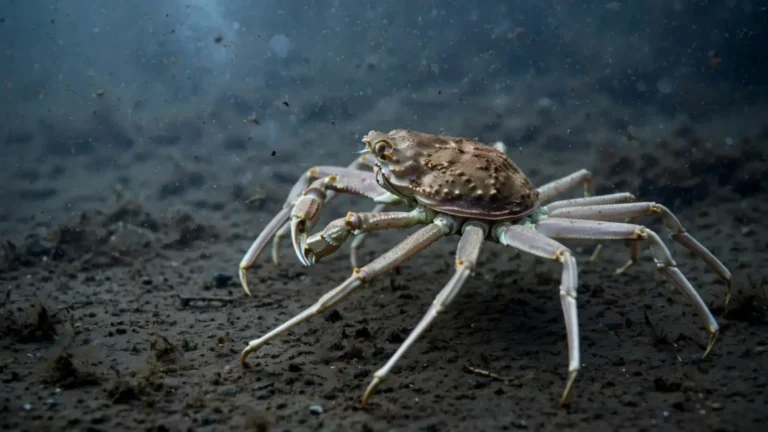
It is a heavyweight: its carapace, the broad, smooth shell across its back, reaches 25 to 28 centimetres wide, and a large crab weighs 2 to 3 kilograms, as heavy as a small bag of flour. It is one of the biggest crabs of the mangrove forest, and its claws are its signature — massive, smooth and powerful, with a single large tooth on the fixed finger, strong enough to crush an oyster shell.

The four species of the genus Scylla all share the name, and they are hard to tell apart without a close look at the spines and the claws. Scylla serrata, the species of this guide, is the largest and the most widespread, and it is the one most often caught and eaten. The size is the point: this is not a small crab that happens to live in the mud, it is a big crab that owns the mangrove.
Life in the Mangroves
It lives in the mangrove forests and estuaries of the Indo-Pacific, from the east coast of Africa through South-East Asia to northern Australia and the Pacific islands, in shallow water from the tide line to about 50 metres deep. It has also been introduced to Hawaii, where it has settled into the same mangrove and estuary habitat. The mangrove is its whole world: the tangled roots give it shelter, the mud gives it a burrow, and the estuary gives it food.
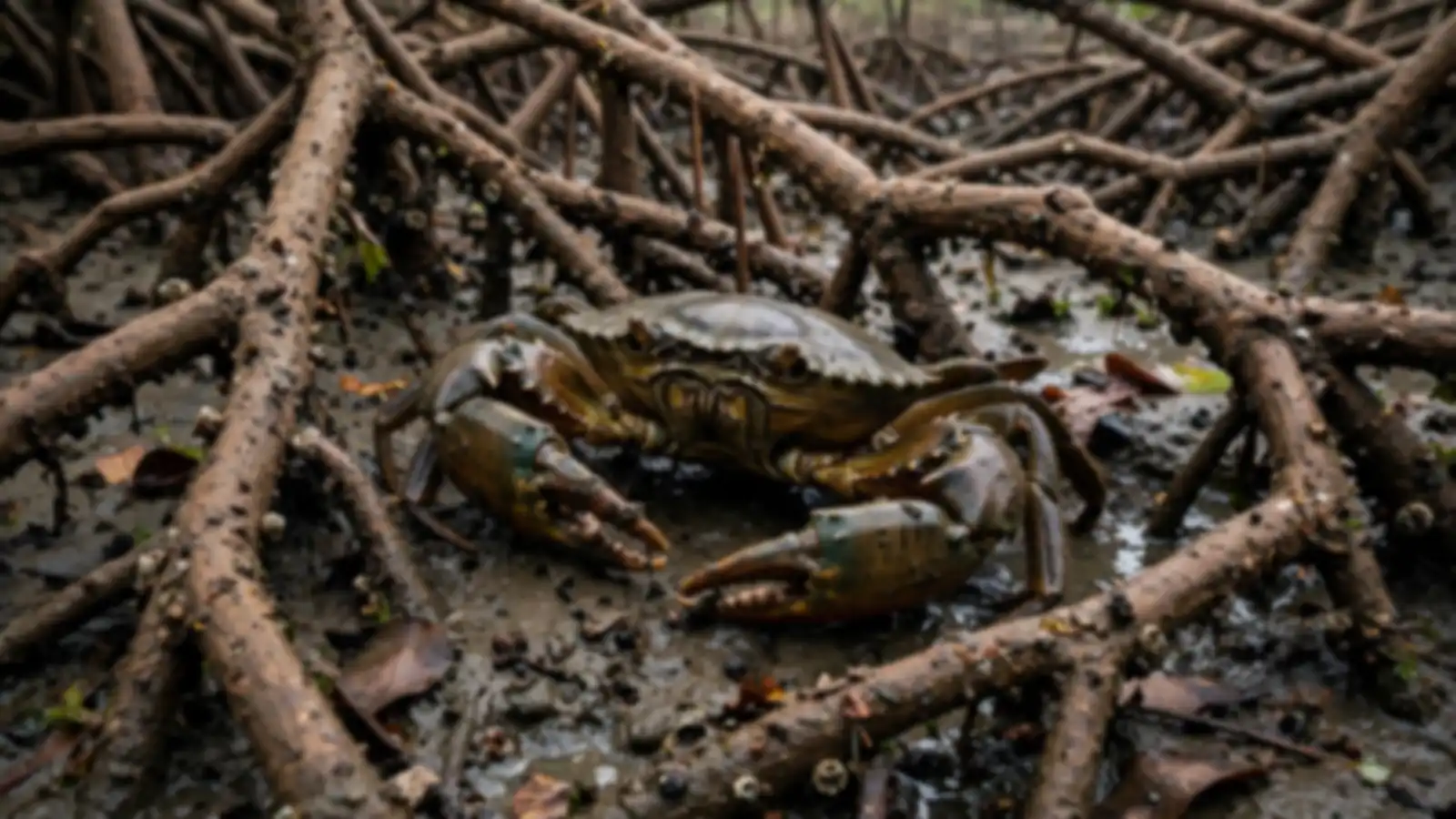
The crab needs the mangrove’s mix of salt and fresh water, and it needs the mud. It burrows into the muddy banks of the mangrove creeks, digging a burrow that it returns to every day, and it comes out at night to hunt in the shallow water and on the mudflat. Where the mangroves are cut down, it disappears with them.
Burrows and Night Feeding
By day it sits in its burrow, a hole dug into the muddy bank of a mangrove creek, with only its eyes and the tips of its claws showing above the mud. The burrow is its shelter from the sun, from predators and from the drying tide, and the crab defends it fiercely, returning to the same burrow day after day.
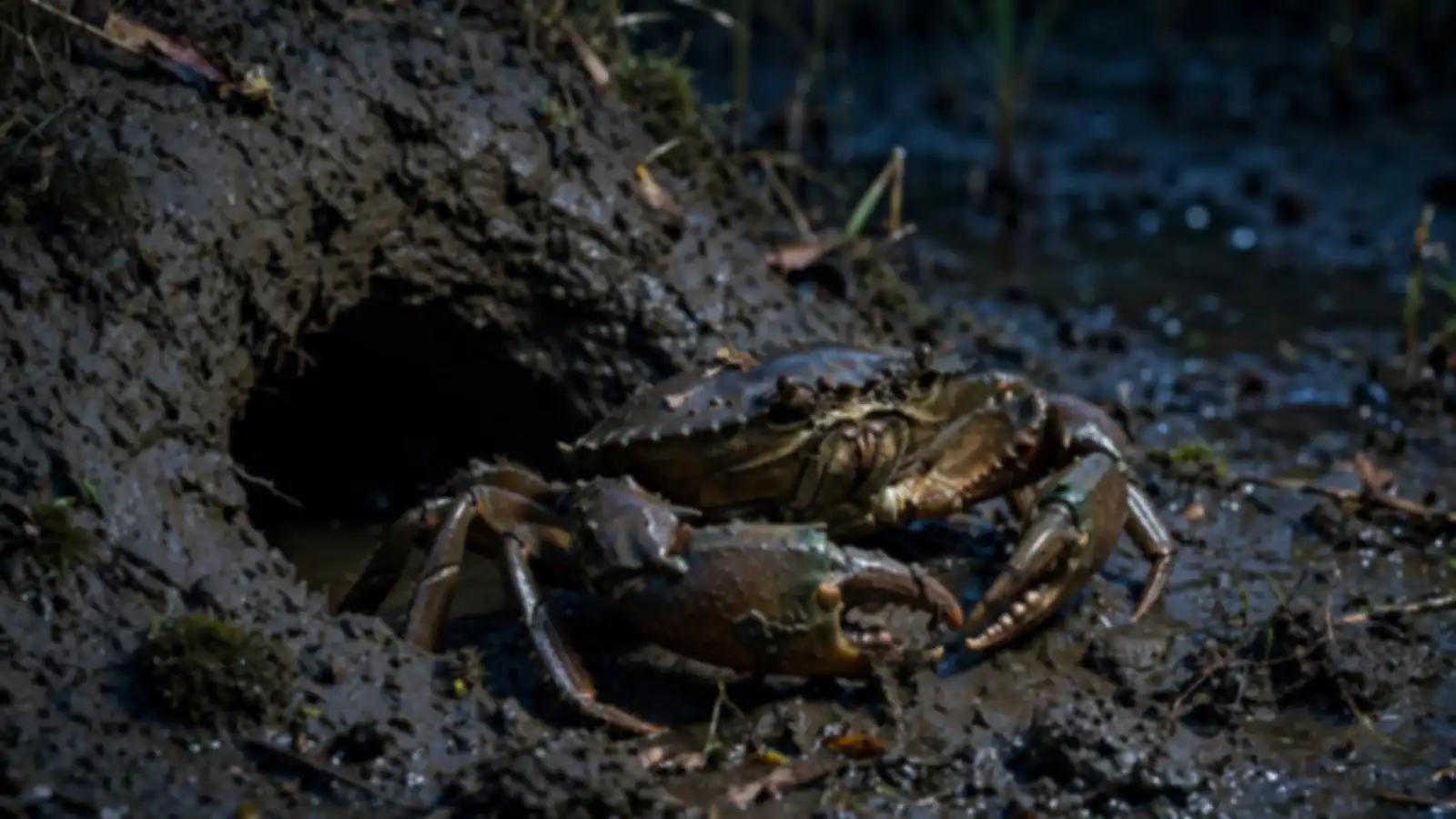
By night it comes out to hunt. It is a nocturnal feeder, and it hunts in the dark in the shallow water and on the mudflat, using its powerful claws to crush bivalves and small crabs and its speed to catch shrimps and small fishes. It is an aggressive hunter, and it will fight anything that challenges it — including a fisherman’s hand, which is why mud crabs are handled with care and with tongs.
What Do They Eat?
Mud crabs eat shrimps, crabs, fishes and bivalves, and they prefer oysters above all: one will crush an oyster shell with its massive claw and pick out the flesh, and it will eat any bivalve it can open. They also eat small fishes, shrimps and other crabs, and they will scavenge dead animals when they find them.
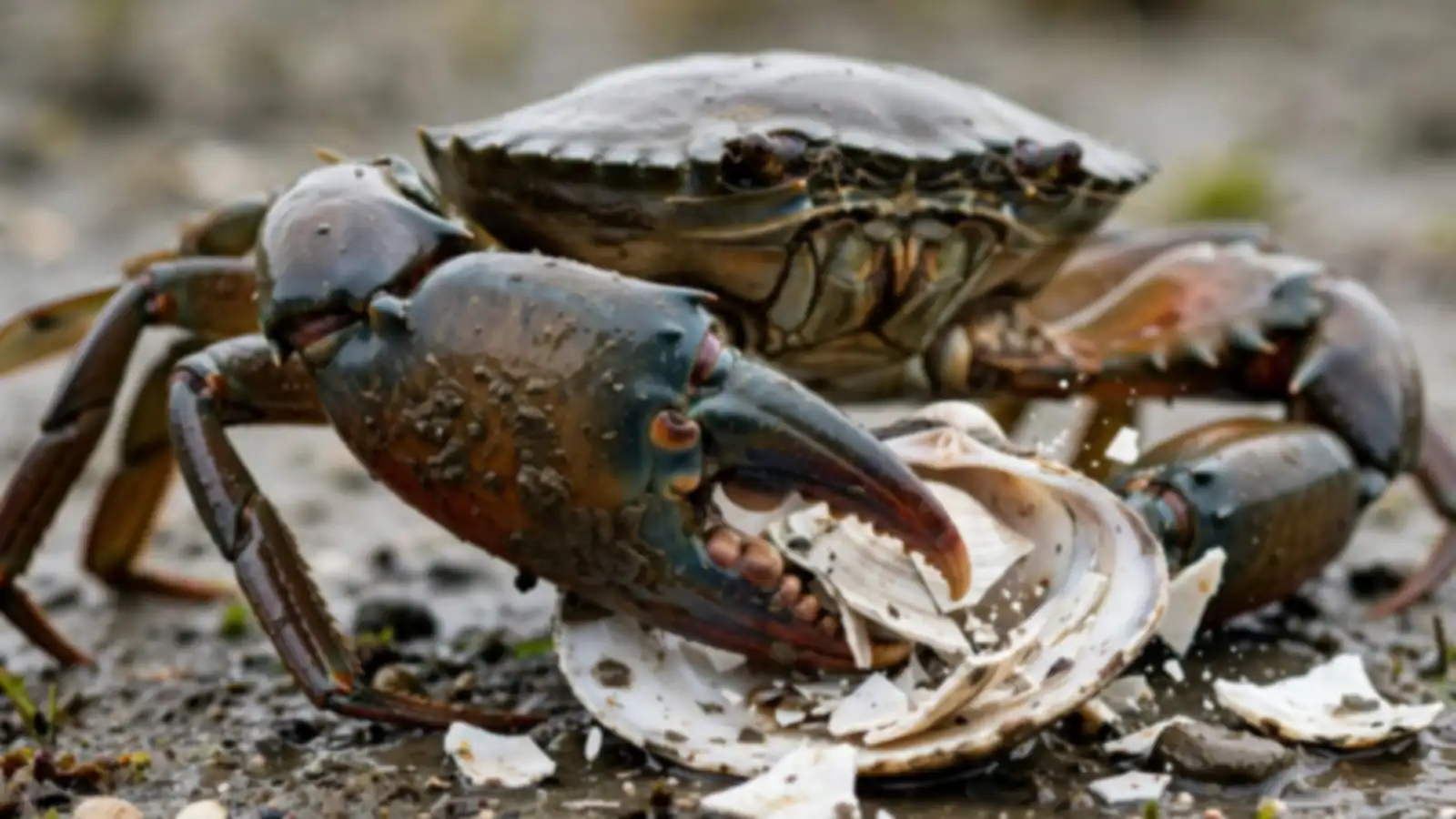
The diet is what makes it a pest in oyster farms and a prize on the dinner table. It eats the same animals that people eat, and it eats them with the same enthusiasm, which is why oyster farmers curse it and chefs praise it. The crab is a predator of the mangrove, and the oyster is its favourite prey.
Reproduction: The Offshore Swim
When a female is ready to spawn, she leaves the mangrove and swims out to sea, travelling up to about 50 kilometres offshore to release her eggs in the open ocean. She carries millions of eggs under her abdomen, in a spongy, orange mass, and she releases them in the deep water where the currents will carry the larvae far from the estuary.
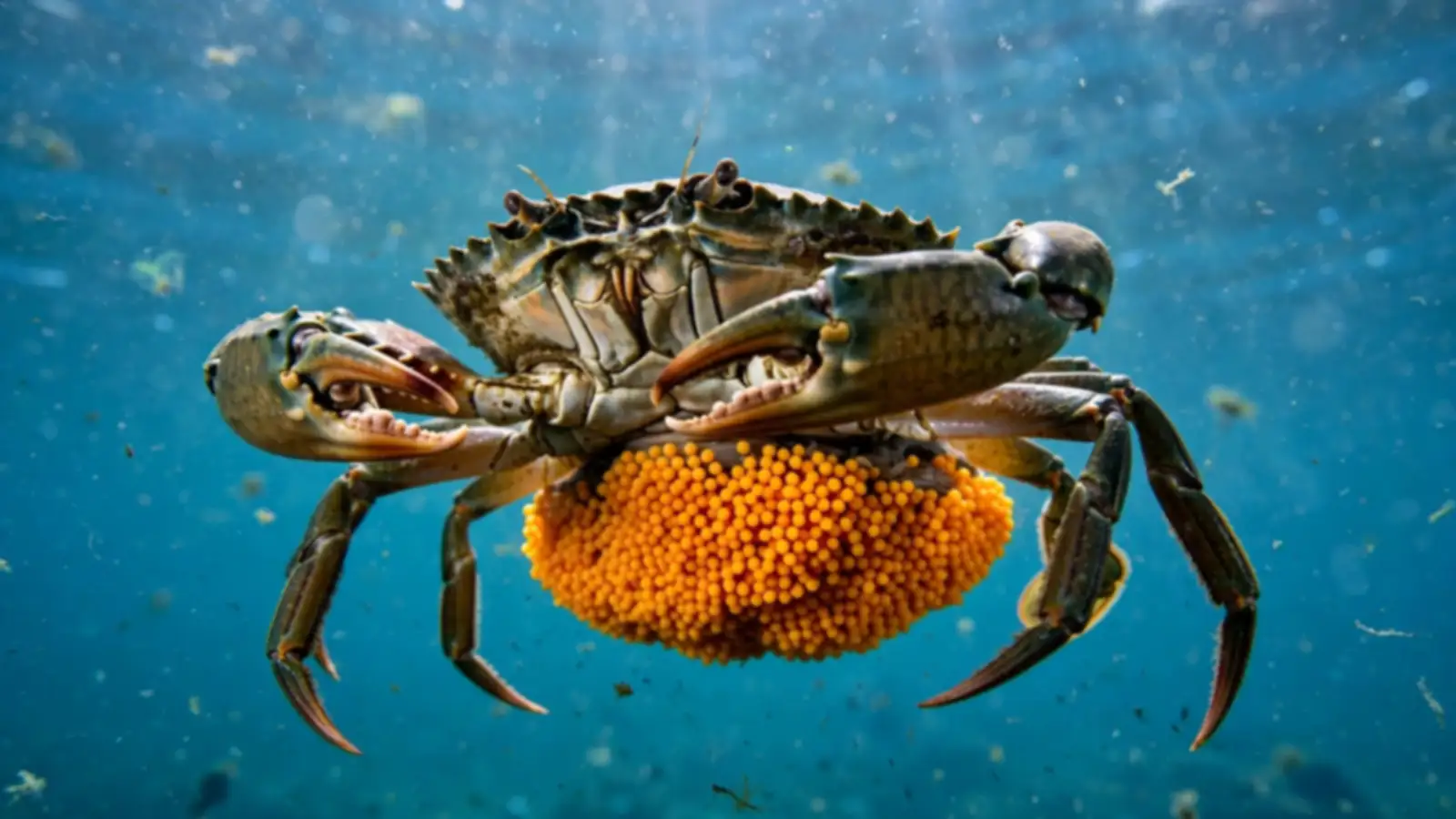
The larvae drift in the open sea for weeks, moulting through several stages, before they return to the estuary as tiny crabs and settle into the mangrove. The offshore swim is its answer to the estuary’s dangers: the eggs are safest in the open sea, and the larvae are spread far and wide by the currents, so that a single female can found a new population in a mangrove a hundred kilometres away.
Mud Crab vs Blue Crab
This crab and the blue crab are both famous swimming crabs, but they live in different worlds and they look different. It is a mangrove crab of the Indo-Pacific, with a broad, smooth, dark green carapace and massive claws; the blue crab is an Atlantic crab of the Americas, with a blue-tinged shell and long, spiny legs, and it is the crab of Chesapeake Bay and the Gulf of Mexico. It is bigger and heavier; the blue crab is faster and more of a swimmer.

The two are compared because they are both prized as food and both famous for their claws, but they are not close relatives and they never meet in the wild. Our blue crab guide tells the Atlantic cousin’s story, and the species account records the size, weight and spawning figures behind this guide, and the coconut crab, the largest land crab on Earth, is told in our coconut crab guide, where the crab climbs trees and cracks coconuts.
Fun Facts
- Its carapace reaches 28 centimetres wide, and a large crab weighs up to 3 kilograms.
- Females swim up to 50 kilometres offshore to release millions of eggs in the open sea.
- It is one of four species in the genus Scylla that share the name.
- Mud crabs prefer oysters above all, and they are a pest in oyster farms.
- It burrows into the muddy bank of a mangrove creek by day and hunts by night.
- Mud crabs have been introduced to Hawaii, where they have settled into the mangroves.
Frequently Asked Questions
How Big Do Mud Crabs Get?
Mud crabs are heavyweights: their carapace reaches 25 to 28 centimetres wide, and a large crab weighs 2 to 3 kilograms. Scylla serrata, the species of this guide, is the largest of the four species in the genus Scylla that share the name “mud crab”, and its claws are massive enough to crush an oyster shell.
Where Do Mud Crabs Live?
Mud crabs live in the mangrove forests and estuaries of the Indo-Pacific, from East Africa through South-East Asia to northern Australia and the Pacific islands, in shallow water from the tide line to about 50 metres deep. They have also been introduced to Hawaii. They need the mangrove’s mud, its roots and its mix of salt and fresh water.
What Do Mud Crabs Eat?
Mud crabs eat shrimps, crabs, fishes and bivalves, and they prefer oysters above all. They crush bivalve shells with their massive claws, catch shrimps and small fishes at night, and scavenge dead animals when they find them. They are nocturnal hunters, coming out of their burrows after dark.
Why Are Mud Crabs Called Mangrove Crabs?
Mud crabs are called mangrove crabs because the mangrove forest is their whole world: they burrow into the muddy banks of the mangrove creeks, shelter among the tangled roots, and hunt in the estuary water. Where the mangroves are cut down, the mud crab disappears with them.
How Do Mud Crabs Reproduce?
When a female mud crab is ready to spawn, she leaves the mangrove and swims up to about 50 kilometres offshore to release millions of eggs in the open ocean. The larvae drift in the sea for weeks, moulting through several stages, before returning to the estuary as tiny crabs and settling into the mangrove.
Are Mud Crabs Dangerous?
Mud crabs are aggressive and their claws are powerful enough to crush an oyster shell, so they can give a painful nip to a careless hand. They are not dangerous to people who handle them properly — with tongs and care — but they should never be picked up by hand, and a large mud crab should be treated with respect.
What Is the Difference Between a Mud Crab and a Blue Crab?
The mud crab is a mangrove crab of the Indo-Pacific, with a broad, smooth, dark green carapace and massive claws, reaching 28 centimetres wide. The blue crab is an Atlantic crab of the Americas, with a blue-tinged shell and long, spiny legs. The mud crab is bigger and heavier; the blue crab is faster and more of a swimmer, and the two never meet in the wild.
Similar Species Worth Exploring
Keep Exploring
Keep exploring the crabs through the blue crab, the Atlantic cousin of Chesapeake Bay, the coconut crab, the giant that climbs trees and cracks coconuts, and the wider world of the types of crabs. Big, burrowing and hunting by night, the heavyweight of the mangroves is the mud crab.