Oceanic Whitetip Shark: The Shipwreck Shark’s Story
Oceanic Whitetip Shark: The Boldest Shark in the Open Ocean
The oceanic whitetip shark is the open ocean’s boldest predator, a slow, curious shark with long white-tipped fins that once ruled the blue water — and now faces extinction.
By Emily Carter · Reviewed by our vet team · Updated 10 November 2026 · 9 min read
White-tipped paddle fins3–4 m adultsCritically Endangered (2019)
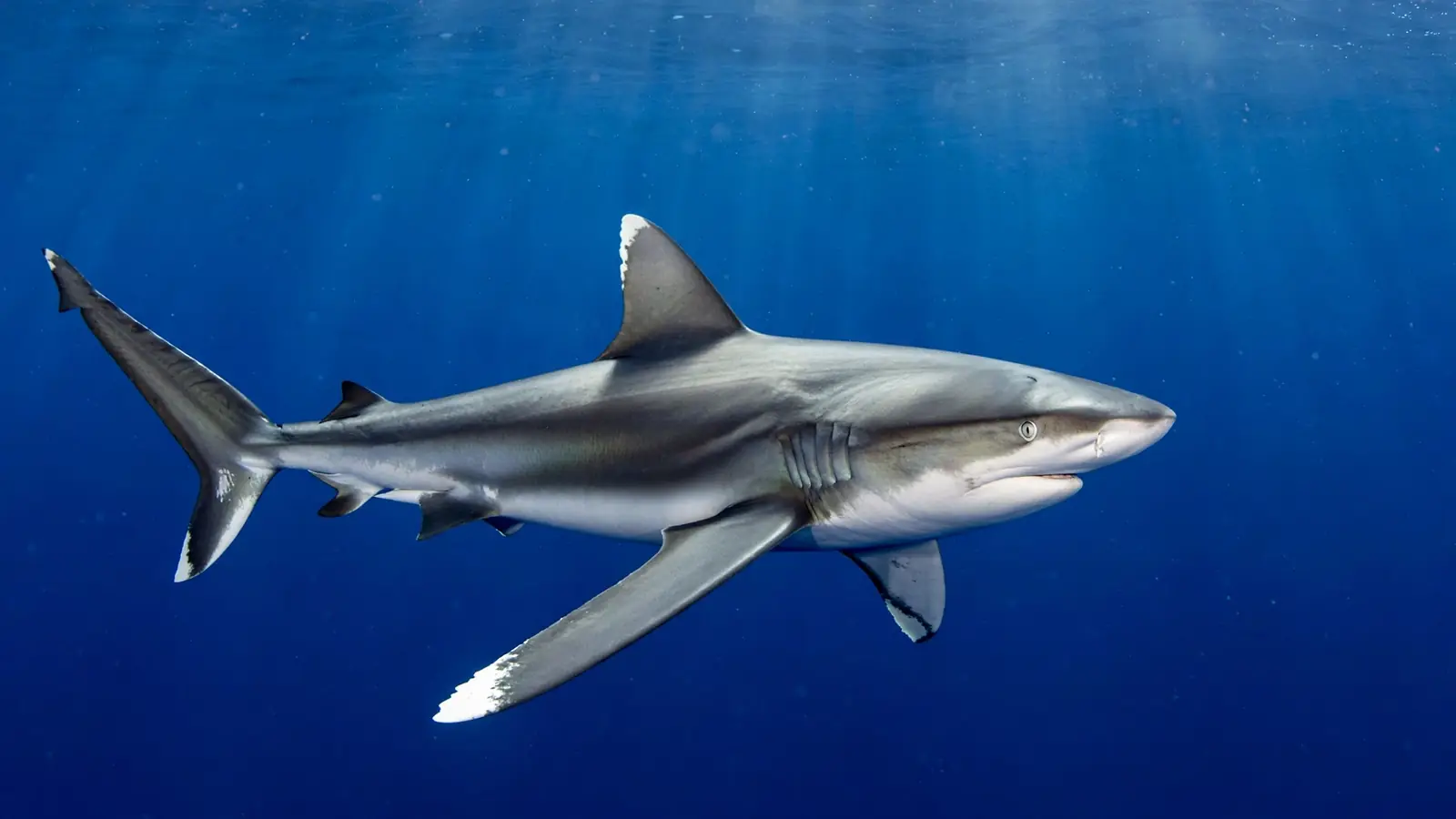
At a Glance
The oceanic whitetip shark was once the most common large shark in the open ocean — the first fin a shipwrecked sailor would see, and the last. Its long, white-tipped fins make it unmistakable, and its bold curiosity made it famous. This guide covers its size, its identification, the Indianapolis disaster, and the collapse that has left it critically endangered.
Oceanic Whitetip Shark Size: How Big Do They Get?
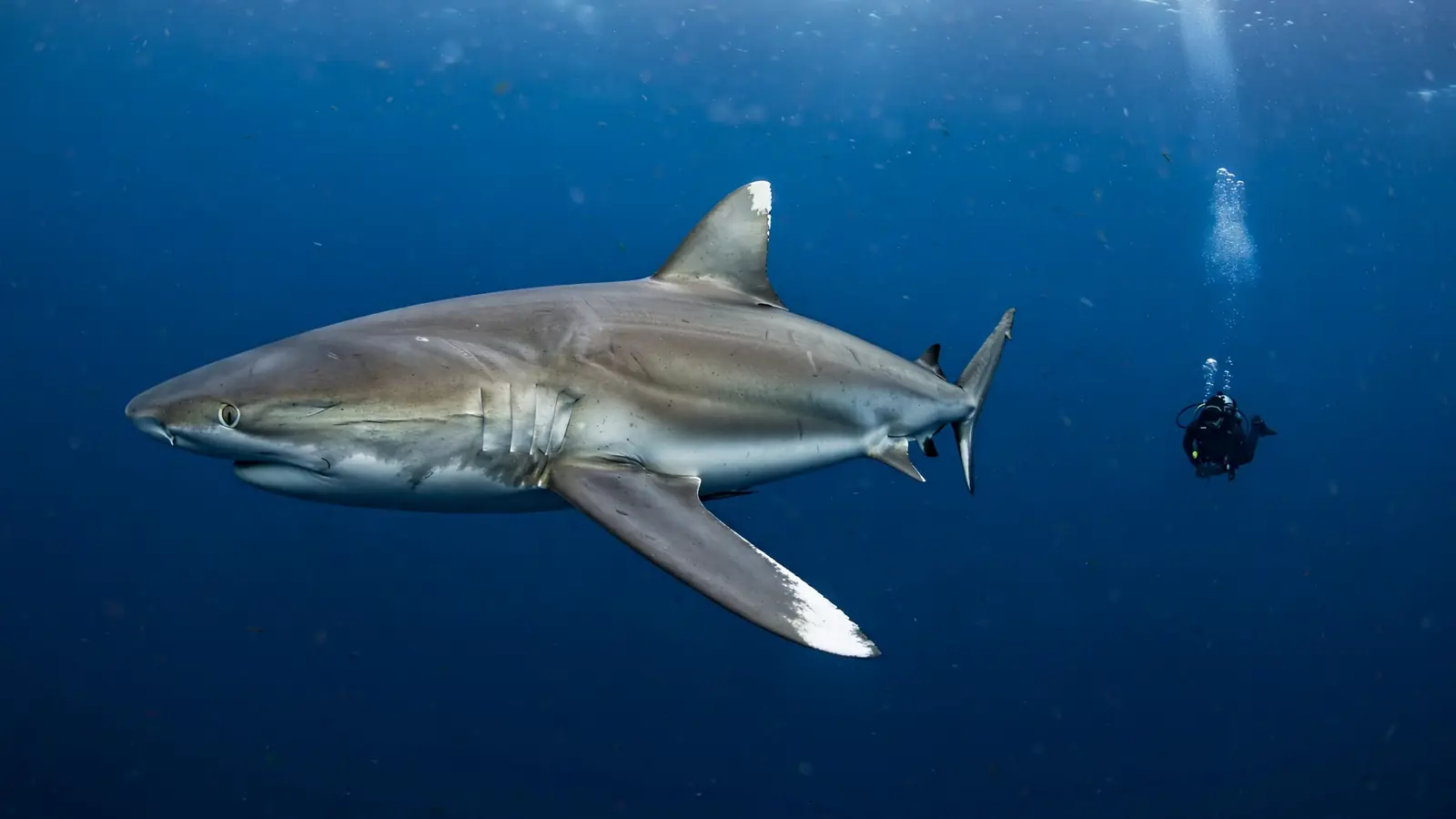
Most oceanic whitetip sharks measure 3 to 4 metres (10 to 13 feet) long, with females growing larger than males. The biggest reliably measured whitetip reached about 4 metres and 167 kg — a heavy, powerful shark, but not a giant by shark standards. What makes it look enormous is its build: a thick, torpedo-shaped body carried on fins so long they seem out of proportion.
Size is part of its hunting style. A whitetip is not a sprinter like a mako or a tuna; it is a slow, steady cruiser that covers huge distances at a walking pace, saving energy for the moment food appears. Its size gives it confidence — in the open ocean, a 3-metre whitetip has almost nothing to fear — and that confidence is exactly what makes it so bold around boats and divers. For the full species record, see the full oceanic whitetip shark species profile.
The White-Tipped Fins: How to Identify an Oceanic Whitetip
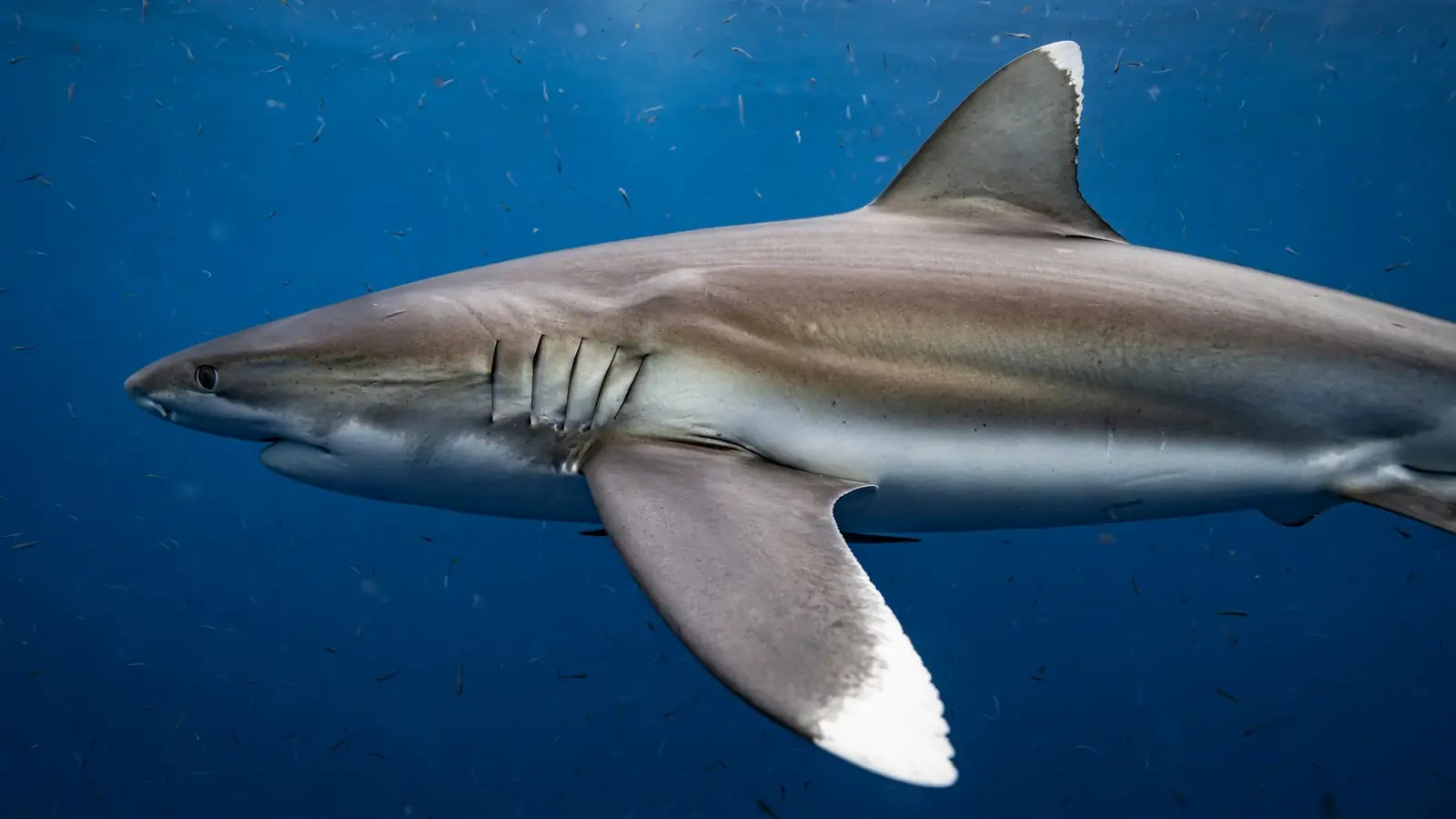
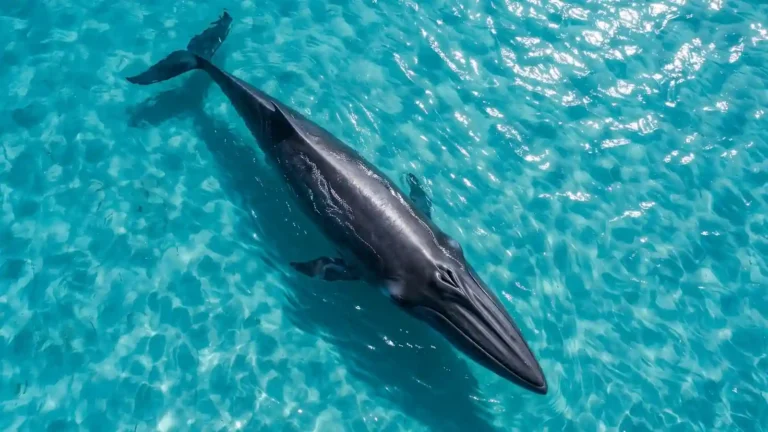
No shark is easier to identify than the oceanic whitetip shark. Its pectoral fins are extraordinarily long and paddle-shaped, ending in broad, clean white tips — fins so distinctive that the shark is sometimes called the “white-tip” before its full name is given. The first dorsal fin is tall and rounded, also tipped in white, and the snout is short and blunt, giving the head a rounded, almost friendly look.
The white tips are the key, but they are not the only mark. The body is grey-bronze above and pale below, the skin looks almost smooth, and the tail is broad with a white tip on the lower lobe. Young whitetips have darker fin tips that whiten with age, which is why juveniles are sometimes mistaken for other requiem sharks. In the water, the long, slow wing-beats of those paddle fins are unmistakable: no other open-ocean shark swims quite like it.
The Open Ocean: Where They Live

The oceanic whitetip shark lives where there is nothing at all — the open tropical and subtropical oceans, far from land, in water warmer than about 20°C. It roams the surface waters of the Atlantic, Pacific and Indian Oceans, from the equator to the edges of the temperate zones, and it can dive to about 150 metres when it needs to. It is a true pelagic shark: it almost never comes near a coast, a reef or the seabed.
That emptiness is its home. A whitetip can spend months at sea without seeing land, following warm currents, floating debris and the great schools of tuna that cross the open ocean. It is often the first shark to arrive at anything new in the water — a drifting log, a fishing boat, a whale carcass — and it will circle it for hours, curious and unafraid. Like the blue shark, the other great traveller of the open ocean, it treats the whole blue water as its territory.
What Do They Eat? Opportunists of the Blue
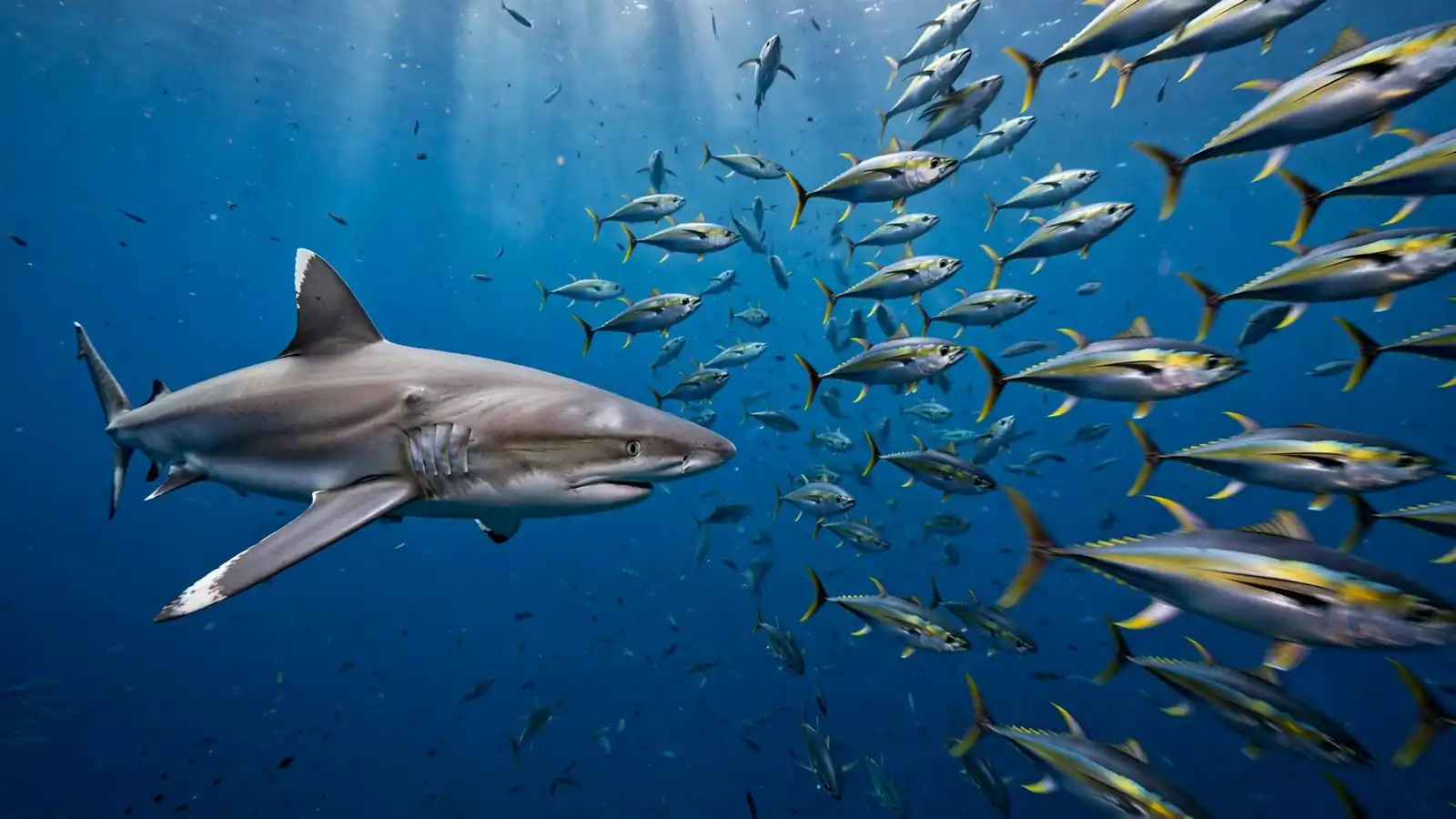
Oceanic whitetips eat almost anything they can catch, and they are not fussy about it. Tuna and other bony fish are the staple, along with squid, seabirds snatched from the surface, smaller sharks and rays, and the carrion of dead whales. They are opportunists first and hunters second: a whitetip will take a free meal over a chase every time, which is why they gather so quickly around fishing boats and dead whales.
When they do hunt, they hunt boldly. A whitetip will swim straight at a school of tuna, scattering it with a few powerful sweeps of its tail, then pick off the stragglers. They often hunt in loose groups, and they have been seen working together to herd fish — a rare piece of cooperation among sharks. Their boldness is also their weakness: a shark that investigates everything is a shark that is easy to catch.
The USS Indianapolis: The Worst Shark Attack in History
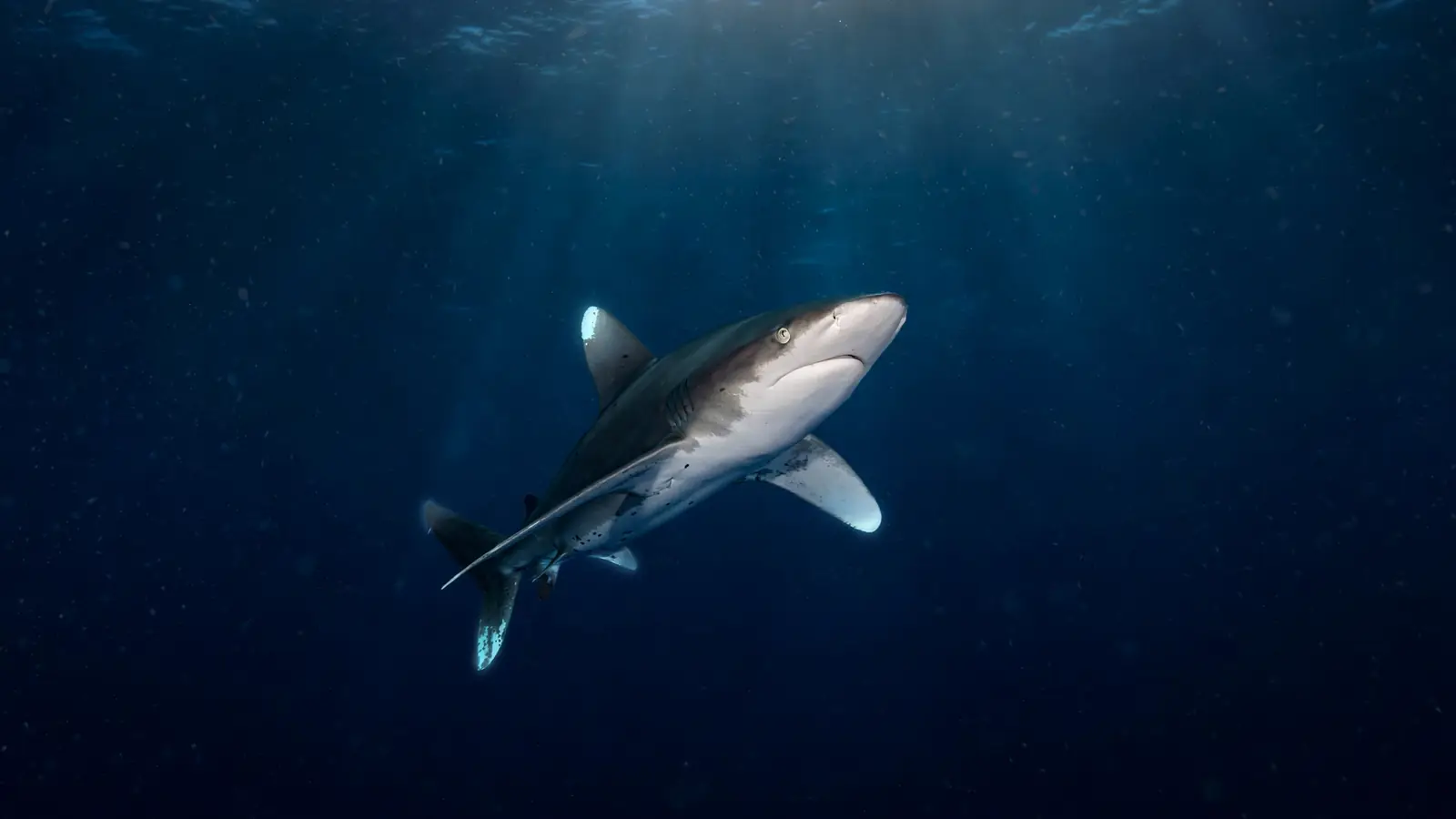
On 30 July 1945, the American cruiser USS Indianapolis was torpedoed in the Philippine Sea, leaving about 900 men adrift in the open Pacific. The sea was warm, the water was full of oceanic whitetip sharks, and over the next four days the sharks attacked the survivors again and again. Around 300 men died, many of them to sharks, in the worst shark attack in history.
The sharks were not hunting people as prey. They were drawn by the noise, the splashing and the blood of wounded men in the water — exactly the signals that tell a whitetip food is near. Tiger sharks were there too, and the two species together turned a disaster into a nightmare. The story gave the whitetip its lasting name: the shipwreck shark.
It is worth remembering what the numbers say. The Indianapolis disaster accounts for most of the whitetip’s fatal attacks on record — the international file lists only 15 unprovoked bites, with 9 fatalities. Outside that one disaster, the whitetip has killed very few people. Its reputation is real, but it rests on four days in 1945.
How Dangerous Are They, Really?
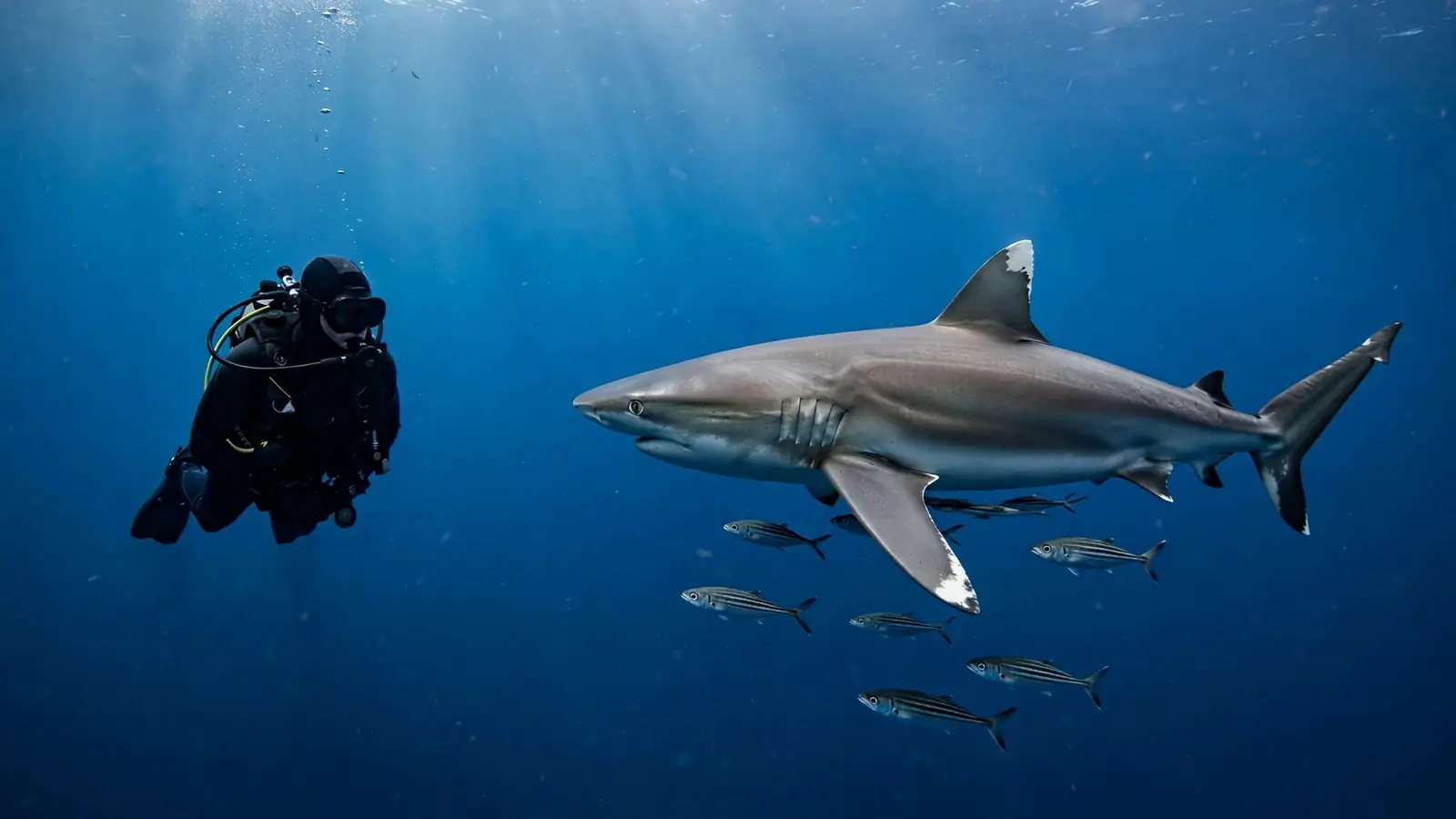
By the numbers, the oceanic whitetip shark is the most dangerous shark in the sea: 15 unprovoked bites, 9 of them fatal — a 60% case fatality, higher than any other shark. Jacques Cousteau called it “the most dangerous of all sharks”, and divers who meet it in the Red Sea treat it with more respect than any other species. Its danger is not speed or aggression; it is boldness. A whitetip will approach anything, circle it, and test it with its mouth.
In practice, the risk to most people is almost zero. Whitetips live far offshore, where almost no one swims, and the few who do meet them are divers and sailors who know what they are doing. The danger is real for a shipwreck survivor or a diver who panics — but for a beach swimmer, the whitetip might as well not exist.
If you do meet one, the rules are simple: stay calm, face the shark, and do not splash or turn your back. A whitetip that is watched usually loses interest and swims on. The shark is testing you, not hunting you — and a calm diver is a boring test.
Critically Endangered: The Collapse of the Ocean’s Shark
The oceanic whitetip shark is listed as Critically Endangered, a status set in 2019 that marks one of the steepest declines of any shark. In some regions its numbers have fallen by more than 90% since the 1950s, driven by the demand for shark fins and by longline fisheries that catch whitetips as bycatch. A shark that was once the most common large shark in the open ocean is now rare almost everywhere.
The decline is hard to reverse. Whitetips grow slowly, mature late and produce few young, so a population that loses its adults cannot bounce back quickly. And the open ocean has no reserves: there is nowhere for a whitetip to hide from a longline. International trade in whitetip fins is now restricted, and some fisheries have banned keeping them — but enforcement on the high seas is thin.
What the whitetip needs is what every open-ocean shark needs: limits on longline catches, an end to the fin trade, and protected corridors in the blue water. The shipwreck shark survived four days of the worst disaster in naval history. Whether it survives the next decade is a question only people can answer.
Fun Facts
- The oceanic whitetip’s pectoral fins are the longest, proportionally, of any shark — long enough to look like wings.
- Jacques Cousteau called it “the most dangerous of all sharks”.
- Whitetips often swim with pilot fish riding alongside them, picking up scraps from their meals.
- A whitetip is a slow, curious swimmer that investigates anything new in the water — boats, debris, divers and all.
- The species was once the most abundant large shark in the open ocean.
- Whitetip pups are born about 60–65 cm long in the open sea, far from any shore.
- The Indianapolis disaster gave the whitetip its lasting name: the shipwreck shark.
Frequently Asked Questions
How Dangerous Is the Oceanic Whitetip Shark?
Very, by the numbers: the international file records 15 unprovoked bites with 9 fatalities — a 60% case fatality, the highest of any shark. But attacks are rare because the shark lives far offshore; most people will never meet one.
What Happened With the USS Indianapolis?
On 30 July 1945 the cruiser USS Indianapolis was sunk by a submarine, leaving about 900 men in the open Pacific. Over four days, oceanic whitetip sharks — along with tiger sharks — attacked survivors in the water. Around 300 men died, many to sharks, in the worst shark attack in history. The sharks were drawn by the struggle of men in the water, not by hunting people as prey.
How Big Do Oceanic Whitetip Sharks Get?
Most adults measure 3 to 4 metres (10 to 13 feet), with the largest reaching about 4 metres and 167 kg. Females grow larger than males.
Where Do Oceanic Whitetip Sharks Live?
In the open tropical and subtropical oceans worldwide, in water warmer than about 20°C. They roam the blue water far from land, from the surface down to about 150 metres, and rarely come near coasts.
What Do Oceanic Whitetip Sharks Eat?
Almost anything they can catch: tuna, squid, seabirds, smaller sharks and rays, and whale carrion. They are bold opportunists, often the first sharks to arrive at food in the open ocean.
Why Are Oceanic Whitetip Sharks Critically Endangered?
Because they were fished hard for their fins and meat, and their open-ocean home offers no refuge. Populations have fallen by more than 90% in some regions since the 1950s, and the species was listed as Critically Endangered in 2019.
How Do You Identify an Oceanic Whitetip Shark?
Look for the fins: very long, paddle-like pectoral fins with broad white tips, a tall rounded first dorsal fin tipped in white, and a blunt, rounded snout. No other open-ocean shark has fins shaped quite like these.
Similar Species Worth Exploring
Keep Exploring
Still exploring the open ocean? Meet the other wide-ranging requiem shark in our Blue Shark guide, compare the whitetip’s boldness with the Tiger Shark that shared the Indianapolis waters, size up the whole family in the Types of Sharks hub, and then drift back into the blue with the oceanic whitetip shark.