Sunflower Sea Star
Sunflower Sea Star: 24 Arms and a Fight to Survive
The sunflower sea star has up to 24 arms and a metre span — but wasting disease has wiped out over 90% of them since 2013, and the cause was only found in 2025.
By Emily Carter · Reviewed by our vet team · Updated 10 November 2026 · 9 min read
24 armsOver 90% lostCause found in 2025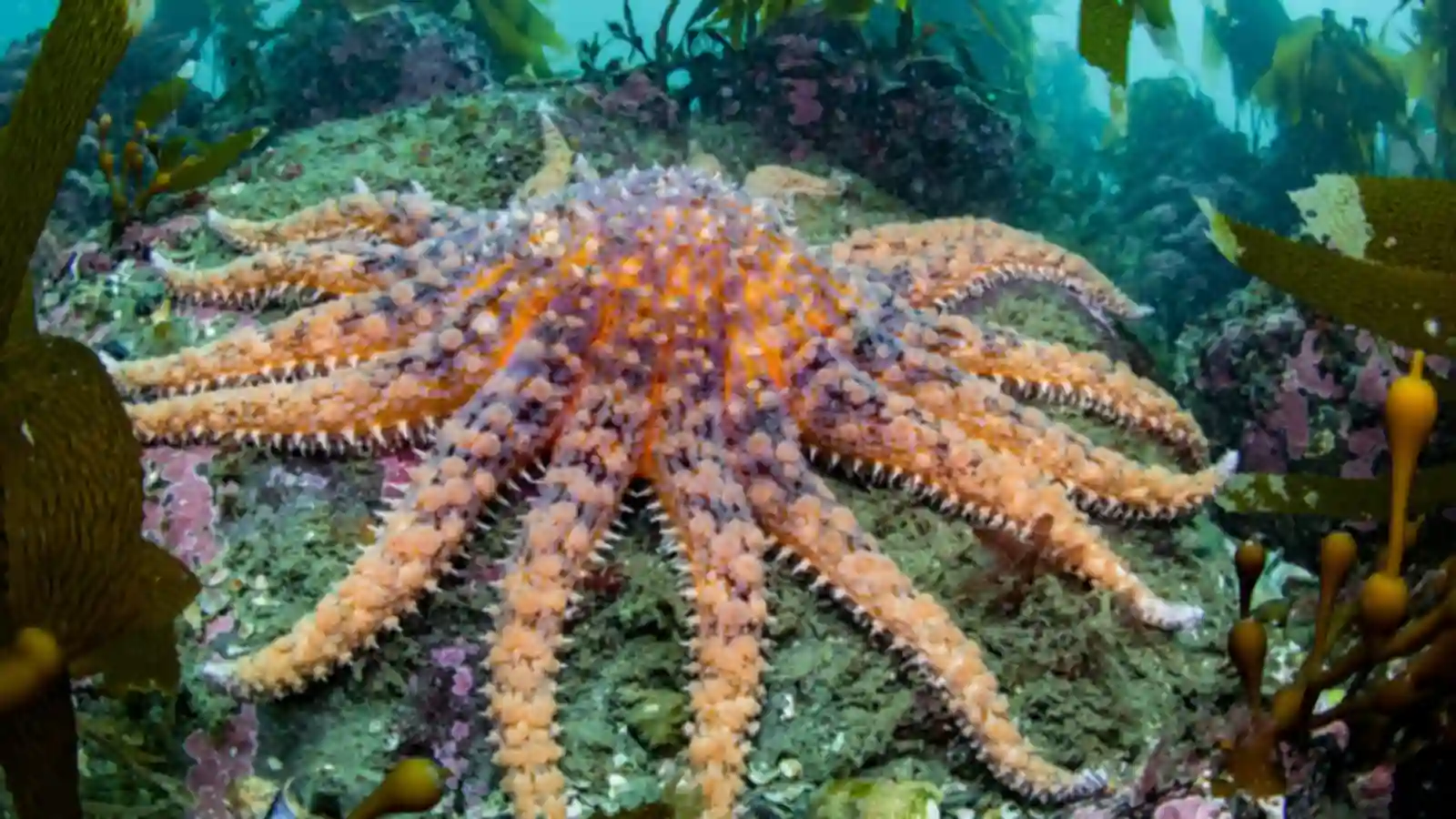
At a Glance
The sunflower sea star is the largest and heaviest sea star in the world, a 24-armed giant of the kelp forest — and it is also the most famous casualty of sea star wasting disease, which has killed more than five billion of them since 2013. The cause was only identified in 2025, and the recovery is only just beginning.
Sunflower Sea Star Anatomy: 24 Arms, One Heavy Body
It has 16–24 arms — most have 24 — radiating from a broad central disc, and it is the heaviest known sea star at about five kilograms. The arms are soft, flexible and covered in spines, and the whole animal looks like a sunflower: a disc in the middle, petals all around.
The size is the point: it can span a metre across, and it moves fast for a sea star — it can crawl at a metre a minute when it is hunting. It is a predator, not a grazer, and its arms are its hunting gear.
The Giant of the Kelp Forest
It is the giant of the kelp forest, the largest sea star in the world, and it lives on the rocky reefs of the north-east Pacific, from Alaska to Baja California, in the cold water where the kelp grows thick.

It is a kelp-forest animal through and through: it lives among the holdfasts, it hunts on the reef, and it is the top predator of the sea stars — the one that keeps the urchins in check and the kelp alive. Without it, the forest changes.
Its range runs from Alaska to Baja California, along the cold north-east Pacific coast, and it is the only sea star of its size in those waters. It hunts on the reef flat and the slope alike, and it is at home in the kelp and on the bare rock — wherever the urchins are, it follows, a metre of arms and appetite. It is the largest sea star in the world, and there is nothing else like it on the reef.
What Do They Eat? Urchins, Clams and Snails
Sunflower sea stars eat sea urchins, clams and snails — and they are the best urchin hunters on the reef. They crawl over an urchin, wrap their arms around it, evert their stomach over it, and digest it where it sits.
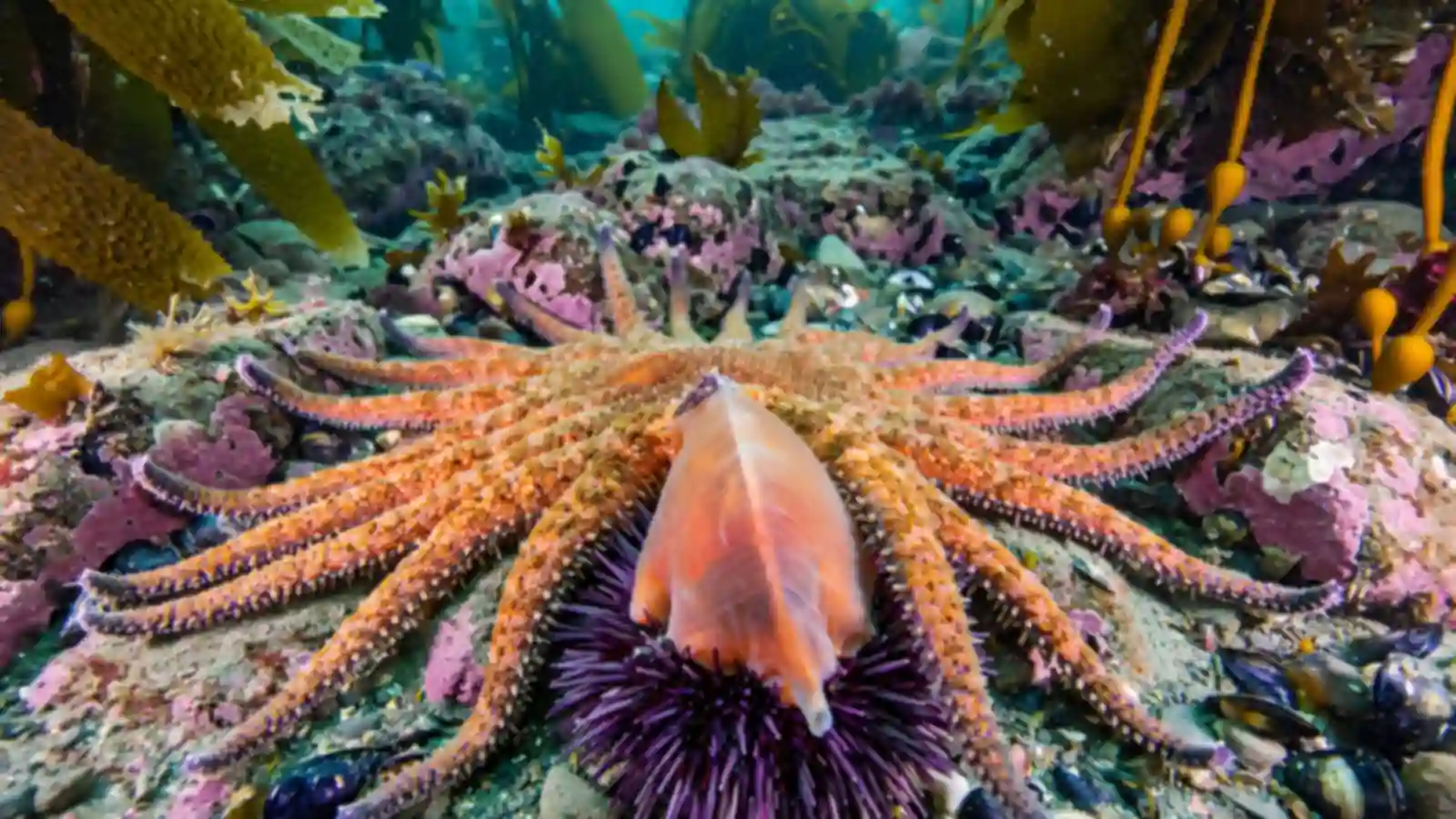
The diet is what makes them a keystone species: urchins eat kelp, and sunflower sea stars eat urchins, so the star keeps the urchin numbers down and the kelp alive. When the stars vanished, the urchins exploded — and the kelp forests followed them down.
The urchin barrens are the visible scar of its absence, and they stretch for miles along coasts that were once forest.
Sunflower Sea Star Wasting Disease: Five Billion Lost
Sea star wasting disease struck in 2013, and it has killed more than five billion sunflower sea stars since then — over 90% of the population, gone in a decade. The disease twists the arms, lesions the body, and the animal melts into the sea floor in days.
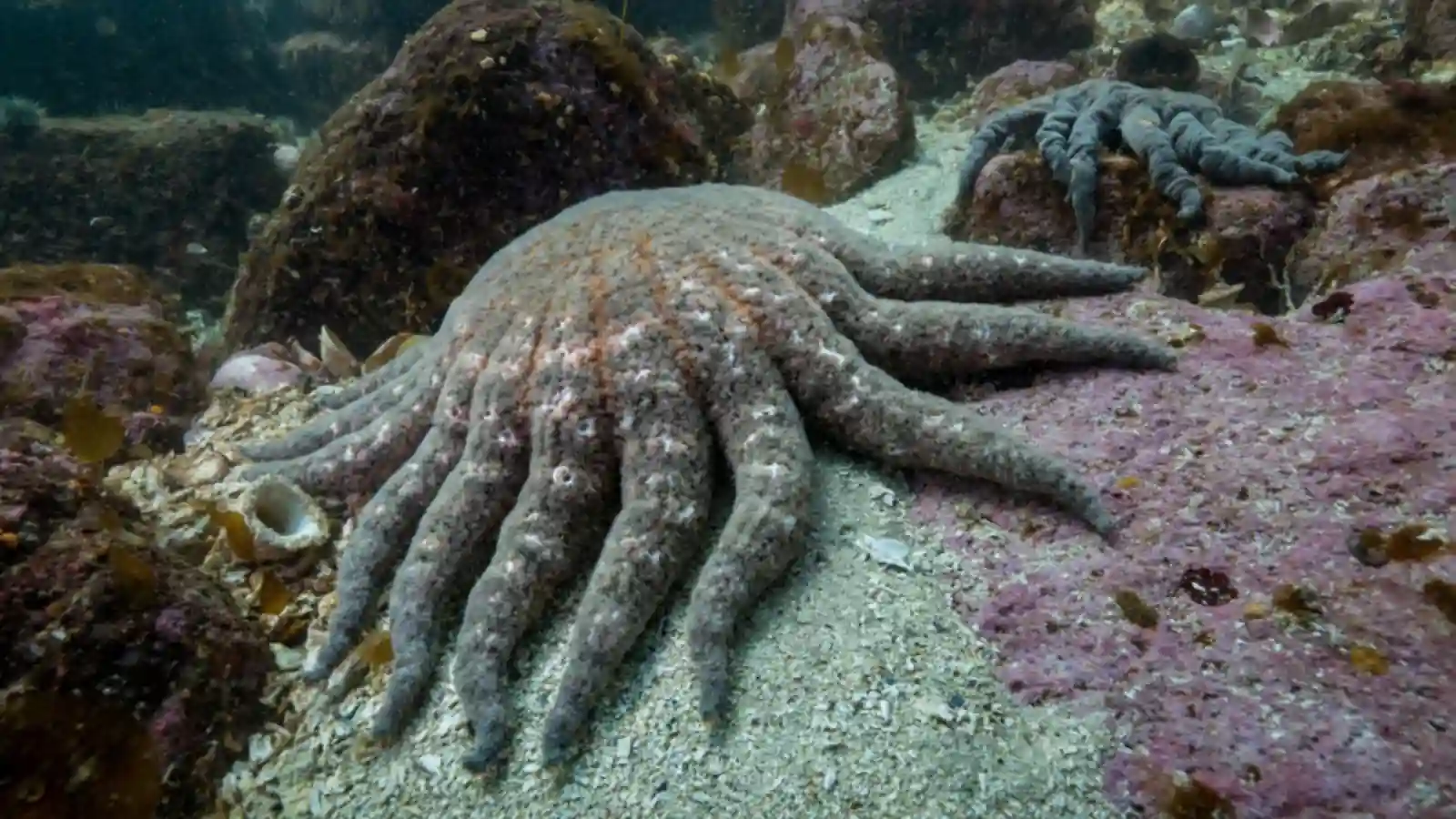
The scale is hard to grasp: five billion animals, an entire species, reduced to a remnant in the fjords and the far north. It was declared Critically Endangered in 2020, and the kelp forests it guarded have never been the same. For more on the wasting disease, see this guide to sea star wasting disease.
The Cause Found: Vibrio pectenicida, 2025
The cause of the wasting disease was a mystery for a decade: an earlier theory blamed a densovirus, but the evidence never fit, and the virus was found in healthy stars too. In 2025, researchers identified the real culprit: a strain of the bacterium Vibrio pectenicida, FHCF-3, which causes the disease in laboratory tests.
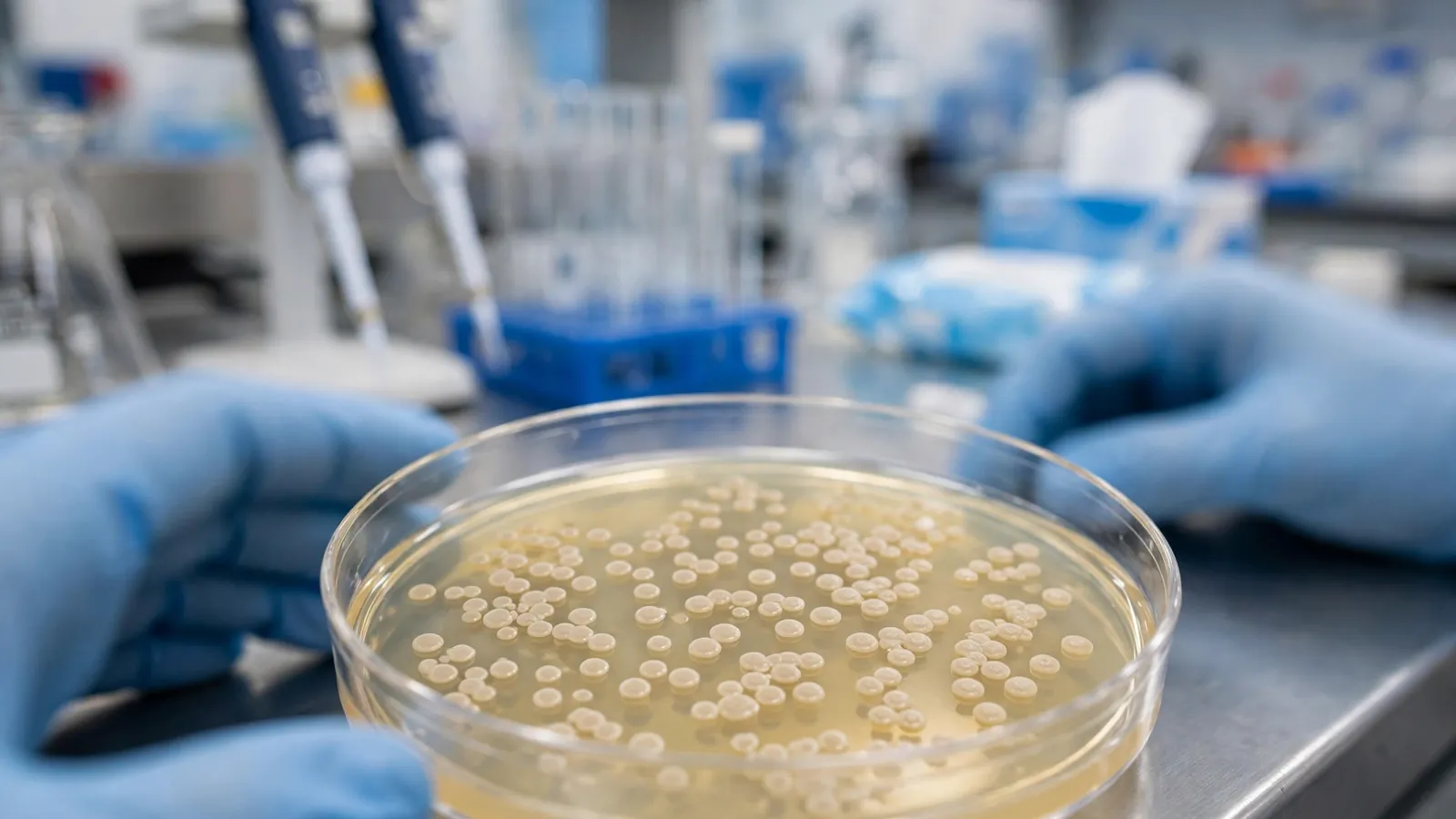
The 2025 finding replaces the densovirus theory as the current explanation — the virus was an earlier suspect, and the bacterium is the answer. The discovery matters because it gives researchers a target: a bacterium can be studied, tracked, and perhaps fought, in a way a mystery never could.
The Kelp Cascade: When the Star Vanished
When the sunflower sea stars vanished, the urchins exploded, and the kelp forests collapsed. Urchins eat kelp, and without the stars to eat the urchins, the urchins grazed the kelp to bare rock — urchin barrens, where a forest used to be.
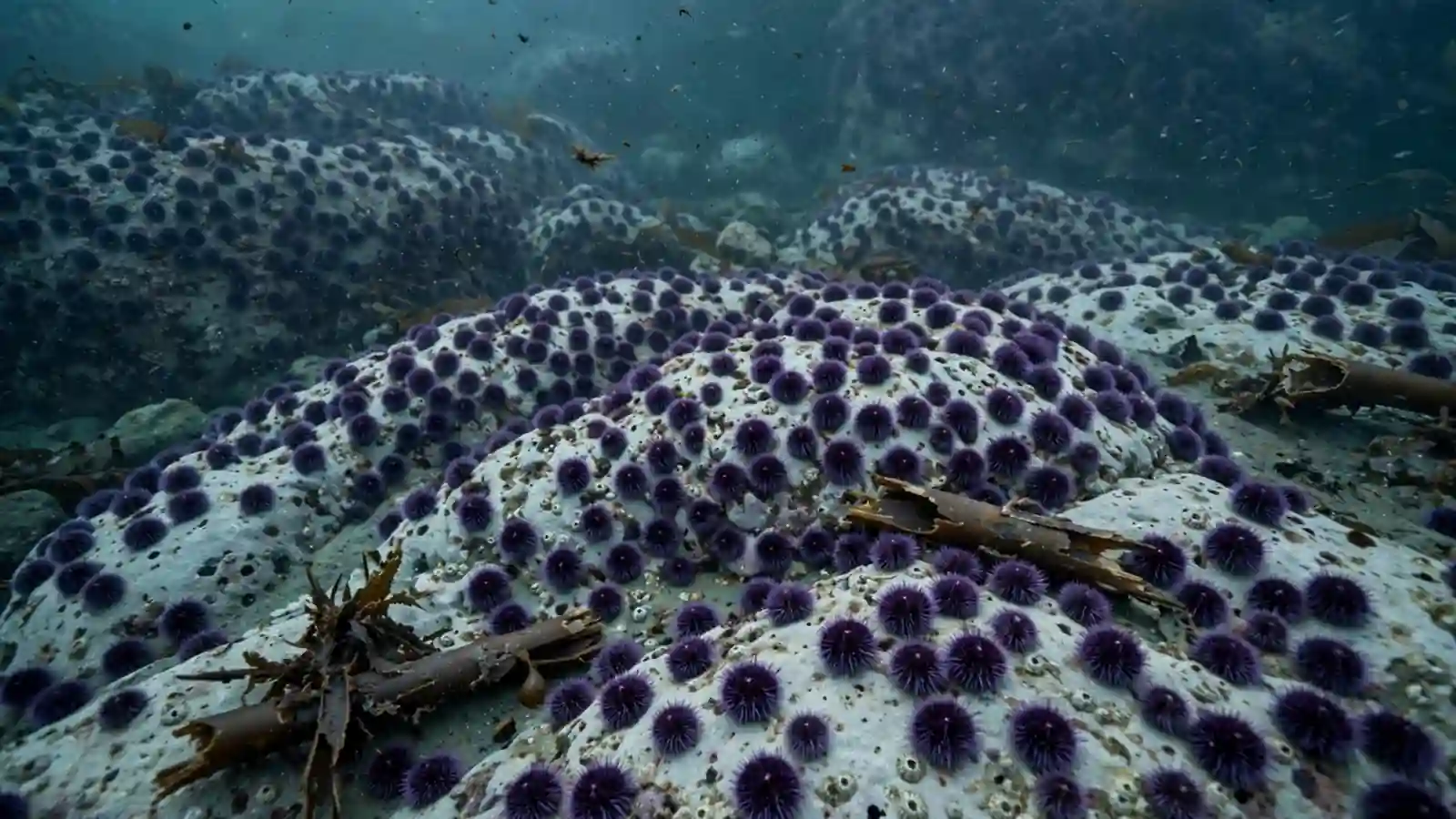
The cascade is its legacy: it was a keystone predator, and its loss changed the whole ecosystem. The kelp forests are still recovering, and the urchin barrens are still there — a reminder that one species can hold an entire forest together.
Recovery: Fjords, Canada and the US Listing
The recovery is beginning, slowly. Remnant populations survive in the fjords of British Columbia and in the far north, where the disease did not reach, and researchers are breeding sunflower sea stars in captivity for release.
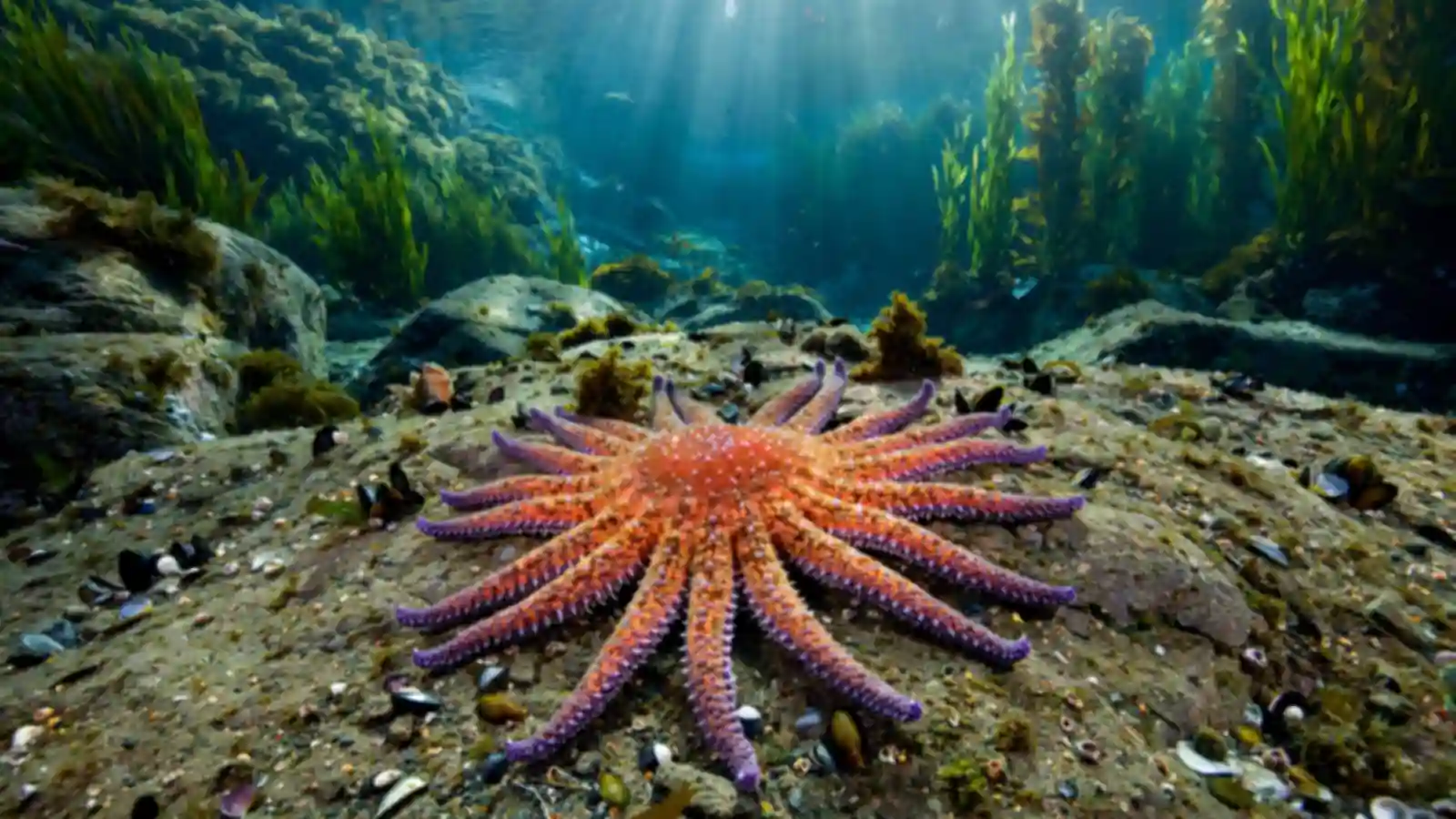
The protection is catching up: Canada recommended the species as endangered in 2025, and a threatened listing in the United States is under consideration. It is not safe yet — but for the first time in a decade, it has a cause, a plan, and a chance.
Fun Facts
- Sunflower sea stars have 16–24 arms and can span a metre across.
- They are the heaviest known sea star, at about five kilograms.
- More than five billion have died since 2013 — over 90% of the species.
- The cause, a strain of Vibrio pectenicida, was only identified in 2025.
- They are keystone predators: without them, urchins eat the kelp forests to bare rock.
- Remnant populations survive in the fjords of British Columbia and the far north.
Frequently Asked Questions
What Is a Sunflower Sea Star?
A sea star in the species Pycnopodia helianthoides, the largest and heaviest sea star in the world, with 16–24 arms and a span of up to a metre. It lives in the kelp forests of the north-east Pacific and eats sea urchins, clams and snails.
How Many Arms Does a Sunflower Sea Star Have?
Between 16 and 24 — most have 24. The arms radiate from a broad central disc, and the whole animal looks like a sunflower: a disc in the middle, petals all around.
How Big Do Sunflower Sea Stars Get?
Up to a metre across, and about five kilograms — the largest and heaviest known sea star. It can also crawl fast for a sea star, at a metre a minute when it is hunting.
What Killed the Sunflower Sea Stars?
Sea star wasting disease, which struck in 2013 and has killed more than five billion of them since then — over 90% of the population. The disease twists the arms, lesions the body, and the animal melts into the sea floor in days.
What Is Sea Star Wasting Disease?
A disease of sea stars, first seen in 2013, that causes the arms to twist, the body to lesion, and the animal to disintegrate in days. It has killed billions of sunflower sea stars, and the cause — a strain of the bacterium Vibrio pectenicida — was only identified in 2025.
Is the Sunflower Sea Star Endangered?
Yes. It was declared Critically Endangered in 2020, after losing over 90% of its population to wasting disease since 2013. Canada recommended it as endangered in 2025, and a threatened listing in the United States is under consideration.
Are Sunflower Sea Stars Recovering?
Slowly. Remnant populations survive in the fjords of British Columbia and in the far north, where the disease did not reach, and researchers are breeding them in captivity for release. The recovery is only just beginning.
Similar Species Worth Exploring
Keep Exploring
Meet the basket star, the star with a thousand branches, then the crown-of-thorns starfish, the reef-eating star, and browse the whole family in our types of echinoderms hub — then come back to the 24-armed giant and its fight to survive, the sunflower sea star.