Pompeii Worm
Pompeii Worm: The Worm That Lives in Near-Boiling Water
The pompeii worm lives on the walls of hydrothermal vent chimneys, 2,500 metres down, where water hot enough to scald a human hand washes over its tail — and it wears a coat of bacteria to survive it.
By Emily Carter · Reviewed by our vet team · Updated 10 November 2026 · 9 min read
~10 cm longVent chimneys 2,500 mBacterial fleece coat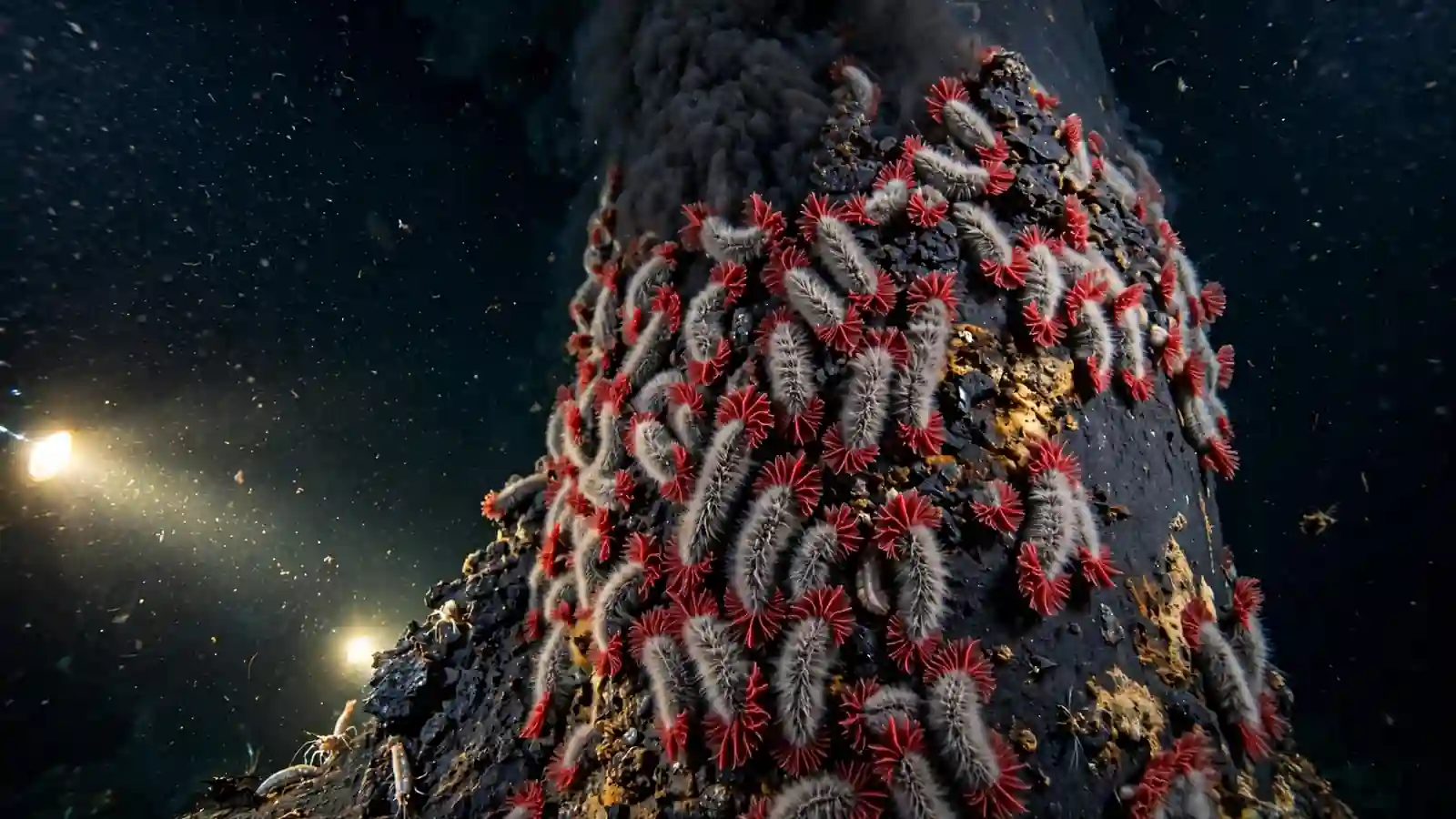
At a Glance
The pompeii worm is a deep-sea worm that lives on hydrothermal vent chimneys on the East Pacific Rise, wrapped in a fuzzy grey coat of bacteria. It is famous as the most heat-tolerant animal known — a claim that needs its honest caveat, as this guide explains.
Pompeii Worm Temperature: The 80°C Claim, Honestly
It is famous for a single number: 80°C. In 1998, researchers reported the worm’s tail sitting in water up to about 81°C while its head rested in water nearer 22°C — a temperature gradient across one small body that made headlines as the most heat-tolerant animal known. The number stuck, and it is still the one most guides print first.
But the 80°C figure needs its caveat, and this guide prints it plainly. A direct experiment in 2013 found 50–55°C lethal to the worm after two hours, with its optimum below 50°C and its proteins denaturing above it. The honest framing is this: up to 80°C was reported in 1998, but direct tests put its real tolerance near 50°C. It is still the most heat-tolerant complex animal after the tardigrades — just not quite the 80-degree marvel of the headlines.
Where They Live: Vent Chimneys 2,500 m Down
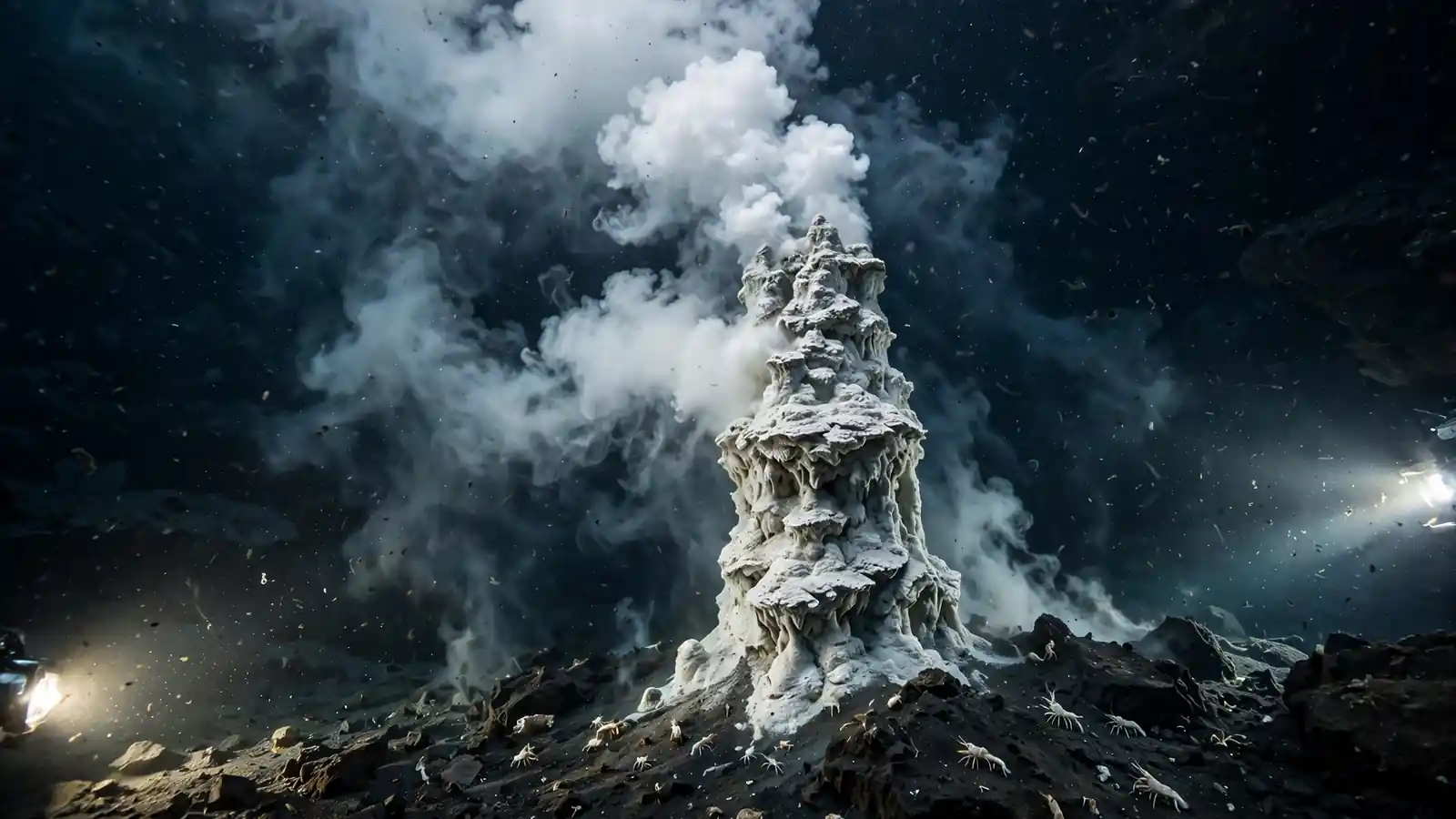
Pompeii worms live on the walls of hydrothermal vent chimneys on the East Pacific Rise, about 2,500 metres down, where the sea floor cracks open and mineral-rich water pours out. The chimneys are black smokers — towers of rock built by the venting water itself — and the worms colonise their sides in dense colonies, each animal in its own tube.
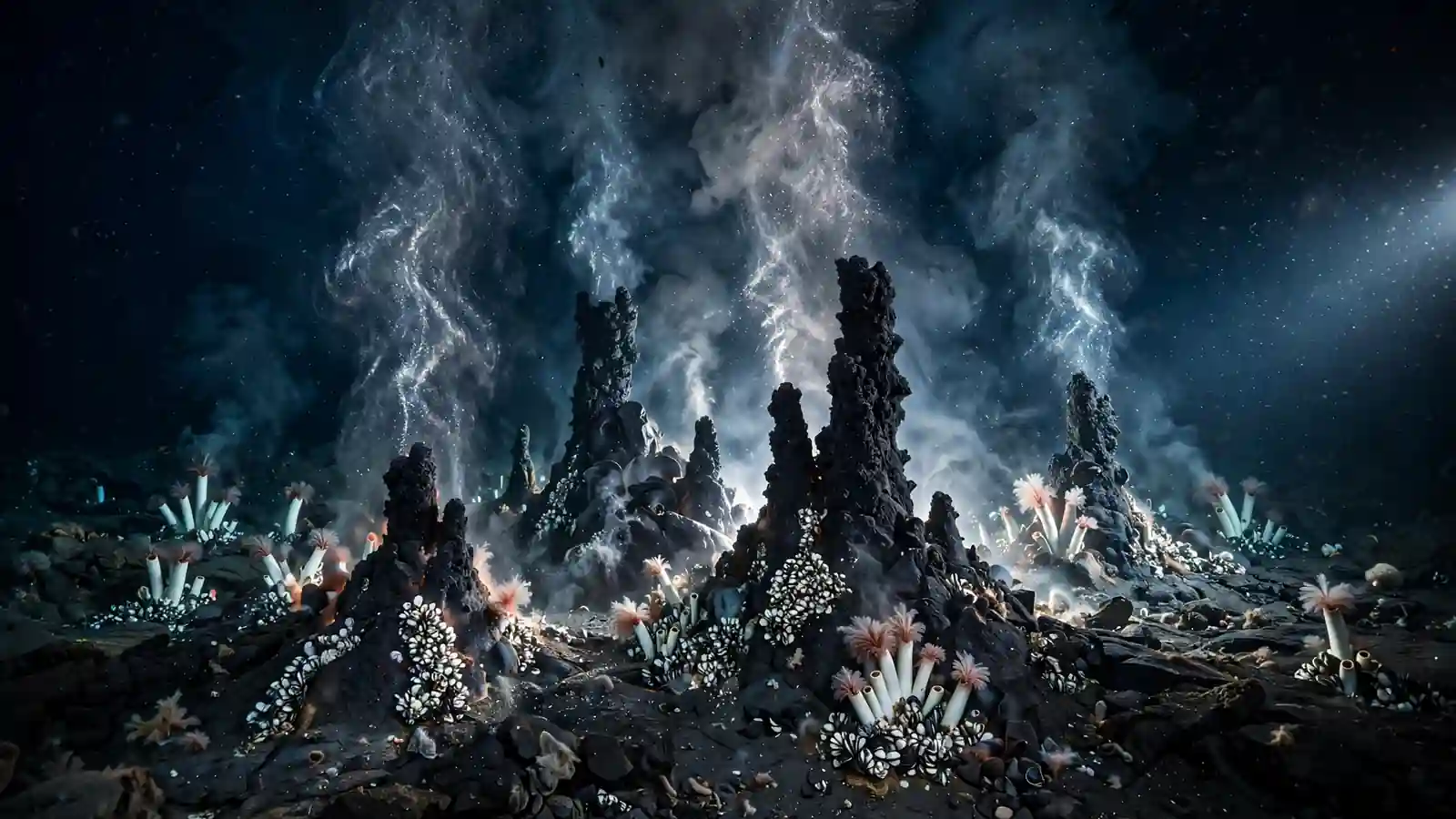
The habitat is as extreme as the temperature. There is no sunlight at 2,500 metres, the pressure is crushing, and the vent water is loaded with sulphur and metals that would poison most animals. Yet the chimney walls are crowded: vent mussels, crabs and its own tubes, all of them living off the chemistry of the vent rather than the sun. For the full picture of this animal and its chimney home, see the worm profile, which covers the worm, its bacterial coat and the vent field it lives in. It is a whole ecosystem built on hot rock and bacteria.
The Bacterial Fleece: A Pompeii Worm’s Living Coat
Every worm wears a coat, and the coat is alive. The worm’s back is covered in a thick, fuzzy grey fleece of bacteria — so thick that early observers mistook it for fur. The bacteria live on the worm and the worm lives on the bacteria, and the partnership is the heart of the animal’s survival.
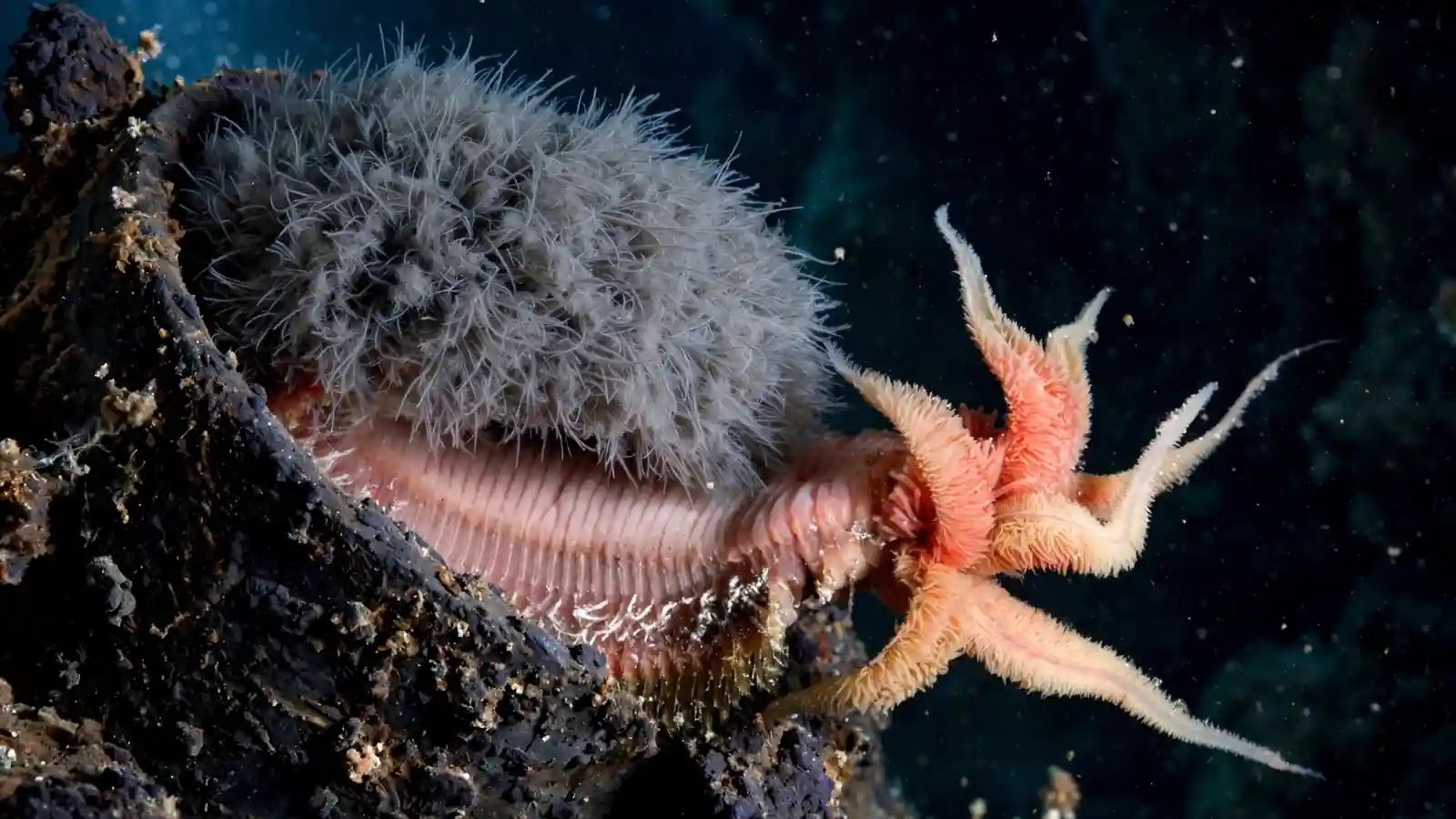
What the fleece actually does is still debated, and the honest answer is that it probably does more than one thing. It may insulate the worm from the chimney’s heat; it may feed the worm, which grazes on its own coat; and it may detoxify the vent water washing over the worm’s back. The red gills at the worm’s head pull oxygen from the cooler water, while the fleece handles the hot side — a division of labour between the worm and its microbes.
What They Eat: Vent Bacteria
It feeds on vent bacteria — the same microbes that coat its back and the chimney walls around it. It grazes the bacterial fleece with its mouthparts, harvesting the microbes that grow on the hot, chemical-rich vent water, and it may also take bacteria directly from the chimney surface.
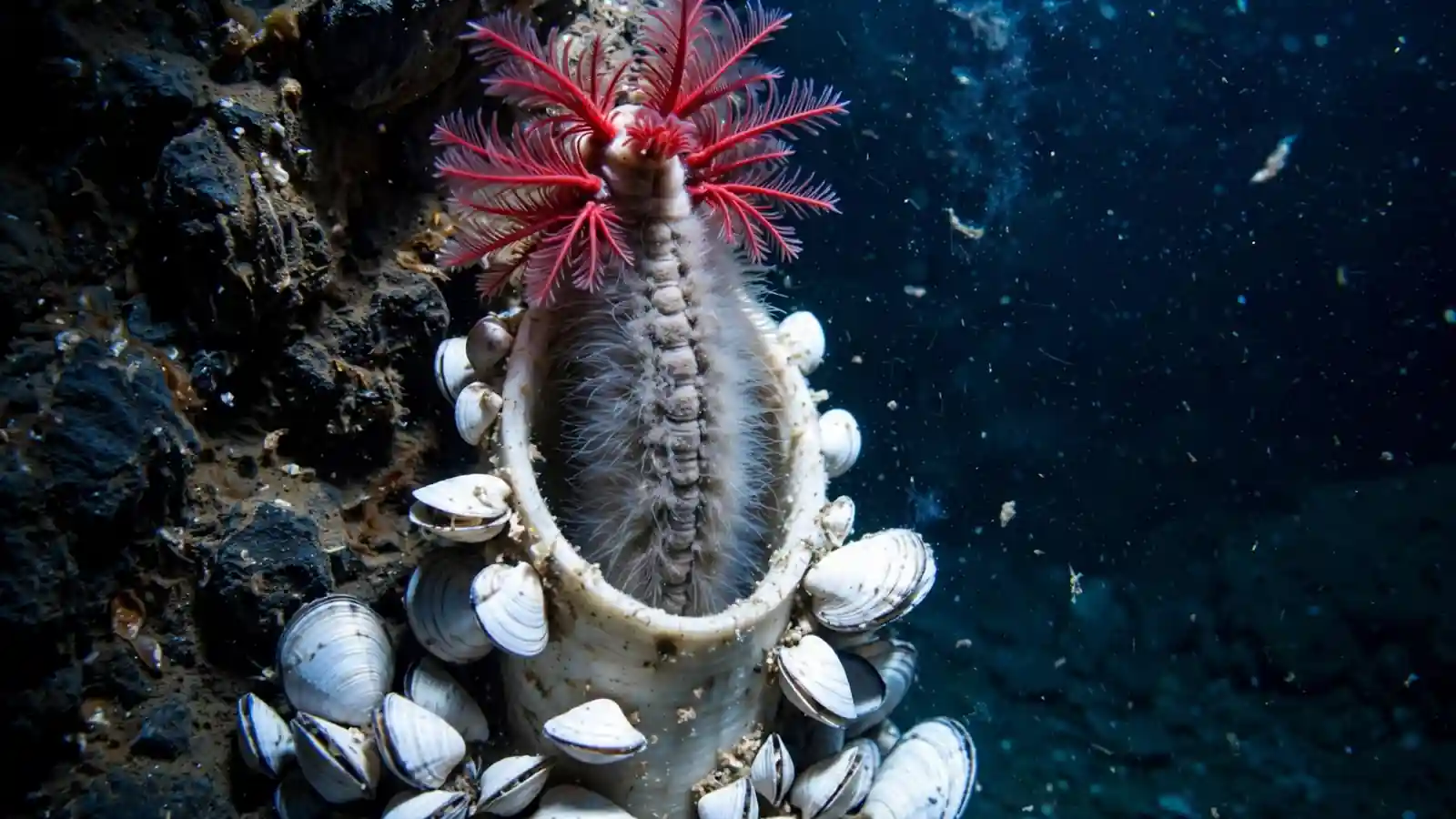
The diet is the vent’s whole economy in miniature. The bacteria are chemosynthetic: they build their bodies from the sulphur and minerals in the vent water, with no sunlight at all. The worm eats the bacteria, the bacteria eat the vent chemistry, and the vent feeds the whole chimney community. Take away the bacteria and there is no worm, no vent mussel, no chimney ecosystem at all.
Size and Body: Built for the Chimney Wall
It is about 10 cm long — the length of a finger — with a body built for the chimney wall. Its front end carries a crown of red gills that fan into the cooler water, while its rear end sits against the hot chimney, wrapped in the bacterial fleece. The body is segmented, like other polychaete worms, but every segment is tuned to the same problem: heat on one side, oxygen on the other.
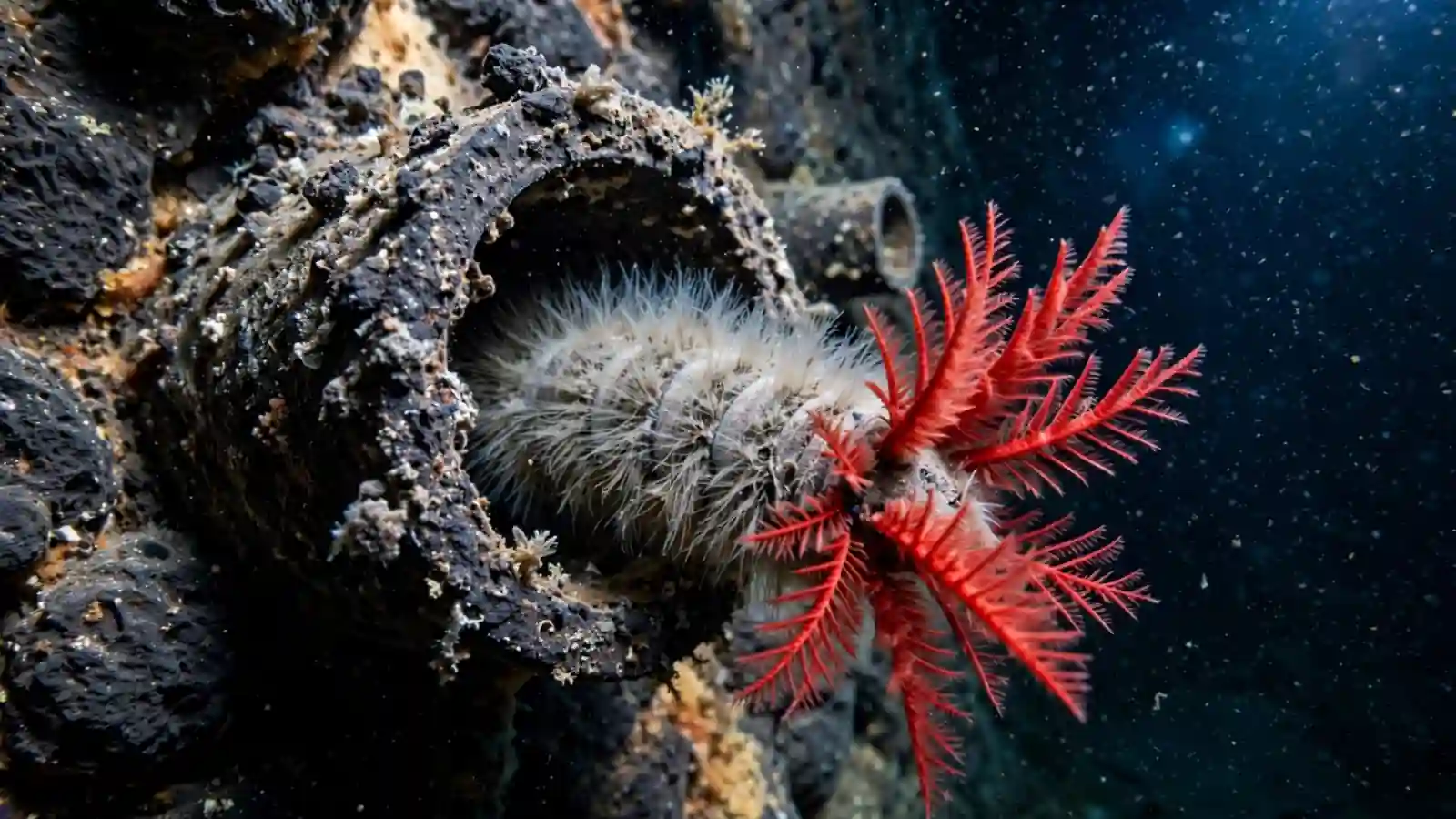
Ten centimetres is small for an animal with such a reputation, and the size is part of the point. A big animal could not live in the temperature gradient the worm exploits: the gradient only works across a small body, with the head in cool water and the tail in hot. The worm’s size is not an accident — it is the size the chimney allows.
How They Survive the Heat
It survives the heat with two tools: the bacterial fleece and its own biochemistry. The fleece is the first line, a living blanket that may insulate the body from the hottest water. Behind it, the worm’s cells make heat-shock proteins — molecular repair crews that refold proteins as the heat damages them — and those proteins are the standing explanation for how the worm holds together.

The gradient matters as much as the tools. The worm lives with its head in water near 22°C and its tail in water far hotter, and it is the head — the gills, the brain, the feeding end — that stays cool. The tail takes the heat because the tail can afford to: it is the end that sits against the chimney, and the worm’s body is arranged so the vital parts never see the worst of it. Heat tolerance, for it, is architecture as much as chemistry.
Conservation: A Vent Species With Nowhere Else to Go
It lives in one kind of place and nowhere else: active hydrothermal vent chimneys on the East Pacific Rise. It cannot move to a reef or a mudflat if its chimney goes quiet, and a chimney that stops venting stops being a home. The worm’s whole range is a scatter of hot towers on a cold sea floor, and each one is temporary on geological time.
That makes the worm a conservation story even though no one is hunting it. Deep-sea mining is the pressure on the horizon: the same vents that host the worm also hold the minerals miners want, and a mined chimney is a dead chimney. The worm is not listed as threatened, but its habitat is one of the smallest and strangest on Earth — and it has nowhere else to go.
Fun Facts
- Its tail was reported in water up to about 81°C in 1998 — but direct tests put its real tolerance near 50°C.
- Its grey fleece is a coat of living bacteria, so thick it was once mistaken for fur.
- It lives on black smoker chimneys on the East Pacific Rise, about 2,500 metres down.
- Its red gills sit in cool water near 22°C while its tail takes the heat.
- It is the most heat-tolerant complex animal known after the tardigrades.
- It is named for Pompeii — the Roman city buried by Vesuvius — because it lives in the heat.
Frequently Asked Questions
How Hot Can a Pompeii Worm Survive?
Up to 80°C was reported in 1998, with the worm’s tail in water near 81°C and its head in water near 22°C — but a direct experiment in 2013 found 50–55°C lethal after two hours, with the optimum below 50°C. The honest figure is near 50°C of real tolerance, with the 80°C number as a reported, not confirmed, extreme.
Where Do Pompeii Worms Live?
On the walls of hydrothermal vent chimneys on the East Pacific Rise, about 2,500 metres down. They colonise black smoker chimneys in dense colonies, each animal in its own tube, in total darkness under crushing pressure.
What Is the Fuzzy Coating on a Pompeii Worm?
A coat of living bacteria — a thick, fuzzy grey fleece that covers the worm’s back. It may insulate the worm from the chimney’s heat, feed it (the worm grazes its own coat), and detoxify the vent water. The exact role is still debated.
How Big Do Pompeii Worms Get?
About 10 cm long — the length of a finger. The small size is part of the survival trick: the temperature gradient the worm exploits, head in cool water and tail in hot, only works across a small body.
What Do Pompeii Worms Eat?
Vent bacteria — the same chemosynthetic microbes that coat its back and the chimney walls. The worm grazes the bacterial fleece with its mouthparts, harvesting microbes that build their bodies from the sulphur and minerals in the vent water, with no sunlight at all.
Why Are Pompeii Worms Called Pompeii Worms?
After Pompeii, the Roman city buried by the eruption of Vesuvius. The worm lives in heat that would destroy most animals, on chimneys that look like smoking ruins — the name is a nod to the most famous victim of volcanic heat.
Are Pompeii Worms the Most Heat Tolerant Animal?
Among complex animals, yes — after the tardigrades. The pompeii worm is the most heat-tolerant complex animal known, with a real tolerance near 50°C and a reported extreme near 80°C. Tardigrades, which are microscopic, tolerate more.
Similar Species Worth Exploring
Keep Exploring
Meet the tube worm, the pompeii worm’s vent neighbour, then the giant tube worm, the giant of the same chimneys, and browse the whole family in our types of marine worms hub — then come back to the worm in the near-boiling water, the pompeii worm.