Somali Cat Breed Guide
Somali: the Fox Cat With a Ticked Coat
The fox cat: a longhaired Abyssinian in a glowing ruddy ticked coat with a banner of a tail. Athletic, clever and devoted, the Somali wants a job, a game, and its people close by.
By Emily Carter · Reviewed by our vet team · Updated 21 October 2026 · 13 min read
Lifespan 12–16 yrs Weight 6–10 lb Athletic & foxy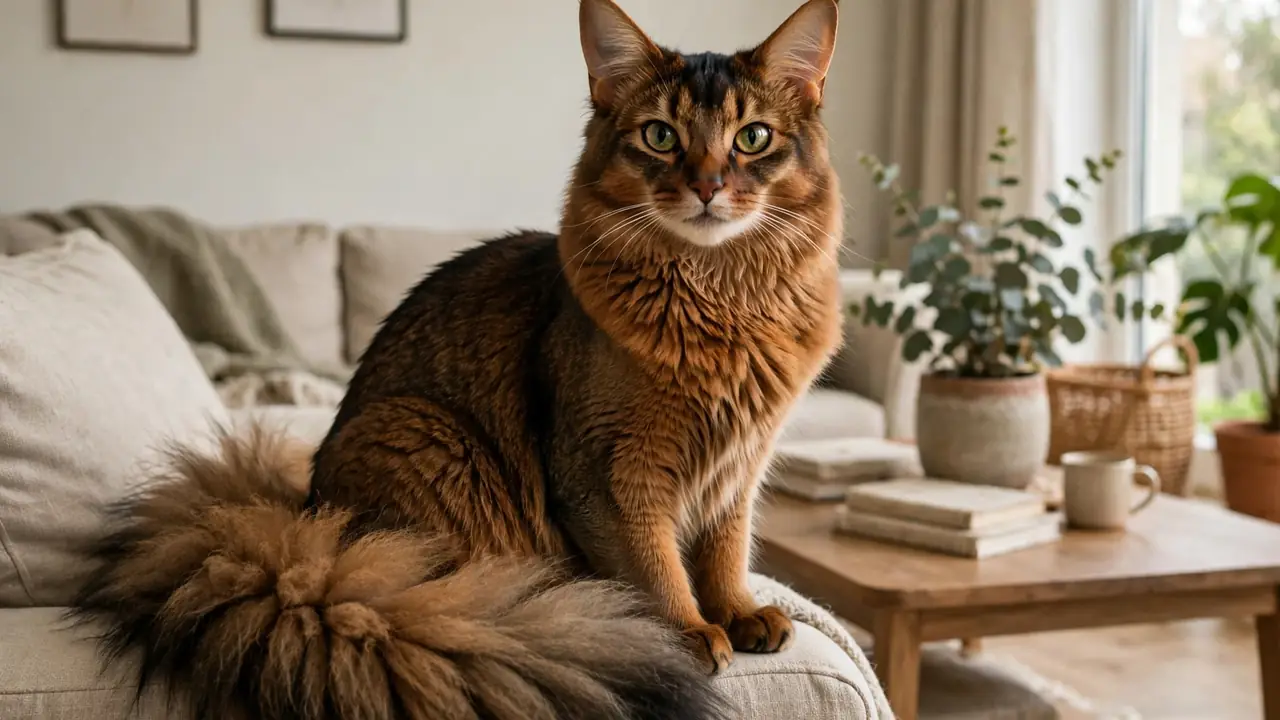
The Somali cat pairs the Abyssinian ticked coat with a magnificent fox-like tail and plush ruff. Wildly active, playful, and intelligent, it is pure entertainment in a graceful frame.
At a Glance
Size and Weight
The Somali cat is built like a gymnast, not a linebacker.
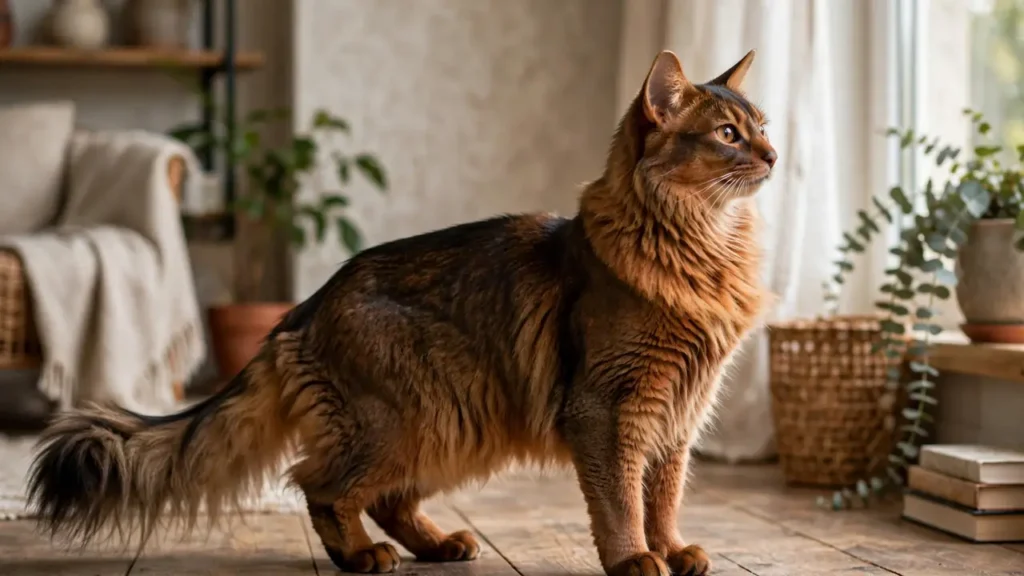
Most adults weigh between 6 and 10 pounds, which places the breed squarely in the medium range. Males run a little larger than females, but both share the same lithe frame, long supple body, slim legs, and neat oval paws. What surprises people is how light a Somali feels when picked up. The magnificent coat adds visual volume, so the cat looks bigger than it is. Under the fur is a compact athlete that leaps to bookshelf tops without seeming to try.
Coat and Colors
The coat is the whole reason this breed stops people in their tracks.
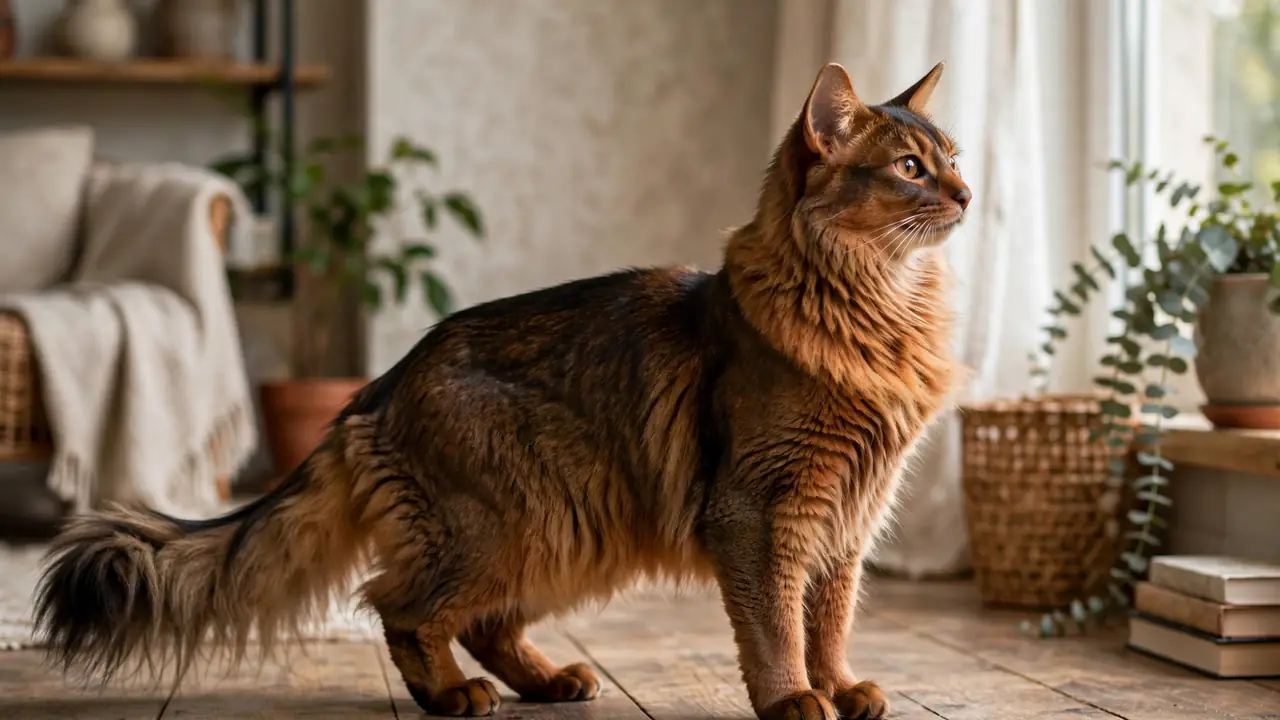
Every hair on a Somali coat carries bands of light and dark color, a pattern called ticking or agouti. The effect is a warm, shimmering finish that glows in sunlight. In the longer coat, ticking shows most along the back and sides, while the belly and chest stay paler and softer. It gives the whole cat a radiant, almost iridescent look that photographs can barely capture.
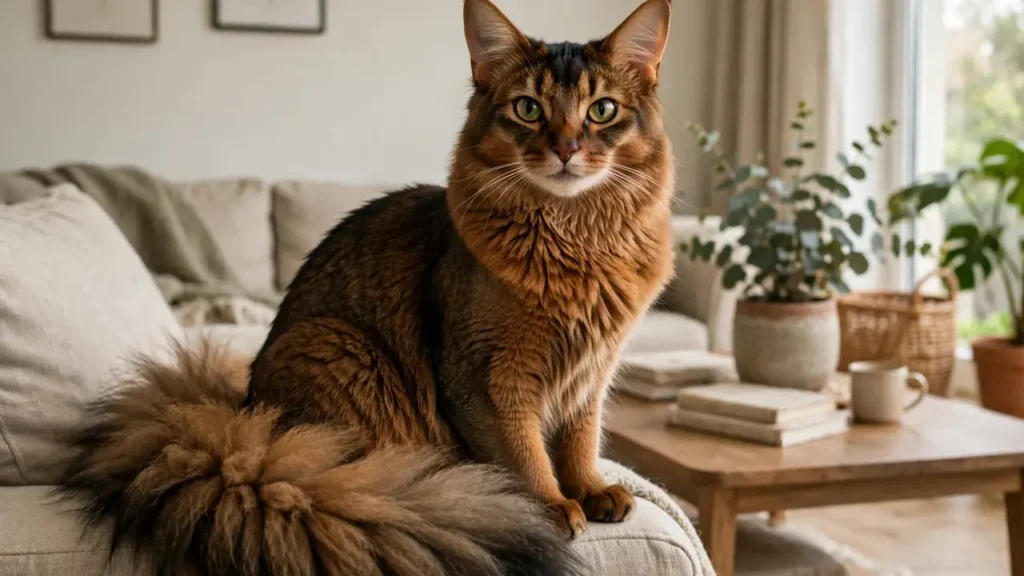
Then there is the tail. Full, bushy, and carried high like a waving banner, it looks so much like a fox brush that the breed earned the nickname fox cat. A thick ruff frames the neck, and tufts sprout between the toes and ear tips. Together these furnishings turn an elegant cat into something out of a storybook.
Ruddy is the classic color. The base glows warm burnt orange banded with black ticking, like autumn leaves in motion. Red, often called sorrel, is rich cinnamon ticked with chocolate brown. Blue softens everything into cool blue grey with slate ticking for a smoky look. Fawn is the palest, a warm creamy beige ticked with light brown.
Somali kittens are born looking quite different from the adults they become. Their coats come in darker and woollier, and the crisp ticking sharpens as they mature. The full ruff, britches, and tail plume take time to develop, often not reaching their glory until the cat is around eighteen months old.
History and Origins
Every Somali cat traces back to a surprise in an Abyssinian litter.
Every Somali traces back to a surprise in an Abyssinian litter: now and then, longhaired kittens appeared. At first these fluffy kittens were simply placed as pets.
A few breeders in the United States saw something special and began breeding them deliberately in the 1960s and 1970s, selecting for the ticked pattern in the longer coat.
The new breed was named Somali for the neighbor land of Abyssinia, the old name for Ethiopia, which borders Somalia — a fitting tribute to the breed that started it all.
Now and then, longhaired kittens appeared in Abyssinian litters. At first these fluffy kittens were simply placed as pets, but a few breeders in the United States saw something special in the 1960s and 1970s. They began breeding them deliberately, selecting for the ticked pattern, the elegant body, and the glorious coat.
The new breed was named Somali for the neighbor land of Abyssinia, the old name for Ethiopia, which borders Somalia. A fitting tribute to the breed that started it all. Progress was slow, but dedicated breeders persevered. Today the Somali cat is loved around the world for combining Abyssinian spirit with a show stopping coat.
Physical Characteristics
Look past the glorious coat and you find a serious athlete.
The head is a gently rounded wedge with large, wide set ears tipped with tufts. Almond shaped eyes come in gold, green, or hazel, often rimmed with dark markings that give a wild, alert look. A ticked tabby M marks the forehead, a signature of the agouti pattern.
The body is medium long, lithe, and muscular, with slim strong legs and small oval paws. The tail is thick at the base and tapers to a full plume. Nothing about the Somali is heavy or coarse. From nose to tail tip, it reads as grace in motion.
Somali Personality and Behavior
If you want a calm lap ornament, keep looking. The Somali cat wants a job.
When the day winds down, many curl up for cuddles — but only after the important business of play is done.
Cautious with strangers, but they study you, approve of you, then love you with unusual intensity.
Meals, play and greetings at the door, on schedule. These cats notice routine, and notice when it slips.
- Athletic, playful and endlessly fun
- Devoted and people oriented
- Silky coat resists tangles
- Needs daily play and mental work
- Cannot handle being ignored
- Moderate shedding, heavier seasonally
This is one of the most active and playful breeds in the cat world. Somali cats adore heights, so expect yours on top of doors and shelves, surveying the kingdom. They invent games, fetch tossed toys, and solve puzzle feeders fast. An intelligent cat needs mental work, and the Somali is no exception.
For all that energy, the breed is deeply people oriented. These cats follow their humans from room to room and greet visitors at the door. They talk in a soft, trilling voice rather than a demanding yowl. When the day winds down, many curl up for cuddles, but only after the important business of play is done.
Care Essentials
A high quality diet with real animal protein high on the list, portions matched to the individual. Feel the ribs lightly — you should feel them easily, even through the coat.
Brushing two or three times a week with a steel comb through the ruff, britches and tail base. The silky coat resists tangles better than most long coats.
Two or three interactive play sessions a day — feather wands, hallway fetch, puzzle feeders. Rotate the toy box weekly; a clever cat tires of the same games.
Indoor living built around vertical space: tall cat trees, sturdy shelves and window perches. A screened catio or patient harness training gives safe outdoor time.
A happy Somali cat is a busy one with a safe home base.
Plan the home around vertical space. Tall cat trees, sturdy shelves, and window perches give this breed the climbing it craves. Scratching posts protect the furniture and stretch those athletic legs. Somalis bond tightly with people, so they do best where someone is around much of the day. A lonely, bored Somali will redecorate in creative ways.
Routine care covers the basics. Keep vaccinations current, schedule yearly vet checkups, and watch dental health. Fresh water should always be available, and the litter box scooped daily. A predictable rhythm helps an energetic cat settle, so feed and play at similar times daily.
Nutrition and Diet
An athlete this active burns fuel fast.
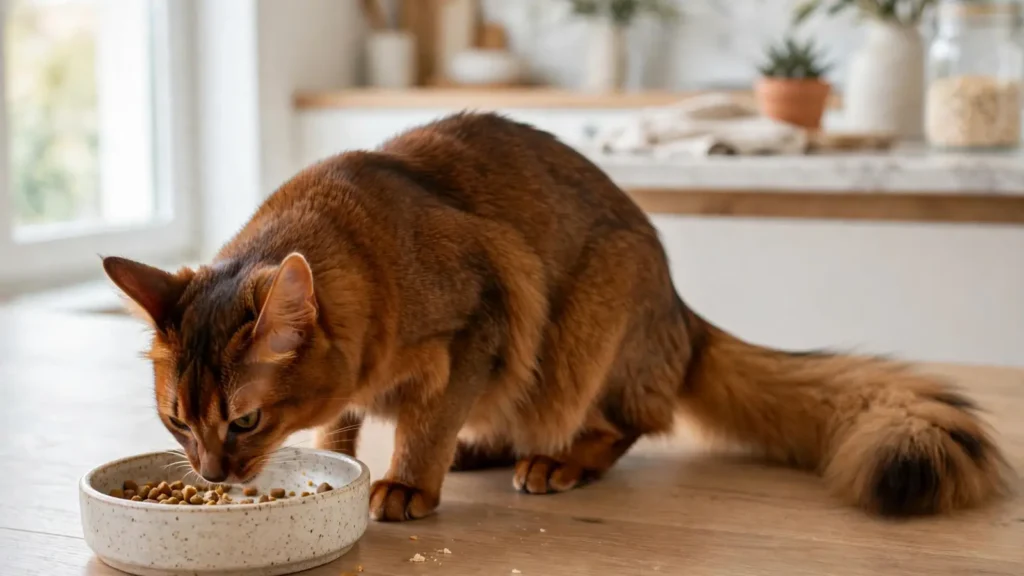
Feed a high quality diet with real animal protein high on the ingredient list. Active breeds like this one do well on food for all life stages, with portions matched to the individual cat. Check the waistline and feel the ribs lightly. You should feel them easily, even through the fluffy coat.
Kittens need calorie dense kitten food until about a year old, then transition to adult food over a week or two. Seniors may need fewer calories as activity slows. Treats are fine in moderation but should stay a small part of the diet. Avoid leaving huge bowls of dry food out all day for a grazer.
Grooming
That coat looks high maintenance. It is more forgiving than you think.
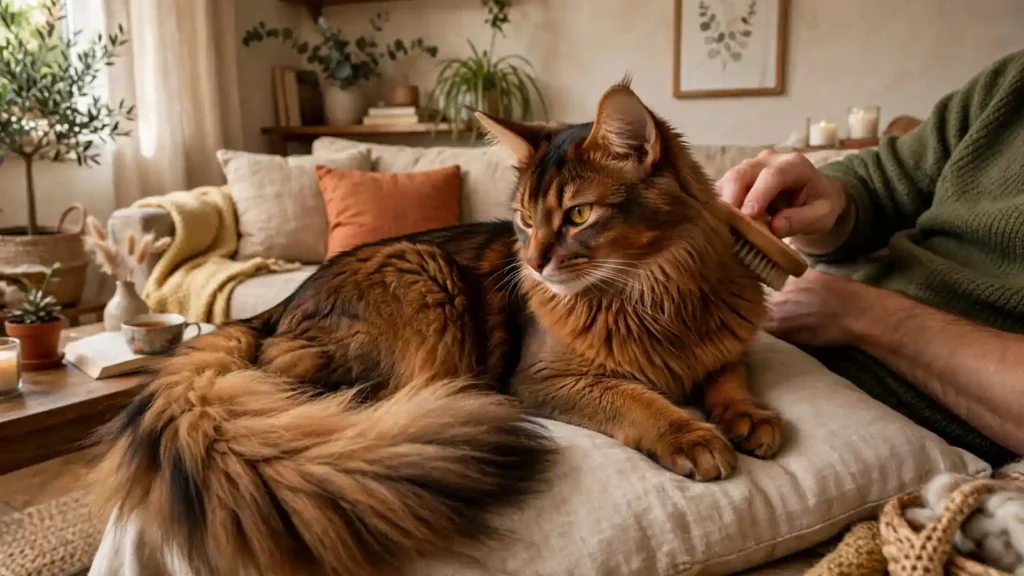
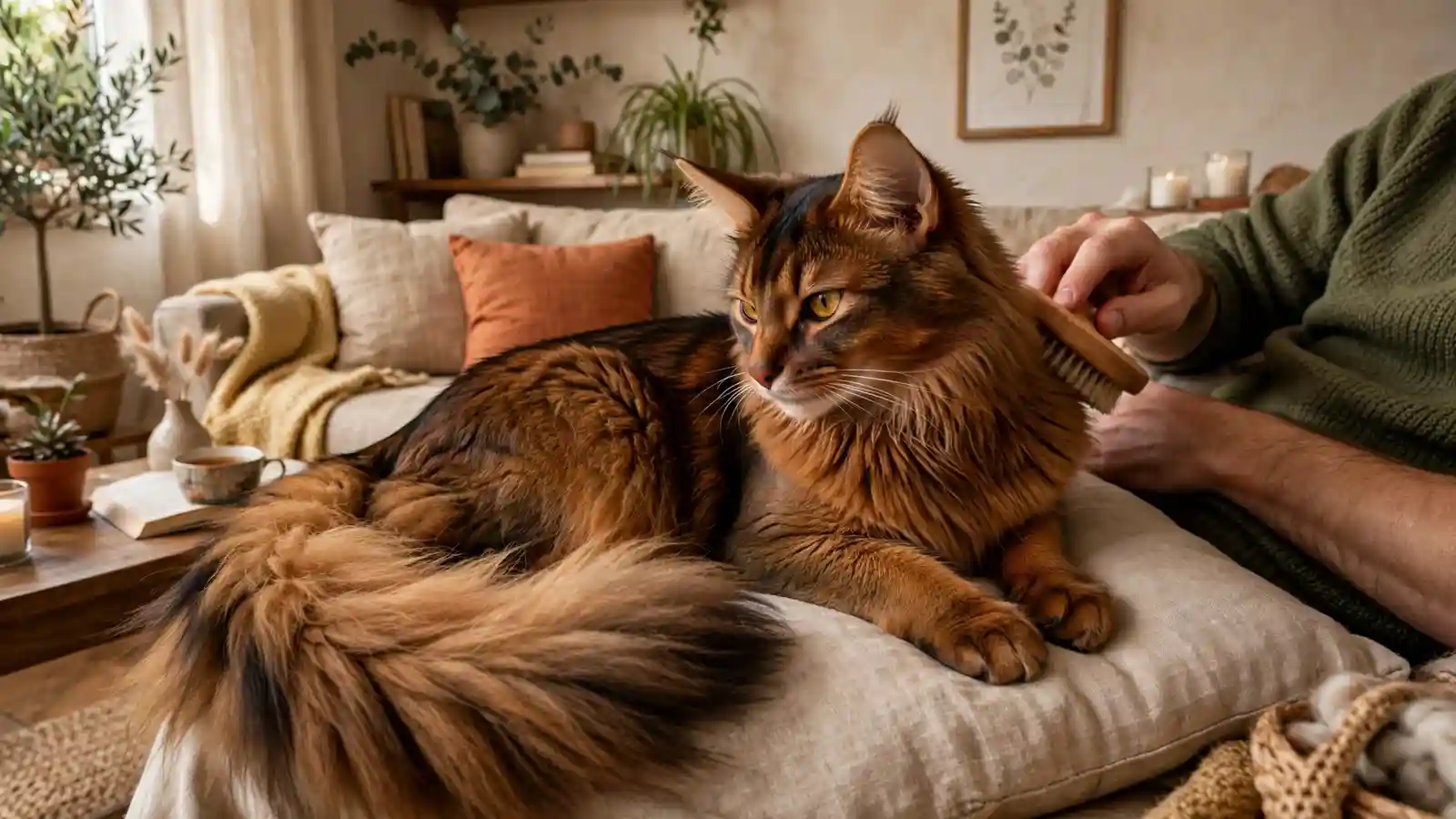
The Somali coat is silky rather than cottony, so it resists tangles better than many long coats. Brushing two or three times a week usually keeps it smooth and gleaming. Work a steel comb through the ruff, hind leg britches, and tail base, where mats start. During seasonal shedding, brush daily.
The rest is standard cat care. Trim nails every couple of weeks, check ears for wax, and brush teeth regularly if your cat allows it. Start grooming in kittenhood so the cat grows up enjoying it. Most Somalis come to love brushing as one more chance to be near their person.
Exercise and Enrichment
A bored Somali cat will invent games. You will not always like them.
Two or three interactive play sessions a day work wonders. Feather wands and anything that moves like prey get those athletic legs pumping. Many learn to fetch, so keep lightweight toys for tossing down the hallway. Rotate the toy box every week or two, because a clever cat tires of the same old mouse.
Mental enrichment matters as much as physical exercise. Puzzle feeders turn mealtime into a hunt. A window perch with a bird view gives hours of free entertainment. If you work long hours, consider a feline companion, since a playmate can mean the difference between a content cat and a curtain climbing daredevil.

Health
Somali cats are generally sturdy, with a few conditions worth knowing.
Progressive retinal atrophy (PRA) causes gradual vision loss, and pyruvate kinase deficiency is an inherited red blood cell disorder — responsible breeders screen for both with simple DNA tests. Renal amyloidosis is also watched in the breed.
Vaccinations, parasite prevention, yearly exams and dental checks go a long way. A healthy weight and an active lifestyle give a Somali its best shot at a long life.
Progressive retinal atrophy, or PRA, causes gradual vision loss, and responsible breeders screen for it with a simple DNA test. Pyruvate kinase deficiency is an inherited red blood cell disorder that can cause anemia, and testing exists for it too. Renal amyloidosis, where abnormal protein deposits build up in the kidneys, is another reason to choose a breeder who health tests.
Beyond these concerns, standard preventive care goes a long way. Keep up vaccinations, parasite prevention, and yearly exams with blood work as the cat ages. Have the teeth checked regularly. A healthy weight, good food, and an active lifestyle give a Somali its best shot at a long, lively life.
Indoor and Outdoor Living
This breed was made for the great indoors.
A Somali should live as an indoor cat. The silky coat picks up burrs and mud fast, and a trusting nature makes roaming risky. Indoors, these cats thrive with climbing structures, sunny windows, and plenty of company.
To offer a taste of the outdoors, do it safely. A screened catio lets the cat enjoy fresh air and bird watching without risk. Leash training is possible with patience, and many take to a harness for supervised garden time. Never leave a harnessed cat tied up alone.

Family Suitability
The right family will find no more entertaining companion.
Somalis do beautifully with respectful children who play gently. They match kid energy and often become a child best friend. Other cats and cat friendly dogs are usually welcomed with gradual introductions. These social cats enjoy a full house.
The one thing this breed cannot handle is being ignored. Homes empty twelve hours a day are a poor fit unless another pet provides company. Quiet households wanting a serene lap cat may find the pace a bit much. But for an engaged family that wants a cat at the center of daily life, there is hardly a better choice.
Finding a Breeder or Rescue
A little homework now saves heartache later.
Look for a breeder who health tests for PRA and pyruvate kinase deficiency and discusses results openly. Visit in person and watch how the kittens interact. Well raised kittens are confident and used to household sights and sounds. Meet the mother cat when possible; her temperament hints at the kittens future.
Ask how kittens are socialized and when they go home, no earlier than twelve weeks. A good breeder offers a health guarantee, a contract, and lifetime support. Breed rescues are another wonderful route, with adult Somalis and mixes waiting for homes. Walk away from anyone who hides where cats live, lacks health records, or pressures a snap decision.
- Breeder DNA tests for PRA and PK deficiency, results shared openly
- Kittens confident and used to household sounds; go home at 12+ weeks
- Meet the mother cat when possible
- Check breed rescues — adult Somalis wait for homes
Quick Quiz: Is a Somali Right for You?
Answer four questions. Tap yes or no.
Frequently Asked Questions
Are Somali cats good for first time owners?
They suit active first timers wanting an engaged, playful companion. They fit poorly for those expecting a calm, independent cat, since this breed needs daily play and attention.
Do Somali cats shed a lot?
Shedding is moderate. The silky coat sheds year round with heavier seasonal turnover in spring and fall. Regular brushing keeps loose hair under control and the coat looking its best.
Are Somali cats hypoallergenic?
No cat is truly hypoallergenic, and Somalis produce the same allergens as other breeds. People with mild sensitivities should spend time with the breed first and keep up with grooming.
How long do Somali cats live?
With good care, Somali cats typically live 12 to 16 years. Healthy weight, quality food, regular vet care, and an active indoor life all support a long lifespan.
Are Somali cats lap cats?
They are affectionate but busy. Most enjoy cuddles on their own terms, usually after play. Expect a cat that perches beside you during quiet moments rather than sitting still for hours.
What colors do Somali cats come in?
The four classic colors are ruddy, red also called sorrel, blue, and fawn. All show the signature ticked agouti pattern, with the glorious bushy tail, ruff, and ear tufts in every color.
The Somali cat is grace in motion: a glowing ticked coat, a fox plume tail and an athlete’s heart. For engaged families it may be the most entertaining companion in the cat world.
Similar Breeds Worth Exploring
Related Breed Guides
Keep Exploring
Browse the full A to Z cat breed collection to compare personalities, or find out your cat’s age in human years with the cat age calculator.