Needlefish
Needlefish: the surface hunter that leaps like a thrown spear
The needlefish is a slender surface hunter with a beak like a needle, a fish that leaps clear of the water at up to 60 kilometres per hour and has, rarely, killed people who crossed its path at night. This guide covers its speed, its halfbeak cousins, its hunting and the honest risks of night fishing.
By Emily Carter · Reviewed by our vet team · Updated 10 November 2026 · 11 min read
Leaps at 60 km/hA needle for a beakCousins: the halfbeaks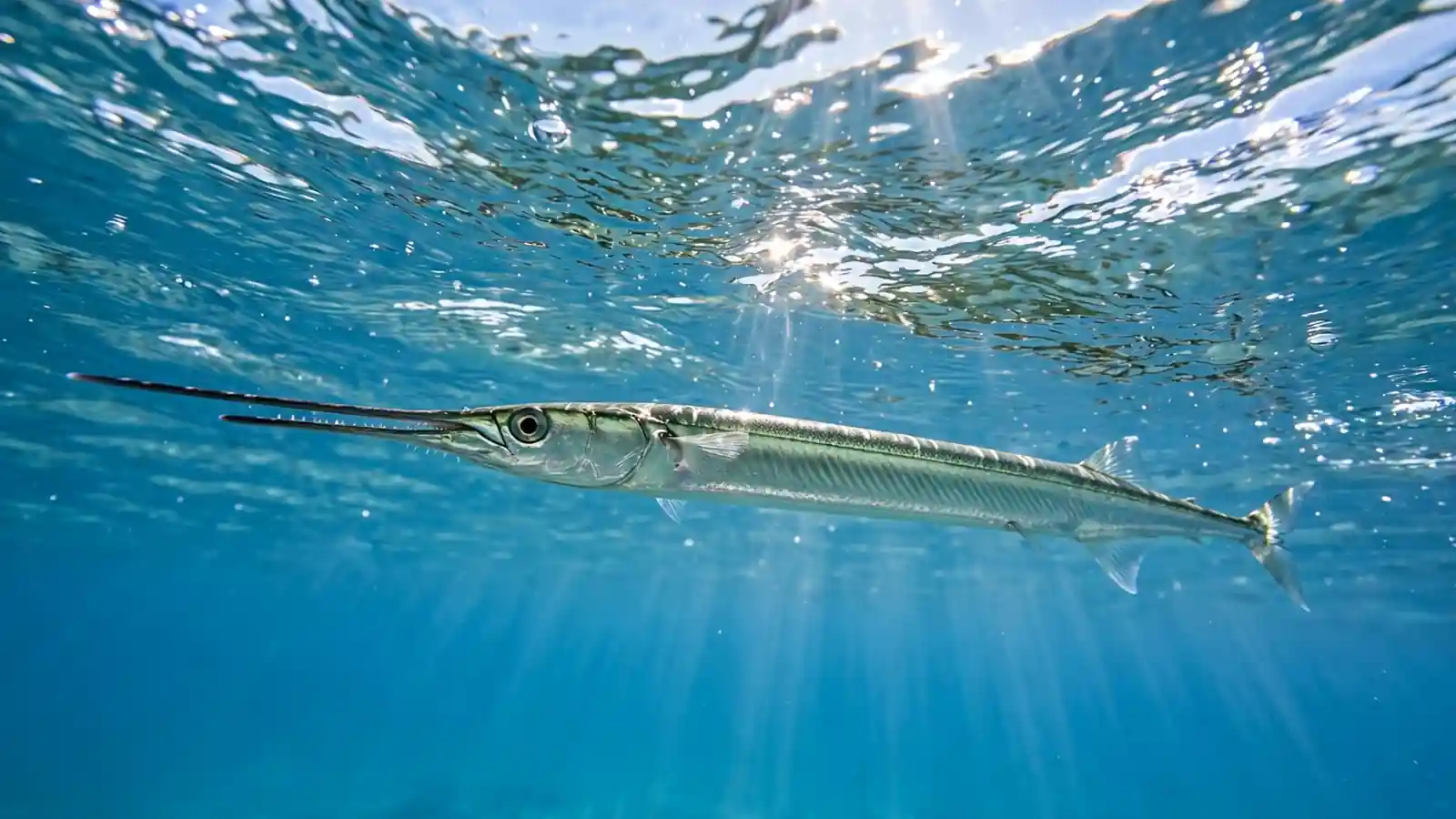
At a Glance
A needlefish is a line drawn on the water: a long, slender, silver-green fish with a beak like a needle, a small dorsal fin set far back, and a habit of leaping clear of the surface at speed. It is a fish of the top centimetres of the sea, a hunter that lives where the water meets the air, and a fish with a reputation it did not ask for.
What Is a Needlefish?
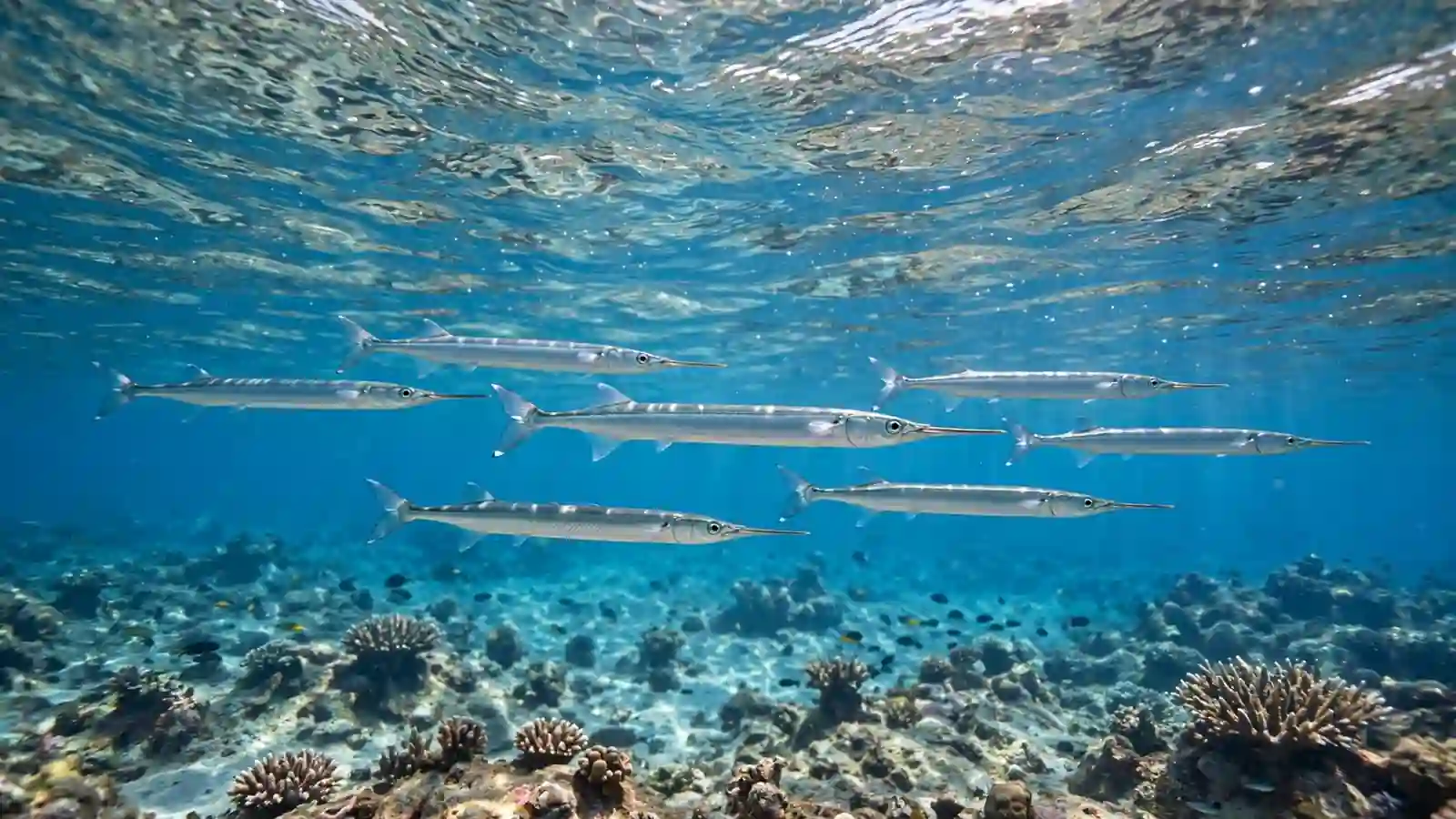
It is any member of the family Belonidae, a group of long, slender surface fishes found in warm seas worldwide. The body is a green-backed, silver-bellied needle, the jaws are drawn out into a long beak lined with tiny sharp teeth, and the dorsal and anal fins sit far back near the tail, giving the fish its dart-like shape.
They are surface fish in the truest sense: they live in the top few centimetres of the water, patrolling just below the surface with only their backs breaking the skin of the sea. They are fast, nervous and easily startled, and when startled they do what gives them their reputation — they leap, and they leap far.
Size and Species
They range from tiny species of 3 centimetres to large ones near 95 centimetres, and the family framing is the honest one: there is no single size, only a family of long, thin fish that share a shape. Most of the species people meet are in the middle of that range, 30 to 60 centimetres of silver needle, and the largest, the houndfish, is the one behind the biggest claims.
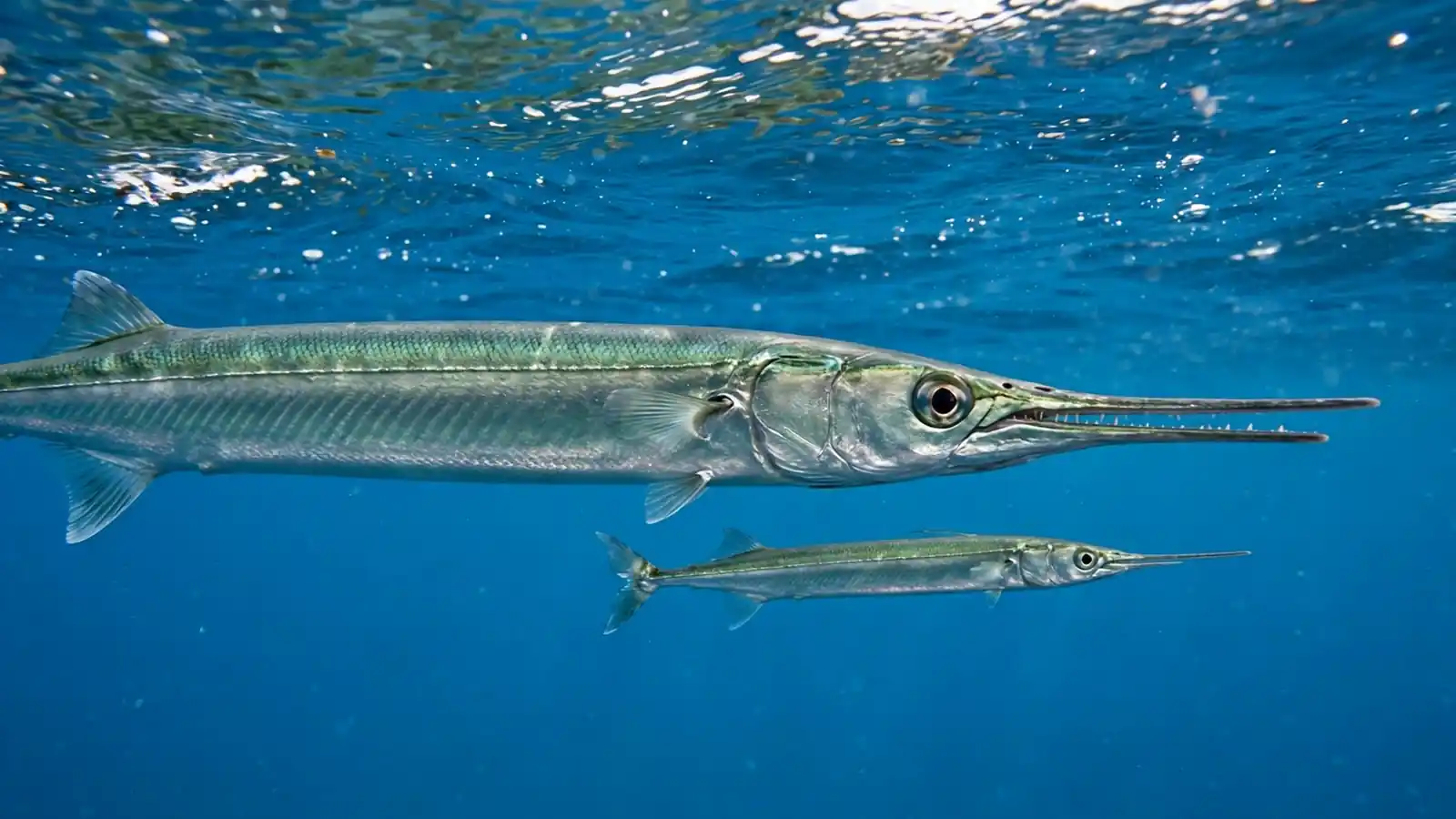
One weaker source claims the houndfish reaches about 1.5 metres, but the family range of 3 to 95 centimetres is the figure the stronger sources give, and it is the one this guide uses. The species differ in size, in colour and in the length of the beak, but the shape is always the same: a needle with fins, built for the surface.
Halfbeaks: The Close Cousins
Its closest relatives are the halfbeaks, small surface fishes of the same order, Beloniformes, and the family resemblance is obvious: the halfbeak has the same slender body and surface habit, but only the lower jaw is drawn out into a beak, while the upper jaw stays short and triangular. The result is a fish that looks like one that stopped halfway, and the name says exactly that.
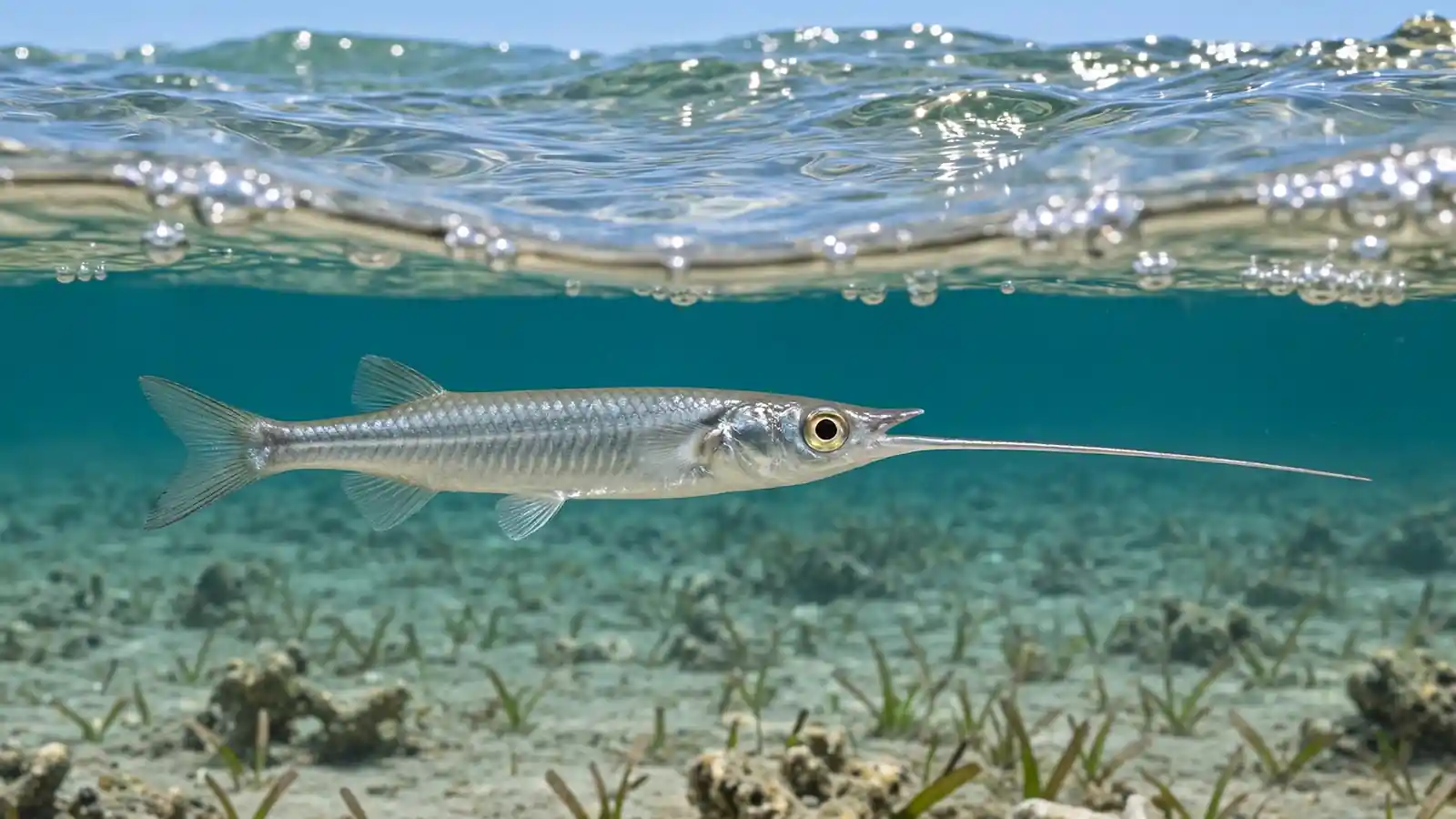
Halfbeaks live the same surface life as their cousins, skimming the top of warm coastal waters and feeding on small animals at the surface. Juveniles even look like halfbeaks: the young of many species have a lower jaw longer than the upper, a half-beak appearance that straightens out as they grow, which is a useful identification note and not a separate species.
Speed and Leaping: How Fast They Move
It swims fast and leaps faster: the fish can reach speeds of up to 60 kilometres per hour, 37 miles per hour, in a burst, and it leaves the water in long, low leaps that can carry it metres through the air. The leaping is partly escape, partly travel, and partly hunting: one that leaps clears the surface drag and covers ground fast, and it does it often enough that leaping is the signature behaviour of the whole family.

The leaps are also the danger. One leaping at 60 kilometres per hour is a needle travelling at the speed of a car, and anything in its path — a boat, a swimmer, a fisherman — is in the way of a sharp object moving very fast. Most leaps miss everything, but the ones that do not have made it famous for the wrong reason, and the next section tells that story plainly.
Hunting at the Surface
It hunts at the surface, where its food lives. Small fish, shrimp and the occasional squid are seized sideways with the long beak, and it has a curious anatomical detail: it has no stomach, so food passes straight through to the gut, and the fish feeds often and in small amounts rather than in large meals.
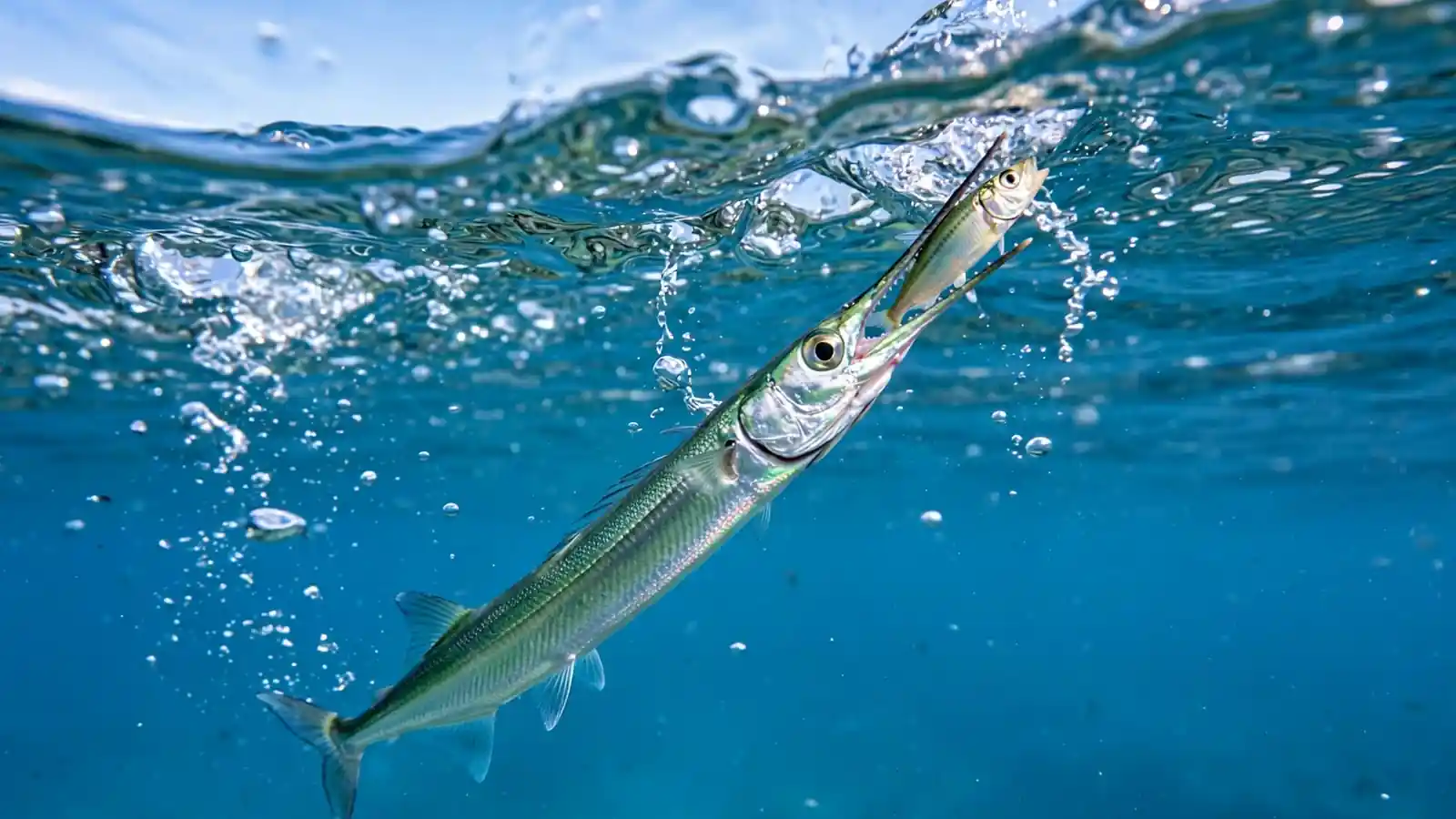
The beak is the tool and the surface is the hunting ground. It patrols just below the skin of the water, watching for the flicker of a small fish above or below, and strikes sideways with a snap of the beak, holding the prey until it can be swallowed head-first. It is a precise, economical way to hunt, and it suits a fish that lives its whole life in the top few centimetres of the sea.
Are Needlefish Dangerous? Night Fishing and Fatal Leaps
Yes, rarely, and the danger is real enough to report factually. A boy was killed diving at night in Halong Bay in 2007, and a Thai Navy cadet was killed in 2018, both by fish that leapt from the water and struck them, and night fishing lights are part of the story: the lights attract small fish, the small fish attract them, and they leap toward the light and the boat. These are documented cases, not myths, and they are reported here without sensationalising them.
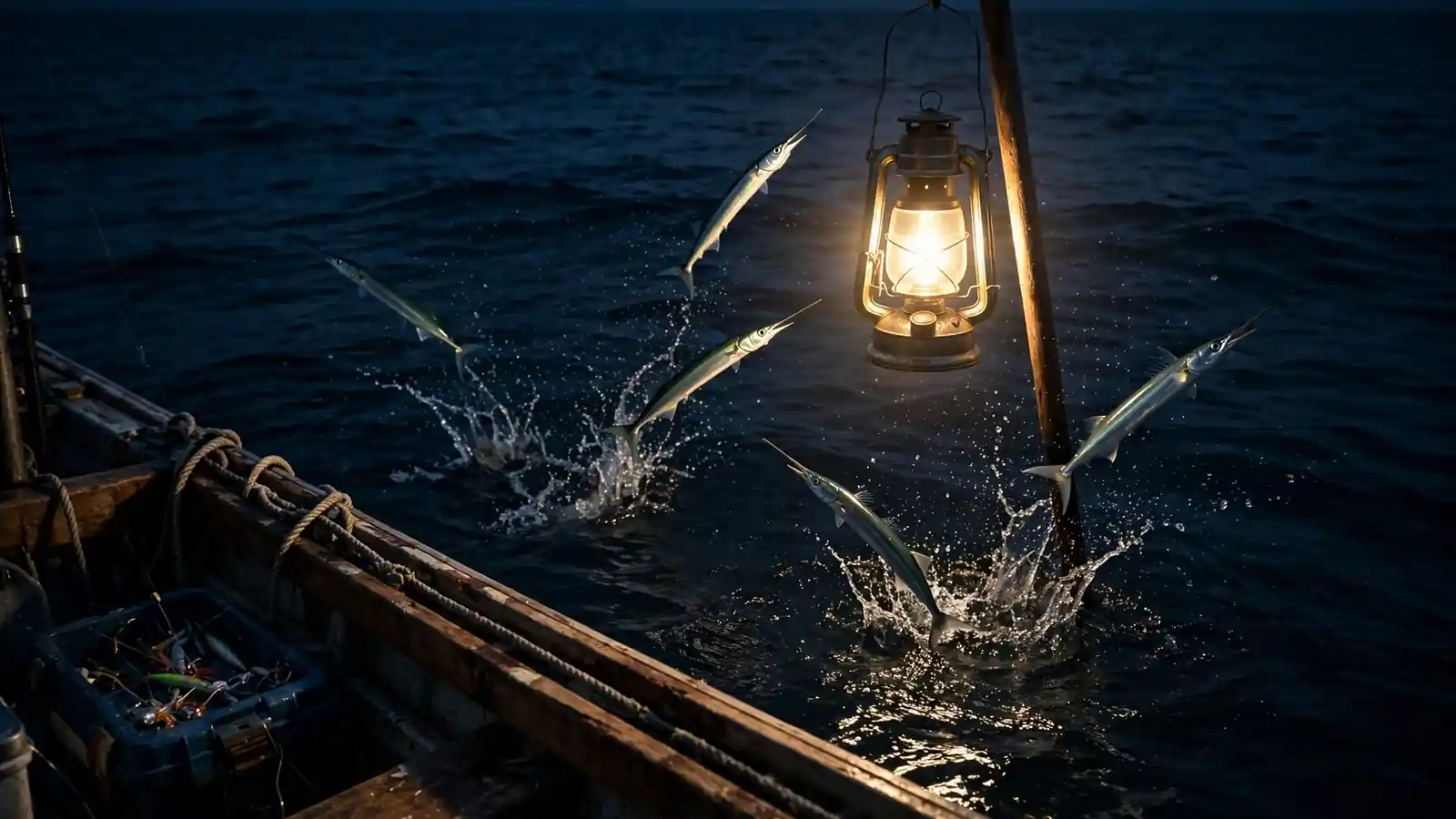
The risk is narrow and avoidable. They are not aggressive and do not hunt people; the danger comes from being in the path of a leaping fish at night, near lights, on the water. Fishermen in these waters know the rule: keep lights low, watch the surface, and do not lean over the side at night, and the fish that is a marvel by day stays a marvel by night.
Habitat and Range
They live in warm surface waters worldwide, in tropical and subtropical seas, estuaries and lagoons, wherever the top of the water is warm and full of small fish. They are coastal more often than oceanic, favouring bays, reef flats and river mouths, and they are as common in harbours as on open coasts. The family account maps the full range and the family in detail.
They are often confused with garfish, the other long-jawed surface fish, and the confusion is understandable: both are long, thin and beaked, and both live at the surface. The difference is in the beak and the fins, and in the range, and the two are separate families that arrived at the same shape from different directions, which is why it is best known by its own name and its own leap.
Fun Facts
- It can leap at up to 60 kilometres per hour, 37 miles per hour.
- It has no stomach, so food passes straight through to the gut.
- Juveniles look like halfbeaks, with a lower jaw longer than the upper.
- Night fishing lights attract them, and their leaps have killed people in documented cases.
- The family ranges from 3-centimetre species to near-metre adults.
- It lives its whole life in the top few centimetres of the sea.
Frequently Asked Questions
Are needlefish dangerous to humans?
Rarely, but yes. They are not aggressive and do not hunt people, but one leaping at 60 kilometres per hour is a sharp object moving very fast. Two fatal cases are documented: a boy diving at night in Halong Bay in 2007 and a Thai Navy cadet in 2018. Night fishing lights attract them, so the risk is highest near lights at night.
How fast can needlefish swim?
Up to about 60 kilometres per hour, 37 miles per hour, in a burst, and they leap clear of the water at that speed. The leaps carry them metres through the air, which is why they are the signature behaviour of the family.
How big do needlefish get?
The family ranges from 3 centimetres to about 95 centimetres. Most species people meet are 30 to 60 centimetres long. One weaker source claims the houndfish reaches 1.5 metres, but the stronger sources give 95 centimetres as the family maximum.
What is a halfbeak?
A halfbeak is its closest relative, a small surface fish of the same order. Only its lower jaw is drawn out into a beak, while the upper jaw stays short and triangular, so it looks like one that stopped halfway. Juveniles look like halfbeaks too.
What do needlefish eat?
Small fish, shrimp and the occasional squid, all taken at the surface with the long beak. It has no stomach, so it feeds often and in small amounts, seizing prey sideways and swallowing it head-first.
Where do needlefish live?
In warm surface waters worldwide: tropical and subtropical seas, estuaries and lagoons. They favour coastal water — bays, reef flats, river mouths and harbours — and live in the top few centimetres of the sea.
Why do needlefish jump out of the water?
To escape, to travel and to hunt. Leaping clears the surface drag and covers ground fast, and it is the family’s signature behaviour. The leaps are also the danger: a leaping one is a needle moving at 60 kilometres per hour, and anything in its path is at risk.
Similar Species Worth Exploring
Keep Exploring
Keep exploring the surface hunters: meet the fish that glides in our flying fish guide, or browse the whole shoal in the types of fish. Then come back to the needle with fins: the needlefish.