
Alaskan Malamute Dog Breed Guide
Alaskan Malamute: built to haul freight across frozen ground
One of the oldest sled dog breeds, built to haul heavy freight across frozen ground. Energy, training, care, and health in one complete guide.
By Emily Carter · Reviewed by our vet team · Updated 22 October 2026 · 11 min read
Lifespan 10–14 yrsWeight 75–100 lbFriendly & playful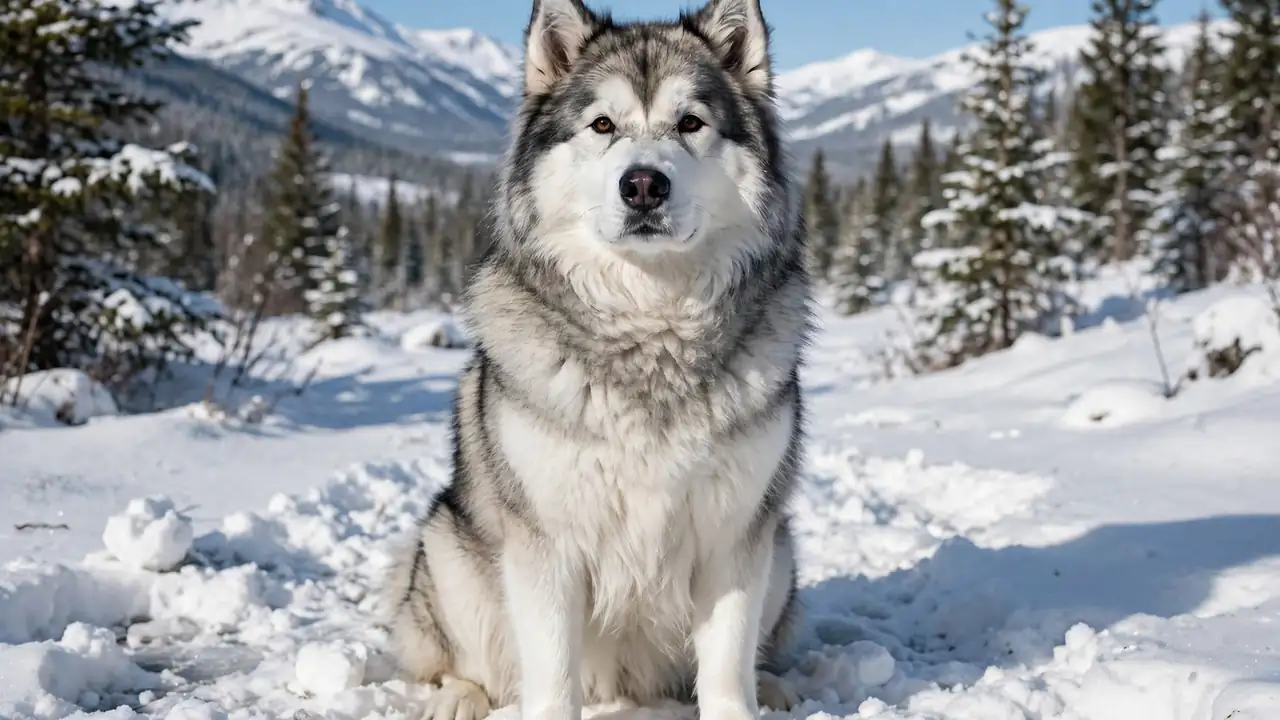
Alaskan Malamute dog is one of the oldest sled dog breeds, built to haul heavy freight across frozen ground. Before the fluffy coat wins you over, here is what matters.
At a Glance
Size and Weight
Bigger than you think and stronger than it looks. Here are the numbers. The Alaskan Malamute dog is larger and stronger than many first-time owners expect.
Males stand 25 to 28 inches and weigh 85 to 100 pounds; females are 23 to 26 inches and 75 to 90 pounds. Alaskan Malamutes are heavier-boned and more powerful than they appear under all that fur. They mature slowly, reaching full size around 18 months and full mental maturity closer to three years.
This is a working freight dog, not a decoration. Everything in your home, from the fence to the couch, should be rated for a 90-pound athlete with opinions. That size is part of the appeal of the Alaskan Malamute dog.
Coat and Colors
The coat is a survival tool from the Arctic. Here is what it means for you.
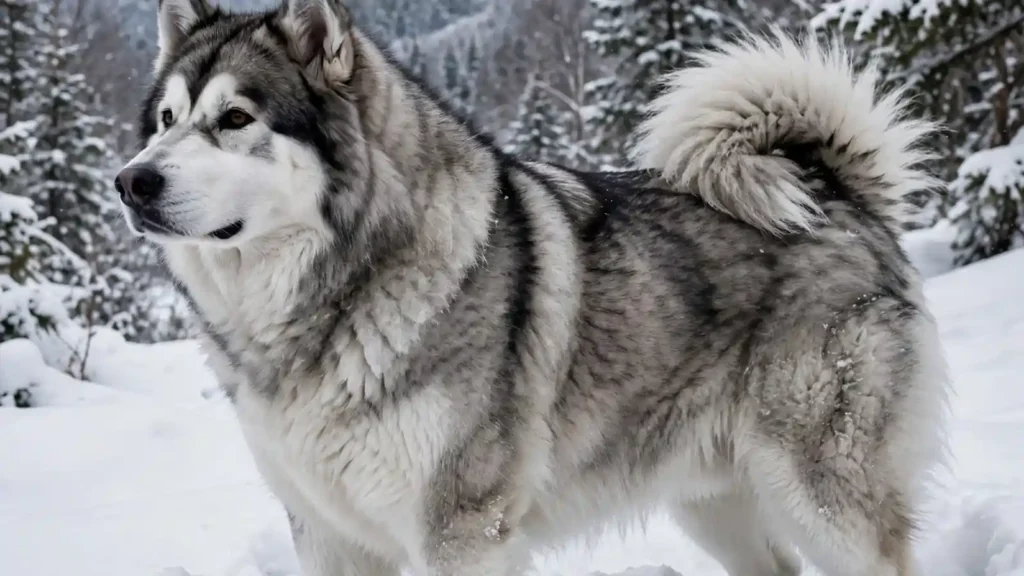
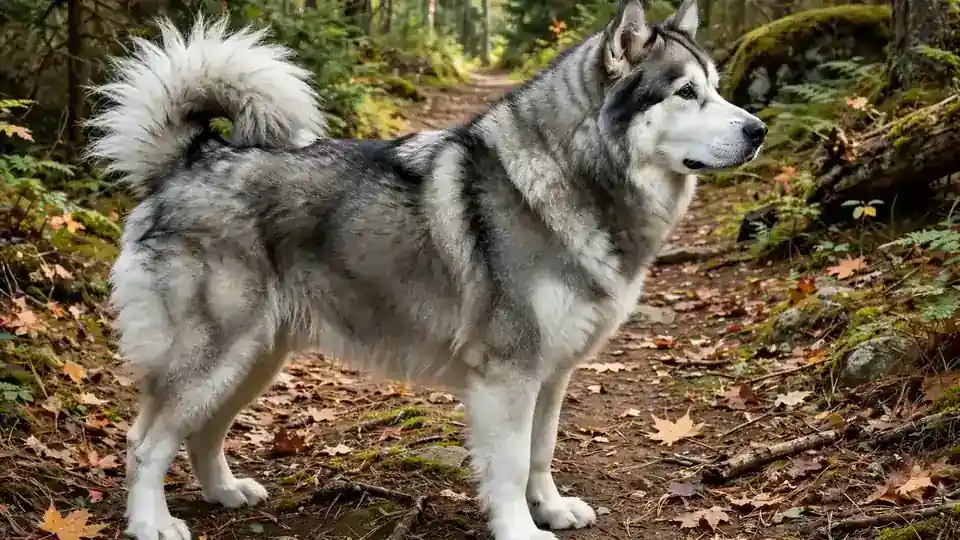
A dense, coarse outer coat over a thick woolly undercoat, built to insulate in extreme cold. Colors range from light gray to black, sable, and red, always with white on the legs, underbody, and usually the face in a cap or mask pattern. That thick coat is a defining feature of the Alaskan Malamute dog.
Alaskan Malamutes shed year-round and “blow” the undercoat dramatically twice a year. During a blow, you will brush out enough fur to build a second dog. This is one of the heaviest-shedding breeds in existence.



History and Origins
The breed is named for the Mahlemut, an Inuit tribe of northwestern Alaska. For thousands of years, these dogs pulled sleds loaded with food and supplies, valued for strength and endurance over speed.
During the Alaska gold rush, Malamutes were crossed with other breeds for faster sled dogs, and the pure breed nearly disappeared. Dedicated breeders in the 1920s and 1930s restored it.
Malamutes served in World War II and in Antarctic expeditions, including Admiral Byrd’s expeditions. The breed’s working heritage is the core of its temperament.
The breed is named for the Mahlemut, an Inuit tribe of northwestern Alaska. Its history is the history of Arctic survival. The history of the Alaskan Malamute dog explains its strong work ethic.
For thousands of years, these dogs pulled sleds loaded with food and supplies, working in teams through brutal conditions. They were valued for strength and endurance over speed. During the Alaska gold rush, Alaskan Malamutes were crossed with other breeds for faster sled dogs, and the pure breed nearly disappeared. Dedicated breeders in the 1920s and 1930s restored it.
Alaskan Malamutes served in World War II and in Antarctic expeditions, including Admiral Byrd’s expeditions. The breed’s working heritage is not decoration; it is the core of the temperament.
Physical Characteristics
Power, bone, and fluff in equal measure. Here is the build.
Deep chest, strong straight back, heavily muscled legs, and large snowshoe-like feet. The head is broad with erect ears and dark almond eyes (blue eyes are a disqualifying fault in the breed standard). The plume tail curls over the back when the dog is alert.
Alaskan Malamutes look like wolves to the untrained eye, but the expression is friendly, not wild. Everything about the structure says endurance athlete.
Alaskan Malamute Personality and Behavior
A big softie with a sled dog’s work ethic and a comedian’s timing. Here is the real personality.
Malamutes are famously friendly, even with strangers, and deeply bonded to their families. They are playful well into adulthood and famous for “talking”: wooing, howling, and grumbling their opinions. This is a vocal, expressive breed. That friendly bond is typical of the Alaskan Malamute dog.
They are also independent and strong-willed. A Malamute understands commands perfectly well and will consider whether obeying suits its plans. Training requires patience, humor, and consistency. They have a high prey drive and a love of digging, both relics of Arctic life.
Owners consistently describe the Malamute as friendly, loyal, and endlessly entertaining. In practice, owners report that the breed’s clownish affection is the main reason they recommend it to active families.
A big softie with a sled dog’s work ethic is exactly right. The Alaskan Malamute dog is one of the oldest sled dog breeds, famously friendly even with strangers and deeply bonded to its family, playful well into adulthood and famous for talking: wooing, howling, and grumbling its opinions. The working heritage is the core of the temperament, not decoration.
The independence and prey drive set the training conditions. Independent and strong-willed, the dog understands commands perfectly well and considers whether obeying suits its plans, so training requires patience, humor, and consistency. A high prey drive plus a clownish affection means the breed needs an owner with stamina and a sense of humor.
Malamutes are famously friendly, even with strangers, and deeply bonded to their families.
Playful well into adulthood and famous for ‘talking’: wooing, howling, and grumbling their opinions. This is a vocal, expressive breed.
Independent thinkers. A Malamute understands commands perfectly well and will consider whether obeying suits its plans, so training requires patience, humor, and consistency.
- Gentle and patient with children
- Friendly, playful and endlessly entertaining
- Loyal and deeply affectionate
- Among the heaviest shedding breeds of all
- A notorious escape artist; needs a dig-proof fence
- High prey drive makes small pets risky
Care Essentials
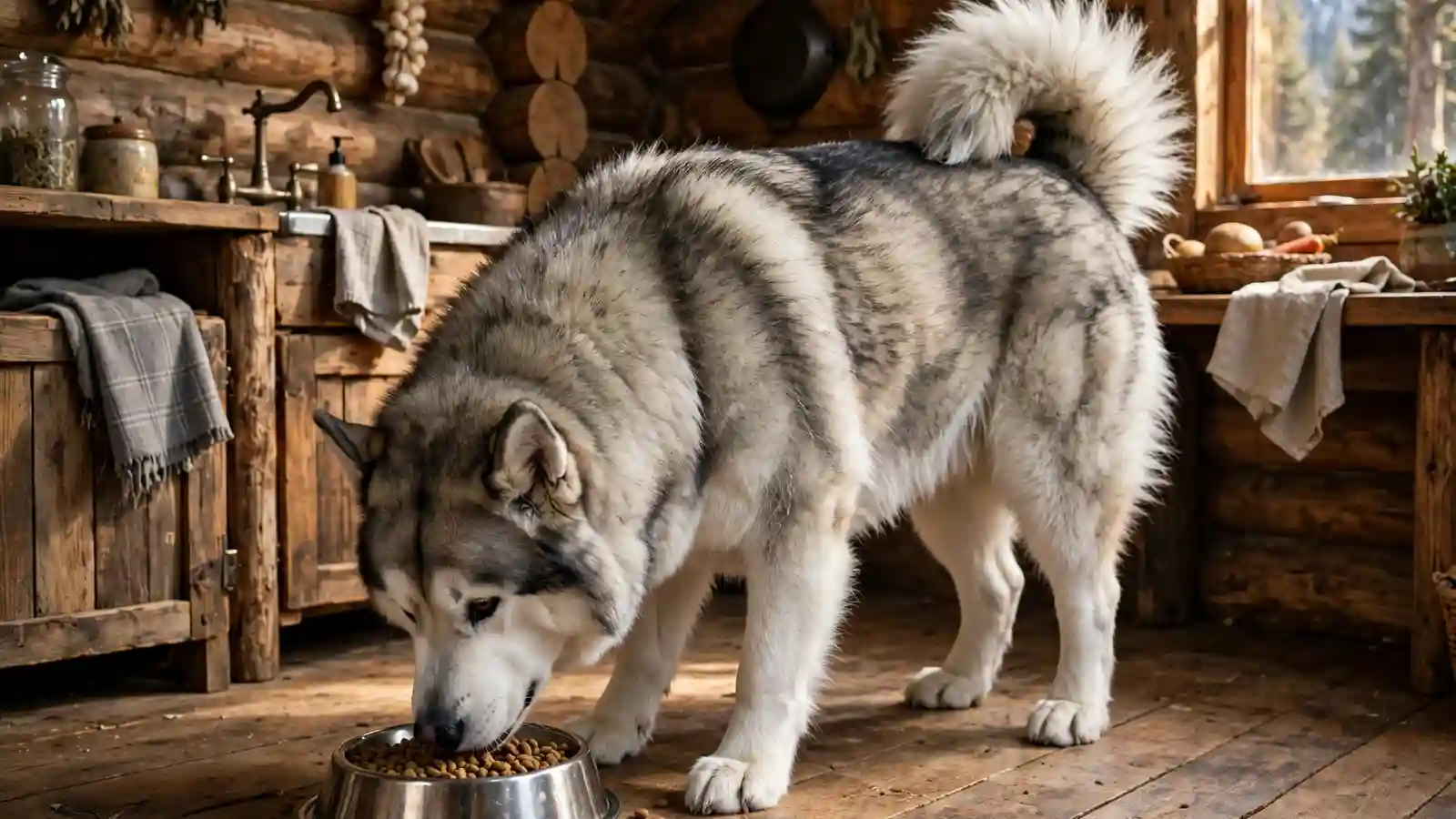
Two measured meals a day. Bred to survive on little food, Malamutes gain weight easily, so portions should match your dog’s condition, not the bag’s chart.
Brush several times a week with an undercoat rake, daily during coat blows. Never shave the double coat; it insulates against heat as well as cold.
60 to 90 minutes of vigorous activity daily, ideally pulling sports like carting, sledding or canicross that honor the breed’s purpose.
Best in cool climates with an escape-proof yard and people around most of the day. A lonely Malamute is a destructive Malamute.
This breed needs a job, a fence, and an owner with stamina. Here is the daily reality.
Malamutes need serious daily exercise and mental work. Without it, they dig, chew, howl, and escape. They are notorious escape artists who can climb, dig under, or break through inadequate fencing. A tall, dig-proof fence is mandatory. A secure, dig-proof garden matters a great deal for the Alaskan Malamute dog.
They do best in homes where someone is around a lot. A lonely Malamute is a destructive Malamute. This is not a breed for people who work long hours away from home.
A typical day runs on a job, a fence, and an owner with stamina. Serious daily exercise and mental work cover the need, since without them the dog digs, chews, howls, and escapes, and a tall, dig-proof fence is mandatory for a notorious escape artist. The breed does best where someone is around a lot, since a lonely dog is a destructive dog.
Nutrition and Diet
Arctic efficiency means they eat less than you would guess. Here is the feeding picture.
Malamutes were bred to survive on relatively little food, so they tend toward efficient metabolisms. Feed a high-quality diet appropriate for large, active breeds, and watch portions carefully; obesity is common because owners overfeed that fluffy frame. Portion control is important for the Alaskan Malamute dog.
Two meals a day is standard for adults. As a deep-chested breed, avoid heavy exercise right after eating to reduce bloat risk. Ask your vet to help set portions based on your dog’s actual condition, not the bag’s generic chart.
Feeding suits Arctic efficiency. Bred to survive on relatively little food, the dog has an efficient metabolism, so a high-quality diet for large, active breeds in two meals keeps weight controlled, with portions set by actual condition, not the bag’s generic chart. As a deep-chested breed, heavy exercise right after eating is avoided to reduce bloat risk.
Grooming
The grooming commitment is serious. Here is the routine.
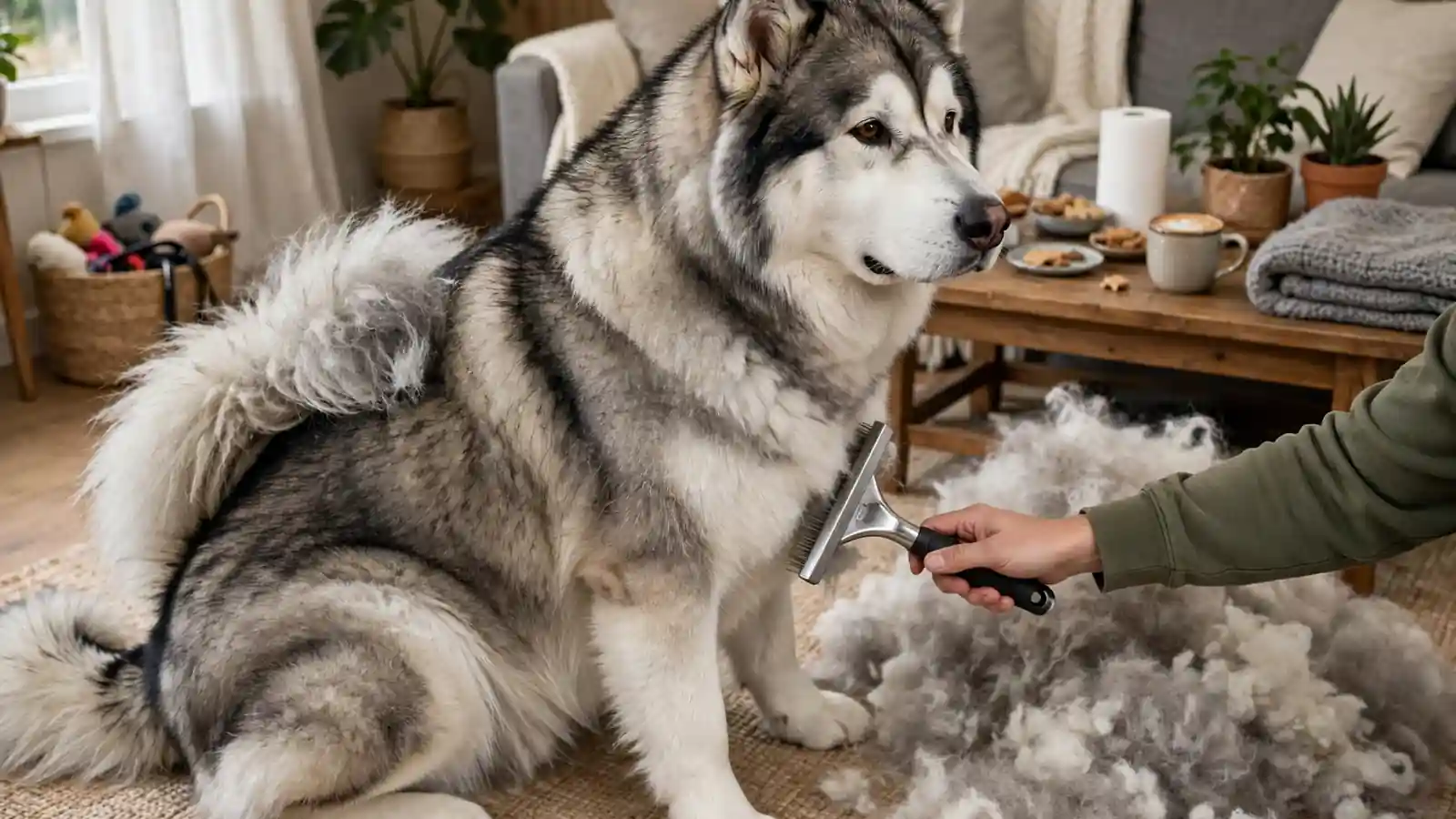
Brush several times a week with an undercoat rake; daily during coat blows. Never shave a Malamute: the double coat insulates against heat as well as cold, and shaving ruins it. Bathe occasionally, trim nails monthly, and check ears regularly. Regular brushing helps manage the coat of the Alaskan Malamute dog.
Start grooming in puppyhood. A Malamute that will not tolerate brushing becomes a matted, miserable 90-pound problem.
Grooming is a serious commitment for a heavy shedder. Brushing several times a week with an undercoat rake, daily during coat blows, manages the dense coat and its dramatic twice-yearly blows, with baths occasionally and nails monthly. The double coat must never be shaved, since it insulates against heat as well as cold, and starting grooming in puppyhood prevents a matted, miserable 90-pound problem.
Exercise and Enrichment
High energy is the baseline. Plan accordingly.
Aim for at least 60 to 90 minutes of vigorous activity daily: hiking, running, backpacking, or better yet, pulling sports like carting, sledding, or canicross that honor the breed’s purpose. A tired Malamute is a good Malamute; an under-exercised one remodels your yard. Daily vigorous activity keeps the Alaskan Malamute dog settled at home.
Mental work matters too. Training sessions, puzzle toys, and nose work burn energy that running alone cannot. This breed was built to think while working.
Exercise is high energy as the baseline. Sixty to ninety minutes of vigorous activity daily cover the need, with hiking, running, backpacking, and better yet pulling sports like carting, sledding, and canicross honoring the breed’s purpose. Mental work matters too: training sessions, puzzle toys, and nose work burn energy running alone cannot, since the breed was built to think while working.
Health
Malamutes live 10 to 14 years. Here are the health issues to know.
Hip dysplasia is the most common orthopedic concern; buy from breeders who screen hips. Hypothyroidism occurs in the breed, as does a condition called polyneuropathy in some lines. Bloat is a risk for any deep-chested breed. Eye conditions including cataracts are seen occasionally. Screening is especially valuable for the Alaskan Malamute dog.
Schedule annual wellness exams, or twice-yearly exams for seniors, and ask your vet about screening for conditions the breed can be prone to, such as hip dysplasia and hypothyroidism. Consult your veterinarian promptly if you notice changes in appetite, thirst, weight, or energy. For general background, see the Alaskan Malamute article on Wikipedia.
Health care follows the familiar rhythm with joint and thyroid screening in focus. Annual exams, twice-yearly exams for seniors, and screening for hip dysplasia and hypothyroidism cover the ground the guide names, and breeders who health-test hips, eyes, and thyroid are worth seeking out. Day to day, limping, weight gain, and changes in appetite, weight, or energy deserve a prompt vet call, and bloat risk means post-meal rest matters.
The most common orthopedic concern in the breed; buy from breeders who screen hips.
Occurs in the breed, as does a condition called polyneuropathy in some lines. Ask your vet about screening.
Bloat is a risk for any deep-chested breed, and eye conditions including cataracts are seen occasionally.
Indoor and Outdoor Living
Cold weather is paradise; heat is the enemy. Here is the balance.
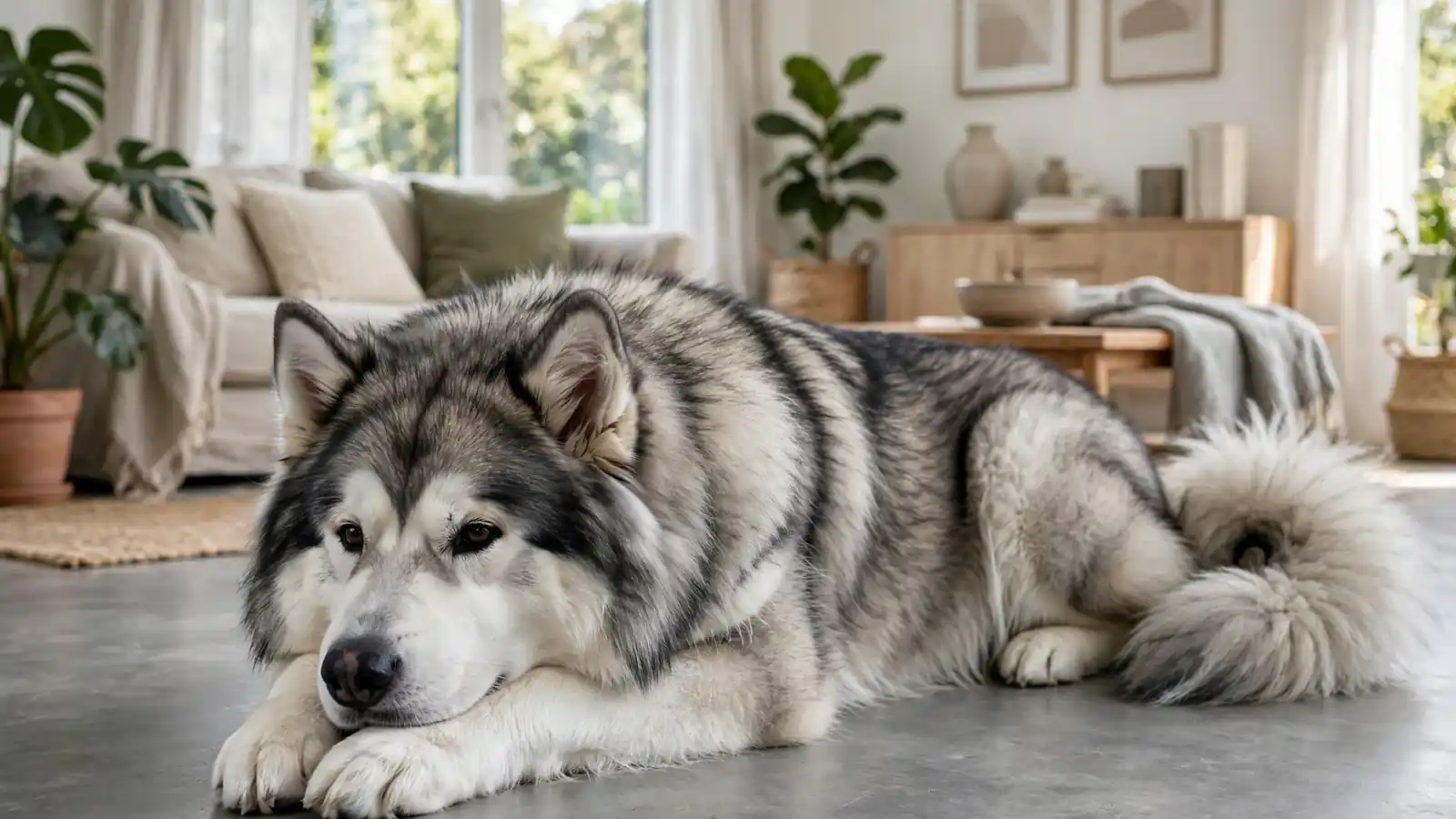
Malamutes thrive in cold climates and can happily spend time outdoors in winter. In warm climates they need air conditioning, shade, and exercise limited to cool hours. They are indoor dogs by companionship, not kennel dogs; isolation makes them miserable. A cool home suits the Alaskan Malamute dog well.
The yard must be escape-proof: tall fences with buried or concrete footers. Malamutes dig for joy and roam for fun.
Indoor living as a companion defines the arrangement. Cold weather is paradise and heat is the enemy, with warm climates needing air conditioning, shade, and exercise limited to cool hours, while the dog thrives in cold and happily spends time outdoors in winter. The yard must be escape-proof, with tall fences and buried or concrete footers, since the breed digs for joy and roams for fun.
Family Suitability
Wonderful with kids, tricky with small animals. Here is the family picture.
Malamutes are famously gentle and patient with children, and their playful nature matches kids’ energy. Size means supervision with toddlers, but the temperament is genuinely family-friendly. Supervision remains wise with any Alaskan Malamute dog.
With other dogs, same-sex aggression can occur, and the prey drive makes cats and small pets risky. Early socialization helps, but the instincts run deep. Many Malamutes do best as the only pet or with a well-matched companion.
With families, gentleness leads and prey drive sets the limit. The Alaskan Malamute dog is famously gentle and patient with children, with a playful nature matching kids’ energy, though size means supervision with toddlers. Same-sex aggression can occur and the prey drive makes cats and small pets risky, so early socialization helps, though instincts run deep, and many do best as the only pet or with a well-matched companion.
Finding a Breeder or Rescue
The breed’s popularity means both good breeders and careless ones. Choose carefully.
Good breeders health-test (hips, eyes, thyroid), work or show their dogs, and take dogs back if homes fail. Northern-breed rescues are full of Malamutes surrendered by owners who underestimated the energy and shedding; adopting an adult lets you skip the hardest phase. A careful search is worth the wait for an Alaskan Malamute dog.
- Ask what health testing the breeder does on their dogs
- Ask to see the parents and the living conditions
- Puppies should be raised in a home environment
- A good breeder answers questions openly and asks you some too
Quick Quiz: Is an Alaskan Malamute Right for You?
Answer four questions. Tap yes or no.
Frequently Asked Questions
Are Alaskan Malamutes good family dogs?
Yes, for active families. They are gentle with children and deeply affectionate. The challenges are size, energy, shedding, and escape artistry, not temperament.
Do Malamutes bark a lot?
They are more talkers than barkers: famous for wooing, howling, and grumbling. Neighbors will hear the opinions.
How much exercise does a Malamute need?
At least 60 to 90 minutes of vigorous activity daily, plus mental work. This is a non-negotiable.
Do Alaskan Malamutes shed a lot?
Enormously. They are among the heaviest-shedding breeds. Twice a year the undercoat comes out in sheets.
Can Malamutes live in warm climates?
They can with air conditioning and careful management, but they are built for cold. Hot climates are hard on them.
How long do Alaskan Malamutes live?
Typically 10 to 14 years.
What do Malamute owners say about living with the breed?
Owners consistently describe the Malamute as friendly, loyal, and playful. In practice, owners report that the breed’s clownish affection is the main reason they recommend it to active families.
When should I ask my vet about my Malamute’s health?
Schedule annual wellness exams, or twice-yearly exams for seniors, and ask your vet about screening for conditions the breed can be prone to, such as hip dysplasia and hypothyroidism. Consult your veterinarian promptly if you notice changes in appetite, thirst, weight, or energy.
The Alaskan Malamute is a friendly, powerful freight dog with a comedian’s timing and an athlete’s engine. For active families in cool climates who can offer exercise, secure fencing and company, it returns clownish affection in full.
Similar Breeds Worth Exploring
Related Breed Guides
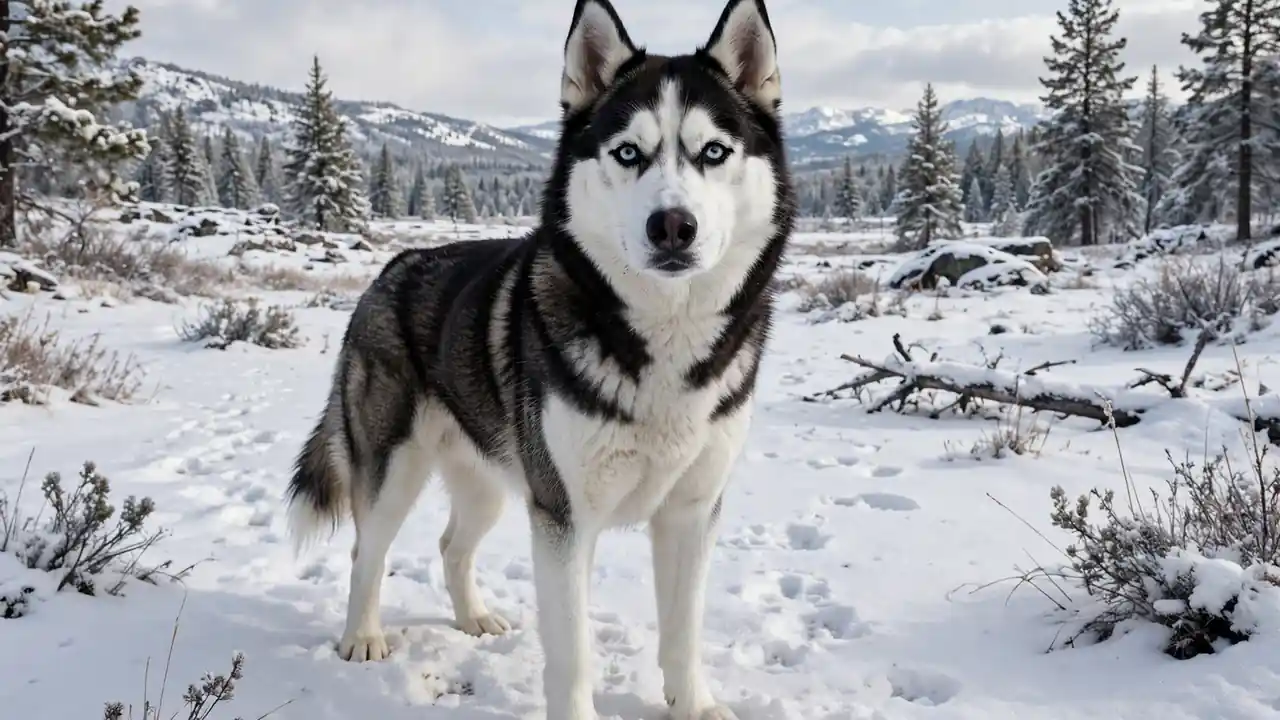
- Siberian Husky Dog Breed Guide
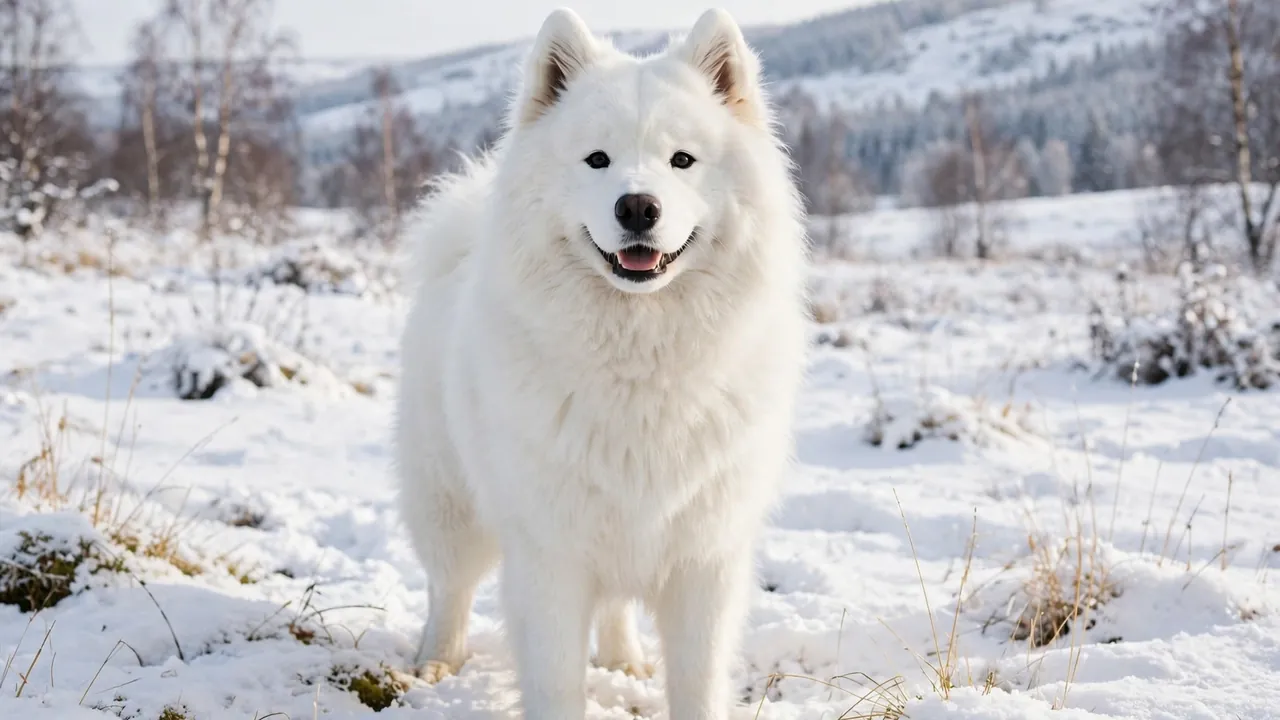
- Samoyed Dog Breed Guide
- Akita Dog Breed Guide
- Bernese Mountain Dog Dog Breed Guide
Keep Exploring
Browse all our Dog Breed Guides, try the Dog Age Calculator, or explore our Cat Breed Guides.