American Bobtail Cat Breed Guide
American Bobtail: a dog-like cat with a signature tail
The American Bobtail cat pairs a distinctive bobbed tail with a loyal, dog-like nature. Playful and adaptable, it fits families looking for an interactive feline friend.
By Emily Carter · Reviewed by our vet team · Updated 21 October 2026 · 10 min read
Lifespan 13–15 yrs Weight 7–16 lb Dog-like & loyal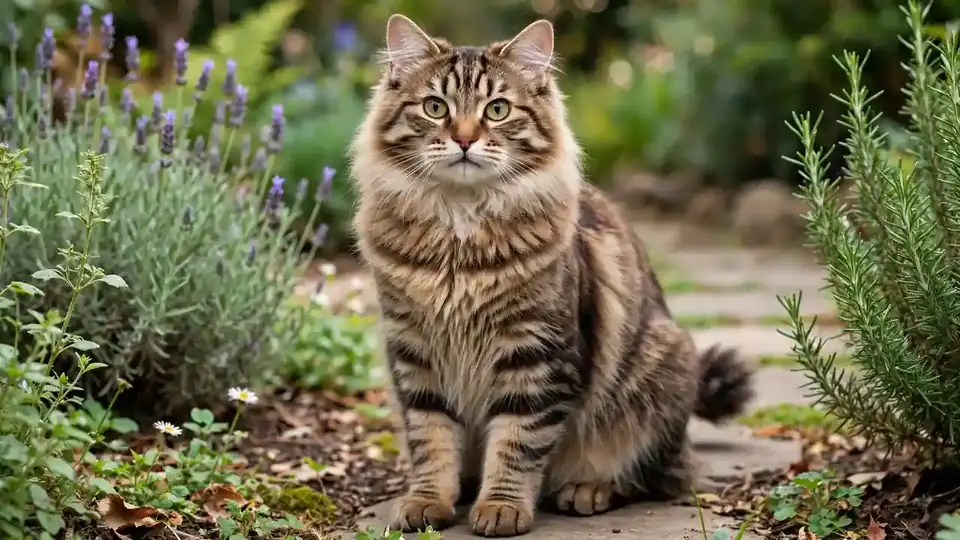
Want a cat with the loyalty of a dog and a wild, rugged look? Here is the quick rundown on the American Bobtail cat.
At a Glance
Size and Weight
Size matters when you are choosing a breed, and this breed brings real substance. This is a sturdy, athletic animal built for play.
Most adults land between 7 and 16 pounds, squarely in the medium to large range. Males usually outweigh females and look broader through the chest. Many keep filling out until age two or three.
Despite the solid build, they move with surprising grace and love climbing, jumping, and wrestling toys. A sturdy cat tree suits them better than flimsy furniture.
Coat and Colors
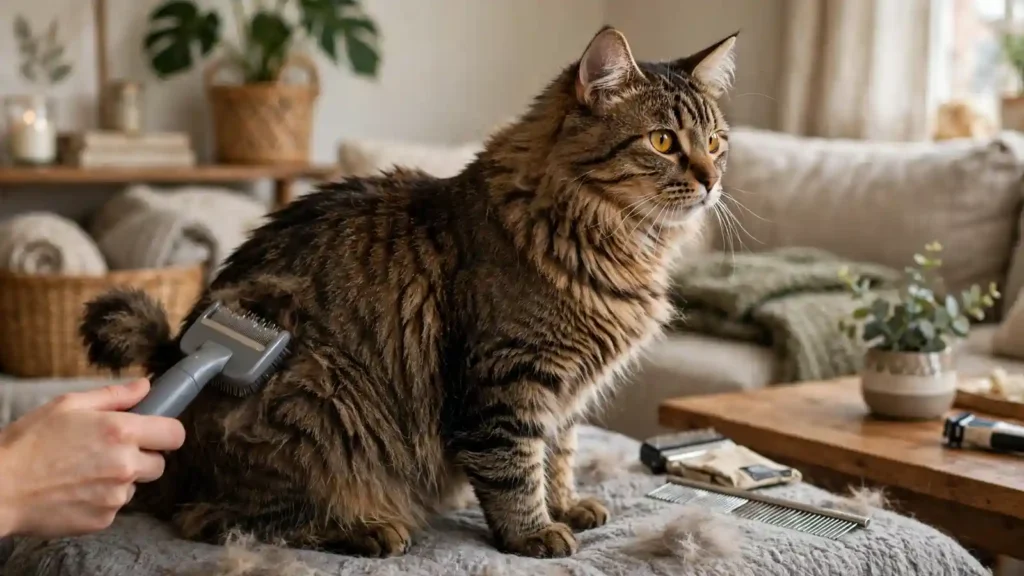
It wears one of the most interesting coats in the cat world: a little wild looking, soft with a rugged texture, and hugely varied in color.
Two coat lengths exist. The short version lies close with a slightly shaggy, resilient texture. The medium long version is fuller, with feathering on the legs and a fluffy ruff around the neck. Both are double coats with a soft underlayer. The coat thickens in winter and sheds down in summer, so expect seasonal changes.
Color is where this breed truly shows off, and every color and pattern is accepted. Tabby is most common: classic swirls, mackerel stripes, and spotted markings that suit the rustic look. Solids appear too, including black, white, blue gray, cream, and warm reds. Bi colors, tortoiseshell, and calico patterns all occur, and some Bobtails even carry pointed coloring with darker ears, face, paws, and tail.
The overall effect is a cat that looks like it walked in from the wilderness, even after napping on your sofa all afternoon. Eyes are usually gold, green, or copper, with an alert, intelligent gaze.
History and Origins
In the 1960s, a couple traveling through Arizona adopted a stray tabby kitten with an unusually short tail and named him Yodie.
When Yodie bred with the family’s Siamese type female, several kittens inherited his short tail.
Breeders began a deliberate program to preserve the natural bobbed tail.
The breed developed on the American mainland from naturally short tailed cats — it remains less common than mainstream breeds.
Every breed has a beginning, and the American Bobtail cat has one of the most charming origin stories around. It starts with a stray and a bit of luck.
In the 1960s, a couple traveling through Arizona adopted a stray tabby kitten with an unusually short tail and named him Yodie. When Yodie later bred with the family’s Siamese type female, several kittens inherited his short tail, and breeders began a deliberate program to preserve it.
Unlike some short tailed breeds shaped by island isolation, the American Bobtail cat developed on the American mainland from naturally short tailed cats. It remains less common than many mainstream breeds, which only adds to its appeal.
Physical Characteristics
Beyond the famous tail, the American Bobtail cat is a study in athletic balance. Everything about the body suggests strength without bulk.
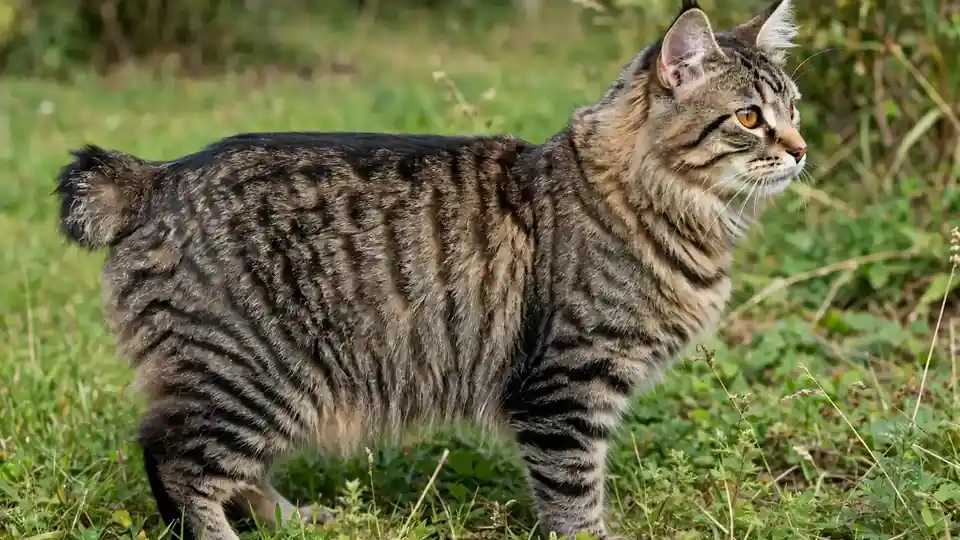
The tail is the headline feature: naturally short at about one third to one half of normal length, never cut or docked. Each is unique. Some curve gently, some kink slightly, and the fur is often a little longer, giving a pom pom look.
The body is rectangular and muscular, with a broad chest and strong hindquarters that sit slightly higher than the shoulders, which explains the impressive jumping. The head is broad with wide set, alert eyes. Paws are large and round, often tufted between the toes. Altogether it looks like a small wildcat that decided domestic life was not so bad.
American Bobtail Personality and Behavior
Personality is where the American Bobtail cat truly wins hearts. People often describe these cats as dog like, and the comparison is fair.
Loyalty runs deep. Bobtails often pick a favorite person but stay affectionate with everyone. Many greet you at the door and follow you from room to room. They want to be part of whatever you are doing.
Playfulness lasts well into adulthood. Fetch is a genuine favorite, and many carry a toy back again and again. Leash walking is another known talent. They are intelligent problem solvers who learn puzzle toys fast and sometimes open cabinets, so a little cat proofing goes a long way. They are not overly vocal, preferring chirps and soft meows.
Bobtails often pick a favorite person but stay affectionate with everyone, greeting you at the door and following you from room to room.
Playfulness lasts well into adulthood — fetch is a genuine favorite, and many carry a toy back again and again.
Intelligent cats who learn puzzle toys fast and sometimes open cabinets, so a little cat proofing goes a long way.
- Loyal and people bonded
- Patient with children
- Gets along well with cat friendly dogs
- Needs daily interaction and play
- Bonds tightly — wants someone around
- Clever paws open cabinets
Care Essentials
Quality animal protein for the muscular build; watch body condition and trim portions if weight creeps up.
Short coats once or twice a week; medium long coats two or three sessions, more in shedding season.
Two or more interactive play sessions daily, plus puzzle feeders and a sturdy cat tree.
Indoors is safest; harness walks and a secure catio add adventure.
Nutrition and Diet
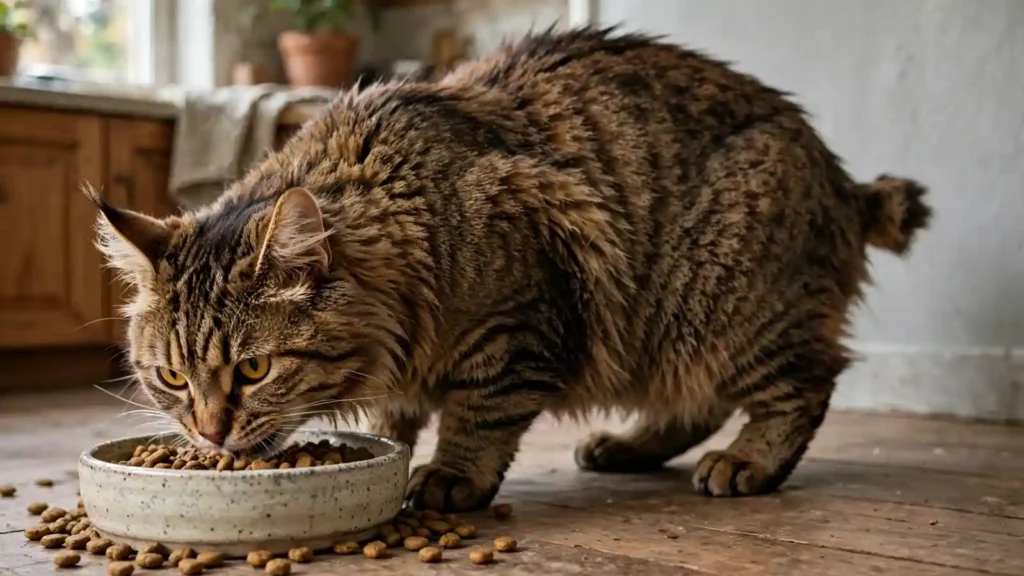
Good food fuels an active cat, and the American Bobtail cat is definitely active. A diet built around quality animal protein supports the muscular build and playful energy.
Choose a complete and balanced food for the life stage. Active adults may need a bit more than a sedentary cat of the same size, so watch body condition. You should feel the ribs under a light fat layer without seeing them.
Keep treats a small part of daily intake. If weight creeps up, trim portions and add play before switching foods.
Grooming
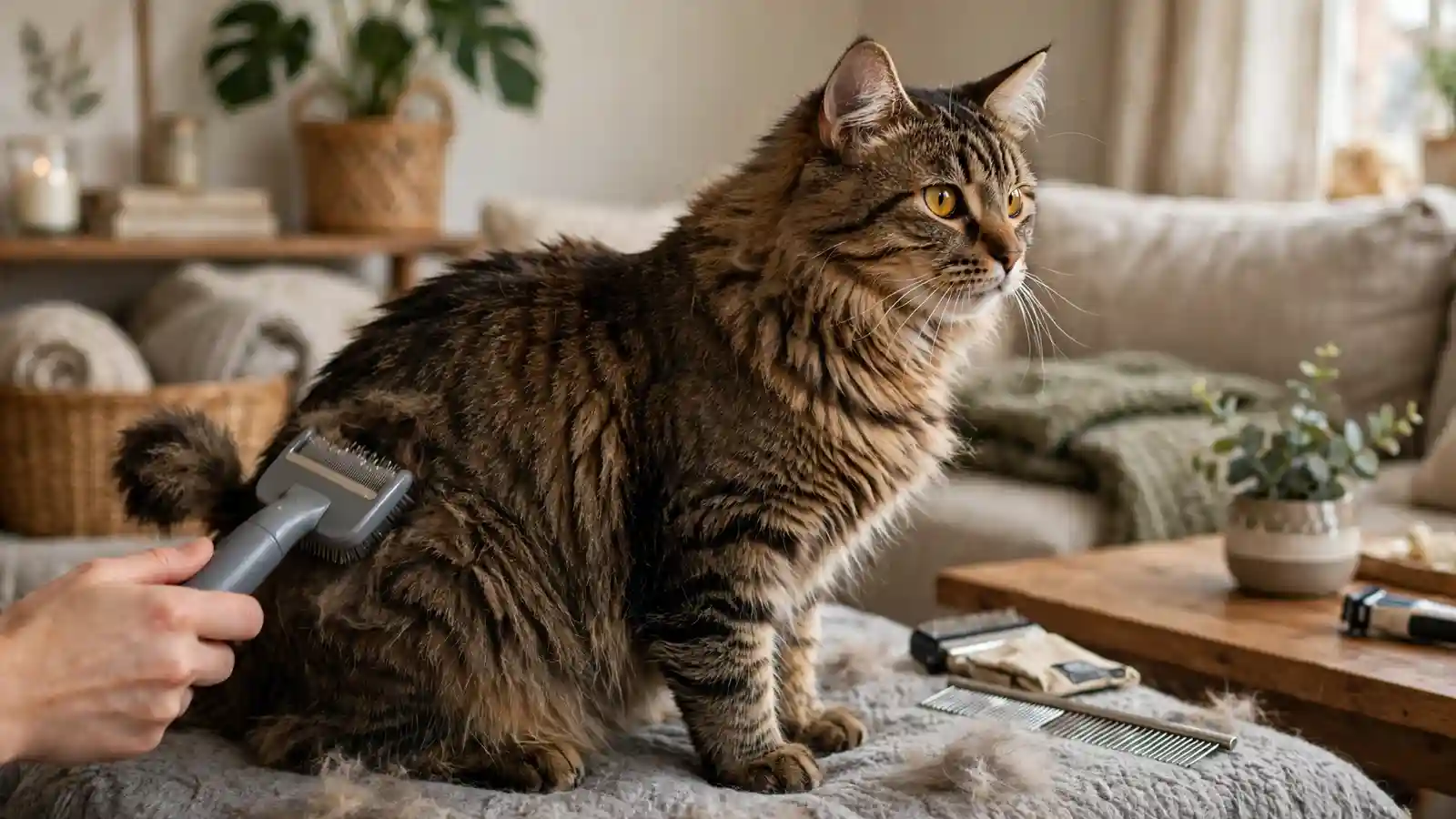
The shaggy coat looks high maintenance, but grooming this breed is pleasantly manageable. The texture resists matting better than the silky coats of some longhaired breeds.
Brush short coats once or twice a week. Medium long coats do better with two or three sessions, focusing on the ruff, leg feathering, and belly. Add extra sessions during spring and fall shedding.
Trim nails every couple of weeks, check ears, and ask your vet about dental care. Start young and most Bobtails learn to enjoy grooming.
Exercise and Enrichment
An American Bobtail cat with nothing to do is a missed opportunity. These cats were built to move and are happiest with a full schedule of play.
Aim for two or more interactive play sessions daily. Wand toys bring out the hunter, and puzzle feeders turn meals into mental work. A window perch and a tall cat tree add variety.
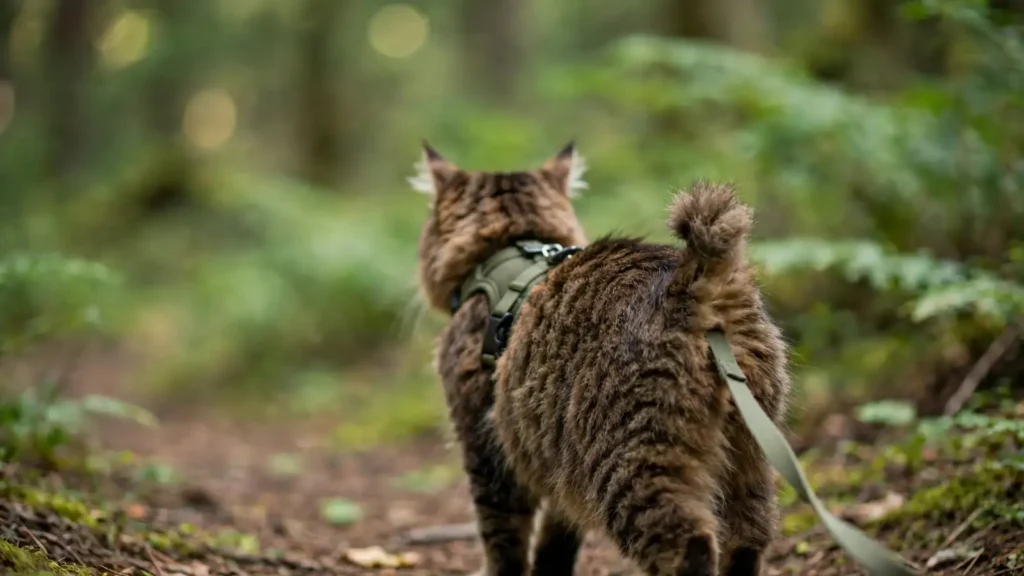
Leash training suits confident Bobtails. Start indoors with a well fitting harness, keep early outings short, and let the cat set the pace.
Health
This is generally a healthy, hardy breed. Responsible breeding and the breed’s natural origins have given it a solid foundation.
Annual checkups, vaccinations, and parasite prevention keep small issues from becoming big ones. A healthy weight also protects the joints of this athletic cat.
The short tail comes from a natural spinal variation, so spinal issues can occasionally occur. Choose a breeder who screens, and see your vet if movement or jumping changes.
Indoor and Outdoor Living
Where should one live? Indoors is the safest answer, with supervised outdoor time as a bonus for those who want it.
Indoor life protects against traffic, predators, parasites, and fights. It also keeps this curious breed from wandering too far on self guided adventures. A stimulating indoor environment with climbing space and window views keeps them content.
For outdoor time, a harness and leash is the way to go. Many Bobtails take to leash walking with enthusiasm, trotting alongside their owners like tiny dogs. A secure catio or enclosed patio is another great option.

Family Suitability
Few breeds fit family life as naturally as the American Bobtail cat. This is a cat that genuinely likes people, including the small and noisy ones.
Children usually adore Bobtails, and the feeling is mutual. These cats tend to be patient and sturdy enough for supervised play with respectful kids. Teach children to handle the cat gently and to respect resting time.
Other pets are welcome too. Bobtails are known for getting along well with cat friendly dogs, sometimes forming close friendships complete with shared naps. Introductions should still be gradual, with scent swapping and supervised meetings first.
Finding a Breeder or Rescue
Ready to bring one home? Take your time and choose your source carefully. A little homework now prevents heartache later.
A responsible breeder raises kittens at home, socializes them early, and welcomes questions. Ask about health screening and meet the mother cat if possible. Avoid anyone who will not let you visit or pressures a quick decision.
Rescue is another worthy path. Breed specific rescue groups sometimes have Bobtails or Bobtail mixes looking for homes. An adult rescue lets you see the full personality and final tail length up front.
- Ask about health screening — meet the mother cat if possible
- Kittens raised at home and socialized early
- Avoid sellers who refuse visits or pressure a quick decision
- Consider breed specific rescue groups too
Quick Quiz: Is a American Bobtail Right for You?
Answer four questions. Tap yes or no.
Frequently Asked Questions
Is the American Bobtail’s short tail natural?
Yes. It is never cut or docked. Each tail is unique, usually about one third to one half of normal length.
How big do American Bobtail cats get?
Most adults weigh between 7 and 16 pounds, with males typically larger than females. They are medium to large cats with a muscular, athletic build.
Do American Bobtail cats get along with dogs?
Very well, in most cases. Their dog like temperament makes them one of the best cat breeds for homes with dogs. Introduce them gradually and supervise early meetings.
Are American Bobtail cats vocal?
Not overly. They communicate with chirps, trills, and soft meows rather than constant loud meowing. They are expressive without being noisy.
How long do American Bobtail cats live?
With good care, most live around 13 to 15 years. Regular vet visits, quality nutrition, and an active lifestyle all support a long life.
Do American Bobtails need a lot of grooming?
Less than you might expect from the shaggy look. Weekly brushing suits short coats, while medium long coats do best with brushing two or three times a week.
The American Bobtail cat pairs a distinctive bobbed tail with a loyal, dog-like nature. Playful, adaptable, and family bonded, it looks like a small wildcat that decided domestic life was not so bad — and for an interactive feline friend, few breeds fit family life as naturally.
Similar Breeds Worth Exploring
Related Breed Guides
Keep Exploring
Browse the full A to Z cat breed collection to compare personalities, or find out your cat’s age in human years with the cat age calculator.