Japanese Bobtail Cat Breed Guide
Japanese Bobtail: at a Glance
A silky, athletic cat with a one of a kind pom pom tail and a soft, singing voice. Active, intelligent and talkative, it has been Japan’s good luck cat for centuries.
By Emily Carter · Reviewed by our vet team · Updated 21 October 2026 · 13 min read
Lifespan 15–18 yrs Weight 6–10 lb Playful & talkative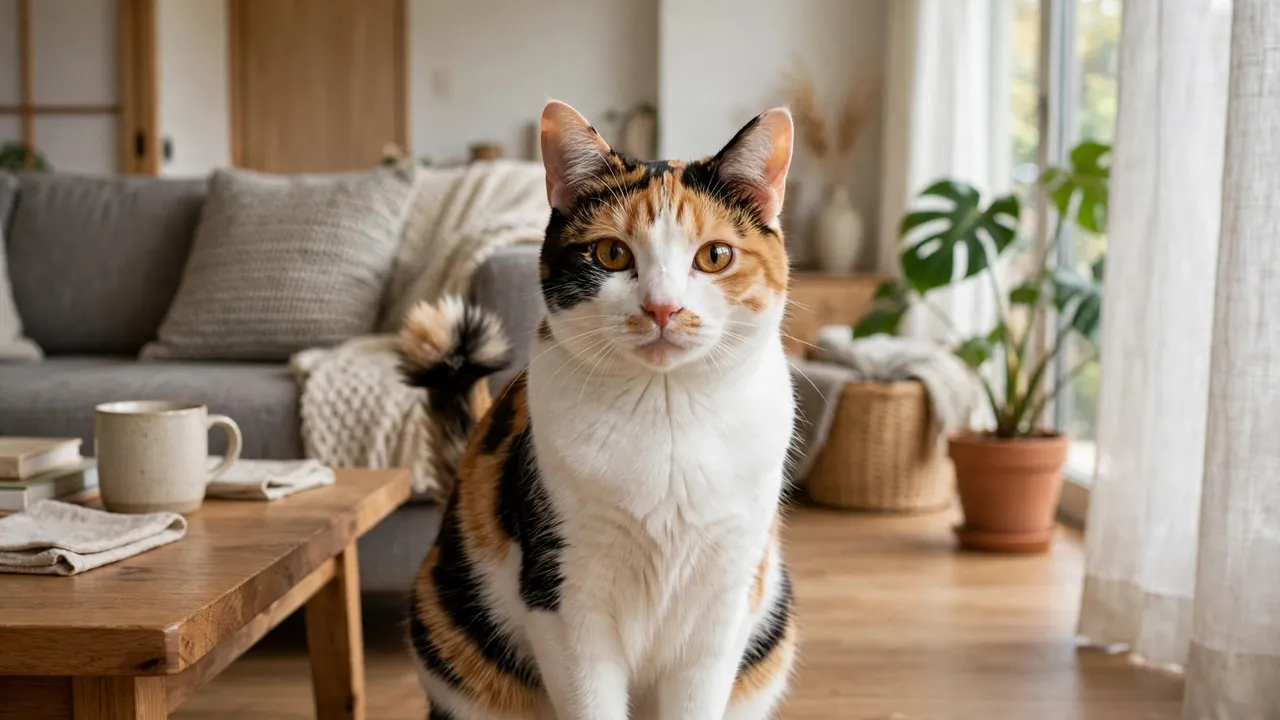
Short on time? Here is the Japanese Bobtail cat in a nutshell.
At a Glance
Size and Weight
The Japanese Bobtail cat looks refined rather than bulky, and that first impression is accurate.
Most adults weigh between 6 and 10 pounds. The body is long, lean, and well muscled, with clean lines and legs that look built for motion. Males tend to run a little larger than females, but both sexes share the same athletic outline.
Do not let the elegant frame fool you. These cats are strong and springy, with a build that favors agility over mass. Pick one up and you will feel solid muscle under that silky coat.
Coat and Colors
This is the section to linger on, because the coat is one of the breed’s quiet glories.
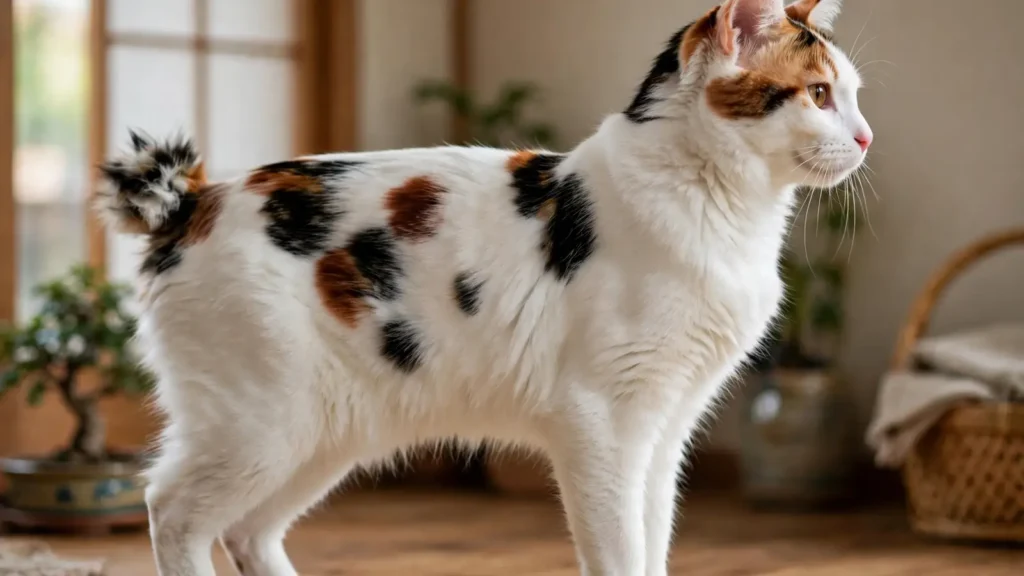
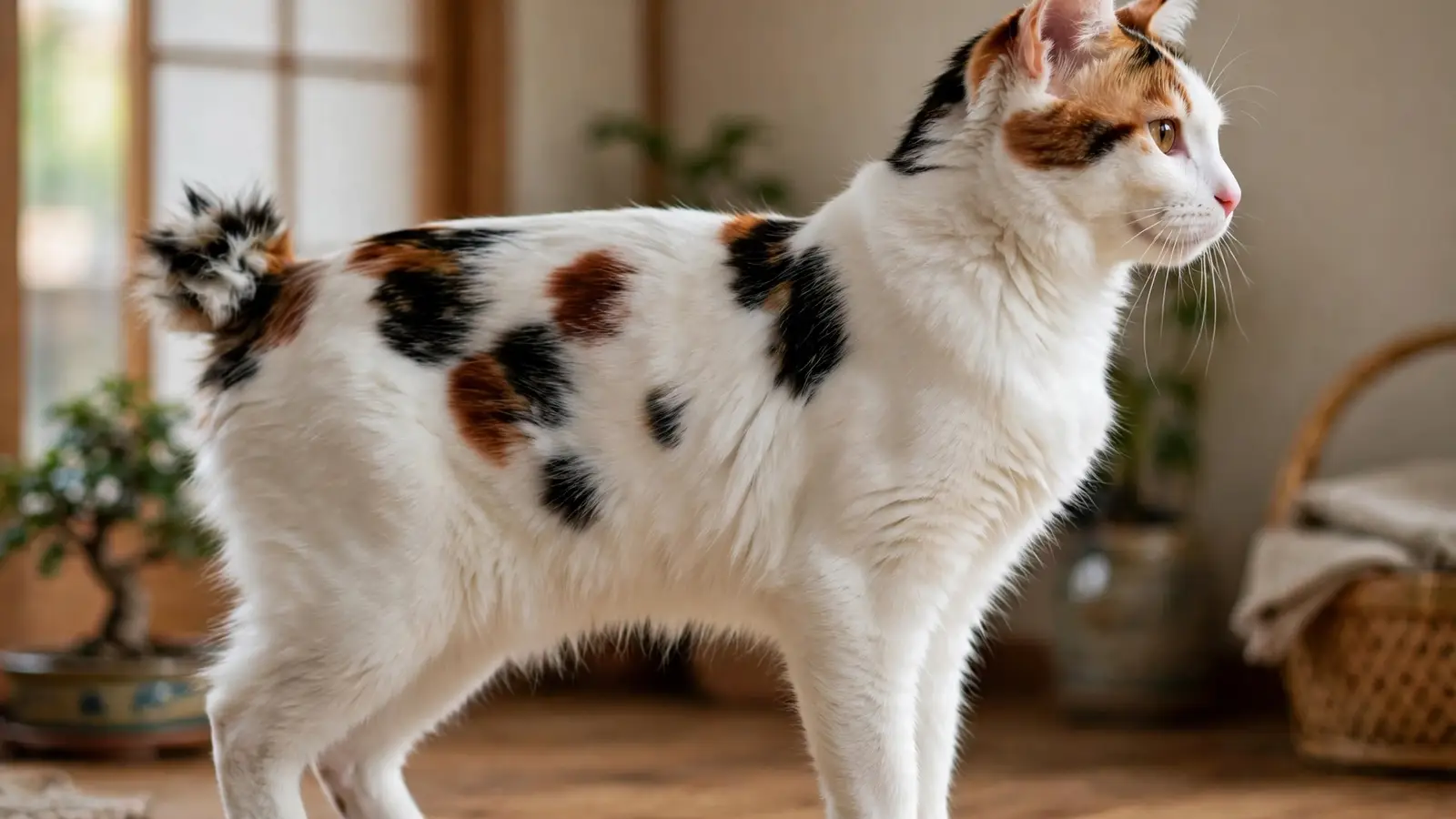
The fur feels like silk between your fingers. It lies smooth and close to the body, and because there is very little undercoat, it rarely mats and sheds less than the fullness of the coat might suggest. The breed comes in two coat lengths. The short version is sleek and neat, hugging the athletic frame. The medium to long version adds a soft ruff around the neck and a fuller, feathery tail that shows off the famous pom pom shape even more.
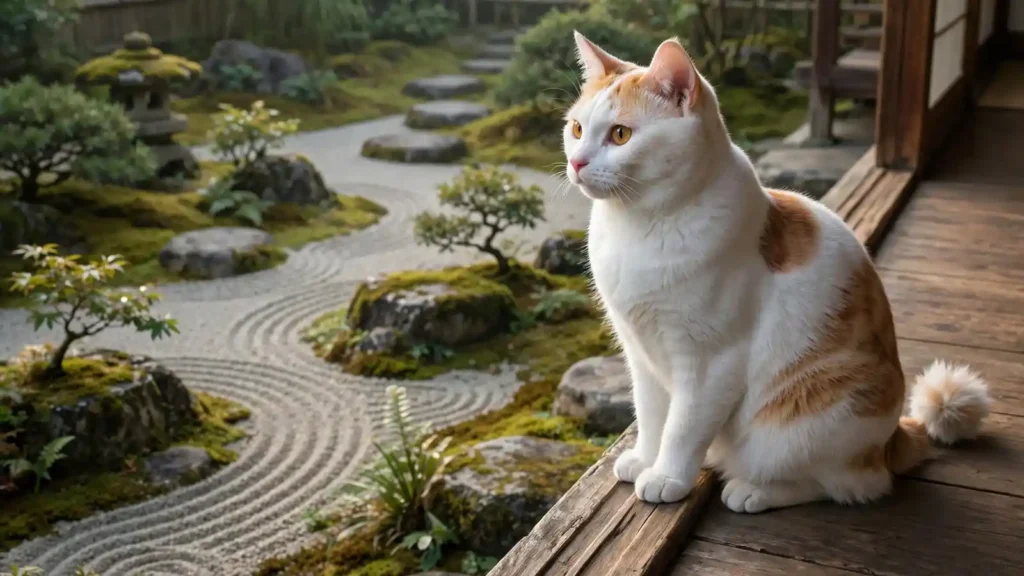
Color is where the Japanese Bobtail cat truly shines. The most famous pattern is mi-ke, a striking mix of red, black, and white that lands differently on every cat. The patches fall in bold, irregular shapes across the body, and many mi-ke cats wear the pattern like a work of art. Beyond mi-ke, you will meet these cats in solid colors, tabby markings, bicolor patterns, and tortoiseshell blends. Pure white coats, deep black coats, and warm red coats all appear in the breed, so the variety is wide enough to suit almost any taste.
Kittens arrive with soft, slightly fluffy coats that settle into adult silkiness during the first year. The unique shape of the tail also becomes clearer as the kitten grows, with the bunched fur filling out into its characteristic form.


History and Origins
Few cat breeds carry as much cultural meaning as this one.
Cats with this distinctive short tail have lived in Japan for centuries, treasured as street and temple cats long before the breed was formally developed.
In Japanese culture the breed is a symbol of good luck — the famous beckoning cat figurine, waving from shop windows around the world, is modeled on it.
The breed’s path to the West came later, but its luck and charm traveled with it. Today it keeps its old world elegance while fitting easily into modern homes.
The Japanese Bobtail cat is an ancient breed from Japan, where cats with this distinctive short tail have lived for centuries. In Japanese culture, the breed is considered a symbol of good luck. That reputation is so strong that the famous beckoning cat figurine, the little waving cat seen in shops and restaurants, is based on the Japanese Bobtail.
For a long time, these cats were treasured street and temple cats in Japan rather than a formally developed breed. Their path to the wider world came later, but the luck and charm associated with them traveled along. Today the breed keeps its old world elegance while fitting easily into modern homes.
Physical Characteristics
Every feature of this cat seems designed to catch the eye, starting with the tail.
The tail is short, kinked, and bunched into a shape that looks like a rabbit pom pom. A natural mutation causes it, and each tail is unique, with its own curves and angles hidden under the fur. It is a harmless trait that gives the breed its unmistakable silhouette.
The rest of the cat is just as refined. The head is a balanced triangle with high cheekbones, large upright ears, and wide oval eyes that give an alert, intelligent expression. Legs are long and slender, with the hind legs slightly longer than the front, which explains the breed’s springy, graceful movement.
Japanese Bobtail Personality and Behavior
If you want a quiet ornament of a cat, look elsewhere. This breed wants to be part of everything.
Many Japanese Bobtails enjoy pawing at dripping faucets, batting at water in a bowl, or joining their people near the sink — playful, and it never fails to amuse.
Cautious with strangers, but they study you, approve of you, then love you with unusual intensity.
Meals, play and greetings at the door, on schedule. These cats notice routine, and notice when it slips.
- Playful, social and affectionate
- Easy silky coat, modest shedding
- Great with children and other pets
- Bored and mischievous without daily play
- Wants company — dislikes long alone time
- Curious about everything, cabinets included
This breed is active, intelligent, and endlessly curious. These cats learn routines fast, figure out how doors and cabinets work, and love games that challenge their quick minds. Puzzle toys, fetch, and interactive play sessions all earn their full attention.
They are also famously talkative. Their voice is soft and musical, rising and falling in a way that sounds almost like singing. They will answer you, greet you at the door, and comment on the day’s events in gentle tones rather than demanding yowls.
One of the breed’s most charming quirks is a fondness for water. Many Japanese Bobtails enjoy pawing at dripping faucets, batting at water in a bowl, or even joining their people near the sink. It is playful rather than obsessive, and it never fails to amuse.
Care Essentials
A complete, balanced diet with quality animal protein first. Measure meals and keep treats to a small share to protect the lean, muscular build.
A gentle brushing once or twice a week is plenty for the silky coat. Trim nails every couple of weeks, and keep up ears and teeth checks.
Short, lively play sessions twice a day — feather wands, crinkle balls and fetch — plus puzzle feeders and rotating toys for the clever mind.
Indoor living with a tall cat tree or wall shelves, a window perch with a view, and people around. A screened porch or catio adds safe adventure.
This is a straightforward breed to live with, as long as you respect its need for company and play.
The Japanese Bobtail cat does best in a home where someone is around for much of the day. These cats bond deeply with their people and can grow bored or lonely if left alone for very long stretches. A second pet, a window perch with a view, and a daily play routine go a long way toward keeping one happy.
Keep the essentials simple and consistent: fresh water, a clean litter box scooped daily, scratching posts, and safe spots up high for climbing. Routine and attention matter more to this breed than luxury.
Nutrition and Diet
An active cat needs fuel that matches its energy.
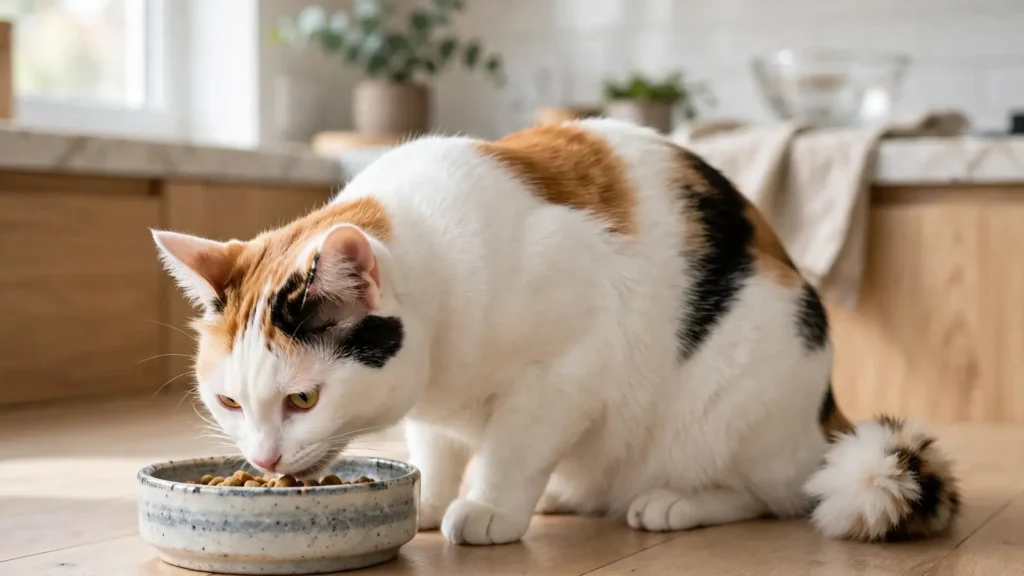
Feed a complete and balanced diet formulated for the cat’s life stage, whether kitten, adult, or senior. Look for a food where quality animal protein leads the ingredient list, since cats are obligate carnivores and thrive on meat based nutrition.
Because the Japanese Bobtail cat stays lean and muscular, watch portion sizes rather than letting food sit out all day. Measure meals, keep treats to a small share of daily calories, and adjust as your cat ages or its activity level changes. Your vet can help you fine tune the plan at each checkup.
Grooming
That silky coat is far easier to maintain than it looks.
The lack of a thick undercoat means the fur resists matting and tangles. A gentle brushing once or twice a week is plenty for most Japanese Bobtail cats, and many enjoy the attention. The medium to long coated variety benefits from a slightly more regular routine, especially around the ruff and the feathery tail.
Round out the routine with the usual basics. Trim nails every couple of weeks, check ears for buildup, and brush teeth as often as your cat will allow. Start these habits in kittenhood and they become a calm part of the week.

Exercise and Enrichment
A bored Japanese Bobtail is a mischievous Japanese Bobtail, so plan for daily play.
These cats adore interactive toys: feather wands, crinkle balls, and anything they can chase or pounce on. Short, lively play sessions twice a day burn off energy and satisfy the hunting instinct. Many also learn to play fetch, happily trotting back with a toy for another throw.
Mental enrichment matters just as much. Puzzle feeders, treat balls, and rotating toy selections keep that clever mind busy. A tall cat tree or wall shelves feed the love of climbing and give a good vantage point for supervising the household.

Health
Good genes are one of this breed’s quiet advantages.
The short tail comes from a natural mutation and does not cause the spinal problems seen with some other tail traits. The breed is generally healthy, though responsible breeders still screen their cats.
Annual vet exams, core vaccinations, parasite prevention and dental checks keep small issues from growing — the routine behind those long 15 to 18 year lives.
The Japanese Bobtail cat is generally a healthy breed. The short tail comes from a natural mutation and does not cause the spinal problems seen with some other tail traits. Responsible breeders still screen their cats for common feline conditions, and you should ask about health testing when choosing a kitten.
Everyday care does the heavy lifting. Annual vet exams, core vaccinations, parasite prevention, and dental checks keep small issues from growing. With attentive care, these cats often enjoy long lives of 15 to 18 years.
Indoor and Outdoor Living
This breed belongs indoors, where its curiosity cannot get it into trouble.
The Japanese Bobtail cat is bold and inquisitive, which makes the outdoor world risky. Traffic, other animals, and wandering too far are real dangers for a cat that follows its nose. An indoor life with enriched surroundings is safer and suits the breed’s social nature.
You can still feed the sense of adventure. A screened porch, a secure catio, or leash walks in a quiet area let your cat experience fresh air safely. Supervised outdoor time is the best of both worlds.
Family Suitability
Few breeds slot into family life as naturally as this one.
The Japanese Bobtail cat tends to love children, especially kids who understand gentle handling and enjoy play. These cats join in games rather than hiding from noise, and their sturdy athleticism means they keep up well.
They also mix well with other pets. Cat friendly dogs and fellow cats are usually welcomed, particularly with slow, patient introductions. Because the breed craves companionship, a home with another animal often suits it better than a solo setup.
Finding a Breeder or Rescue
Taking time at this stage pays off for years.
Look for a breeder who raises kittens in the home, welcomes questions, and shares health screening results openly. Meet the kitten’s mother if you can, and observe how the kittens interact with people. A well socialized kitten is confident, curious, and comfortable being handled.
Breed specific rescues and shelters are also worth checking. Adult Japanese Bobtail cats sometimes need new homes, and an adult’s personality is already clear, which takes guesswork out of the match. Ask the rescue about the cat’s history, habits, and health.
- Kittens should be raised in the home and well socialized
- Ask to meet the mother and watch how kittens interact with people
- Ask for health screening results, shared openly
- Check breed rescues too — adults sometimes need new homes
Quick Quiz: Is a Japanese Bobtail Right for You?
Answer four questions. Tap yes or no.
Frequently Asked Questions
Are Japanese Bobtail cats good pets?
Yes, they make wonderful pets for the right home. The Japanese Bobtail cat is playful, affectionate, and social, thriving in households that offer daily interaction and play. They suit families, singles, and multi pet homes alike.
Do Japanese Bobtail cats shed a lot?
Shedding is moderate. With very little undercoat, the silky fur sheds less than many breeds, and a weekly brushing keeps loose hair under control. You will notice more shedding during seasonal changes, which is normal.
Why is the tail so short?
The short tail comes from a natural genetic mutation that has existed in Japan for centuries. Each tail is unique in its kinks and curves. The trait is harmless and does not cause health problems.
Are Japanese Bobtail cats loud?
They are talkative but not loud. Their voice is soft and musical, and they use it to chat with their people rather than to demand. Most owners find the gentle commentary charming.
Do Japanese Bobtail cats like water?
Many do. It is common for the breed to paw at dripping faucets or splash in water bowls. This playful fascination is one of the breed’s best known quirks, though not every cat indulges in it.
How long do Japanese Bobtail cats live?
With good care, these cats often live 15 to 18 years. A balanced diet, regular vet visits, and an indoor lifestyle all support a long, healthy life.
The Japanese Bobtail cat is a centuries old good luck charm with a silky coat, a pom pom tail and a playful, people loving spirit — an easy fit for lively family homes.
Similar Breeds Worth Exploring
Related Breed Guides
Keep Exploring
Browse the full A to Z cat breed collection to compare personalities, or find out your cat’s age in human years with the cat age calculator.