Peterbald Cat Breed Guide
Peterbald: at a Glance
A graceful hairless cat with an Oriental body, huge ears and a heart set on its people. Born in St. Petersburg in 1994, the Peterbald follows you, talks to you, and sleeps under your blankets.
By Emily Carter · Reviewed by our vet team · Updated 21 October 2026 · 13 min read
Lifespan 12–15 yrs Weight 6–10 lb Hairless & devoted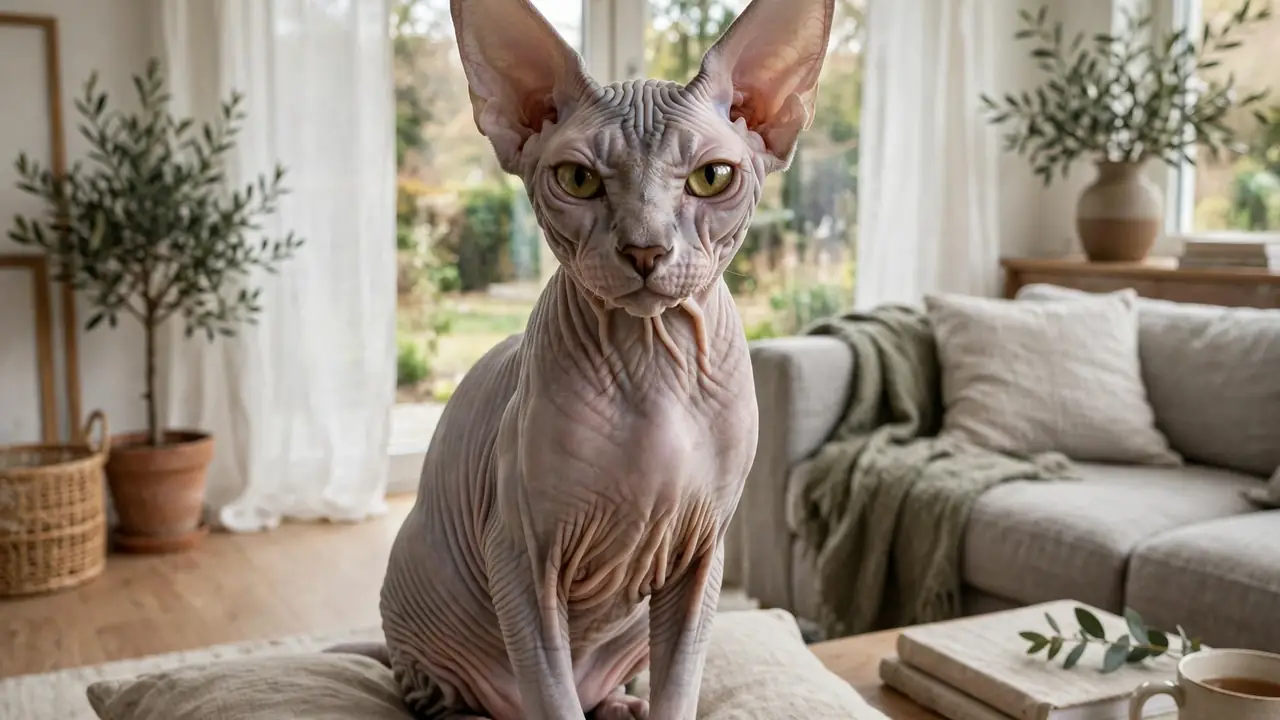
Short on time? Here is the Peterbald cat in a nutshell.
At a Glance
Size and Weight
This breed is built like a dancer, long, lean, and graceful.
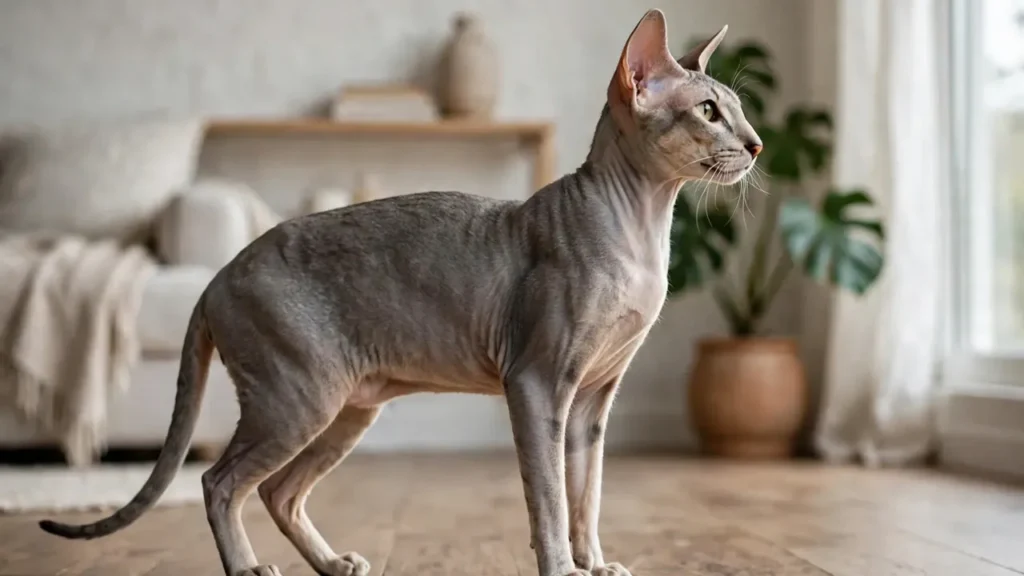
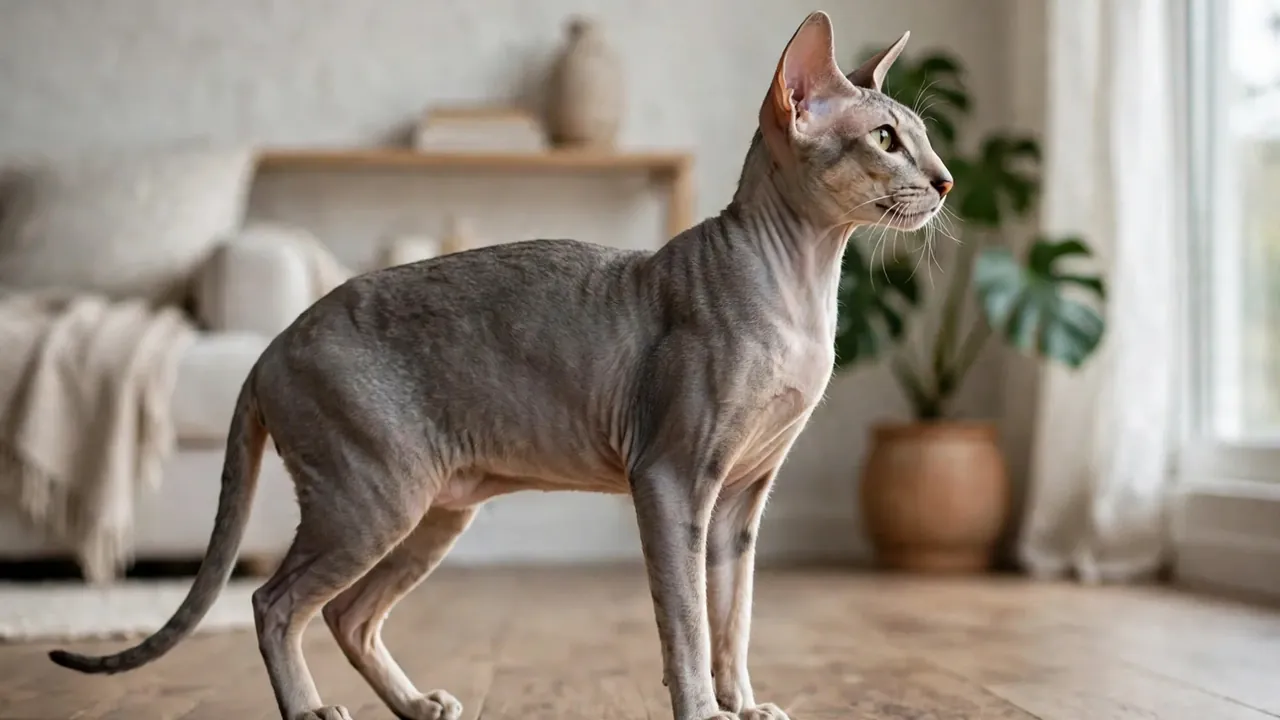
Most adults weigh between 6 and 10 pounds, which places them in the medium range. What catches the eye is not the weight but the elegant outline. The body is tubular and muscular, with long legs, a long whippy tail, and a refined bone structure that gives a striking, statuesque look.
These cats carry themselves with poise. If you are used to cobby, round breeds, this silhouette will feel noticeably sleek and elongated.
Coat and Colors
The coat is the most fascinating thing about this breed, and it comes in more versions than most people expect.
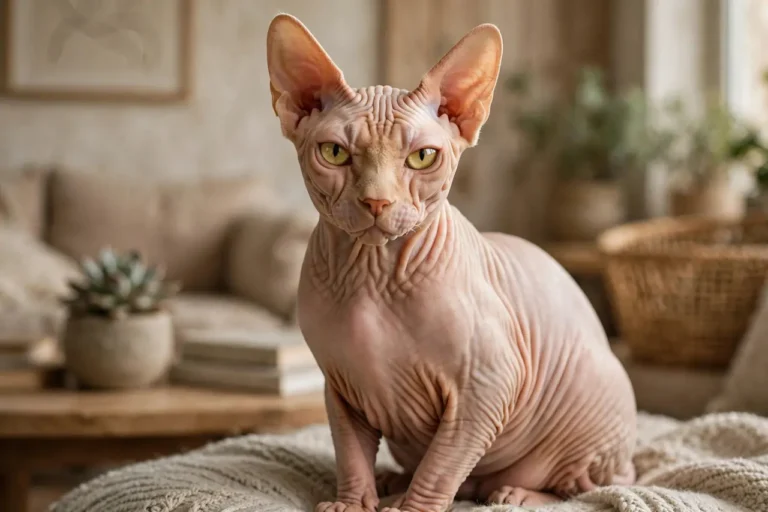
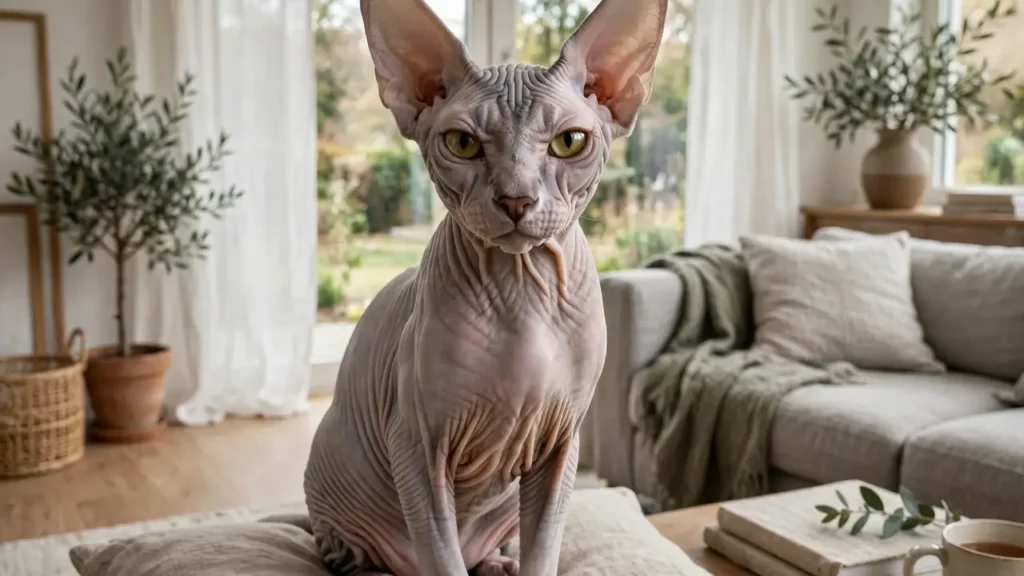
The Peterbald appears in five coat types, and a single litter can contain several of them. The bald type is completely hairless, with skin that feels warm and smooth like soft suede. The flock type carries a barely there fuzz, like the down on a peach, that you feel more than you see. Velour has a short, fine texture similar to a brushed cloth. The brush coat is wiry and sparse, with a tousled, textured look. The straight type is fully coated with a normal short coat.
Because so much skin shows, this breed displays color directly on the skin itself. Accepted colors and patterns cover the familiar range: solids in black, blue, red, and cream, plus tabby, tortoiseshell, bicolor, and colorpoint patterns. On a bald or flock cat, a tabby pattern shows as a soft shadow of stripes across the skin, which many owners find beautiful. Whiskers are often short, crinkled, or even broken, which is a normal trait and not a health concern.
Kittens can surprise their owners. A kitten born with a brush coat may lose it and grow into a bald adult, while a flock kitten can develop a slightly thicker coat with age. The skin itself needs the same attention as the coat does, which is why bathing and sun protection matter so much for this breed.
History and Origins
This is one of the youngest cat breeds in the world, with a very modern story.
The breed was developed in St. Petersburg, Russia in 1994, crossing a Don Sphynx, a Russian hairless breed, with an Oriental Shorthair to combine hairlessness with the elegant Oriental body type.
The name honors its home city. The first litters produced exactly what breeders hoped for: graceful, hairless cats with outgoing personalities.
From Russia the breed spread to Europe and then to North America, winning fans who love the combination of a hairless look and a devoted nature.
The breed was developed in St. Petersburg, Russia in 1994. Breeders crossed a Don Sphynx, a Russian hairless breed, with an Oriental Shorthair to combine hairlessness with the elegant Oriental body type. The first litters produced exactly what the breeders hoped for: graceful, hairless kittens with long lines.
The name honors its home city, St. Petersburg. From Russia, the breed spread to Europe and then to North America, where it continues to win fans who love the combination of a hairless look and an outgoing personality.
Physical Characteristics
Every feature of the Peterbald cat seems designed for elegance.
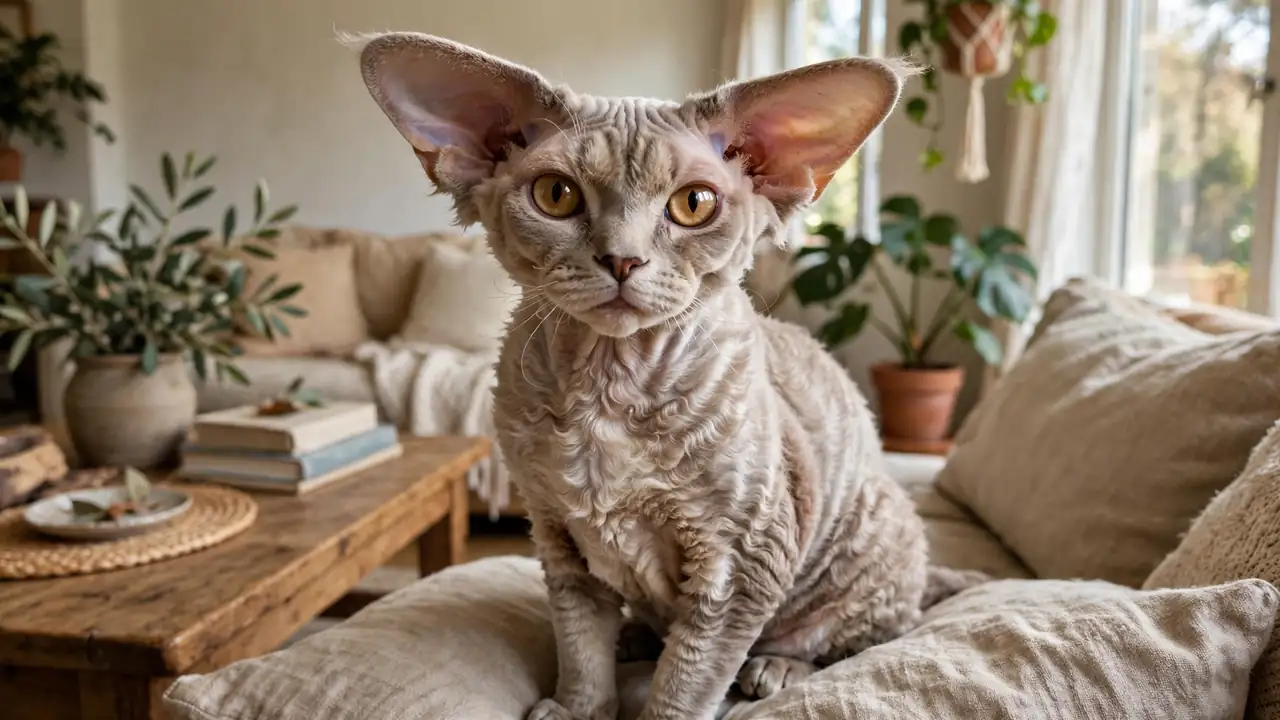
The head is a long wedge with a straight profile, flat forehead, and a strong chin. Large, wide set ears sit low on the head and give the cat an alert, attentive expression. The eyes are almond shaped, medium in size, and set at a slight slant, adding to the exotic look.
The neck is long and slender, flowing into a muscular, tubular body. The legs are long with neat oval paws, and the tail is long and tapering, often carried with a graceful curve.
Peterbald Personality and Behavior
If you want a cat that acts like a devoted companion, this breed delivers.
They chat in a soft, sweet voice throughout the day, and they are not shy about asking for attention, food, or a warm lap.
Cautious with strangers, but they study you, approve of you, then love you with unusual intensity.
Meals, play and greetings at the door, on schedule. These cats notice routine, and notice when it slips.
- Devoted, affectionate shadow
- Almost no shedding or loose hair
- Playful, smart and entertaining
- Weekly bathing and skin care routine
- Feels the cold — needs warmth and blankets
- Sunburn risk on bare skin
The Peterbald is affectionate, energetic, and intensely people oriented. These cats do not just enjoy company, they seem to need it. They follow their favorite people from room to room, greet visitors at the door, and often ride on shoulders or curl up under the blankets at night.
Playfulness runs deep here. Peterbalds stay active well into adulthood, inventing games, chasing toys, and climbing to the highest spot they can find. They are also talkative in a soft, sweet voice, and they are not shy about asking for attention. One left alone for long hours can grow lonely, so this breed suits homes where someone is around often.
Care Essentials
A high quality diet with plenty of animal protein. A hairless cat burns extra calories staying warm, so portions may run slightly larger than for a coated cat.
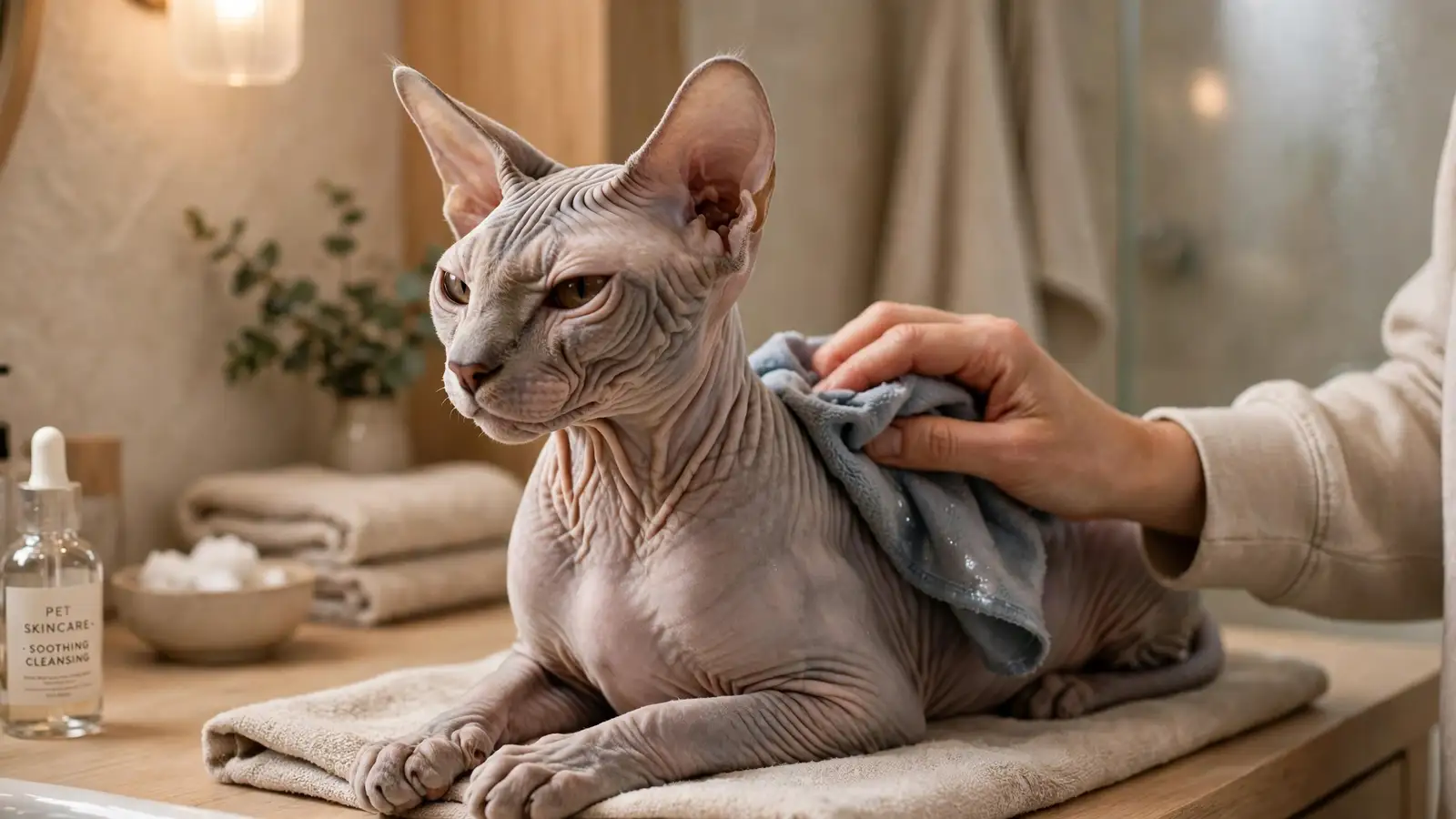
Gentle bathing every week or two with a mild, cat safe shampoo keeps skin oils from building up. Wipe the ears, trim nails, and check skin folds for irritation.
Interactive toys, feather wands and puzzle feeders daily, plus cat trees and wall shelves for climbing. Rotate toys to keep the smart mind interested.
Indoors only, with heated beds, sunny windows and blankets to burrow into. Bare skin sunburns, so limit intense midday sun; a catio gives safe outdoor time.
Caring for a hairless breed is a little different, but the routine is easy to learn.
Warmth comes first. Without a full coat, these cats feel the cold and seek out heated beds, sunny windows, and warm laps. Keep the home comfortably warm in winter and provide cozy blankets the cat can burrow into.
Sun protection matters too. Bare skin can sunburn, so limit how long your Peterbald cat sunbathes and keep the cat away from intense midday sun through windows. Indoors is the only safe home for this breed, and a screened porch or catio can give safe outdoor time without the risks.
Because these cats are so social, plan for companionship. Another friendly pet or a family member who is home often will keep a Peterbald cat happy and secure.
Nutrition and Diet
A hairless cat burns fuel faster than a coated one, so feeding needs a little extra thought.
The Peterbald uses more calories to stay warm, since it lacks the insulation of a full coat. Most do well on a high quality diet with plenty of animal protein, and some need slightly larger portions than a coated cat of the same size. Your vet can help you find the right amount for your cat’s weight and activity level.
Keep fresh water available at all times, and feed measured meals rather than leaving food out all day if your cat tends to overeat. Healthy skin starts from the inside, so a balanced diet with good fats supports the skin that is so central to this breed’s care.

Grooming
Less hair does not mean less grooming. The skin needs regular care.
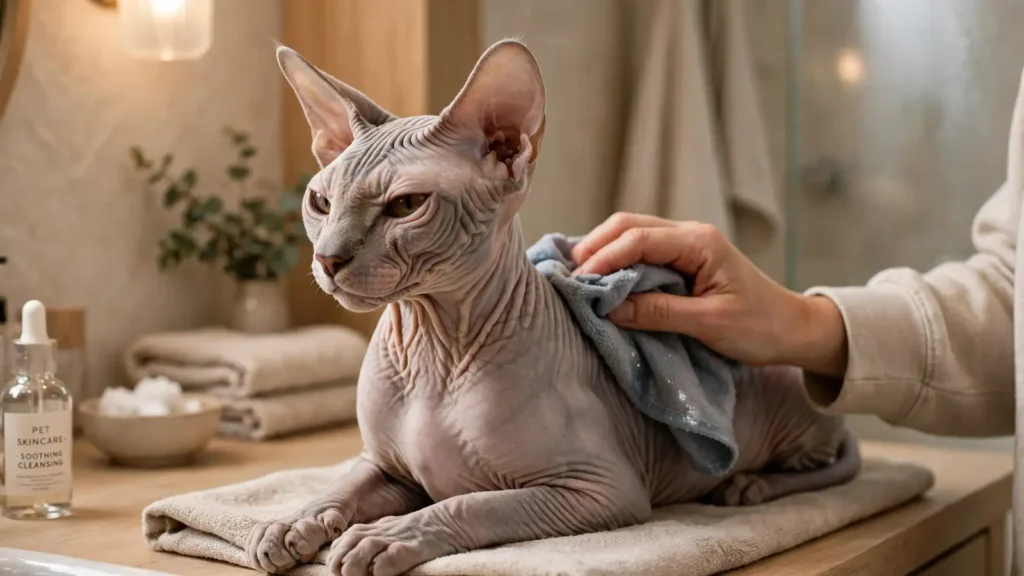
The Peterbald produces skin oils that would normally be absorbed by fur. Without that fur, the oils can build up, so regular gentle bathing is part of the routine. Most owners bathe their cat every week or two with a mild, cat safe shampoo, followed by a thorough rinse and careful drying.
Ears also need attention on a Peterbald cat, since wax can collect without much hair to trap it. A gentle wipe with a damp cloth during bath time keeps them clean. Trim the nails regularly, and check the skin for any redness or irritation, especially in the folds around the neck and legs. Bald and flock cats appreciate a light, pet safe moisturizer if the skin looks dry, but ask your vet before using any product.
Exercise and Enrichment
This is an athletic breed that needs both physical and mental play.
This breed loves interactive toys, feather wands, and puzzle feeders that make it think. Cat trees and wall shelves satisfy the urge to climb, and a window perch gives hours of bird watching entertainment. Because these cats are so smart, rotate toys regularly to keep things interesting.
Play sessions also strengthen the bond this breed craves. A good game of chase followed by a long cuddle is the perfect evening. If you work from home, expect a supervisor on your desk.

Health
The Peterbald cat is generally a healthy young breed, with a few things to watch.
Responsible breeders screen for hypertrophic cardiomyopathy, a heart condition seen in many breeds. Ask about heart testing when choosing a kitten — the breed is young, so its health picture is still developing.
Watch for sunburn, dryness or irritation, and keep up the bathing routine. Dental care matters too, alongside regular vet checkups and a balanced diet.
Responsible breeders screen for hypertrophic cardiomyopathy, a heart condition that affects many breeds, and you should ask about heart testing when choosing a kitten. Because the breed is still young, its full health picture continues to develop as more generations are studied.
Skin health deserves daily attention. Watch for sunburn, dryness, or irritation, and keep up with the bathing routine. Dental care matters too, so brush the teeth or use vet approved dental products. With regular vet checkups, a balanced diet, and an indoor life, the Peterbald can enjoy a long, healthy life.
Indoor and Outdoor Living
This breed belongs indoors, full stop.
The Peterbald has no coat to protect it from cold, sun, or rough surfaces. Outdoor life brings risks of sunburn, temperature swings, and skin injuries that this breed simply is not built to handle. An indoor home with warm spots, climbing furniture, and interactive play is the ideal setting.
If your cat shows interest in the outdoors, a secure screened enclosure or a harness walk on a warm day can satisfy that curiosity safely. Always supervise, and bring the cat inside if the weather turns cool or the sun grows strong.

Family Suitability
For the right household, this breed is a wonderful fit.
The Peterbald thrives with families who are home often and enjoy an interactive pet. Children who are gentle and respectful will find a playful companion, and these cats usually get along well with friendly dogs and other cats. Their affectionate nature makes them a natural fit for multi pet homes.
The main requirement is attention. One in a home where everyone is gone all day may become lonely or bored. If your household is busy but loving, with time for play and cuddles, this breed will repay you with endless devotion.
Finding a Breeder or Rescue
Taking time to find the right source pays off for years.
Look for a breeder who raises Peterbald cat kittens in the home, socializes them well, and provides health records including heart screening. A good breeder will ask you questions too, because they want their kittens in homes that understand the breed’s needs. Visit if you can, and meet the kitten’s mother to see her temperament and condition.
Breed specific rescues and general cat rescues sometimes have Peterbald cats or hairless mixes looking for homes. An adult rescue can be a lovely choice, since the personality is already clear. Whether you choose a breeder or a rescue, plan for the skin care routine and the companionship this breed needs before you bring your cat home.
- Breeder provides health records including heart screening
- Kittens raised in the home and well socialized
- Plan for the bathing routine before the cat arrives
- Check rescues — hairless cats sometimes need homes
Quick Quiz: Is a Peterbald Right for You?
Answer four questions. Tap yes or no.
Frequently Asked Questions
Are Peterbald cats completely hairless?
Not always. The breed comes in five coat types, from fully bald to a light fuzz called flock, a fine velour, a wiry brush coat, and even a fully coated straight type. Many owners love that each cat is a little different.
Do Peterbald cats need baths?
Yes. Without fur to absorb skin oils, this breed needs regular gentle bathing, usually every week or two. This keeps the skin clean and healthy and prevents oil buildup.
Are Peterbald cats good for people with allergies?
No cat is truly allergen free. Some people with mild sensitivities do better with hairless breeds because there is less shedding, but the skin still produces allergens. Spend time with the breed before committing if allergies are a concern.
Do Peterbald cats get cold easily?
Yes. Without a full coat, they feel the cold and seek warmth. Keep your home comfortably heated, provide heated beds and blankets, and consider a soft sweater for chilly days.
Are Peterbald cats vocal?
They are chatty in a soft, sweet voice. The Peterbald will talk to you throughout the day, especially when it wants attention, food, or a warm lap.
How long do Peterbald cats live?
With good care, the Peterbald typically lives 12 to 15 years. Regular vet checkups, a balanced diet, proper skin care, and an indoor life all support a long, healthy life.
The Peterbald cat pairs the Oriental’s elegance with a warm, hairless skin and total devotion. For owners happy with a simple bathing routine, it is a shadow, a playmate and a bed warmer in one.
Similar Breeds Worth Exploring
Related Breed Guides
Keep Exploring
Browse the full A to Z cat breed collection to compare personalities, or find out your cat’s age in human years with the cat age calculator.