Blue Jellyfish
Blue Jellyfish: the gentle blue stinger of Britain
The blue jellyfish drifts around Britain’s coasts with a sapphire bell and a mild, nettle-like sting — the smaller cousin of the lion’s mane. This guide follows Cyanea lamarckii, named for Lamarck in 1810, through the North Sea and the British Isles, and the blue lines that tell it apart.
By Emily Carter · Reviewed by our vet team · Updated 10 November 2026 · 10 min read
Sapphire bell, typically 10–20 cmMild, nettle-like stingSmaller cousin of the lion’s mane
At a Glance
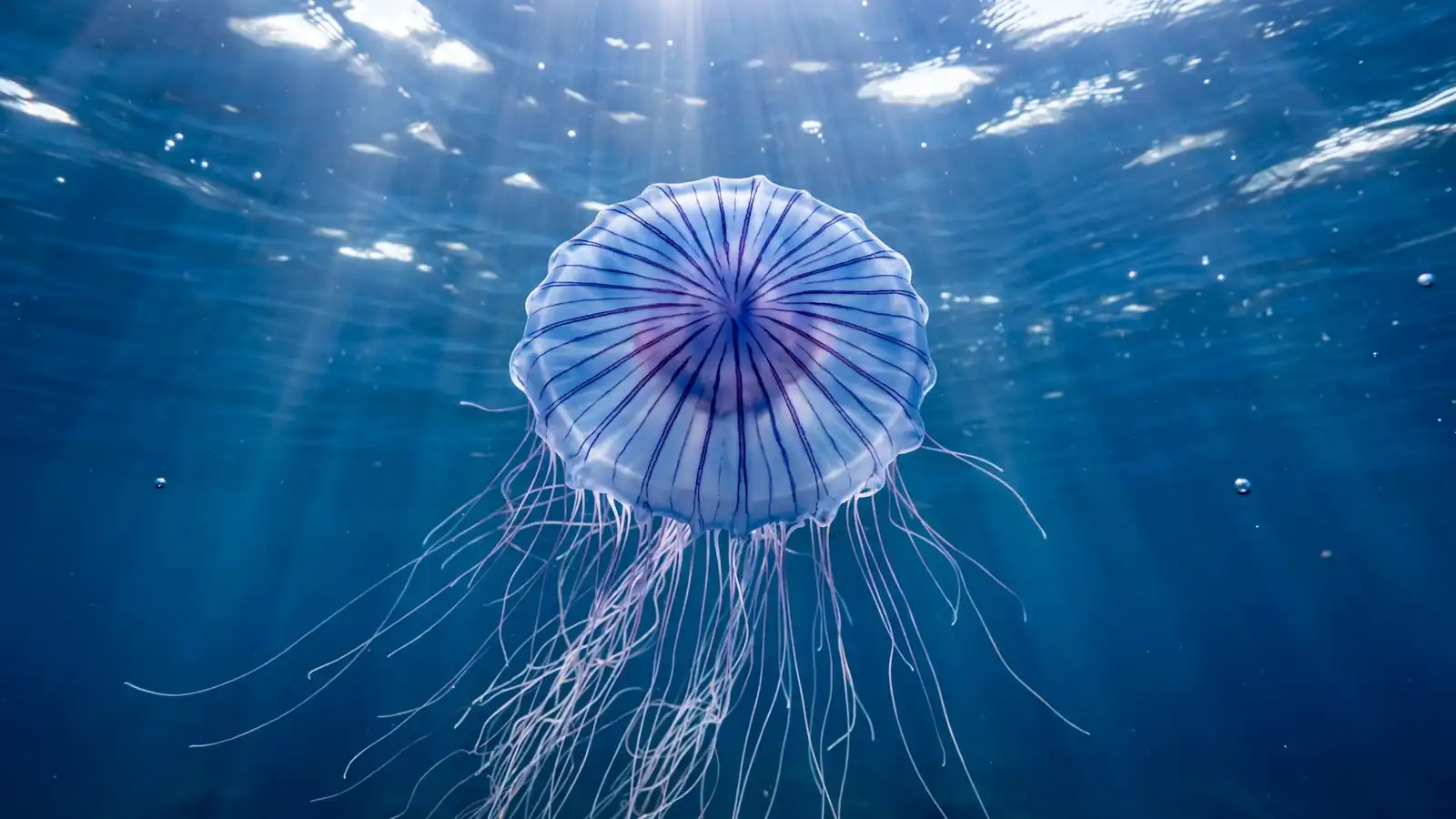
A blue jellyfish is a sapphire bell drifting in the cold water of the North Sea, and it is the gentlest of the large British jellies. Its sting is mild, like a nettle, and its bell is smaller than its famous cousin’s — but a stranded one can still sting, and the blue lines on its bell are the way to know it. This is the whole animal, at a glance, before the detail begins.
Blue Jellyfish Size: A Modest Bell
It has a bell typically 10 to 20 centimetres across, with a maximum of about 30 centimetres, and the size is modest for a jellyfish of its family. The bell is a shallow dome, blue or violet, with a frill of oral arms beneath it, and the whole animal drifts in the current rather than swimming against it.
Drifting is the whole life. The bell pulses gently, but the current decides the journey, and a summer of tides can carry the animal the length of a coastline. That is why appearances on beaches come in waves: a few days of onshore wind, and the strandings begin.
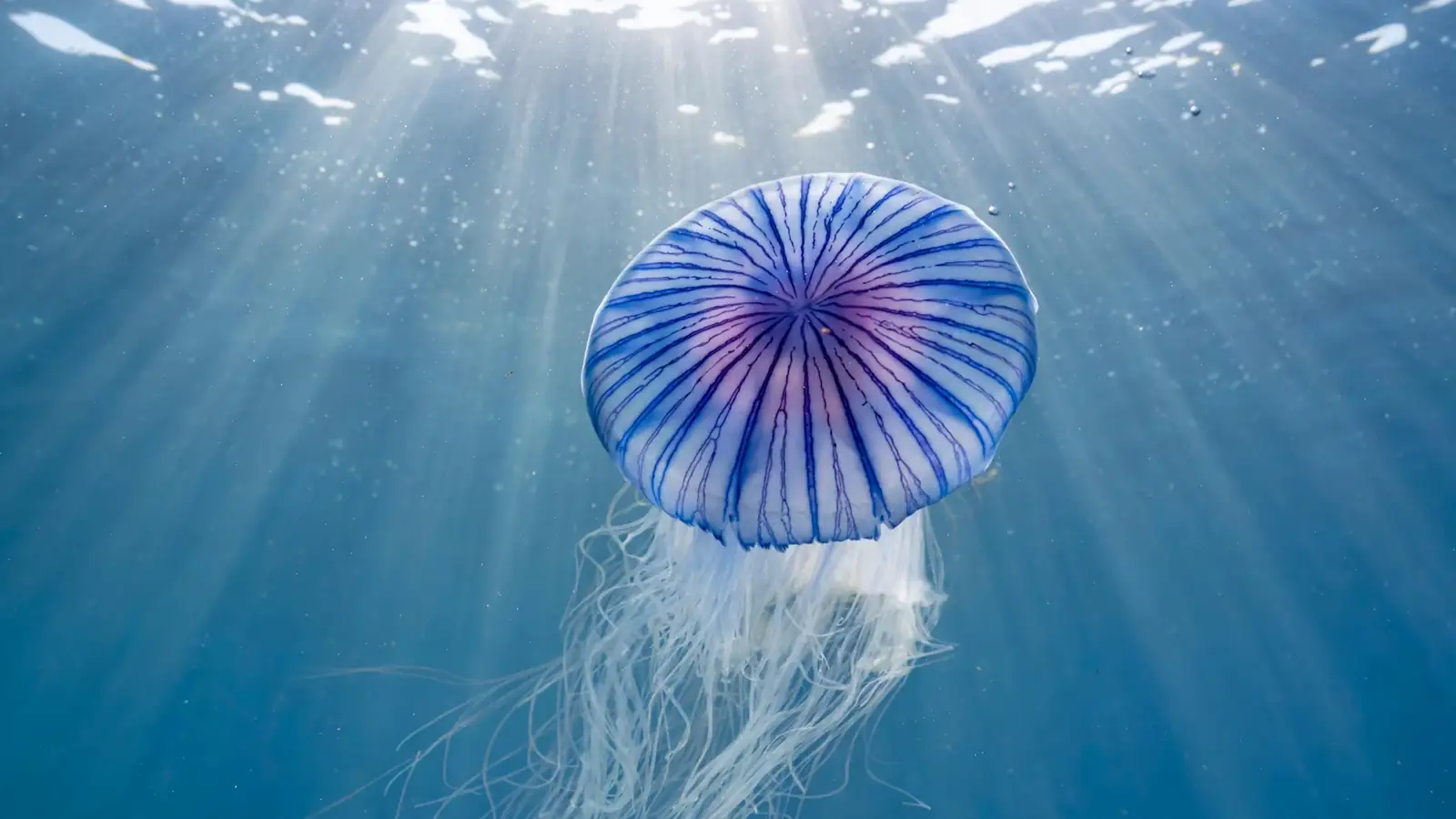
The size is the first difference from the lion’s mane, which grows far larger. It is the smaller cousin: the same family, the same shape, and a bell that fits in two hands, where the lion’s mane needs a bucket. Keep the typical and the maximum apart — most you meet will be 10 to 20 centimetres, not 30.
The Blue Lines: How to Tell It Apart
It is identified by the blue lines on its bell: radial lines that run from the centre to the edge, like the spokes of a wheel, in a deeper blue than the bell itself. The lines are the field mark, and they are visible even in murky water, where the rest of the bell fades into the blue.
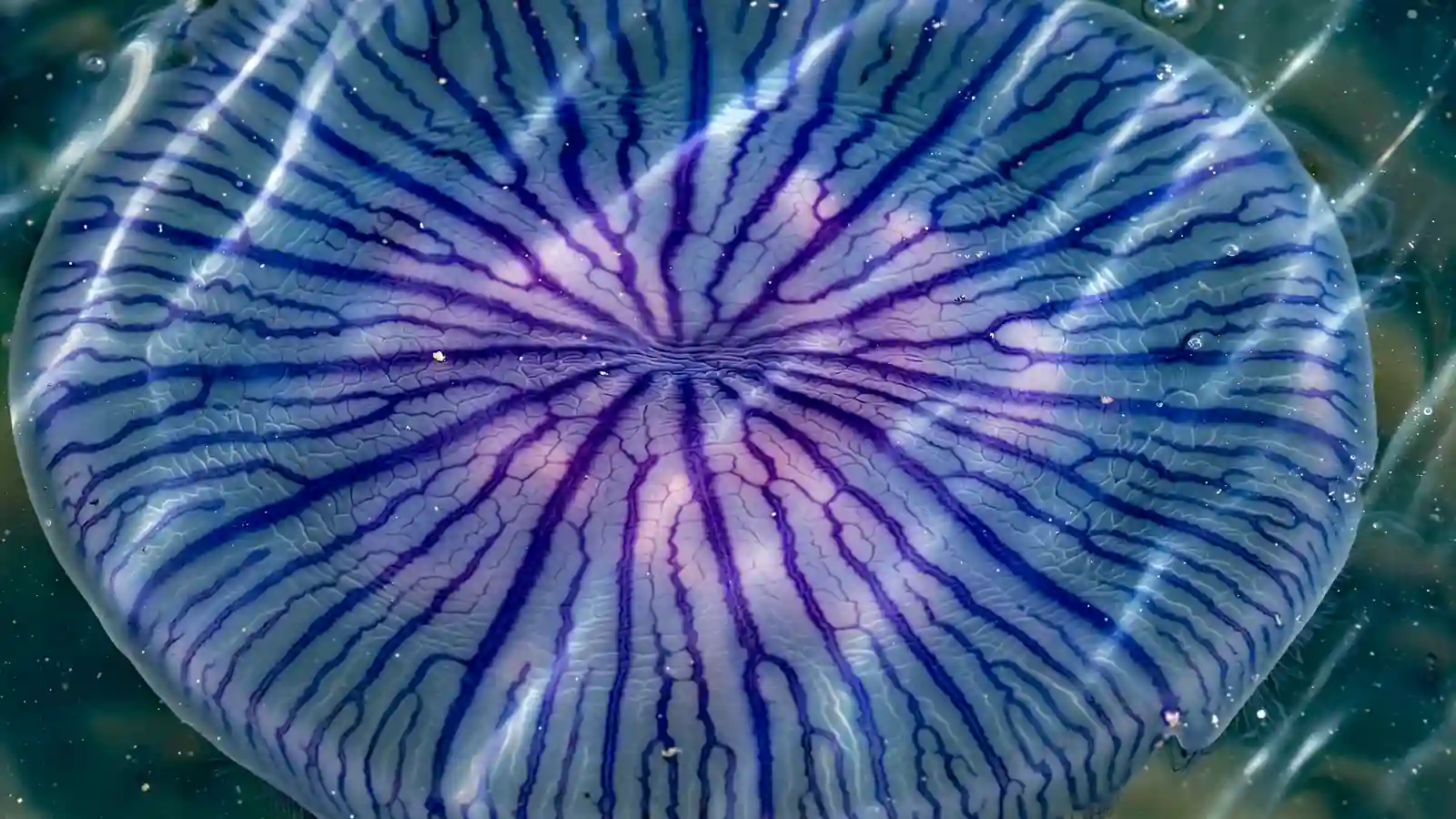
The bell is sapphire or violet, and the oral arms beneath it are frilly and pale, with a blue tinge at the edges. The combination — the blue lines, the sapphire bell, and the modest size — is the way to tell it from the lion’s mane, which is larger, redder, and far hairier.
Where They Live: The North Sea and British Coasts
They live in the north-east Atlantic, in the North Sea and around the British Isles, and they are a common sight on British beaches in the summer, when the wind blows them ashore. They drift in the cold coastal water, following the currents, and they strand in large numbers after a storm.
The strandings are a summer rhythm on British beaches. Storms push the surface water shoreward, and the drifters come with it, ending up in rock pools and along the tide line. Most beachgoers meet the animal this way — out of the water, on the sand, and still able to sting.
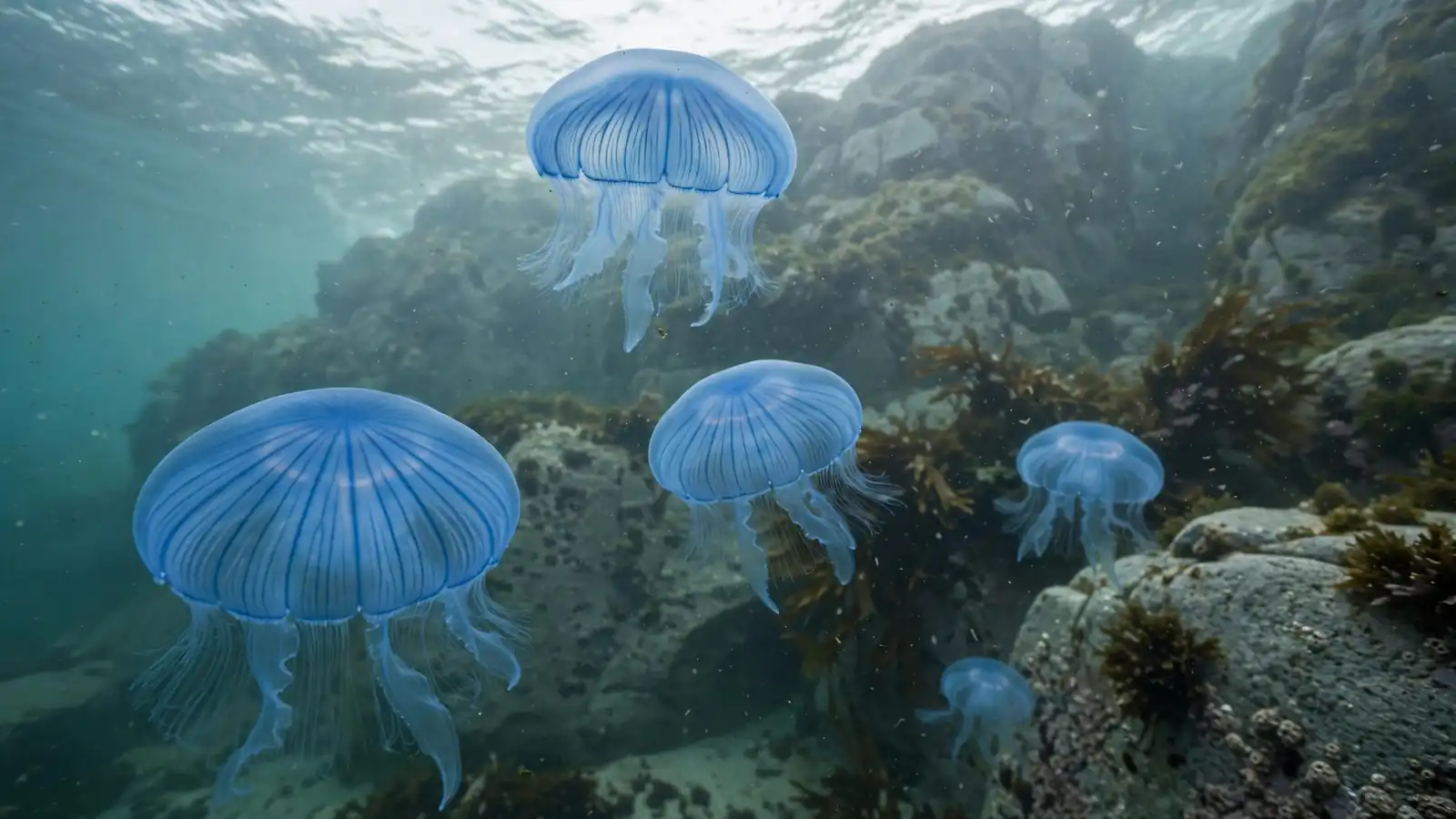
The range is the cold edge of the family. It is a northern animal, at home in the North Sea’s cold green water, while its cousin the lion’s mane ranges further north still. The British coast is its home, and the summer strandings are the time most people meet it.
What Do They Eat? Drifting Hunters
It eats zooplankton, small fish and other jellyfish, catching them with its oral arms and its stinging tentacles as it drifts. The jellyfish does not chase its food — it drifts, and the food comes to it, caught in the frill of arms beneath the bell and passed to the mouth.
The method is passive but effective. Zooplankton is thick in cold northern water, and a drifting curtain of arms and tentacles sweeps it up around the clock. Small fish and smaller jellyfish end up in the same net, digested in the same unhurried way.
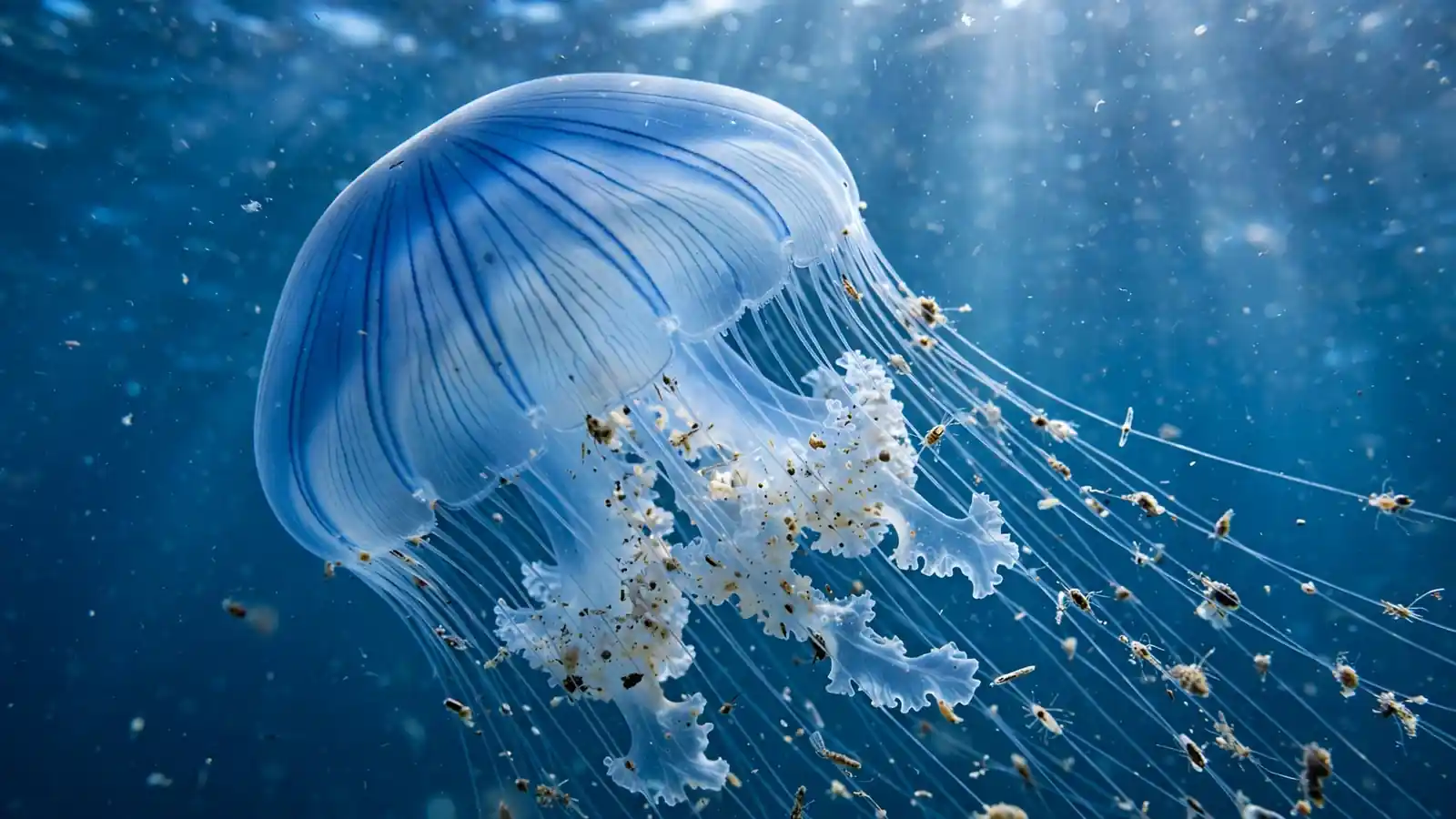
For a wider survey of the species, see this species guide. The diet is the diet of a drifter: whatever the current brings, taken in the frill, and eaten as the jellyfish drifts on.
The Sting: Mild, But Respect a Stranded Jelly
It stings, but the sting is mild, like a nettle — a rash, a little pain, and then it fades. The sting is a warning, not a weapon, and a swimmer who brushes one will know about it, but will not be in danger.
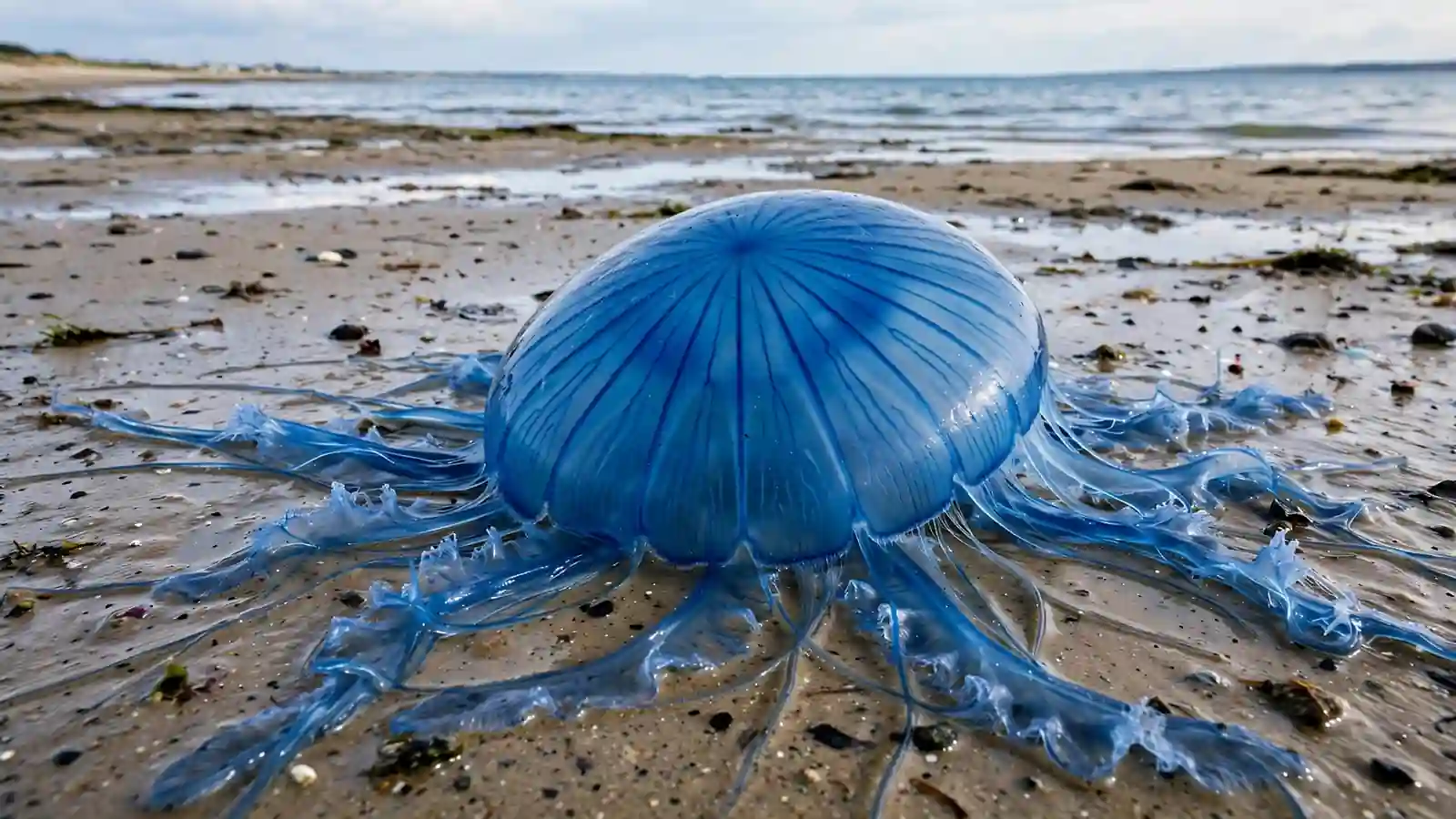
The warning matters most on the beach. A stranded one can still sting, and the tentacles stay active for hours after the animal has died, so a jellyfish on the sand is not a toy — it is a stinging animal that happens to be out of the water, and it deserves the same respect it gets in the sea.
Respect is simple in practice: look, photograph, and leave it alone. The sting needs no malice to work — a bare foot or a curious hand brushing the tentacles is enough. Children and dogs are the usual victims on the beach, and a wide berth prevents nearly every case.
Blue Jellyfish vs Lion’s Mane: The Smaller Cousin
The difference between this jellyfish and a lion’s mane is size and sting. It is smaller, with a bell of 10 to 20 centimetres and a mild nettle-like sting, while the lion’s mane is larger, with a bell that can reach a metre across and a sting that is far more painful. Both are Cyanea, and both are beautiful, but the lion’s mane is the one to respect.
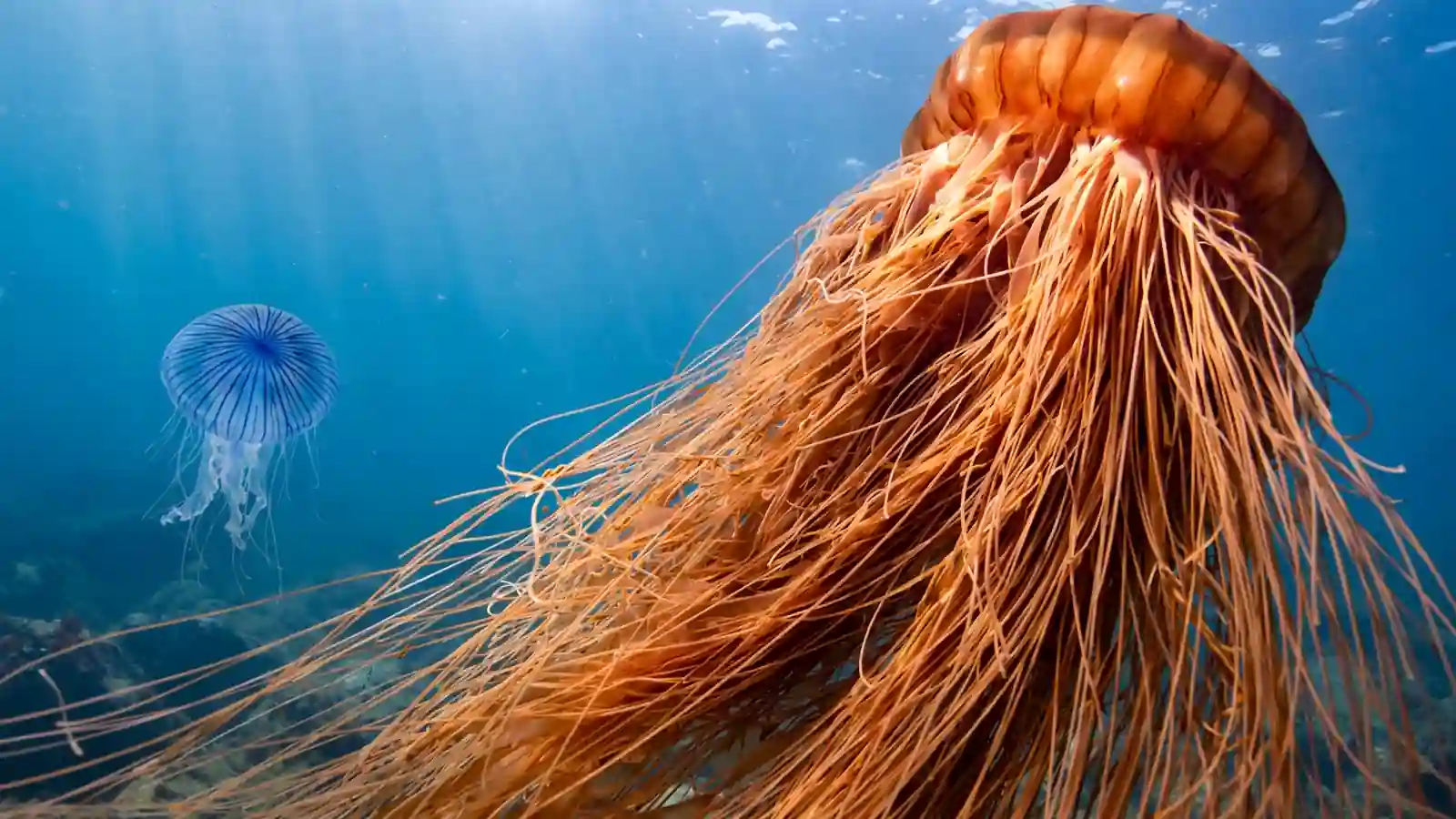
The two are often confused, because both are Cyanea and both drift in the same cold water. It is the gentler of the two: a sapphire bell, blue lines, and a sting like a nettle, where the lion’s mane is a red mane of tentacles and a sting that hurts for hours.
Life Cycle: From Polyp to Medusa
It begins life as a polyp, a tiny stalked animal fixed to a rock or a shell on the seabed, and the polyp buds off young medusae in the spring. The medusae drift away and grow through the summer, reaching their full size by late summer, when they are most often seen on the beaches.
The polyp stage is easy to overlook. Stalked and tiny on a shell or rock, it waits out the cold months, then buds off young medusae when the water warms. A single polyp can seed a whole summer’s drift of bells along a stretch of coast.
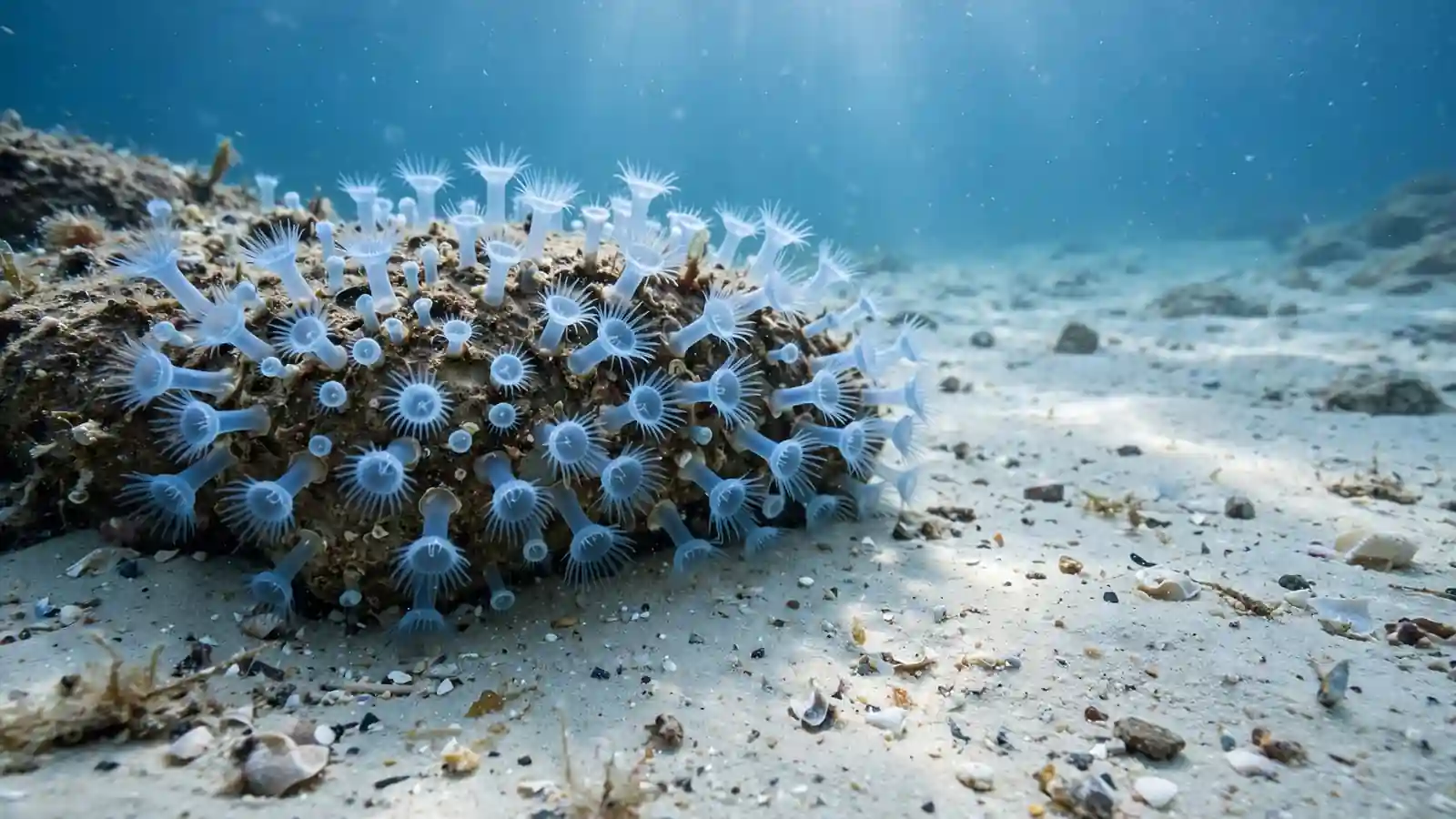
The medusa mates and releases eggs, and the eggs settle as polyps to wait out the winter. The cycle is the classic jellyfish pattern: a polyp that waits on the seabed, and a medusa that drifts in the summer sun, and a bell that washes up on the beach when the wind turns.
Fun Facts
- Its bell is typically 10 to 20 cm across, with a maximum of about 30 cm.
- It was described in 1810 and named for Lamarck.
- The blue lines on its bell are the field mark that identifies it.
- Its sting is mild, like a nettle — but a stranded jellyfish can still sting.
- It eats zooplankton, small fish and other jellyfish.
- It is the smaller, gentler cousin of the lion’s mane jellyfish.
Frequently Asked Questions
What Is a Blue Jellyfish?
It is a jellyfish with a sapphire bell, Cyanea lamarckii, found in the north-east Atlantic, the North Sea and around the British Isles. It was described in 1810 and named for Lamarck, and its sting is mild, like a nettle.
How Big Do Blue Jellyfish Get?
It has a bell typically 10 to 20 centimetres across, with a maximum of about 30 centimetres. Most you meet will be 10 to 20 centimetres, not 30.
Where Do Blue Jellyfish Live?
They live in the north-east Atlantic, in the North Sea and around the British Isles. They are a common sight on British beaches in summer, when the wind blows them ashore.
Do Blue Jellyfish Sting?
Yes, but the sting is mild, like a nettle — a rash and a little pain, and then it fades. A stranded one can still sting, and the tentacles stay active for hours after the animal has died.
What Is the Difference Between a Blue Jellyfish and a Lion’s Mane Jellyfish?
It is smaller, with a bell of 10 to 20 centimetres and a mild sting, while a lion’s mane is larger, with a bell that can reach a metre across and a much more painful sting. Both are Cyanea, but the lion’s mane is the one to respect.
What Do Blue Jellyfish Eat?
It eats zooplankton, small fish and other jellyfish, catching them with its oral arms and stinging tentacles as it drifts. It does not chase its food — the current brings the food to it.
What Should You Do If You Find a Blue Jellyfish on the Beach?
Admire it from a distance and do not touch it. A stranded one can still sting, and its tentacles stay active for hours after it has died. If you are stung, rinse with seawater and seek advice if the pain persists.
Similar Species Worth Exploring
Keep Exploring
Keep exploring the jellyfish: meet the lion’s mane jellyfish, its larger cousin, or browse the whole family in our guide to the types of jellyfish. Then come back to the British coast, home of the blue jellyfish.