Shipworm: The Wood-Boring Bivalve That Is Not a Worm
Shipworm: The Wood-Boring Bivalve That Is Not a Worm
The shipworm is a clam that bores into wood — not a worm at all, despite the name. It tunnels through the hulls of wooden ships, the pilings of docks and the roots of mangroves, eating the wood as it goes, and it has sunk more ships than any storm: the wooden fleets of history were at war with it for centuries.
By Emily Carter · Reviewed by our vet team · Updated 10 November 2026 · 9 min read
Wood-boring clamNot a wormTunnels in wood
At a Glance
The shipworm is one of the most destructive animals in the sea — and one of the most misunderstood. It is not a worm: it is a clam, a bivalve mollusk, with a tiny shell at its front end and a long, soft, worm-like body behind it. It bores into wood — the hulls of ships, the pilings of docks, the roots of mangroves — and it eats the wood as it tunnels, with the help of bacteria in its gills that digest the cellulose. A single one can grow to 60 centimetres long inside a piece of wood, and a piece of wood full of shipworms can crumble in a hand.
What Is It?
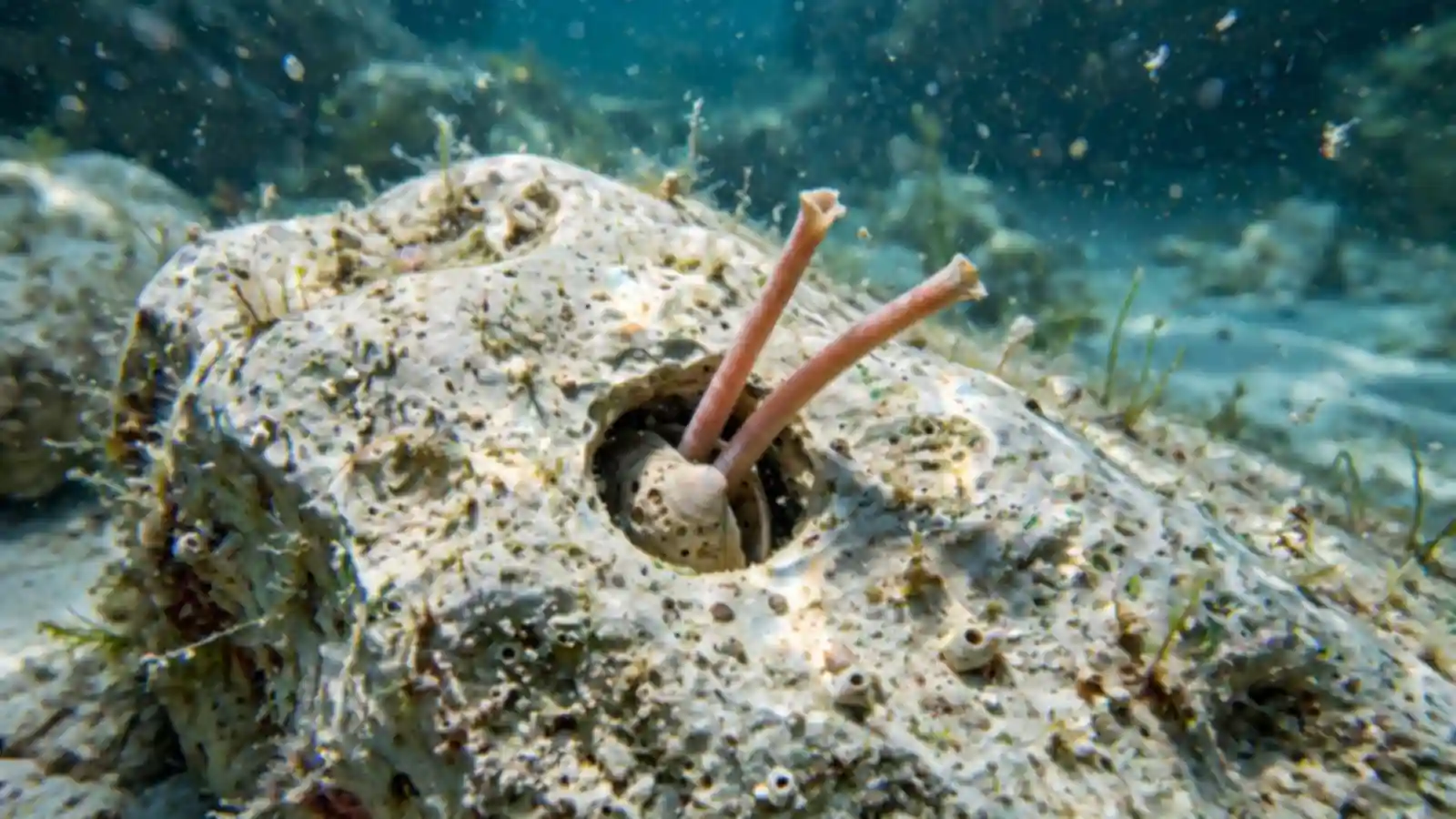
A shipworm is a wood-boring clam in the family Teredinidae, the shipworms, and the best-known species is Teredo navalis, the famous naval species. The name is a trap: the animal looks like a worm — a long, soft, pale tube, sometimes half a metre long — but it is a bivalve, a clam, with a tiny two-part shell at its front end that it uses as a drill. The rest of the body is soft and worm-like, living inside the tunnel it has bored.
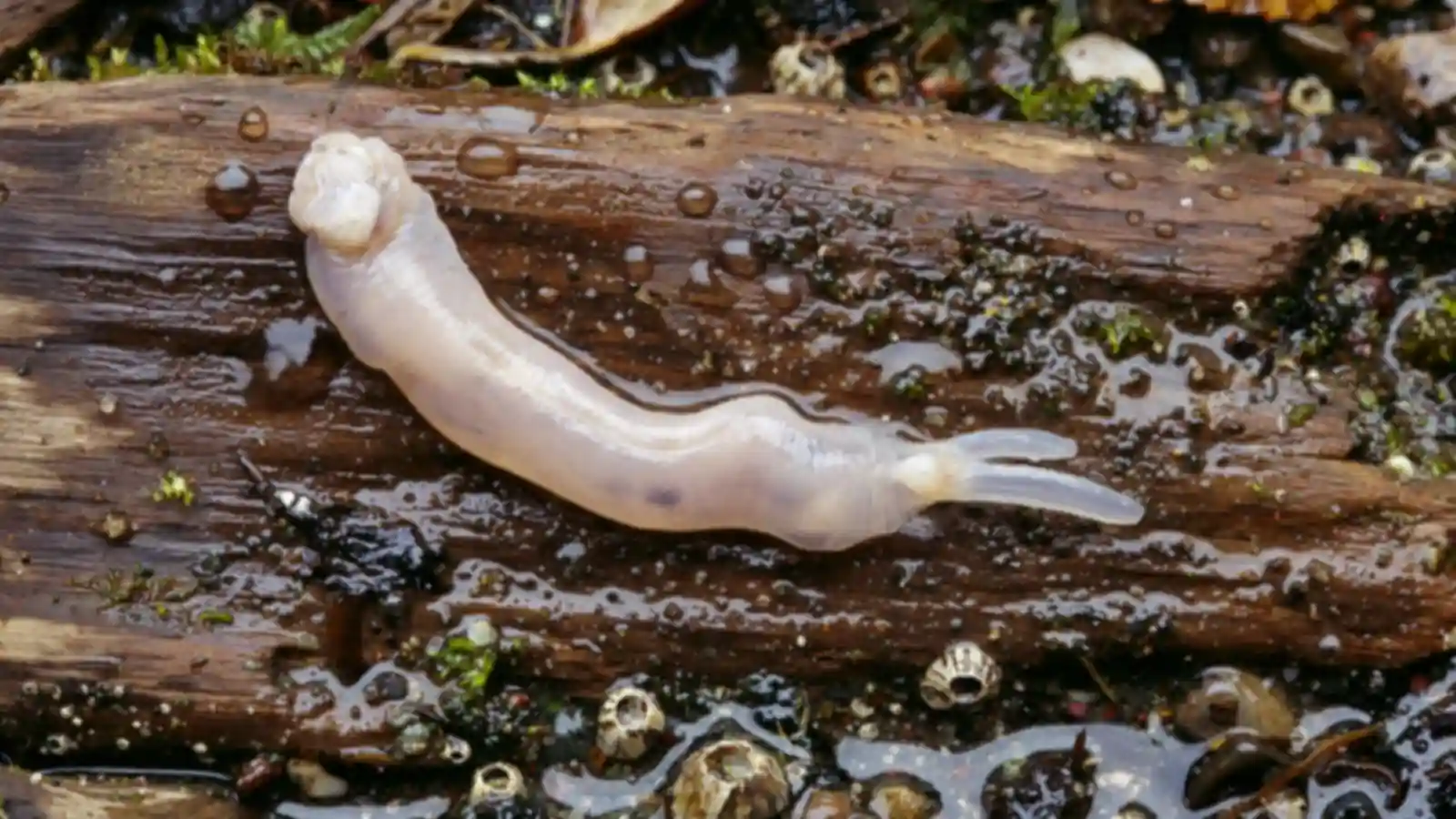
Its cousin, the giant clam, sits on the reef and filters the water — but it has turned the clam’s body plan inside out, living inside wood instead of on a reef. Its close relative, Kuphus polythalamia, is even stranger: it grows to more than a metre long, lives in mud rather than wood, and feeds through bacteria in its gills instead of eating at all.
Shipworm Shell: The Tiny Drill at the Front
Its shell is tiny — a few millimetres across, at the very front of the animal — and it is the most important part of its body. The shell is in two parts, like a clam’s, but it is rough and ridged, and the worm uses it as a drill: it rocks the shell back and forth, grinding away the wood, while its body pushes forward into the tunnel. The shell is the only hard part of the animal, and it is what makes it a borer rather than a burrower.
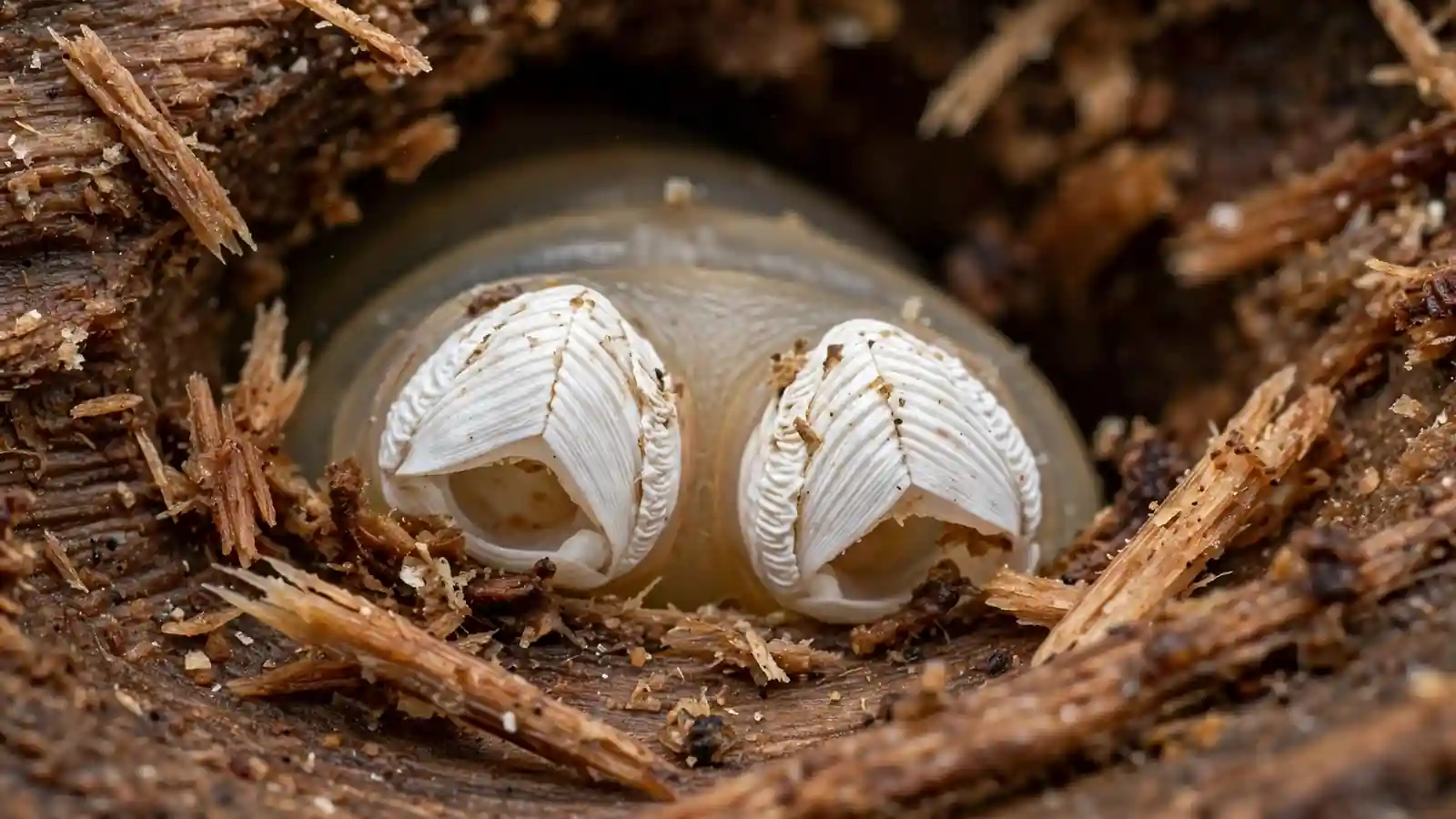
Behind the shell, the body is soft and unprotected, lined with the tunnel the worm has bored. The tunnel is lined with a thin layer of calcium, like a plaster cast, which protects the soft body from the wood and from predators. The worm’s rear end, with its two siphons, sticks out of the tunnel’s entrance — the only part of the animal visible from outside the wood.
How It Bores Into Wood
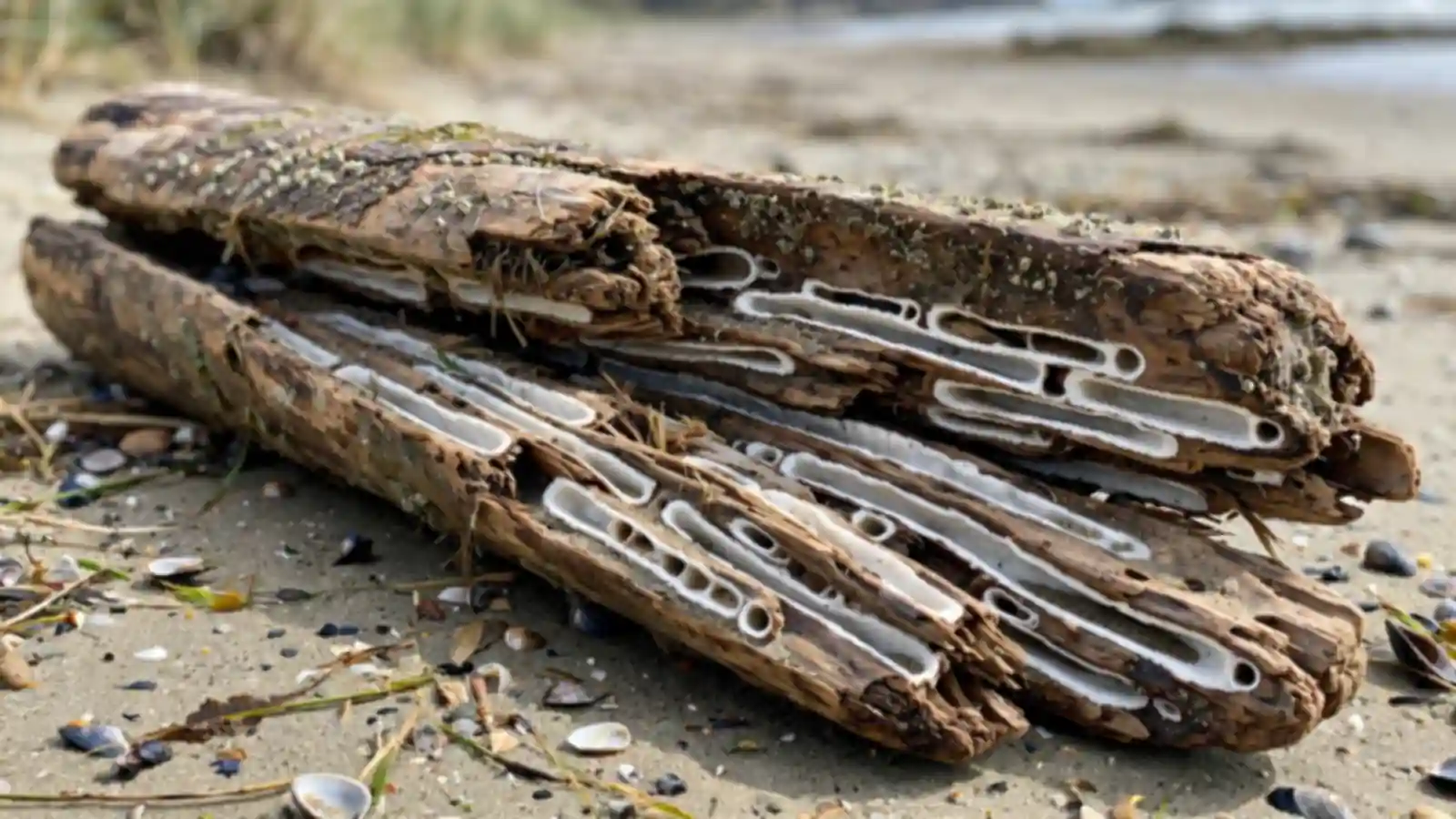
It bores by grinding. It anchors its body in the tunnel, rocks its tiny shell back and forth against the wood, and grinds away a few millimetres a day — slow work, but relentless, and a single worm can tunnel for months, growing longer as it goes. The tunnel follows the grain of the wood, turning and branching as the worm meets other tunnels, until the wood is a honeycomb of tunnels.

The entrance hole is tiny — a few millimetres across — so a piece of wood can look sound from the outside while it is hollow inside. That is what made it so dangerous to wooden ships: a hull could be riddled with tunnels and still look fine, until it failed in a storm. The only defence was to sheathe the hull — in lead, in copper, in tar — and the history of wooden shipbuilding is, in part, the history of fighting it.
Kuphus polythalamia: The Giant Shipworm
The giant, Kuphus polythalamia, is the strangest of the family — and the largest. It grows to 1.5 to 1.6 metres long, with a tube up to 5 centimetres wide, and it lives not in wood but in the mud of shallow lagoons in the Philippines. It does not bore at all: it lives in a long, elephant-tusk-shaped tube in the mud, and it feeds through bacteria in its gills, which turn hydrogen sulfide from the mud into food.

Kuphus was known for centuries only from its empty tubes, which wash up on beaches and were mistaken for elephant tusks. The living animal was only found in 2017, when scientists in the Philippines dug up five live specimens from a lagoon — the first time anyone had seen the animal alive. It is a member of the family that has given up ships entirely, and it shows how far the family’s body plan can go.
Diet: Eating Wood With Bacterial Help
It eats wood — and it is one of the few animals that can. Wood is mostly cellulose, a tough carbohydrate that almost no animal can digest, but it carries bacteria in its gills that make cellulase, the enzyme that breaks cellulose down. The worm grinds the wood into tiny particles, the bacteria digest the cellulose, and the worm absorbs the sugars — a partnership that lets the animal live on a diet of pure wood.
The worm also filter-feeds, drawing in plankton through its siphons, and the balance between wood-eating and filter-feeding varies by species. The giant Kuphus has gone furthest: it eats no wood at all, and lives entirely on its bacteria, which feed on hydrogen sulfide from the mud. The family’s trick — farming bacteria in the gills — is the same one the tube worms use at the vents, in a different sea and a different century.
Shipworms and Ships: The Enemy of Wooden Fleets
It has sunk more ships than any storm. For centuries, the wooden fleets of Europe, Asia and the Americas were at war with it: a ship’s hull, left unprotected in warm water, could be riddled with tunnels in a single season, and a fleet could be crippled in port. The Spanish treasure fleets, the Dutch East Indiamen, the wooden warships of every navy — all of them fought it, and all of them lost ships to it.

The defences were ingenious and desperate: sheathing the hull in lead, in copper, in tar and hair, in thin wooden planks nailed over the hull. The copper sheathing of the 18th century was the first defence that really worked, and it changed naval history — a coppered ship could stay at sea for years, while an uncoppered ship rotted in months. Its defeat was one of the quiet victories of the age of sail, and it is still a problem today for wooden docks, piers and boats.
Life Cycle and Lifespan
Its life begins as a tiny larva, drifting in the plankton for days or weeks before settling on a piece of wood. The larva bores a tiny hole and begins its tunnel, growing longer as it tunnels, and the adult lives for one to three years inside its piece of wood, breeding by releasing eggs and sperm into the water. The larvae drift on to the next piece of wood — a ship’s hull, a dock piling, a mangrove root — and the cycle begins again.
The species has not been assessed by the IUCN, so it carries no Red List category. In most of its range it is abundant, and the tunnels in driftwood are the best evidence of a healthy population. The study on the wood-boring clam’s bacterial partnership describes the animal and its symbionts in detail.
Fun Facts
- It is a clam, not a worm — its tiny shell is a drill at the front of a long, soft body.
- The giant Kuphus grows to 1.5 metres long and lives in mud, not wood.
- The living Kuphus was only found in 2017 — it was known for centuries only from its empty tubes.
- A piece of wood can look sound outside while it is hollow with tunnels inside.
- Copper sheathing, invented to fight it, changed naval history in the 18th century.
- It eats wood with the help of bacteria in its gills that digest cellulose.
Frequently Asked Questions
Is a Shipworm a Worm?
No — the shipworm is a clam. It looks like a worm, but it is a bivalve mollusk in the family Teredinidae, with a tiny two-part shell at its front end that it uses as a drill, and a long, soft, worm-like body behind it. The name is a holdover from the days when sailors saw only the long, soft body and assumed it was a worm.
How Do Shipworms Bore Into Wood?
By grinding. It anchors its body in the tunnel, rocks its tiny ridged shell back and forth against the wood, and grinds away a few millimetres a day. The tunnel is lined with a thin layer of calcium, and the worm’s rear end, with its two siphons, sticks out of the entrance. The entrance hole is only a few millimetres across, so the wood can look sound while it is hollow inside.
How Big Is the Giant Shipworm?
The giant shipworm, Kuphus polythalamia, grows to 1.5 to 1.6 metres long, with a tube up to 5 centimetres wide — the longest bivalve in the world. Typical shipworms are much smaller, around 10 to 15 centimetres, though the common naval species, Teredo navalis, can reach about 60 centimetres inside its tunnel.
What Damage Do Shipworms Cause?
They hollow out wood from the inside. A ship’s hull, a dock piling or a pier left unprotected in warm water can be riddled with tunnels in a single season, while looking sound from the outside — the entrance holes are only a few millimetres across. For centuries, wooden fleets lost ships to it, and the defence was sheathing the hull in lead, copper or tar. Modern steel ships are safe, but wooden docks, piers and boats still need protection.
What Is Kuphus polythalamia?
Kuphus polythalamia is the giant shipworm, the largest shipworm and the longest bivalve in the world, growing to 1.5 to 1.6 metres long. It lives in the mud of shallow lagoons in the Philippines, in a long elephant-tusk-shaped tube, and feeds through bacteria in its gills instead of eating wood. It was known for centuries only from its empty tubes, and the living animal was only found in 2017.
Do Shipworms Eat Wood?
Yes — wood, mostly. It grinds wood into tiny particles, and bacteria in its gills make cellulase, the enzyme that breaks cellulose down — the worm absorbs the sugars. It also filter-feeds on plankton through its siphons. Its giant relative Kuphus eats no wood at all and lives entirely on bacteria that feed on hydrogen sulfide from the mud.
How Do Shipworms Survive Without Eating Wood?
Through bacteria and filter-feeding. The giant Kuphus eats no wood at all: bacteria in its gills turn hydrogen sulfide from the mud into food, and the worm lives entirely on what the bacteria make. The common species also filter-feeds, drawing in plankton through its siphons, so wood is only part of its diet — and for Kuphus, no part at all.
Similar Species Worth Exploring
Keep Exploring
Start with the moon snail, another mollusk with a drilling habit, then meet the queen conch, the pink-shelled grazer, and browse the whole family in our types of mollusks hub — then come back to the clam that ate the fleets, the shipworm.