Parrotfish
Parrotfish: the reef grazer with a beak, making beaches grain by grain
The parrotfish is a reef grazer with a beak of a thousand teeth: it scrapes algae from dead coral, grinds the coral in its gut, and drops it as sand, changing colour as it ages and keeping the reef healthy as it feeds. This guide covers its beak, its sand, its colours and the honest numbers behind the beach.
By Emily Carter · Reviewed by our vet team · Updated 10 November 2026 · 11 min read
A beak of 1,000 teethMakes sand from coralChanges colour with age
At a Glance
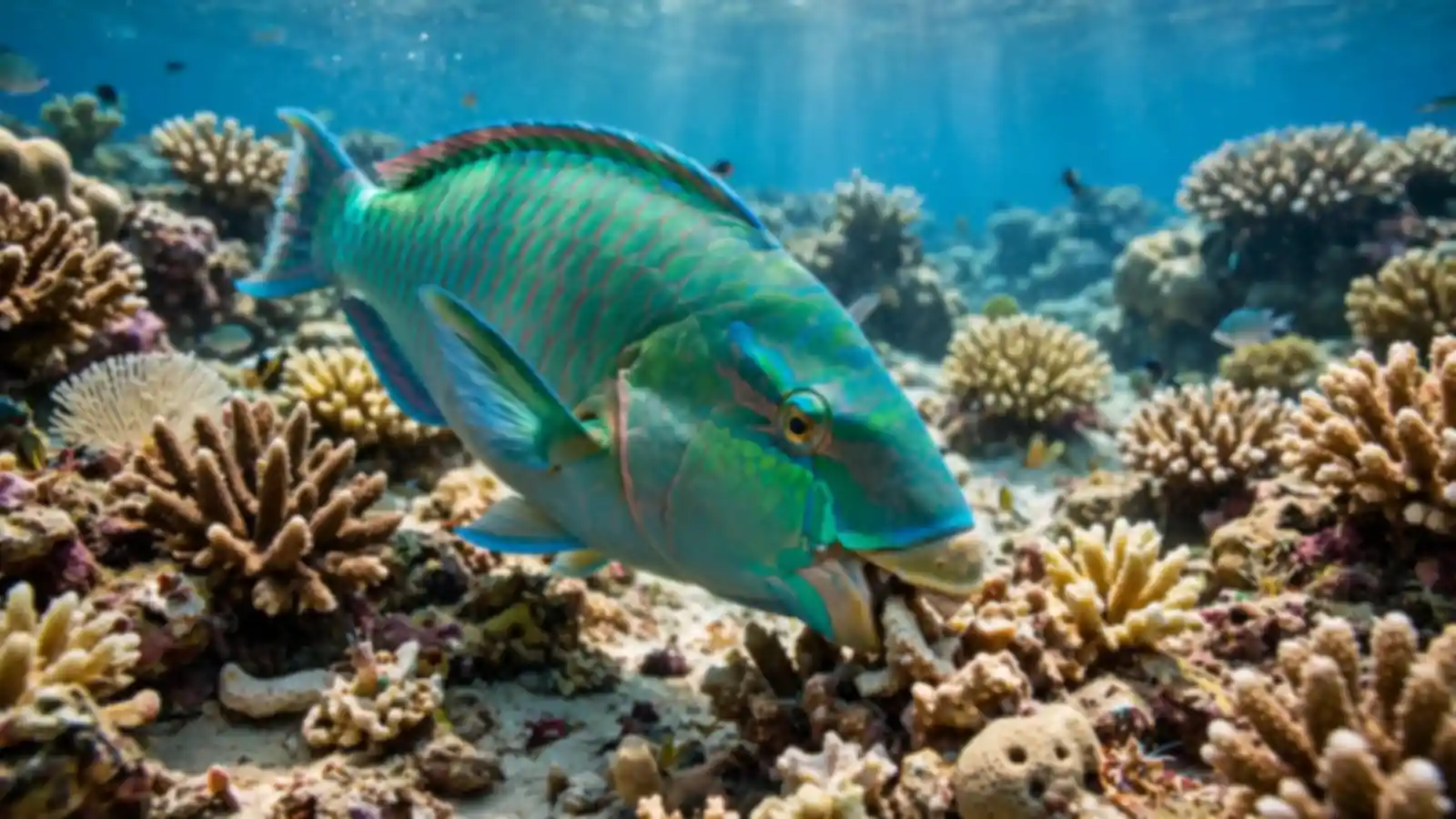
A parrotfish is a reef in motion: a bright, blunt-headed grazer with a beak like a parrot’s, a body that changes colour as it ages, and a habit that has built beaches — it eats coral, grinds it, and drops it as sand, grain by grain, year after year. There are about ninety-five species, and together they are among the most important animals on any coral reef.
What Is a Parrotfish?
It is any member of the subfamily Scarinae, a group of about ninety-five species in the wrasse family, Labridae, found on tropical coral reefs worldwide. They are named for the beak: the teeth are fused into a hard, parrot-like beak that scrapes algae from dead coral, and the body is bright, blunt-headed and deep, built for grazing rather than for speed.
They are reef fish in the fullest sense: they live on the reef, eat the reef, and shape the reef, and their grazing is one of the forces that keeps a coral reef a reef rather than an algae-covered rock. Without them, algae would smother young corals; with them, the reef stays open, clean and growing.
Size and Species
Most species run 30 to 50 centimetres long, a forearm of bright reef fish, and the giant of the group is the green humphead, which grows past a metre and weighs more than most divers expect. The humphead is the exception that proves the rule: it is the largest of them, the slowest-growing, and the one behind the biggest sand figures in this guide.
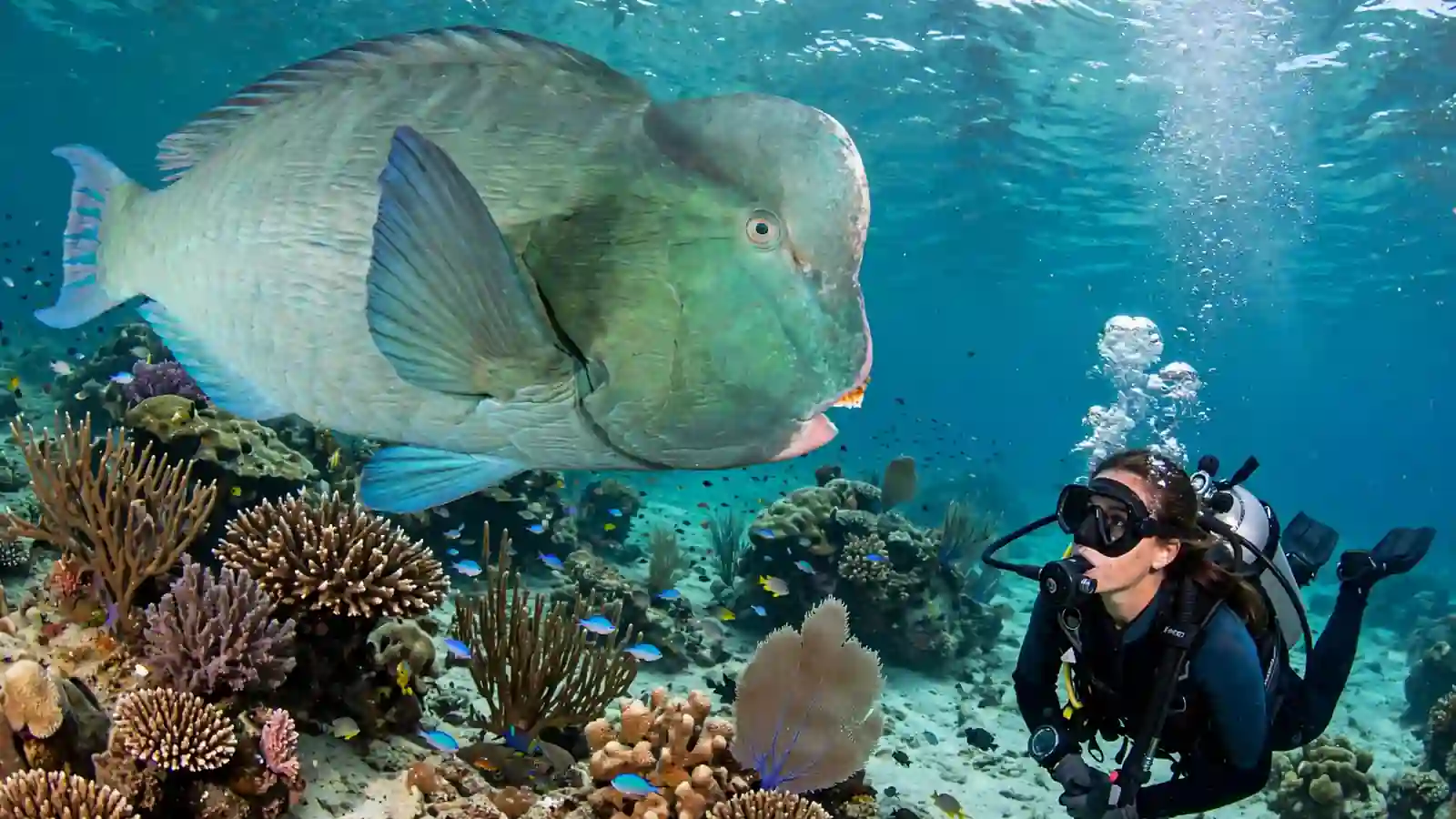
Ninety-five species share the subfamily, and they differ in size, colour and habit, from the small, drab grazers of the reef flat to the big, bright humpheads of the outer reef. Most species are listed as Least Concern, and the humphead is the exception to note: it is the one species whose size and slow growth have made it vulnerable, and the one most often singled out for protection.
The Beak of a Thousand Teeth
The beak is its whole living: about a thousand teeth, arranged in some fifteen rows, fused into a hard beak made of fluorapatite, one of the hardest biomaterials known. The beak scrapes algae from dead coral and bites chunks from the reef itself, and the teeth wear down and are replaced in a constant conveyor, so the beak is always sharp and always growing.

Behind the beak sits a second set of teeth in the throat, the pharyngeal mill, which grinds the bitten coral into fine sand. The fish swallows the scrape, the mill grinds it, the algae is digested, and the coral comes out the other end as sand — a complete factory in one animal, from beak to mill to beach.
How Do Parrotfish Make Sand
It makes sand by eating coral. It bites chunks from dead coral, grinds them in its throat mill, digests the algae, and excretes the coral as fine white sand, and a single large fish does this all day, every day. The conservative published figure is about 90 kilograms of sand a year for one large green humphead, and other sources give much larger numbers — 200 pounds, 300 kilograms, 800 pounds, even 900 kilograms — which is why this guide uses the attributed conservative figure and treats the rest as the unreliable range it is.
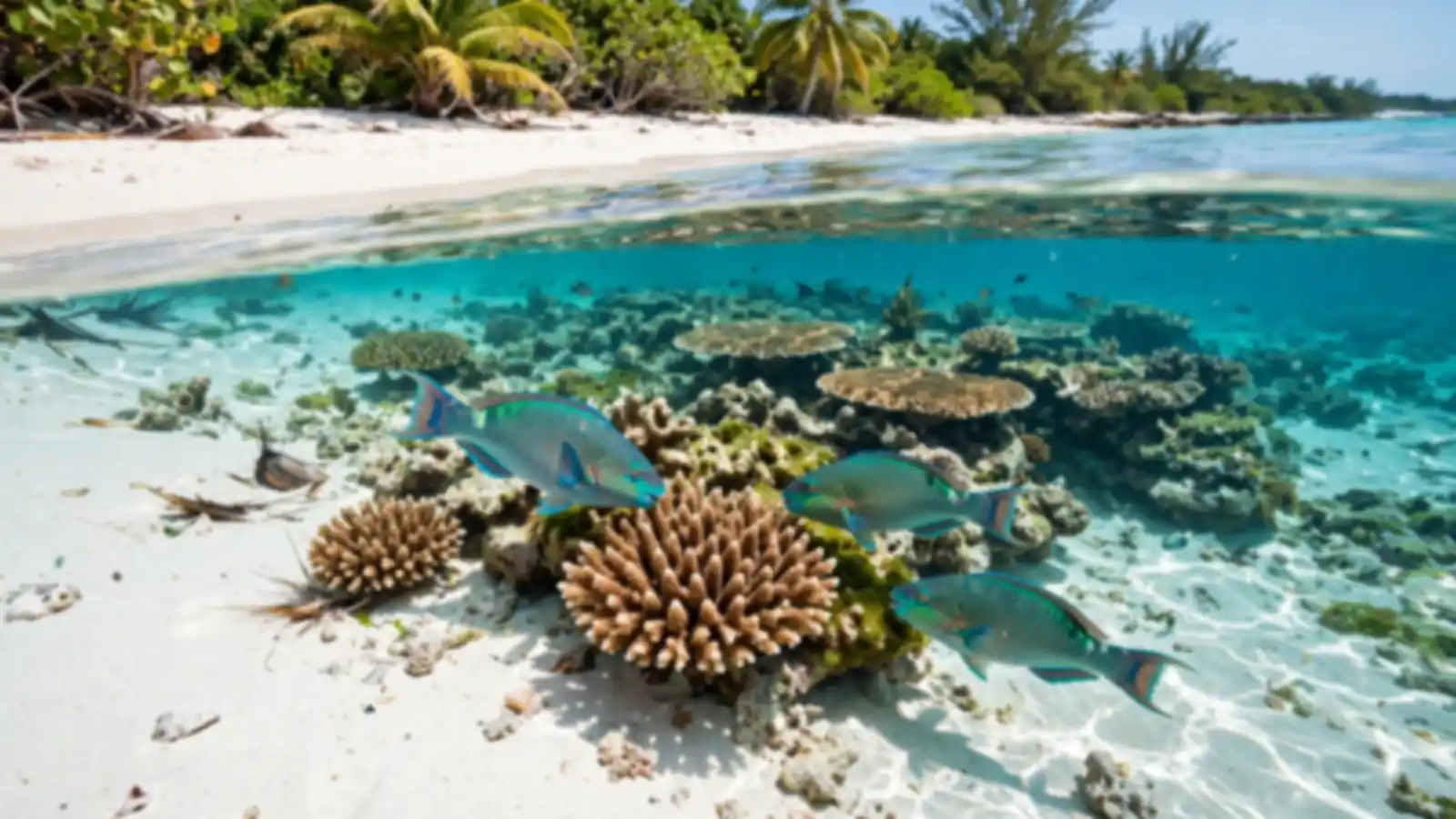
The share of the beach is just as variable: estimates that they make up to 70 to 85 percent of the sand on some tropical beaches are widely quoted, and they vary by beach and by source. What is not in doubt is the scale: on reefs where they are common, a large part of the white sand under your feet passed through one, and the beach is, in a real sense, made by them.
Colour Changes With Age and Sex
It changes colour as it ages, and again as it changes sex, and the result is a fish that can look like three different species in one lifetime. Juveniles are often drab, females are often brown or grey, and the terminal males — the fish that have changed sex from female to male — are the bright ones, green and blue and pink, the colours that make them the most photographed fish on the reef.

The change is not decoration for its own sake. Colour signals sex and status on a crowded reef, and the bright terminal males hold territories and harems while the drabber initial-phase fish feed and grow. It is a life lived in phases, and the colours are the record: look at one and you can read its age, its sex and its place in the reef’s order, all in one glance.
Grazing and Reef Health
Grazing is its gift to the reef. By scraping algae from dead coral, they keep the reef surface clean, and clean coral is coral that young polyps can settle on, which is how a reef renews itself. Without grazers, algae would smother the coral and the reef would stop growing; with them, the reef stays open and alive. The group account covers the grazing, the species and the reef role in full.
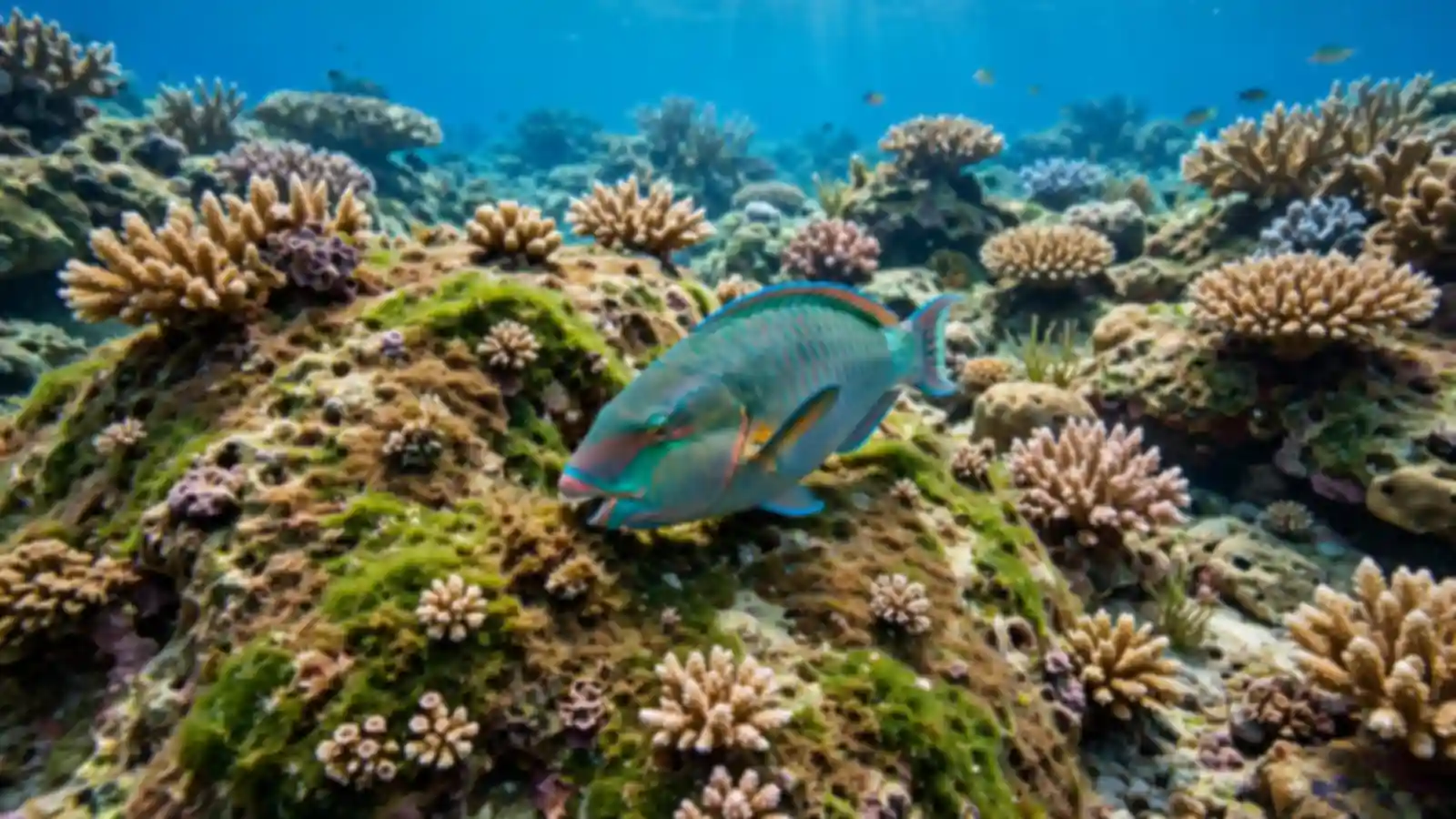
The work is constant and it is hungry work: a single fish can take thousands of bites a day, and a reef full of them is a reef being cleaned around the clock. It is why marine reserves that protect them often see their reefs recover, and why the fish is called a keystone grazer — remove it, and the reef changes; keep it, and the reef keeps itself.
Fishing, Protection and the Reef’s Future
People eat them, and in many places they eat a lot of them, which is where the trouble starts. The fish are easy to catch on a reef, the big humpheads are the most prized and the slowest to replace, and heavy fishing has thinned them on reefs across the tropics. The answer in a growing number of places is protection: fishing bans, marine reserves and catch limits, all aimed at keeping the grazers on the reef.
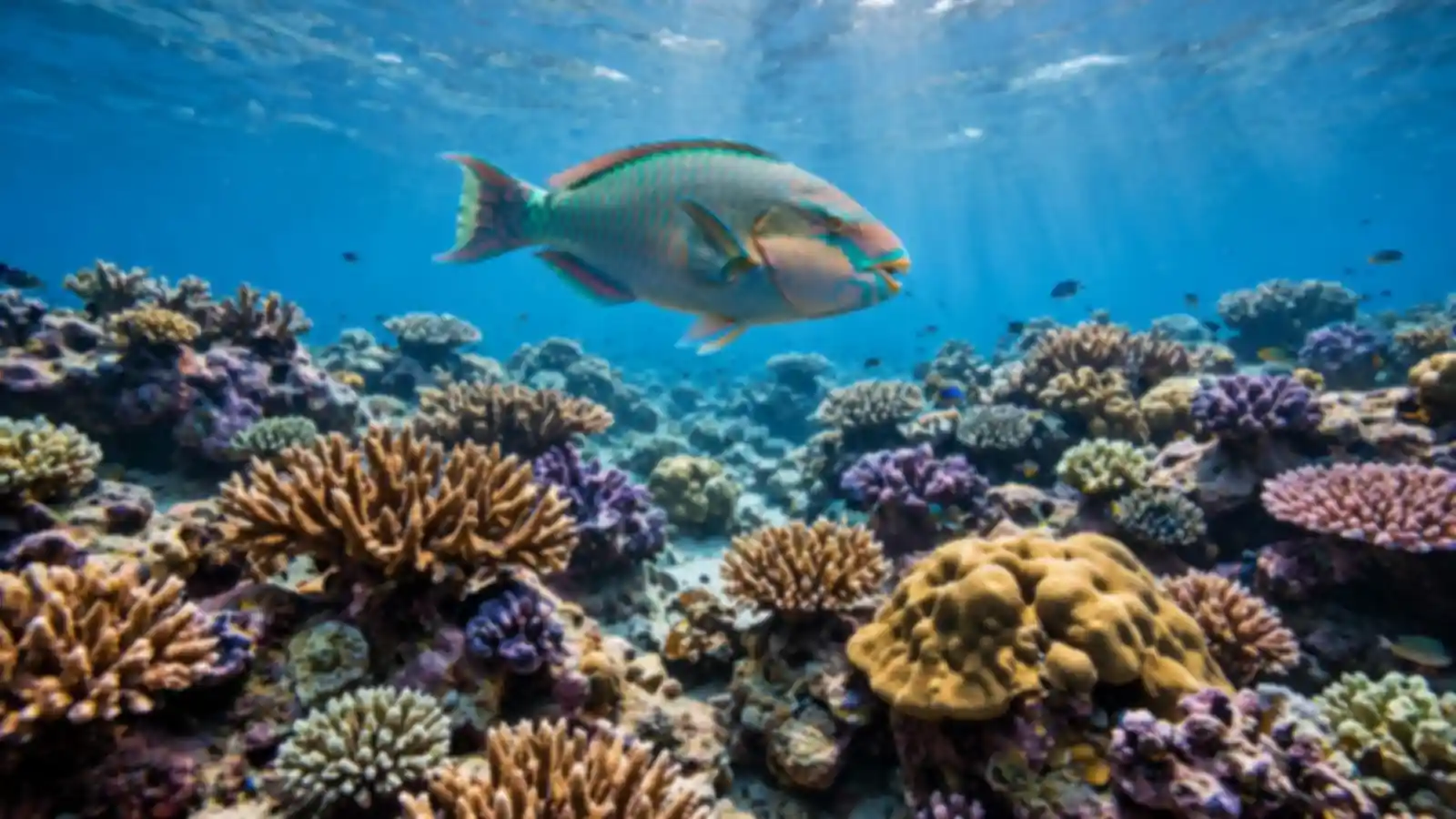
The protection is working where it is tried. Reefs that keep their grazers keep their coral, and the fish are a visible sign of a healthy reef: bright, busy and everywhere, scraping and grazing and making sand. The question of whether to eat one is a question about the reef itself, and more and more, the answer is to leave the grazers to their work.
Fun Facts
- Its beak holds about 1,000 teeth in 15 rows, made of fluorapatite, among the hardest biomaterials known.
- One large green humphead makes about 90 kilograms of sand a year, by the conservative published figure.
- They change colour as they age and again as they change sex, so one fish can look like three species.
- There are about 95 species, all of them in the wrasse family.
- Some sleep in a mucus cocoon, a bubble of slime that hides their scent from predators at night.
- Without their grazing, algae would smother young corals and the reef would stop growing.
Frequently Asked Questions
How do parrotfish make sand?
By eating coral. It bites chunks from dead coral, grinds them in a throat mill, digests the algae, and excretes the coral as fine white sand. It is a complete factory in one animal: beak, mill and beach.
How much sand does a parrotfish make in a year?
The conservative published figure is about 90 kilograms a year for one large green humphead. Other sources give much larger numbers — 200 pounds, 300 kilograms, even 800 pounds or 900 kilograms — but those figures vary widely and are best treated as unreliable. The 90-kilogram figure is the attributed, conservative one.
What do parrotfish eat?
Reef algae, scraped from dead coral with the beak, plus the tiny animals living in the algae. They are grazers: they keep the reef surface clean so young corals can settle, which is why they are called keystone grazers.
Why do parrotfish change colour?
Colour changes with age and with sex. Juveniles are often drab, females are often brown or grey, and the terminal males — fish that have changed sex from female to male — are bright green, blue and pink. Colour signals sex and status on a crowded reef.
How big do parrotfish get?
Most species run 30 to 50 centimetres long. The largest is the green humphead, which grows past a metre and is the slowest-growing and most vulnerable species.
Are parrotfish good for coral reefs?
Yes, they are among the most important animals on a reef. By grazing algae from dead coral, they keep the reef clean so young corals can settle and grow. Reefs that protect their grazers often recover better, and the fish are a visible sign of a healthy reef.
Can you eat parrotfish?
Yes, people eat them in many places, and the big humpheads are the most prized. But heavy fishing has thinned them on reefs across the tropics, and a growing number of places protect them with bans and reserves, because the reef needs its grazers.
Similar Species Worth Exploring
Keep Exploring
Keep exploring the reef grazers: meet the royal-blue grazer in our blue tang guide, or browse the whole reef in the types of reef fish. Then come back to the fish that makes beaches: the parrotfish.