Flightless Cormorant
Flightless Cormorant: The Only Cormorant That Cannot Fly
The flightless cormorant is the only cormorant on Earth that cannot fly — a Galápagos endemic that gave up the sky for the sea, and now hunts eels and octopus on the rocky seafloor with wings a third the size flight would need.
By Emily Carter · Reviewed by our vet team · Updated 10 November 2026 · 9 min read
Only flightless cormorantWings a third of flight sizeGalápagos endemic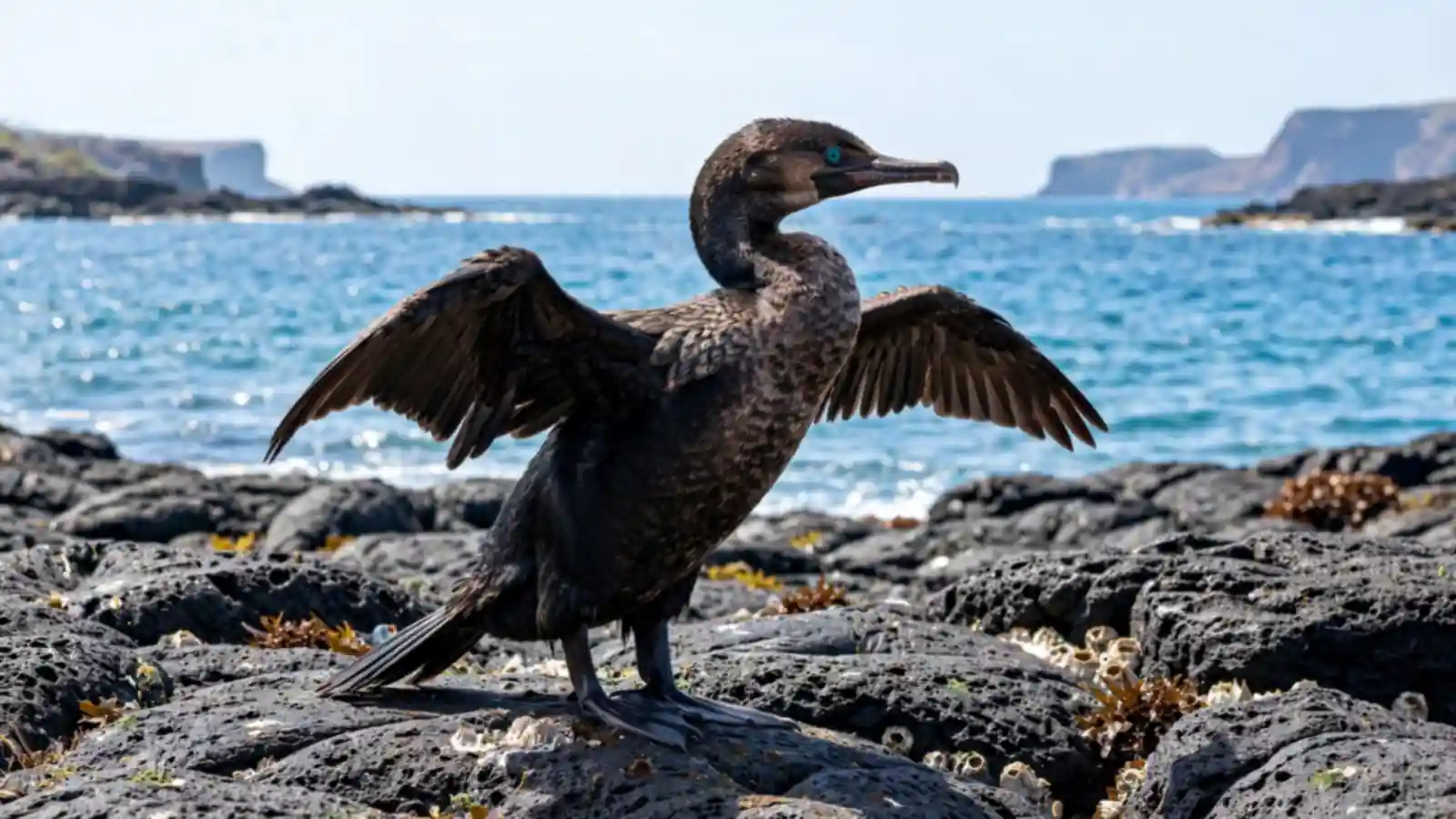
At a Glance
The flightless cormorant is the largest and heaviest cormorant in the world, and the only one that cannot fly. It lives on just two Galápagos islands, dives for eels and octopus near the seafloor, and survived an El Niño that halved its population to around 400 birds.
The Only Flightless Cormorant in the World
It is the only cormorant in the world that cannot fly, and one of the very few seabirds to have given up flight entirely. Every other cormorant — all 40-odd species — flies, but this one traded its wings for a life underwater, and it has never looked back.
Its scientific name is Nannopterum harrisi, though it is often still listed under its older name, Phalacrocorax harrisi. The name means little to most people; what matters is the bird itself — a dark, upright, penguin-like cormorant that walks the lava shores of the Galápagos and swims like a torpedo after its dinner.
Flightless Cormorant Size: The Largest Cormorant
It measures 89–100 cm long and weighs 2.5–5.0 kg, which makes it the largest and heaviest cormorant in the world. It is a big, solid bird — noticeably bulkier than its flying relatives — and its size is part of what makes its flightlessness work: a heavy body is a diving body.
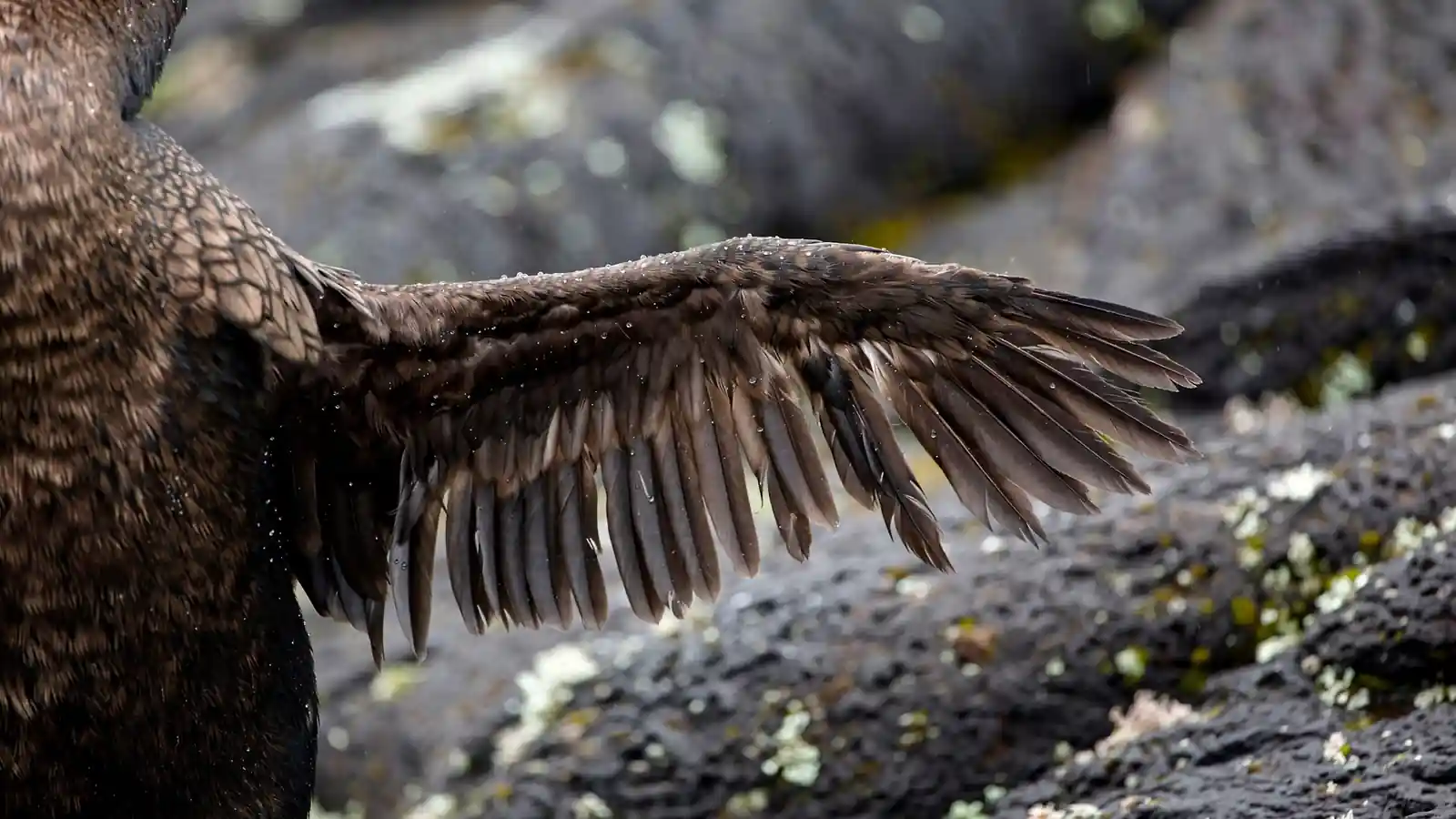
Males are slightly larger than females, and both sexes carry the same dark brown plumage, pale eyes and long hooked bill. For the full measurements and the species account, see the detailed species account from a university natural-history database. Size alone does not explain this bird, though — the wings do.
Wings a Third the Size Flight Needs
Its wings are about one third the size that flight would need, and they are the clearest evidence of its bargain with the sea. The wings are small, stubby and useless in the air — but underwater they are paddles, and the bird uses them to steer and brake as it hunts.
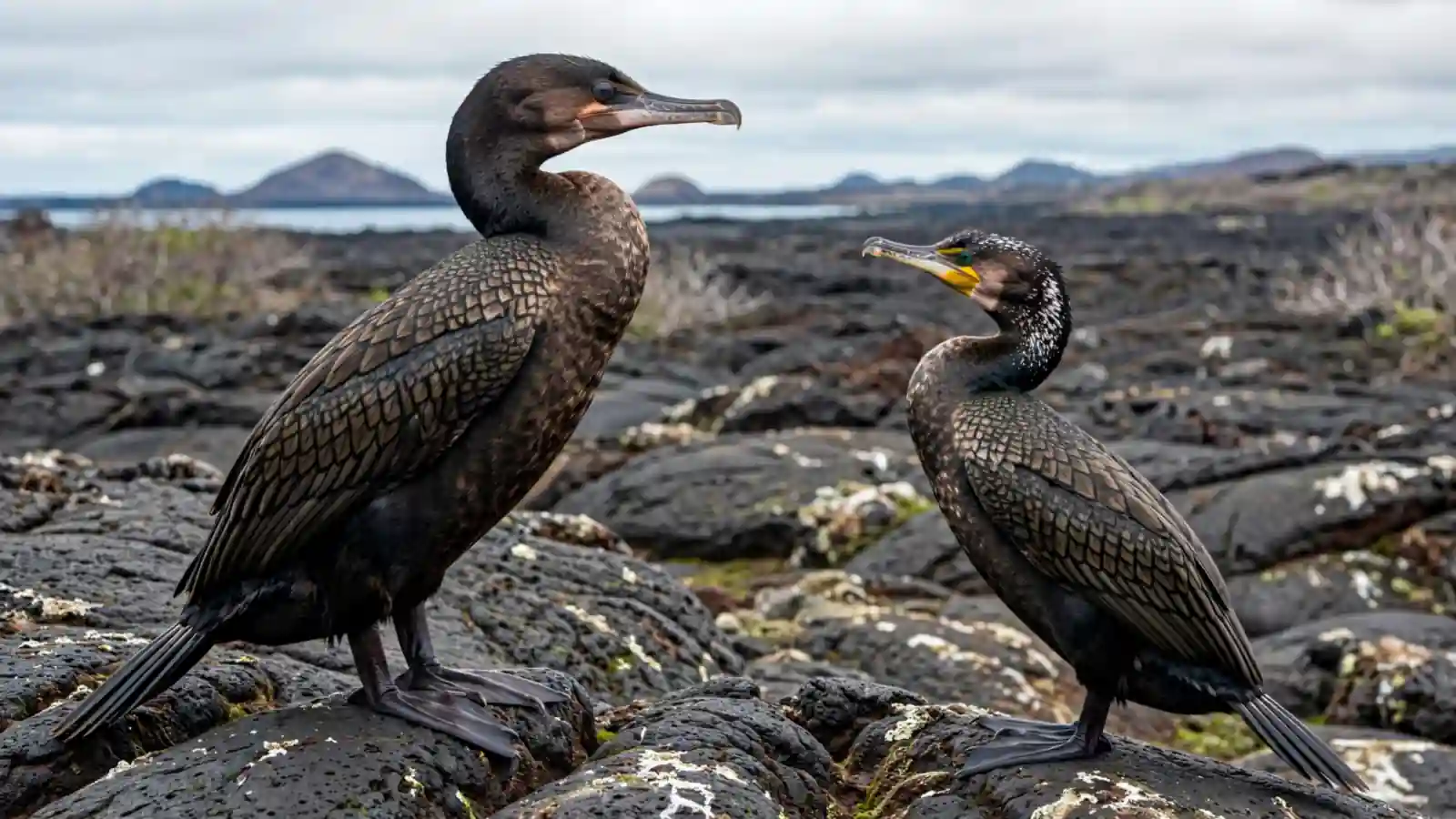
The bird still spreads its wings to dry them in the sun, just as flying cormorants do, and the sight is one of the Galápagos’ oddest: a bird holding out wings that could never lift it, drying feathers it no longer flies with. The wings are not broken or damaged — they are simply built for a different job now.
Where Flightless Cormorants Live: Fernandina and Isabela
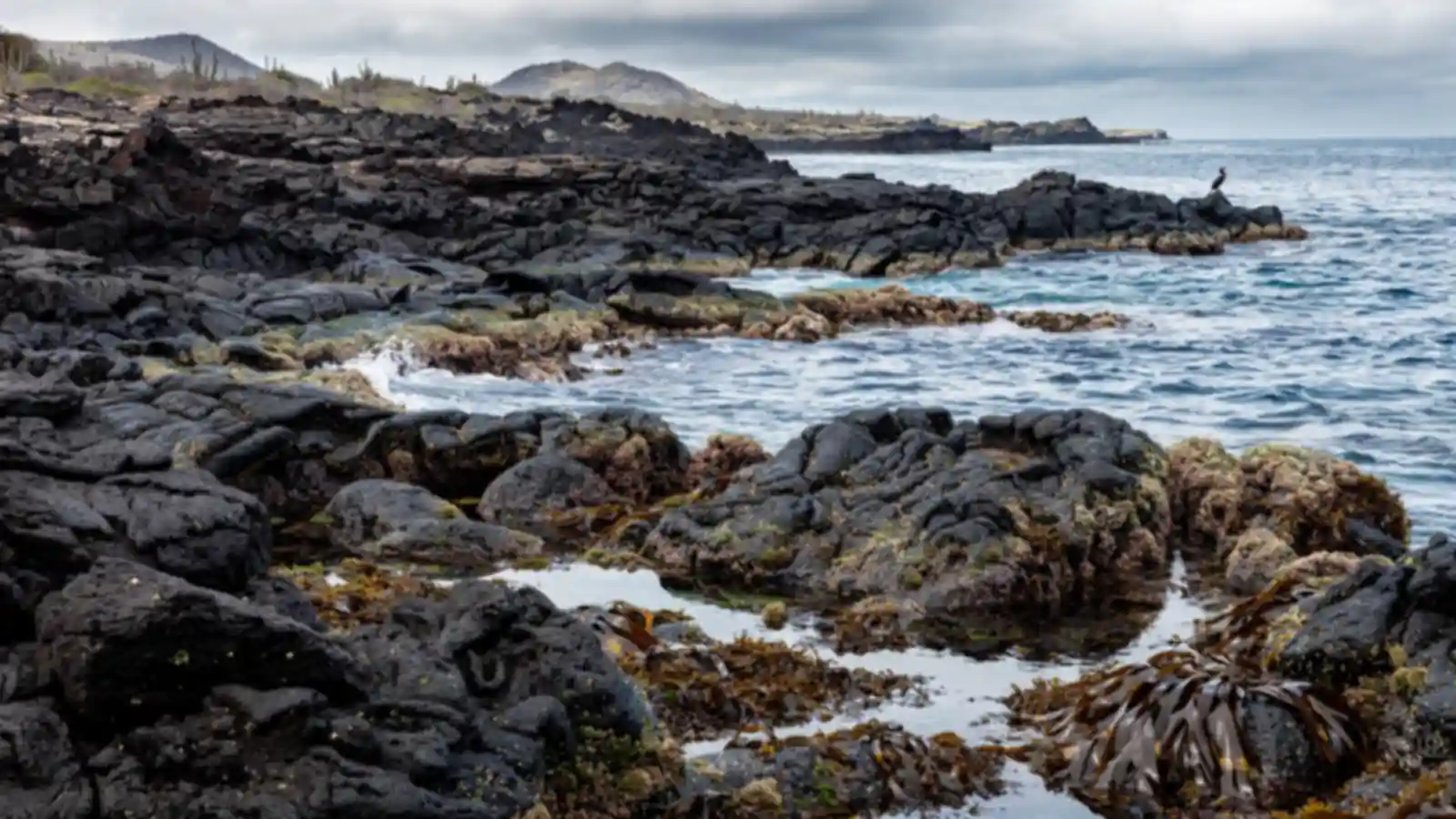
Flightless cormorants live on just two islands in the Galápagos: Fernandina and the west coast of Isabela. Nowhere else on Earth has this bird, and its whole world is a narrow strip of cold, food-rich water along the lava shores of those two islands.
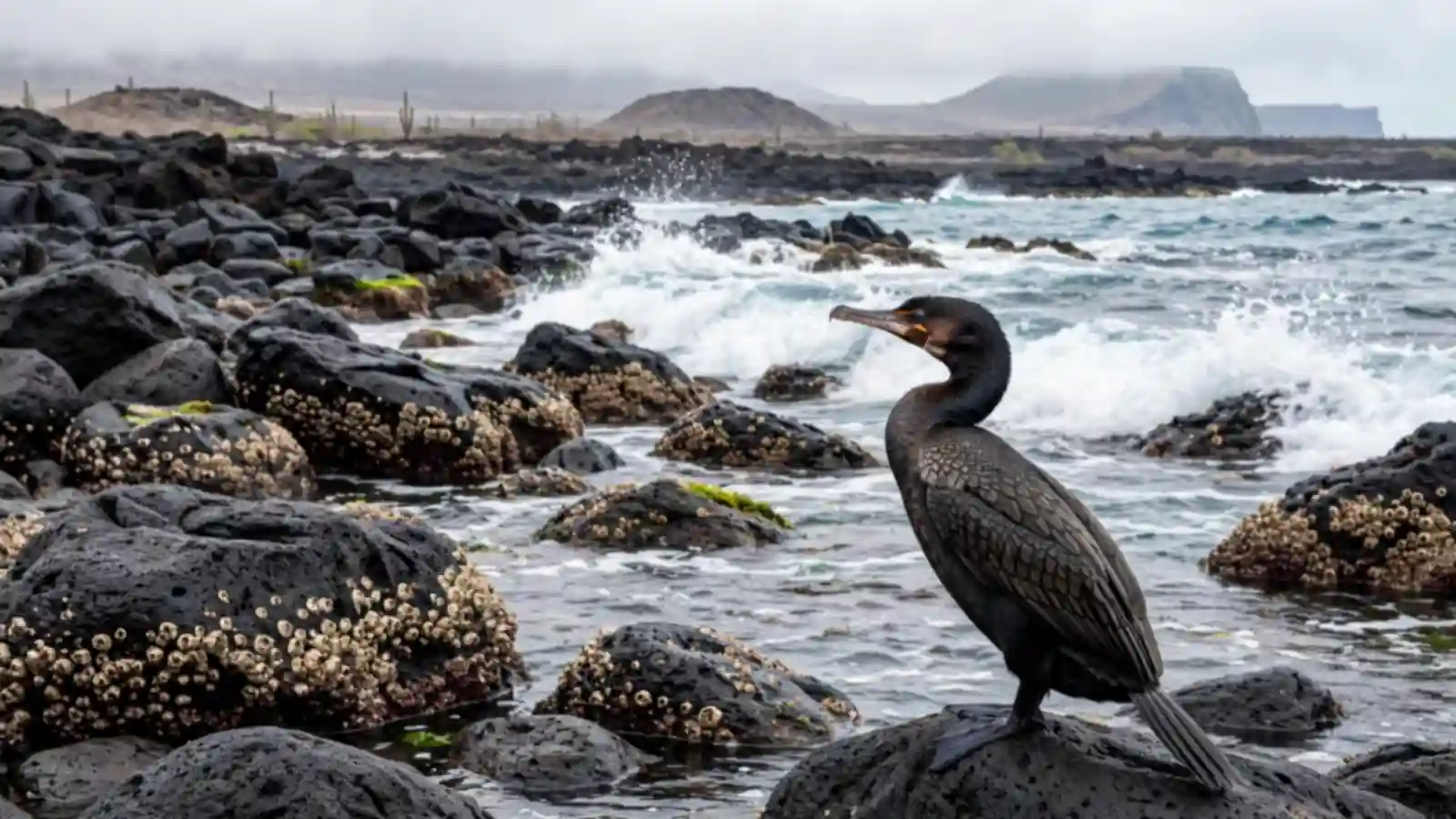
The cold water matters. The islands sit where the Cromwell Current wells up from the deep, bringing cold, nutrient-rich water that feeds the eels and octopus the cormorants hunt. The bird stays close to shore, rarely venturing more than a few hundred metres out, and it nests on the lava itself, in the open, without a tree in sight.
What Do Flightless Cormorants Eat? Eels and Octopus
Flightless cormorants eat eels and octopus, hunted near the seafloor in the cold water off Fernandina and Isabela. They dive from the surface, kick with their powerful feet, steer with their stubby wings, and catch their prey among the rocks and crevices below.
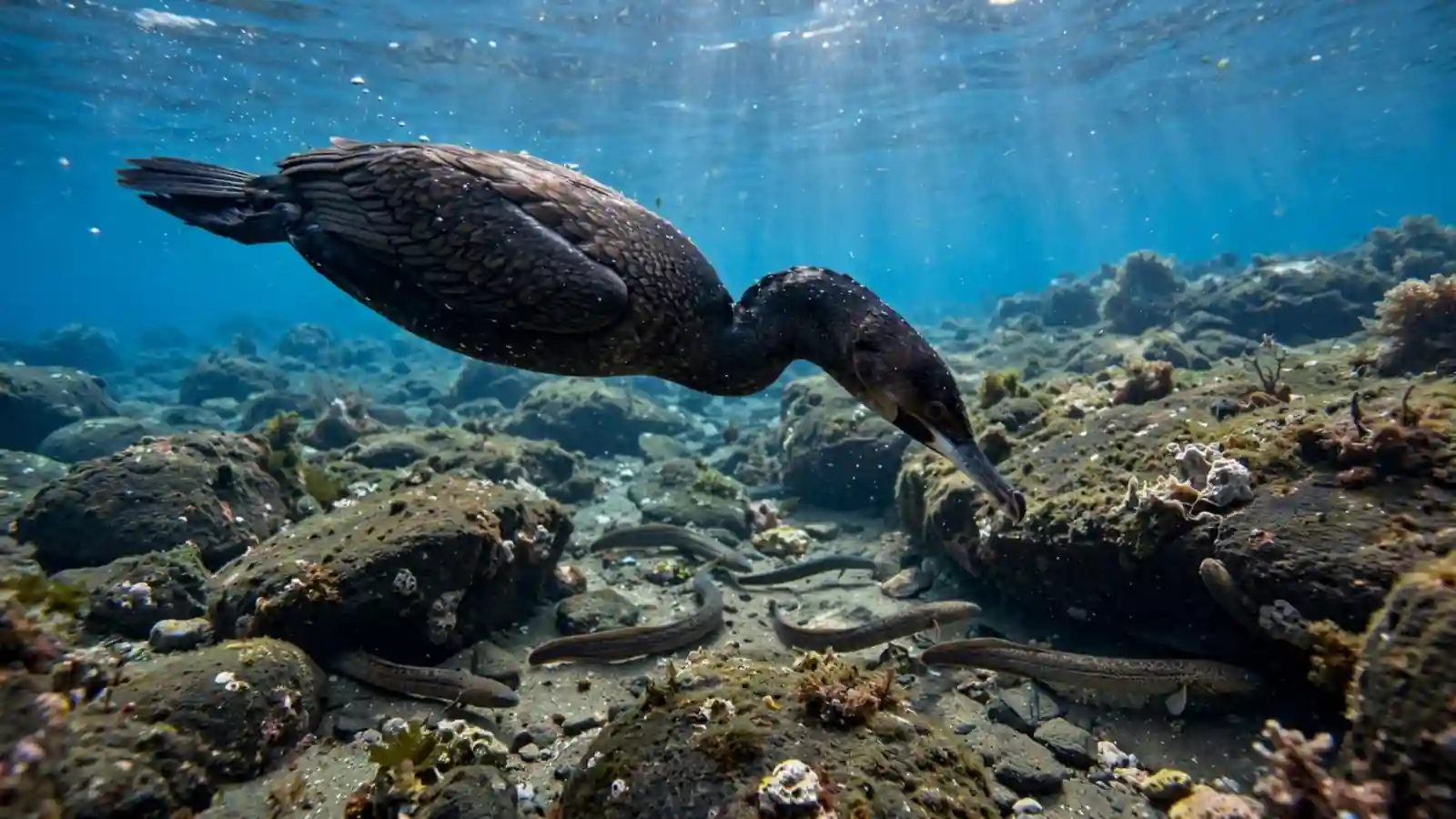
The hunt is a bottom-hunt, not a chase through open water. The bird works the seafloor methodically, probing cracks with its bill, and it can stay down for over a minute at a time. Eels are the staple, octopus the prize — and a cormorant that catches an octopus must work hard to keep it, beating it against the rocks before swallowing it whole.
The 1983 El Niño: Halved to 400 Birds
The 1983 El Niño halved the cormorant population to around 400 birds, and it is the event every account of this species turns on. El Niño warms the water, the cold current fails, and the eels and octopus the cormorants depend on vanish. Birds starve, breeding stops, and the population collapses in a single season.
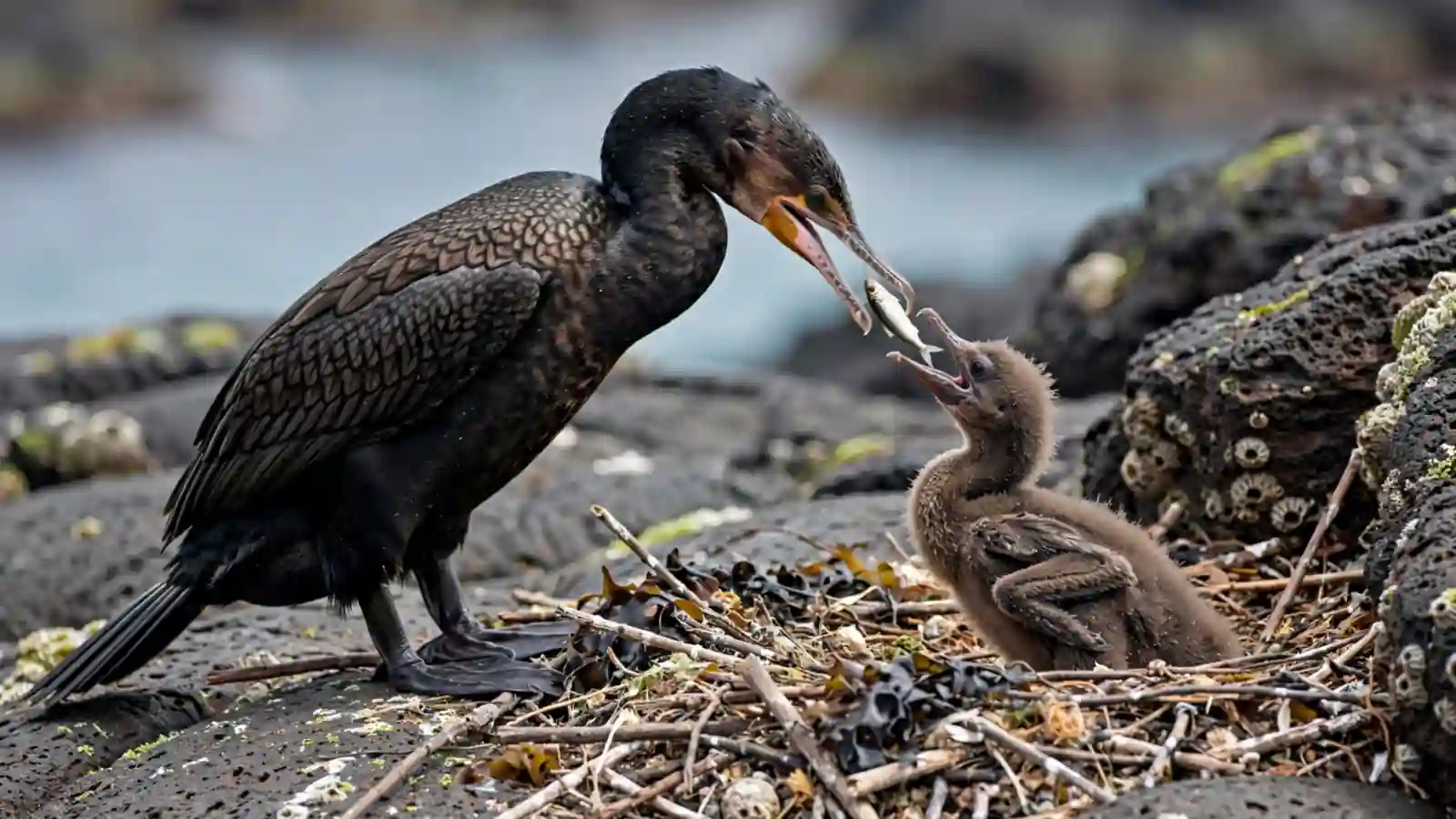
The 400-bird figure is a historical low, not the current population — the birds recovered once the cold water returned, and the 2022 count put them at around 2,085. But the recovery is fragile: the next strong El Niño will do the same damage again, and a bird that lives on two islands has nowhere to run when the water warms.
Conservation: Vulnerable, Around 2,000 Birds
It is listed as Vulnerable by the IUCN, a status it was downlisted to in 2011 — and the listing rests on the same two facts that define the bird: it lives on two islands, and its food depends on cold water that El Niño can switch off.
Around 2,000 birds is a small population for a whole species, and about 800–1,000 of them are breeding pairs. The Galápagos National Park protects the islands, and the population is monitored every year, but the real threat is the ocean itself: a warming sea, a strong El Niño, or an oil spill in the narrow strip of water this bird calls home could undo decades of recovery in a season.
Fun Facts
- It is the only cormorant in the world that cannot fly.
- Its wings are about one third the size flight would need — but they work as paddles underwater.
- At 89–100 cm and up to 5 kg, it is the largest and heaviest cormorant alive.
- It lives on just two Galápagos islands: Fernandina and the west coast of Isabela.
- The 1983 El Niño halved the population to around 400 birds; it has since recovered to about 2,085.
- It still spreads its wings to dry them in the sun, like a flying cormorant.
Frequently Asked Questions
Why Can’t the Flightless Cormorant Fly?
Because its wings are about one third the size flight would need. Over generations the bird traded flight for diving: its wings shrank, its body grew heavier, and it became a superb swimmer that hunts eels and octopus on the seafloor instead of flying to its food.
Where Do Flightless Cormorants Live?
Only on two Galápagos islands — Fernandina and the west coast of Isabela. They live along the lava shores where the cold Cromwell Current wells up, bringing the eels and octopus they hunt, and they rarely venture more than a few hundred metres from shore.
How Big Is a Flightless Cormorant?
It measures 89–100 cm long and weighs 2.5–5.0 kg, making it the largest and heaviest cormorant in the world. Males are slightly larger than females, and both sexes have dark brown plumage, pale eyes and a long hooked bill.
What Do Flightless Cormorants Eat?
Eels and octopus, hunted near the seafloor. They dive from the surface, steer with their stubby wings, and probe cracks in the rocks with their bills. Eels are the staple food; octopus is the prize catch, beaten against the rocks before it is swallowed whole.
How Many Flightless Cormorants Are Left?
Around 2,085 birds, according to the 2022 count, with roughly 800–1,000 breeding pairs. The population crashed to about 400 birds in the 1983 El Niño and has recovered since, but it remains small and vulnerable to the next strong El Niño.
How Do Flightless Cormorants Swim Without Flying?
They use their powerful feet to kick and their stubby wings to steer and brake underwater. The wings are useless in the air but work as paddles in the water, and the heavy body that makes flight impossible is exactly what makes the bird a strong diver.
Are Flightless Cormorants Endangered?
They are listed as Vulnerable by the IUCN, downlisted from a higher threat level in 2011. The listing reflects their tiny range — two islands — and their dependence on cold water that El Niño can switch off, rather than any direct human pressure.
Similar Species Worth Exploring
Keep Exploring
Meet the great cormorant, the flying cousin this bird left behind, then the northern gannet, a seabird that hunts from the sky instead of the seafloor, and browse the whole family in our types of seabirds hub — then come back to the bird that gave up the sky, the flightless cormorant.