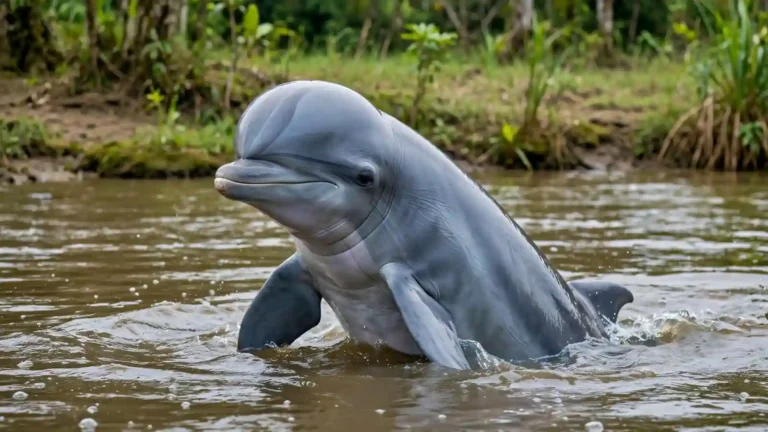
Black Coral
Black Coral: The Deep-Sea Coral That Lives Millennia
Black coral builds its skeleton from protein, not stone, and some colonies are over 4,000 years old — the deep sea’s slow, dark jewellery, and one of the oldest animals on Earth.
By Emily Carter · Reviewed by our vet team · Updated 10 November 2026 · 9 min read
Over 4,000 years oldProtein skeletonCITES Appendix II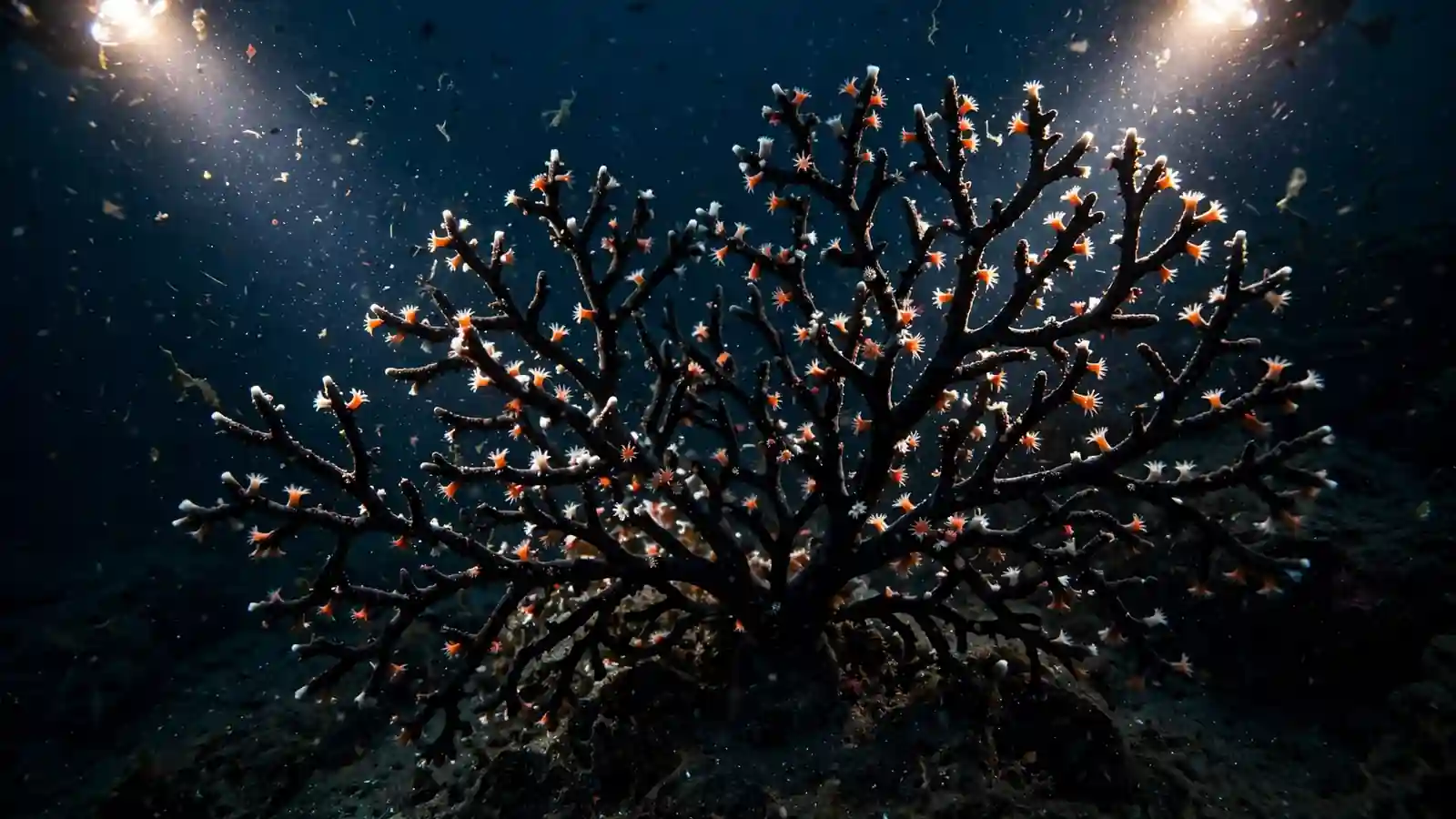
At a Glance
Black coral is a group of deep-sea corals, the order Antipatharia, whose skeletons are made of protein and chitin rather than stone. Some colonies are over 4,000 years old — older than the pyramids — and their black, thorny skeletons have been polished into jewellery for centuries.
Black Coral Skeleton: Protein, Not Stone
The skeleton is made of protein and chitin — the same materials as an insect’s shell — not calcium carbonate, and not stone. It is jet-black to golden-brown, lined with microscopic spines, and it contains no minerals at all.
That chemistry explains the polish. Protein and chitin take a shine the way horn or tortoiseshell does, and the microscopic spines vanish under the polishing wheel, leaving a surface that looks like black glass. Cut across a branch and the growth shows as rings, laid down a few millimetres at a time.
The skeleton is the animal’s framework and its defence: it is hard, it is thorny, and it lasts. When the colony dies, the skeleton remains, and it is the skeleton that is polished into jewellery — black beads, black carvings, black ornaments.
Why It Looks Black: The Living Tissue on Top
It is called black for its skeleton, but the living animal is rarely black. The polyps that cover the skeleton are white, orange, yellow or green, and they hide the dark skeleton beneath — so a living colony can look brightly coloured, and only the bare skeleton is black.
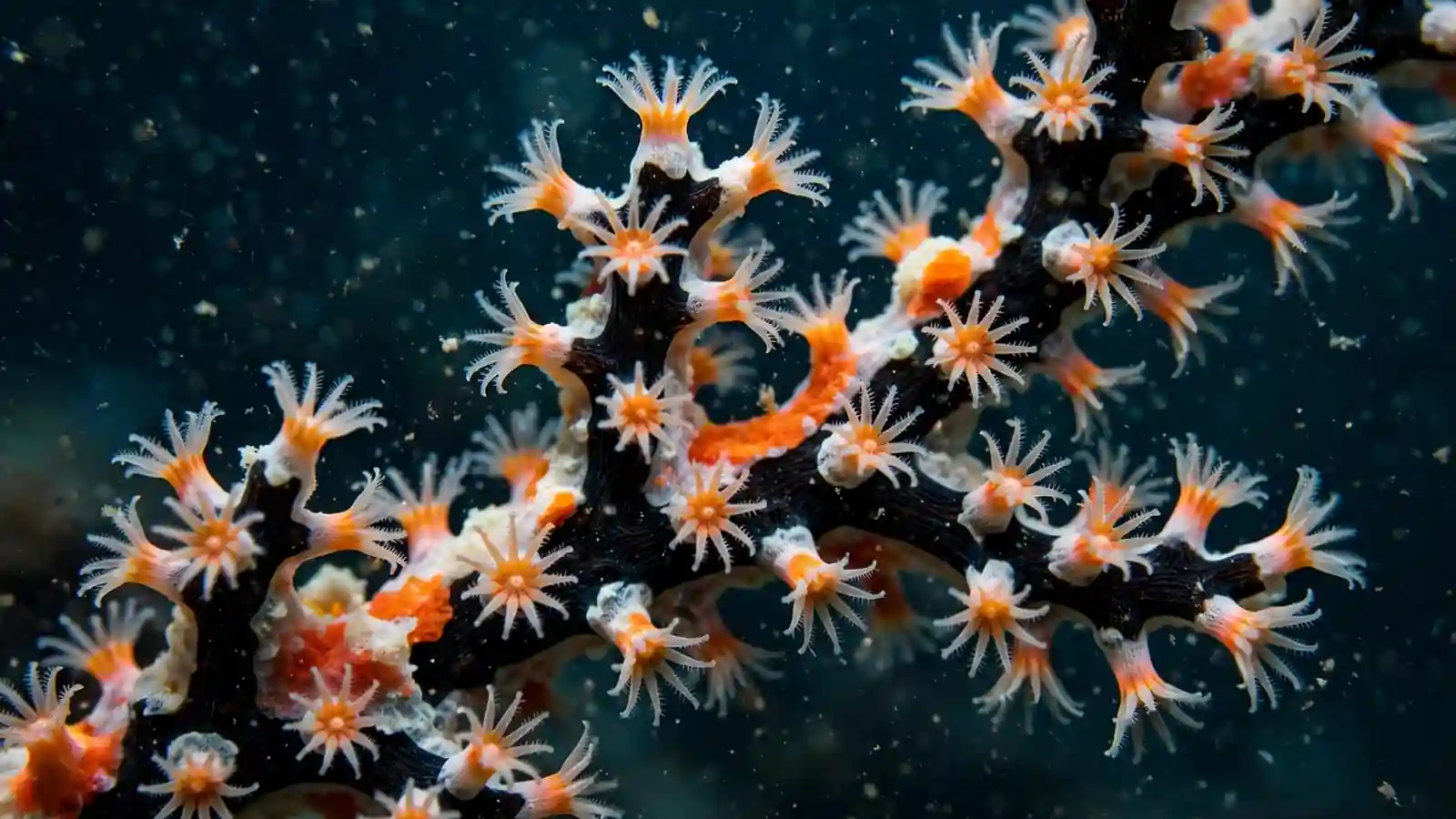
The name comes from the skeleton, not the animal: strip the tissue away and the coral is jet-black. In the water, though, the colony is a coloured, feathery thing, and the black is hidden under a coat of living polyps.
Where It Grows: Deep Slopes and Dark Fjords
It grows in all oceans, mostly below 50 metres on continental slopes, in the cold, dark water where the light never reaches. It likes the deep: the slopes, the seamounts, and the dark corners of the sea.
Depth is protection as much as preference. Below the reach of storms and sunlight the water stays cold and steady for centuries at a time, and a colony that settles on a slope can grow undisturbed for longer than most species have existed. The deep is less a refuge than a timescale.
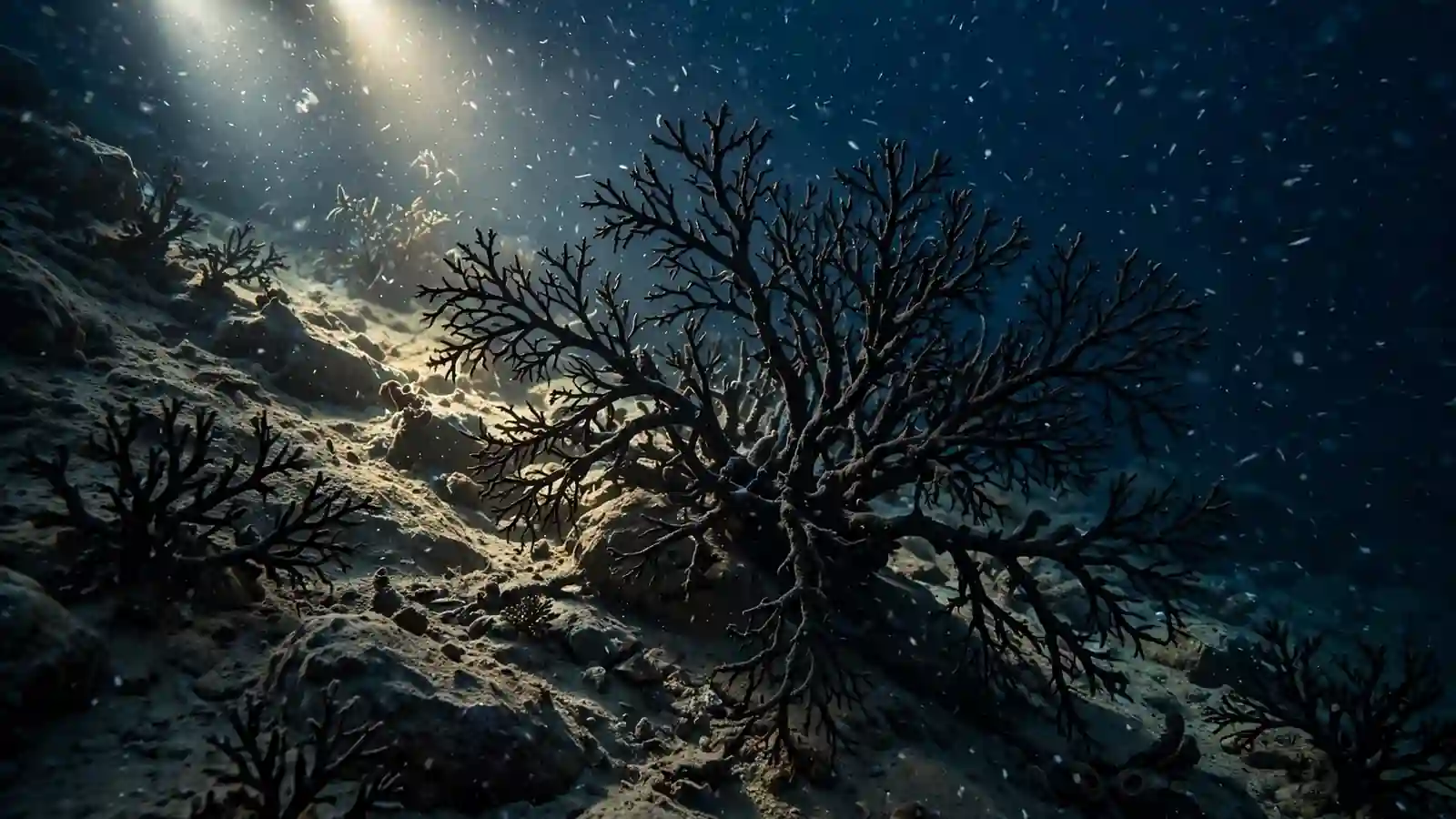
The shallowest black corals live in the fjords of New Zealand, at just four metres down, in dark tannin-stained water that mimics the deep sea. Everywhere else, it is a deep animal — and the deeper it lives, the older it gets.
The New Zealand exception proves the rule about light. Fiordland’s water is stained dark by tannins from the forest, so the shallows there feel like the deep: dim, cold and still. Colonies settle at wading depth in that gloom, doing at four metres what their relatives need hundreds of metres to do elsewhere.
The New Zealand fjords are the exception that proves the rule: the water there is stained dark with tannin from the forest, and the light dies within metres of the surface, so the deep sea comes shallow. Black corals grow there at four metres down, in water a snorkeller can reach — the only place in the world where a shallow diver can meet a deep-sea coral face to face. The fjord colonies are small and young compared to their deep-sea cousins, but they are the most studied black corals on Earth.
Four Thousand Years: The Oldest Colonies
Some colonies are over 4,000 years old, dated by radiocarbon in a 2009 study — older than the pyramids, older than written history, and among the oldest animals on Earth. A colony in the Gulf of Mexico is over 2,000 years old, and it is still growing.
Radiocarbon tells the story ring by ring. The 2009 dating work read the skeleton the way foresters read a tree, and the innermost layers of the oldest colonies formed when the pyramids were new. Every branch since then is a continuous record of deep water, growth laid over growth without pause.
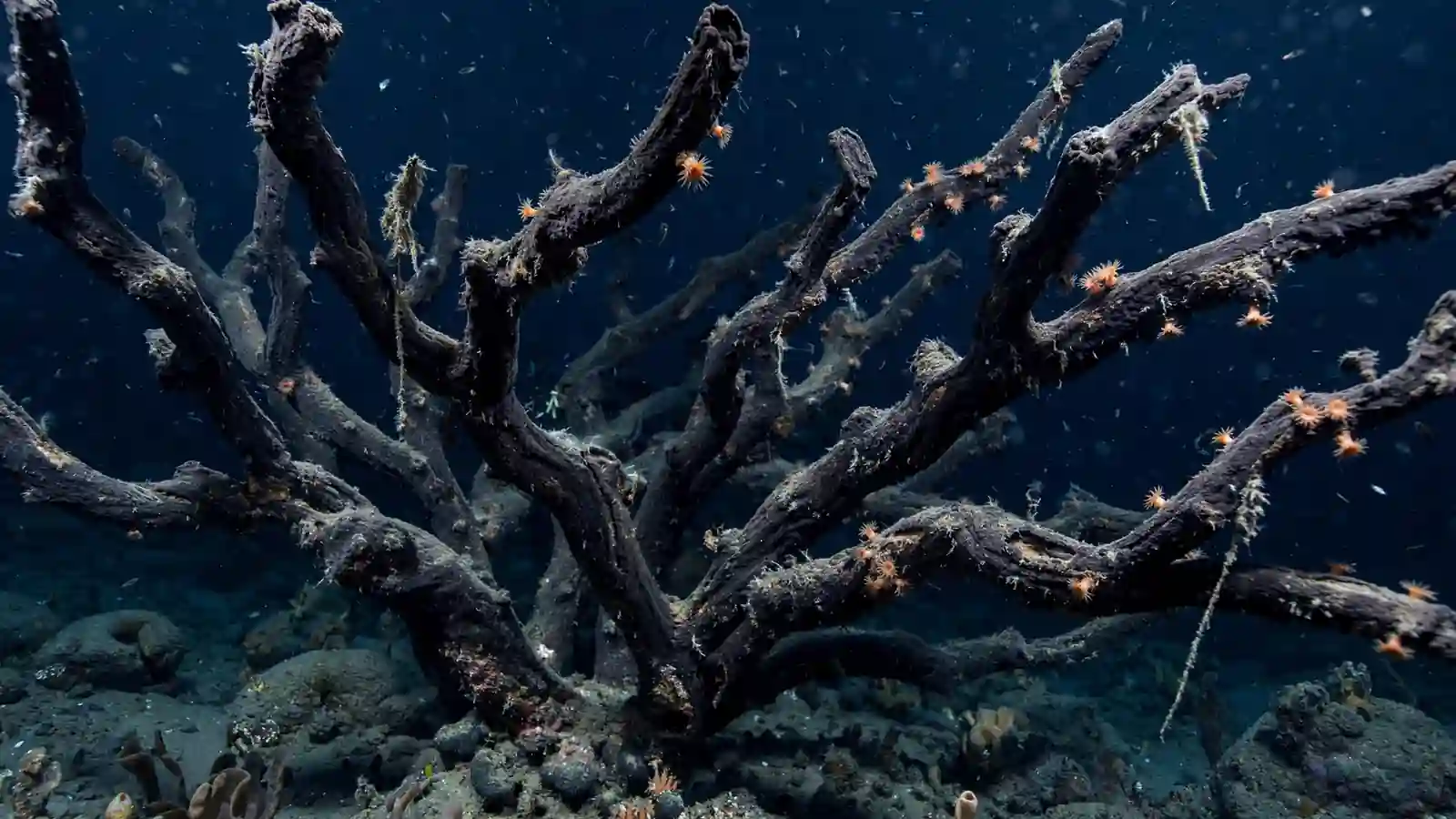
The age comes from the slow growth: it adds its skeleton at millimetres a year, and a thick, gnarled colony has been growing since before the Roman Empire. It is a living archive, and every branch is a record of the sea it grew in.
The Polyps: Six Tentacles, No Hiding Place
The polyp has six tentacles, non-retractile, entirely external to the skeleton — it cannot pull them in, and it cannot hide from sediment. The polyps sit on the surface of the skeleton, exposed, and they feed by catching plankton from the current.
Exposure is the price of that feeding style. A polyp that cannot withdraw sits open to sediment, nibbling fish and the drag of the current, trusting the thorny skeleton and its numbers to carry it through. Colonies answer the risk by growing many polyps: lose a few, and the branch feeds on.
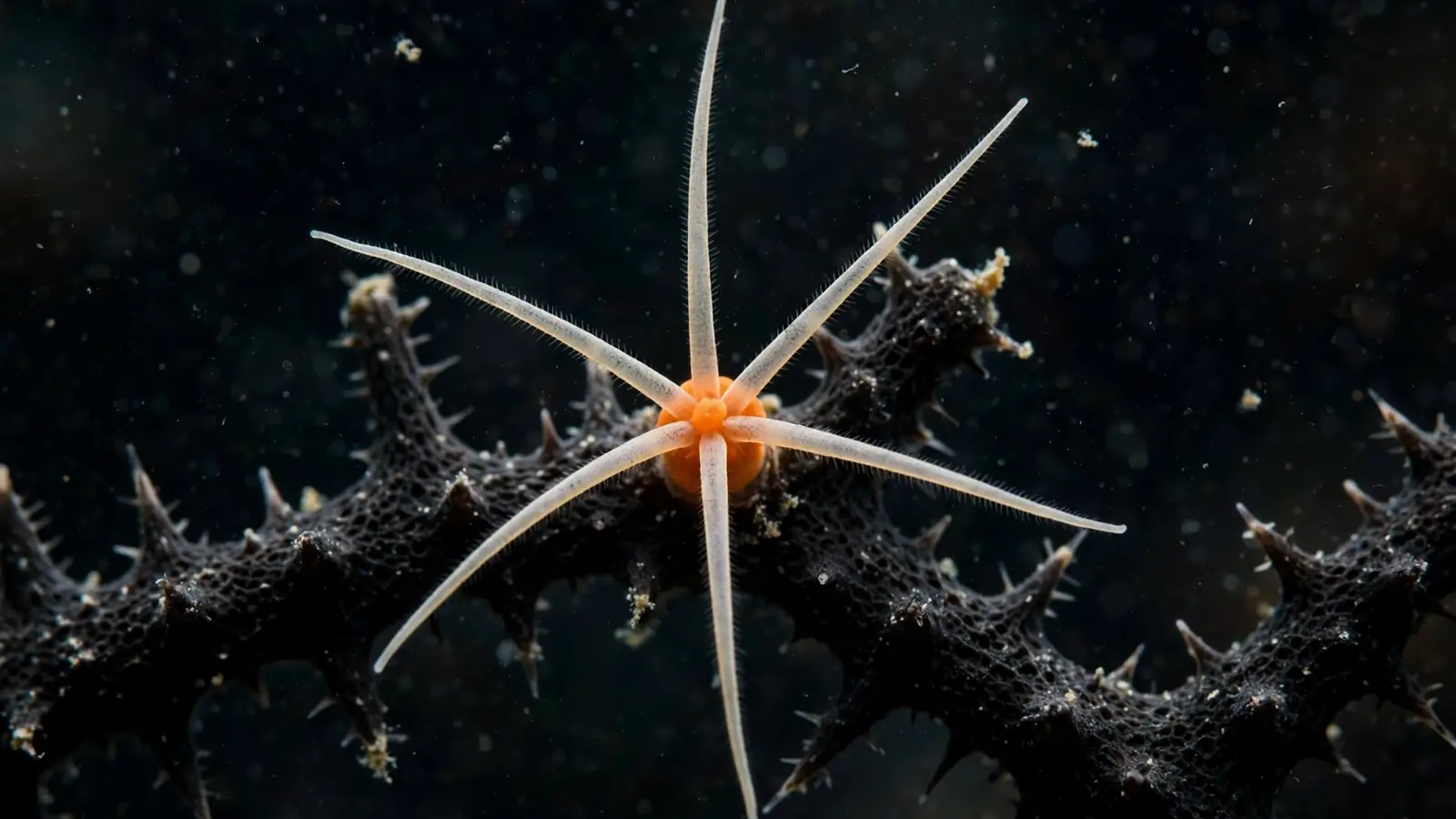
The six tentacles are the mark of a hexacoral, and they are what separate it from the octocorals like precious coral, which has eight. Count the tentacles and the group is settled: six means this group, and six means the animal cannot hide.
Black Coral vs Precious Coral: Two Different Jewels
The two are both jewellery corals, but they are different in every way that matters. Its skeleton is protein and chitin; precious coral’s is calcium carbonate. It lives deep, in every ocean; precious coral lives shallow, in the Mediterranean. It is a hexacoral; precious coral is an octocoral.
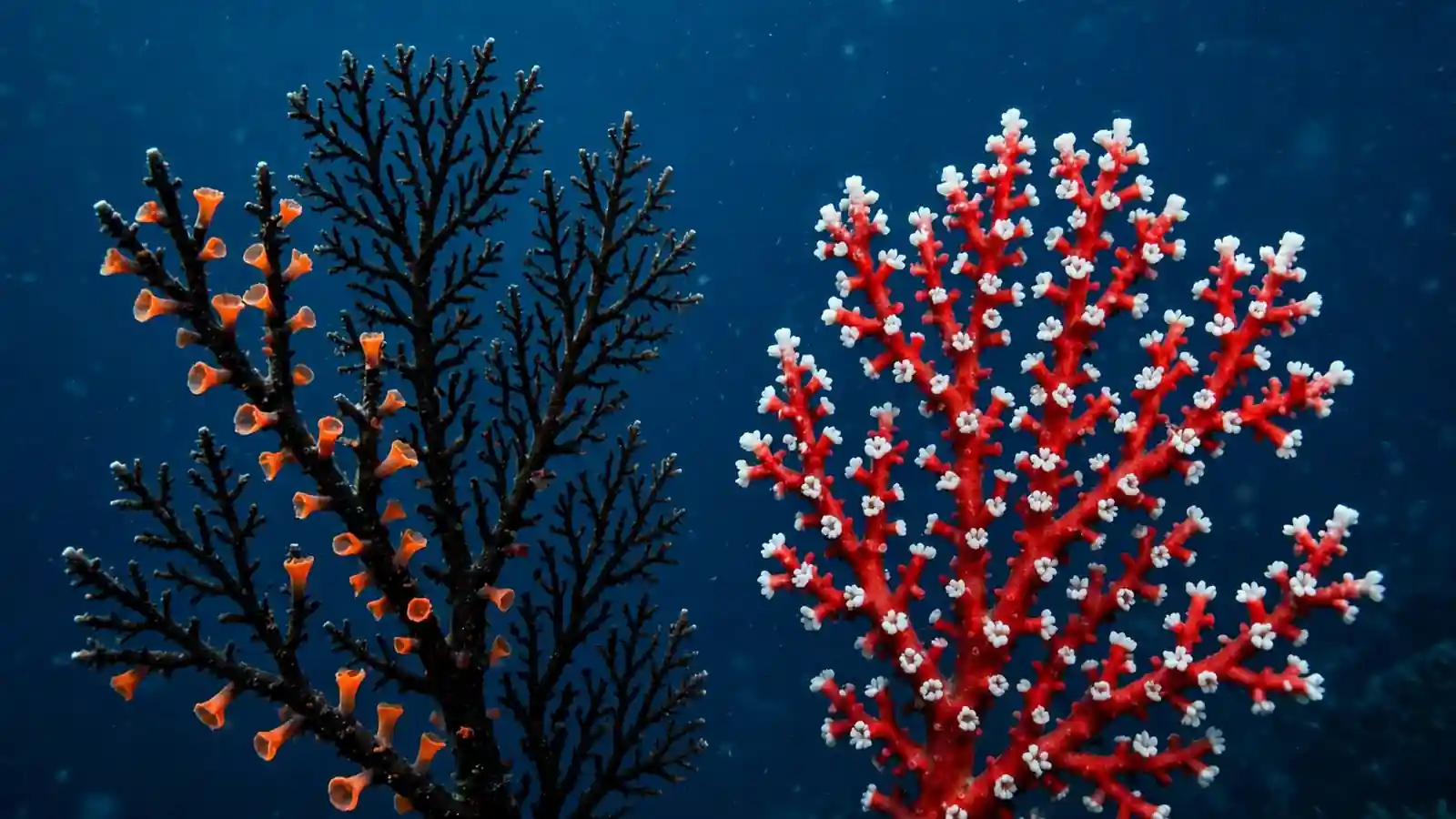
The two are confused because both are polished into beads, but they are not related, they do not live in the same places, and they do not grow the same way. One is a deep-sea protein skeleton; the other is a shallow-water red stone. Two different jewels, two different animals.
Harvest and Protection: Jewellery Under Pressure
It is harvested for jewellery in Hawaii and elsewhere, and the trade is old: the polished black skeleton has been carved into beads and ornaments for centuries. The slow growth makes the trade unsustainable — a colony that took millennia to grow can be harvested in an afternoon.
The maths of the trade never worked. Jewellery wants the thickest, oldest branches — exactly the parts of a colony that took longest to grow and anchor its future. Taking them spends in an hour what the deep spent a thousand years building, and the colony cannot hurry to replace them.
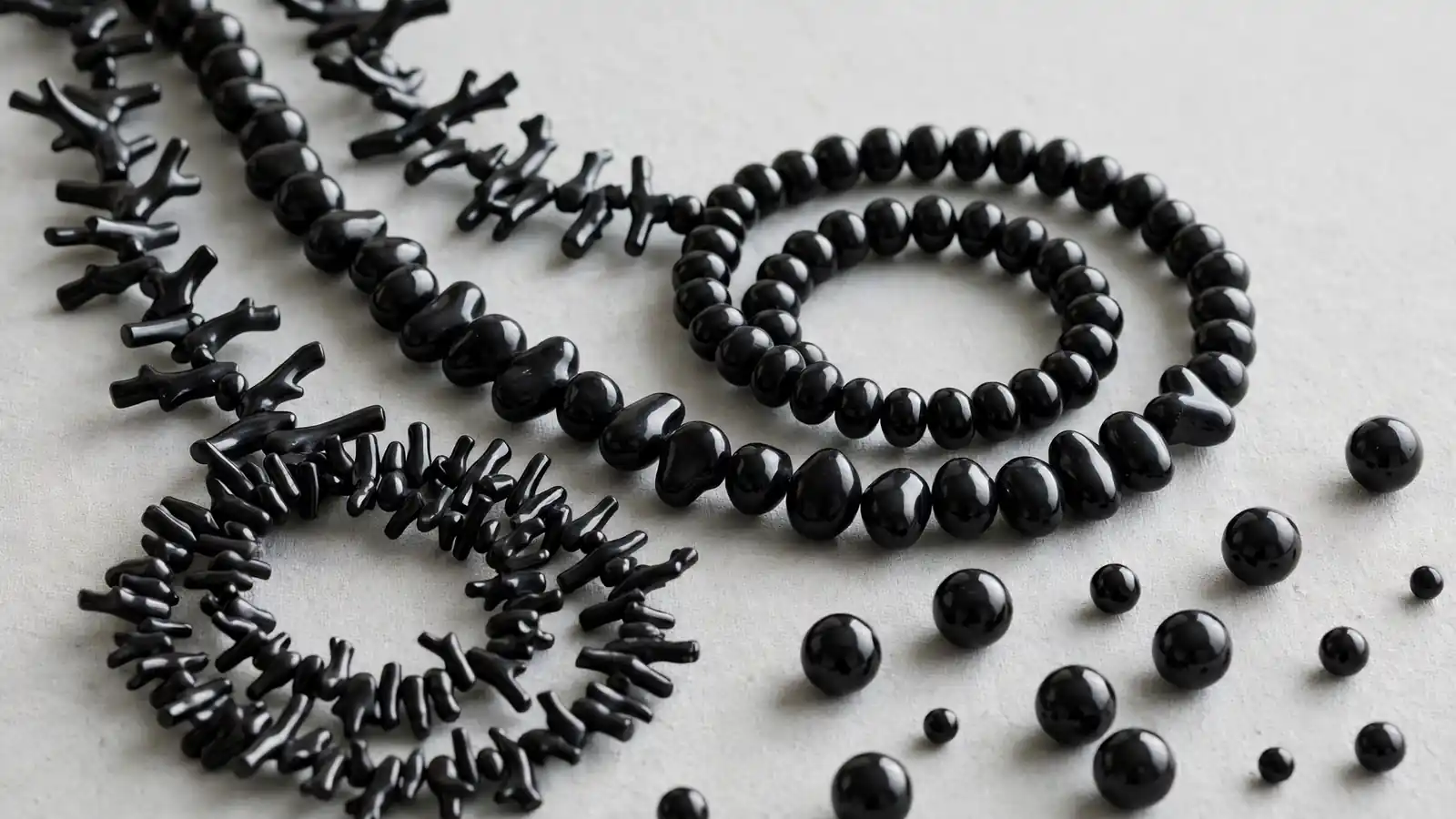
The protection is real: black corals are listed in CITES Appendix II, the international treaty list that controls their trade, and the listing was verified before this guide was written. The listing does not ban the trade, but it controls it — and for an animal that grows at millimetres a year, control is the difference between a fishery and an extinction. For the full coral descriptions, see this guide to Gulf coral descriptions.
Fun Facts
- Some colonies are over 4,000 years old — older than the pyramids.
- Its skeleton is protein and chitin, not stone — it contains no minerals at all.
- The living animal is often brightly coloured; only the bare skeleton is black.
- Its polyps have six tentacles and cannot retract them.
- There are around 280 species in the order Antipatharia.
- Black corals are listed in CITES Appendix II, which controls their trade.
Frequently Asked Questions
What Is Black Coral?
A group of deep-sea corals in the order Antipatharia, also called thorn corals, whose skeletons are made of protein and chitin rather than stone. There are around 280 species in 7 families, living mostly below 50 metres in every ocean.
Why Is It Called Black Coral If It Is Not Black?
The name comes from the skeleton, which is jet-black to golden-brown. The living animal is often brightly coloured — white, orange, yellow or green polyps cover the skeleton and hide the black beneath. Strip the tissue away and the coral is black.
How Old Can Black Coral Get?
Over 4,000 years. Radiocarbon dating in a 2009 study found colonies older than the pyramids, and a colony in the Gulf of Mexico is over 2,000 years old. The slow growth — millimetres a year — is what makes such ages possible.
Where Does Black Coral Grow?
In all oceans, mostly below 50 metres on continental slopes, in cold, dark water. The shallowest colonies live in the fjords of New Zealand, at just four metres down, in dark tannin-stained water that mimics the deep sea.
What Is a Black Coral Skeleton Made Of?
Protein and chitin — the same materials as an insect’s shell — lined with microscopic spines. It contains no minerals at all, which is what separates it from precious coral, whose skeleton is calcium carbonate.
What Is the Difference Between Black Coral and Precious Coral?
Its skeleton is protein and chitin, dark and deep, and it is a hexacoral with six-tentacled polyps. Precious coral’s skeleton is calcium carbonate, red and shallow, and it is an octocoral. Two different groups, two different skeletons, two different jewels.
Is Black Coral Endangered?
It is not listed as endangered as a group, but it is protected: black corals are listed in CITES Appendix II, which controls their international trade. The slow growth makes the jewellery harvest unsustainable without that control, and some local populations are depleted.
Similar Species Worth Exploring
Keep Exploring
Meet the precious coral, the other jewellery coral, then the fire coral, the stinging coral that is not a coral, and browse the whole family in our types of jellyfish hub — then come back to the deep-sea coral that lives millennia, the black coral.