American Lobster
American Lobster: the heaviest crustacean ever weighed
The American lobster carries a crusher and a cutter claw, can live for decades, and holds the record as the heaviest crustacean ever weighed — a 44 lb giant pulled from the waters off Nova Scotia. This guide follows Homarus americanus along the cold rocky Atlantic coast, from its two very different claws to the European cousin it is so often compared with.
By Emily Carter · Reviewed by our vet team · Updated 10 November 2026 · 10 min read
Crusher and cutter clawsRecord 44 lb, the heaviest crustaceanCold rocky Atlantic coast
At a Glance
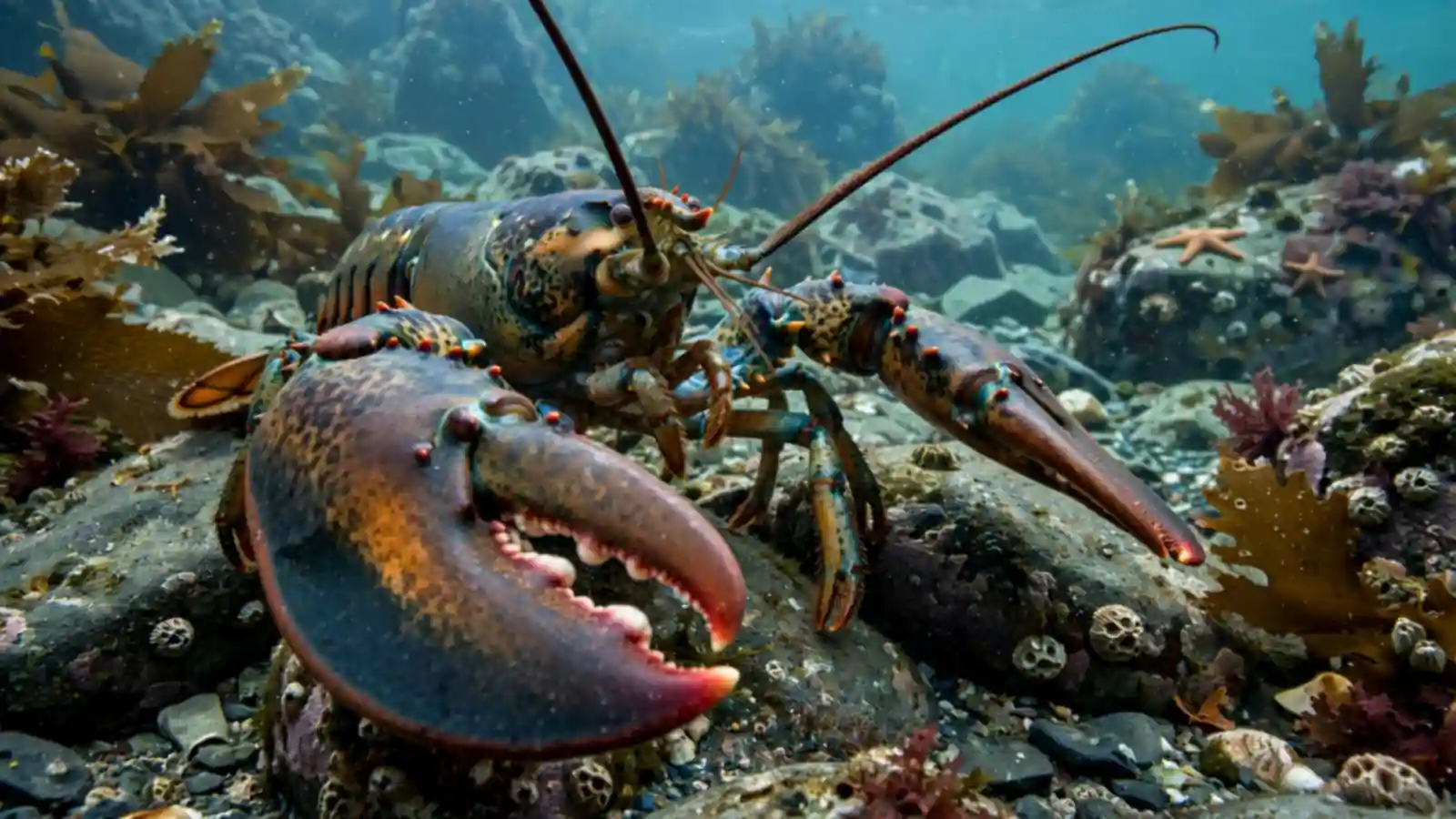
An American lobster looks like the lobster of storybooks, and it is — the big-clawed animal of the cold Atlantic, the one that fills the traps off New England and the Canadian Maritimes. Its two claws are its signature, one a crusher and one a cutter, and they can sit on either side, so a lobster can be left-clawed or right-clawed like a person is left- or right-handed. This is the whole animal, at a glance, before the detail begins.
American Lobster Size: The Heaviest Crustacean on Record
The lobster holds the record as the heaviest crustacean ever weighed. The record animal, caught off Nova Scotia, weighed 44 lb (20.1 kg) and measured about 3.5 feet from claw to tail, a lobster the size of a small dog. Most lobsters are far smaller, but the record shows what the species can reach when it lives long enough.
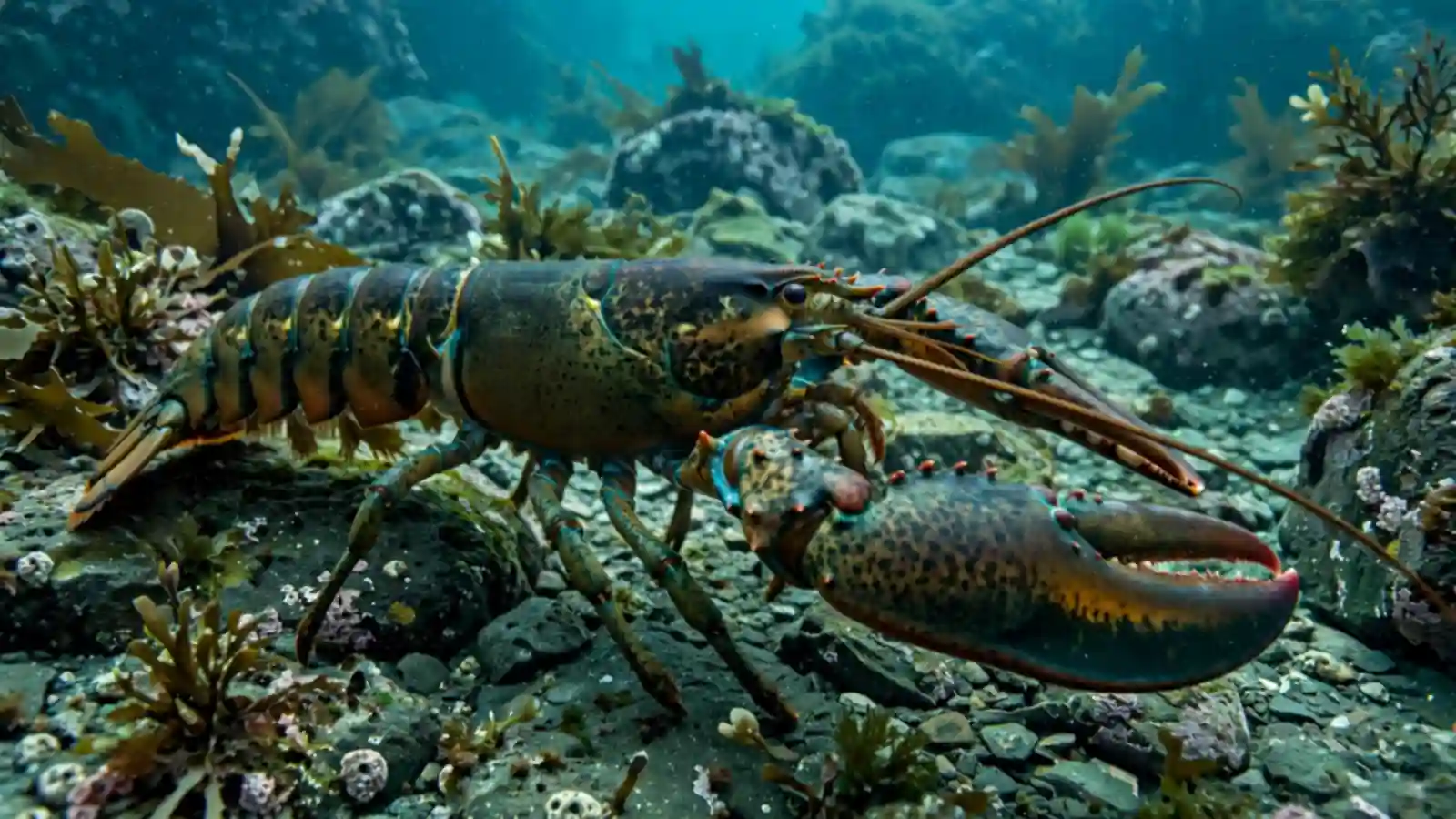
Size comes with age, and the lobster grows slowly, moulting its shell and hardening a new one a little larger each time. A lobster that survives for decades keeps growing, and the biggest animals are the oldest ones, scarred and algae-covered, living in the deepest water where the traps rarely reach.
Crusher and Cutter: The Two Claws Explained
A lobster carries two different claws, and they do two different jobs. The crusher is the big blunt claw, built for breaking shells and cracking crabs, while the cutter is the slimmer claw with a sharp inner edge, built for tearing soft food into pieces. Together they let the lobster handle almost anything it finds on the seabed.
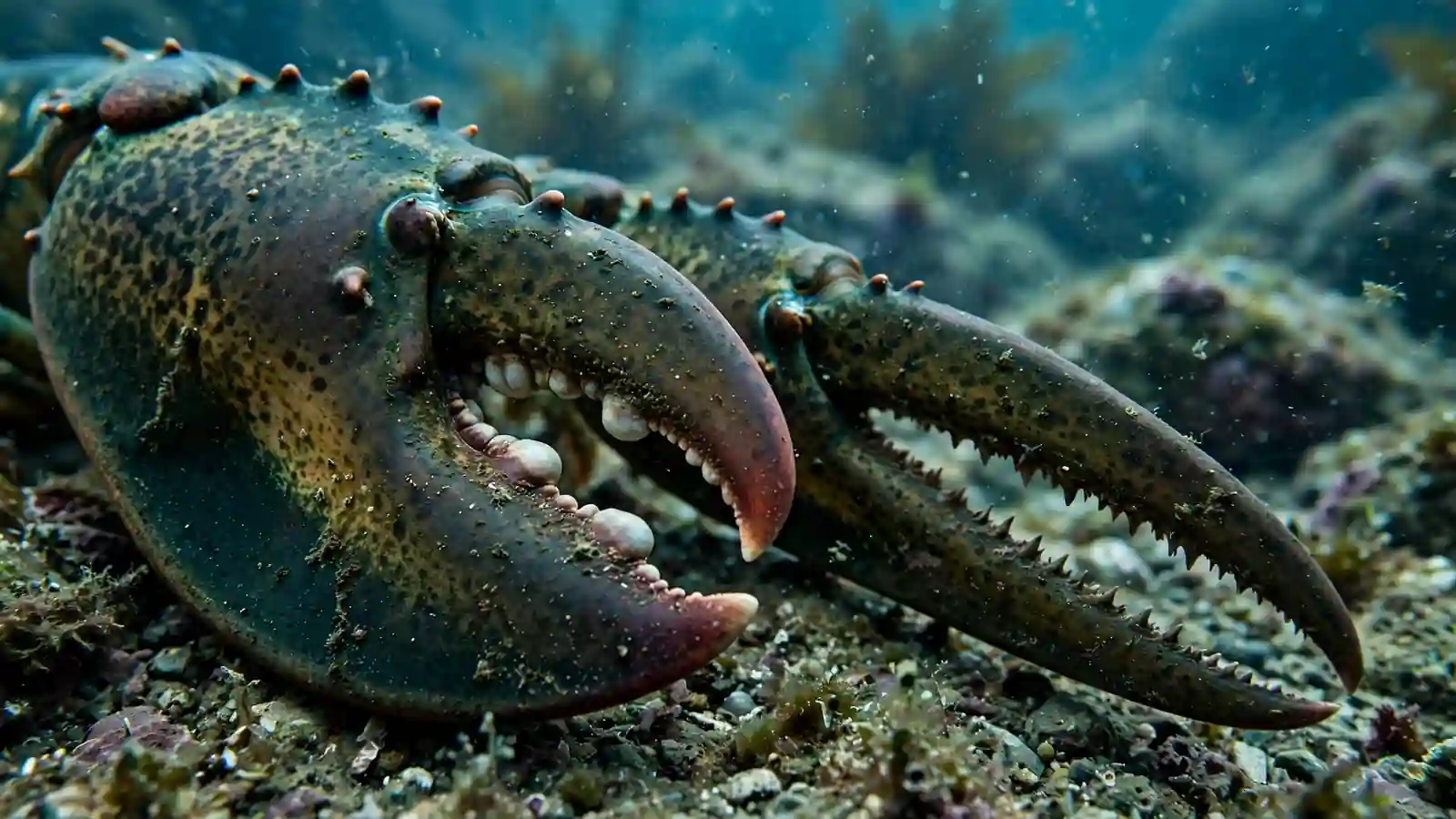
The claws can sit on either side: a lobster may carry its crusher on the left or on the right, and it stays that way for life. Lose a claw and the lobster regrows it, though the replacement starts small and takes several moults to reach full size — and a lobster that loses its crusher may grow the replacement as a cutter instead.
Where They Live: The Cold Rocky Atlantic Coast
The lobster lives along the cold rocky coast of the northwest Atlantic, from Labrador in the north to Cape Hatteras in the south, and it is most abundant off New England and the Canadian Maritimes. It needs cold water and hard ground — rocky ledges, boulder fields and harbour walls, anywhere it can find a crevice to shelter in.
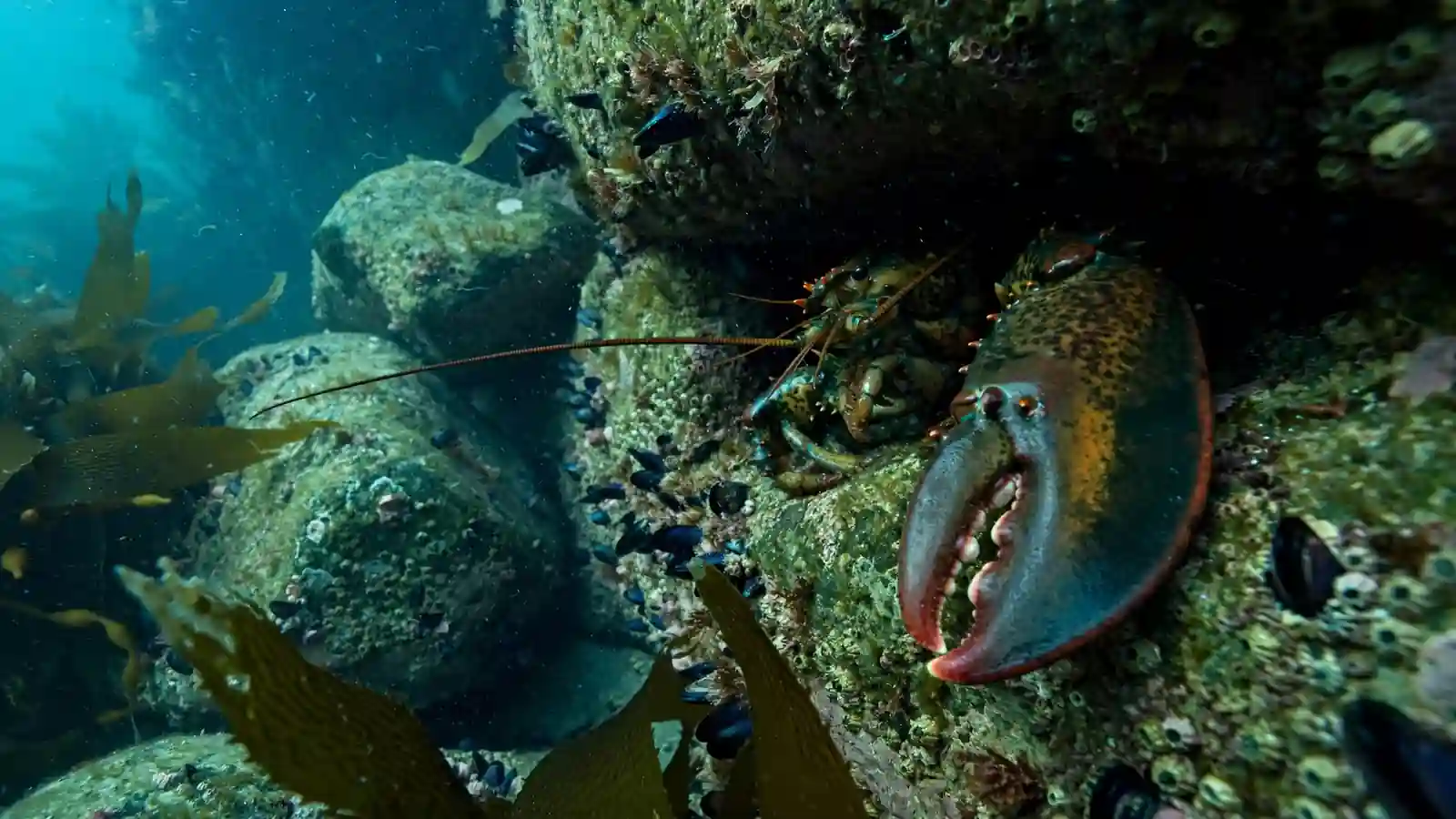
Young lobsters hide in the smallest cracks, under stones and among seaweed, and they move to deeper water as they grow. Adults may live from the shallows down to several hundred metres, and the largest animals are usually found deepest, where the water stays cold and the traps are few.
What Do They Eat? Crabs, Molluscs and Carrion
A lobster eats crabs, molluscs, sea urchins and fish, and it scavenges carrion as well. The crusher claw breaks the shells of crabs and clams, the cutter tears the meat into pieces, and the lobster eats at night, walking the seabed in search of food and returning to its shelter by day.
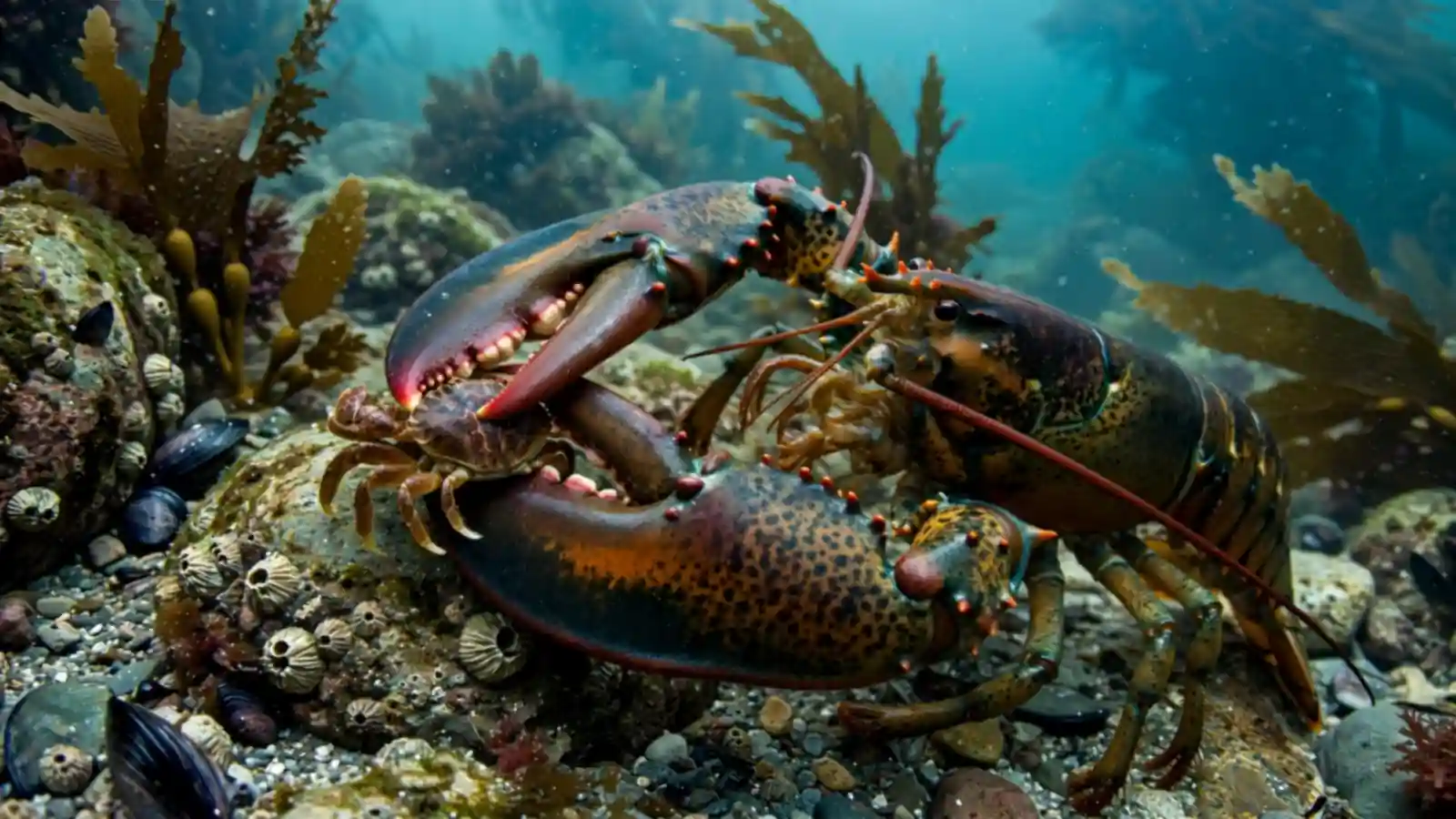
For a wider survey of the species, see this lobster guide. The diet makes the lobster a useful predator on the reef: by eating crabs and urchins it keeps their numbers in check, and by scavenging it clears the seabed of dead animals.
American vs European Lobster: The Famous Pair
The lobster has a famous counterpart, the European lobster, Homarus gammarus, and the two are so alike that they were once thought to be one species. The lobster is the bigger of the two, with larger claws and a colour that runs bluish-green to brown, while the European lobster is darker blue and slightly smaller.
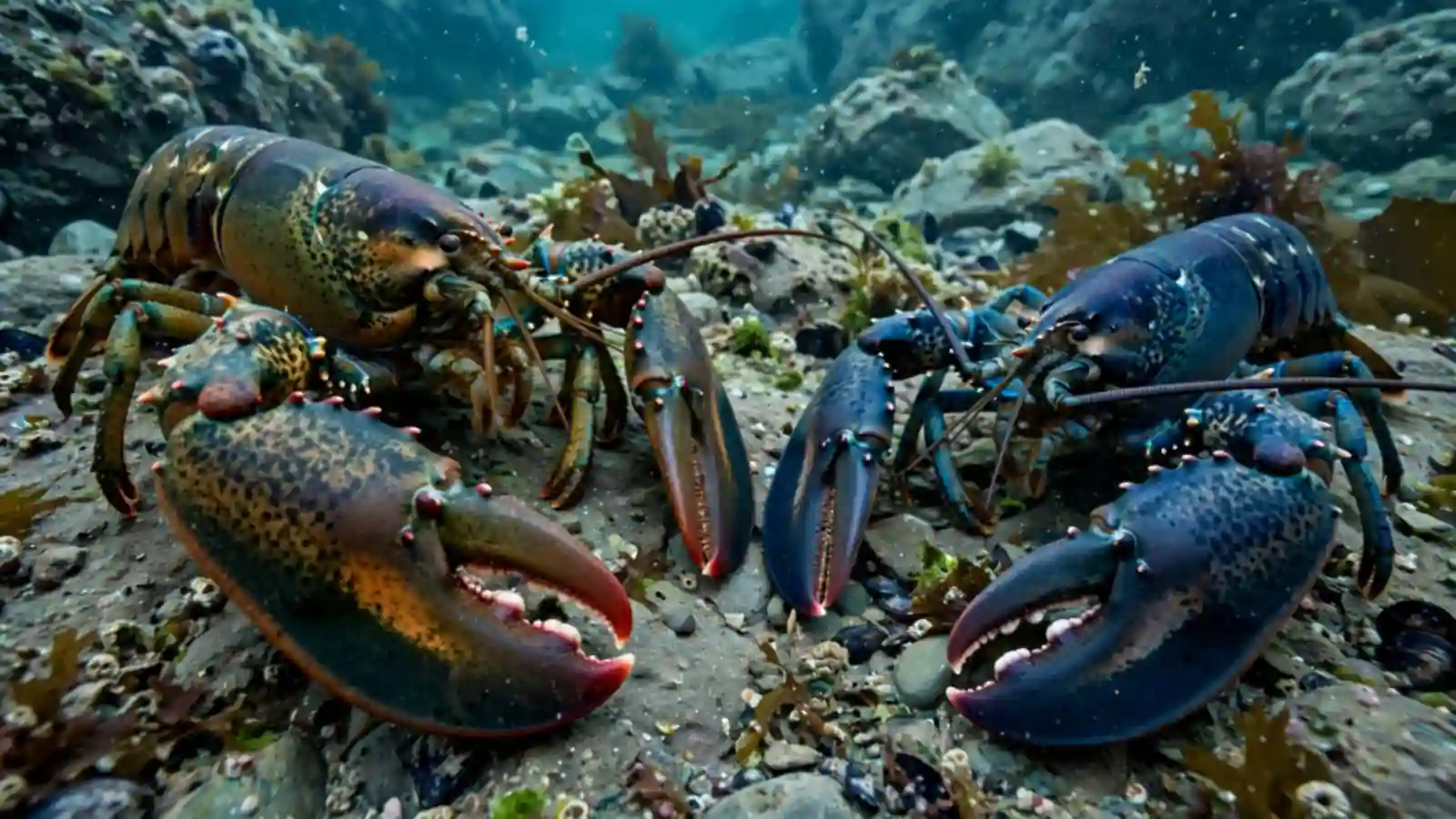
The two lobsters live on opposite sides of the Atlantic and never meet in the wild, but they are so closely related that they can interbreed in captivity. The comparison is the classic way to learn both animals at once: same two claws, same cold-water life, different oceans, and the lobster the heavier of the pair.
How Long Do They Live? Lifespan and Ageing
A lobster can live for a very long time, and the honest answer is a range, not a number. Common sources give 50 to 100 years, some give 100 to 140 years, and the truth is that exact ageing is impossible — lobsters have no growth rings to count, so nobody can say how old a big lobster really is.

What is certain is that the biggest lobsters are the oldest, and that they keep growing for as long as they live. A lobster does not stop growing when it reaches adulthood the way a mammal does; it moults, grows a little, and moults again, and the only thing that stops it is a predator, a disease, or a trap.
Conservation: A Managed Fishery
The lobster supports one of the largest crustacean fisheries in the world, and it is managed with minimum sizes, protected egg-bearing females and trap limits that keep the catch within the stock. The rules work because the lobster is widespread and slow-growing, and a fishery that takes only the middle-sized animals leaves the breeders to carry on.
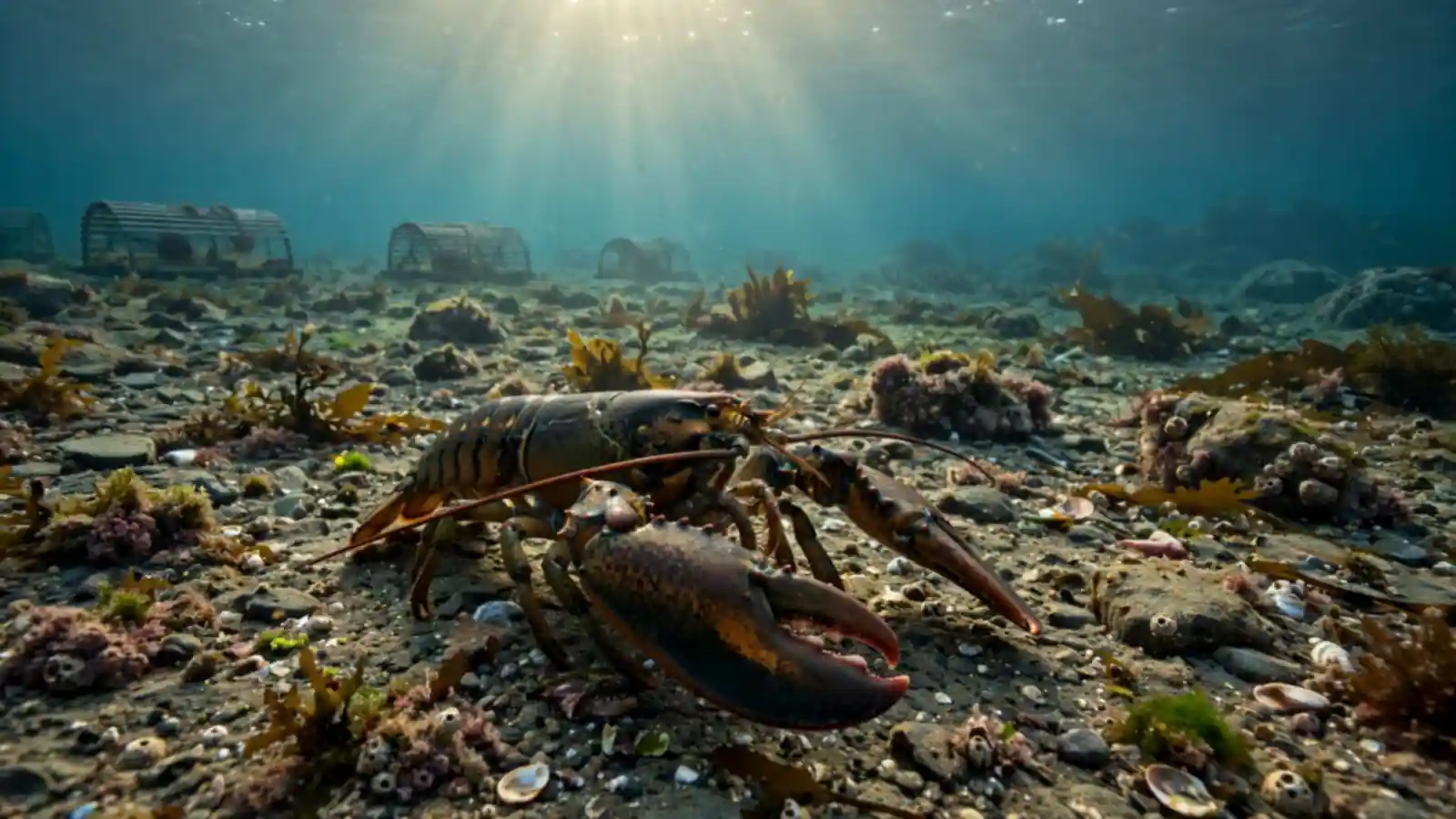
The lobster is not considered endangered, but the fishery is watched closely, and the warming of the Atlantic is the question that matters most now. As southern waters warm, lobsters are moving north, and the fishery follows them — a slow shift that the next decades will measure in traps and landings.
Fun Facts
- The record lobster weighed 44 lb — the heaviest crustacean ever weighed.
- A lobster has a crusher claw and a cutter claw, and either can be on the left or the right.
- Lobsters keep growing for as long as they live, moulting into a larger shell each time.
- Nobody can tell a lobster’s exact age — it has no growth rings to count.
- The European lobster is the lobster’s closest relative, across the Atlantic.
- A lobster that loses a claw regrows it, though the replacement takes several moults to catch up.
Frequently Asked Questions
How Big Do American Lobsters Get?
The record American lobster weighed 44 lb (20.1 kg) and measured about 3.5 feet, caught off Nova Scotia. Most lobsters are far smaller, but the species keeps growing for as long as it lives.
How Long Do American Lobsters Live?
Estimates range from 50 to 100 years, and some sources give 100 to 140 years. Exact ageing is impossible, because lobsters have no growth rings, so the honest answer is 50 to 100 years, possibly more.
What Is the Difference Between an American Lobster and a European Lobster?
The American lobster is bigger, with larger claws and a colour that runs bluish-green to brown. The European lobster is darker blue and slightly smaller. They live on opposite sides of the Atlantic and never meet in the wild.
Why Do Lobsters Have One Big Claw and One Small Claw?
The two claws do different jobs. The big crusher claw breaks shells and cracks crabs, while the slimmer cutter claw tears soft food into pieces. A lobster may carry its crusher on the left or on the right.
Where Do American Lobsters Live?
The American lobster lives along the cold rocky coast of the northwest Atlantic, from Labrador to Cape Hatteras, and is most abundant off New England and the Canadian Maritimes. It needs cold water and hard ground with crevices to shelter in.
What Do American Lobsters Eat?
An American lobster eats crabs, molluscs, sea urchins and fish, and it scavenges carrion as well. It feeds at night, using its crusher claw to break shells and its cutter claw to tear the meat.
Are American Lobsters Endangered?
No. The American lobster is not considered endangered. It supports a large managed fishery, with minimum sizes, protected egg-bearing females and trap limits, though the warming Atlantic is shifting its range north.
Similar Species Worth Exploring
Keep Exploring
Keep exploring the crustaceans: meet the spiny lobster, the clawless cousin with the backwards tail flip, or browse the whole family in our guide to the types of crustaceans. Then come back to the cold rocky coast, home of the American lobster.