Black Browed Albatross
Black Browed Albatross: The World’s Most Common Albatross
The black browed albatross is the world’s most common albatross — over 70% of the population nests in the Falkland Islands — a 70-year seabird with a 2.4 metre wingspan and a recovery story no other albatross can match.
By Emily Carter · Reviewed by our vet team · Updated 10 November 2026 · 9 min read
Most common albatross70% nest in the FalklandsLives 70+ years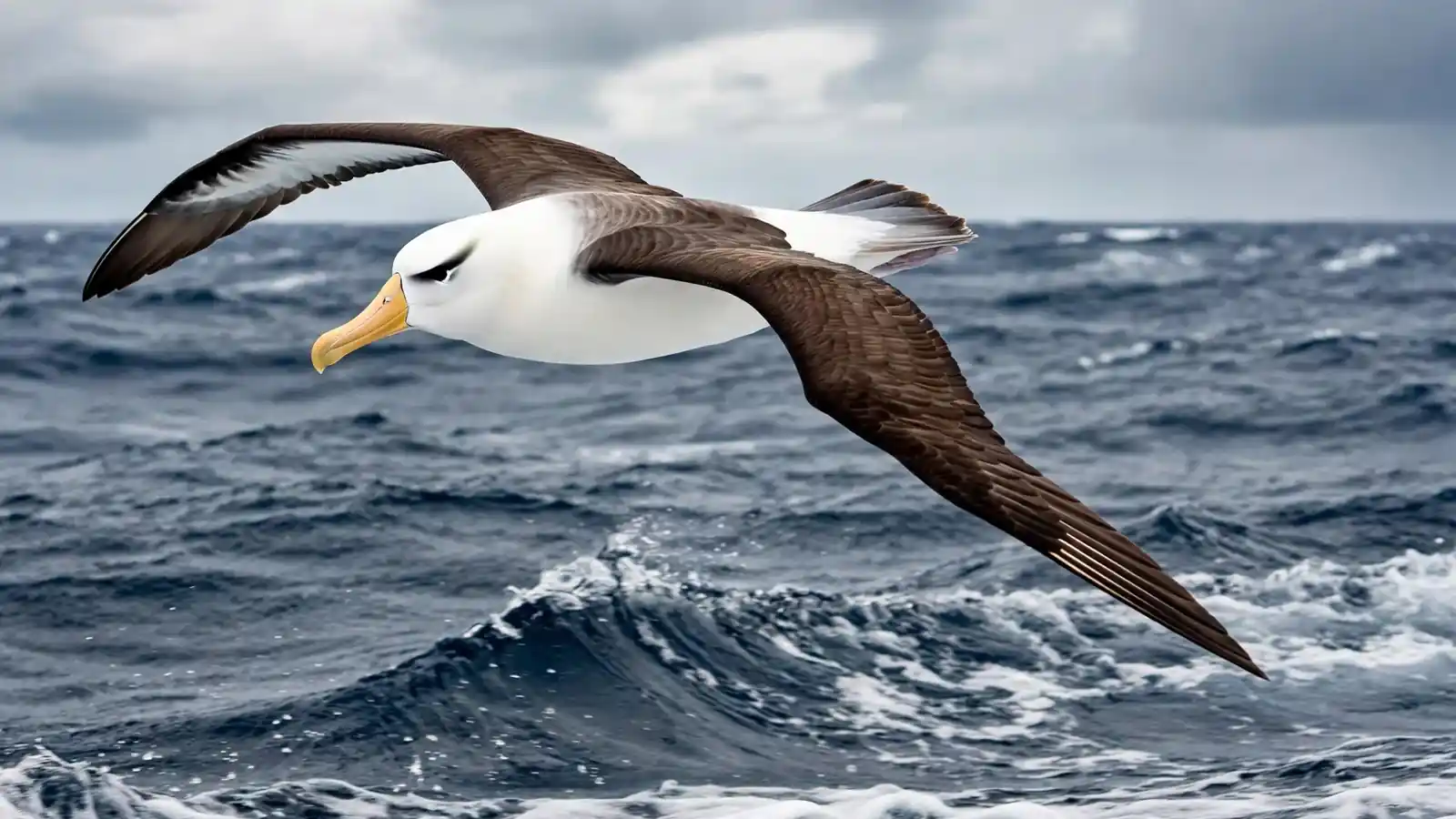
At a Glance
The black browed albatross is a mollymawk — a small albatross — and the most common albatross in the world. Over 70% of its population nests in the Falkland Islands, it lives for 70 years or more, and it has come back from Endangered to Least Concern.
Black Browed Albatross Size: A 2.4 Metre Wingspan
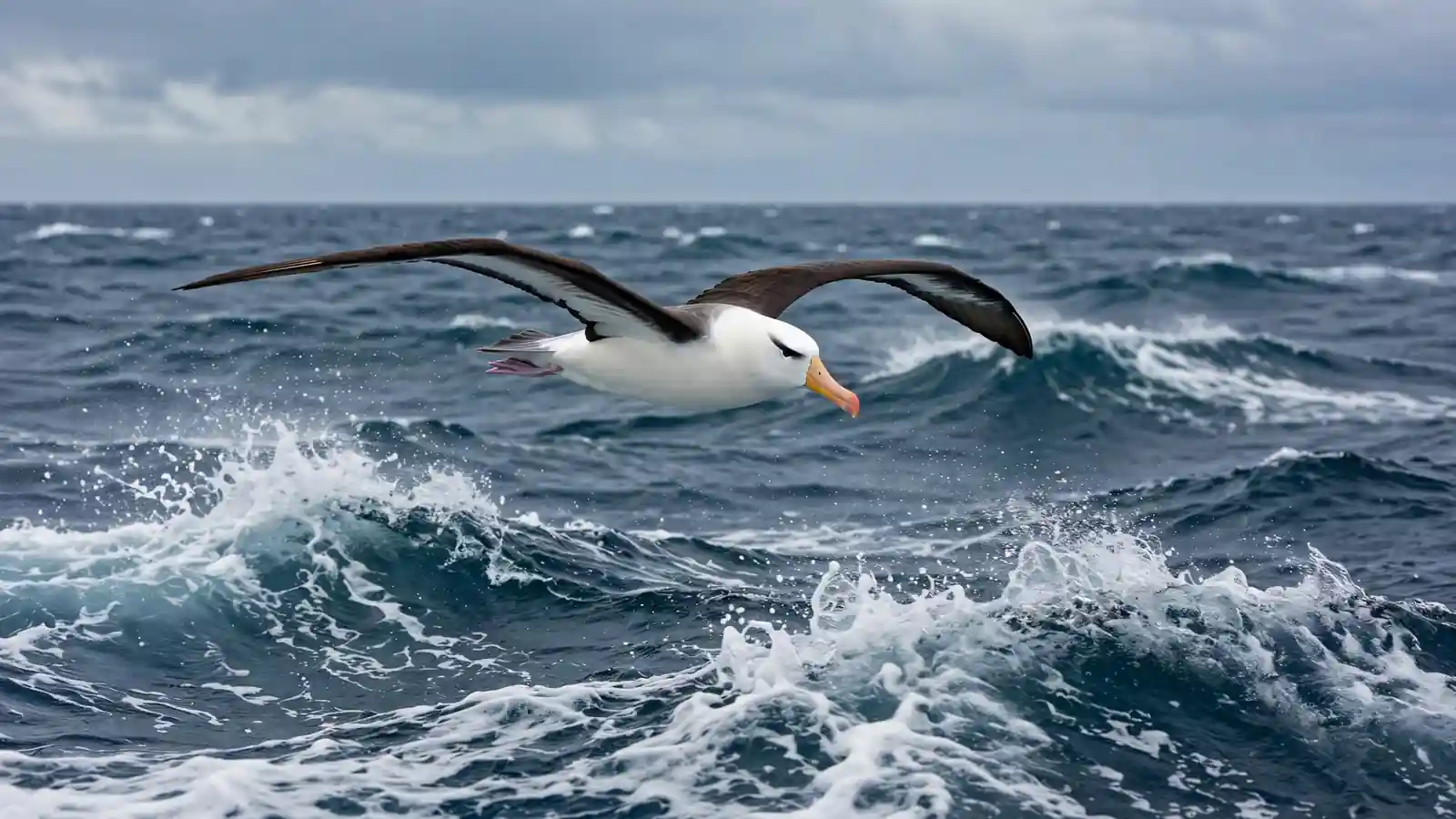
It measures 80–95 cm long, with a wingspan of 200–240 cm and a weight of 2.9–4.7 kg. The wingspan is the number that matters: 2.4 metres of long, narrow wing, built to lock in place and ride the wind for hours without a single flap.
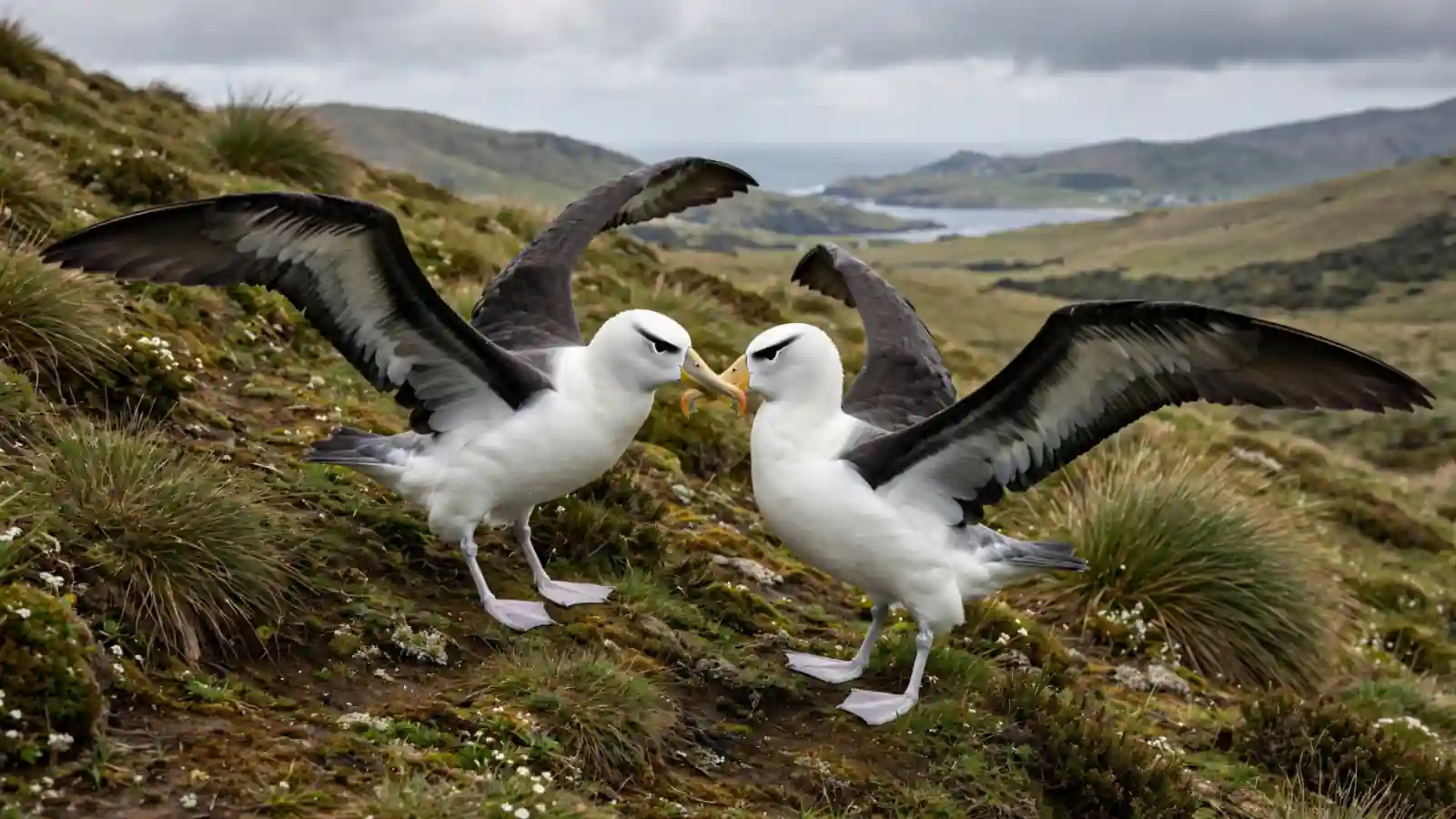
The bird is a mollymawk — a small albatross, by albatross standards — but small is relative when your wings are wider than a tall man. The wings are white with black trailing edges, the body is white, and the head carries the dark smudge that gives the bird its name.
The Black Brow: What the Name Describes
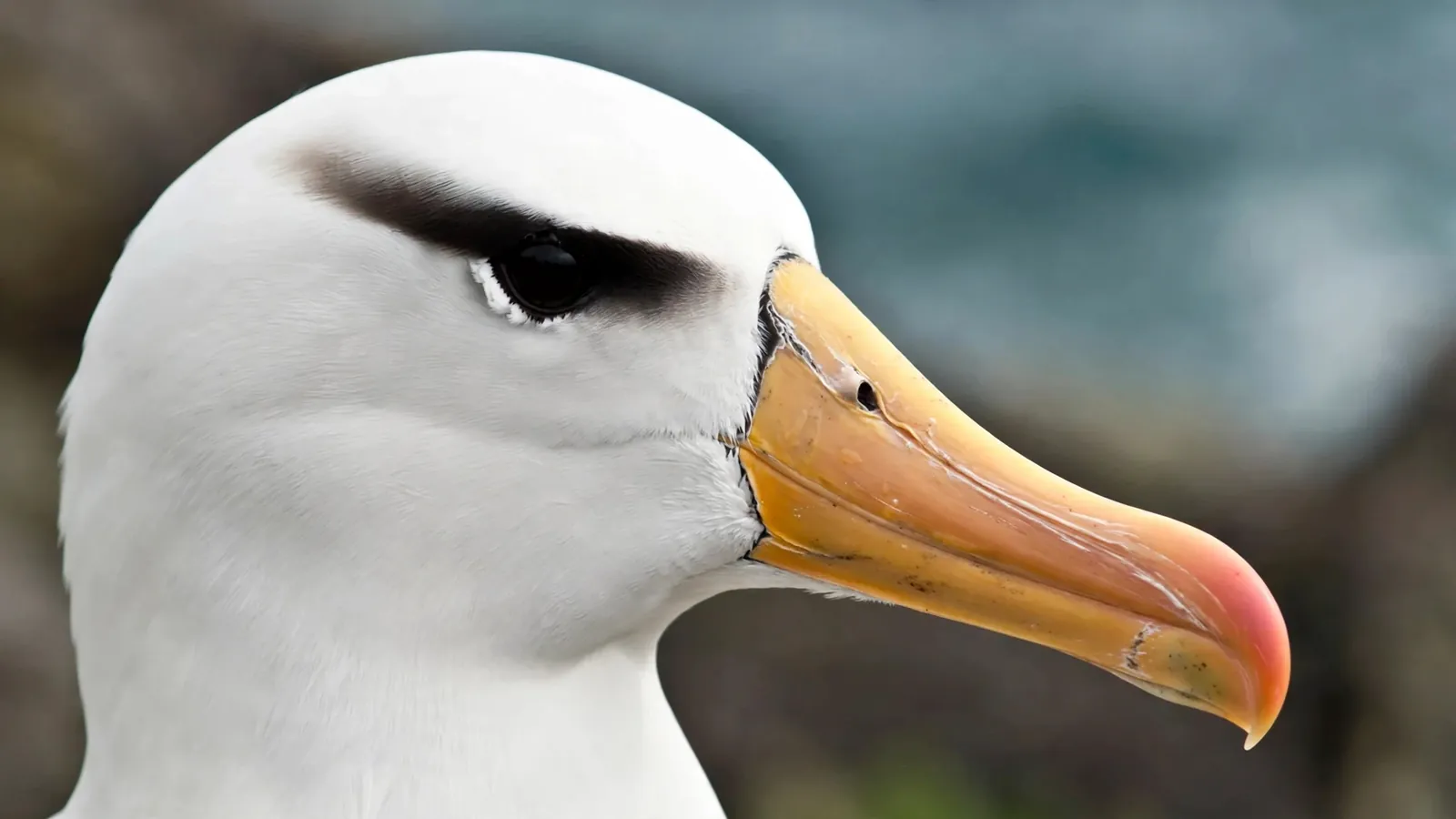
The black brow is a dark smudge above the eye — not a raised brow, not a stripe, but a smear of dark feathers that looks like an eyebrow drawn on with a thumb. It is the bird’s signature, and it is how you tell it from every other mollymawk at sea.
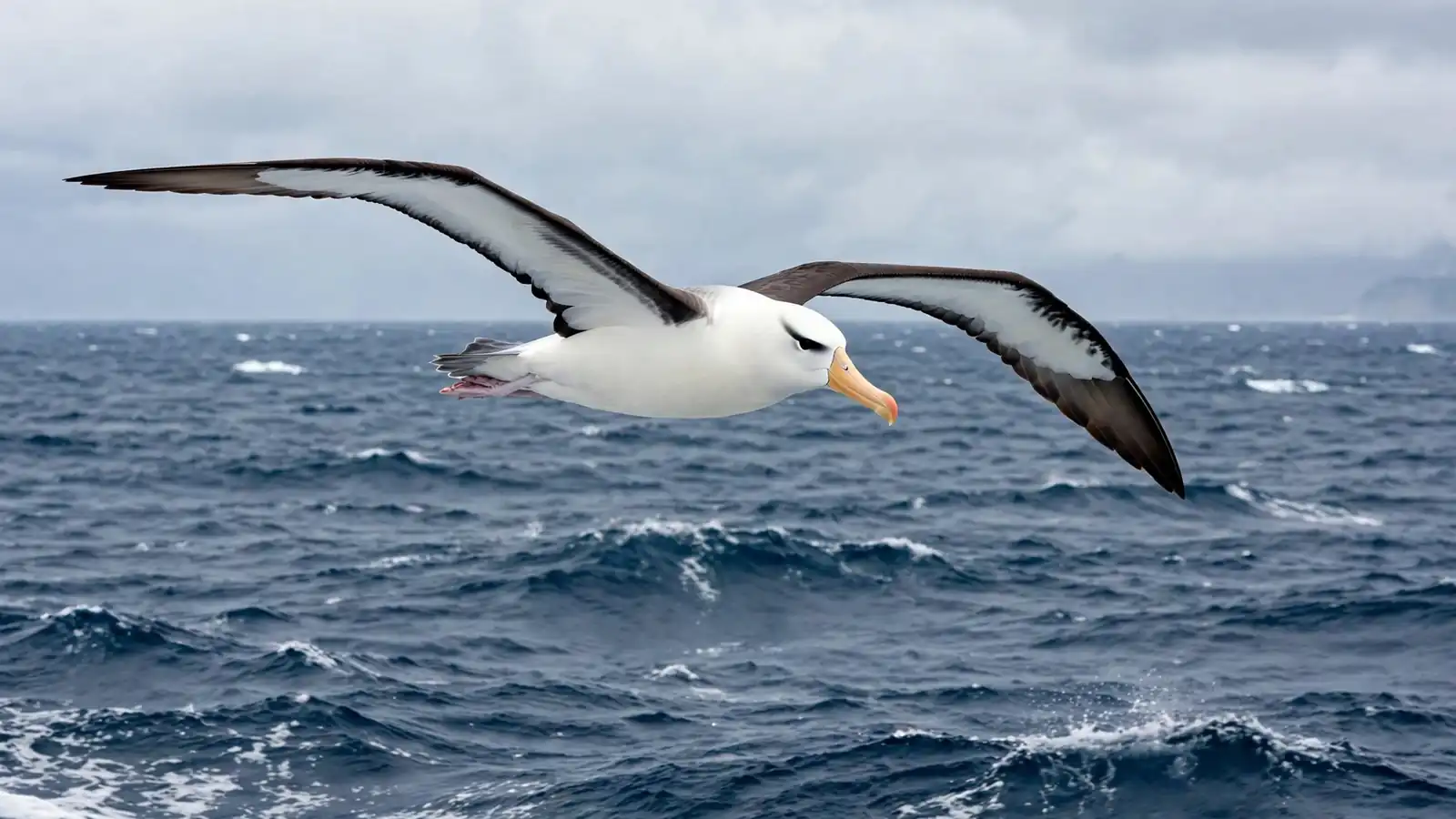
The bill is the other clue: yellow-orange with a pink tip, long and hooked, and bright against the white head. Together the brow and the bill make the albatross one of the easiest albatrosses to identify — which is fortunate, because it is also the one you are most likely to see.
Where Black Browed Albatrosses Nest: The Falklands Stronghold
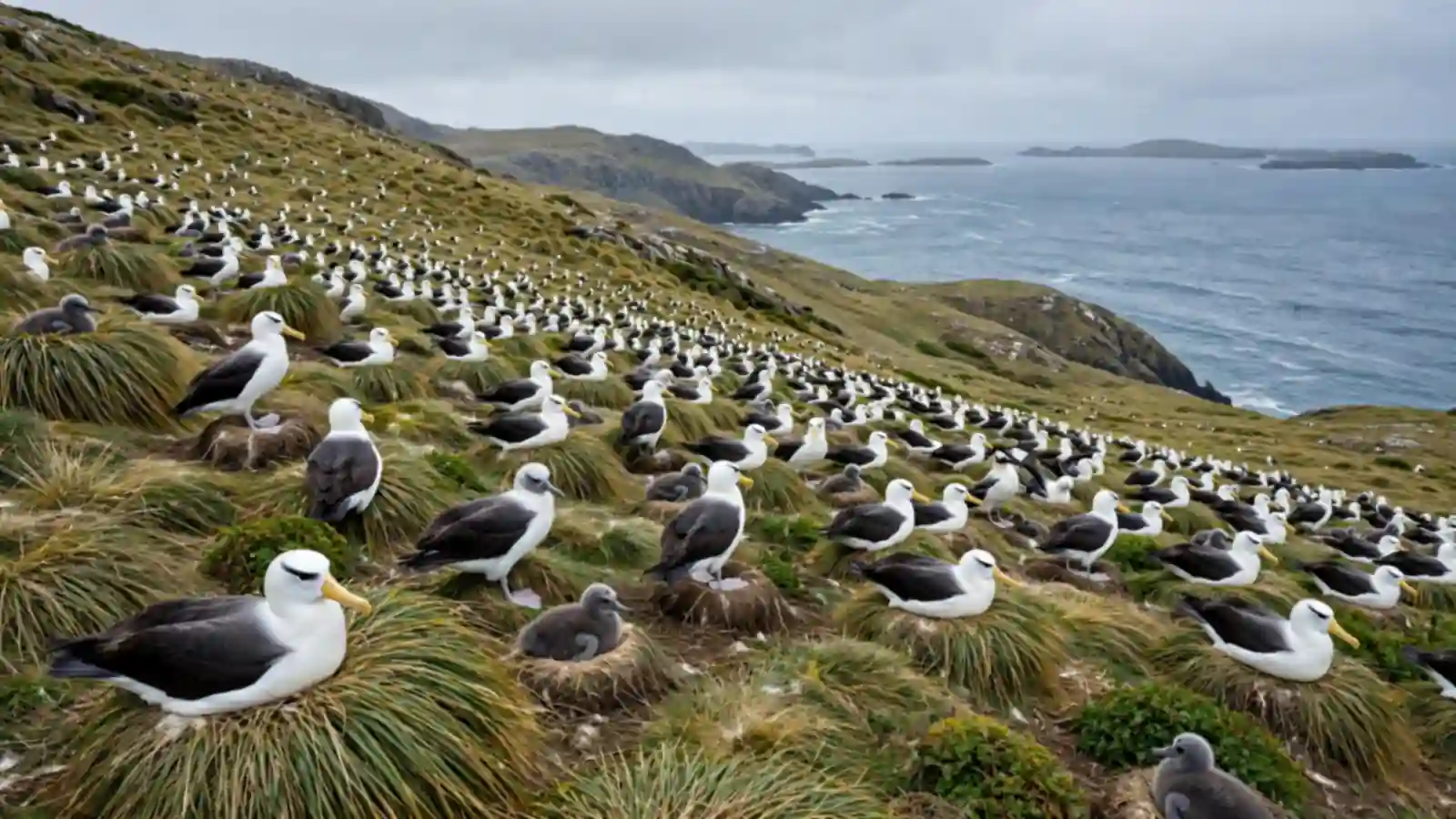
Black browed albatrosses nest mostly in the Falkland Islands, where over 70% of the world population breeds on the grassy slopes above the sea. The colonies are vast — hundreds of thousands of birds, each pair on its own mud nest, each nest a small tower of mud and grass.
The rest of the population is scattered across the southern oceans: South Georgia, Kerguelen, the Crozet Islands and a handful of other specks of land. But the Falklands are the stronghold, and the bird’s future is tied to those islands more than to any other place on Earth. The colonies return to the same nesting sites year after year, a fidelity that makes the birds easy to count — and hard to move if the islands change. For the full species account, see the albatross guide from a UK bird charity.
What Do Black Browed Albatrosses Eat? Squid, Fish and Krill
Black browed albatrosses eat squid, fish and krill, caught at the surface or just below it. They are surface feeders, not divers: they sit on the water and seize prey with their bills, or snatch it in flight, and they follow fishing boats for the offal thrown overboard.
The diet is the reason the bird follows ships, and the reason it has suffered from longline fishing: a bird that feeds at the surface behind a boat is a bird that can swallow a baited hook. The Falklands colonies are healthier than most because the local fishery is better managed — but the sea is full of hooks, and the albatross is always hungry.
A 70-Year Life: The Long-Lived Albatross
It lives for 70 years or more, and that long life is the other half of its story. A bird that lives 70 years does not need to breed every year — it can afford to raise one chick at a time, slowly, and to skip a season when the food is short.
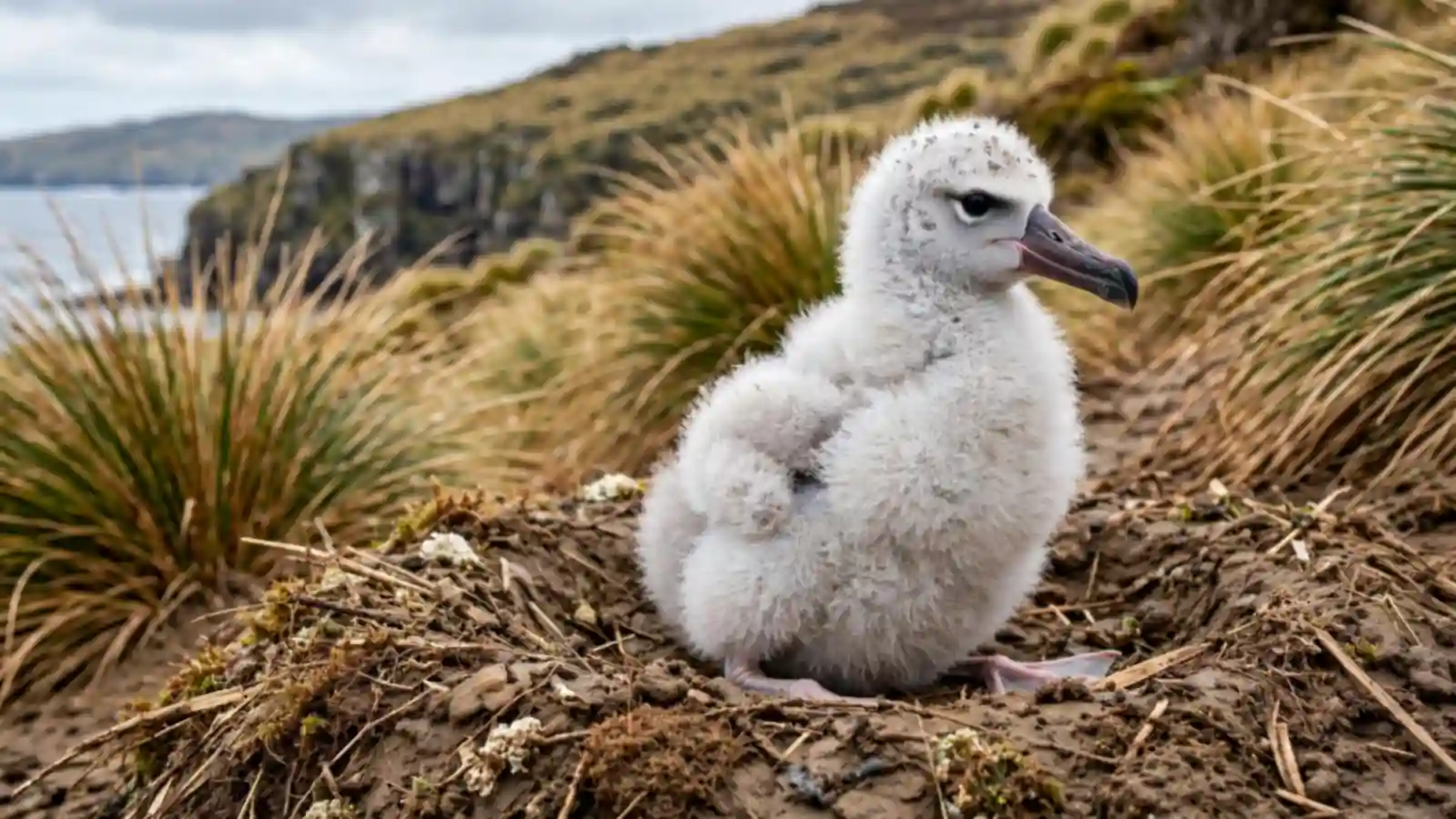
The cost of a long life is a slow recovery: when adults die, they are not replaced quickly, and a colony that loses its breeders takes decades to rebuild. The 70-year lifespan is a strength in a stable ocean and a weakness in a changing one.
From Endangered to Least Concern: The Recovery
It was listed as Endangered until 2013, and its recovery to Least Concern in 2018, as assessed by BirdLife International, is one of the few good-news stories in seabird conservation. The recovery was not luck: it was better fisheries management around the Falklands, fewer hooks, and colonies that were left alone to breed.
The status is Least Concern, not safe. One ranking source still lists the bird as Near Threatened, but that is outdated — the authoritative status is IUCN Least Concern (2018). The bird is also listed as Vulnerable under Australia’s EPBC Act, but that is a regional listing, not the global status. The recovery is real, and it is also reversible.
Conservation: Least Concern (2018), Still Watched
It is listed as Least Concern (2018) by the IUCN, with a population of around 700,000 pairs — about 1.4 million mature individuals. The numbers are the largest of any albatross, and the trend, for once, is stable rather than falling.
Stable is not the same as secure. The bird’s future depends on the Falklands staying well managed, on longline fishing staying controlled, and on the southern ocean staying cold and rich enough to feed a million albatrosses. The recovery proves that conservation works — and that it has to keep working.
Fun Facts
- It is the world’s most common albatross.
- Over 70% of the population nests in the Falkland Islands.
- It lives for 70 years or more.
- Its wingspan reaches 2.4 metres — wider than a tall man.
- It was Endangered until 2013 and is Least Concern since 2018.
- The “brow” is a dark smudge above the eye, not a raised eyebrow.
Frequently Asked Questions
What Is a Black Browed Albatross?
A small albatross — a mollymawk — Thalassarche melanophris, and the most common albatross in the world. It has a white body, long narrow wings with black edges, a dark smudge above the eye and a yellow-orange bill, and it lives for 70 years or more.
Where Do Black Browed Albatrosses Nest?
Mostly in the Falkland Islands, where over 70% of the world population breeds on grassy slopes above the sea. The rest nest on South Georgia, Kerguelen, the Crozet Islands and a handful of other southern ocean islands.
How Big Is a Black Browed Albatross?
It measures 80–95 cm long, with a wingspan of 200–240 cm and a weight of 2.9–4.7 kg. The 2.4 metre wingspan is the key figure — long, narrow wings built to lock in place and ride the wind for hours.
How Long Do Black Browed Albatrosses Live?
For 70 years or more. A bird that lives that long raises one chick at a time, slowly, and can skip a breeding season when food is short. The cost is a slow recovery: lost breeders take decades to replace.
What Do Black Browed Albatrosses Eat?
Squid, fish and krill, caught at the surface or just below it. They sit on the water and seize prey with their bills, snatch it in flight, and follow fishing boats for offal — which is also why they are vulnerable to longline hooks.
Why Is It Called a Black Browed Albatross?
Because of the dark smudge above its eye — a smear of dark feathers that looks like an eyebrow drawn on with a thumb. Together with the yellow-orange bill, it is the bird’s signature and the easiest way to identify it at sea.
Are Black Browed Albatrosses Endangered?
No — they are listed as Least Concern (2018) by the IUCN, after being Endangered until 2013. The recovery came from better fisheries management around the Falklands. One ranking source still lists Near Threatened, but that is outdated; the bird is also listed as Vulnerable under Australia’s EPBC Act, which is a regional listing only.
Similar Species Worth Exploring
Keep Exploring
Meet the northern gannet, another great ocean glider, then the sooty shearwater, the dark migrant of the same southern seas, and browse the whole family in our types of seabirds hub — then come back to the world’s most common albatross, the black browed albatross.