Cownose Ray Facts: Migrations, Schools and Sting Guide
Cownose Ray: The Schooling Ray That Migrates in Thousands
The cownose ray migrates in schools of up to 10,000 along the Atlantic coast, a Vulnerable ray whose sting is no worse than a bee sting.
By Emily Carter · Reviewed by our vet team · Updated 10 November 2026 · 7 min read
Schools of 10,000Migrates 1,600 kmVulnerable (2019)
At a Glance
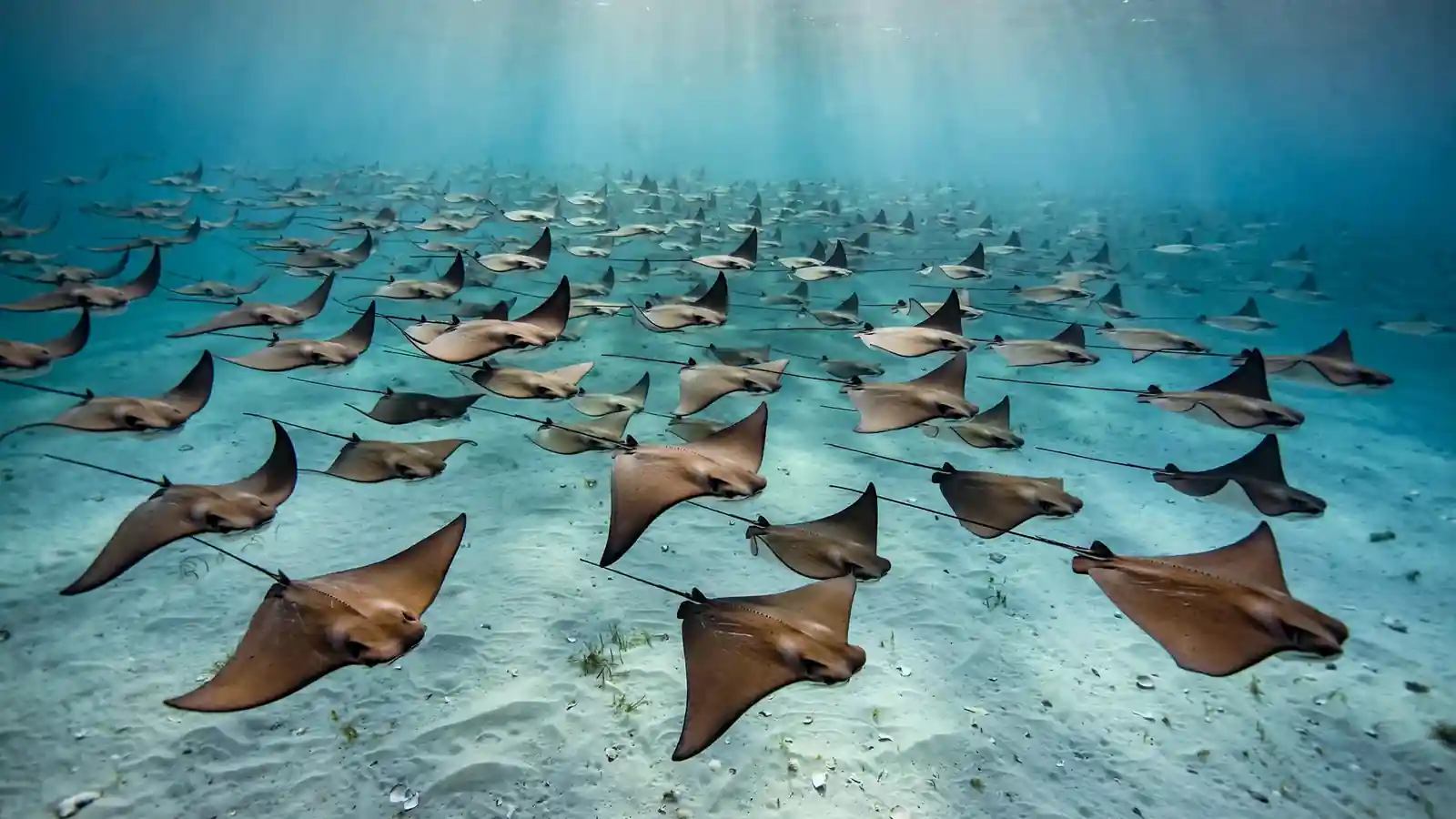
The cownose ray is the ray that travels in thousands. Every spring, schools of up to 10,000 cownose rays sweep up the Atlantic coast to Chesapeake Bay, where they mate and give birth — a migration of up to 1,600 kilometres that turns the bay into a ray nursery. It is also a ray blamed unfairly for oyster declines, and a ray whose sting is no worse than a bee sting. This guide covers the schools, the migration, and the truth about the oysters.
Cownose Ray Size: A Common 1.1-Metre Disc
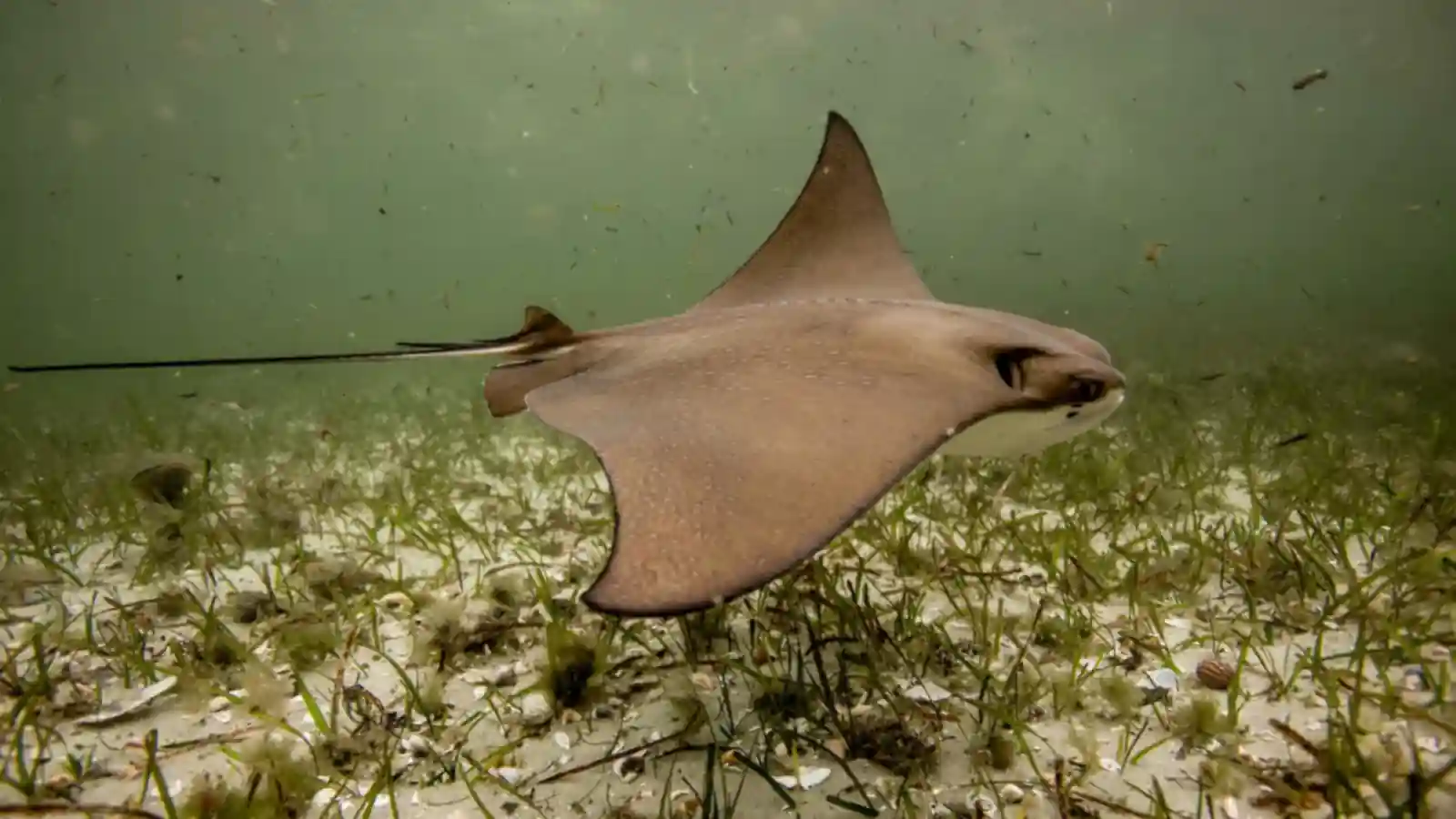
Cownose rays are commonly about 1.1 metres across the disc — the flat, kite-shaped body that gives the ray its wingspan. No verified hard maximum for the species exists in the research, so no single maximum figure is given here; 1.1 metres is the reliable, commonly reported size.
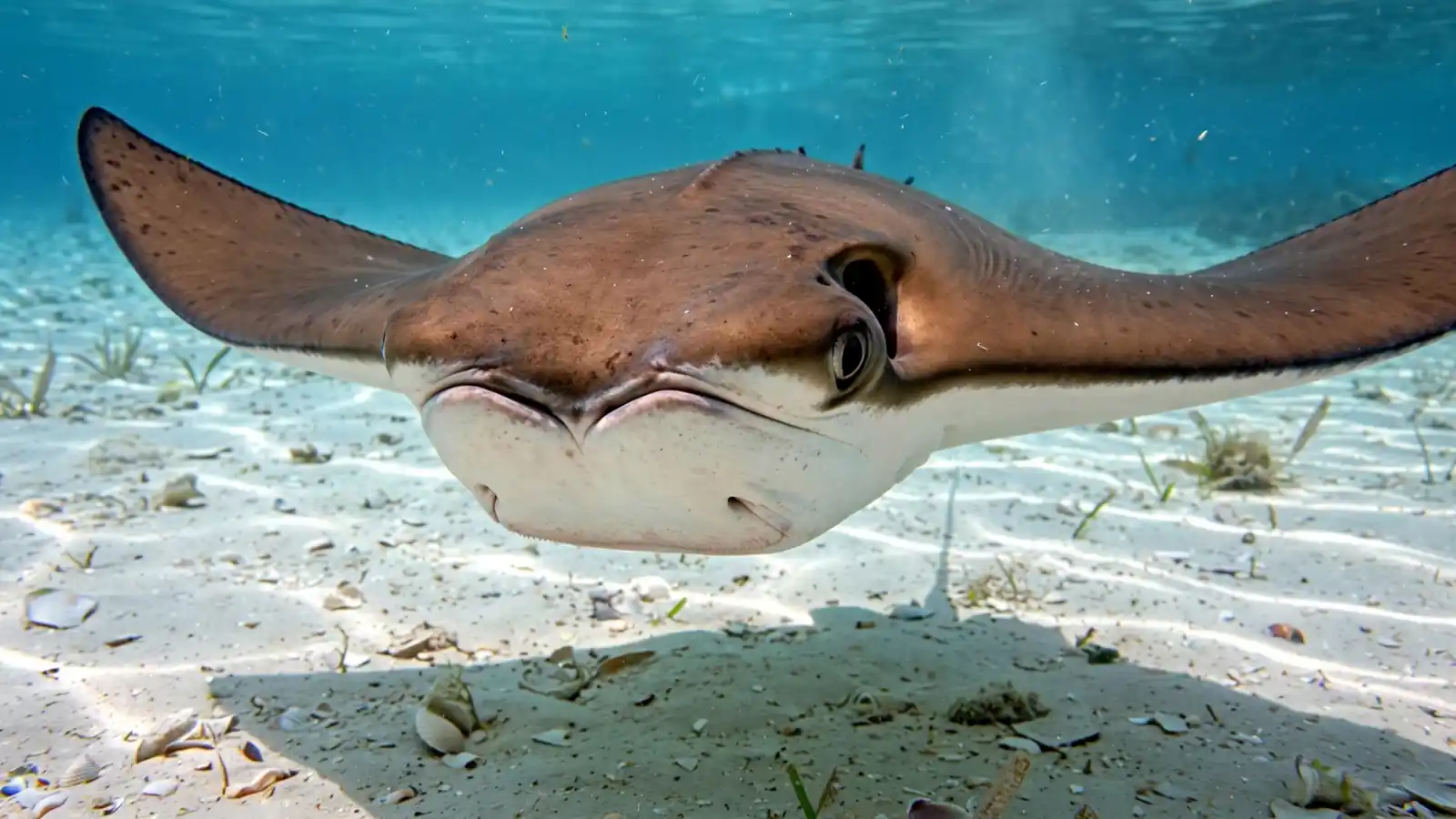
The ray’s shape is distinctive: a blunt, cow-like snout that gives it its name, a broad disc, and a long, thin tail with a small barb. It is built for the school, not for solitude — and the school is the cownose’s defining feature. For the full species record, see the Mystic Aquarium page.
Schools of 10,000: The Cownose Migration
Cownose rays travel in schools of up to 10,000, one of the largest gatherings of any ray. The schools move as a single dark cloud through the water, wings beating in unison, and they are visible from the air as a vast, moving shadow.
The migration that carries them is up to 1,600 kilometres, from the warm waters of Florida and the Gulf of Mexico up the Atlantic coast to Chesapeake Bay. It is one of the longest ray migrations known, and it happens every year, on the same schedule.
Where Cownose Rays Live: Chesapeake Bay and Beyond

Cownose rays live in the western Atlantic, from New England to Brazil, with Chesapeake Bay as their great summer home. The bay is where they mate and give birth, and where the young grow up in the shallow, food-rich shallows.
A note on the name: the eastern Atlantic cownose is now a separate species, Rhinoptera marginata, so the name Rhinoptera bonasus belongs to the western Atlantic ray covered here. The two look alike, but they are different species in different oceans.
What Do Cownose Rays Eat? Crushing Clams and Oysters
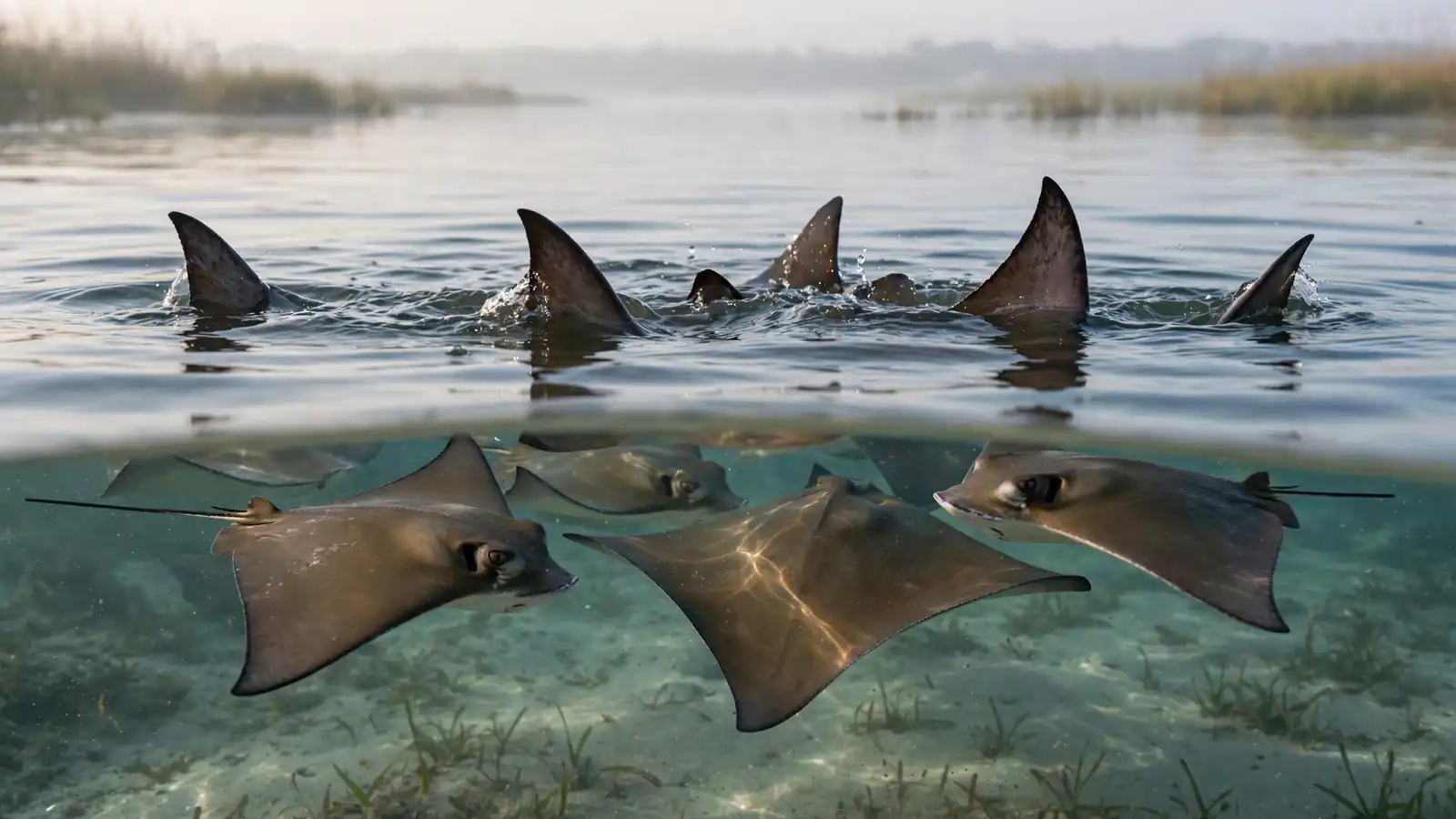
It eats clams, oysters, crabs and shrimp, crushing shells with the flat dental plates in its jaws. It feeds by flapping its wings over the bottom, stirring up the sediment, and sucking up the exposed shellfish — a feeding style that leaves pits in the sand.
Its diet is why it is blamed for oyster declines. Cownose rays do eat oysters, and in large numbers — but the research shows they are not the main cause of the Chesapeake’s oyster collapse. Overfishing, disease and habitat loss did far more damage, and the ray has been blamed unfairly for a problem it did not cause.
The Cownose Ray Sting: No Worse Than a Bee Sting
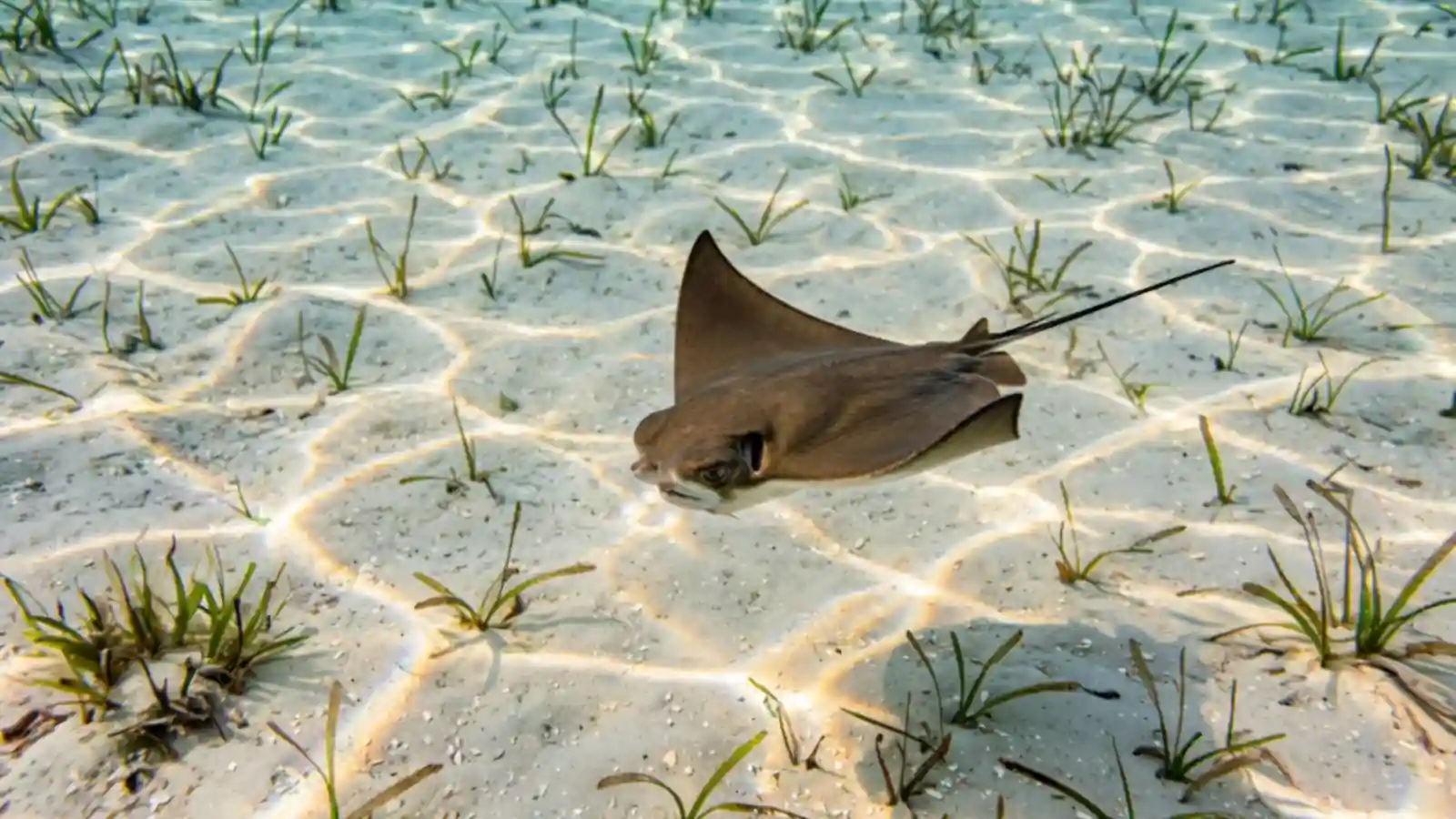
It carries a barb on its tail, but the sting is weak — about as bad as a bee sting. It is a defensive weapon, used only when the ray is stepped on or handled, and it is not a danger to swimmers who give the ray space.
The sting’s reputation is worse than the sting itself. Cownose rays are shy, schooling animals that flee rather than fight, and the few stings that do happen are almost always the result of someone stepping on a ray in shallow water.
Reproduction: Chesapeake Bay Nurseries
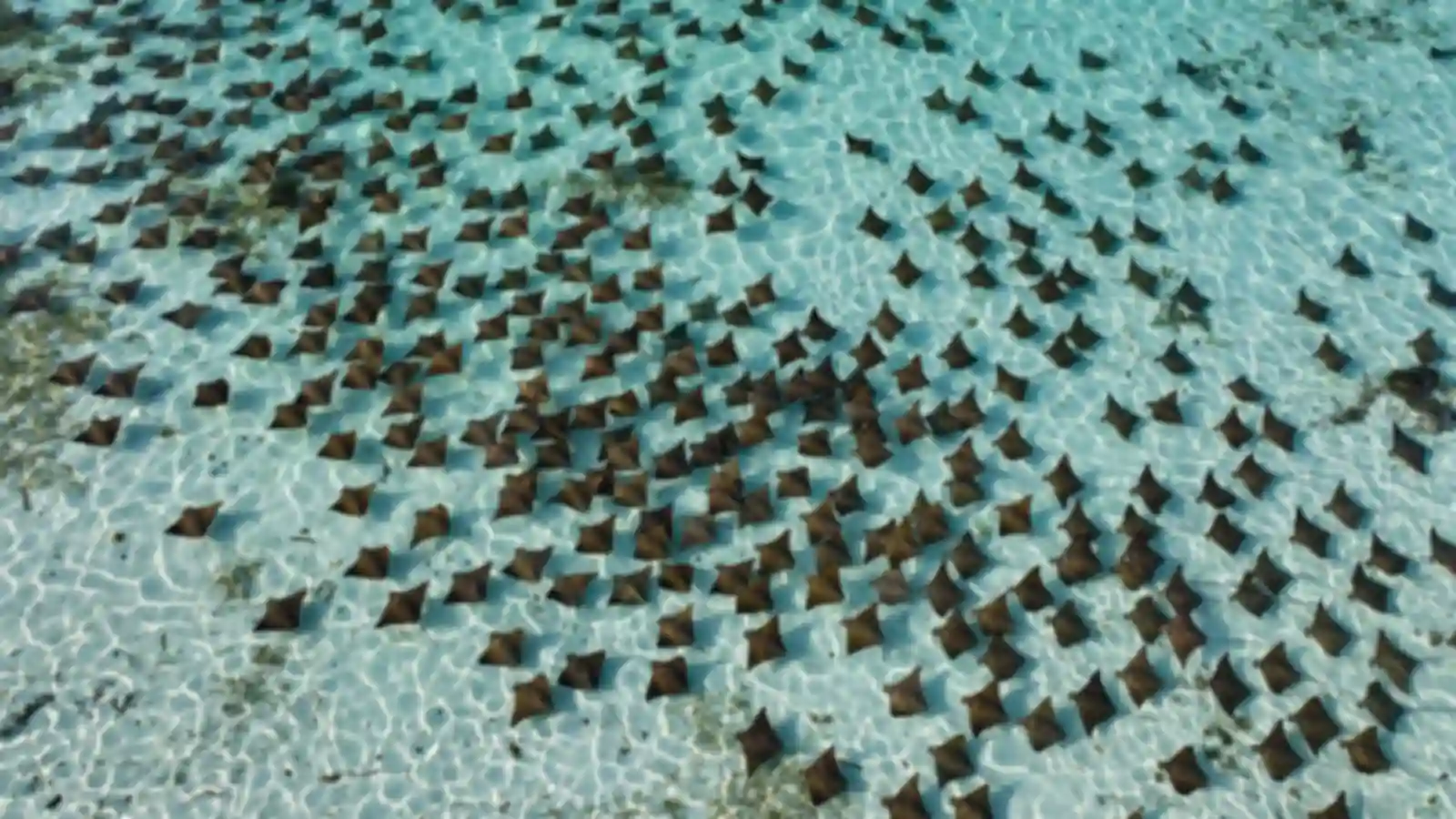
Cownose rays give birth in Chesapeake Bay, where the females arrive in the spring schools and drop their pups — usually one per female — in the shallow, sheltered shallows. The pups grow up in the bay, feeding on the shellfish beds, before joining the autumn migration south.
The bay nursery is the species’ bottleneck: the whole western Atlantic population depends on Chesapeake Bay for its young, and the bay’s health — its water quality, its seagrass, its oyster beds — shapes the future of the species.
Conservation: A Vulnerable Schooling Ray
It is listed as Vulnerable, a status set in 2019. Its numbers have fallen under fishing pressure and habitat loss, and the great schools are smaller than they were — though they are still one of the most impressive sights in the Atlantic.
The species’ future depends on Chesapeake Bay. Protect the bay’s water and its shellfish beds, and the schools keep coming; lose the bay, and the migration that defines it has nowhere to go.
Fun Facts
- Cownose rays travel in schools of up to 10,000 — one of the largest ray gatherings known.
- They migrate up to 1,600 kilometres to reach Chesapeake Bay.
- The cownose sting is about as bad as a bee sting.
- Cownose rays are blamed unfairly for the Chesapeake’s oyster declines.
- Females give birth to usually one pup, in the bay shallows.
- The eastern Atlantic cownose is now a separate species, Rhinoptera marginata.
Frequently Asked Questions
How Big Do Cownose Rays Get?
Cownose rays are commonly about 1.1 metres across the disc. No verified hard maximum for the species exists in the research, so no single maximum figure is given here.
Why Do Cownose Rays Migrate in Such Huge Schools?
Safety in numbers, and the nursery: the great schools travel up the Atlantic coast to Chesapeake Bay, where they mate and give birth. A school of 10,000 is harder for a predator to pick apart, and the migration brings the whole population to the same nursery.
How Far Do Cownose Rays Migrate?
Up to 1,600 kilometres, from Florida and the Gulf of Mexico up the Atlantic coast to Chesapeake Bay, every spring, on the same schedule.
What Do Cownose Rays Eat?
Clams, oysters, crabs and shrimp, crushed with flat dental plates after the ray flaps its wings over the bottom to expose them.
Do Cownose Rays Eat Oysters?
Yes, cownose rays do eat oysters — but research shows they are not the main cause of the Chesapeake’s oyster collapse. Overfishing, disease and habitat loss did far more damage.
Are Cownose Rays Dangerous? Do They Sting?
Not really — the cownose ray sting is weak, about as bad as a bee sting. It is defensive, used only when the ray is stepped on or handled, and not a danger to swimmers who give it space.
Are Cownose Rays Endangered?
The cownose ray is listed as Vulnerable (2019), with numbers fallen under fishing pressure and habitat loss — though the great schools still sweep into Chesapeake Bay every spring.
Similar Species Worth Exploring
Keep Exploring
Still exploring the rays? Meet the leaping Spotted Eagle Ray, watch the jumping Devil Ray, and then compare the bay’s other big animal, the Bull Shark, and then come back to Chesapeake Bay to meet the cownose ray.