Skeleton Shrimp
Skeleton Shrimp: The Thread-Thin Amphipod That Vanishes Among Seaweed
The skeleton shrimp is a thread-thin amphipod that vanishes among seaweed — and one species has hitchhiked around the world on ships and ropes. It is not a shrimp at all, and it is one of the most successful invaders in the sea.
By Emily Carter · Reviewed by our vet team · Updated 10 November 2026 · 9 min read
Under 3 cm longNot a real shrimpJapanese species invasive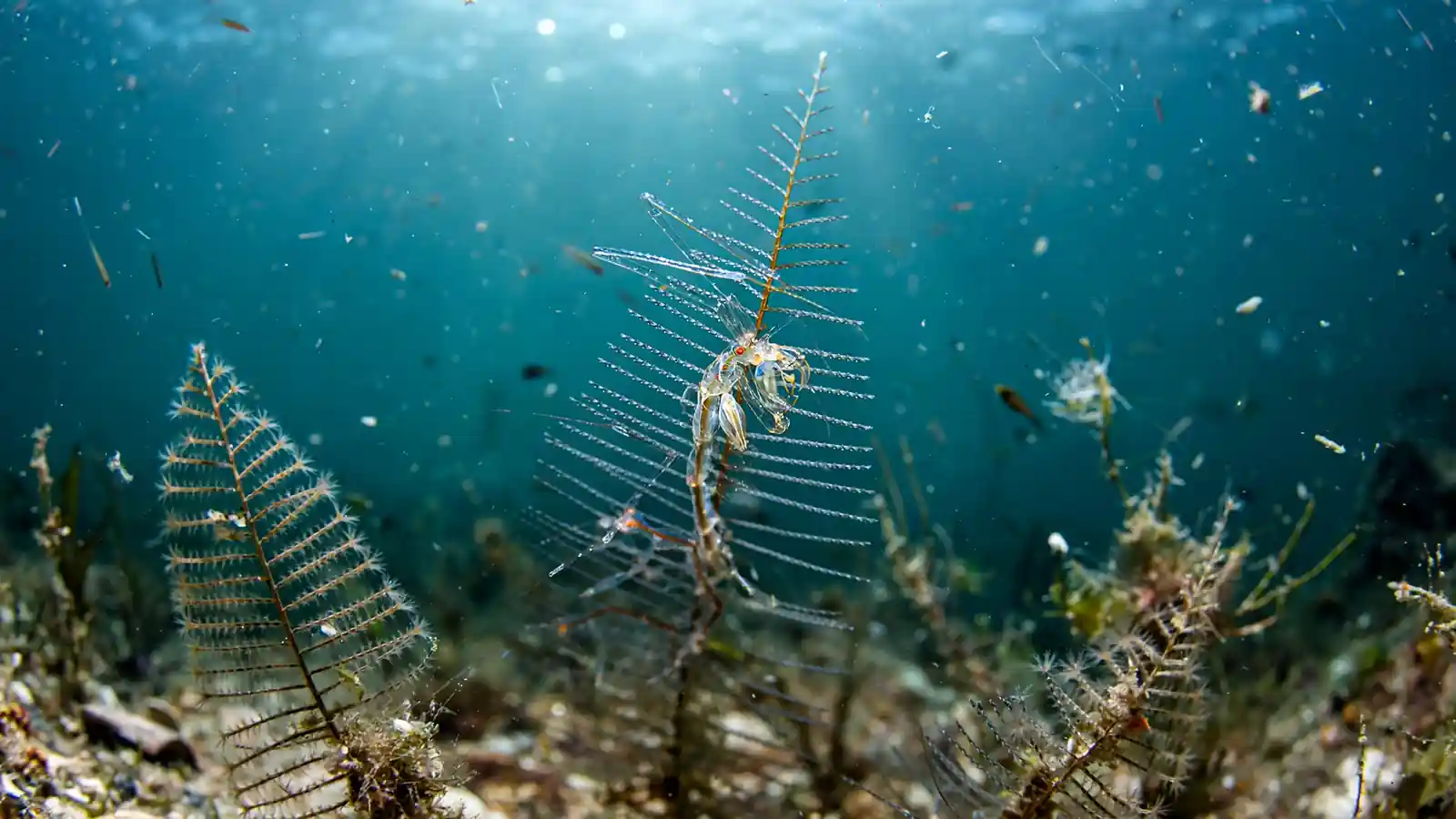
At a Glance
The skeleton shrimp is a group of thread-thin crustaceans in the family Caprellidae — caprellid amphipods, not true shrimp — that cling to seaweed, hydroids and ropes in shallow water worldwide. Most are harmless and invisible; one of them has become a global hitchhiker.
Size: Under 3 cm of Thread
It is under 3 cm long — a thread of an animal, thin as a pine needle, with a body like a stick insect. Males of the Japanese species reach 5 cm, which is large for the family and still small by any other measure. The grasping legs are the giveaway: thick, hooked pereopods that grip seaweed like hands, built for holding on rather than for swimming.
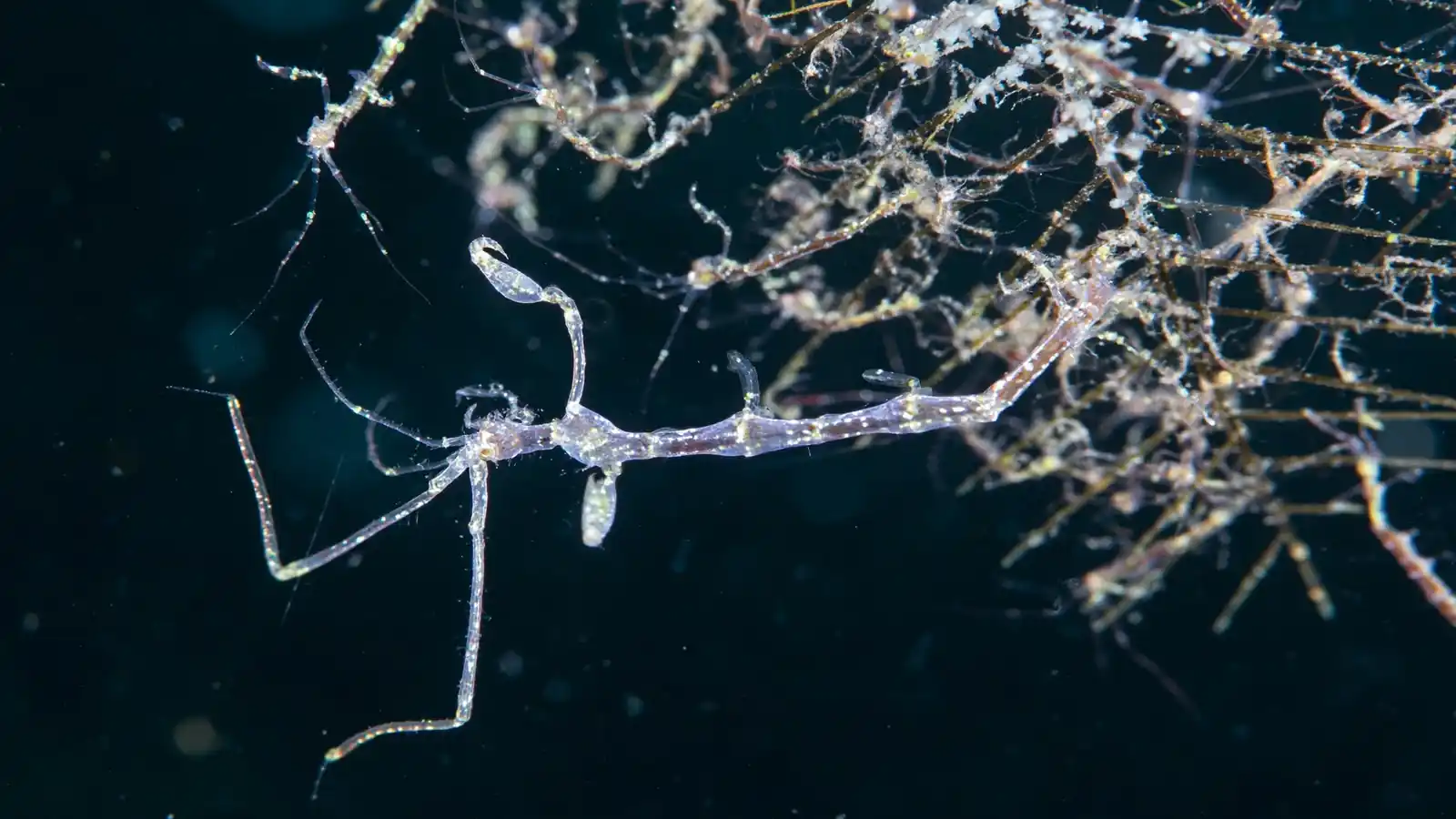
The size is the camouflage. At under 3 cm, one is the same width as the seaweed it lives on, and it is the same colour too — which is why divers swim past colonies of them without ever seeing one. It is an animal that survives by being the same size as its background.
Being background is harder than it sounds. The weed moves, the light shifts, and the animal has to hold its pose through all of it — upright, swaying in time, neither faster nor slower than the fronds around it. A colony can cover a stalk for weeks before a diver’s eye finally separates animal from plant.
Are They Real Shrimp?
No. They are caprellid amphipods, not true shrimp — a specialised family within the amphipods, and this guide says so plainly. True shrimp are decapods, with ten legs and a familiar shrimp shape; these animals are amphipods, with a thin, segmented body, grasping legs and no shrimp tail at all. The name is a shape, not a family.
The distinction matters because the two posts must agree. The Wave D Amphipod post (6550) covers the amphipods as a group, and this post covers the caprellid family within them: caprellids ARE amphipods, a specialised family of them, and both posts cross-link and say so rather than contradicting each other. If you know amphipods, you know its thin members — the ones clinging to the weed.
Skeleton Shrimp Habitat: Seaweed, Hydroids and Ropes
It lives clinging to seaweed, hydroids, bryozoans and eelgrass in shallow water worldwide — and to ropes, buoys and mussel farm lines, anywhere there is something thin to grip. A dense colony can cover a mussel farm rope so thickly that the rope looks furry, and a single hydroid stalk can hold dozens of them, each one gripping with its hooked legs.

The habitat is the holdfast. It does not swim: it grips, and it stays gripped, riding the current from its perch. It lives where the water moves, because moving water brings food, and it lives on thin things, because thin things are what it can grip. Give it a rope in a harbour and it will colonise it.
Grip is the whole life. The hooked legs never really let go — the animal moves hand over hand along the stalk, feeding from its perch, mating on it, raising its young in a brood pouch beneath it. A harbour rope is not a poor substitute for seaweed; to a gripping animal, it is simply more of the same country.
How They Feed: Diatoms, Detritus and Small Prey
It eats diatoms, detritus, protozoans and small amphipods — an omnivorous filter feeder and scavenger, picking food from the water and from the surface it clings to. It waves its antennae and mouthparts in the current, gathers what sticks, and eats it, and it also picks at the seaweed itself, grazing the film of diatoms that grows there.
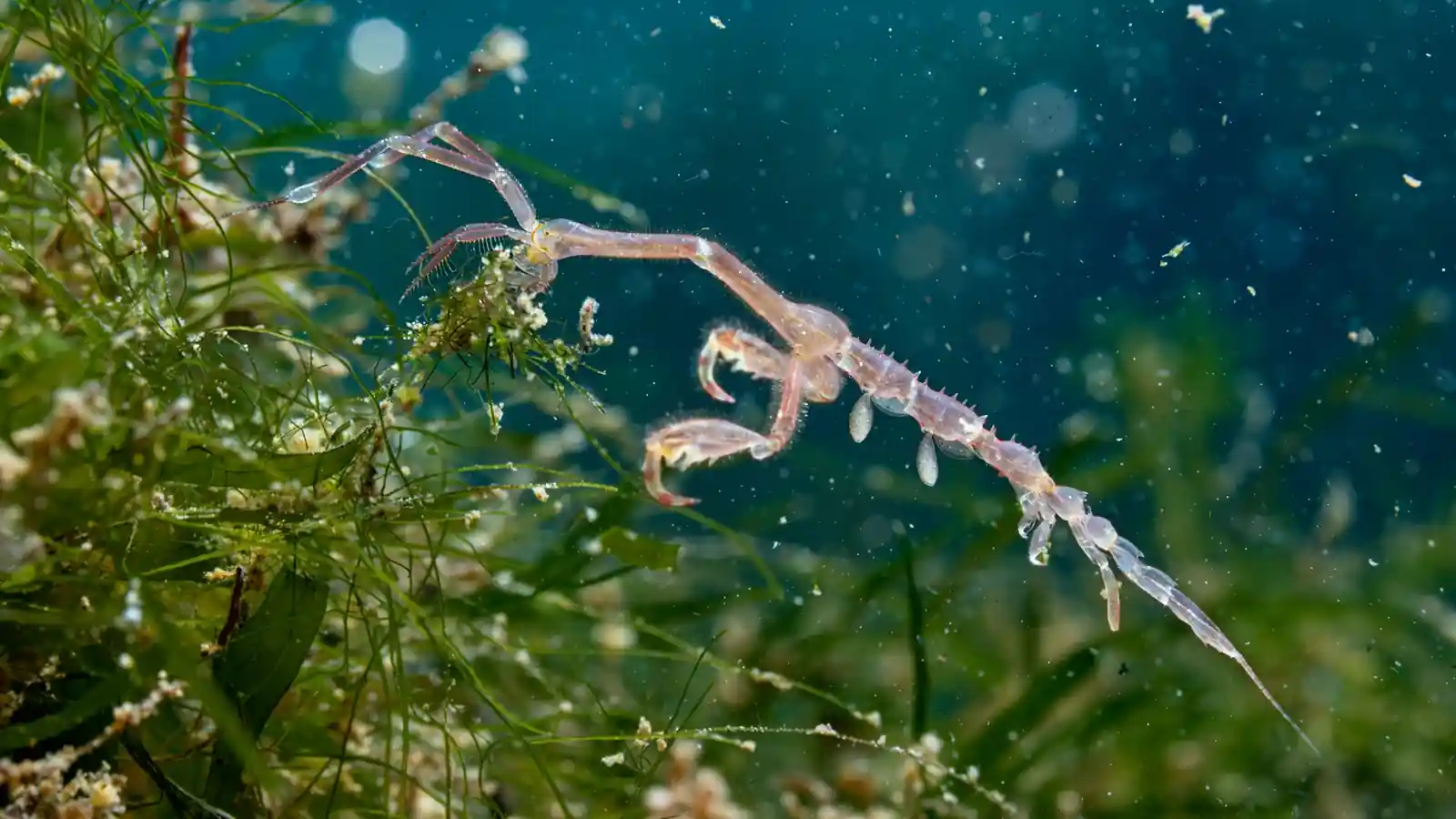
Feeding is a waiting game. It does not hunt: it sits on its perch and lets the current bring food to it, and when a small amphipod wanders too close, it grabs it. It is the same strategy as the porcelain crab’s, on a smaller scale — sit still, filter the water, and eat what comes.
The waiting is finely judged. Waving antennae test the current, the mouthparts gather whatever the water delivers, and the perch itself is grazed clean of its diatom film. It is farming and fishing from the same square centimetre — a thread of an animal running a complete food economy without ever letting go.
Camouflage: The Invisible Crustacean
It hides by being a stick: a thread-thin body, the colour of the seaweed it lives on, held upright among the fronds like another piece of weed. Among red algae it is red; among green weed it is green; and among hydroids it is pale and thin, vanishing into the stalks. It is a stick insect of the sea, and it works.

The camouflage is behaviour as much as colour. It sways with the weed, moves slowly, and freezes when disturbed — and a predator looking for a meal sees weed, not food. It is invisible by being boring, and boring is a very good defence in a sea full of hungry fish.
Japanese Skeleton Shrimp: A Global Hitchhiker
The Japanese species, Caprella mutica, is the invader of the family: spread from north-east Asia on ships and ballast water, it now lives on coasts worldwide, at densities of 180,000 to 300,000 per square metre on artificial structures — ropes, buoys, harbour walls, anywhere it can grip. It is one of the densest animals in the sea, where it establishes.

The invasion works because the animal is built for travel. For the full species account, see this full species account from SANBI. It grips ropes and hulls, survives the voyage in ballast water and on fouled surfaces, and colonises the first suitable structure it finds. The male’s spiny back is the field mark: a big, spiny, 5 cm male on a harbour rope is almost certainly Caprella mutica, and it is almost certainly not alone.
Predators and Role in the Food Web
It is eaten by fish, by nudibranchs — the lion nudibranch is a specialist predator of caprellids — and by anything that can find it among the weed. It is a small, abundant animal, and abundance is its role: it turns diatoms and detritus into food for larger animals, and it is a link in the chain between the plankton and the fish.
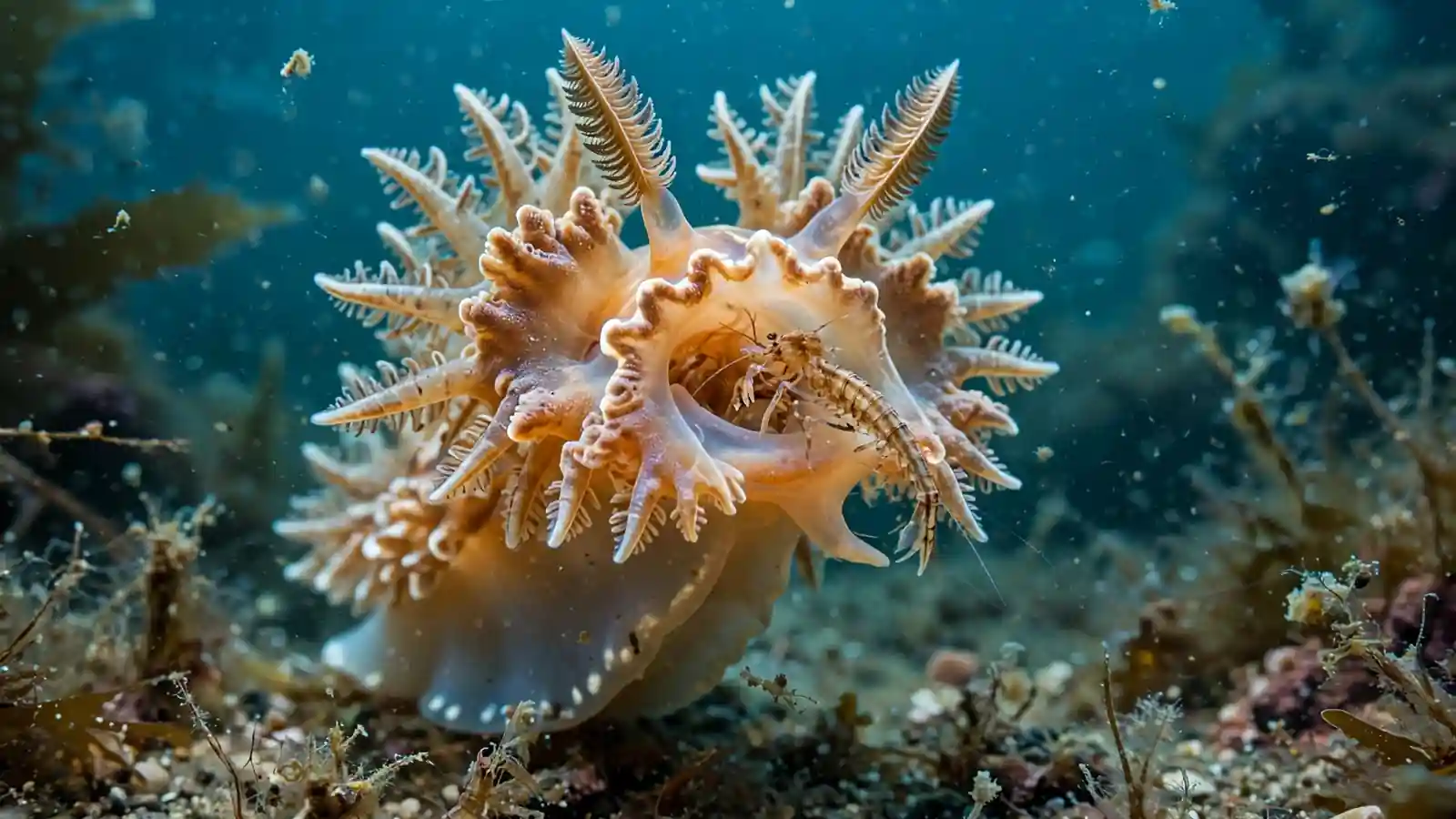
Its role is quiet but large. Where they are dense — hundreds of thousands per square metre on a rope — they are a food source that shapes the local food web, feeding the fish and nudibranchs that hunt them. It is an invisible animal with a visible effect: the seaweed it lives on feeds the sea, through the shrimp.
Density is the effect. A few animals on a stalk are a curiosity; hundreds of thousands to the square metre are a food source, and the fish and nudibranchs that hunt them patrol the ropes and weed beds like regulars. The invisible animal ends up feeding half the harbour — through being eaten.
Fun Facts
- It is not a shrimp — it is a caprellid amphipod.
- It is under 3 cm long, thin as a pine needle, like a stick insect of the sea.
- The Japanese species reaches densities of 180,000 to 300,000 per square metre on ropes.
- It grips seaweed and hydroids with hooked grasping legs and never lets go.
- The lion nudibranch is a specialist predator of caprellids.
- It sways with the weed and freezes when disturbed — invisible by being boring.
Frequently Asked Questions
Are skeleton shrimp real shrimp?
No. They are caprellid amphipods, not true shrimp — a specialised family within the amphipods. True shrimp are decapods with ten legs and a shrimp shape; they have a thin, segmented body, grasping legs and no shrimp tail. The name is a shape, not a family.
How big do skeleton shrimp get?
Under 3 cm long — a thread of an animal, thin as a pine needle. Males of the Japanese species reach 5 cm, which is large for the family and still small by any other measure.
Where do skeleton shrimp live?
Clinging to seaweed, hydroids, bryozoans and eelgrass in shallow water worldwide — and to ropes, buoys and mussel farm lines, anywhere there is something thin to grip. A dense colony can cover a mussel farm rope so thickly that the rope looks furry.
What do skeleton shrimp eat?
Diatoms, detritus, protozoans and small amphipods. It is an omnivorous filter feeder and scavenger: it waves its antennae and mouthparts in the current, gathers what sticks, and eats it, and it also grazes the film of diatoms on the seaweed.
How do skeleton shrimp hide?
By being a stick: a thread-thin body, the colour of the seaweed it lives on, held upright among the fronds like another piece of weed. It sways with the weed, moves slowly, and freezes when disturbed — invisible by being boring.
Why is the Japanese skeleton shrimp invasive?
Because it hitchhikes. Caprella mutica spread from north-east Asia on ships and ballast water, and it now lives on coasts worldwide at densities of 180,000 to 300,000 per square metre on artificial structures. It grips ropes and hulls, survives the voyage, and colonises the first suitable structure it finds.
What eats skeleton shrimp?
Fish, and nudibranchs — the lion nudibranch is a specialist predator of caprellids — and anything that can find them among the weed. It is a small, abundant animal that turns diatoms and detritus into food for larger animals.
Similar Species Worth Exploring
Keep Exploring
Meet the amphipod, the family it belongs to, then the mantis shrimp, another small crustacean with a very different strategy, and browse the whole family in our types of crustaceans hub — then come back to the thread-thin amphipod that vanishes among seaweed, the skeleton shrimp.