Glass Squid
Glass Squid: The Nearly Invisible Squid of the Twilight Zone
The glass squid is nearly invisible in the twilight zone and lights its own shadow away. It is the transparent squid of the deep — a family of about 60 species that hides by being see-through.
By Emily Carter · Reviewed by our vet team · Updated 10 November 2026 · 9 min read
Nearly invisiblePhotophores erase the shadowAbout 60 species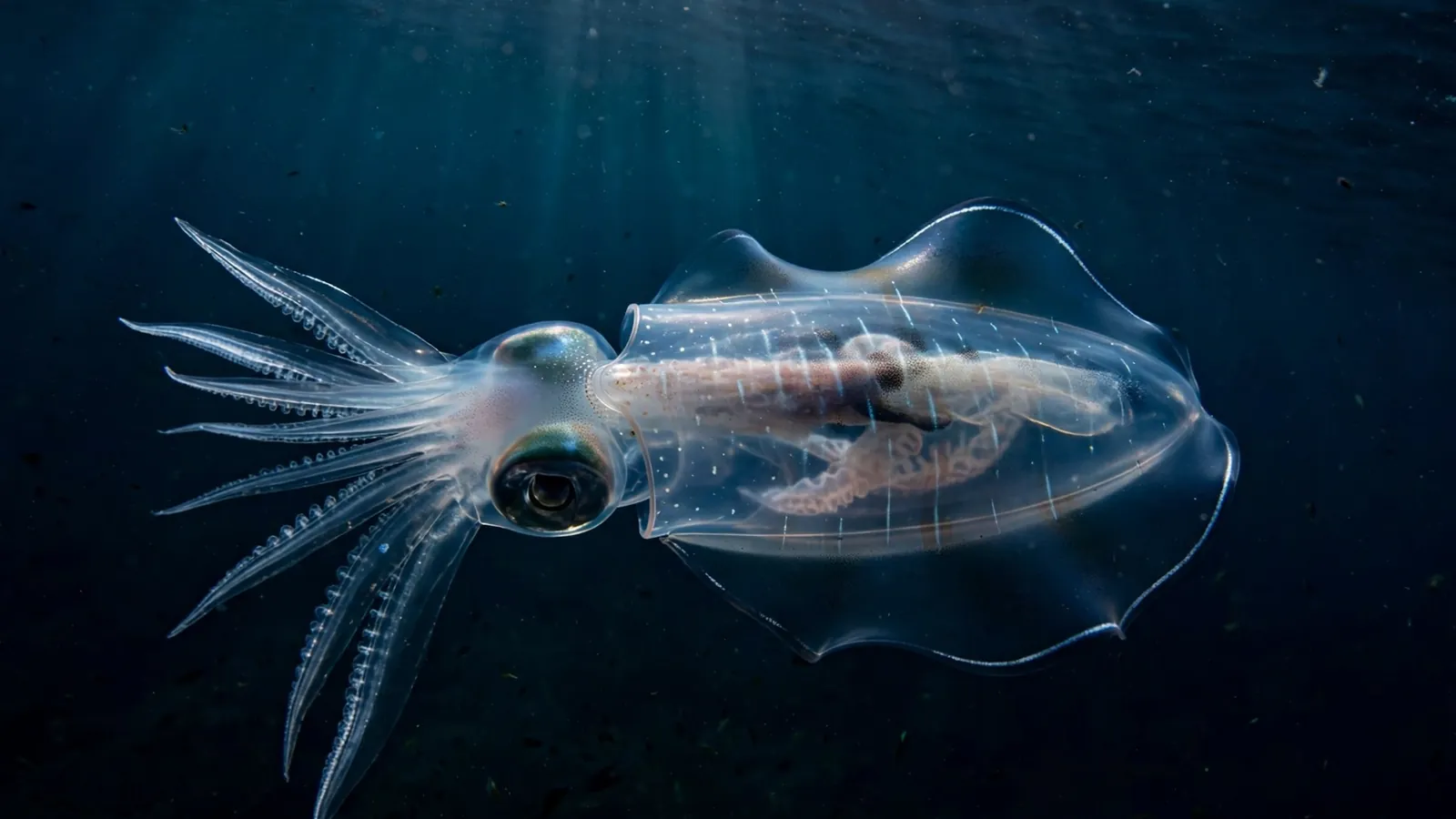
At a Glance
The glass squid is a family of about 60 species in the Cranchiidae, the glass squids, that live in the twilight zone and hide by being transparent. Most species have a mantle of 10–20 cm, and the family includes the colossal squid.
Glass Squid Size: From 10 Centimetres to the Colossal
Most squid have a mantle of 10–20 cm — small, transparent animals of the twilight zone — but the family includes the colossal squid, which reaches a mantle of about 2 m and a total length of nearly 10 m, weighing up to 495 kg per MBARI. It is the biggest squid in the family and one of the biggest invertebrates in the world.
The size range is the family’s story: from a 10 cm transparent squid to a 495 kg giant, all of them glass squids, all of them built on the same transparent plan. The colossal squid is the exception that proves the family — a squid grown to the size of a small car.
Transparency: Nearly Invisible in the Twilight Zone
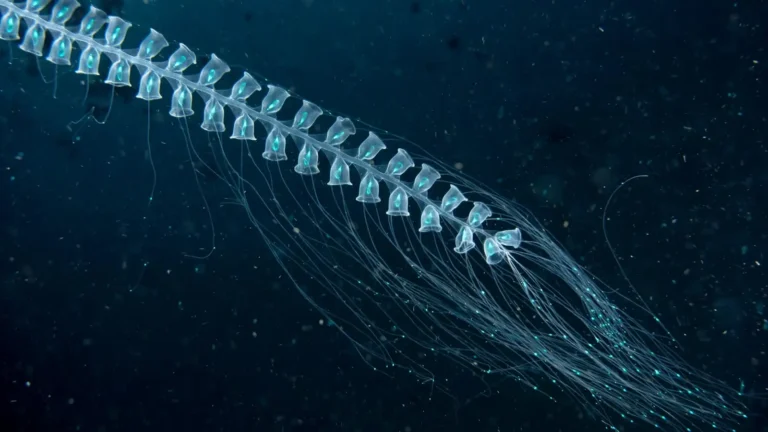
It is nearly invisible in the twilight zone, because its body is transparent. The mantle is clear, the internal organs are visible through it, and the chromatophores — the pigment sacs that other squid use to change colour — are kept closed, so the animal is a ghost in the water.

The transparency is the point: in the twilight zone there is nowhere to hide, so the squid hides by being see-through. Only its eyes, its digestive gland and a few other organs give it away, and even those are small and dark against the transparent body.
Photophores: Light That Erases the Shadow
It carries photophores — light organs — for counter-illumination, and in Teuthowenia there are three photophores on each eyeball. The photophores make light that matches the light coming down from above, so a predator looking up from below sees no shadow — only light, and the squid is gone.
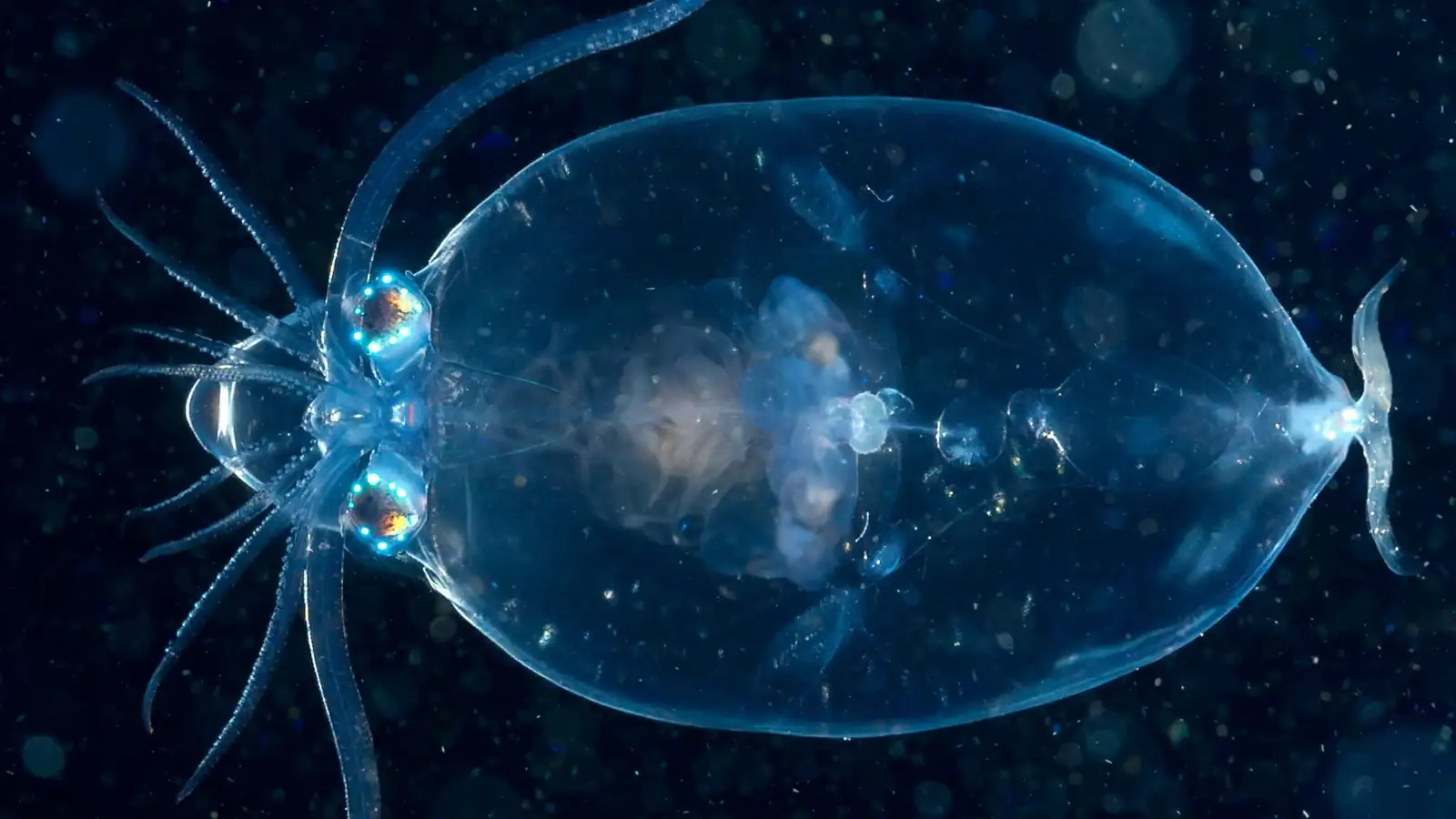
The eyeball photophores are the giveaway in close-up: three small glowing spots on each eye, like headlights, in an otherwise transparent animal. The light is the squid’s camouflage, and it is precise — the photophores adjust their brightness to match the light from the surface, so the shadow never appears. For the full account, see this squid profile from MBARI, which covers the photophores, the transparency and the twilight-zone life in detail. The institute’s remotely operated vehicles meet glass squids regularly in the deep water off California, drifting past the cameras as transparent ghosts with glowing eyes.
Where Glass Squids Live: The Mesopelagic Zone
They live in the mesopelagic twilight zone, 200–1,000 m down, and juveniles live near the surface. They are midwater animals, drifting in the dark water of the open ocean, and they are found worldwide in tropical and temperate seas. The twilight zone is shared with other deep-water cephalopods, including the seven-arm octopus, a pale gelatinous octopus that drifts in the same dim water.
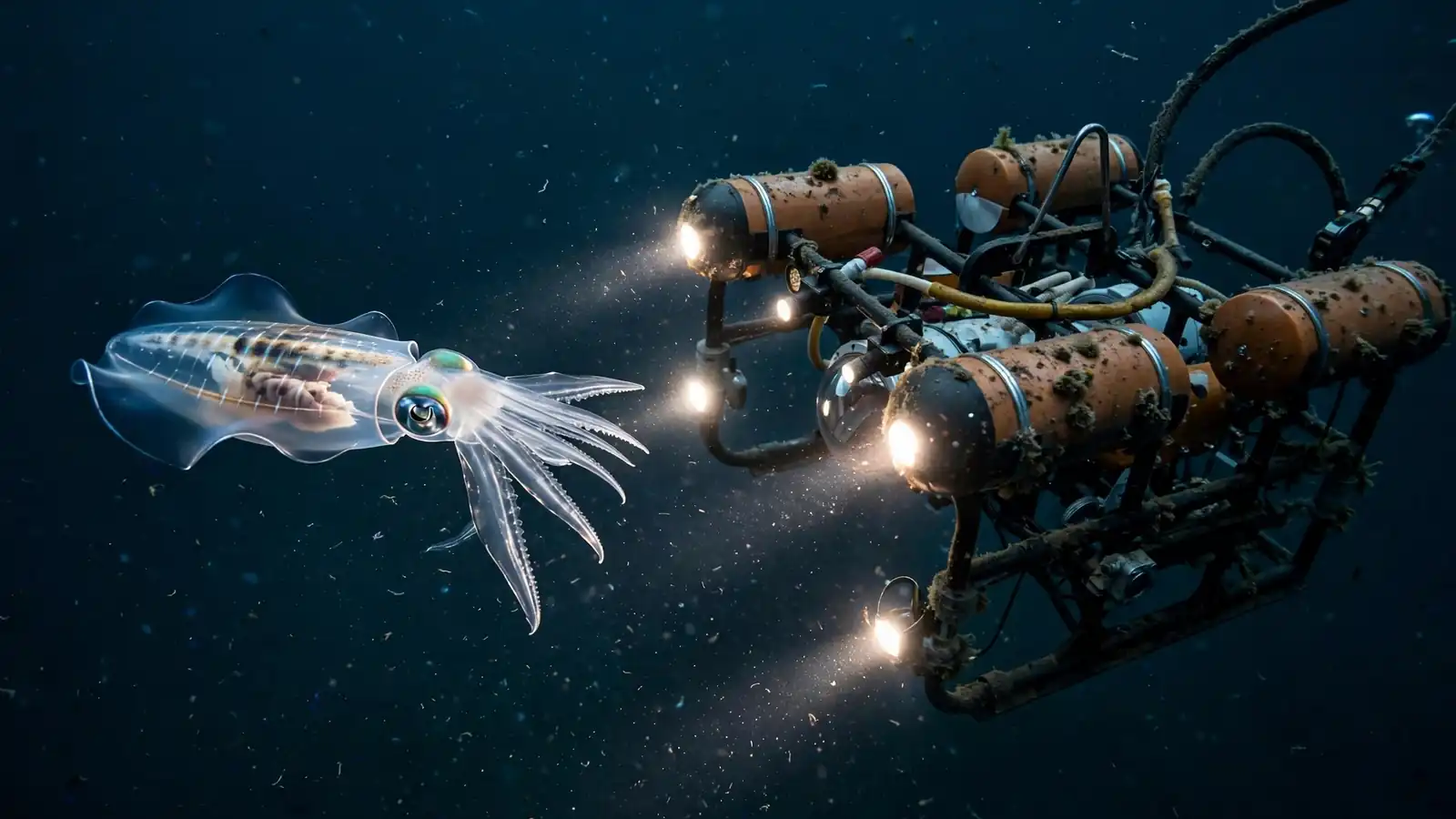
The twilight zone is its home because it is the zone of dim light — enough light for counter-illumination to work, and dark enough for transparency to hide the animal. An ROV in the deep water meets glass squids drifting past, transparent and glowing, and they are gone before the lights can find them.
What Do Glass Squids Eat? Small Fish and Crustaceans
They eat small fish and crustaceans, caught with their arms and tentacles in the midwater. They are hunters of the twilight zone, drifting through the dark water and snatching the small animals that rise at night.
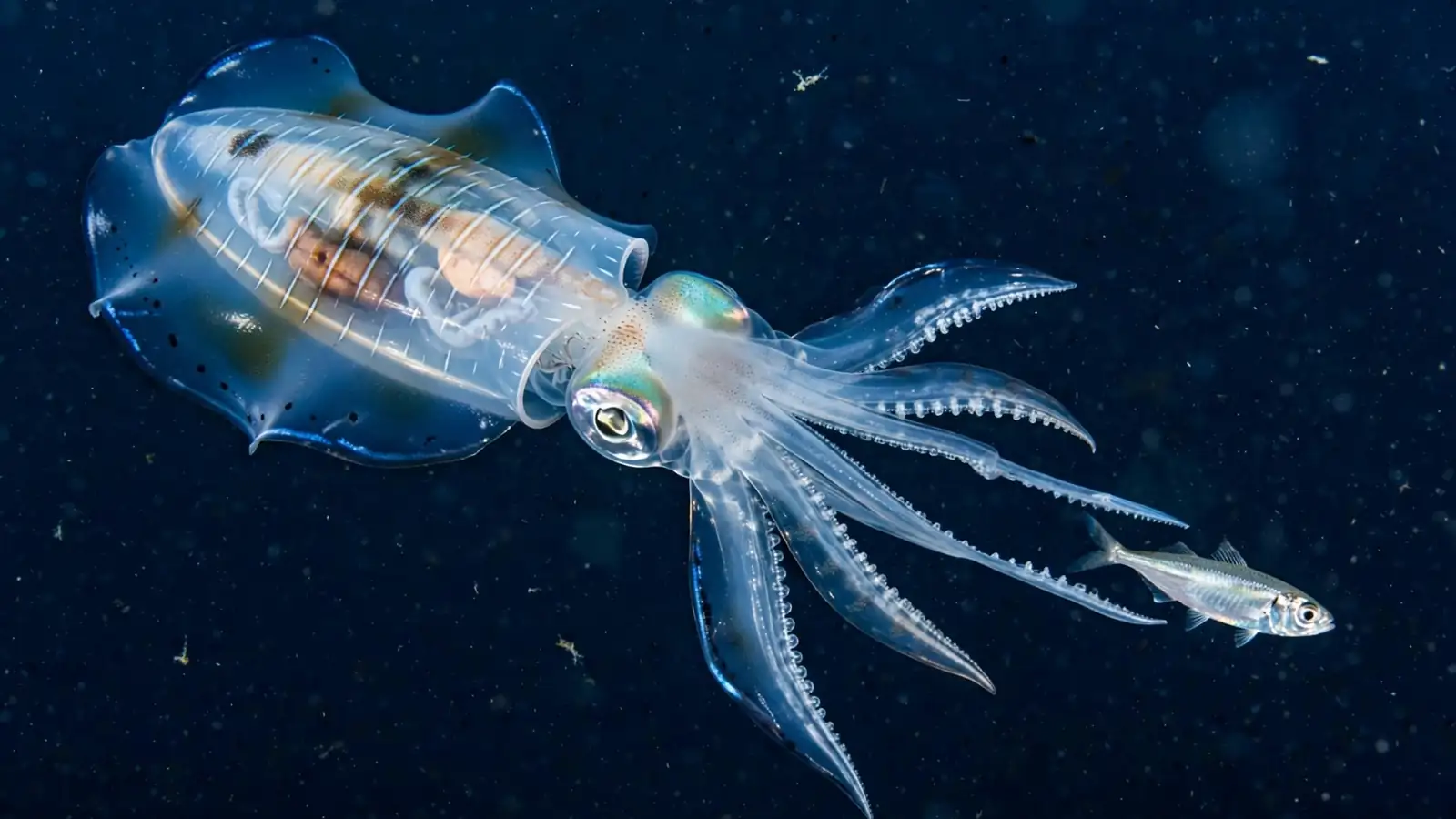
The hunting is slow and patient: the squid drifts, its transparent body invisible, and when a small fish comes close it strikes with its arms. The colossal squid, the family’s giant, eats larger prey — including toothfish — but the small glass squids eat the small animals of the midwater.
The Vertical Gland: The Cockatoo Posture
Some glass squids hold their digestive gland vertical, like a cockatoo’s crest — a posture called the cockatoo posture, in which the dark, cigar-shaped gland stands upright inside the transparent mantle. It is one of the family’s most distinctive sights, and it is visible through the clear body.
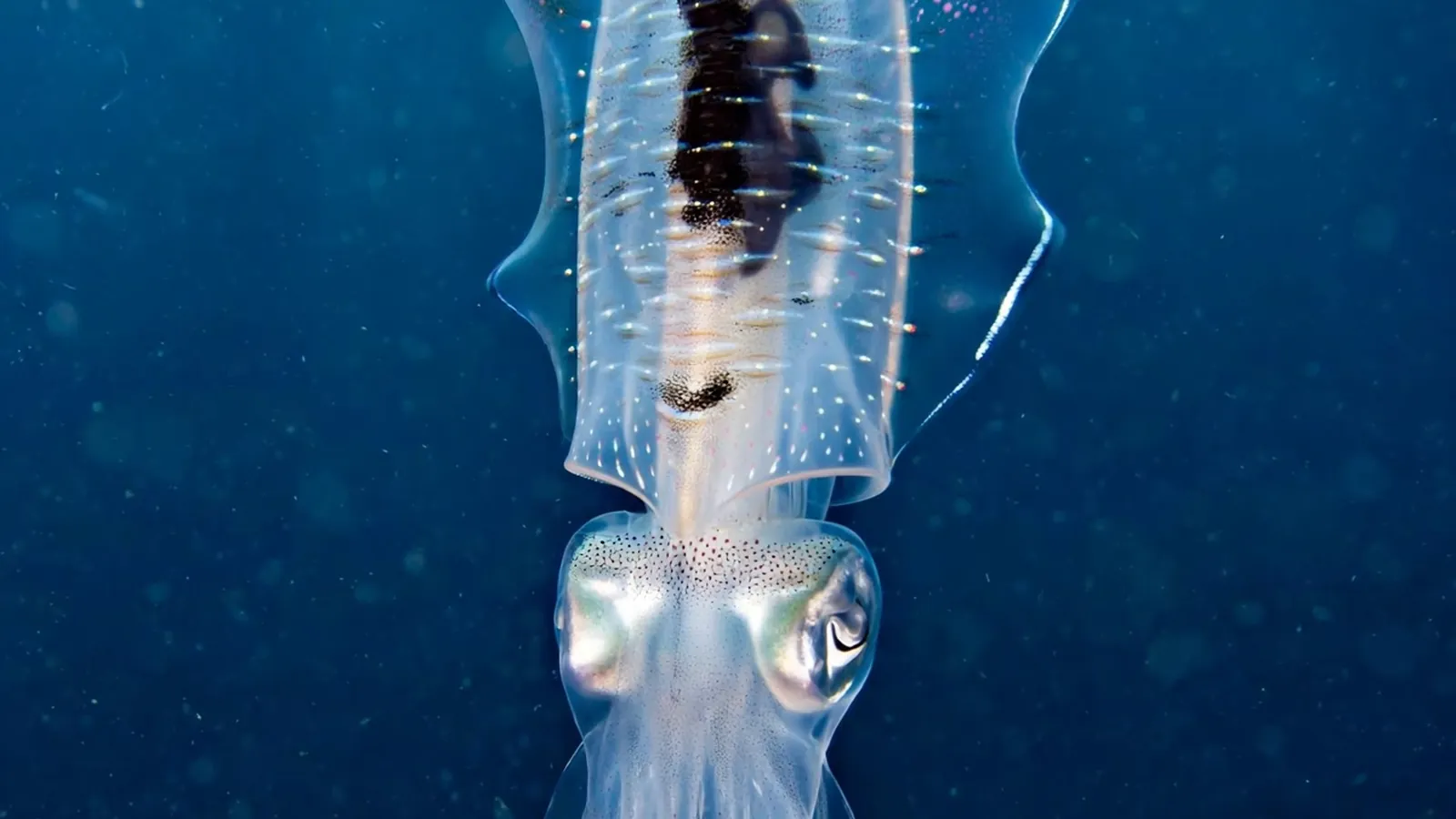
The vertical gland is not just a curiosity: it may help the squid balance, or it may be a way of hiding the gland’s shadow. Whatever the reason, the cockatoo posture is its signature — a dark crest standing up inside a transparent animal, like a feather in a glass bird.
Glass Squid Species: Teuthowenia and the Colossal
Teuthowenia is the best-known squid genus, a small transparent squid with three photophores on each eyeball and a mantle of about 10–20 cm. It is the classic squid: nearly invisible, glowing at the eyes, and drifting in the twilight zone with its digestive gland held vertical.
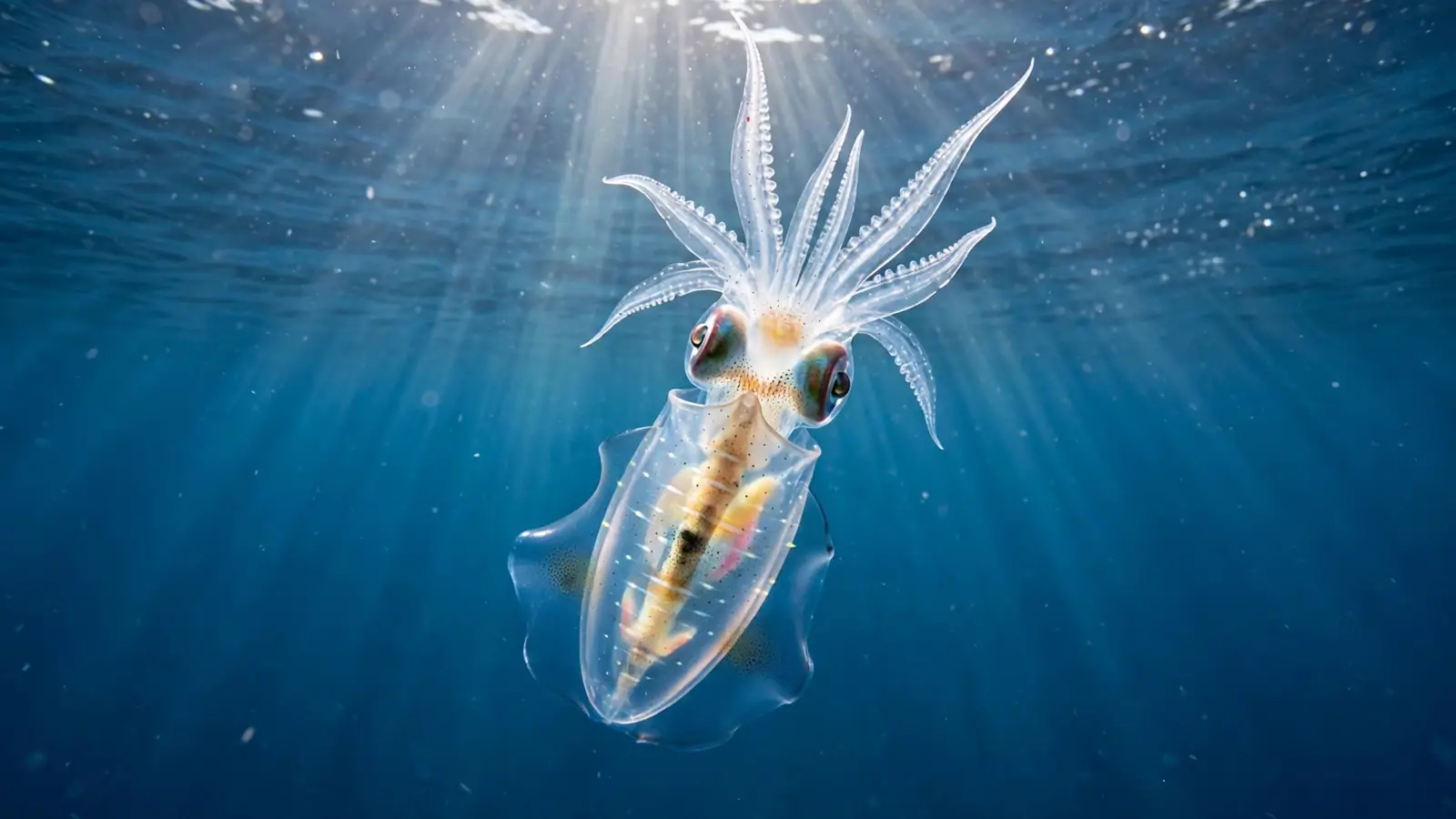
The colossal squid is the family’s giant and the reason the glass squids are famous: a mantle of about 2 m, a total length of nearly 10 m and a weight of up to 495 kg, per MBARI. It is one, a member of the Cranchiidae, and it is the biggest invertebrate in the world — a transparent squid grown to the size of a car. For the giant itself, see the giant squid, its closest famous relative.
Fun Facts
- It is nearly invisible — its body is transparent and its chromatophores stay closed.
- Teuthowenia has three photophores on each eyeball.
- Some glass squids hold their digestive gland vertical, like a cockatoo’s crest.
- The family has about 60 species — some sources say 66.
- The colossal squid, one, reaches nearly 10 m and 495 kg.
- Glass squids use ammonium-filled cavities for neutral buoyancy.
Frequently Asked Questions
What Is a Glass Squid?
It is a member of the family Cranchiidae, about 60 species of transparent squid that live in the twilight zone. Their bodies are nearly invisible, their chromatophores stay closed, and they use photophores for counter-illumination.
Why Are Glass Squids Transparent?
Because transparency is camouflage in the twilight zone. In the dim midwater there is nowhere to hide, so the squid hides by being see-through — its mantle is clear, its organs are visible through it, and only its eyes and digestive gland give it away.
How Big Do Glass Squids Get?
Most species have a mantle of 10–20 cm, but the family includes the colossal squid, which reaches a mantle of about 2 m, a total length of nearly 10 m and a weight of up to 495 kg, per MBARI.
Where Do Glass Squids Live?
In the mesopelagic twilight zone, 200–1,000 m down, worldwide in tropical and temperate seas. Juveniles live near the surface, and adults drift in the dark midwater of the open ocean.
What Do Glass Squids Eat?
Small fish and crustaceans, caught with the arms and tentacles in the midwater. The colossal squid, the family’s giant, eats larger prey including toothfish, but the small glass squids eat the small animals of the twilight zone.
How Do Glass Squids Hide From Predators?
Two ways: transparency, which makes them nearly invisible, and photophores, which make light that matches the light from above and erases the squid’s shadow. Together, the two tricks make the squid almost impossible to see from below.
Is the Colossal Squid a Glass Squid?
Yes. The colossal squid is a member of the Cranchiidae, the glass squid family. It is the family’s giant — a mantle of about 2 m, nearly 10 m long and up to 495 kg — but it is built on the same transparent plan as the small glass squids.
Similar Species Worth Exploring
Keep Exploring
Meet the giant squid, the giant of the deep and the colossal squid’s rival, then the bobtail squid, the tiny squid that borrows its glow from bacteria, and browse the whole family in our types of cephalopods hub — then come back to the nearly invisible squid of the twilight zone, the glass squid.