Chiton
Chiton: the plated mollusk with eight shells and iron teeth
The chiton is a mollusk wearing a suit of armour it can bend. Eight overlapping shell plates run down its back, its teeth are capped with magnetite iron, and the design is older than the dinosaurs by hundreds of millions of years. This guide takes the armour apart plate by plate, explains the iron teeth underneath, and meets the grazer that has barely changed in half a billion years.
By Emily Carter · Reviewed by our vet team · Updated 10 November 2026 · 8 min read
Eight overlapping shell platesTeeth capped with magnetite ironLineage ~500 million years old
At a Glance
A chiton looks like a woodlouse that went to sea in armour, and in a way it did something better: it kept the armour flexible. Beneath the eight plates sits a soft mollusk that moulds itself to rock, grazes algae with teeth capped in iron, and has survived, recognisably itself, since before there were fish with jaws or trees on land.
Chiton Size and Species
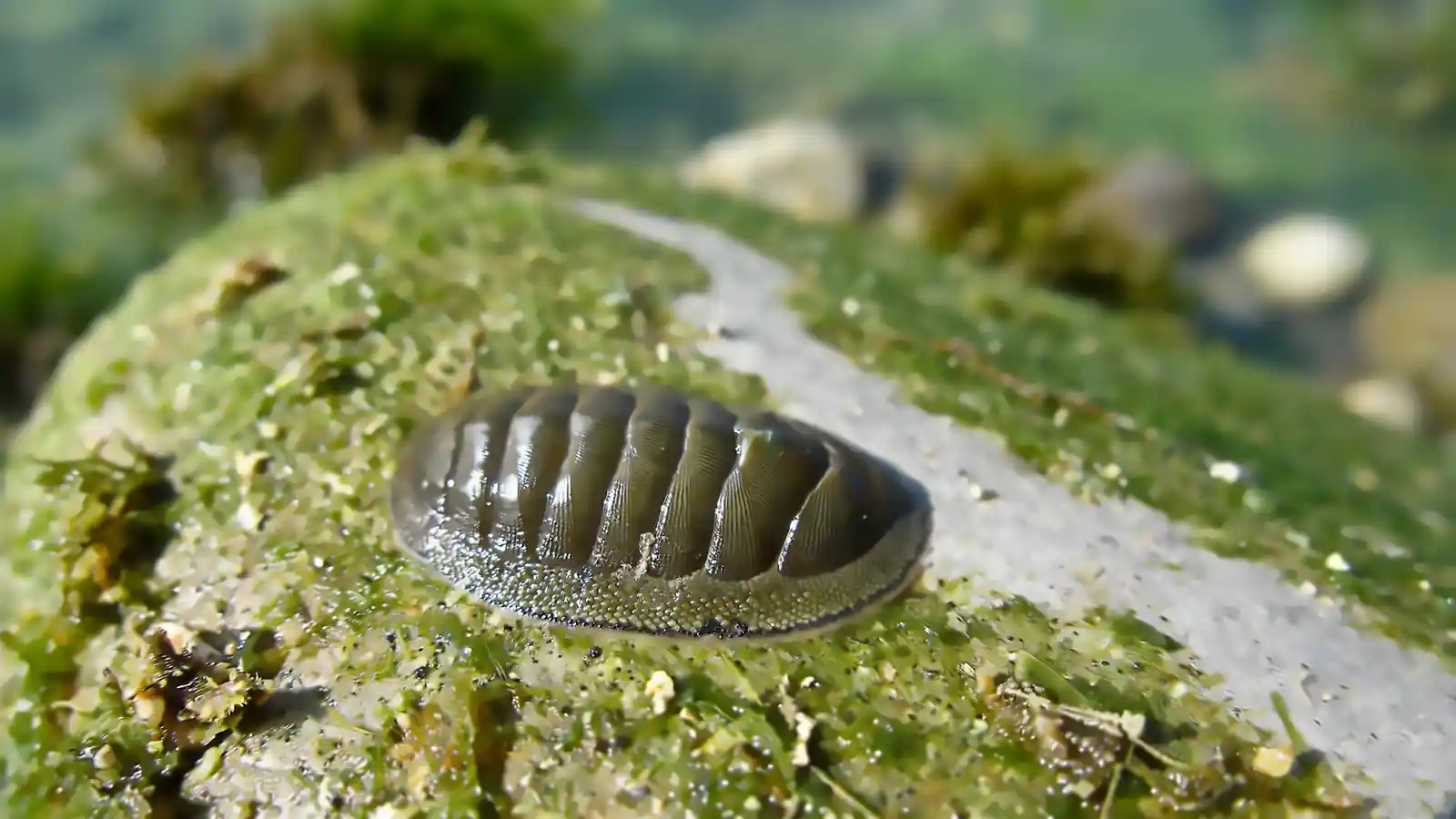
Around 1,000 living species are recognised, and they span the usual mollusk trick of doing a lot with a little. The smallest are a few millimetres long, specks on a pebble. The largest, the gumboot species of the Pacific north-west, reaches about 36 centimetres and can weigh more than a bag of sugar, a red-brown giant whose plates are hidden completely beneath its leathery girdle. Between the extremes, most shore species sit at a modest 2 to 5 centimetres, oval, flattened and easy to overlook.

Chitons form their own class of mollusks, the Polyplacophora, the bearers of many plates, set apart from snails, clams and octopuses by that unique back. From above there is no obvious head at all: no eyes, no tentacles, just the armoured oval. The senses are underneath and inside the armour, a mouth at the front, gills in a groove around the foot, and, in the plates themselves, a surprise the teeth section will come back to.
Chiton Eight Shell Plates and the Girdle
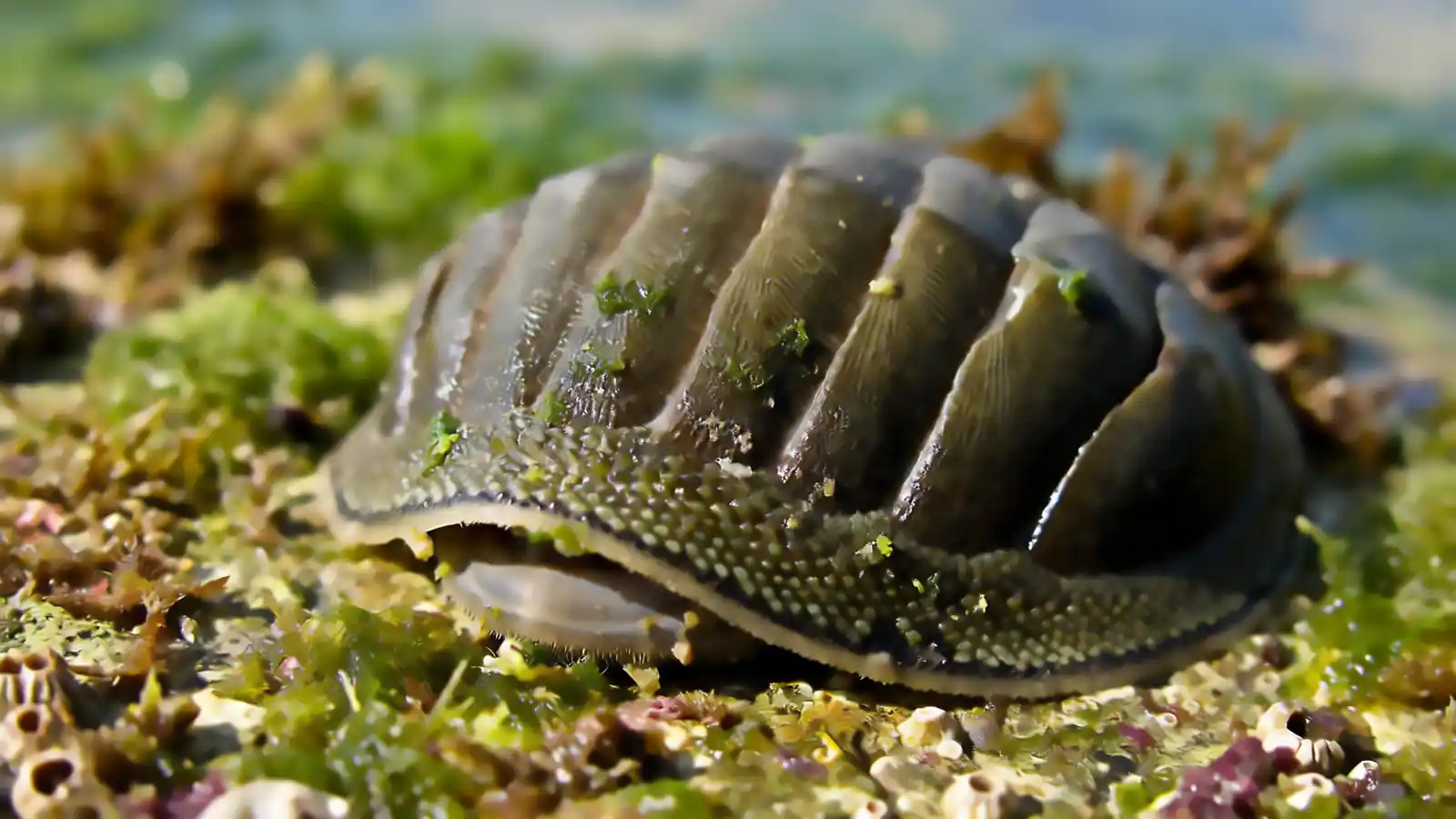
Eight is the magic number, and it never varies: every one carries exactly eight shell plates, overlapping like the tiles on a roof and held in a tough, muscular skirt called the girdle. Because the plates articulate against each other instead of forming one rigid shell, the animal can flex. It moulds its body over knobs and hollows in the rock until the seal is perfect, and in some species the articulation goes further still, letting a one that has been prised loose roll itself into a ball, soft parts inside, armour out.
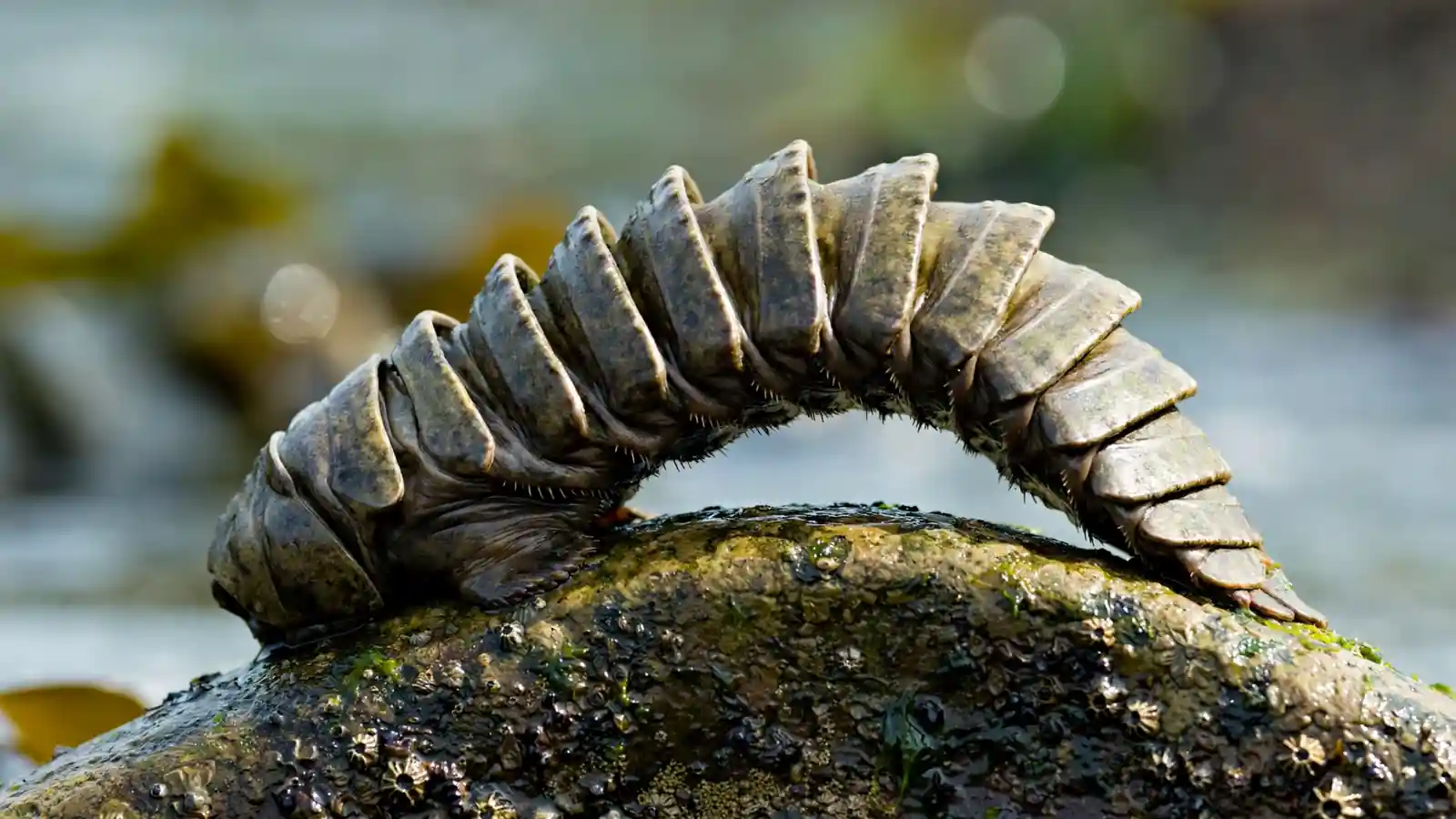
The plates hold one more surprise. Their surface is pierced by microscopic canals carrying sense organs, and in some species those organs graduate into true eyes, hundreds of them, with lenses made of aragonite, the same mineral as the shell. A member of those species quite literally sees through its own armour, dimly but usefully, watching for the shadow of a predator. The girdle around the plates is its own display: smooth in some species, and in others armoured with scales, bristles or spines.
Chiton Teeth: Magnetite in the Radula
Under the front of the body sits the feeding machine, a radula, the mollusk’s ribbon of teeth, and the animal’s version is unique in the animal kingdom. The mature teeth at the working end are capped with magnetite, an iron oxide, the mineral of lodestones. When biologists identified it, the species became the first animal known to manufacture magnetite in its own body. The point of the iron is hardness: the caps rank among the hardest and most wear-resistant materials any animal produces, and they need to be, because dinner is scraped off rock.
Teeth that eat rock wear out, so the radula works as a conveyor: new teeth form continuously at the back of the ribbon and advance as the worn front teeth are shed, a replacement line the animal runs for its whole life. The magnetite trick has made the animal famous far beyond malacology, because a tooth that stays hard and sharp while grinding stone is a design engineers would love to copy. The complete species reference follows the radula and the rest of the anatomy in fine detail.
Where They Live: The Rocky Shore
Chitons live where rock meets sea, on shores in every ocean, from the splash zone down into deep water. The familiar ones are intertidal, clamped to boulders and rock faces where waves break, held by a broad muscular foot that works like a suction pad. Wave shock that would tear a snail away simply presses its low, flexible profile tighter to the stone.

The daily routine follows the tide. Many shore species feed at night or under water and rest clamped in a chosen spot by day, and some return to exactly the same resting place, a home scar worn and fitted to the individual shell. Out of the water, the girdle seals down against the rock and traps moisture over the gills, letting the animal sit out the low tide in its own small reservoir until the sea comes back for it.
What Do They Eat? Grazing the Rock Gardens
Most chitons are grazers, and their grazing shapes the shore. Night after night the radula rasps over the rock, cropping films of algae, diatoms and other microscopic growth down to a close shave, leaving pale feeding trails across dark algal turf. By keeping the surface cropped, chitons hold open the bare rock that barnacles, limpets and young seaweeds need to settle, an outsized ecological role for an animal most beachcombers walk straight past.
The grazers are, in turn, a food resource with armour problems attached: sea stars, fish, crabs and shorebirds all take chitons, prising, crushing or swallowing them plates and all. A few chitons break the vegetarian pattern entirely: some browse on sponges and bryozoans, and the veiled species has become an ambush predator, raising a flap of its girdle off the rock and snapping it shut over small crustaceans that wander underneath, a mollusk running a mousetrap.
Living Fossils: 500 Million Years on the Rocks
The animal’s design is not old in the way a shark is old; it is old in the way the moon is old. The group reaches back to the late Cambrian, around 500 million years ago, before fish had jaws, before plants had colonised the land, before there was anything on Earth with a backbone walking, swimming or flying. The earliest fossils are already recognisably chitons, plated grazers on Cambrian rock. The lineage then simply persisted, through every mass extinction the planet has run, which is why the living-fossil label, overused elsewhere, fits this animal honestly.

Modern chitons have mostly escaped the attention of conservation assessors, species by species, and shore populations face the ordinary pressures of collection, trampling and warming seas. But the deep fact of the group is resilience. Empires of trilobites, ammonites and dinosaurs rose and vanished around this animal, and on any rocky shore today the experiment is still running, eight plates at a time.
Fun Facts
- Chiton is pronounced “KY-tuhn”, from a Greek word for a tunic, the armoured garment the plates were thought to resemble.
- Its teeth are capped with magnetite, the mineral in lodestones, so the animal’s bite is genuinely magnetic.
- Some chitons see through their shells: hundreds of tiny eyes with lenses of aragonite are set into the plates themselves.
- Dislodge some chitons from the rock and they roll into a ball, exactly like a pill woodlouse on land.
- The gumboot species is the giant of the group at up to 36 centimetres, and its leathery girdle covers the plates completely.
- One predatory species hunts like a mousetrap, lifting a flap of its girdle and snapping it down on passing shrimp.
Frequently Asked Questions
What Is a Chiton?
A It is a marine mollusk of the class Polyplacophora. Instead of one shell it carries eight overlapping plates on its back, set into a muscular girdle, and it lives grazing algae from rocks. Around 1,000 living species are known, from a few millimetres long to the 36-centimetre gumboot chiton.
Why Do Chitons Have Eight Shell Plates?
Eight separate plates give the animal armour that bends. The plates overlap like roof tiles and articulate against each other, so the body can mould itself over lumps and curves in the rock and clamp down tightly. In some species the arrangement goes further, letting a dislodged animal roll itself into a protective ball.
What Are Chiton Teeth Made Of?
The working teeth on a specimen’s radula are capped with magnetite, an iron oxide mineral, the first case of an animal producing magnetite ever identified in biology. The caps make the teeth exceptionally hard and wear-resistant, which matters when your food is scraped off rock, and worn teeth are continuously replaced from the back of the ribbon.
How Old Are Chitons as a Group?
Very old. Chitons date to the late Cambrian, around 500 million years ago, which makes the group older than the dinosaurs by more than 150 million years and older than trees. The plated, grazing body plan visible in the earliest fossils is recognisably the one chitons still use on rocky shores today.
What Do Chitons Eat?
Most chitons are grazers, scraping films of algae and other microscopic growth off rock with the radula. Some species also take sponges, bryozoans or detritus, and a handful are predators: the veiled chiton lifts a flap of its girdle and snaps it down over passing shrimp and other small animals.
Where Do Chitons Live?
Chitons live on hard surfaces in the sea, above all on rocky shores, where they clamp to rock, boulders and shells from the splash zone down. They occur in every ocean, and while the tide-line species are the familiar ones, many others live in deep water where divers never see them.
Can Chitons Roll Into a Ball?
Some can. Species with wide, flexible girdles and strongly articulating plates can curl up when they are prised off the rock, enclosing the soft foot and gills inside a ball of armour. It is the same trick the pill woodlouse performs on land, arrived at independently by a mollusk.
Similar Species Worth Exploring
Keep Exploring
Keep exploring the mollusks: meet the geoduck, a clam built for a century underground, or browse the whole family tree in our guide to the types of mollusks. Then come back to the armoured grazer on the rocks, five hundred million years in the making: the chiton.