Types of Dolphins
Types of Dolphins: From Coastal Bottlenoses to the Mighty Killer Whale
Types of dolphins range from a waist-high river specialist smaller than a child to the killer whale, a nine-metre hunter that is a dolphin through and through. Around 40 species survive today, and this guide walks through the two great groups: the oceanic family and the river dolphins.
By Emily Carter · Reviewed by our vet team · Updated 10 November 2026 · 7 min read
About 40 living speciesSmallest: about 1.2 mLargest: the killer whale
At a Glance
What Makes a Dolphin a Dolphin
Types of dolphins are toothed whales: mammals that breathe air, bear live young and hunt with echolocation, clicking out sound and reading the echoes to find fish in dark water. Most share the classic dolphin shape: a beak clearly set off from a rounded forehead, called a melon, a curved dorsal fin, and a single row of small cone-shaped teeth in each jaw.
The experts cannot quite agree on the final headcount, because a few populations keep being split or merged as new evidence arrives, but most put the living species at around 40. The types of dolphins fall into two very uneven camps: one huge oceanic family, and a handful of river dolphins scattered across separate small families of their own.
Names mislead delightfully here. The killer whale is a dolphin, the largest of them all, and so are the two pilot whales and the false killer whale, a group of big, dark, blunt-headed species nicknamed the blackfish. If it belongs to the oceanic dolphin family, it is a dolphin, no matter what the name on the label says. Taxonomists keep the family tree under review, and newly recognised species still turn up every decade or so, most recently when coastal dolphins long lumped in with known species proved to be distinct. The dolphins, it seems, are not finished surprising us.
The Oceanic Dolphins
The oceanic dolphins are the largest family in the whole whale order, with around 37 species found in every ocean on Earth. This is the family of the bottlenose and its spotted, striped and spinner cousins, of acrobats that bow-ride ships and of deep-water hunters most people never see at all. A family account of the oceanic dolphins lists every member, from small coastal species to the nine-metre orca. Their sizes run from the 1.2-metre Hector’s dolphin to the orca, and the family’s variety of beaks, fins and colour patterns is the widest in the whale world.
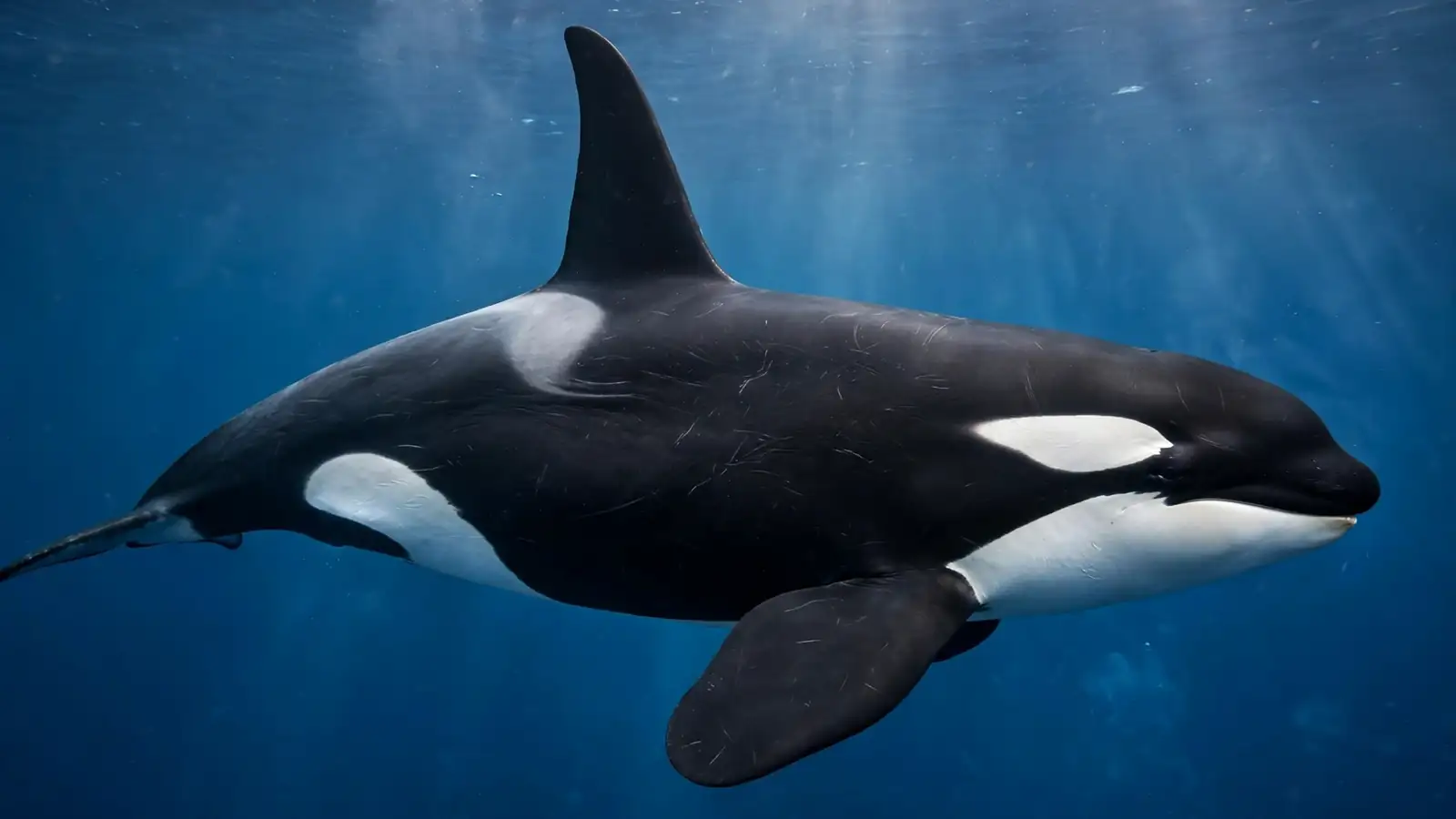
The family even includes the heavyweight champion below. A killer whale is not a whale that failed an audition; it is an oceanic dolphin that grew to nine metres, and its family loyalty shows in its melon, its teeth and its pod-centred life. Of all the types of dolphins, the four profiled here span the family’s full range, from harbour-side favourite to open-ocean giant.
The River Dolphins
A few dolphins left the sea behind entirely. The river dolphins live in great tropical river systems: the Amazon and Orinoco in South America, and the Ganges, Indus and Yangtze in Asia. They belong to several separate families rather than one, and scientists think their ancestors split away from the oceanic line very early, which makes them living cousins from an older branch of the tree.
River life shaped them strangely. They tend to have very long, thin beaks full of teeth, tiny eyes and poor vision, huge paddle-like flippers, and necks flexible enough to twist between flooded-forest trees when the waters rise. The Amazon’s pink river dolphin even turns rose-coloured as it ages. Their story has a sad edge: one Asian species, the Yangtze’s baiji, is probably extinct, and every surviving river dolphin is in trouble. All of them now live alongside heavy boat traffic, dammed and dredged channels and nets set for other catch, which is why researchers count them among the most threatened small whales on Earth.
Dolphins and Porpoises: Spot the Difference
Porpoises are close cousins, not true dolphins, and you can usually tell them apart at a glance. A dolphin has a beak, a curved, sickle-shaped dorsal fin and cone-shaped teeth. A porpoise has a blunt, rounded face with no beak, a small triangular fin, and teeth shaped like tiny spades.
Only six or seven porpoise species survive, and the smallest of all, the vaquita of the Gulf of California, is also the most endangered marine mammal on Earth. It is a porpoise, not a dolphin, but leaving it out of a guide to small toothed whales would be a crime against completeness.
Where Types of Dolphins Live
Between them, the types of dolphins have colonised almost every water on the planet. Oceanic species fill every sea from the Arctic edges to the sub-Antarctic, with the richest variety in warm tropical and temperate water. Some, like the bottlenose, keep to coasts, harbours and even estuaries; others, like the spinners and spotted dolphins, belong to the open ocean and may never come within sight of land.
The exceptions prove how adaptable the group is. River dolphins never leave fresh water at all, riding the flood pulse of the Amazon and the great Asian rivers. Fresh water, salt water, harbour or high sea: wherever fish gather in numbers, some dolphin has usually found a way to make a living there.
A few species blur the border entirely, following wide rivers far inland for days at a time or settling full-time in brackish coastal lagoons. The dolphin body plan, it turns out, answers to food and shelter far more than it answers to salt.
Dolphins and People
Few wild animals engage us like dolphins do. They bow-ride boats and surf harbour wakes, and in a handful of places they even work with human fishers, herding fish towards the nets in return for the escapees. Scientists value them as indicators of ocean health: a coast with dolphins is usually a coast with fish in it.
The relationship cuts both ways. Dolphins drown in fishing nets, swallow plastic, and hunt through shipping noise that muddles their echolocation. Watching them well means distance and patience: let the pod choose the encounter, keep clear of mothers with calves, and never feed a wild dolphin, which only teaches it to beg from boats.
How to Tell Dolphins Apart
Start with the head. A clear, well-defined beak points to one of the classic dolphins; a blunt, rounded forehead with no beak at all suggests one of the blackfish, or a porpoise. Then look at the fin: tall and sickle-curved on most dolphins, small and triangular on porpoises, and on a grown male killer whale a straight triangle up to 1.8 metres high.
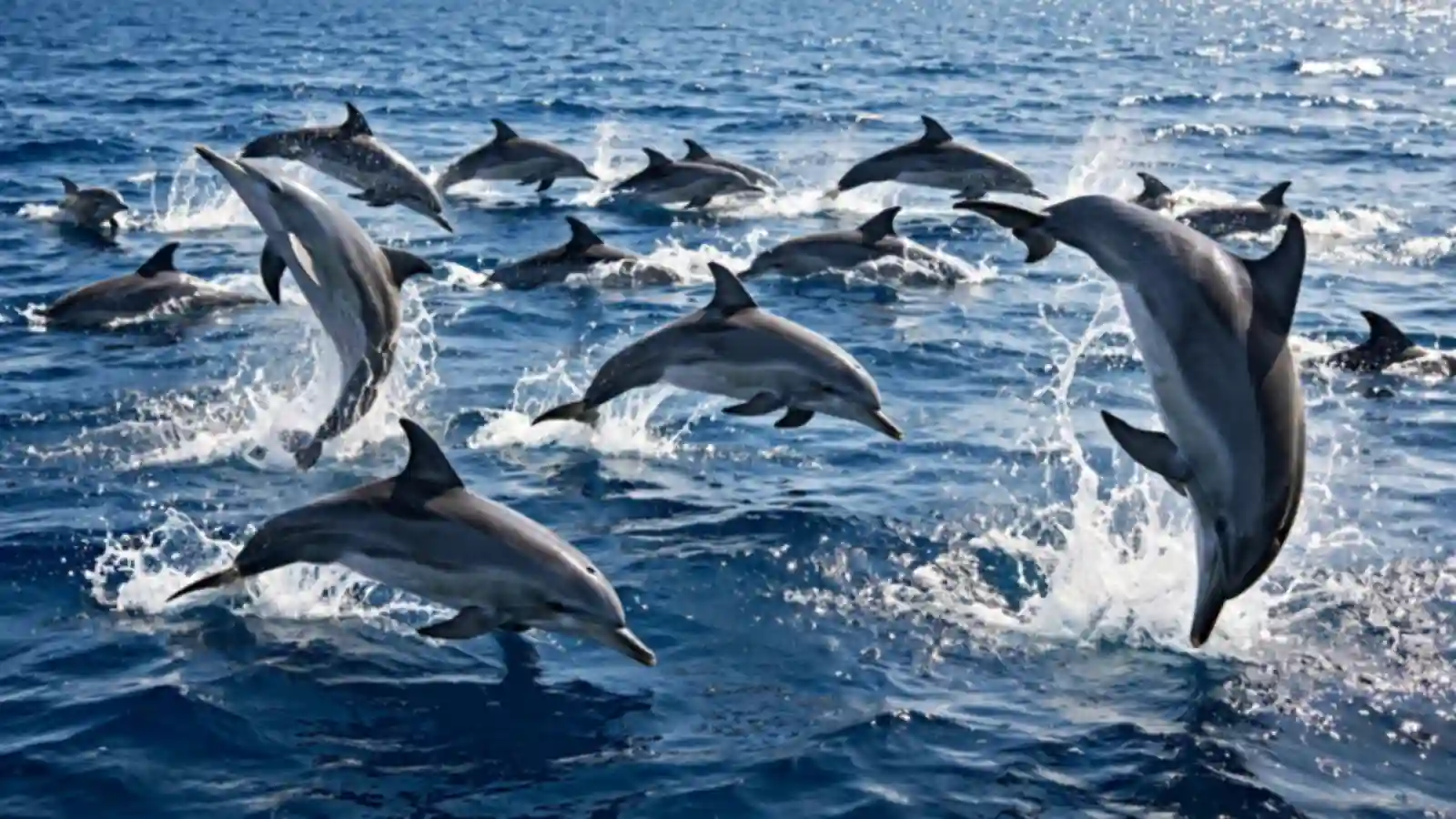
Colour and behaviour finish the job. Stripes mark the fast oceanic schoolers, spots appear on several tropical species as they age, and pink can only mean a river. A lone animal hugging the harbour wall is most likely a bottlenose; a hundred leaping in a ship’s wake are almost certainly commons or spinners on the move.
Frequently Asked Questions
How Many Types of Dolphins Are There?
Around 40 types of dolphins are alive today. Most belong to a single huge family, the oceanic dolphins, with around 37 species; the river dolphins make up the rest, spread across a few small families of their own. The exact total shifts as scientists split or merge borderline populations.
Is a Killer Whale Really a Dolphin?
Yes. The killer whale, or orca, is the largest member of the oceanic dolphin family, growing to about 9 metres (30 feet). It shares the family’s melon forehead, toothed jaws and pod-based social life; only its size and its old, misleading name suggest otherwise.
What Is the Smallest Dolphin in the World?
The smallest are Hector’s dolphin and its Maui subspecies, from New Zealand, at about 1.2 to 1.4 metres long, roughly the height of a small child. Maui dolphins are also among the rarest marine mammals on Earth, with only a few dozen adults left.
What Is the Difference Between a Dolphin and a Porpoise?
Dolphins usually have a beak, a curved dorsal fin and cone-shaped teeth. Porpoises have a blunt face with no beak, a small triangular fin and spade-shaped teeth. Porpoises are also generally smaller and shyer, and there are only six or seven species of them.
Do Any Dolphins Live in Rivers?
Yes. The river dolphins live in the Amazon and Orinoco in South America and in great Asian rivers such as the Ganges and the Indus. They have long thin beaks, tiny eyes and flexible necks for hunting in flooded forests, and sadly every surviving species is endangered.
Keep Exploring
Ready to meet the relatives? Our guide to the types of whales covers the whole whale family tree, the bottlenose dolphin profile goes deep on the best-loved species of all, and the killer whale guide tells the full story of the dolphin that outgrew the name. However you explore the types of dolphins, start with the family: once you see the shape of it, every species falls into place.