Pollock
Pollock: one name, two fish, and a very big secret
The pollock on the world’s fish counters is not one fish but two, an Alaska giant of the Pacific and an Atlantic cousin, both true cods travelling under one shared name. This guide separates the pair, explains where each one lives, settles the comparison with cod and covers the mercury facts, all from the animal’s side of the story rather than the fillet’s.
By Emily Carter · Reviewed by our vet team · Updated 10 November 2026 · 8 min read
Two species share one nameAlaska shoals among Earth’s biggestTrue members of the cod family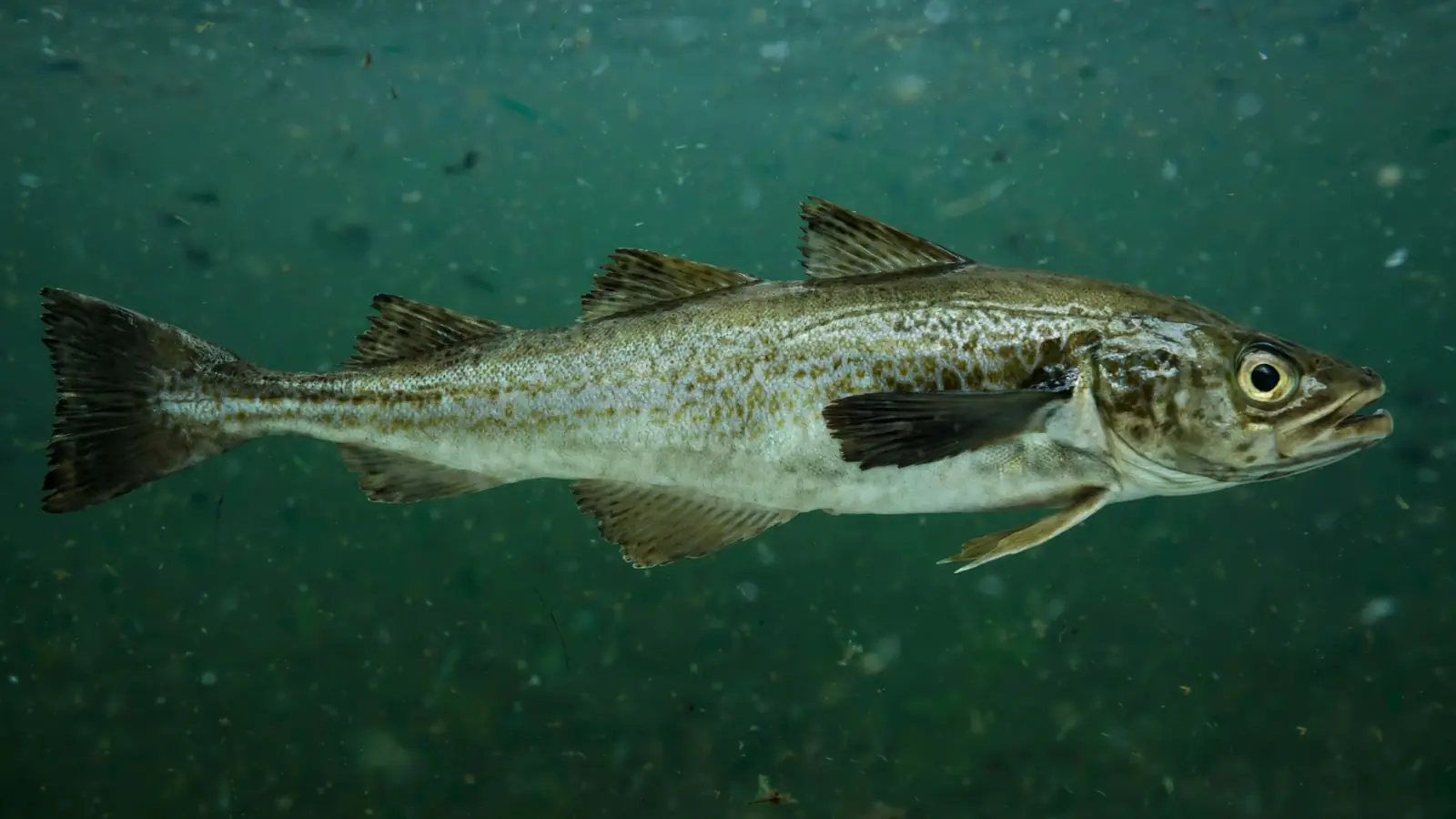
At a Glance
A pollock lives a double life in the public mind, and for once the confusion is justified, because the name covers two different fish on opposite sides of the planet. Both are true cods, both school through cold northern seas in enormous numbers, and between them they quietly became some of the most caught fish on Earth. Separating the pair is the whole trick to understanding either of them.
Pollock: One Name, Two Fish
Here is the pair. In the North Pacific swims the Alaska fish, Gadus chalcogrammus, a mottled, big-eyed schooling fish of the Bering Sea. In the North Atlantic swims the Atlantic fish, Pollachius virens, darker and larger, the fish Europeans mostly call saithe or coalfish. Both belong to Gadidae, the cod family, and both are caught commercially, but the Alaska species dwarfs the other in volume: when the world says the name, it almost always means the Pacific fish.
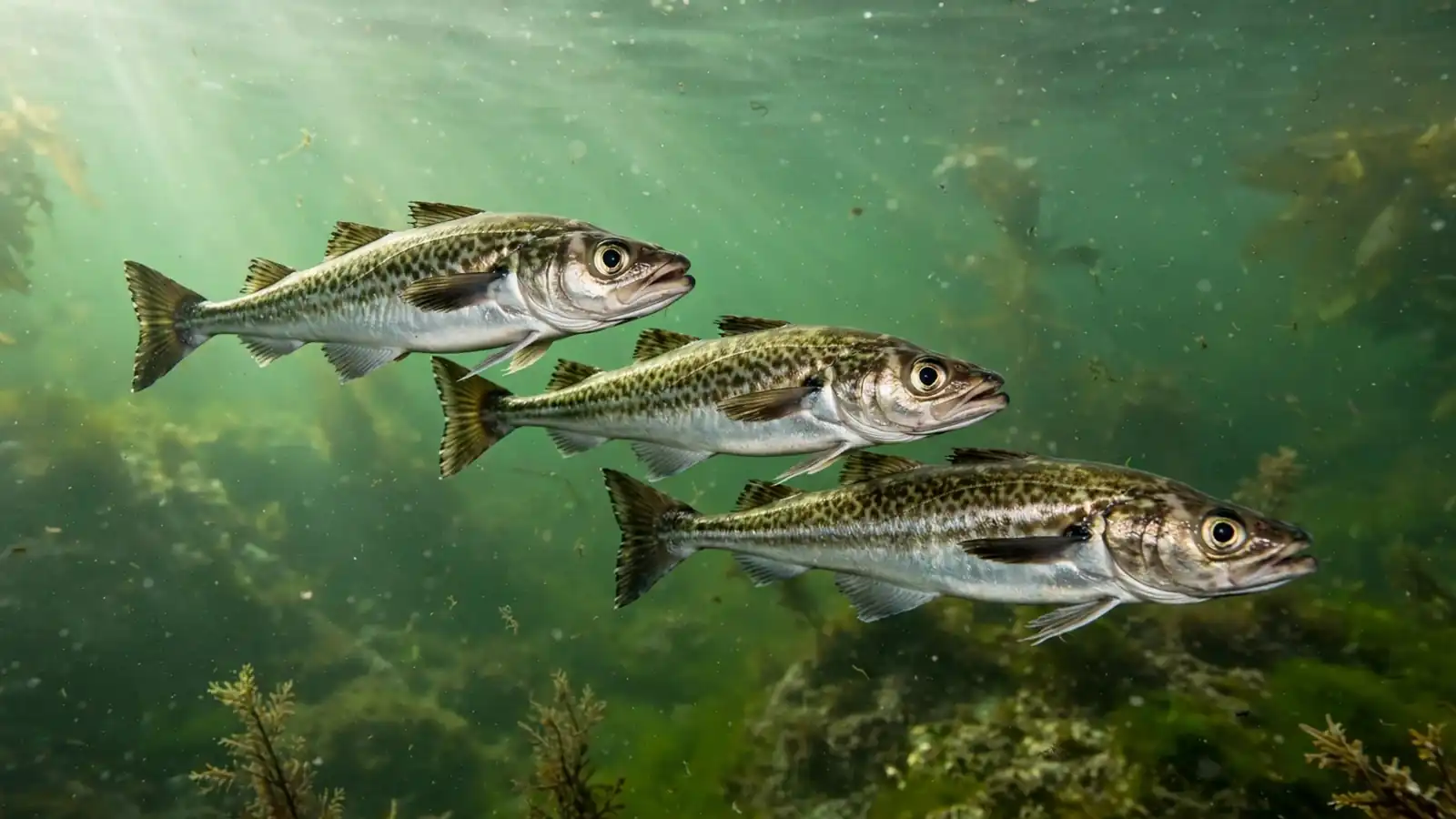
Telling them apart at a glance is a matter of three marks. The Alaska fish is mottled olive-brown with big eyes and no real chin barbel. The Atlantic fish is darker and greener, carries a small barbel, and grows noticeably bigger. Both wear the family uniform of three dorsal fins and a forked tail, but put the pair side by side and the shared name starts to look like a historical accident, two cousins issued the same passport.
The Alaska Species: Giant of the Bering Sea
The Alaska fish may be the most important fish most people have never seen. It gathers over the Bering Sea shelf in schools of staggering size, midwater layers of fish that can stretch for miles, feeding on krill, small fish and each other’s young. The annual catch runs into millions of tonnes, placing the fishery among the largest single-species harvests on the planet. The fish behind the tonnage is modest: typically 30 to 50 centimetres, mottled for life over sand and in the water column, with a maximum size near 90 centimetres.
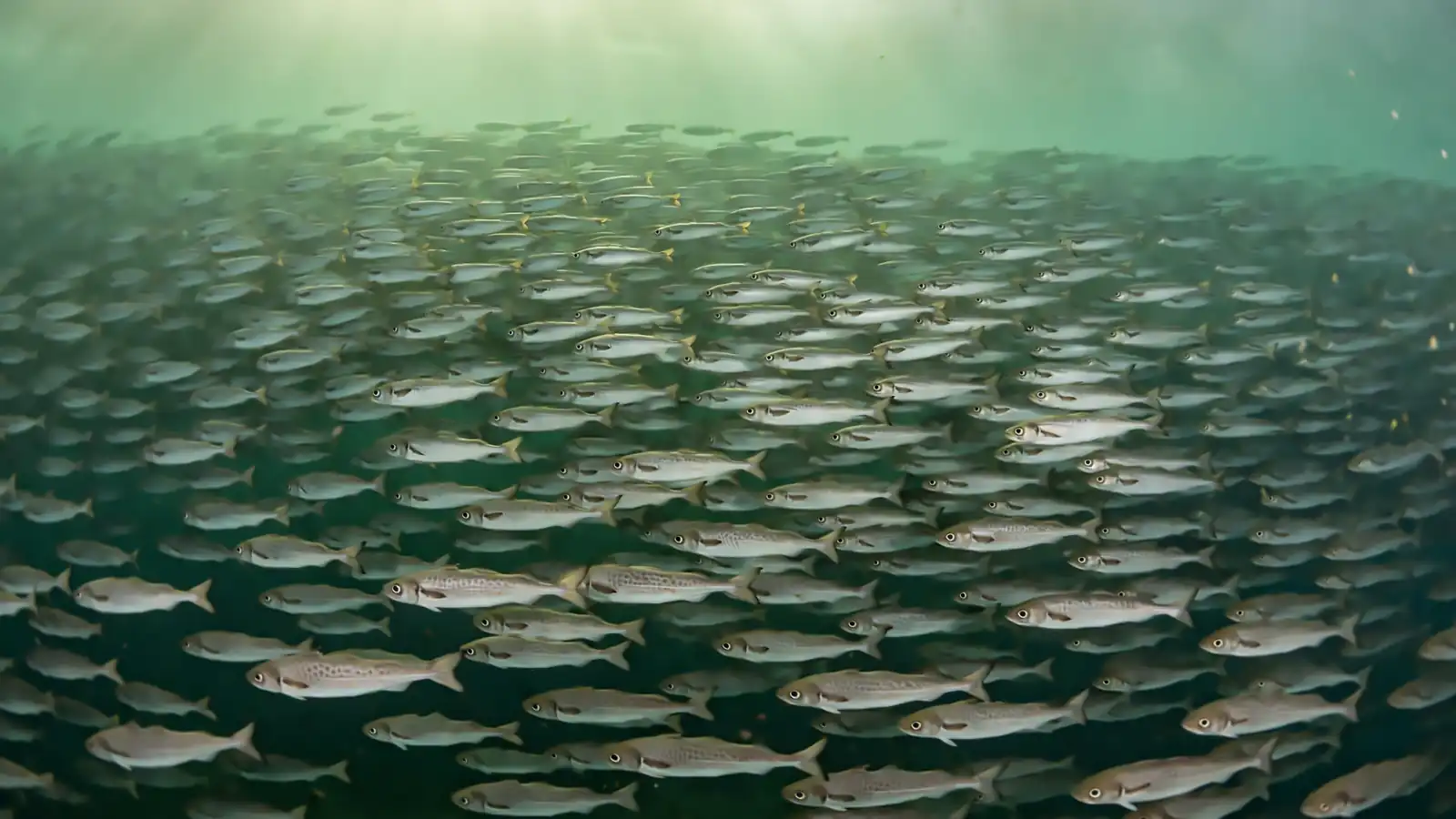
The Alaska fishery is frequently held up as a model of quota-based management, with catches set from annual surveys of the stock, and the fish itself is a cornerstone of the Bering Sea food web, eaten by Steller sea lions, seals, whales and seabirds in quantities that make it as important uneaten as caught. It lives to around 17 years, spawns in vast winter aggregations, and its mild flesh reaches most of the world processed, the route by which the Alaska fish’s species account and the fish counters of three continents end up describing the same animal.
The Atlantic Species: Saithe of the North
The Atlantic fish is the bigger, moodier fish of the pair, dark green-black along the back, growing to around 130 centimetres and carrying the small chin barbel its Pacific cousin lacks. Young fish live inshore, often in harbours and over kelp, where generations of children have caught them on handlines; the adults move offshore into deep, roaming schools that hunt fish and crustaceans through the water column. Under its European name of saithe it supports major fisheries from Norway to Iceland, and on the American side it ranges from New England up to Labrador.

One more confusion needs flagging while we are here, because the names differ by a single letter. The European pollack, Pollachius pollachius, the Atlantic fish’s only close relative, is a separate species again, a more inshore, reef-loving fish of European coasts. The name with an o and pollack with an a are different animals, and the Atlantic fish, the saithe, is the larger, darker, more oceanic of the Pollachius pair.
Pollock vs Cod: The Family Resemblance
Put a one beside an Atlantic cod and the kinship is obvious, because the differences are details, not design. Cod grow bigger and heavier, carry a bold, whiskery chin barbel, and show a pale lateral line against a speckled flank. The Alaska fish is slimmer, mottled rather than speckled, big-eyed, and effectively barbel-less. The Atlantic fish is darker than both, almost black-green on the back, with a straighter pale line. All three share the cod family’s soft-finned, three-dorsal silhouette.
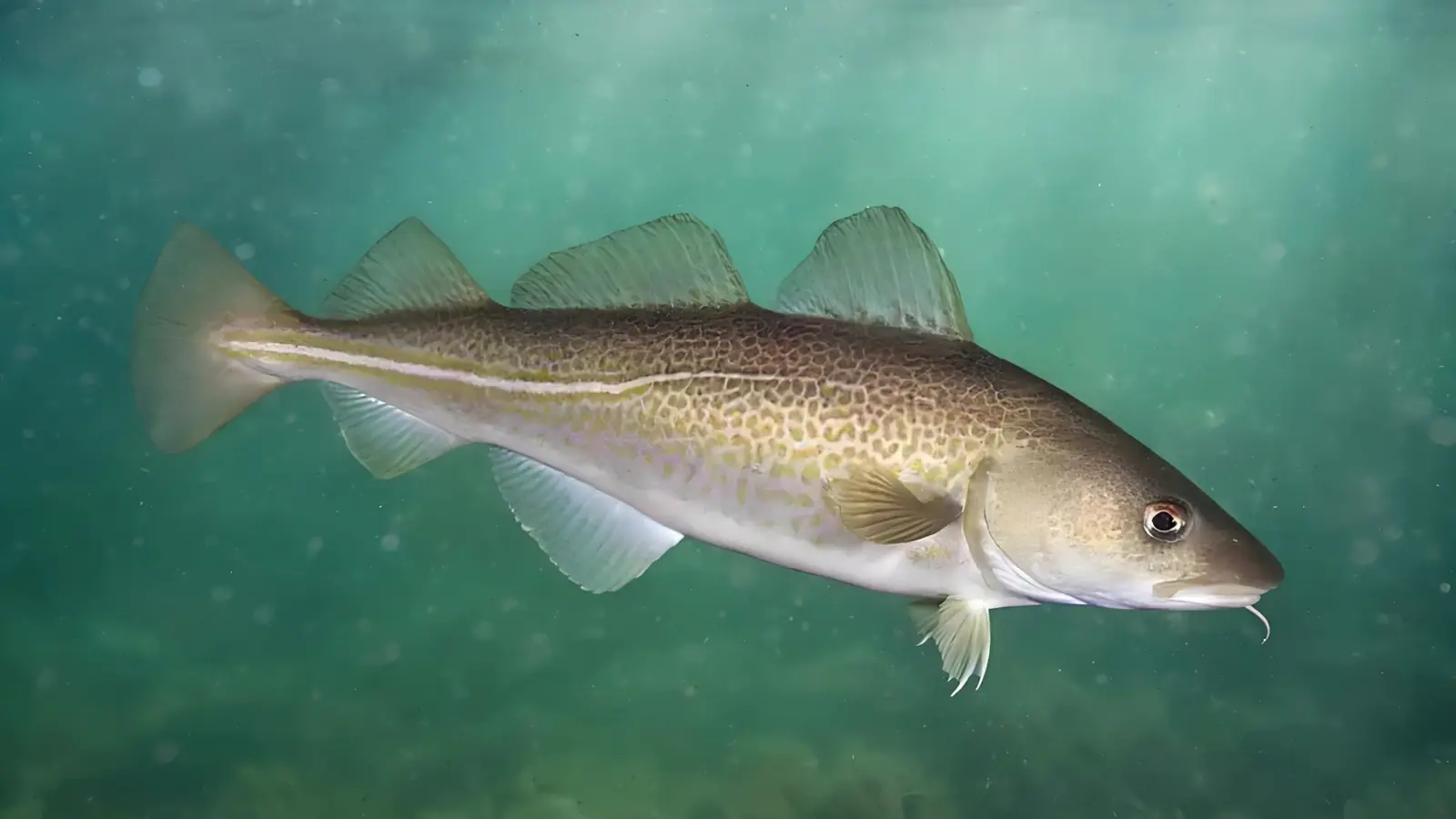
So the everyday question, it or cod, has a slightly cheeky scientific answer: the Alaska fish is a cod, by genus, while the fish called cod is its close cousin. The Atlantic fish stands one step further away in Pollachius, but the family resemblance, the three dorsal fins, the barbel heritage, the cold-water schooling life, runs through them all. The names on the counter are history; the family tree is blunter.
Cold Seas: Range, Depth and Daily Life
Both species are fish of the cold shelves of the north. The Alaska species ranges from Japan and Alaska across to British Columbia, concentrated in the Bering Sea and the Gulf of Alaska, living from near the surface down several hundred metres but spending much of its life in midwater over the shelf. The Atlantic species mirrors it across the other ocean, from the Barents Sea and Norway to Iceland, Greenland, Canada and New England. Neither tolerates warmth; the southern edges of both ranges are set by temperature.

Daily life runs on the cold-water timetable: feeding movements up and down the water column, long seasonal shifts between feeding and spawning grounds, and for the young of both species a nursery period inshore before they join the offshore schools. It is an unglamorous, enormously successful way of life, repeated by hundreds of millions of fish in two oceans under one shared name.
The Mercury Question
Mercury climbs food webs, concentrating at every step, which is why the biggest, longest-lived predators carry the most and why the species pair carry so little. Krill, small crustaceans and little fish are low-mercury food; a mid-level hunter growing fast in cold water accumulates only a trace across its life. The result, recognised in official US dietary guidance, is that it sits in the lowest-mercury tier of seafoods, the best-choice category for regular eating, a ranking earned by its ecology rather than by marketing.

The same biology explains the contrast with the high-mercury names. A swordfish or a shark eats mid-sized predators for decades and concentrates the mercury of thousands of meals; a fish eats krill and small fish for a handful of years and concentrates very little. Position in the food web, written into the animal’s life, is the whole mercury story, and on that measure the species pair sit near the clean end of the sea.
Fun Facts
- The Alaska species was renamed by science: long filed under Theragra, it now sits in Gadus, the cod genus itself.
- Atlantic fish answer to half a dozen names, saithe, coalfish and coley among them, depending on the port.
- Beware the third name-trap: the European pollack, Pollachius pollachius, is a separate species from the Atlantic fish.
- Alaska fish gather in spawning shoals so vast and dense that they show up as solid layers on sonar.
- Its mottled back is camouflage for a hunter that works both near the bottom and up in open midwater.
- They are cornerstone prey of the north: sea lions, seals, whales, seabirds and bigger cod all queue up to eat them.
Frequently Asked Questions
Is Pollock a Real Fish?
Yes, twice over. It is the shared name of two real, closely related species in the cod family: the Alaska fish of the North Pacific and the Atlantic fish of the North Atlantic. When a menu or a fish counter says the name without a qualifier, it is almost always the Alaska species, which is caught in far greater numbers.
Alaska Pollock vs Atlantic Pollock: What Is the Difference?
Ocean, size and markings separate them. The Alaska fish lives in the North Pacific, is mottled olive-brown, big-eyed and essentially barbel-less, and rarely exceeds about 90 centimetres. The Atlantic fish lives in the North Atlantic, runs larger at up to about 130 centimetres, wears a darker green-black back, and carries a small chin barbel. They are in different genera, Gadus and Pollachius.
Pollock vs Cod: How Are They Different?
They are family rather than strangers: both belong to Gadidae, the true cods, and the Alaska fish is even classified in the cod genus Gadus. Against Atlantic cod, they are smaller and slimmer; cod carry a bold chin barbel and a pale lateral line, while Alaska fish are mottled with no real barbel and Atlantic fish are darker with a straighter, lighter line of their own. In short, a one is a cod by blood, just not the fish the name cod usually means.
Is Pollock High in Mercury?
No. It sits at the low end of the mercury scale, and official US dietary guidance places it in the lowest-mercury, best-choice tier for regular eating. The reasons are biological: they feed in the middle of the food web on krill and small fish rather than on other big predators, and mercury concentrates as it climbs, so mid-level hunters in cold water carry little of it.
Where Do Pollock Live?
In cold northern seas, split by species. Alaska fish range across the North Pacific, concentrated in the Bering Sea and the Gulf of Alaska, over the continental shelf from near the surface down several hundred metres. Atlantic fish range across the North Atlantic, from New England and Canada to Norway and the Barents Sea, with the young fish inshore and the adults schooling offshore.
What Family Do Pollock Belong To?
The cod family, Gadidae, alongside Atlantic cod, haddock, hake and whiting. The kinship is closer than the names suggest: genetic work moved the Alaska fish out of its old genus, Theragra, and into Gadus, the genus of the true cods themselves. The Atlantic fish sits in its own genus, Pollachius, with the European pollack as its only close relative.
Similar Species Worth Exploring
Keep Exploring
Keep exploring the cold-water fish: meet the marked cousin in our haddock guide, or browse the whole shoal in the types of fish. Then come back to the two fish hiding behind one very famous name: the pollock.