Yellowtail Snapper
Yellowtail Snapper: The Yellow-Tailed Night Hunter of the Reef
The yellowtail snapper is a slim western Atlantic reef fish with a bright yellow tail, feeding at night above the reef and growing to 86 cm.
By Emily Carter · Reviewed by our vet team · Updated 10 November 2026 · 9 min read
Up to 86 cmNight feederData Deficient
At a Glance
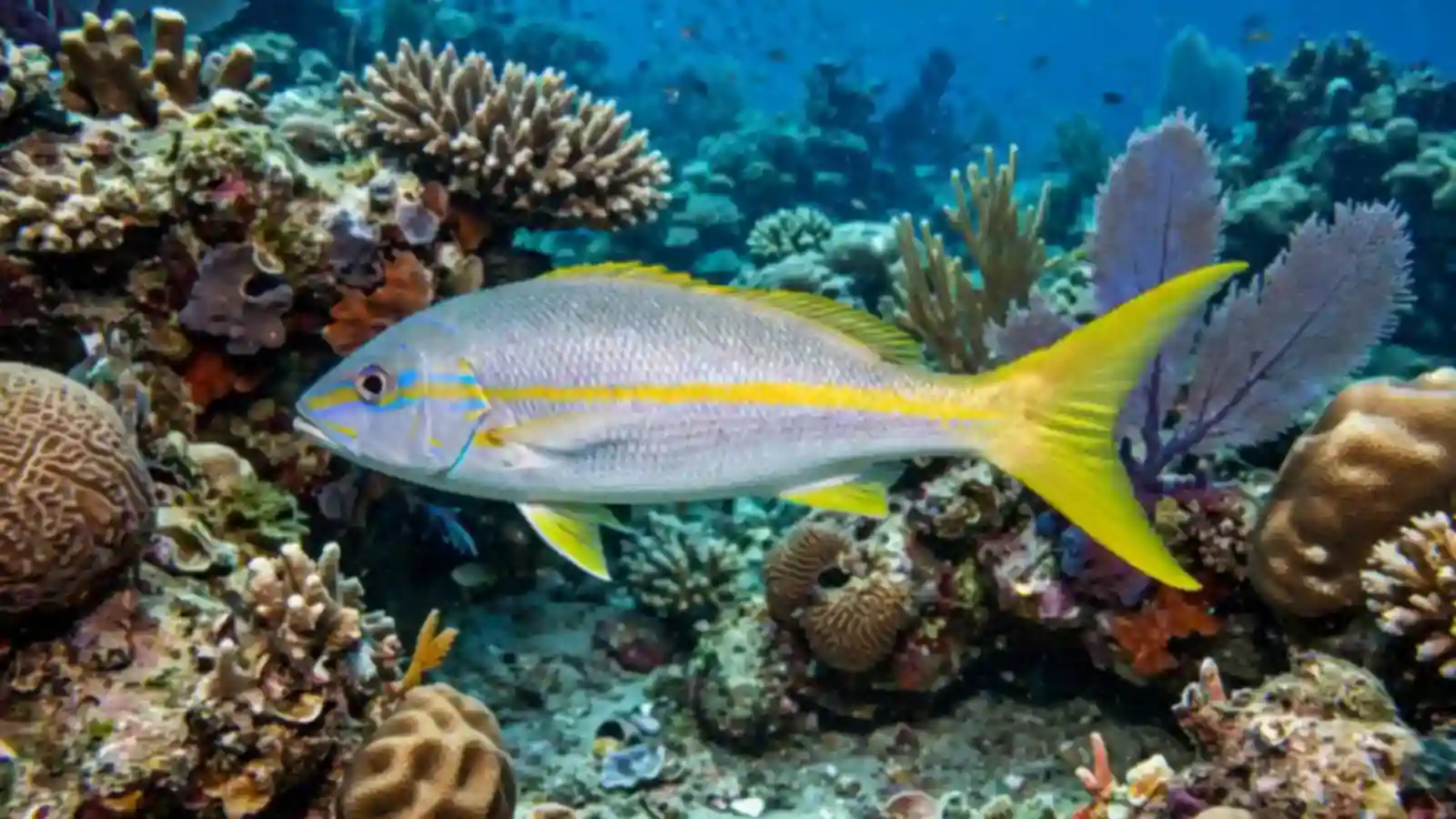
The yellowtail snapper is the reef’s yellow flag, a slim silver fish with a bright yellow tail that schools above the coral by day and hunts at night. It is one of the most recognisable fish of the western Atlantic, a fast swimmer that feeds above the seabed after dark and hides among seagrass as a juvenile.
Yellowtail Snapper Size: How Big Do They Get?
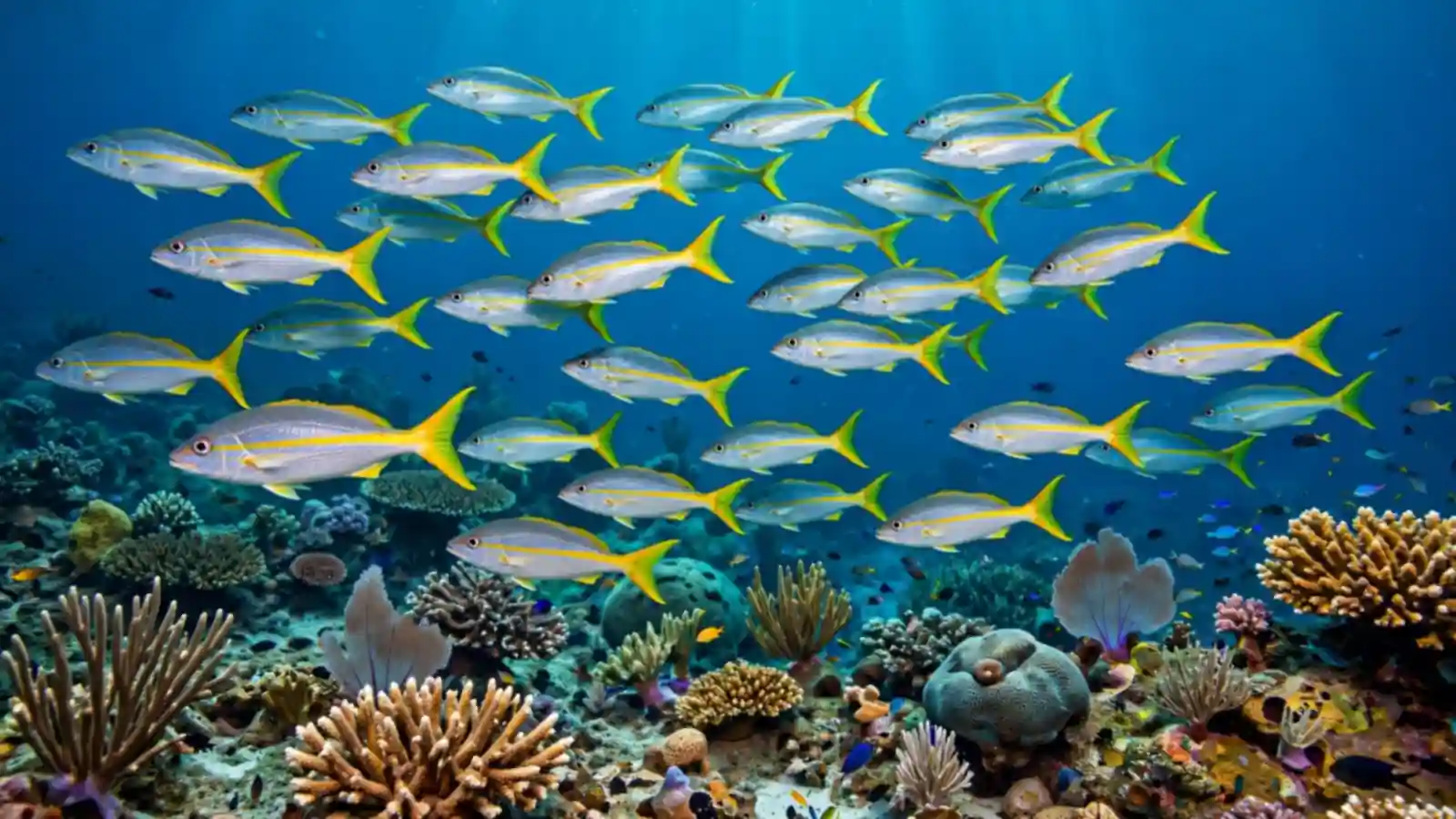
Most yellowtail snappers measure about 40 cm long and weigh around 3 lb, a slim, fast fish built for open water above the reef. The biggest reliably measured individual reached 86.3 cm, and the maximum published weight is around 4 to 5 kg — a large yellowtail is a genuinely impressive fish, though most of the ones divers meet are half that size.
Growth is steady rather than spectacular. It reaches maturity at around two to three years old, and it can live for up to 19 years, growing slowly throughout its life. The oldest fish are the largest, and the largest fish are the ones that produce the most eggs — which is why protecting big adults matters for the whole population.
The Yellow Tail
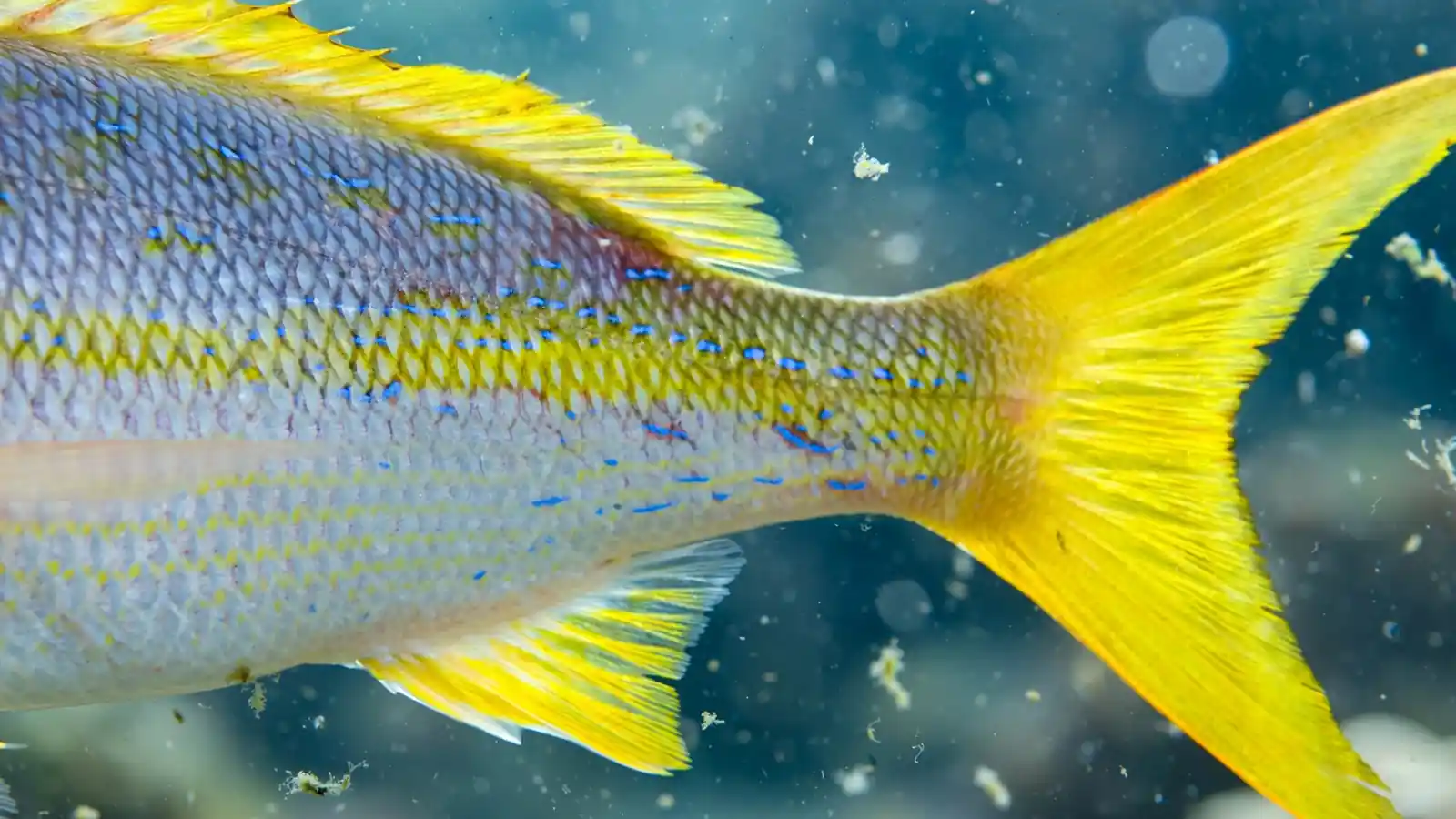
It is named for the obvious feature: a bright yellow tail, matched by a yellow stripe that runs from the snout along the flank to the tail. The body itself is silvery blue-white above and pale below, with small blue spots and streaks on the upper sides that catch the light as the fish turns. In a school of a hundred fish, the yellow tails flash in unison, and the school is visible from a long way off.
That colour does real work. The yellow stripe helps the school stay together in open water, letting each fish track its neighbours at a glance, and it marks the species clearly against the dozens of other silver fish on the reef. Young fish carry the same yellow tail from an early age, so a juvenile in the seagrass is as recognisable as an adult on the reef.
Where Yellowtail Snappers Live
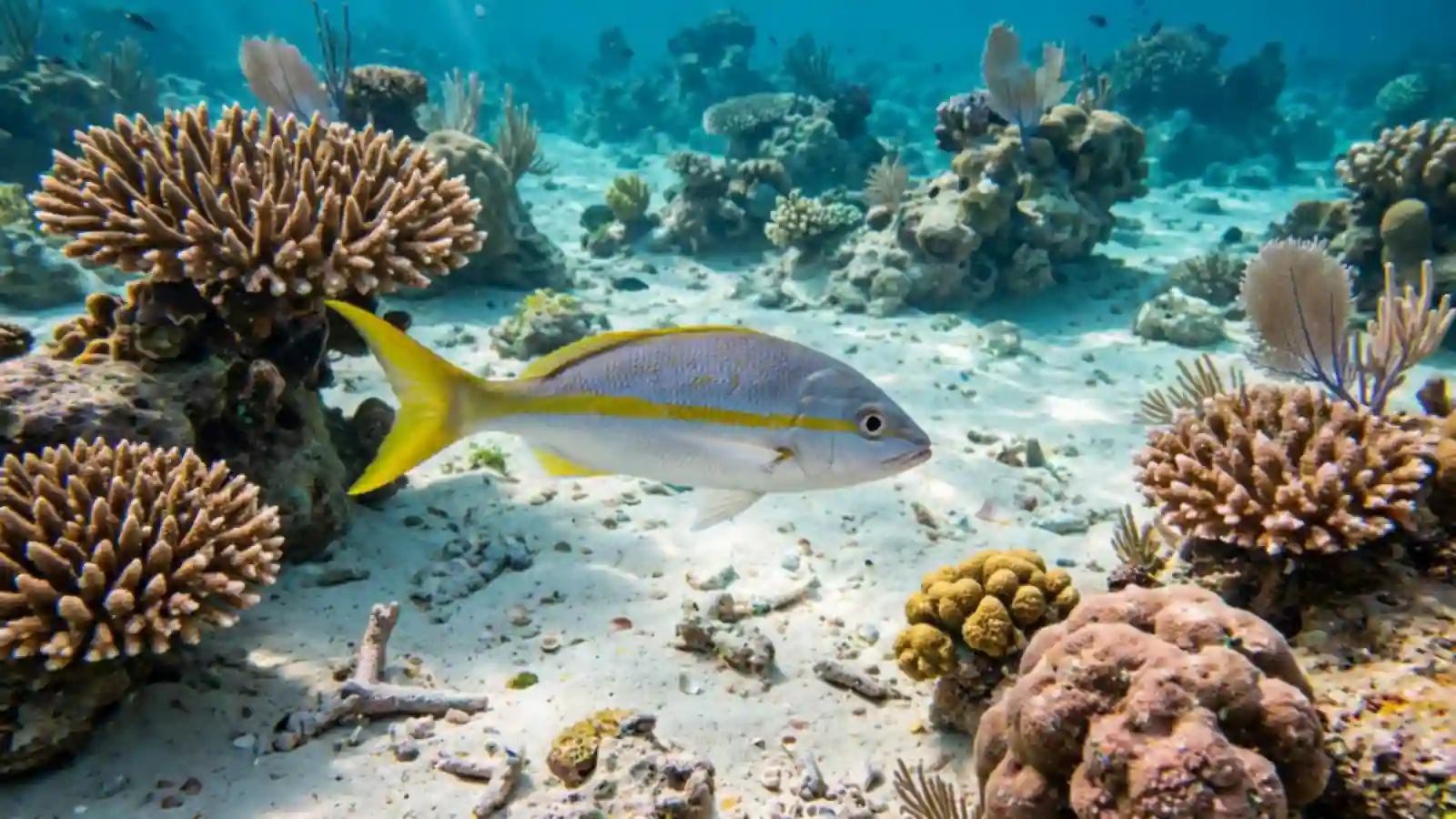
Yellowtail snappers live on coral reefs across the western Atlantic, from the south-eastern United States and the Bahamas through the Caribbean to Brazil. They favour clear, warm water over coral reefs, rocky bottoms and seagrass beds, living from the shallows down to around 180 metres, though most of the fish divers meet are in the top 30 metres. For the full species profile, see the Florida Museum’s yellowtail snapper profile.
By day the school hangs above the reef, drifting in mid-water and picking at plankton. By night it spreads out to feed over the reef and the sand flats, returning to the same reef at dawn. Juveniles live a different life entirely: they shelter in seagrass beds and mangrove fringes, where the cover is dense and the predators are fewer, moving out to the reef only when they are big enough to join the school.
Night Feeding

It is a night feeder, and its feeding style is unusual for a snapper. Instead of hunting on the bottom like its cousins, it feeds above the seabed, taking plankton, small fish and crustaceans from the water column as it swims. It is a fast, agile swimmer, and it can pick individual prey from the water with a quick snap of its jaws.
That night-time habit sets it apart from the mangrove snapper, which hunts on the bottom and among the reef structure. The two species share the same reefs and the same waters, but they feed in different places at different times — the yellowtail above the reef at night, the mangrove snapper on the reef itself. It is a neat division of labour that lets two similar fish live side by side.
Young in Seagrass

It starts life in the seagrass. The larvae drift in the open ocean, then settle into shallow seagrass beds and mangrove fringes, where they find food and cover in equal measure. The young fish are small, silvery and already yellow-tailed, and they grow fast in the warm, food-rich shallows, feeding on plankton and tiny crustaceans among the blades.
As they grow, they move gradually out to the reef, joining the adult school in deeper water. The seagrass stage lasts months, and it is the most vulnerable part of the life cycle: without healthy seagrass beds, there are no young yellowtails, and without young yellowtails there is no next generation on the reef. Protecting seagrass is protecting the snapper.
Yellowtail Snapper vs Mangrove Snapper
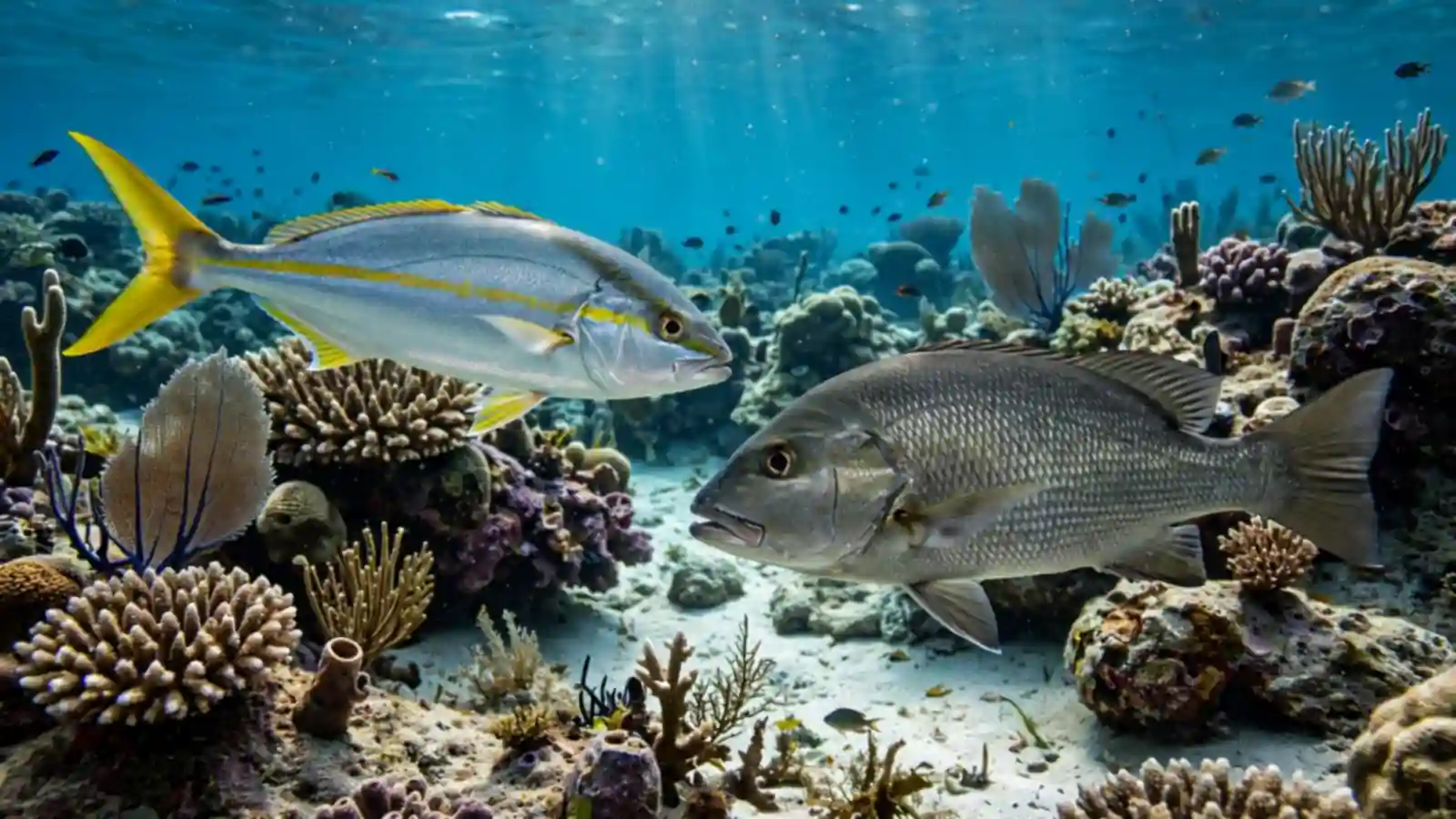
The yellowtail and the mangrove snapper are easy to tell apart once you know what to look for. The yellowtail is slim and silvery, with a bright yellow tail and a yellow stripe along its flank, and it feeds above the reef at night. The Mangrove Snapper is grey and heavy-bodied, with a dark stripe through the eye, and it hunts on the reef and among the mangrove roots, by day as a juvenile and by night as an adult.
They are both snappers, both western Atlantic reef fish, and both prized by anglers — but they live different lives. The yellowtail is the open-water schooler, the mangrove snapper is the reef-and-root hunter. On a single dive you can often see both: the yellowtail flashing above the coral, the mangrove snapper holding station in the shade below.
Yellowtail Snapper Conservation
It is listed as Data Deficient, a status set in 2015. That does not mean the species is safe — it means there is not enough information to judge its status properly. Some pages online call it Least Concern, but that is not from the current assessment, and this guide prints the assessment that exists: Data Deficient.
The species is heavily fished across its range, and it is one of the most important reef fish in the Florida and Caribbean fisheries. Management exists — size limits, catch limits and closed seasons — but the lack of a current assessment makes it hard to know whether those measures are enough. A new assessment, and better data on how many fish are left, is what the species needs most.
Fun Facts
- A school can number in the hundreds, all flashing their yellow tails in unison above the reef.
- Unlike most snappers, it feeds above the seabed at night rather than hunting on the bottom.
- Juvenile yellowtail snappers hide in seagrass beds, where their yellow tails are already bright.
- The biggest reliably measured one reached 86.3 cm — more than twice the usual size.
- It can live for up to 19 years, growing slowly throughout its life.
- Its official status is Data Deficient, set in 2015 — not Least Concern, as some pages claim.
Frequently Asked Questions
How Big Do Yellowtail Snappers Get?
Most yellowtail snappers measure about 40 cm and weigh around 3 lb. The biggest reliably measured individual reached 86.3 cm, and the maximum published weight is around 4 to 5 kg.
Why Is It Called a Yellowtail Snapper?
For its bright yellow tail and the yellow stripe that runs from its snout along its flank to the tail. The stripe helps the school stay together in open water and marks the species clearly on the reef.
Where Do Yellowtail Snappers Live?
On coral reefs across the western Atlantic, from the south-eastern United States and the Bahamas through the Caribbean to Brazil. Adults live over reefs and rocky bottoms; juveniles shelter in seagrass beds and mangrove fringes.
What Do Yellowtail Snappers Eat?
Plankton, small fish and crustaceans, taken from the water column above the seabed at night. They are night feeders, picking individual prey from the water with a quick snap of the jaws.
Are Yellowtail Snappers Dangerous?
No. They are fast, shy schooling fish with no interest in people. They are prized food fish, not a threat — the only danger is to the small fish and plankton they eat.
How Long Do Yellowtail Snappers Live?
Up to 19 years. They reach maturity at around two to three years old and grow slowly throughout their lives, with the oldest fish being the largest and most fertile.
What Is the Difference Between a Yellowtail Snapper and a Mangrove Snapper?
The yellowtail is slim and silvery with a bright yellow tail, feeding above the reef at night. The mangrove snapper is grey and heavy-bodied with a dark eye stripe, hunting on the reef and among mangrove roots. They share the same reefs but live different lives.
Similar Species Worth Exploring
Keep Exploring
Still exploring reef-snapper country? Meet the grey cousin in the Mangrove Snapper guide, watch the hunter that stalks its school in the Great Barracuda guide, size up the whole family in the Types of Reef Fish hub, and then come back to the reef at dusk to watch the yellowtail snapper.