Japanese Spider Crab
Japanese Spider Crab: the largest crab on Earth
The Japanese spider crab is the largest crab in the world, and it is not close. Stretch out its longest legs and the span reaches some 3.7 metres, wider than a family car, yet the body at the centre of all that scaffolding is barely the size of a dinner plate. It lives in cold, dark water off Japan, grows for decades, and may still be walking the seabed a century after it hatched.
By Emily Carter · Reviewed by our vet team · Updated 10 November 2026 · 9 min read
Leg span up to 3.7 mThe largest living arthropodMay live for 100 years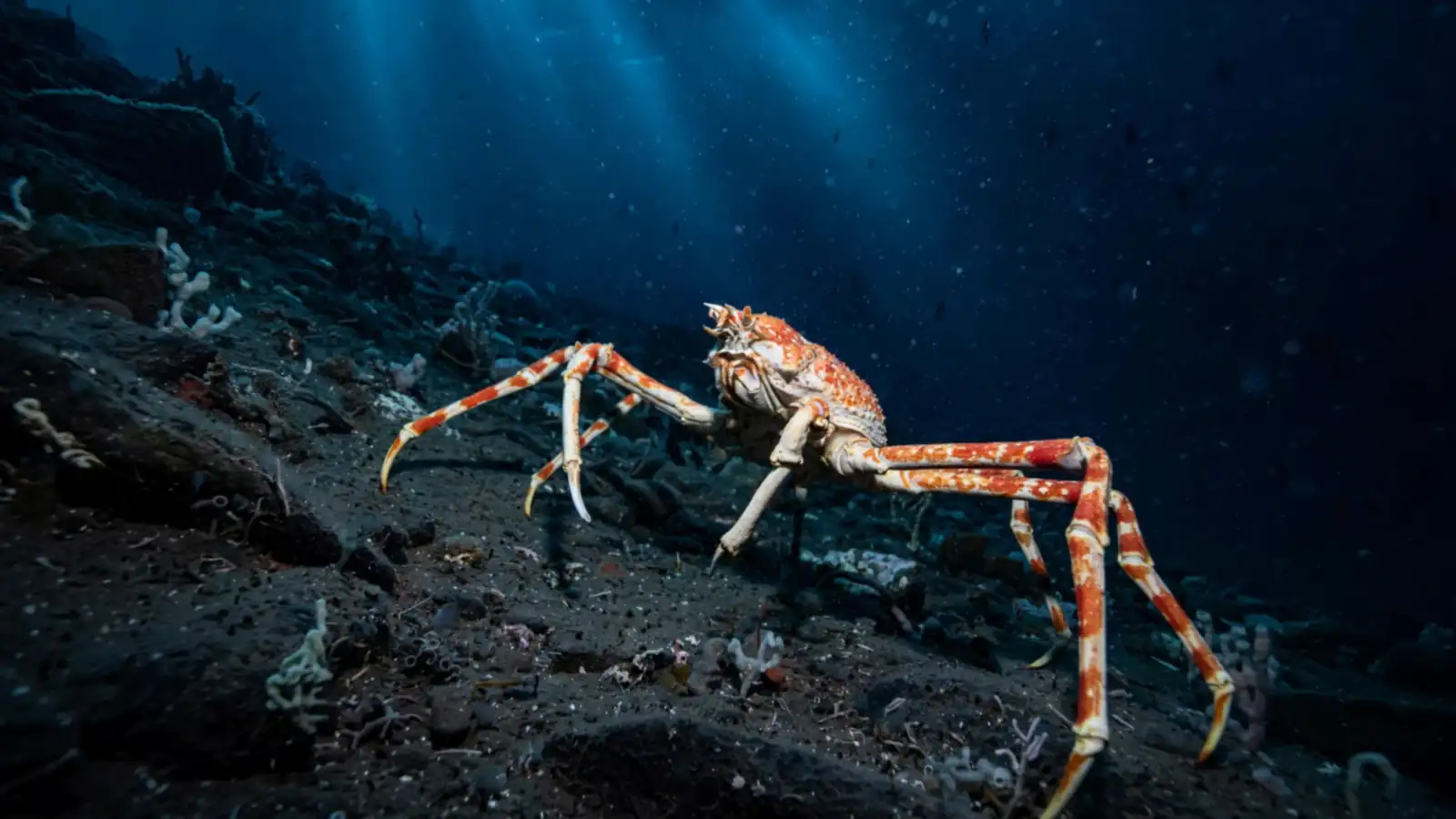
At a Glance
The Japanese spider crab, Macrocheira kaempferi, owns the record outright: no other crab, and no other living arthropod, stretches further. Nearly everything about the animal is scaled for a slow life in cold darkness, from its century-long lifespan to the stilt legs that step over the seabed like a living scaffold. This guide covers the records, the deep bays it calls home, and the quiet life behind the monster measurements.
Japanese Spider Crab Size and the Record Leg Span
The headline number is the leg span: the crab can stretch about 3.7 metres (12 feet) from claw tip to claw tip, the largest reach of any living arthropod. The first pair of legs, the claw arms, are the longest of all, and in big males they curve out like the frame of a tent. Set against that, the body is almost comically small: a rough, warty carapace only 38 to 40 centimetres across, in a crab that can weigh around 19 kilograms.
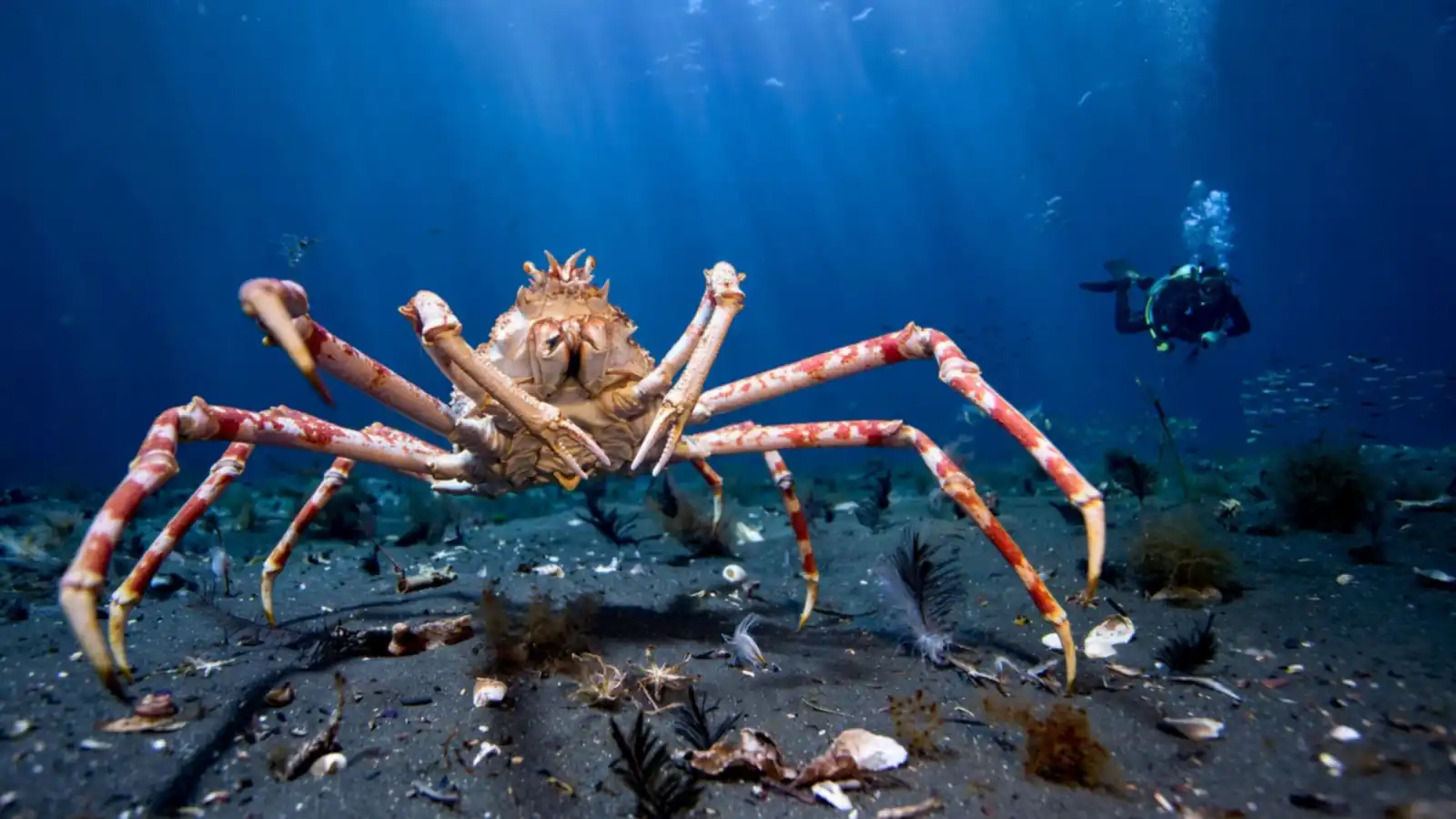
Those legs are not just long, they are delicate. They bend at a high middle joint, so the crab walks with its body held well clear of the ground, and they snap more easily than their size suggests; wild crabs are often missing one or two, lost to predators, fishing gear or fights. A lost leg is not gone forever, though: it regrows, shorter, at the next molt, one of the rebuilding tricks the whole spider crab family shares.
A Body Built for the Deep: Legs, Shell and Senses
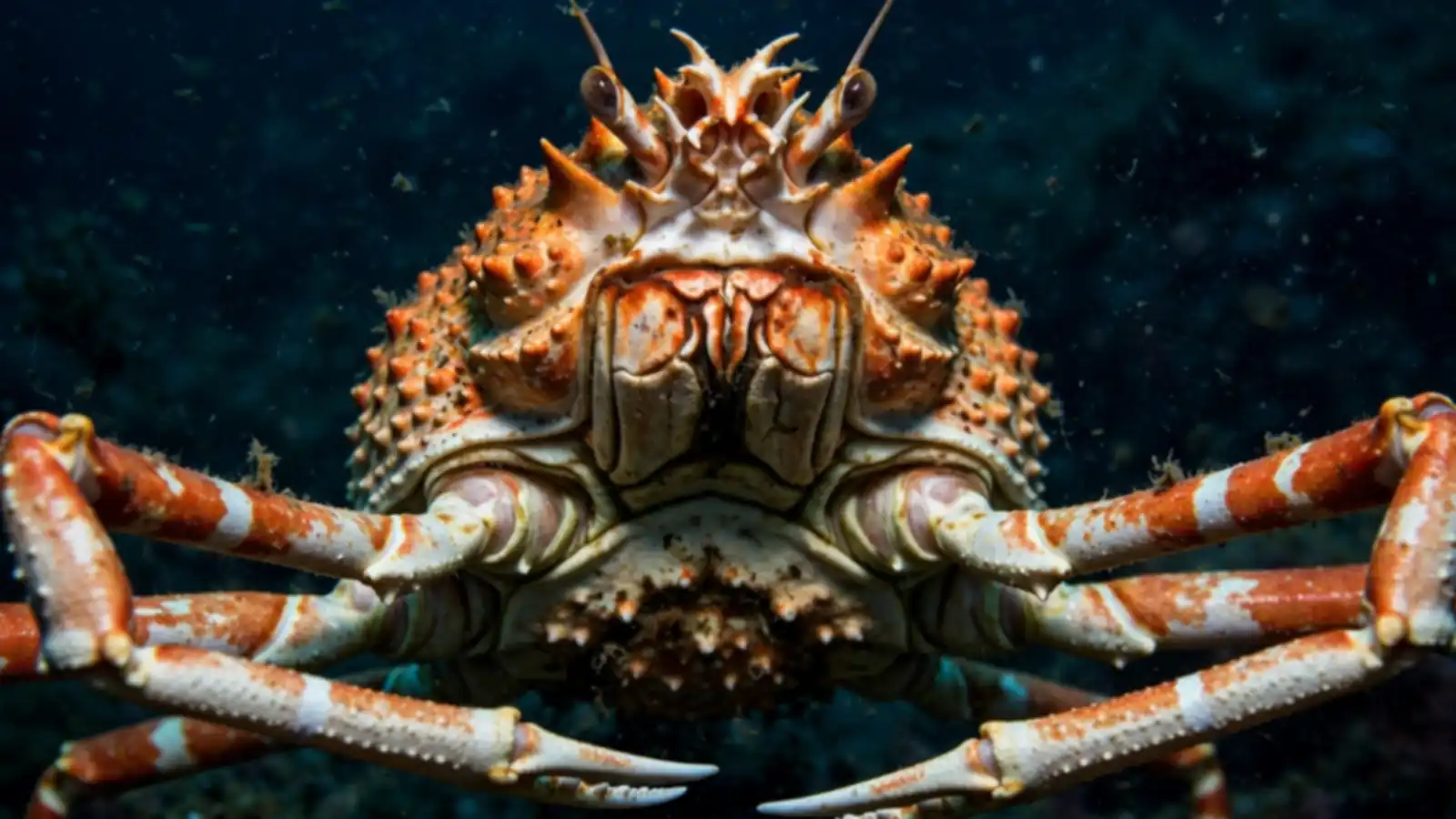
Looked at closely, the crab is armoured less than expected. The carapace is pear-shaped and covered in warts and short spines, orange darkening with age, with two slim horns between the stalked eyes. The legs are banded orange and white, surprisingly slender for their length, and tipped with simple points rather than pincers; only the small claw pair at the front can grip, and even those are modest tools for picking and tearing food.
You can read the full record of its measurements and discovery in the animal’s species account, from its naming to its museum giants. The species name honours a 17th-century German naturalist who described Japan’s wildlife, and in Japan the crab itself is called taka-ashi-gani, the tall-legged crab, which is exactly what it is.
Where Do Japanese Spider Crabs Live?
Japanese spider crabs live only in the northwest Pacific, in the waters around Japan. Their strongholds are the deep bays of the Pacific coast, above all Suruga Bay and Sagami Bay, with further records around the Izu Islands and occasionally as far south as Taiwan. They walk rocky and sandy slopes at depths of roughly 50 to 600 metres, most often between 150 and 300 metres down, where the water stays cold and dark all year.
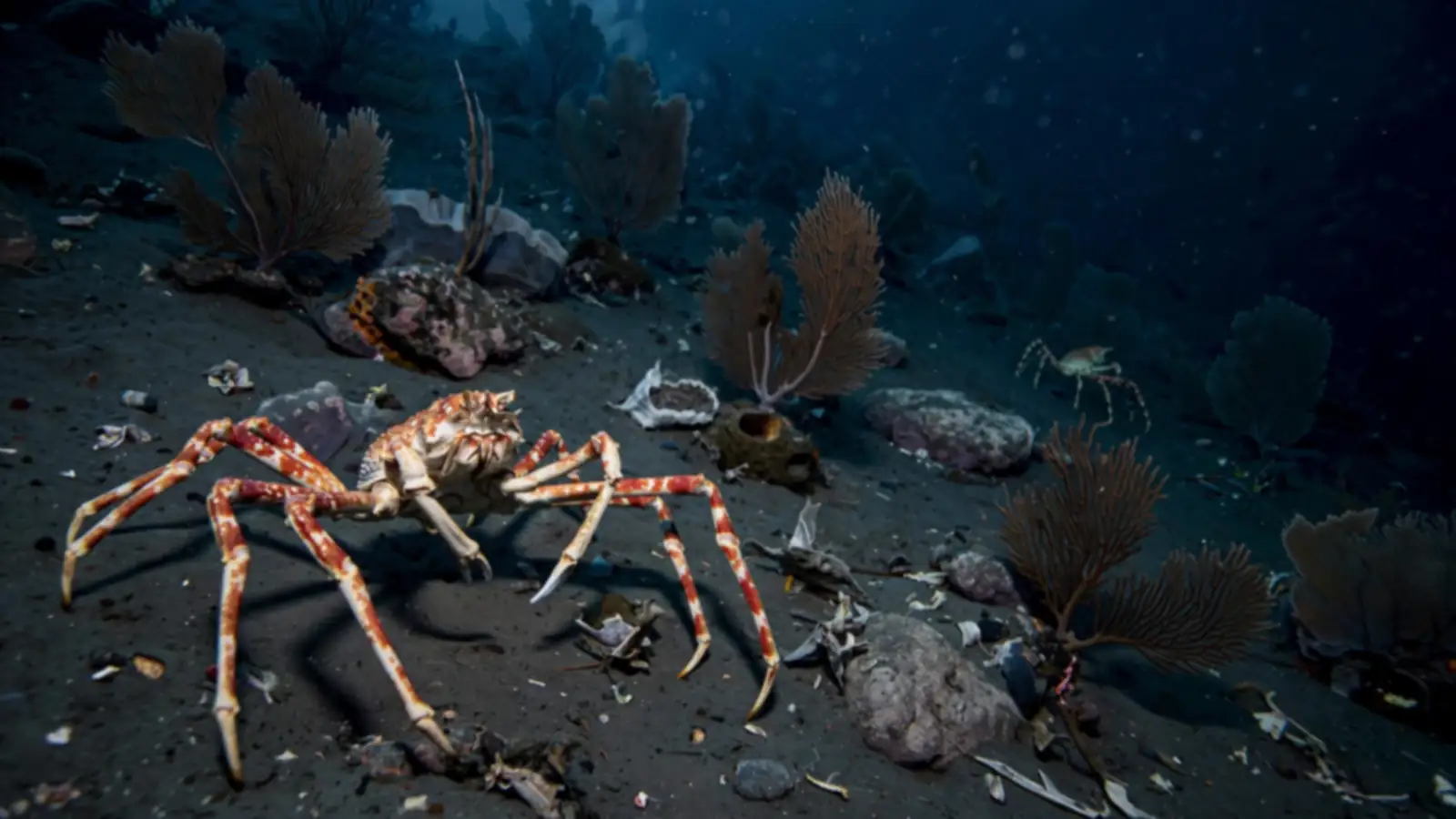
Each spring the giants move: adults climb into shallower water, around 50 metres deep, to mate and release their eggs into the plankton-rich surface layers. They share those cold slopes with another famous oversized local, the giant isopod, and with the deep-water community mapped in our guide to the types of crustaceans.
What Do Japanese Spider Crabs Eat? Diet and Feeding
For all its Halloween looks, the crab is a gentle scavenger. It walks the seabed gathering what the deep provides: dead fish and carrion sinking from above, molluscs and other shellfish it prises open or crushes, sea stars, smaller crustaceans, and algae and kelp where it can reach them. Its small claws are cutlery, not weapons, used to tear food into pieces and pass them to the mouth.
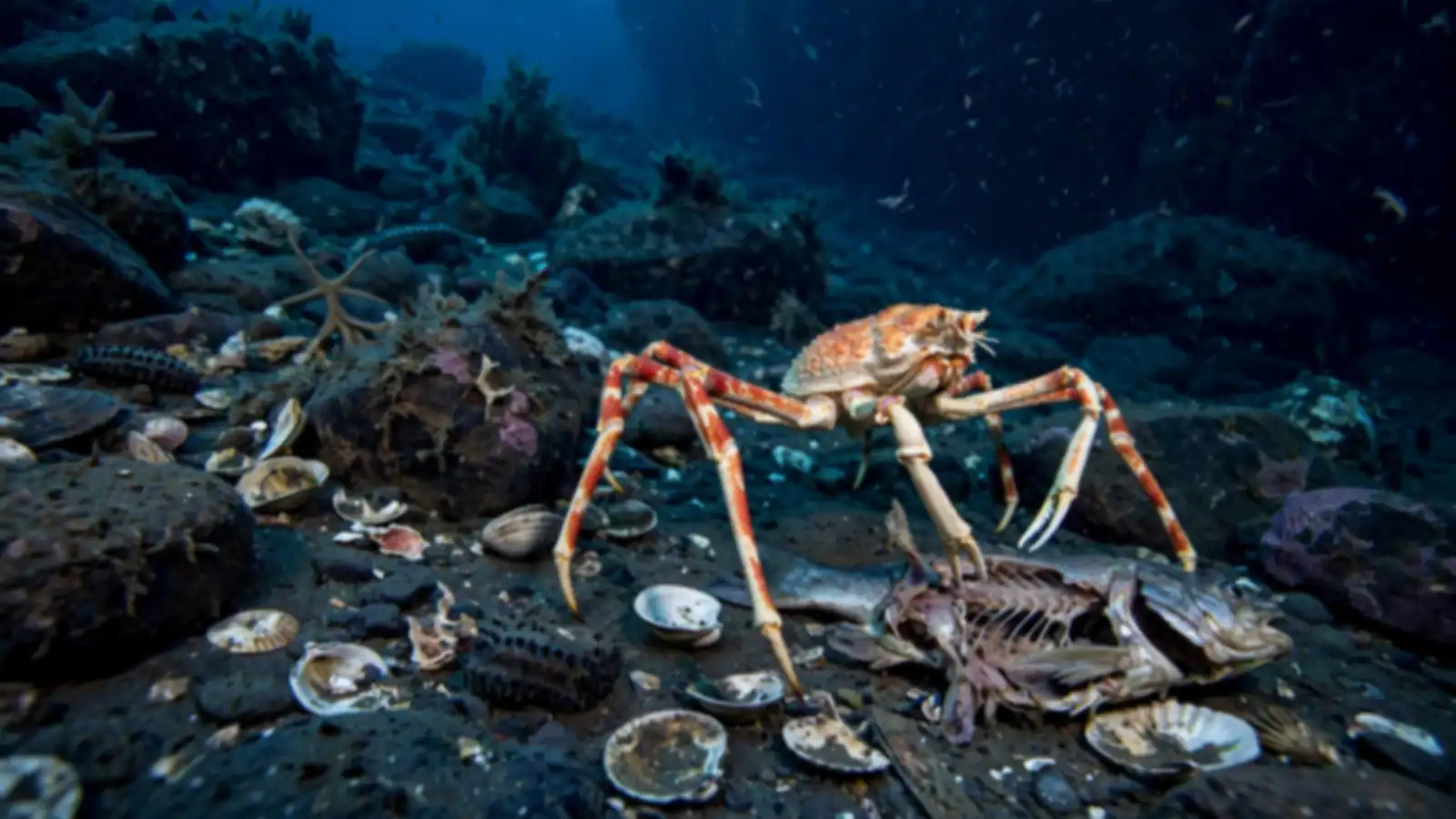
That slow grazing shapes how it hunts, which is to say it barely hunts at all. A One covers ground at a stately walk, testing the sediment with its leg tips, and its placid temperament is famous in the aquariums that keep it: divers hand-feed individuals that show no aggression at all. Its enemies are bigger than its prey: octopuses, large fish and, above all, people.
Life Cycle and a Possible 100-Year Lifespan
A It begins absurdly small. After mating in the spring shallows, the female carries well over a million eggs beneath her body; the larvae that hatch drift in the plankton for weeks before settling to the seabed as crabs a few millimetres wide. The young live in shallower, kelp-covered water, many of them decorating their shells with algae like their smaller spider crab cousins, and move deeper as they grow.
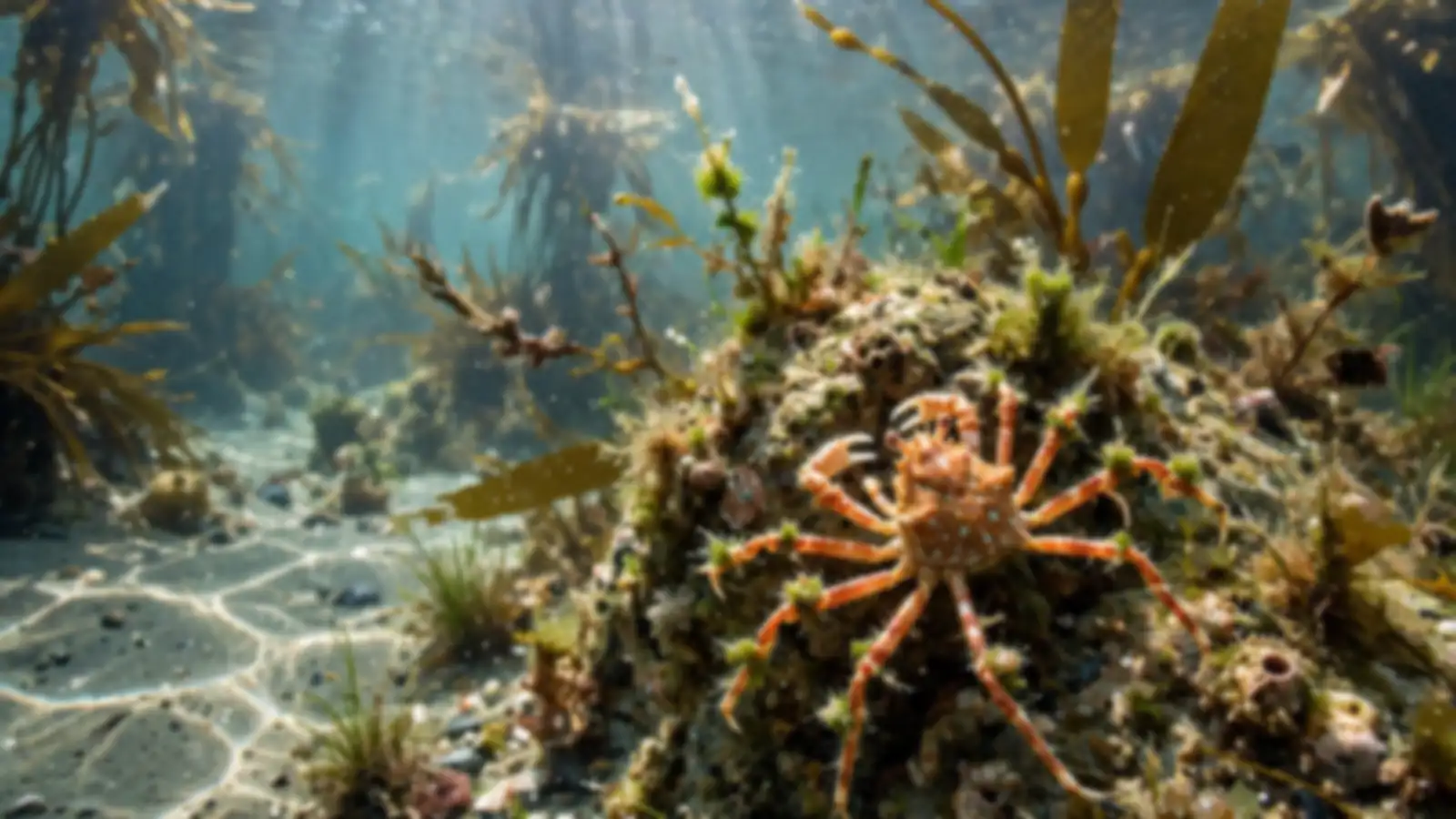
Growth is a decades-long project of molts, and the lifespan matches the scale of everything else about this crab: Japanese spider crabs are believed to live up to 100 years, among the longest lives of any crab. Nobody has followed one individual for a century, so the figure is an informed estimate built from growth rates, but even cautious readings make it a Methuselah of the crustacean world.
Japanese Spider Crabs and People: Fisheries and Aquariums
In Japan this giant is also a delicacy, caught in small numbers with trawl nets and traps, mainly in Suruga Bay. It has never been a mass fishery, the crabs are too scattered and the catch too occasional, and fishing is restricted during the spring egg season to protect breeding females. Even so, researchers treat the population with care: an animal that takes decades to mature cannot bounce back quickly from heavy fishing.
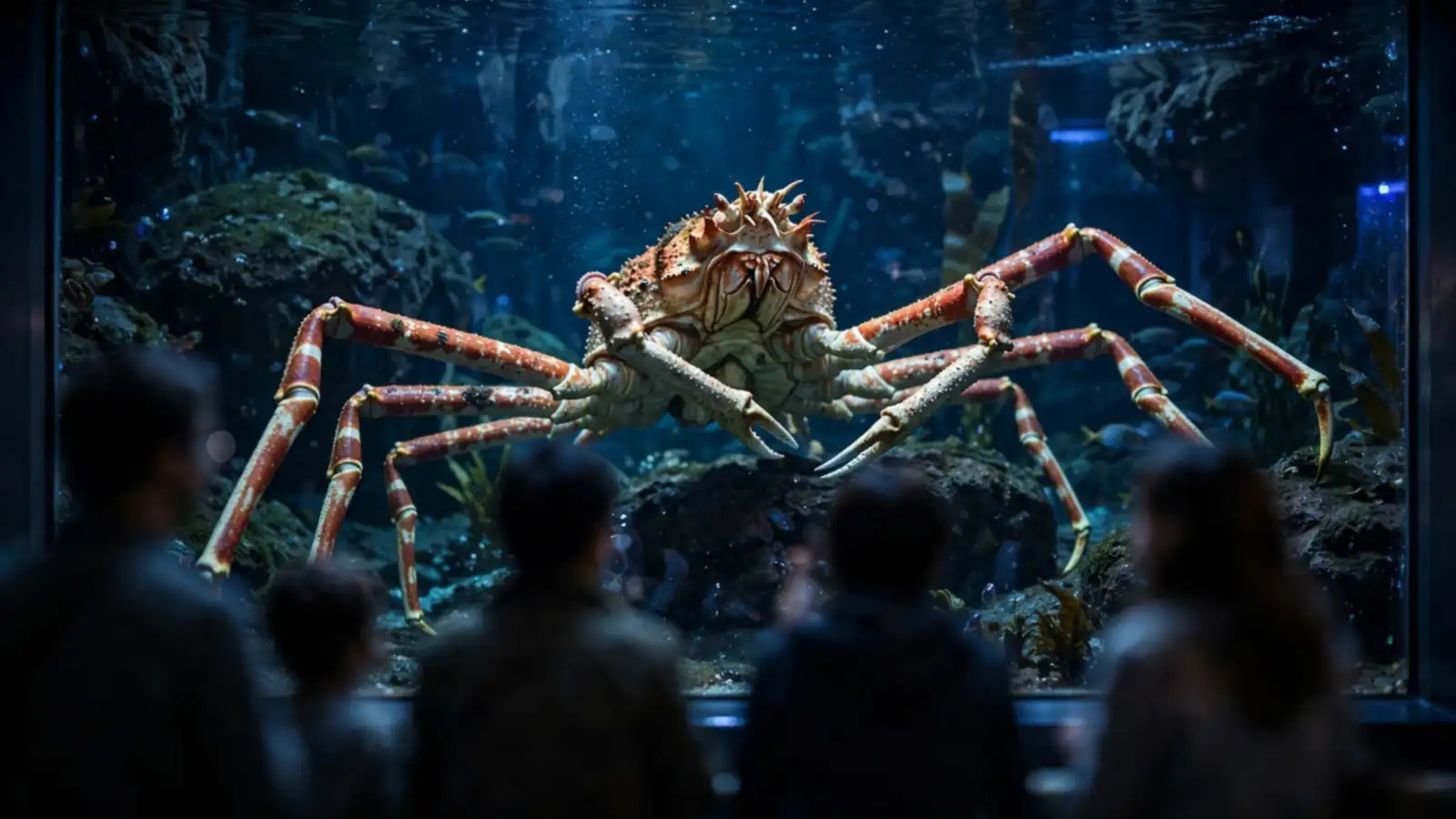
For most people, the meeting happens through glass. Japanese spider crabs are stars of deep-sea aquarium halls around the world, where a big male spreading his legs across a cold tank stops crowds like few animals can. They are harmless neighbours, too: despite the size, a crab can offer only a mild pinch, and wild encounters are vanishingly rare, since its world begins deeper than almost any diver goes.
Fun Facts
- A big specimen’s leg span, about 3.7 metres, is wider than a family car is long, yet its body is the size of a serving platter.
- The species is the only living member of its genus, Macrocheira, a lone survivor of a line of giant spider crabs.
- In Japanese it is called taka-ashi-gani, meaning tall-legged crab, and it appears in art and folklore as a gentle deep-sea giant.
- A female crab can carry more than a million eggs at once beneath her folded abdomen.
- Its legs bend at a high middle joint, which is why the crab walks with a strange, hovering, stilt-walker’s gait.
- Despite the fearsome silhouette, the crab is so placid that aquarium divers hand-feed it inside its tank.
Frequently Asked Questions
How Big Is a Japanese Spider Crab?
A Japanese spider crab can span about 3.7 metres (12 feet) from claw to claw, the largest leg span of any living arthropod. Its body, though, is only 38 to 40 centimetres across, and the whole animal weighs up to about 19 kilograms. The first pair of legs, the claw arms, are the longest and account for much of the record span.
Is the Japanese Spider Crab the Largest Crab in the World?
Yes. By leg span, the Japanese spider crab is the largest crab in the world and the largest living arthropod. Heavier individual crabs exist (a big coconut crab can rival its weight on land), but nothing out-reaches it. The title rests on its roughly 3.7-metre span, measured on the largest males.
How Long Do Japanese Spider Crabs Live?
Japanese spider crabs are believed to live up to about 100 years, making them among the longest-lived crabs. The figure is an estimate based on their very slow growth and late maturity rather than a tracked individual. Even conservative estimates put their lifespan at many decades.
Where Do Japanese Spider Crabs Live?
Japanese spider crabs live in the northwest Pacific around Japan, especially in deep bays such as Suruga Bay and Sagami Bay. They walk rocky and sandy slopes between about 50 and 600 metres deep, mostly at 150 to 300 metres. In spring they move into shallower water, around 50 metres, to breed.
What Do Japanese Spider Crabs Eat?
Japanese spider crabs are scavengers. They eat dead fish and other carrion that sinks to the seabed, molluscs and shellfish, sea stars, smaller crustaceans, and algae or kelp. Their small claws tear food into pieces rather than catch prey, and the crabs are famously slow and placid feeders.
Are Japanese Spider Crabs Dangerous to Humans?
No. Japanese spider crabs are gentle, slow animals whose only defence is a mild pinch from their small claws. They are not venomous and show little aggression; aquarium staff and divers handle and hand-feed them. In any case, wild ones live far deeper than swimmers or most divers ever go.
Why Are Japanese Spider Crab Legs So Long?
Long legs suit a slow scavenger of the deep seabed. They let the Japanese spider crab step over rocks and sediment, cover more ground while searching for carrion, and keep its body clear of the bottom. The high middle joint gives the legs their strange folded, stilt-like walk, and the great span may also make the crab look larger to predators.
Similar Species Worth Exploring
Keep Exploring
Keep exploring the family through the wider spider crab guide, the full roll call of the types of crabs, and the stranger corners of the types of crustaceans. Nothing in the sea out-stretches the calm, century-walking Japanese spider crab.