Wrasse
Wrasse: The Reef’s Great Shape-Shifters
The wrasse family holds about 500 species, from a tiny 5 cm species to the 2 metre humphead, most born female and changing sex.
By Emily Carter · Reviewed by our vet team · Updated 10 November 2026 · 9 min read
About 500 speciesBorn femaleCleaner fish

At a Glance
The wrasse family is the reef’s great shape-shifter, a group of about 500 to 600 species that runs from a tiny 5 cm species hiding in the rubble to a 2 metre humphead patrolling the reef. Most wrasses are born female and change sex as they grow, most change colour as they age, and a few run the cleaning stations that keep the whole reef healthy.
Wrasse Species

The family, Labridae, holds about 500 to 600 species in about 60 genera — one of the largest fish families on the reef, and one of the most varied. There are wrasses that bury themselves in sand to sleep, wrasses that clean other fish for a living, wrasses that smash shellfish with rocks, and wrasses that change sex, colour and shape as they grow. If a reef fish does something unusual, it is probably one of them.
The family is found on reefs worldwide, from the tropics to the temperate coasts, and it includes some of the reef’s most familiar fish: the cleaner wrasse, the humphead, the bird, the moon and the possum species, to name only a few. For a tour of the family’s variety, see Wildlife Nomads’ types of wrasses guide.
Wrasse Size: From 5 cm to Over 2 m

The family spans the full range of reef fish sizes. At the small end is the possum species, a fish of about 5 cm that hides in the rubble and is easy to miss. At the large end is the humphead, which grows to over 2 metres and 200 kg — a fish the size of a diver, with a bulbous forehead and a mouth full of blunt teeth, patrolling the reef like a slow, curious giant.
Most wrasses fall in between: 15 to 40 cm of bright, active fish, hunting over the reef by day and sleeping buried in the sand by night. Size, for these fish, is a matter of species and of sex — the males are usually larger than the females, and in many species the largest fish on the reef is a male that was once the largest female.
Born Female: The Great Sex Change
Most wrasses are born female and change sex as they grow — a pattern called protogyny, shared with groupers and parrotfish. The largest female in a group becomes male, and the change takes days to weeks: the colour shifts, the body grows, and the fish takes on the male’s role, defending the territory and mating with the females. It is one of the most remarkable transformations in the animal kingdom, and it happens routinely on every reef.
The change is driven by size and by social rank. As long as a dominant male is present, the females stay female; when the male dies or leaves, the largest female changes. The system keeps the sex ratio balanced and the breeding going, and it means that sex is not fixed at birth but decided by its life. A male was once a female, and a female may one day be a male.
Three Colours
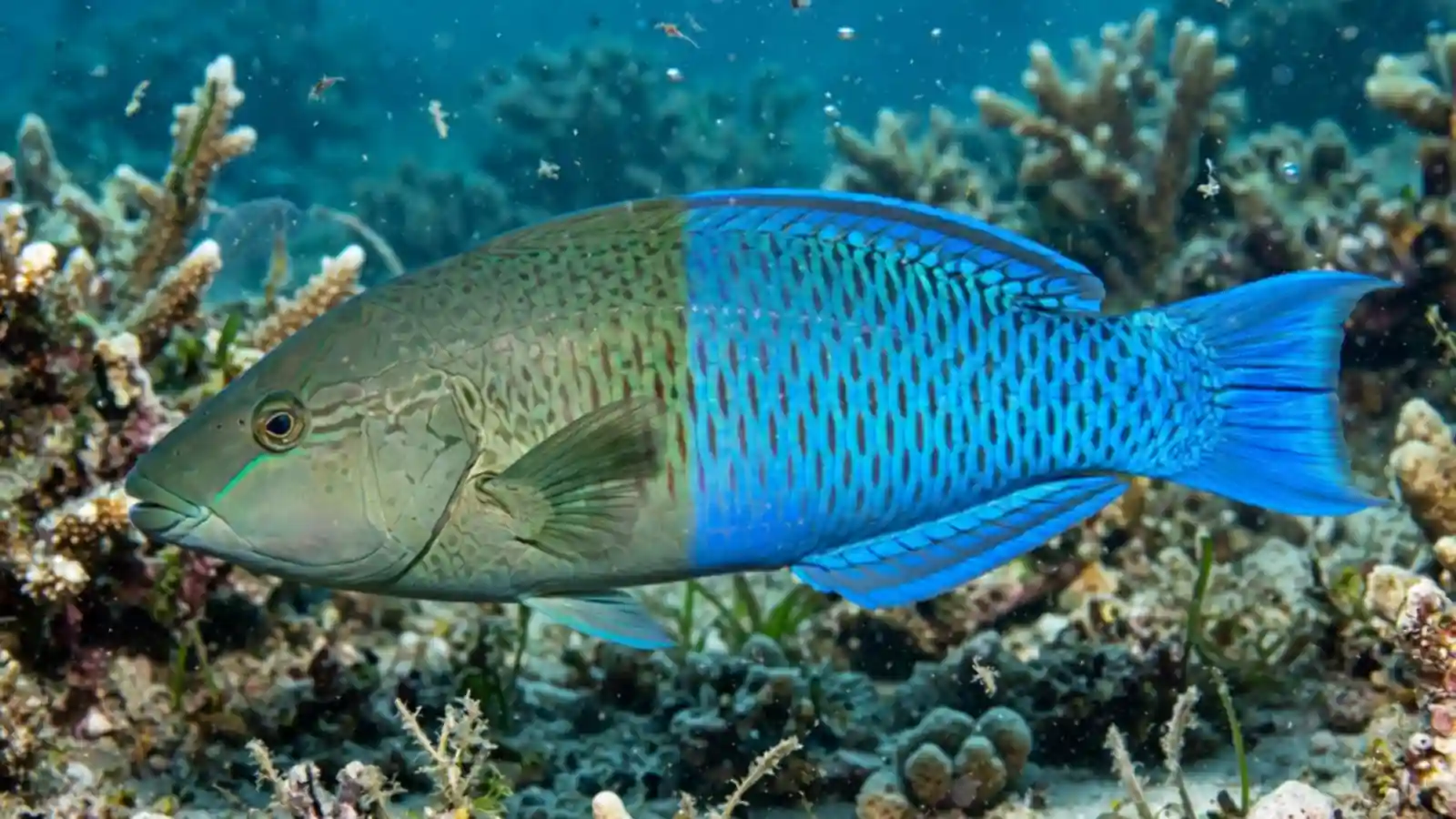
Many wrasses pass through three colour phases in their lives: the juvenile phase, the initial phase, and the terminal phase. The juvenile is small and often camouflaged; the initial phase is the adult female, usually drab or mottled; the terminal phase is the adult male, often brilliantly coloured — blue, green, orange or red, with patterns that no other fish on the reef can match.
The terminal male is the reef’s showpiece, and it is also the most aggressive, defending its territory and its females from other males. The colour change is not just decoration: it is a signal of rank, a warning to rivals, and an advertisement to females. A fish that changes colour is a fish that has changed its life.
Where Wrasses Live

Wrasses live on tropical and temperate reefs worldwide, from the shallows to the reef slope, wherever there is coral, rock or sand to hunt over. They are day fish, active from dawn to dusk, and at night they sleep — many species burying themselves in the sand, others wedging into crevices, all of them hidden until the morning. A reef at night is a reef without wrasses.
The family’s range is enormous, from the cold waters of the North Atlantic to the warm reefs of the Indo-Pacific. Some wrasses live in kelp forests, some in seagrass, some in the open water above the reef — but most live where the reef is richest, hunting among the coral branches and the rubble for the small animals that hide there.
What Do Wrasses Eat?
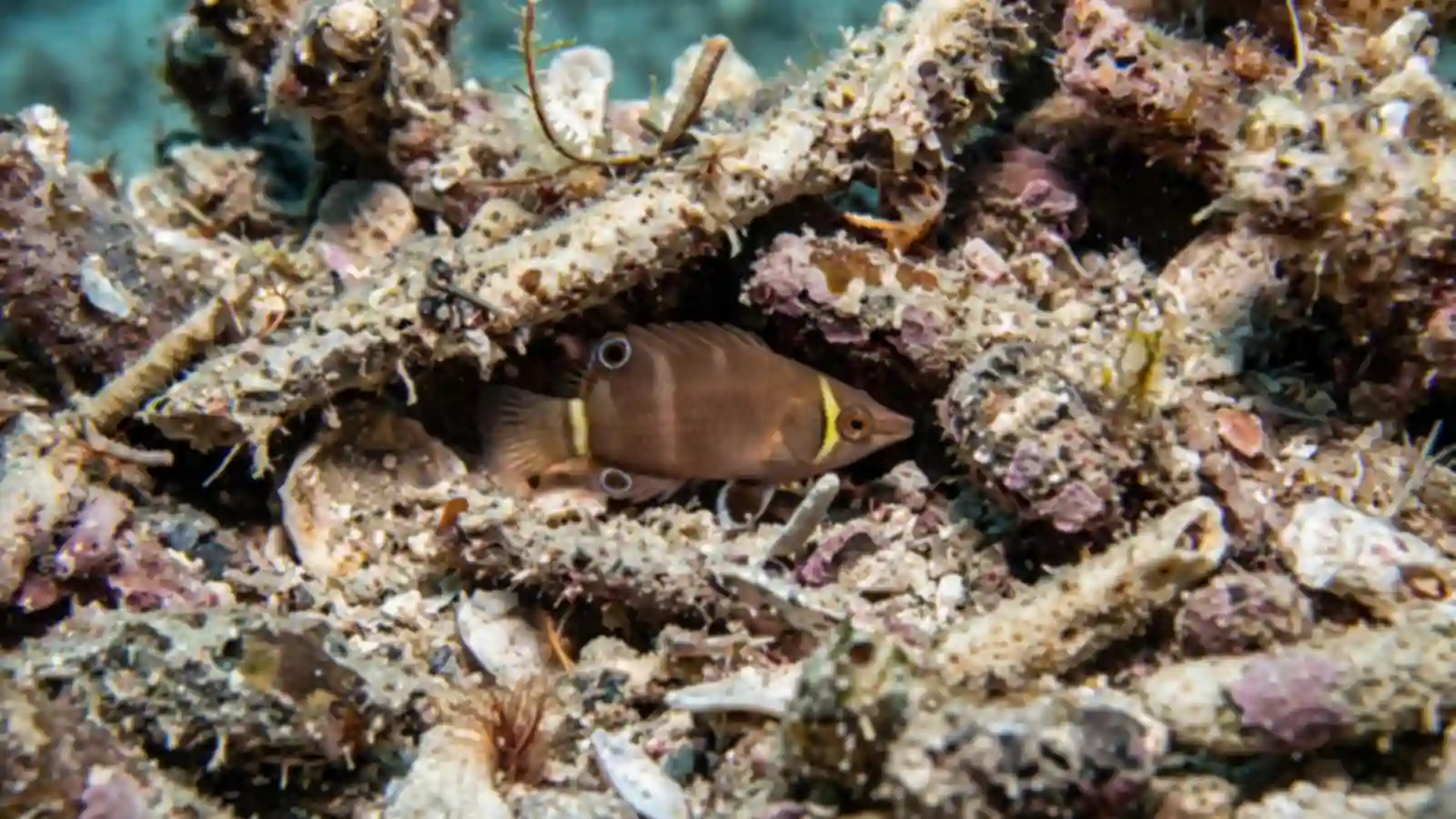
Wrasses eat crustaceans, molluscs, worms and small fish, hunting over the reef by day. They are pickers and crushers, using their strong jaws and blunt teeth to crack shells and pull prey from crevices. Some species specialise: the tuskfish smashes shellfish with rocks, the cleaner picks parasites from other fish, and the humphead eats sea urchins, crabs and molluscs with a bite force that can crush a shell.
Feeding is a daytime activity, and it is constant. It spends its day moving over the reef, picking at the coral, turning over stones, and probing the sand — a busy, curious fish that is always looking for the next meal. At night it sleeps, buried in the sand or wedged in a crevice, and the reef belongs to the night fish.
The Cleaners

Some wrasses are cleaners, and they run the reef’s cleaning stations — the places where other fish come to have their parasites removed. The cleaner is the most famous of them, a small blue-striped fish that sets up a station on a coral head and serves hundreds of clients a day, picking parasites from their gills, their mouths and their skin.
Cleaning is a trade, and it is an honest one: the cleaner gets food, the client gets rid of its parasites, and both benefit. The cleaner advertises with a dance, the client poses with flared gills and an open mouth, and the cleaning happens in full view of the reef. It is one of the most remarkable partnerships in the ocean, and it is run by a single small fish. This guide covers the family; the cleaner’s own story is told in full in the cleaner guide.
Fun Facts
- The family holds about 500 to 600 species in about 60 genera — one of the largest fish families on the reef.
- Most wrasses are born female and change sex as they grow, the largest female becoming male in days to weeks.
- Many wrasses pass through three colour phases: juvenile, initial and terminal — and the terminal male is often brilliantly coloured.
- Some wrasses bury themselves in the sand to sleep, disappearing completely until morning.
- Researchers have reported that one of them can recognise itself in a mirror — a single study, not a settled fact, but a striking claim.
- The humphead, the family’s largest member, grows to over 2 metres and 200 kg.
Frequently Asked Questions
What Is a Wrasse?
A member of the family Labridae, one of the largest fish families on the reef, with about 500 to 600 species in about 60 genera. Wrasses are bright, active day fish that hunt over the reef, change colour as they age, and — in most species — change sex as they grow.
How Many Species of Wrasse Are There?
About 500 to 600 species in about 60 genera. The range runs from the 5 cm possum species to the 2 metre humphead, and the family is found on reefs worldwide, from the tropics to the temperate coasts.
Do Wrasses Change Sex?
Yes, most of them. Most wrasses are born female, and the largest female in a group becomes male when the dominant male dies or leaves. The change takes days to weeks, and it involves a change in colour, size and behaviour.
How Big Do Wrasses Get?
From 5 cm to over 2 metres. The smallest is the possum species at about 5 cm; the largest is the humphead at over 2 metres and 200 kg. Most wrasses are 15 to 40 cm.
Where Do Wrasses Live?
On tropical and temperate reefs worldwide, from the shallows to the reef slope. They are day fish, active from dawn to dusk, and at night many species bury themselves in the sand or wedge into crevices to sleep.
What Do Wrasses Eat?
Crustaceans, molluscs, worms and small fish, hunted over the reef by day. They are pickers and crushers, using strong jaws and blunt teeth to crack shells and pull prey from crevices. Some species specialise — the cleaner wrasse picks parasites from other fish.
What Is a Cleaner Fish?
A fish that removes parasites from other fish at a cleaning station. The cleaner is the most famous: it sets up a station on a coral head and serves hundreds of clients a day, picking parasites from their gills, mouths and skin while the client poses with flared gills.
Similar Species Worth Exploring
Keep Exploring
Still exploring reef-shape-shifter country? Meet the family’s most famous member in the cleaner guide, watch the beaked cousin in the Parrotfish guide, size up the whole family in the Types of Reef Fish hub, and then come back to the reef at dawn to watch the wrasse.