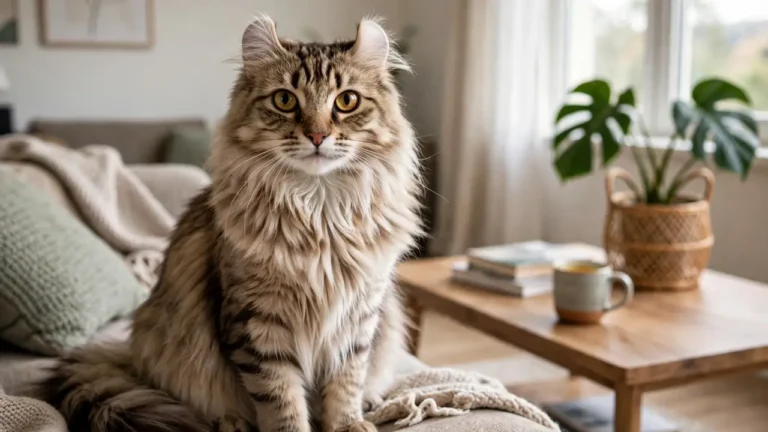
Turkish Angora Cat Breed Guide
Turkish Angora: grace in a Silky Coat
One of the oldest longhaired breeds, a dancer in a silky white coat from Ankara. Intelligent, playful and devoted, the Turkish Angora picks a favorite person and claims the tallest perch in the house.
By Emily Carter · Reviewed by our vet team· Updated 21 October 2026 · 13 min read
Lifespan 12–18 yrs Weight 5–9 lb Elegant & devoted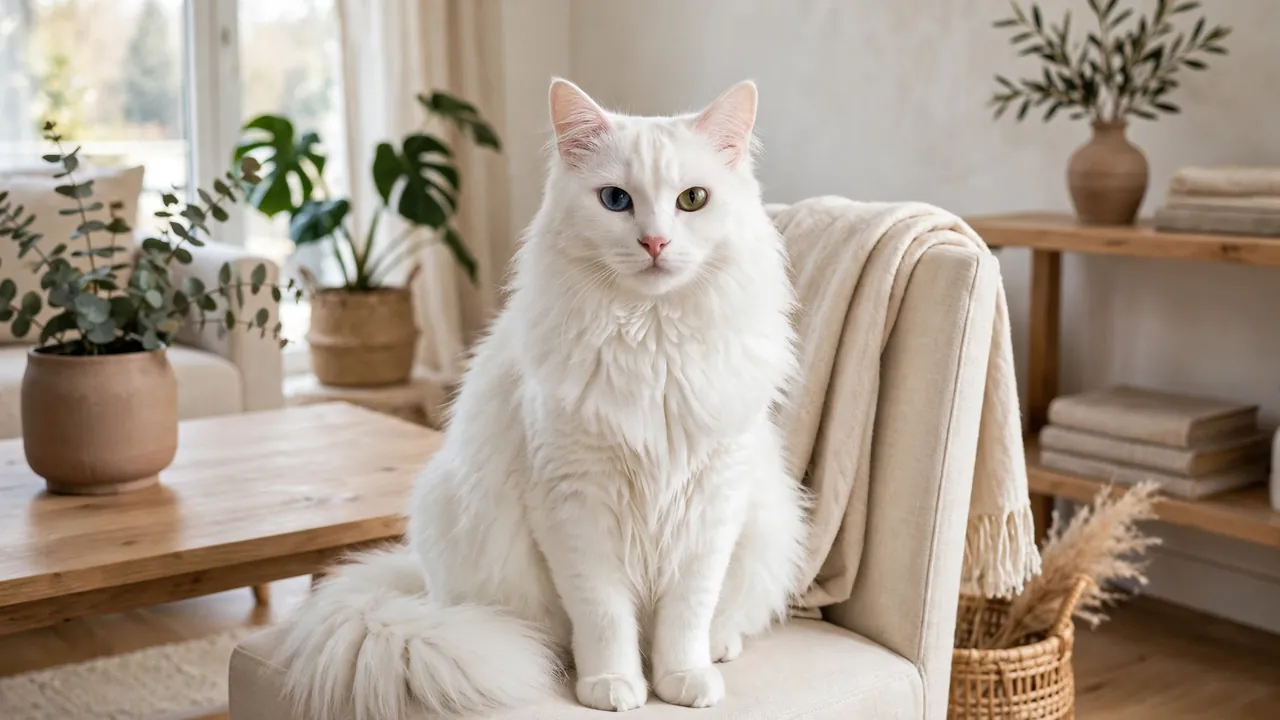
The Turkish Angora cat is an ancient treasure with a flowing silky coat and dancer-like grace. Intelligent, playful, and devoted, it often chooses one special person to adore.
At a Glance
Size and Weight
Do not let the delicate looks fool you. This is a sturdy little athlete.
The Turkish Angora cat is built for grace rather than bulk. Most adults weigh between 5 and 9 pounds, with males usually a touch heavier than females. The body is fine boned but surprisingly firm, with long legs and a tucked waist that give the breed its dancer like outline.
These cats carry their weight beautifully. They move with a light, flowing step and can leap to the top of a bookshelf without seeming to try.
Coat and Colors
The coat of the Turkish Angora cat is its glory, and it deserves a long look.
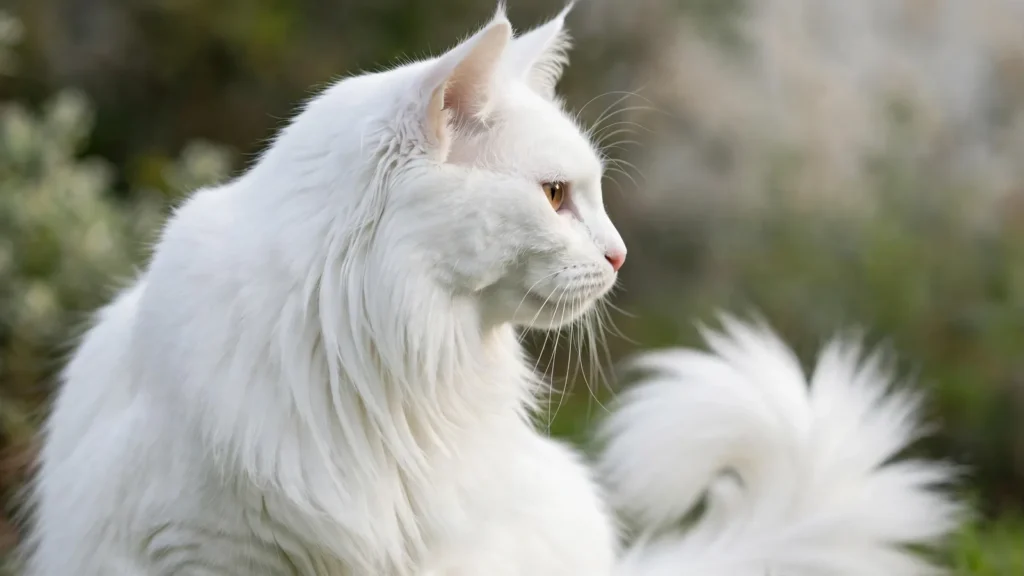
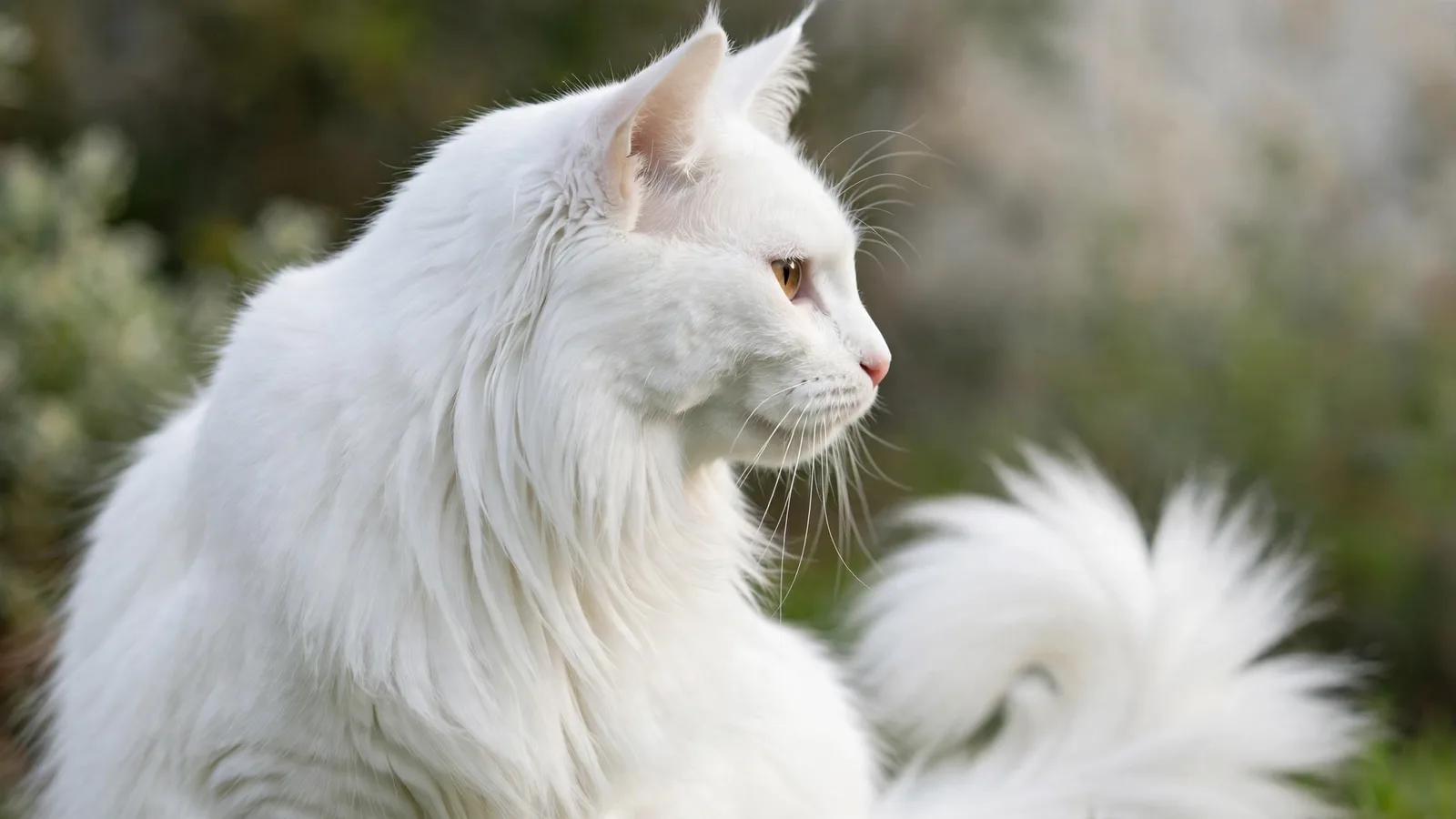
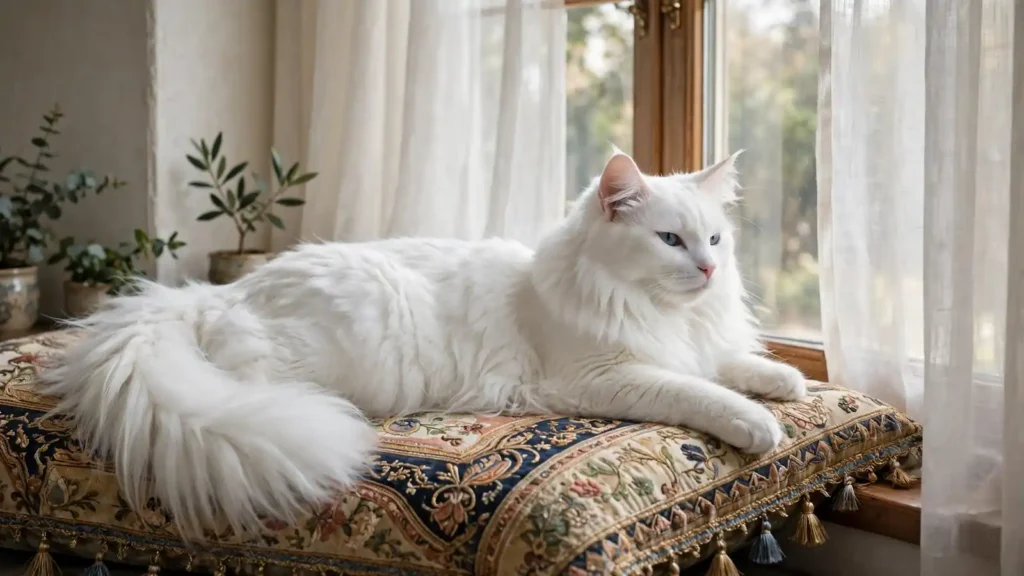
Each hair is fine and silky, with very little undercoat beneath. The result is a coat that flows and shimmers as the cat moves, almost like water over stone. It lies close on the body but fluffs into a soft ruff around the neck, fuller britches on the hind legs, and a long plumed tail that waves like a banner.
Most people picture the Turkish Angora cat in pure white, and white is indeed the classic and best loved color. The white coat against pink skin gives these cats an almost luminous quality in sunlight. But the breed comes in many other colors too. Black, blue, red, and cream all occur, along with tabby patterns, tortoiseshell, and bicolor combinations. Whatever the color, the texture stays the same: soft, fine, and flowing.
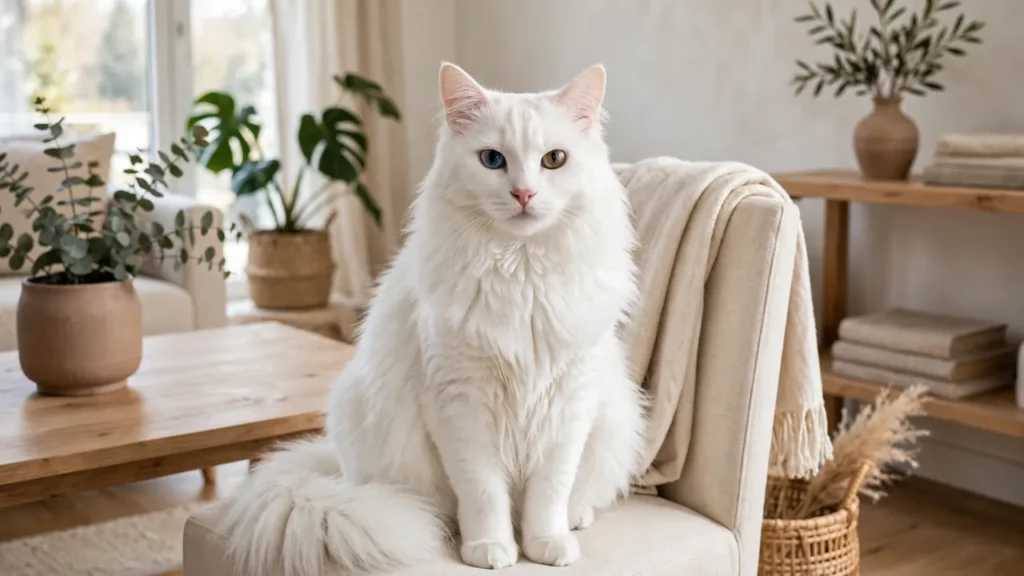
One of the most beloved traits is odd eyes. Some Turkish Angoras have one blue eye and one amber or green eye, a condition called heterochromia. In white cats the contrast is especially striking. Kittens are born with their eyes closed and the coat may look a little fluffy and uneven at first. As they mature, the silky adult coat grows in and the full elegance of the breed appears, usually by the second year.

History and Origins
This breed walked out of history with its elegance intact.
One of the oldest longhaired breeds in the world, it developed naturally in the Ankara region of Turkey — once called Angora — where it lived for centuries.
Travelers and traders carried these striking cats to Europe as early as the 1500s, and they caused a sensation wherever they arrived.
The breed nearly faded in its homeland as other longhaired cats grew popular abroad. Dedicated breeding programs in Turkey preserved the true type, and today it is treasured worldwide.
The Turkish Angora cat is one of the oldest longhaired breeds in the world. It developed naturally in the Ankara region of Turkey, once called Angora, where it lived for centuries. Travelers and traders carried these striking cats to Europe as early as the 1500s, and they caused a sensation among cat lovers there.
For a long time the breed nearly faded in its homeland as other longhaired cats grew popular abroad. Dedicated breeding programs in Turkey helped preserve the true type, and today the Turkish Angora is treasured both in its native country and around the world.
Physical Characteristics
Every line of the Turkish Angora cat says dancer.
The head is a modified wedge, small to medium in size, with large pointed ears set high and close together. The eyes are large and almond shaped, and may be blue, amber, green, or odd, with one of each. The muzzle is fine and the profile shows a gentle slope rather than an extreme break.
The body is long, lithe, and fine boned, carried on tall slender legs with small oval feet. The tail is long and tapering, carried proudly with a full plume. Nothing about this cat is heavy or coarse. From whisker to tail tip, the impression is one of balance and refined athleticism.
Turkish Angora Personality and Behavior
Living with a Turkish Angora cat is never boring, and rarely quiet in spirit.
Expect your cat to claim the tallest perch in the home and survey its kingdom — every line of this cat says dancer.
Cautious with strangers, but they study you, approve of you, then love you with unusual intensity.
Meals, play and greetings at the door, on schedule. These cats notice routine, and notice when it slips.
- Elegant, silky, easy care coat
- Intelligent and deeply devoted
- Long lived and generally hardy
- Bonds hardest with one person
- Needs daily play and mental challenge
- White blue eyed cats need a hearing check
These cats are intelligent, playful, and deeply devoted. They often choose one favorite person and shower that person with attention, following them from room to room and settling close by. They are not aloof. A Turkish Angora wants to be part of everything you do, from cooking dinner to working at your desk.
Play is a serious business for this breed. They love interactive games, puzzle toys, and anything they can chase or fetch. Many learn to open doors and cabinets, so a little cat proofing goes a long way. They also adore heights. Expect your cat to claim the tallest perch in the house and survey the household like royalty.
Care Essentials
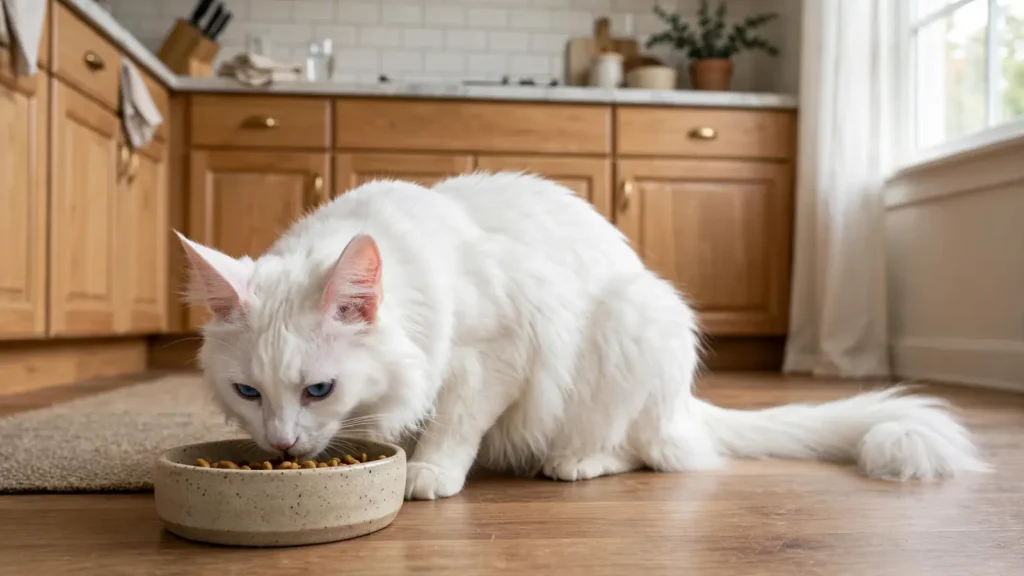
A complete, high quality, protein rich diet suited to age and activity. This active breed burns plenty of calories racing around the house.
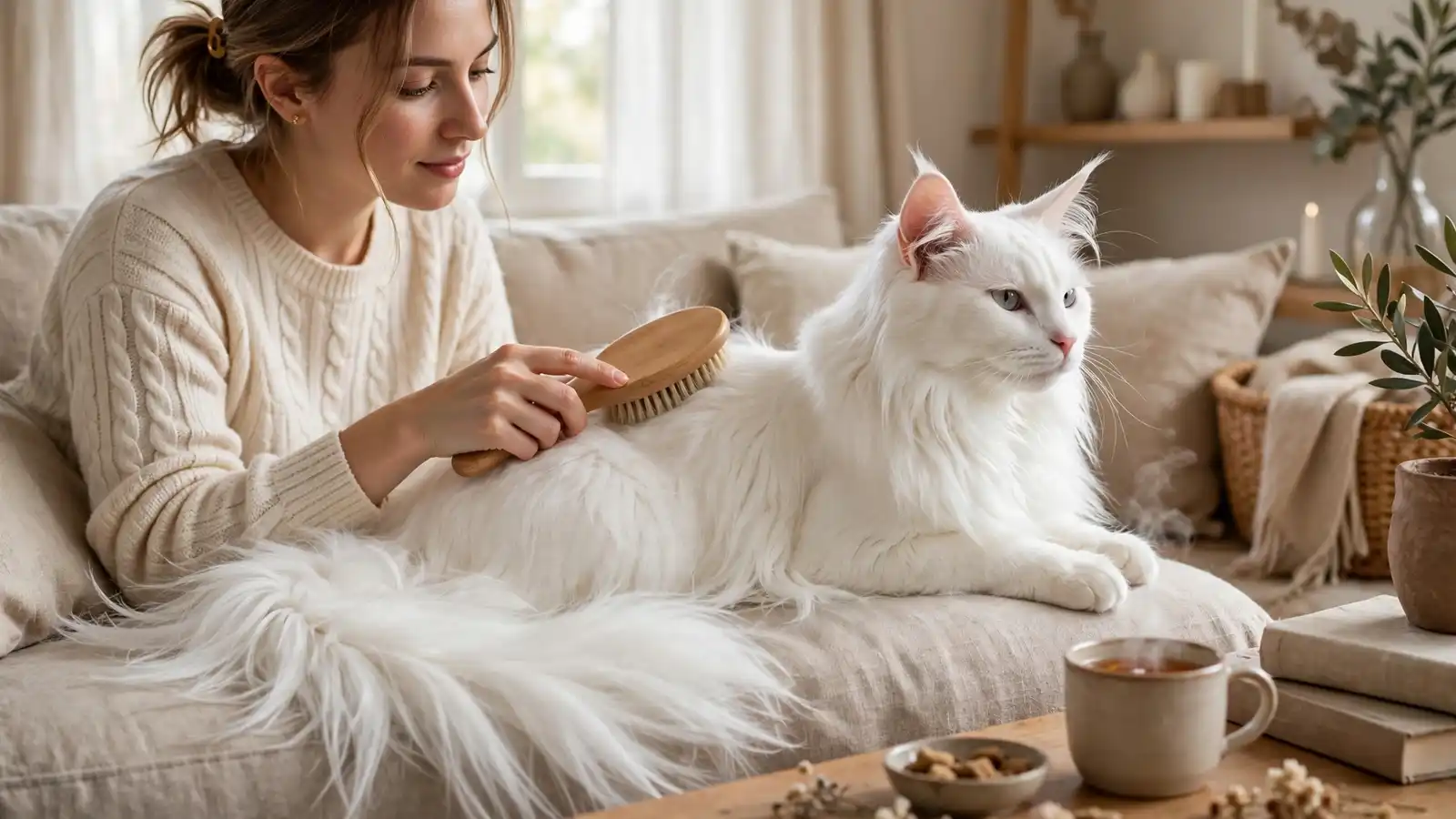
Gentle brushing two or three times a week — the silky coat has so little undercoat it rarely mats. Check ears weekly, trim nails, brush teeth.
Real playtime every day, a few short lively sessions: wands, teasers, crinkle balls and puzzle feeders. Rotate toys to keep things fresh.
Indoor living with tall cat trees, shelves and window perches. A secure catio or supervised harness walks give safe fresh air.
A happy Turkish Angora is a busy Turkish Angora with a warm lap waiting at the end of the day.
Daily life with this breed revolves around engagement. Set aside real playtime each day, rotate toys to keep things fresh, and provide tall cat trees or shelves for climbing.
Fresh water, clean litter, and a calm resting spot matter as much as play. These cats appreciate routine and can be sensitive to big changes in the household. Introduce new people, pets, or furniture gradually and let your cat explore at its own pace.
Nutrition and Diet
Good food fuels all that graceful energy.
Feed your Turkish Angora cat a complete, high quality diet suited to its age and activity level. This is an active breed that burns plenty of calories racing around the house, so most individuals do well on a protein rich diet that supports lean muscle. Follow the feeding guide on the food package and adjust for your own cat, since appetites vary.
Keep fresh water available at all times. Treats are fine in small amounts, but they should make up only a small part of the daily diet. If your cat gains or loses weight unexpectedly, talk with your veterinarian.
Grooming
Grooming a Turkish Angora is more pleasure than chore.
The Turkish Angora cat has one of the easiest long coats to care for. Because there is so little undercoat, the silky hair rarely mats or tangles. A gentle brushing two or three times a week is usually enough to keep the coat smooth, remove loose hair, and reduce hairballs.
Make grooming a calm ritual. Most Turkish Angoras enjoy the attention once they get used to it. Check the ears weekly and clean them gently if needed, trim the nails every couple of weeks, and brush the teeth as often as your cat will allow. Start these habits young and your cat will accept them as part of life.
Exercise and Enrichment
A tired Turkish Angora is a well behaved Turkish Angora.
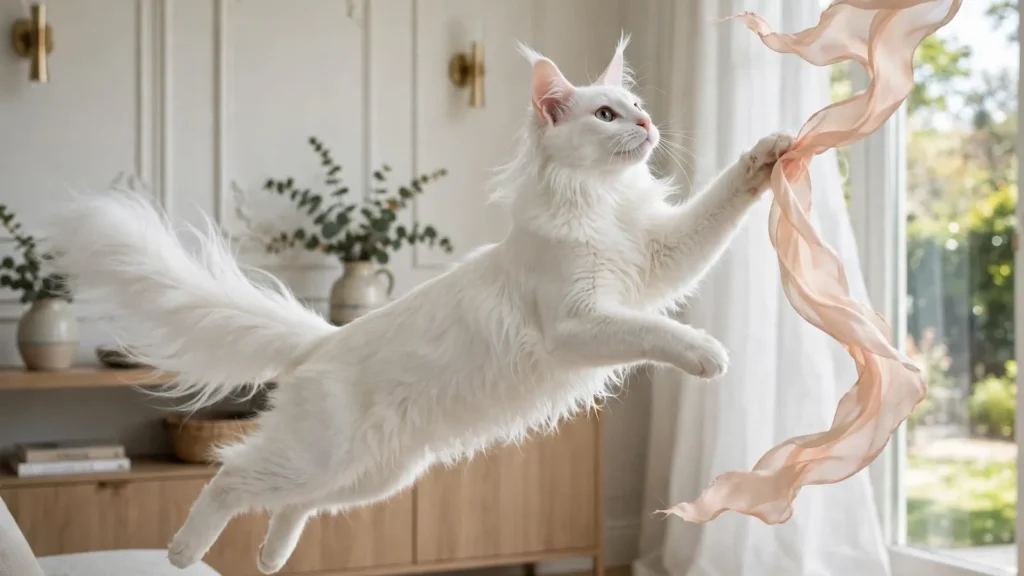
This breed needs both physical exercise and mental challenge. Wand toys, feather teasers, and crinkle balls satisfy the hunting instinct. Puzzle feeders turn mealtime into a game and slow down fast eaters. Short, lively play sessions a few times a day work better than one long session.
Vertical space counts as enrichment too. Tall scratching posts, window perches, and safe shelves let your cat climb, stretch, and watch the world.
Health
Know the few things to watch for, then relax and enjoy your cat.
Generally healthy and hardy, but it can be prone to hypertrophic cardiomyopathy, a heart condition — responsible breeders screen their cats, and regular checkups matter throughout life.
In white cats with blue eyes, deafness can occur in one or both ears. A vet can check hearing, and deaf cats live full, happy lives with a few adjustments.
The Turkish Angora cat is generally a healthy and hardy breed with a long lifespan. Like many breeds, it can be prone to hypertrophic cardiomyopathy, a heart condition, so responsible breeders screen their cats and regular veterinary checkups matter throughout life.
One point deserves calm attention. In white cats with blue eyes, deafness can occur in one or both ears. This is a known link between coat color, eye color, and hearing in cats. A veterinarian can check hearing, and deaf cats live full happy lives with a few adjustments, such as keeping them safely indoors and using visual signals. Odd eyed white cats may be deaf on the blue eyed side only, so testing each ear matters.
Indoor and Outdoor Living
The great outdoors is best enjoyed from a sunny windowsill.
The Turkish Angora cat belongs indoors. The silky coat picks up dirt and tangles outside, the white coat shows every stain, and a cat this friendly may wander off with a stranger. Indoor life also protects against traffic, predators, and disease.
You can still give your cat a taste of the outside world. A secure catio, a screened porch, or supervised harness walks let a Turkish Angora enjoy fresh air safely.
Family Suitability
Is the Turkish Angora right for your household? Probably, with one honest caveat.
These cats are wonderful with families who want an interactive companion. They play gently with respectful children, get along with cat friendly dogs when introduced properly, and thrive in homes where someone is around much of the day. Their devotion makes them deeply rewarding pets.
The caveat is their loyalty. A Turkish Angora often bonds most strongly with one person and may be reserved with strangers. In a busy home that is fine, as long as the cat has its favorite human. If everyone in the house is gone all day, this social breed may feel lonely, so consider whether your schedule fits.
Finding a Breeder or Rescue
Taking your time here pays off for years.
A good Turkish Angora cat breeder raises kittens in the home, welcomes questions, and is open about health screening. Ask about heart screening in the breeding cats and, for white kittens, about hearing checks. The kittens should be bright eyed, playful, and comfortable being handled.
Breed rescues and shelters are another fine path. Turkish Angoras and Angora mixes do appear in rescue, especially in areas where the breed is popular. An adult rescue cat lets you see the true coat, eye color, and personality right away. Whether you choose a breeder or a rescue, avoid anyone who will not let you see where the cats live.
- Ask about heart screening in the breeding cats
- For white kittens, ask about hearing checks
- Kittens bright eyed, playful and comfortable being handled
- Check rescues — Angoras and mixes do appear
Quick Quiz: Is a Turkish Angora Right for You?
Answer four questions. Tap yes or no.
Frequently Asked Questions
Are Turkish Angora cats good with children?
Yes, with respectful children they are excellent. Turkish Angoras are playful and sturdy enough for gentle games, and they enjoy being part of family life. Teach children to handle the cat kindly and to give it space when it wants rest.
Do Turkish Angora cats shed a lot?
They shed a normal amount, often less than you would expect from a longhaired cat. The silky coat has little undercoat, so there is less loose fluff around the house. Regular brushing keeps shedding under control.
Are Turkish Angora cats hypoallergenic?
No cat is truly hypoallergenic. Some people find they react less to Turkish Angoras because of the silky single style coat, but allergies vary from person to person. Spend time with the breed before committing if allergies are a concern.
Why do some Turkish Angoras have two different colored eyes?
Odd eyes, or heterochromia, are a beloved trait in the breed. It happens when pigment develops differently in each eye, often giving one blue eye and one amber or green eye. It does not hurt the cat, though white odd eyed cats should have their hearing checked.
How long do Turkish Angora cats live?
With good care, many live 12 to 18 years, and some reach their late teens. A healthy diet, regular vet visits, indoor living, and plenty of play all support a long life.
Are Turkish Angora cats vocal?
They are communicative but not usually loud. A Turkish Angora will chirp, trill, and talk to its favorite person in a soft voice. They tend to converse rather than demand.
The Turkish Angora is living history: a silky, fine boned dancer with centuries of elegance and a fiercely devoted heart. For an interactive home, it is unforgettable.
Similar Breeds Worth Exploring
Related Breed Guides
Keep Exploring
Browse the full A to Z cat breed collection to compare personalities, or find out your cat’s age in human years with the cat age calculator.