Balinese Cat Breed Guide
Balinese: grace, voice, and sapphire eyes
The Balinese cat combines a silky colorpoint coat with vivid blue eyes and a chatty, devoted nature. Social and elegant, it thrives in homes that love interaction.
By Emily Carter · Reviewed by our vet team · Updated 21 October 2026 · 11 min read
Lifespan 15+ yrs Weight 5–10 lb Chatty & devoted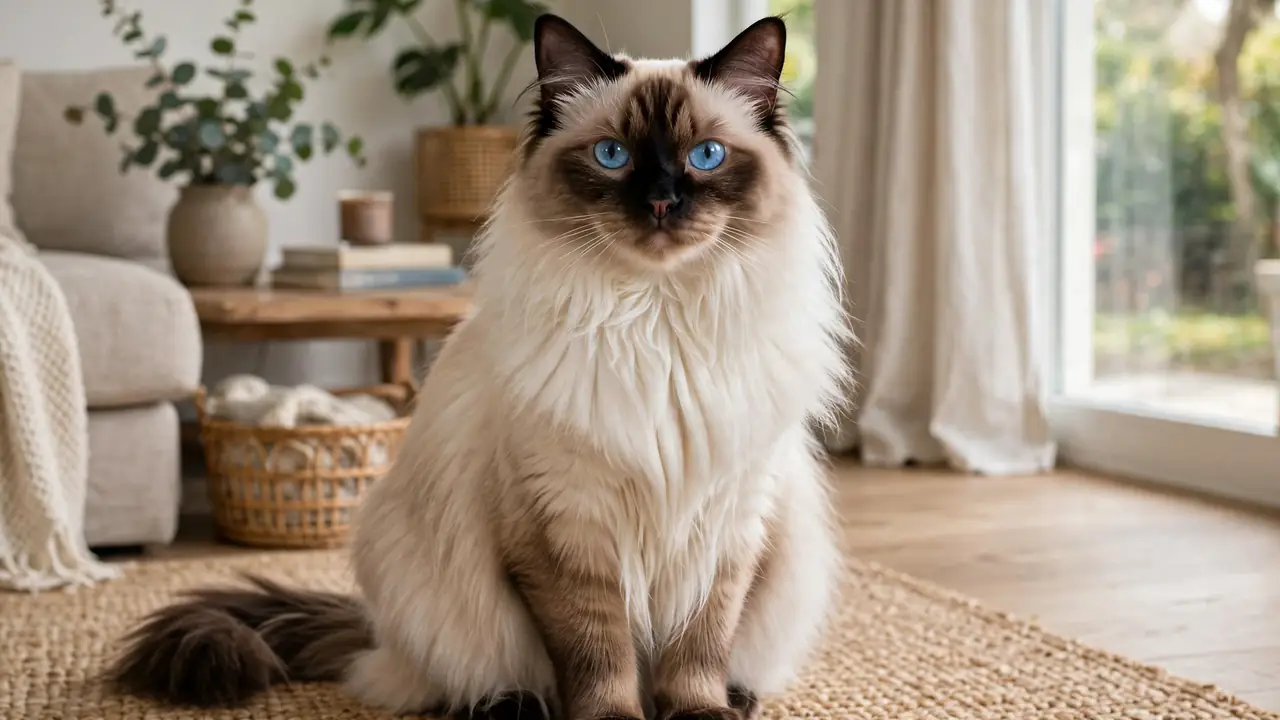
Thinking about sharing your home with one of these elegant cats? This quick snapshot covers the essentials before we get into the details.
At a Glance
Size and Weight
Do not let the flowing coat fool you. There is a light, athletic cat underneath all that silk.
Most Balinese weigh between 5 and 10 pounds, with males tending toward the higher end of that range. The body is slender and tubular, built for climbing and leaping rather than lounging. You will notice long legs, a slim waist, and an overall look of elegant strength.
Because the coat lies close to the body, many Balinese look slimmer than cats of the same weight with fluffier fur. It is a graceful kind of small, never fragile.
Coat and Colors
The coat is where this breed truly turns heads. Let us look closely at what makes it special.
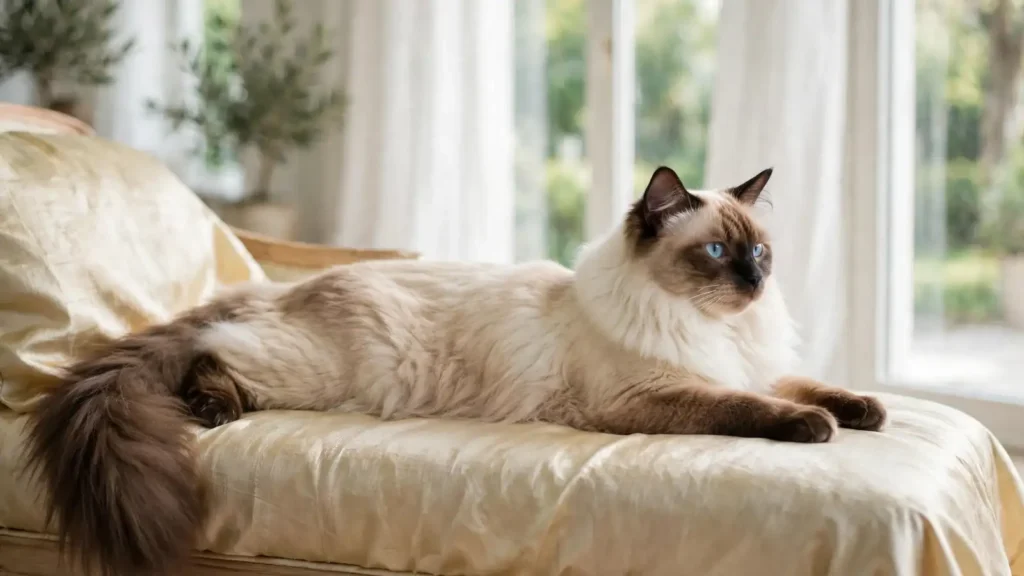
Run your hand along a Balinese cat and you will feel how different this coat is from most long haired breeds. The fur is fine and silky, with a single layer and very little undercoat. It lies close to the body instead of standing out in a cloud.
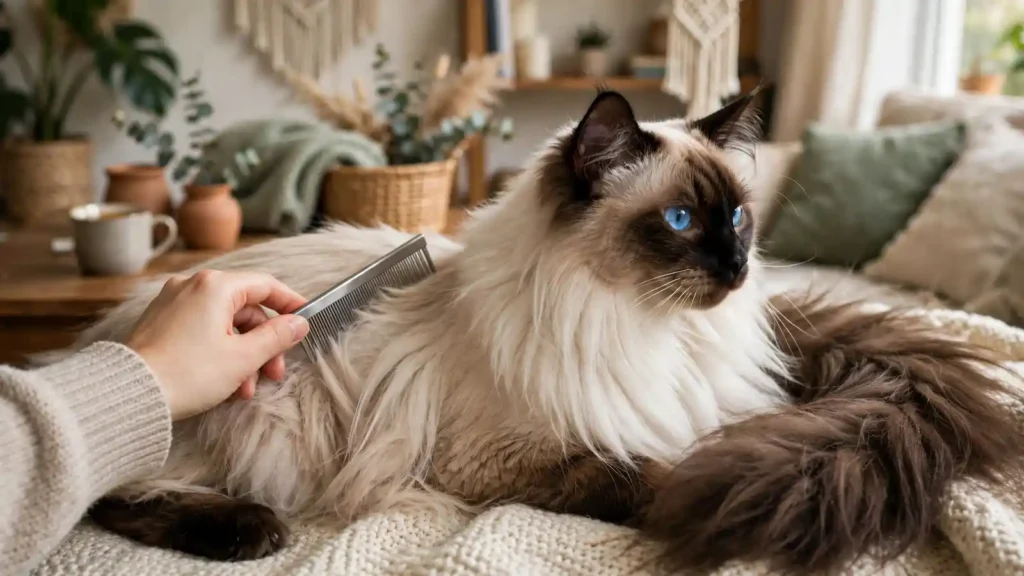
That close lying coat has a practical upside. It resists matting far better than dense double coats, and regular combing is usually enough to keep it smooth.
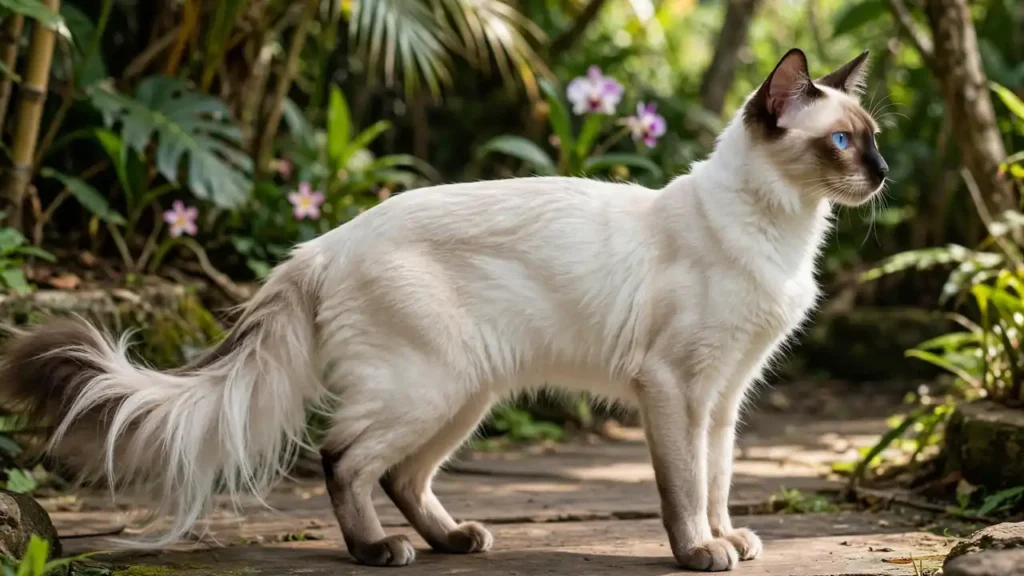
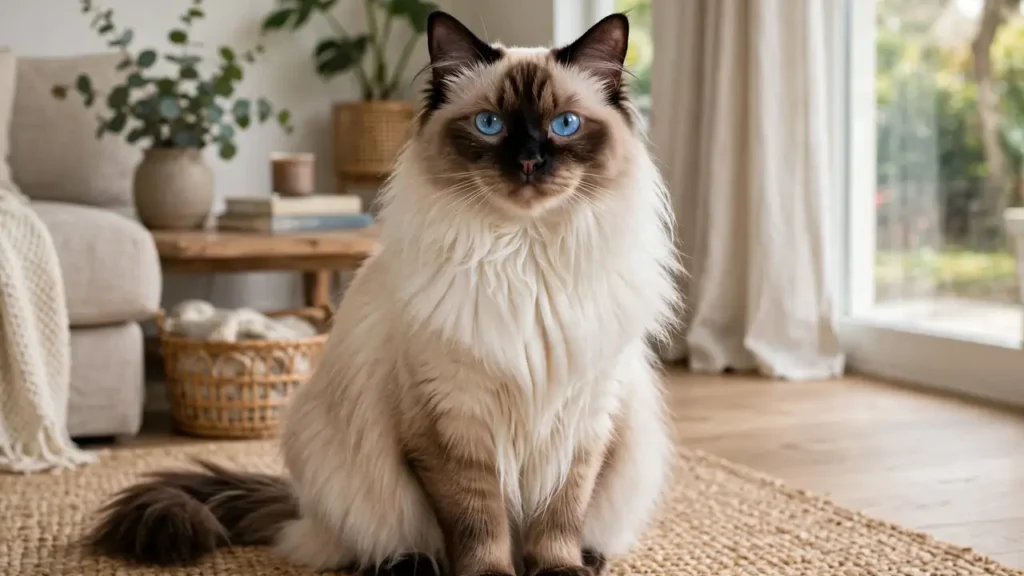
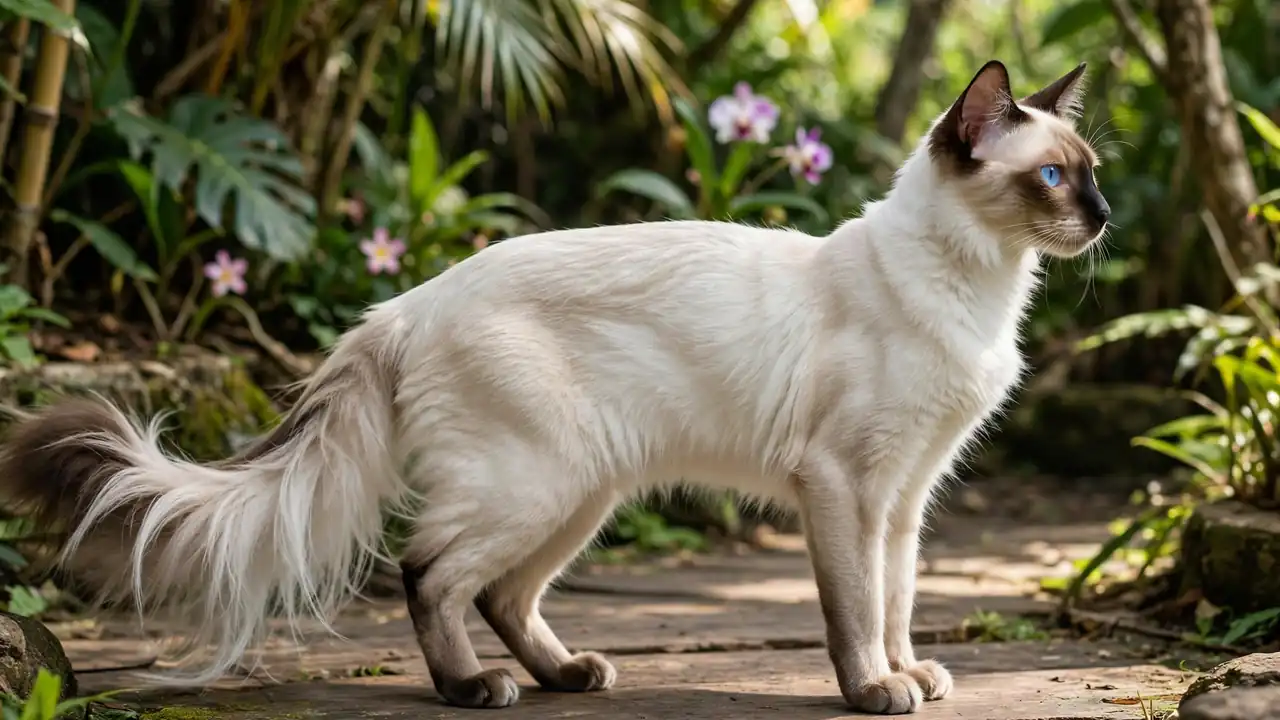
The Balinese wears the classic colorpoint pattern. The body stays a pale, even shade while the ears, face mask, paws, and tail carry a darker, richer color. Those darker areas are called points.
Here is a detail new owners love. Balinese kittens are born almost entirely pale, and the points deepen as they grow. The full pattern usually settles in over the first year or two.
Four point colors are widely accepted, and each gives the cat a completely different look.
Seal point is the classic. Deep, warm brown points sit against a pale fawn body, and the contrast is bold and dramatic. Many people picture seal point first, since it shows off the pattern at its strongest.
Blue point trades warmth for cool elegance. The points are a soft slate gray with a silvery cast over an icy white body. Blue point Balinese have a calm, refined look.
Chocolate point is warmer and lighter than seal. Think milk chocolate over a creamy ivory body. It is a softer contrast, and many owners find it the sweetest looking of the four.
Lilac point is the most delicate. The points are a pale, pinkish gray over a magnolia white body. Lilac is subtle and unusual, and it tends to draw a second look.
No Balinese coat discussion is complete without the tail. Long, fine hair feathers out along its full length, creating a plume that waves behind the cat like a banner. It is the breed’s signature flourish.
History and Origins
Long haired kittens appeared from time to time in litters of Siamese type cats — a natural mutation carried quietly through generations.
The Balinese cat began in the United States, not on the island of Bali.
The name was chosen as a nod to the graceful dancers of Bali.
Development kept the Siamese type look and personality while establishing the long, silky coat as the breed’s hallmark.
The Balinese has an origin story rooted in happy accidents. Here is how a surprise became a breed.
The Balinese cat began in the United States, not on the island of Bali. Long haired kittens appeared from time to time in litters of Siamese type cats, the result of a natural mutation carried quietly through generations. Admirers of these elegant kittens worked to establish them as a breed in their own right.
The name was chosen as a nod to the graceful dancers of Bali. Development focused on keeping the Siamese type look and personality while establishing the long, silky coat as the breed’s hallmark.
Physical Characteristics
Look past the coat and you will find the unmistakable silhouette of the Siamese type. Every line is long and refined.
Its head is wedge shaped with large, wide set ears that continue the lines of the wedge. The eyes are the famous almond shaped blue, vivid and slightly slanted, set to give the face an alert, intelligent expression. The muzzle is fine, the neck is long and slim, and the whole body flows in one continuous elegant line from nose to tail tip.
Legs are long and slim with small, dainty paws, and the tail is long and tapering beneath all that plume. It is built for grace, and it shows in every movement.
Balinese Personality and Behavior
If you want a quiet, independent cat, keep looking. The Balinese has opinions and plans to share them.
Living with a Balinese cat means gaining a constant companion. This highly social breed wants to be involved in everything you do. Expect a cat on your lap, on your desk, or trotting behind you from room to room.
The Balinese is famously chatty, though the voice is softer than you might expect. You will hear commentary throughout the day: greetings when you walk in, opinions about dinner, remarks on the weather outside the window. A Balinese cat talks with you, not at you.
Intelligence runs deep in this breed. These cats learn routines fast and genuinely enjoy puzzle toys and games of fetch. A bored Balinese will invent entertainment, and you may not love the choices it makes.
This highly social breed wants to be involved in everything you do — on your lap, on your desk, or trotting behind you.
You will hear commentary throughout the day — greetings, opinions about dinner, remarks on the weather. A Balinese talks with you, not at you.
These cats learn routines fast and genuinely enjoy puzzle toys and games of fetch.
- Deeply social and devoted
- Soft, musical voice
- Long coat needs less work than it appears
- Long hours alone are the hardest part
- A bored Balinese invents entertainment
- Very people focused — not an independent cat
Care Essentials
Complete, balanced food with real animal protein; measured meals twice a day rather than free feeding.
Gentle combing two or three times a week is usually enough — the single coat resists tangles.
Daily interactive play — wand toys, crinkle balls, fetch and puzzle feeders.
Indoors is where it belongs; tall cat trees and window perches for safe adventure.
Nutrition and Diet
Feed the athlete in front of you. A lean, active cat needs quality fuel.
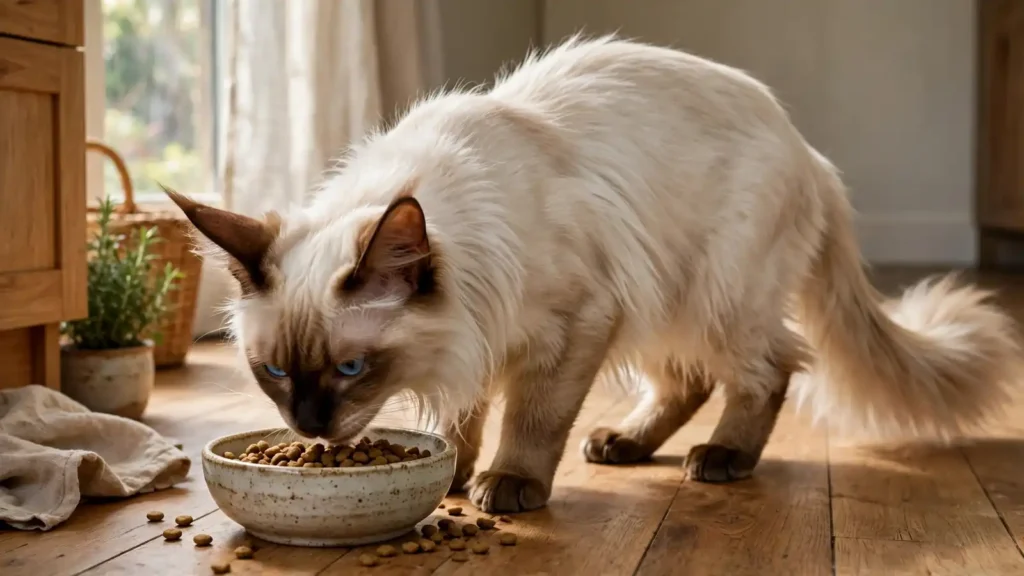
Choose a complete and balanced cat food appropriate for your cat’s age, with real animal protein among the first ingredients. Most Balinese do well on measured meals twice a day rather than free feeding, which makes it easier to notice appetite changes early.
Watch the waistline, not just the scale. At 5 to 10 pounds, even a small gain shows. Treats are fine in moderation but should stay a small part of the daily diet. Your veterinarian can help fine tune portions through every life stage.
Grooming
Here is the pleasant surprise of the breed. That long coat asks for less work than it appears to.
Grooming a Balinese cat is simpler than most people expect. The fine single coat with little undercoat resists tangles, so gentle combing two or three times a week is usually enough. Many Balinese enjoy the ritual and will purr through the whole session.
Trim nails every couple of weeks, check ears for buildup, and keep up with dental care at home. The coat may be the star, but these small habits matter just as much.

Exercise and Enrichment
A Balinese without a job will find one. Make sure the job is one you approve of.
This breed needs daily interactive play. Wand toys, crinkle balls, and games of fetch burn energy and feed that clever mind. Puzzle feeders turn mealtime into a challenge, which they will tackle with obvious pride.
Vertical space matters enormously. A tall cat tree near a window gives climbing, scratching, and bird watching in one spot. Rotate toys every week or two to keep things fresh, or a bored Balinese will invent games you did not approve, like open cabinets and unrolled paper towels.

Health
Balinese cats are generally healthy, and informed owners keep them that way. Here is what to watch for.
Because the breed shares its roots with the Siamese type, some of the same health topics apply. Respiratory sensitivity and dental issues can occur, so keep up with veterinary checkups and dental care. Responsible breeders also watch for inherited conditions such as progressive retinal atrophy, an eye condition that can affect vision over time. Annual exams and prompt attention to changes in appetite, breathing, or behavior catch most problems early.
An inherited eye condition that can affect vision over time — responsible breeders watch for it.
Respiratory sensitivity and dental issues can occur, so keep up with veterinary checkups and dental care.
Indoor and Outdoor Living
The great outdoors holds real risks for a cat this trusting. Inside is where the Balinese belongs.
It does best as an indoor cat. Its social nature makes it likely to approach strangers, and its striking looks can attract the wrong kind of attention. Traffic, predators, and disease are risks no coat is worth.
Indoor does not have to mean boring. Window perches, cat trees, and interactive toys give safe adventure, and many Balinese take to harness walks happily once trained with patience.
Family Suitability
Want a cat that joins the family instead of merely living in the house? You are looking at the right breed.
The Balinese fits well into active households. These cats adore children who treat them gently and will happily join in games. They usually get along with cat friendly dogs and other cats.
The one caution is time. A Balinese left alone for very long days can grow lonely and vocal about it. Households where someone is often home, or where another pet provides company, suit this breed best.
Finding a Breeder or Rescue
Taking your time at this stage pays off for years. A little homework now prevents heartache later.
If you choose a breeder, look for someone who raises kittens in the home, welcomes questions, and provides health records for the kitten and its parents. Ask what health screening they do. A responsible breeder will interview you right back.
Rescue is also worth exploring. Breed specific rescue groups and general shelters sometimes have Balinese or Balinese mixes waiting for homes. Adult rescues have the bonus of a known personality.
- Ask what health screening they do — expect health records
- Kittens raised in the home
- A responsible breeder interviews you right back
- Explore breed specific rescues and shelters too
Quick Quiz: Is a Balinese Right for You?
Answer four questions. Tap yes or no.
Frequently Asked Questions
What exactly is a Balinese cat?
The Balinese is essentially the long haired version of the Siamese type. It shares the slender build, colorpoint coat, and vivid blue eyes, with a long, silky coat and plumed tail setting it apart.
How big do Balinese cats get?
Most weigh between 5 and 10 pounds. They look light and elegant rather than stocky, and the close lying coat keeps the silhouette slim.
Are Balinese cats very vocal?
Yes, they are famously chatty. The Balinese loves to comment on daily life, but the voice is softer and more musical than many expect.
What colors do Balinese cats come in?
The accepted point colors are seal, blue, chocolate, and lilac. All four appear as darker points on the ears, face, paws, and tail over a pale body, and kittens are born pale with points that deepen as they grow.
Do Balinese cats need a lot of grooming?
Less than you would think. The fine single coat has little undercoat and resists matting, so combing two or three times a week is usually enough. Most Balinese enjoy the attention.
Are Balinese cats good with families?
They are excellent family cats for households that can give them time and attention. Balinese cats bond deeply and play gently with respectful children. They do not thrive on long lonely days.
The Balinese cat combines a silky colorpoint coat with vivid blue eyes and a chatty, devoted nature. Social and elegant, it thrives in homes that love interaction — a constant companion with grace, voice, and sapphire eyes.
Similar Breeds Worth Exploring
Related Breed Guides
Keep Exploring
Browse the full A to Z cat breed collection to compare personalities, or find out your cat’s age in human years with the cat age calculator.