Norwegian Forest Cat: Personality, Care, Health, History & Breed Guide
Norwegian Forest Cat: built for winter, born to climb
The Norwegian Forest Cat is a sturdy, longhaired climber with roots in Scandinavian forests. Gentle and people loving, yet calm and independent, it thrives in homes that respect its wild side.
By Emily Carter · Reviewed by our vet team · Updated 21 October 2026 · 9 min read
Lifespan 12–16 yrsWeight 8–18 lbBorn climber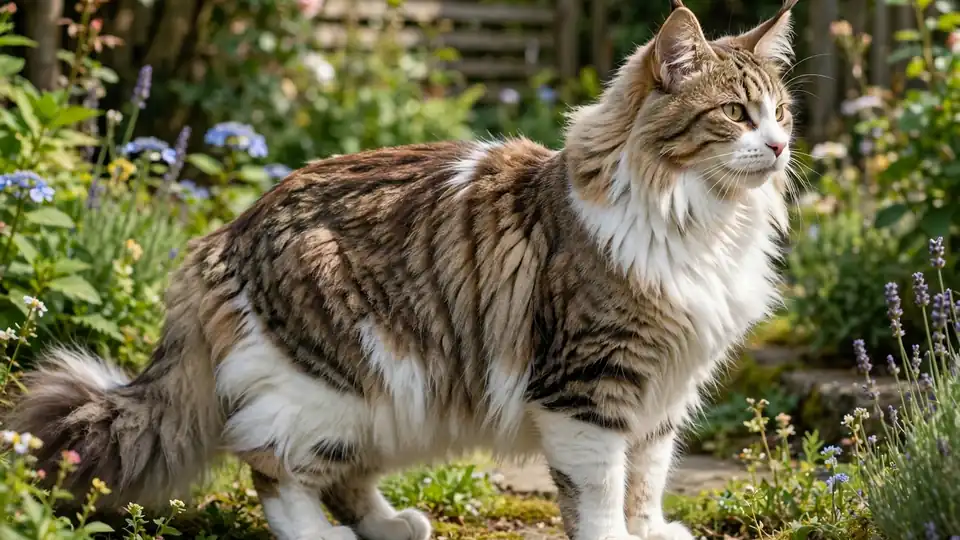
Few cats carry their history in their coat the way this cat does. This large, rugged breed grew up in the cold forests of Norway, and nearly everything about it, from the water resistant guard hairs to the talent for climbing, was shaped by that life.
At a Glance
Size and Weight
Males usually weigh 12 to 18 pounds, and some reach 20 pounds; females run smaller, generally 8 to 16 pounds. The breed is about 30 percent heavier than the average house cat, and that weight comes from bone and muscle rather than fat. The body measures 12 to 18 inches from nose to base of tail, and the long, bushy tail is often nearly as long as the body.
Coat and Colors
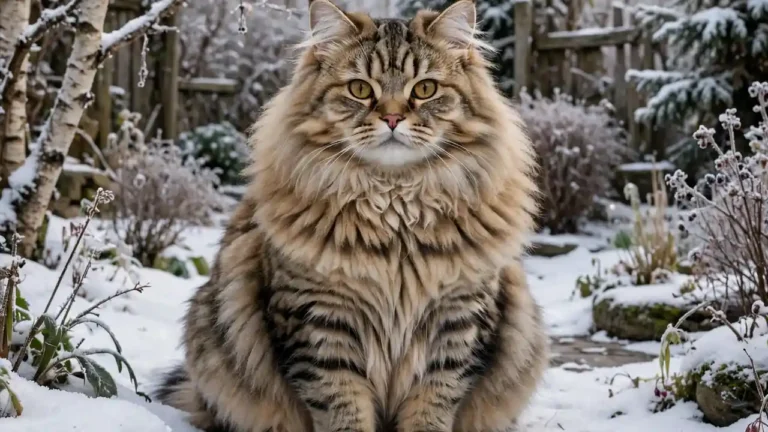
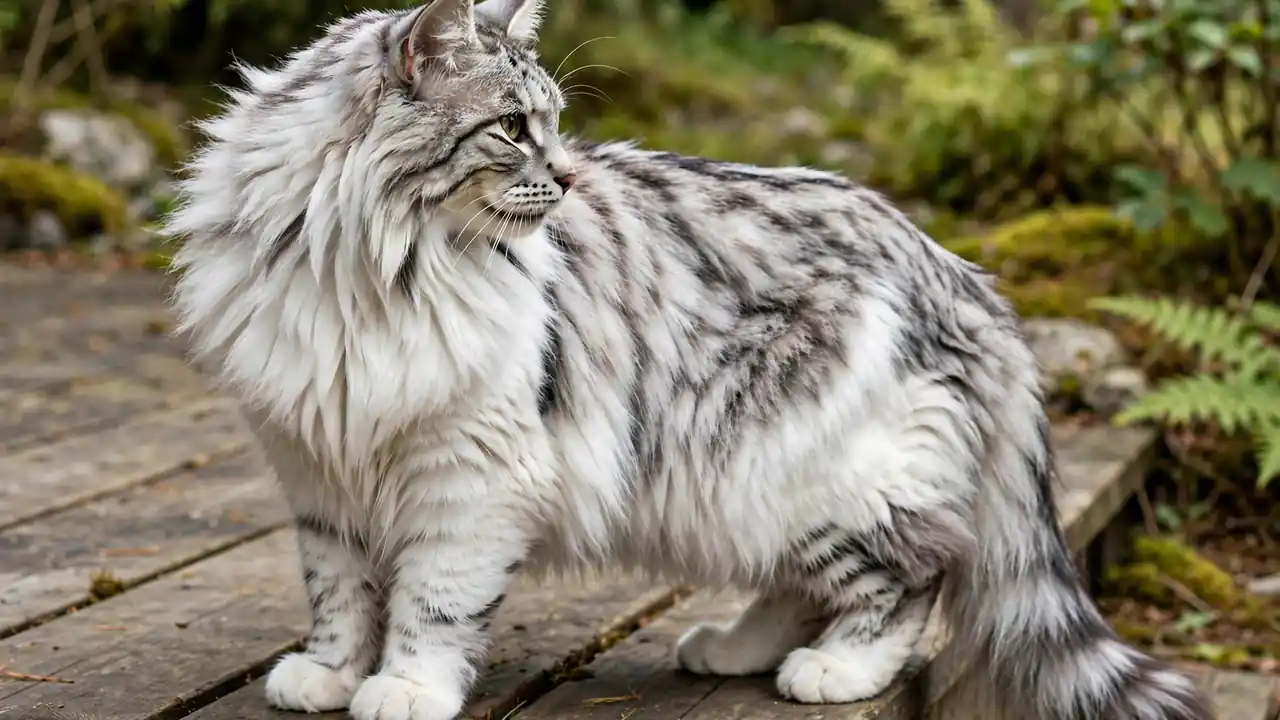
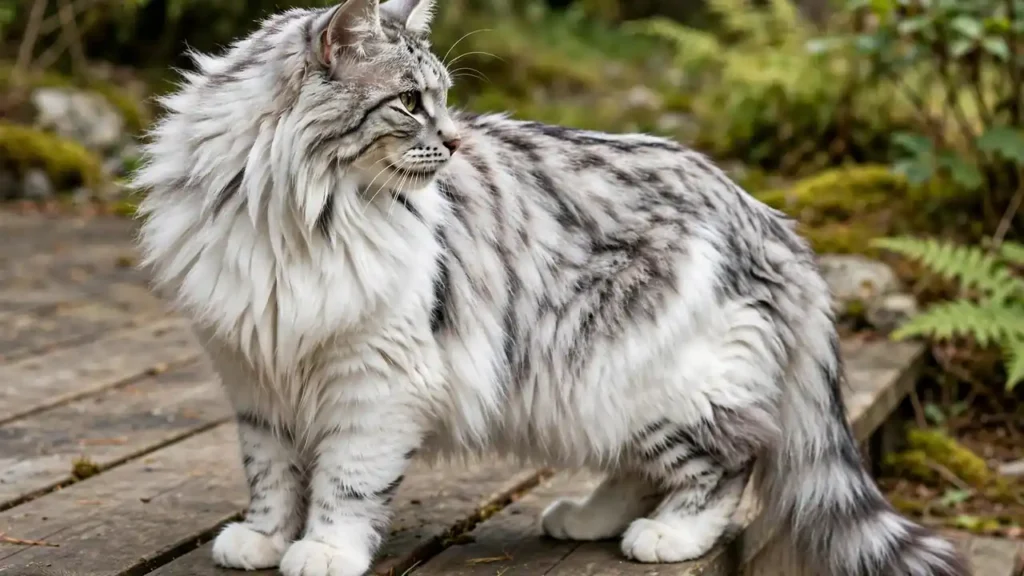
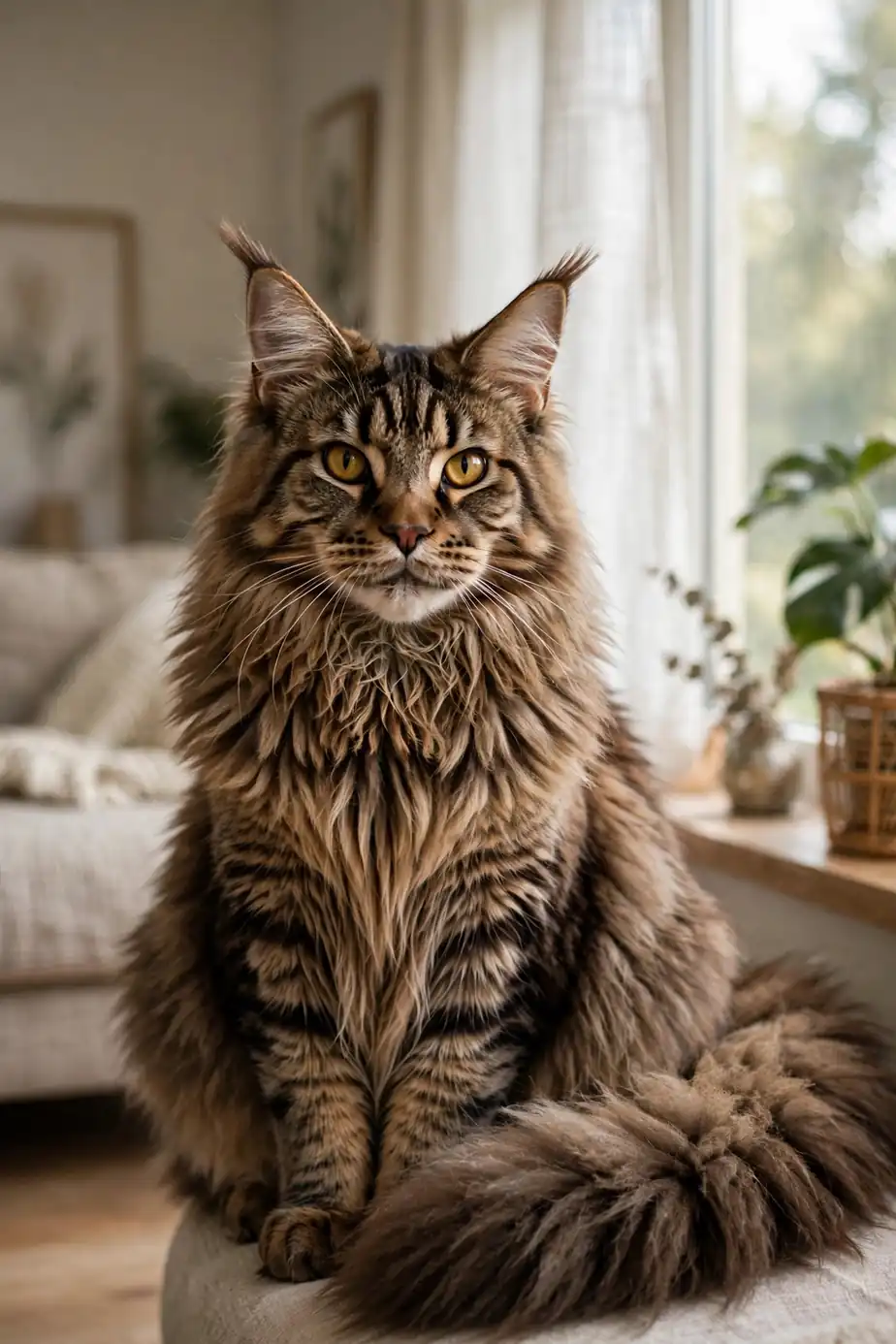
The coat is semi long and double layered: a dense, woolly undercoat sits beneath long, glossy guard hairs that shed water. A fully coated cat wears a full ruff around the neck, a bib, and thick britches on the hind legs. Nearly every color and pattern occurs in this breed, and the most common is tabby and white.
History and Origins
In Norway the breed is called the skogkatt, which means forest cat. Long haired forest cats appear in Norwegian folk tales as far back as the 16th century, when they were known as Hulderkatt, or troll cats.
Historians think shorthaired cats reached Norway with the Vikings more than a thousand years ago and bred with longhaired cats brought by travelers and Crusaders. Those cats mated with farm and feral stock, and the harsh climate did the rest.
From Norwegian farmyards the forest cat reached modern show halls, staying a natural, hardy breed shaped by centuries of natural selection.
The story of this breed runs from Viking ships to Norwegian farmyards to modern show halls, and myths have followed it every step of the way.
Physical Characteristics
This breed looks like it walked out of a winter forest, and its body is built for exactly that kind of life. The head forms an equilateral triangle, with a long straight profile and a firm chin; ears are medium to large, heavily furnished, and lynx tips are prized. The body is solidly muscled with a broad chest and substantial bone, and hind legs longer than the front raise the rump above the shoulders, giving the cat its powerful climbing stride.
Norwegian Forest Cat Personality and Behavior
Strong and wild looking on the outside, this is a soft and easygoing cat on the inside. Sweet, loving, and gentle, it enjoys praise, plays with enthusiasm, and bonds deeply with its family; breeders often call it mild mannered. It is not a clingy cat: calm and independent, happy to entertain itself when the house is empty and just as happy to curl up beside its people in the evening.
Sweet, loving, and mild mannered: it adapts easily to new situations without fuss.
Calm and self reliant, it entertains itself happily and gives affection on its own terms.
It is often said to pick a favorite person in the home, and many follow that person from room to room.
- Gentle, patient and adaptable
- Good with children and other pets
- Large, beautiful and hardy
- Heavy seasonal molt once or twice a year
- Not a lap cat: affection on its terms
- Needs vertical space and sturdy furniture
Care Essentials
A high quality, protein rich diet built on real meat or fish, with fresh water at all times and portions watched.
A weekly combing keeps the coat free of tangles most of the year; step up to daily brushing during the spring and fall shed.
Hunting style games every day: interactive toys, chasing games, and room to run, hide, and ambush.
Tall cat trees, big scratching posts, and window perches: this born climber needs the highest spot in the room.
Nutrition and Diet
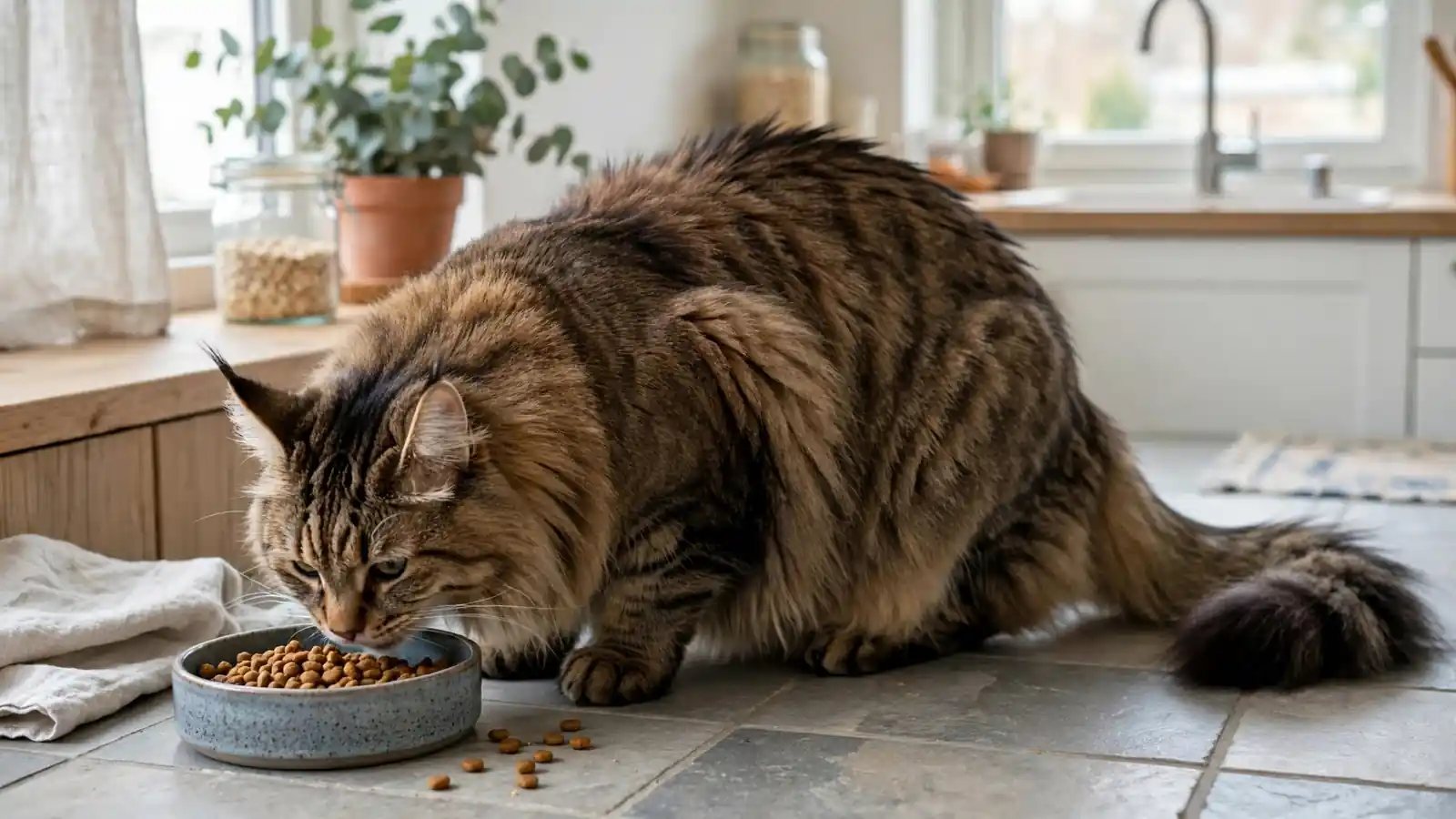
Feeding this breed is about quality food, sensible portions, and plenty of fresh water. As a relatively large breed, it may need more calories per day than the average cat, especially when it is very active. Choose a high quality diet with real meat or fish as the first ingredient, and read ingredient lists closely: favor named proteins like chicken, turkey, lamb, and salmon over by products and fillers.
Grooming
Despite the long coat, grooming is light work for most of the year, and many cats learn to enjoy the routine. A weekly combing with a deep tined comb is usually enough to prevent mats and keep the coat looking its best. The exception is shedding season: when the heavy winter coat starts to come out, switch to daily brushing to keep loose fur off the furniture.

Exercise and Enrichment
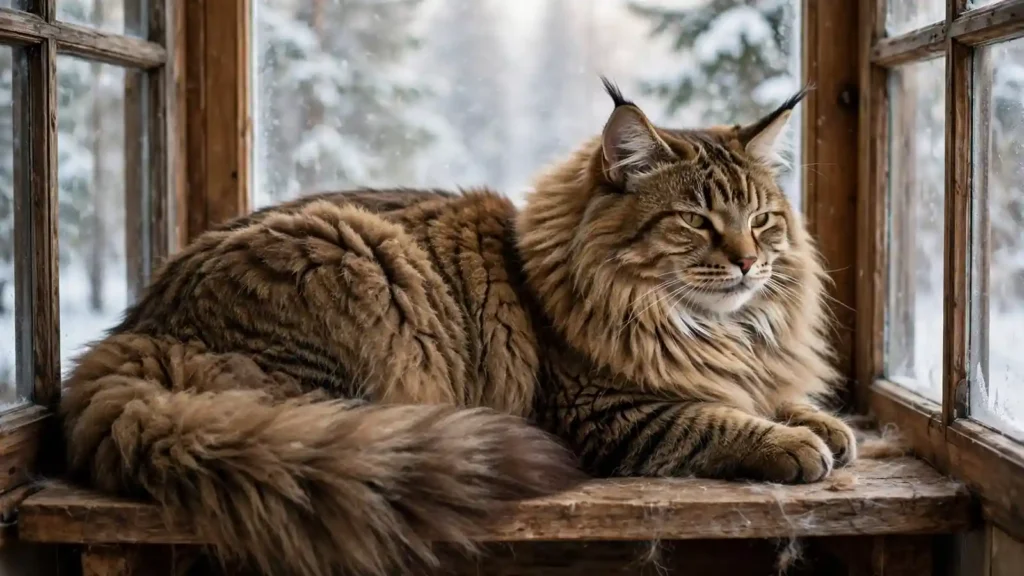
This is a born climber that stays happy with height, hunting games, and room to move. Provide a scratching post wrapped in sisal rope and tall cat trees, and set out perches with room to run: these cats use their powerful hind legs to reach the highest spot in the room. They love interactive toys, catnip, running, hiding, and ambushing their toys.

Health
This is a hardy breed shaped by centuries of natural selection, but like every breed it has a few health concerns worth knowing about. Regular veterinary checkups, current vaccinations, and parasite prevention form the foundation of care, just as they do for any cat.
Hypertrophic cardiomyopathy, a thickening of the heart muscle, occurs in the breed. There is currently no DNA test for this condition in this breed, so breeders screen breeding cats with an echocardiogram every couple of years.
A serious inherited storage disease. DNA tests exist for it, and responsible breeders test their cats: affected kittens are often stillborn or live less than six months.
Pyruvate kinase deficiency destroys red blood cells and causes anemia, and DNA tests exist for it too. The breed also shows a tendency toward kidney disease and hip dysplasia, so blood work and hip evaluations are recommended.
Indoor and Outdoor Living
This breed was made for the outdoors, but most owners today choose a safer setup, and the cat adapts just fine. This cat appreciates an indoor lifestyle with soft surfaces and family company, and adjusts quickly to indoor living, even though its size and energy mean it enjoys big spaces. Because the hunting instinct never fully left, an indoor home should offer vertical space, window perches, and regular play.
Family Suitability
Few large breeds are as patient and adaptable with family life as this one. This breed is known for a calm temperament and an easy fit into busy households: patient with children, a good choice for families with kids and other pets, and friendly with well behaved dogs. Loyalty is a hallmark of the breed, without demanding constant attention.
Finding a Breeder or Rescue
A healthy kitten starts with a careful breeder or a good rescue. A kitten from a reputable breeder typically costs $900 to $1,500, and show quality kittens can cost more. Look for a breeder who health tests breeding cats and shares the results openly. Kittens are slow to mature and may take up to five years to reach full size, so expect a long, lanky teenager phase.
- Ask which health tests were done on the parents (HCM echocardiograms, DNA tests for GSD IV and PK deficiency) and request copies
- Ask to see the parents and the living conditions
- Kittens should be raised in a home environment
- Choose a kitten that is curious, playful, and comfortable being handled
Quick Quiz: Is a Norwegian Forest Cat Right for You?
Answer four questions. Tap yes or no.
Norwegian Forest Cat vs Maine Coon
Shoppers often narrow the choice to a few fluffy breeds, so here is how it compares to its closest lookalike.
Frequently Asked Questions
How big do Norwegian Forest cats get?
Males usually weigh 12 to 18 pounds and females 8 to 16 pounds, with some males reaching 20 pounds. They stand 9 to 12 inches tall and take up to five years to reach full size.
How long do Norwegian Forest cats live?
The average lifespan is 12 to 16 years, and it is not unusual for one to live well beyond 15 with good care.
Do Norwegian Forest cats shed?
Yes, but less than you might expect from such a long coat. They molt heavily once or twice a year and shed lightly in between. Weekly brushing, daily during the shed, keeps it under control.
Are Norwegian Forest cats hypoallergenic?
No. They produce dander like any cat, and the thick coat can hold allergens, so they are not a good choice for people with strong cat allergies.
Choose a Norwegian Forest cat if you want a large, beautiful companion that is gentle with the family, good with other pets, and calm enough to handle a busy household. Think twice if you want a constant lap cat: this cat gives affection on its own terms, and it will not pretend otherwise.
Similar Breeds Worth Exploring
Related Breed Guides
Keep Exploring
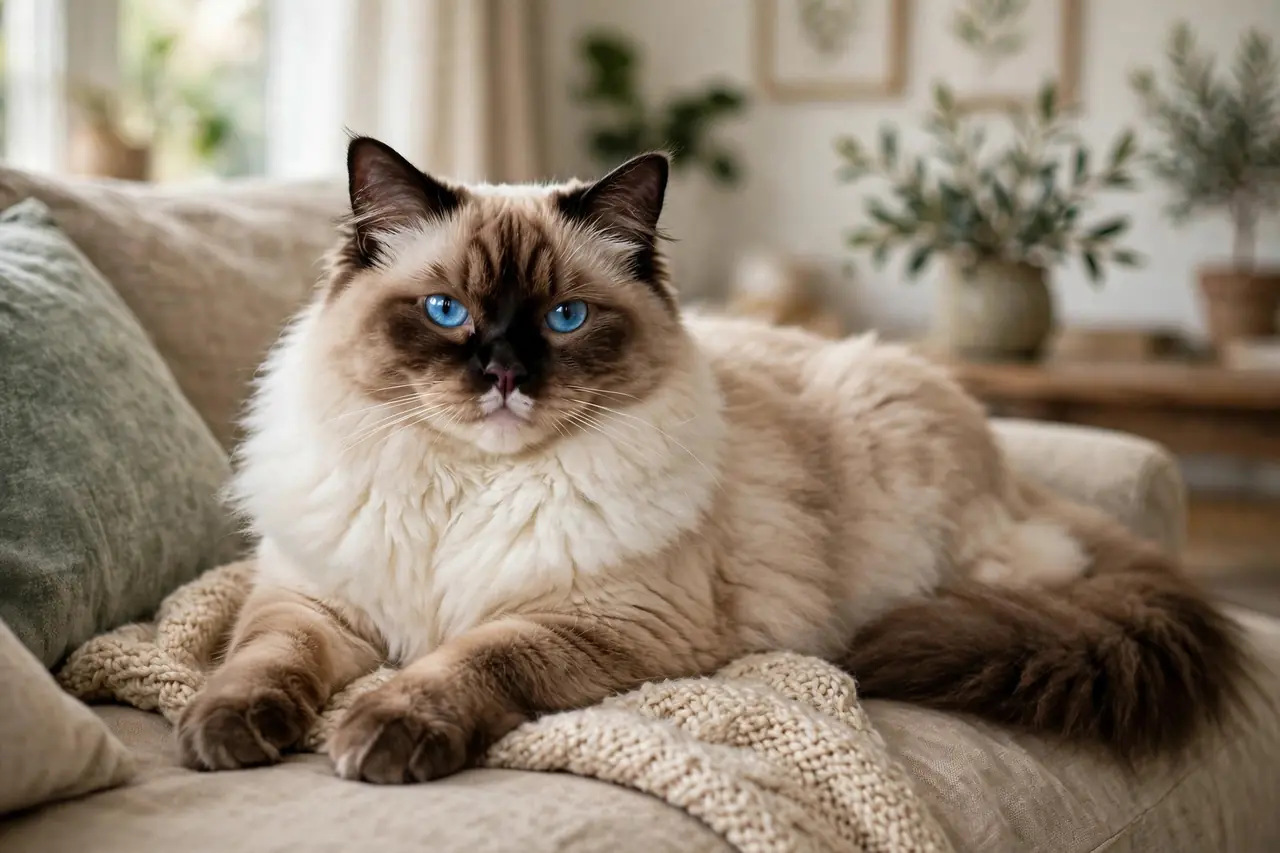
Still deciding? Compare the squarer muzzled Maine Coon, or meet the floppy, gentle Ragdoll. Every guide on this site follows the same layout, so the facts you need are always in the same place.