Tonkinese Cat: Personality, Care, Health, History & Breed Guide
Tonkinese: the best of two worlds
The Tonkinese cat blends Siamese sociability with Burmese sweetness: loving, playful, and people oriented, with a silky, mink like coat and famous aqua eyes.
By Emily Carter · Reviewed by our vet team · Updated 21 October 2026 · 9 min read
Lifespan 10–16 yrsWeight 6–12 lbAqua eyes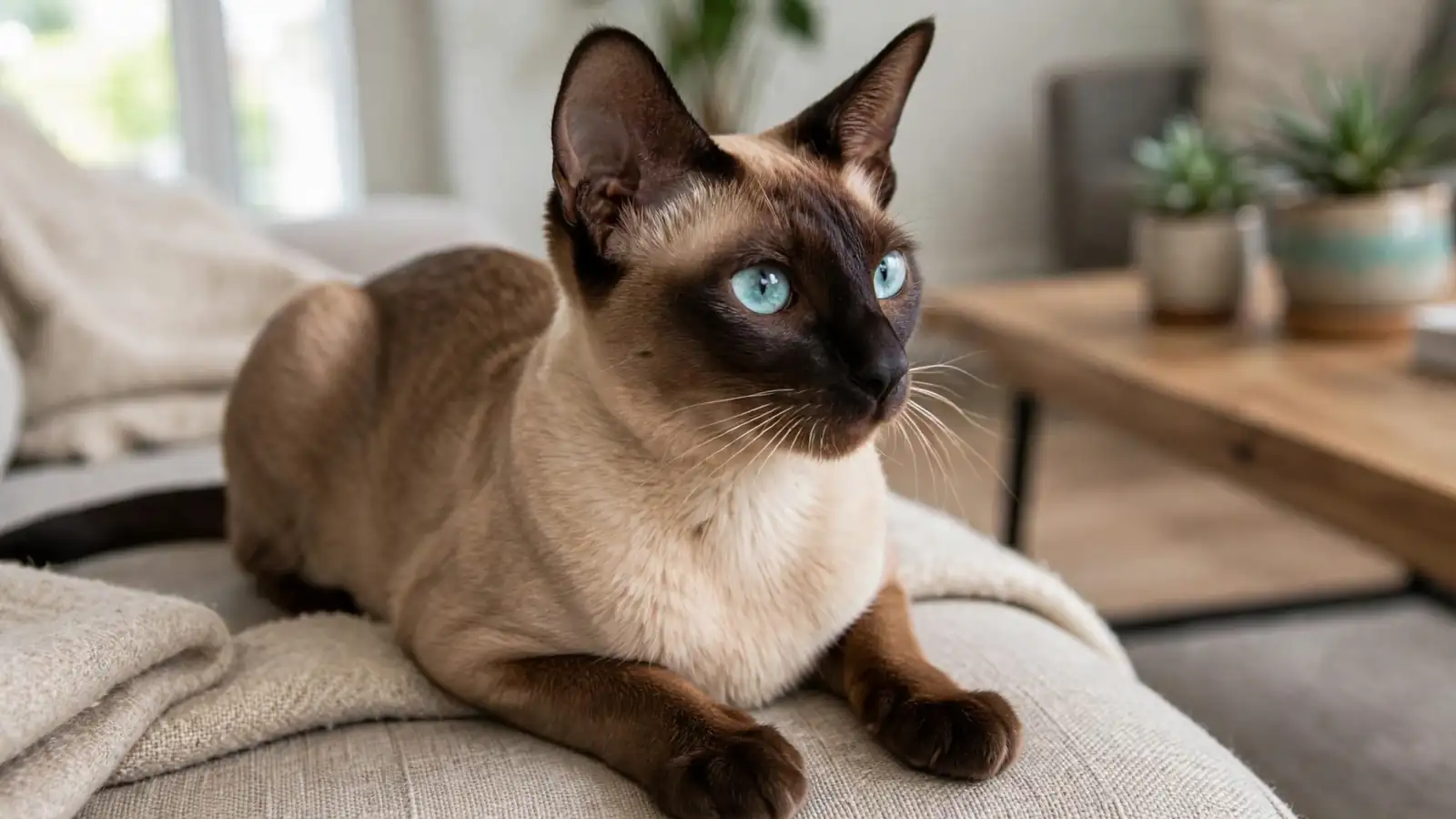
If you cannot decide between a Siamese and a Burmese, the Tonkinese cat may settle the debate. This breed blends the elegance and voice of the Siamese with the warmth and softness of the Burmese, wrapped in a moderate, balanced body. This guide covers everything you need to know about the Tonkinese cat, from its history and appearance to nutrition, grooming, exercise, health, and family life.
At a Glance
Size and Weight
Adult males usually weigh 8 to 12 pounds, while adult females range from 6 to 8 pounds: overall, a healthy adult Tonkinese falls somewhere between 6 and 12 pounds. This is a medium sized breed with a surprisingly muscular build. A Tonkinese can measure up to 28 inches from nose to tail tip, and legs, torso, and tail all sit in good proportion, so the cat looks balanced rather than long or stocky.
Coat and Colors
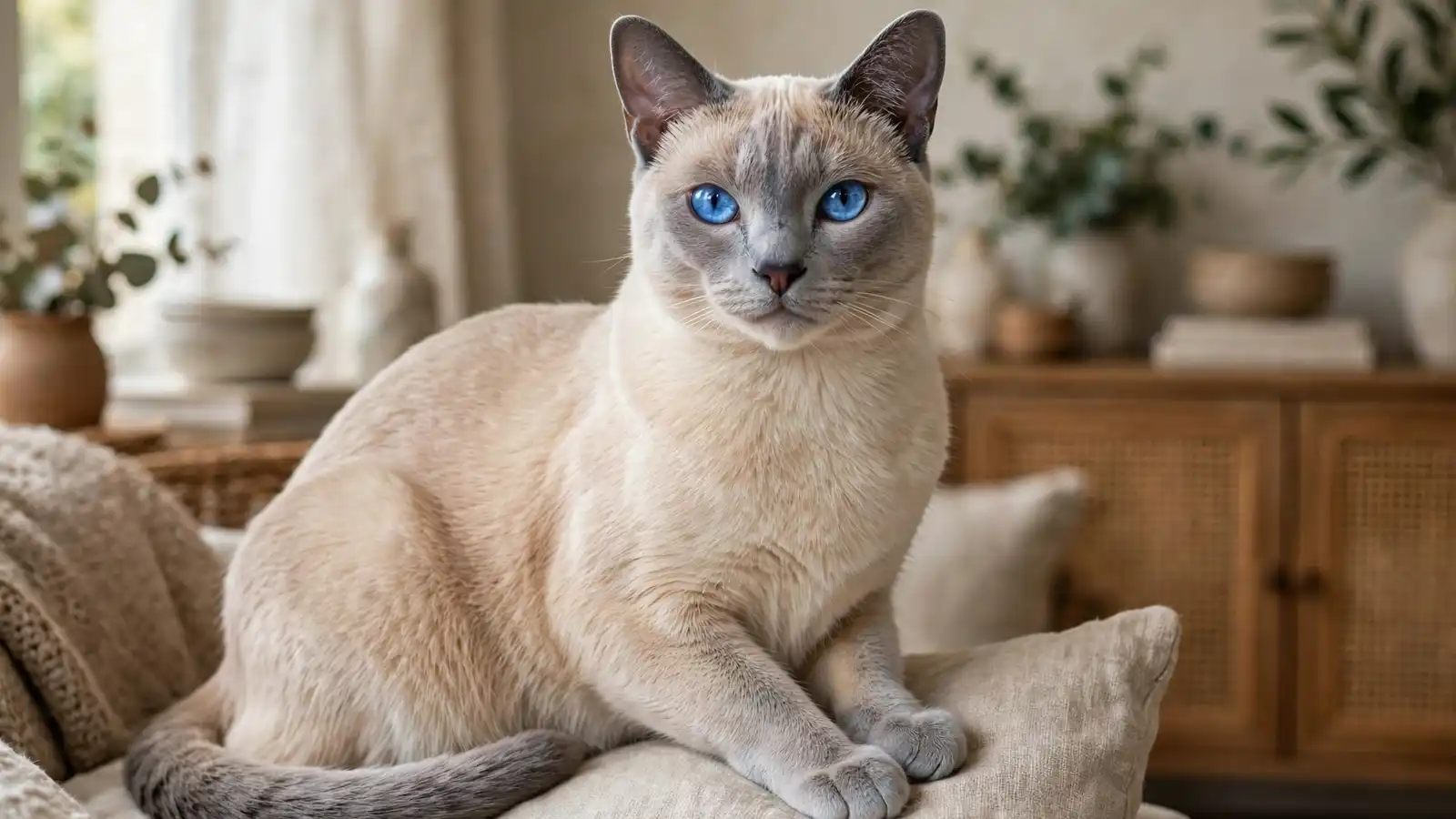
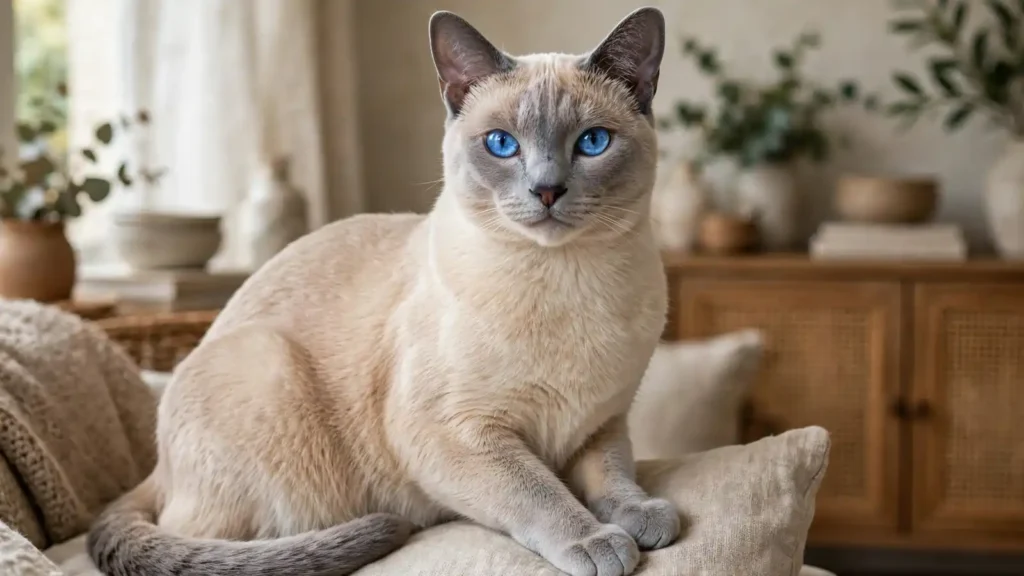
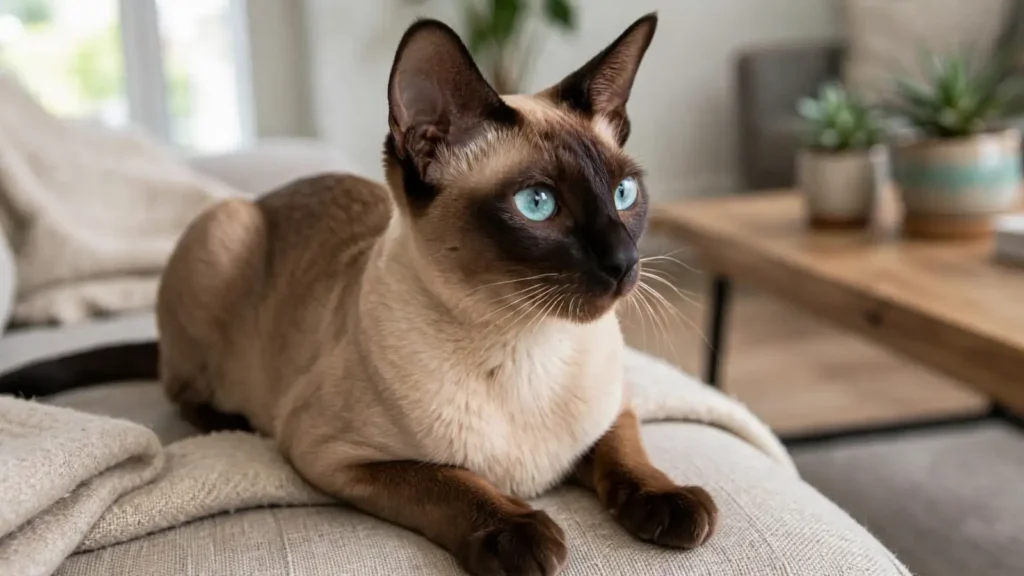
The coat is short, fine, and silky, lying close to the body with a lustrous sheen: many owners compare the feel to mink, and the texture is one of the breed’s signature traits. The breed comes in three pattern groups: pointed cats show high contrast between the pale body and darker points, much like a Siamese; mink cats show medium contrast and are the pattern most closely linked with the breed; solid cats show low contrast, closer to the Burmese look. Eye color follows the pattern, and mink cats have the famous aqua eyes.
History and Origins
The story begins with a cat that was not even recognized as what she was. In 1930, a small brown cat named Wong Mau arrived in the United States: breeders first treated her as a Burmese, but her descendants would help shape two breeds.
By the 1960s, the Siamese and the Burmese had grown into two quite different types, one long and svelte, the other rounded and compact. Two breeders set out to create a cat that sat between the extremes.
The cats were first spelled Tonkanese, and Canadian registries began registering them in the late 1960s. The spelling later changed to Tonkinese, a reference to the Bay of Tonkin off the coasts of southeast Asia.
The result is a breed deliberately built in the middle: Siamese elegance moderated by Burmese warmth.
Physical Characteristics
The Tonkinese is often called the moderate cat, and the description fits: every feature lands between the extremes of its parent breeds, which is exactly what the original breeders intended. The head is a modified wedge, slightly rounded and somewhat longer than wide, with high cheekbones and a blunt muzzle. The body is medium in length with well developed muscle and no coarseness: neither cobby nor svelte, and balance matters more than size.
Tonkinese Personality and Behavior
Here is where the Tonkinese cat truly earns its reputation: this is a people cat through and through, one that follows its owners from room to room, sits on laps, rides on shoulders, and joins in every household activity. Tonkinese are playful, social, and affectionate, with a sense of humor their owners mention again and again. They are vocal, though not as loud or demanding as the Siamese, with a softer, sweeter voice.
Follows its owners from room to room, sits on laps, rides on shoulders, and joins in every household activity.
Playful, social, and affectionate, with a sense of humor: they invent games and play fetch with favorite toys.
Chatty and conversational, answering when spoken to and making its wishes known, but softer and sweeter than the Siamese.
- A true companion, not a roommate
- Playful and funny
- Very low grooming needs
- Dislikes being left alone
- Can turn to mischief when bored
- Needs daily play and mental challenges
Care Essentials
High quality complete food for the life stage, with portion control and measured meals: the breed can become obese.
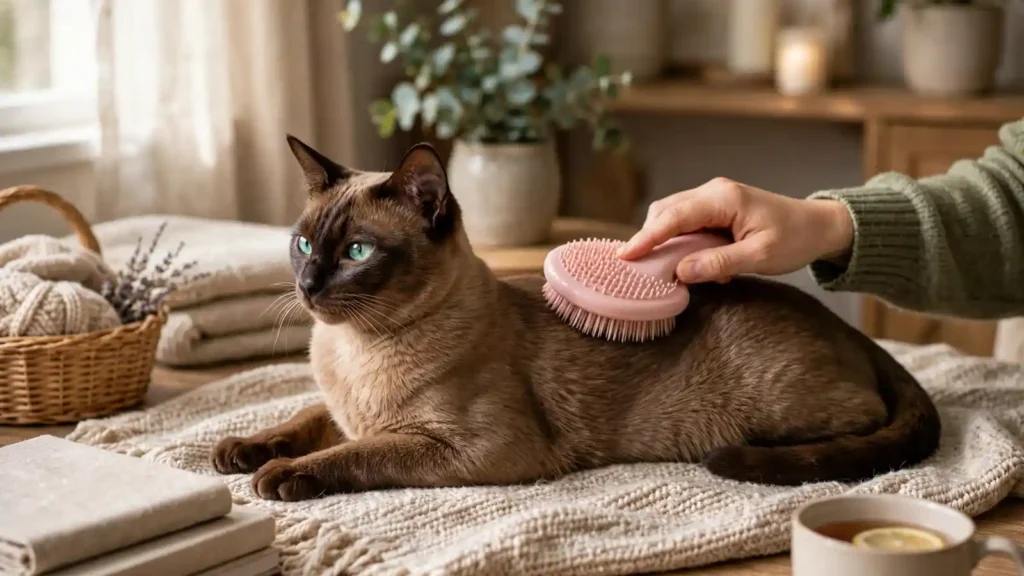
A once a week brush with a rubber brush; nails, ears, and dental care on a regular routine.
Active play sessions spread through the day: wand toys, feather toys, balls, and puzzle toys.
A tall cat tree or wall shelves: climbing is a favorite activity, and an indoor home should be cat proofed.
Nutrition and Diet
Every cat is unique, but all cats share the same basic nutritional needs. Feed a high quality food that is complete and balanced for your cat’s life stage. Because the breed can become obese, portion control matters: measure meals, follow the feeding guidelines on the packaging, and adjust based on your cat’s body condition. Fresh, clean water should be available at all times.

Grooming
Grooming a Tonkinese is easy compared with many breeds. The short, fine coat does not mat, and a once a week brush with a rubber brush removes dead hair and distributes natural oils; an occasional bath is enough for most cats. Beyond the coat, trim the nails as needed, check the ears and clean them when necessary, and keep up dental care.
Exercise and Enrichment
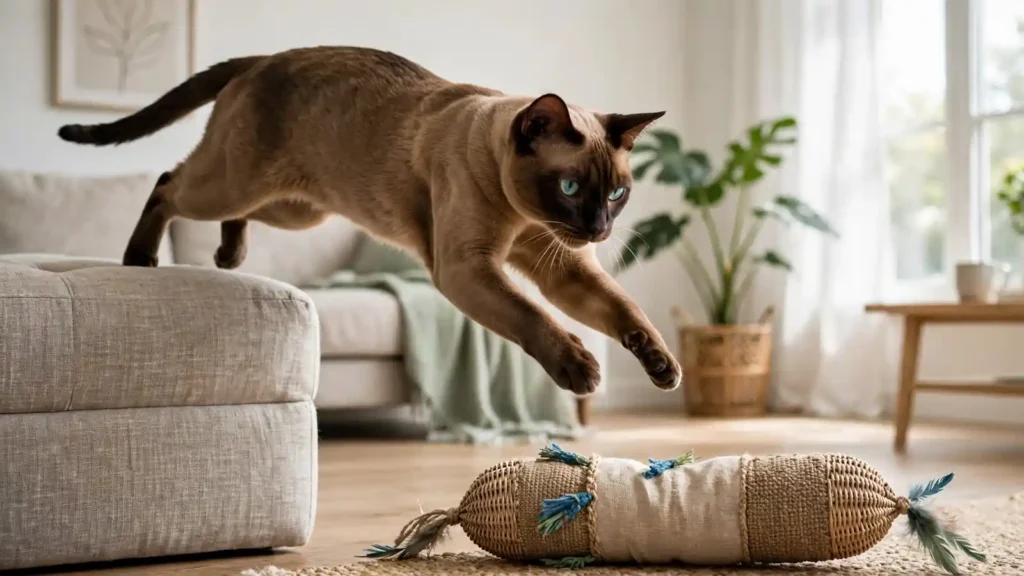
A Tonkinese cat needs both physical exercise and mental challenges every day: without them, this clever breed grows bored and may turn to mischief, from raiding the pantry to reorganizing your shelves. Aim for active play sessions spread through the day: wand toys, feather toys, and balls appeal to the hunting instincts, and many Tonkinese love a good game of fetch. Teaching tricks engages the breed’s intelligence.
Health
The Tonkinese is generally a healthy breed with good genetic diversity. Still, responsible owners should know the conditions the breed can face, and good breeders share health and genetic testing information openly.
The most commonly mentioned concern: Tonkinese are prone to gingivitis, especially as they age, which is why regular tooth brushing and veterinary dental checks matter.
Two inherited conditions worth screening for: progressive retinal atrophy, which can lead to blindness, and pyruvate kinase deficiency, a disease that causes anemia.
A rare inherited condition from the breed’s Burmese side. Responsible breeders test and remove cats with issues from their breeding programs.
Indoor and Outdoor Living
The Tonkinese cat is happiest close to its people, which makes indoor life a natural fit: indoors, the breed stays safe from traffic, predators, and disease while remaining at the center of household activity. These cats are curious, fearless, and fond of high places, so an indoor home should be cat proofed, with climbing structures and scratching posts. If you want your Tonkinese to experience the outdoors, choose safe options: a secure catio, or leash walks, which many Tonkinese learn happily.
Family Suitability
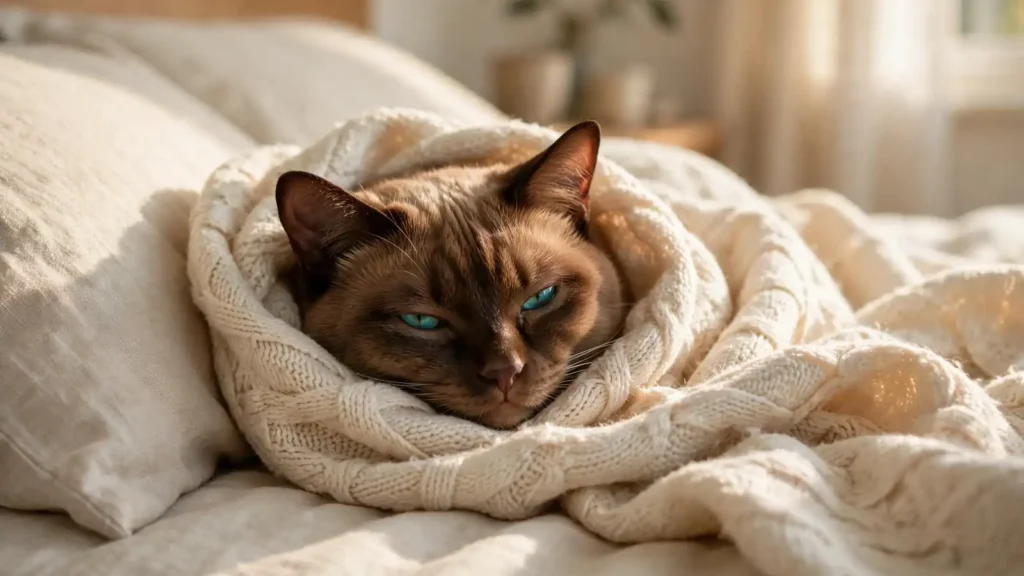
The Tonkinese fits beautifully into family life, and this is one of the breed’s greatest strengths. These cats are good with children, other cats, and cat friendly dogs: with children, the Tonkinese is playful and tolerant, happy to join games and curl up for cuddles afterward. In multi pet homes, Tonkinese usually thrive, and often bond closely with a feline or canine companion.
Finding a Breeder or Rescue
Once you have decided a Tonkinese cat is right for your home, the next step is finding one responsibly: take your time and choose a source that puts health and welfare first. No responsible guide can quote a fixed price, since costs vary widely by breeder, location, and the individual cat. Look for a breeder who raises kittens in the home and handles them from an early age, and who shares health and genetic testing information openly.
- Ask for health and genetic testing information
- Kittens should be raised in the home and handled from an early age
- A well socialized kitten approaches people readily
- Plan for company: a second pet helps if you work long hours
Quick Quiz: Is a Tonkinese Right for You?
Answer four questions. Tap yes or no.
Tonkinese vs Siamese
The Tonkinese is often compared with its parent breeds and other sociable shorthairs. Here is how it stacks up against the Siamese.
Frequently Asked Questions
How big does a Tonkinese cat get?
A Tonkinese is medium sized. Males typically weigh 8 to 12 pounds and females 6 to 8 pounds. They can measure up to 28 inches in length, and their muscular build makes them feel heavier than they look.
Are Tonkinese cats hypoallergenic?
No. Tonkinese are not hypoallergenic. They shed moderately, so allergy sufferers should spend time with the breed before committing.
Are Tonkinese cats vocal?
Yes, but moderately. They are chatty and will hold conversations with their owners, but their voice is softer and less demanding than the Siamese’s. Their tendency to vocalize rates at 3 out of 5.
Do Tonkinese cats like to cuddle?
Very much. Despite their high energy, Tonkinese are devoted lap cats that love curling up with their people at the end of the day.
The Tonkinese cat is an outstanding choice for an owner who wants a true companion, not an independent roommate: constant companionship, playful energy, moderate grooming, and a striking look with aqua eyes. It is less ideal for households where everyone is gone all day.
Similar Breeds Worth Exploring
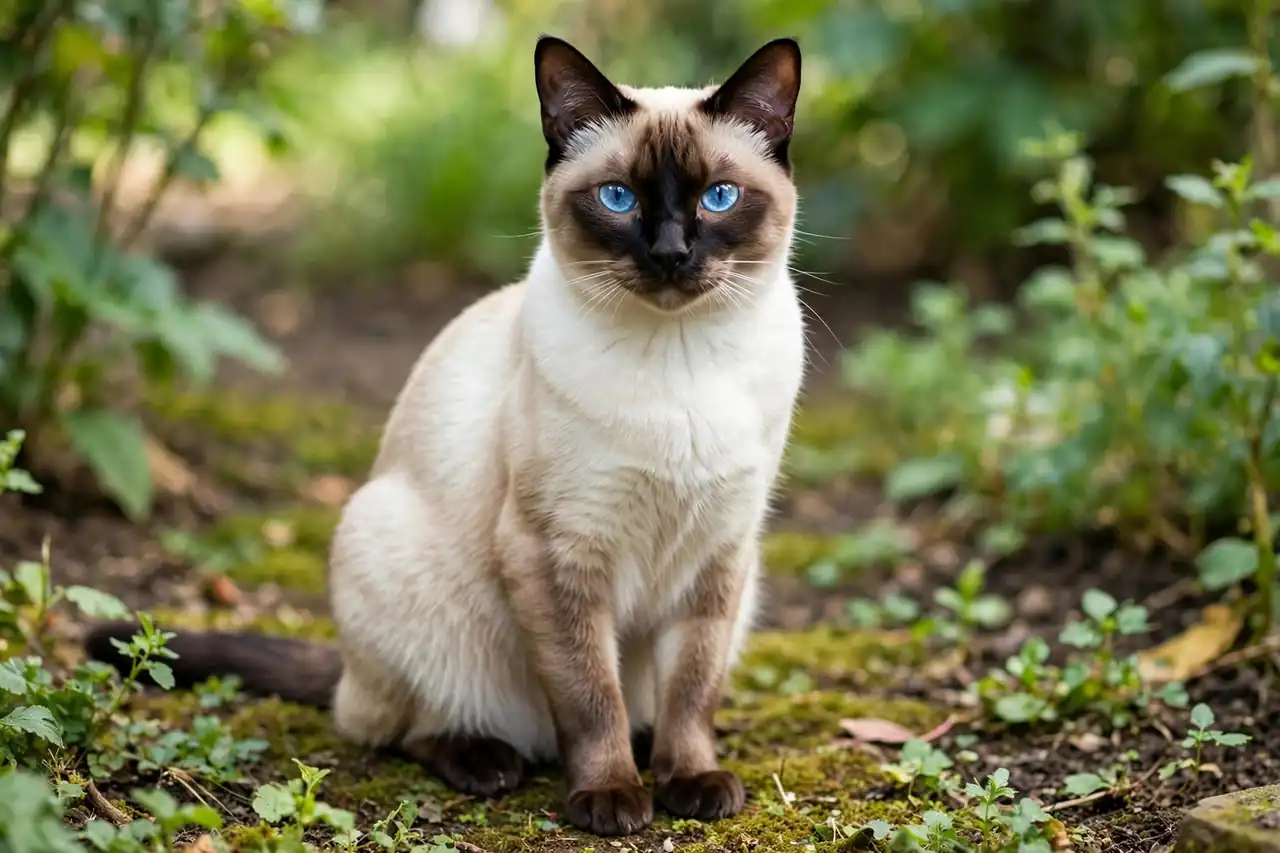
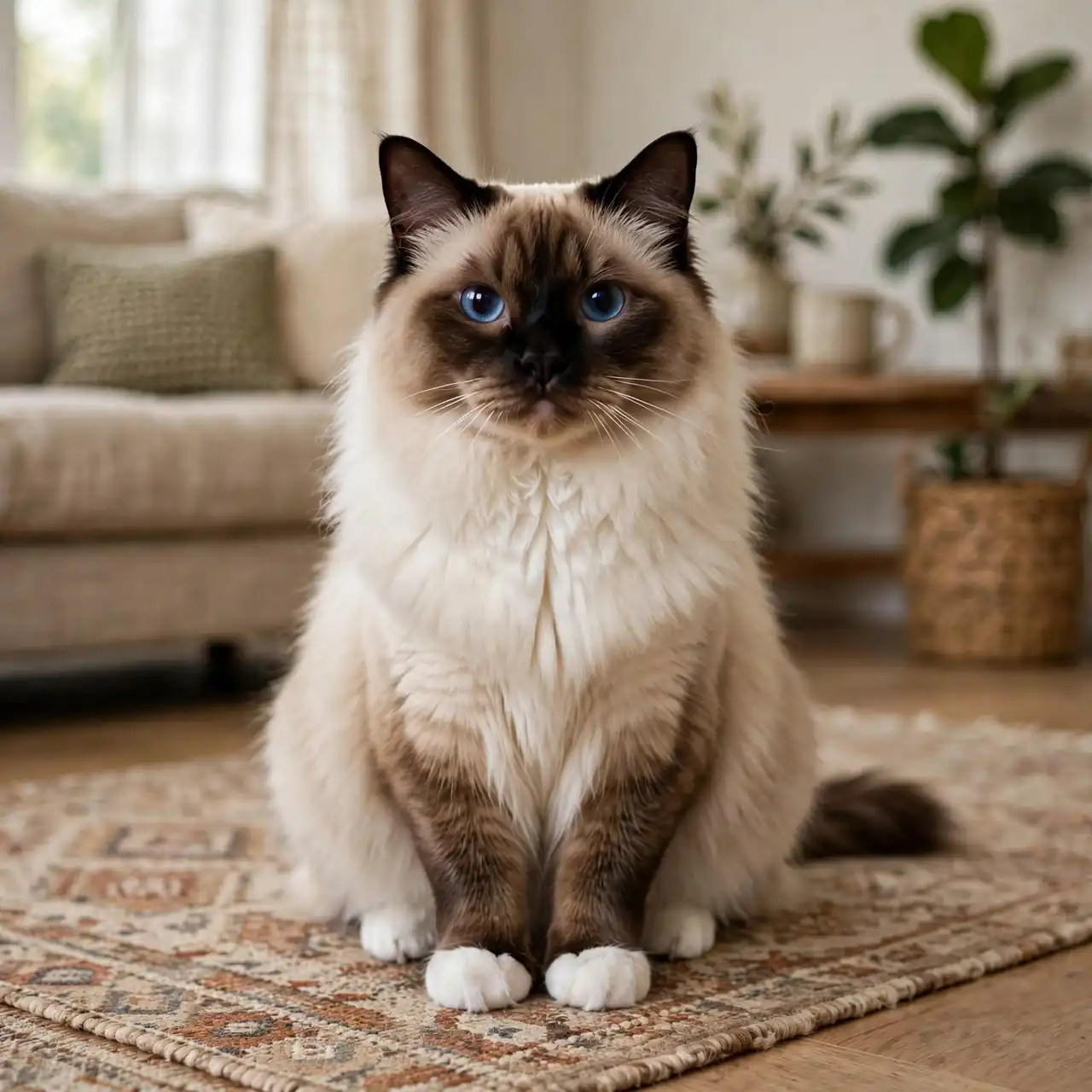
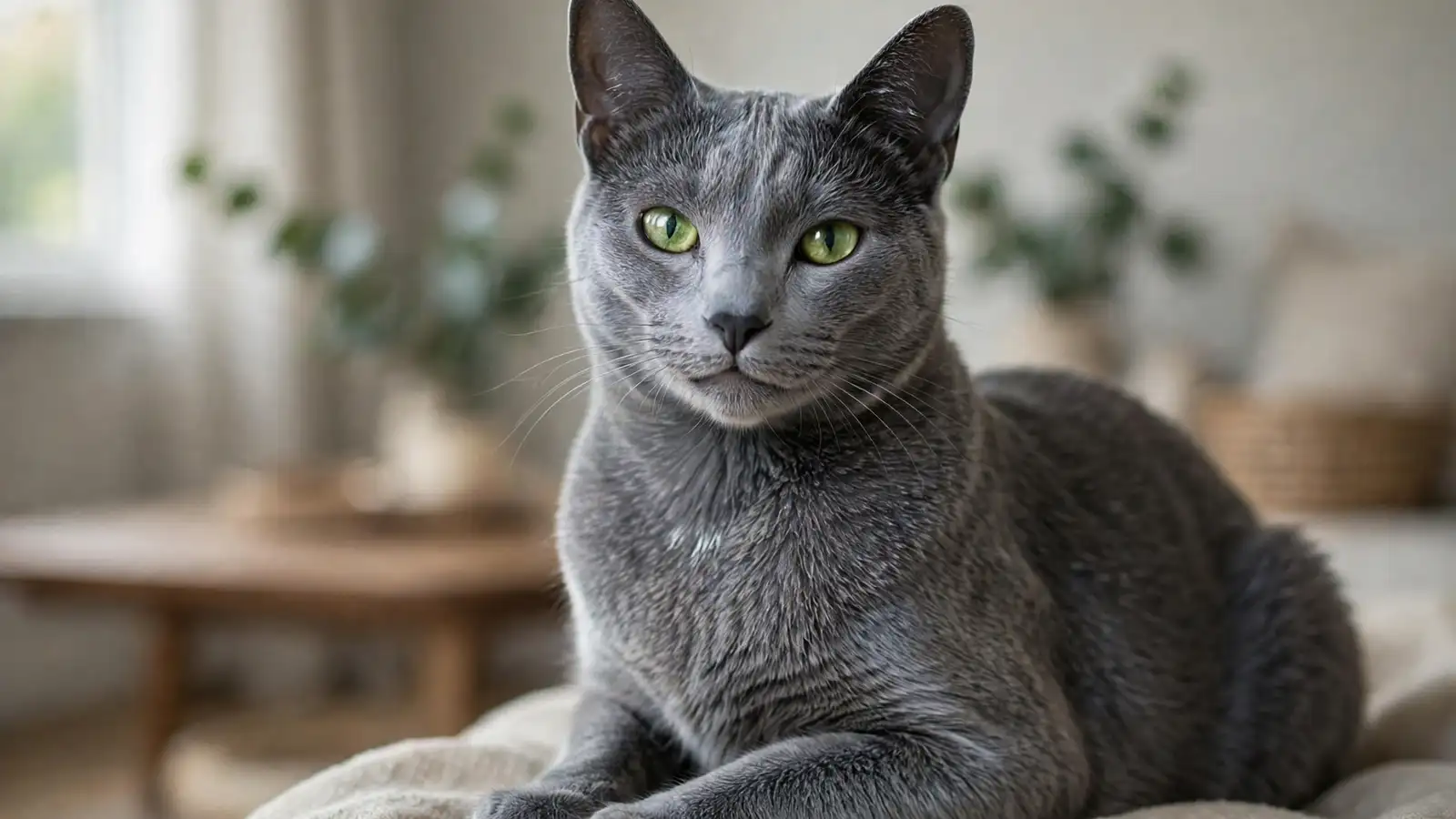
Related Breed Guides
- Siamese Cat Breed Guide
- Birman Cat Breed Guide
- Russian Blue Cat Breed Guide
- Thai Cat Breed Guide
- European Burmese Cat Breed Guide
Keep Exploring
Still deciding? Meet the louder parent breed, the Siamese, or the sweet, gloved Birman. Every guide on this site follows the same layout, so the facts you need are always in the same place.