Cleaner Wrasse
Cleaner Wrasse: The Reef’s Busiest Doctor, Serving 2,000 Clients a Day
The cleaner wrasse runs reef cleaning stations serving 2,000 clients a day, removing parasites from fish that pose with flared gills and open mouths.
By Emily Carter · Reviewed by our vet team · Updated 10 November 2026 · 10 min read
2,000 clients a dayCleaning stationLeast Concern
At a Glance
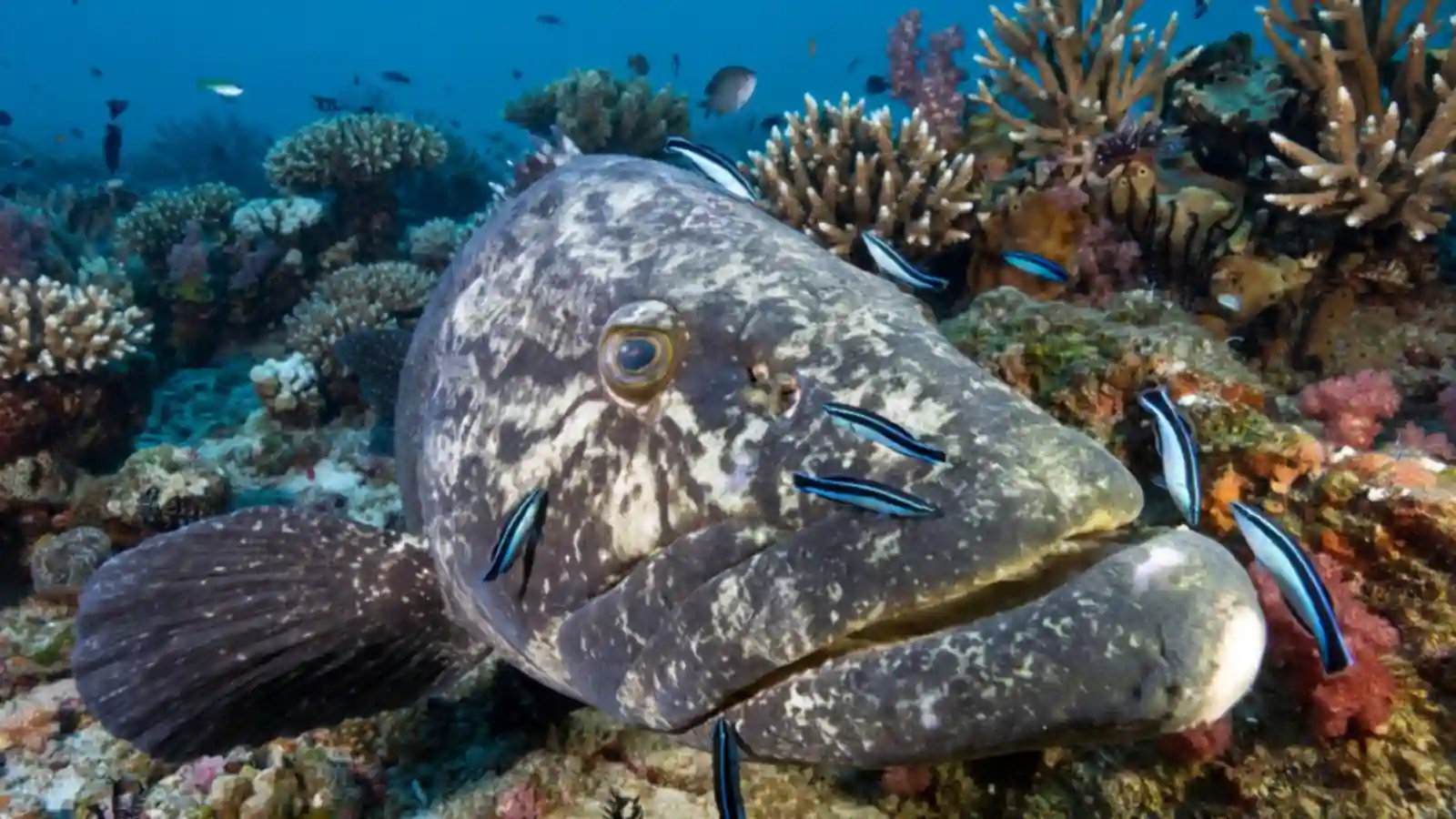
The cleaner wrasse is the reef’s busiest doctor, a small blue-striped fish that runs a cleaning station on a coral head and serves 2,000 clients a day. Big fish queue up to be cleaned, posing with flared gills and open mouths, and the cleaner picks their parasites away — a trade that keeps the whole reef healthy.
Cleaner Wrasse Size: How Big Do They Get?
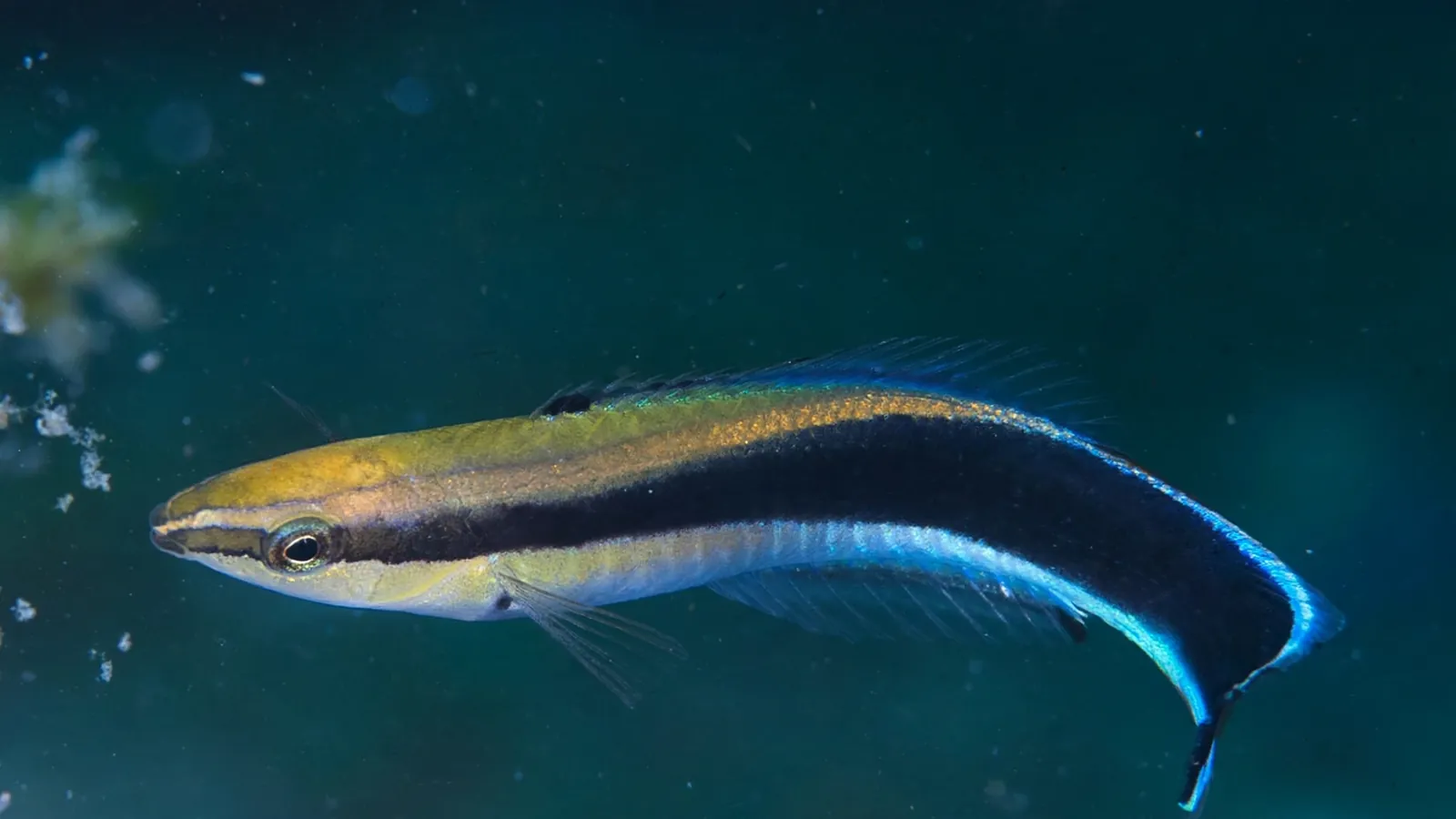
Most cleaner wrasses measure up to 14 cm long, a small, slender fish with a bold blue-black stripe running from its snout to its tail. The stripe is the cleaner’s uniform: it tells other fish who it is, what it does, and that it is safe to approach. A fish that recognises the stripe knows it is looking at a cleaner, not a meal — and it poses, instead of attacking.
Size is a matter of trust. It is small enough to swim into a moray eel’s mouth and pick parasites from its teeth, and large enough to be seen from a distance by a client looking for a station. The blue-black stripe, edged in electric blue, is visible from metres away, and it is the reason the cleaner can work in the open, in full view of the reef’s predators, and never be eaten.
The Cleaning Station
A cleaning station is a coral head or a prominent piece of reef where one sets up its practice, and the clients come to it. The station is a fixed place, used day after day, and the local fish know where it is — they visit in the morning, they queue, and they wait their turn. The cleaner advertises with a dance, wiggling its body in a distinctive pattern that tells the clients the station is open.
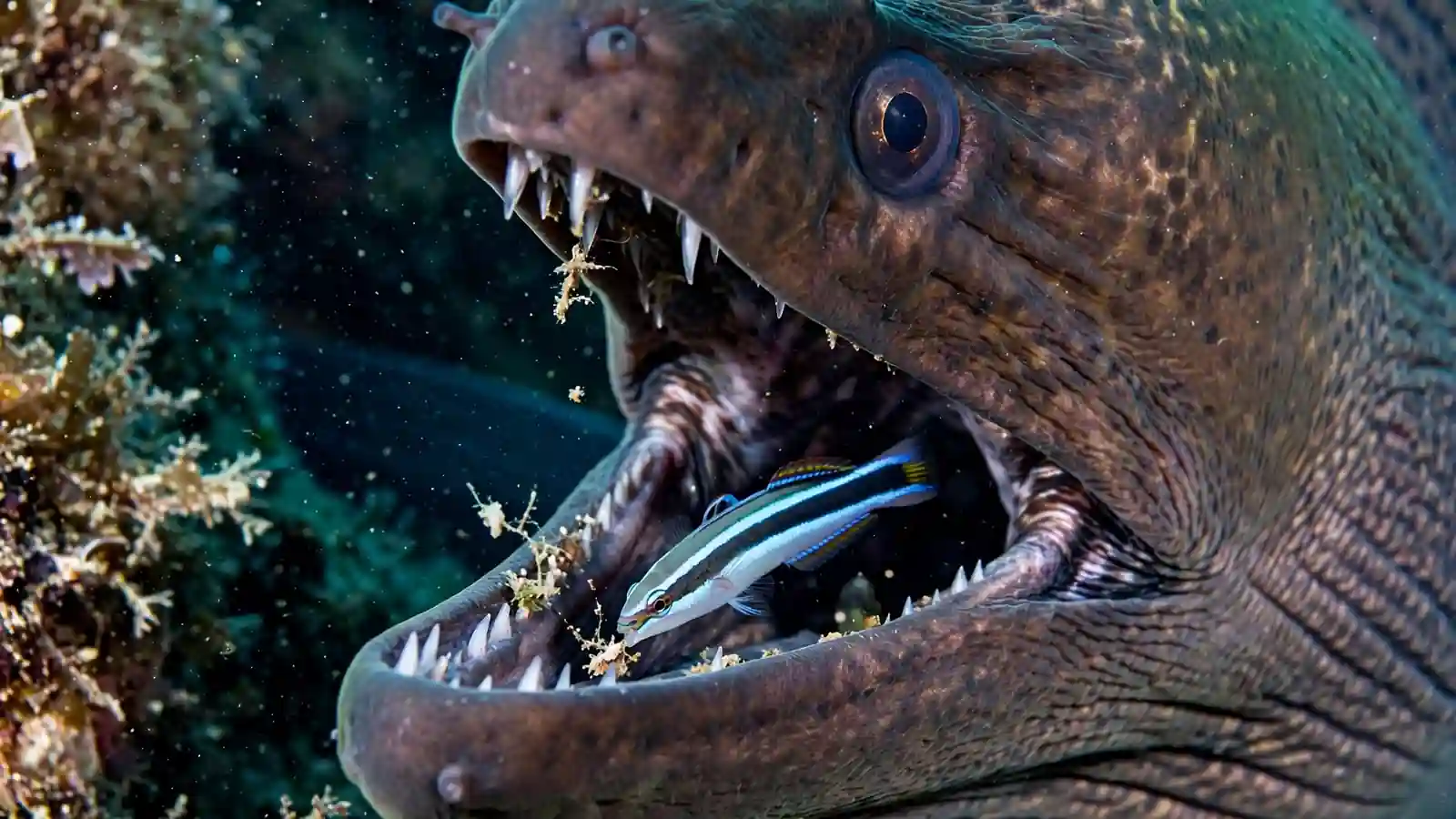
The cleaning itself is a performance. The client poses — fins spread, gills flared, mouth open — and holds still while the cleaner works over its body, picking parasites from its skin, its gills and the inside of its mouth. A moray eel will open its jaws wide and let one swim inside, trusting a fish a fraction of its size with its teeth. For the full animal page, see the Georgia Aquarium’s bluestreak page.
A Day at the Station

A busy cleaning station can serve around 2,000 clients a day, and a single one can remove about 1,000 parasites in 4 hours. The day starts at dawn, when the first clients arrive, and it runs until dusk, with a queue of fish waiting at the coral head for most of it. The cleaner works constantly, moving from client to client, picking, nibbling, and cleaning — a fish that never stops, because the reef never stops needing it.
The queue is orderly, and it is enforced by the clients themselves. A large fish will wait its turn behind a smaller one, and a predator will wait behind its prey — the station is neutral ground, and the rule is that no one eats at the station. It is one of the few places on the reef where a grouper and a damselfish can be in the same place at the same time, and both can be safe.
What Do They Eat? Parasites, Mucus and Cheating
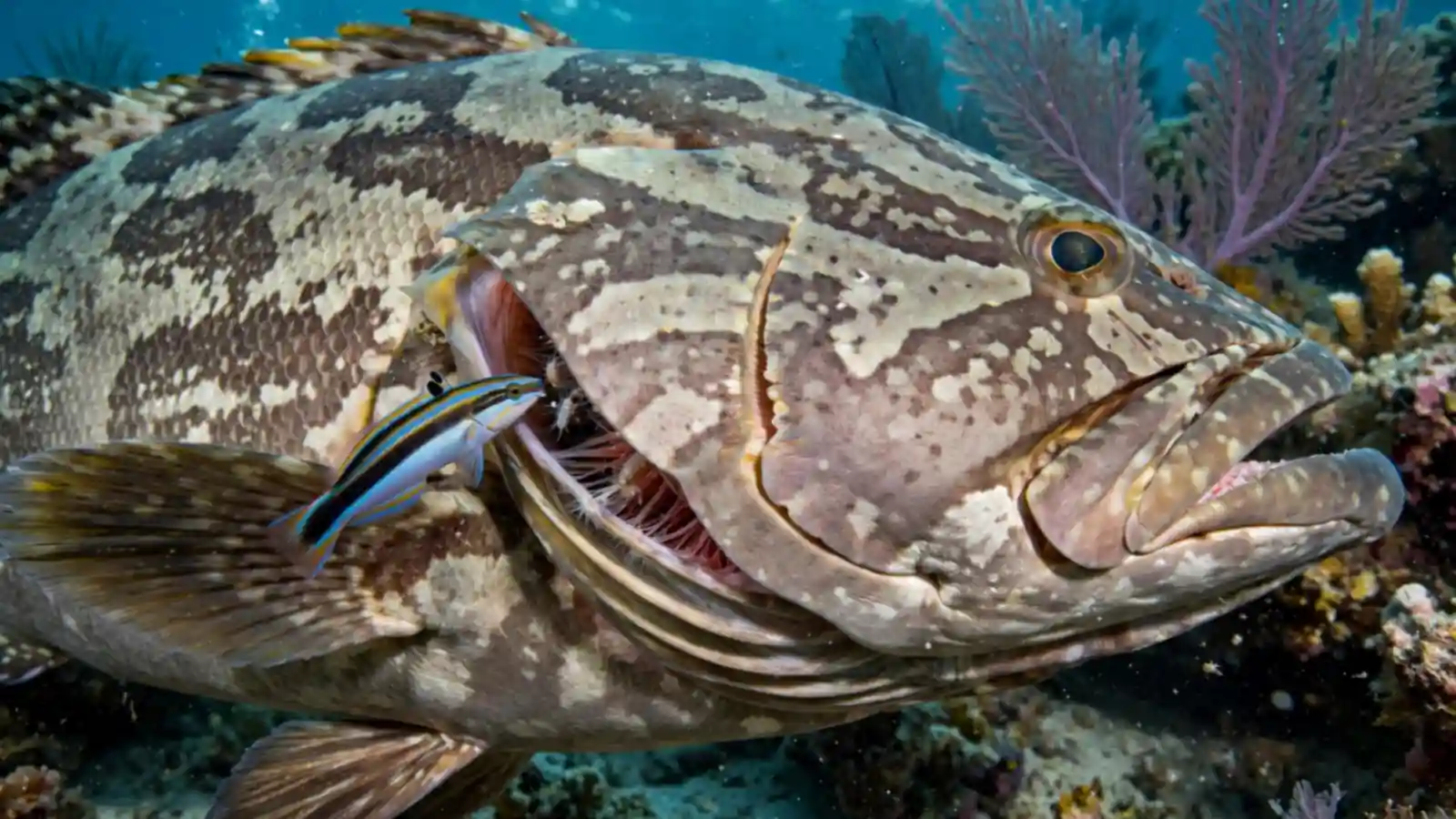
Cleaner wrasses eat parasites, mucus and dead skin, picked from the bodies of their clients. The parasites are the main course — small crustaceans and worms that live on the client’s skin and gills — and the mucus is the dessert, a rich, nutritious layer that the cleaner prefers. The trade is honest: the client gets rid of its parasites, the cleaner gets a meal, and both benefit.
But cleaners sometimes cheat. A cleaner that bites mucus instead of picking parasites is taking food the client did not offer, and the client knows it — a cheated client will jolt, chase the cleaner away, and refuse to return to that station. The cheating is punished by the market: a cleaner that cheats loses its clients, and a cleaner that is honest keeps them. It is a small, daily lesson in economics, played out on a coral head.
The False Cleaner
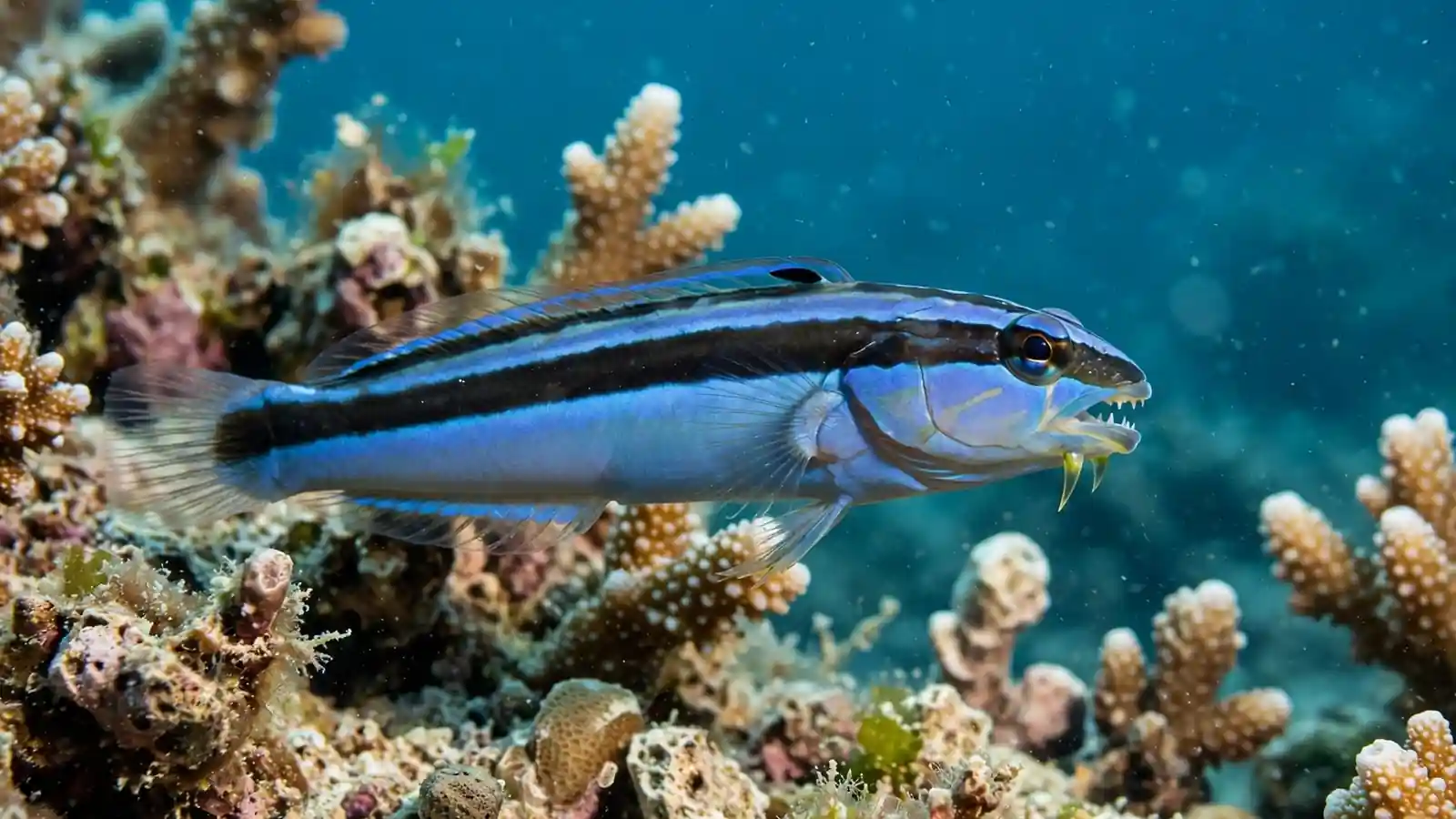
It has a mimic, and it is a cheat. The false cleaner blenny, Aspidontus taeniatus, copies the cleaner’s blue-black stripe, its shape and its dance, and it sets up near a real cleaning station — but when a client poses for cleaning, the blenny bites a chunk out of its fin and swims away. It is a con, and it works because the client cannot tell the mimic from the real thing until it is too late.
Telling them apart takes a careful eye. The false cleaner is slightly duller, its stripe is less crisp, and it does not dance quite the same way — but the differences are small, and the reef’s fish are fooled regularly. The mimic is the reason the cleaner’s stripe is so precise: a cleaner that looks wrong is a cleaner that loses its clients, and a mimic that looks right is a mimic that eats well.
Where Cleaner Wrasses Live
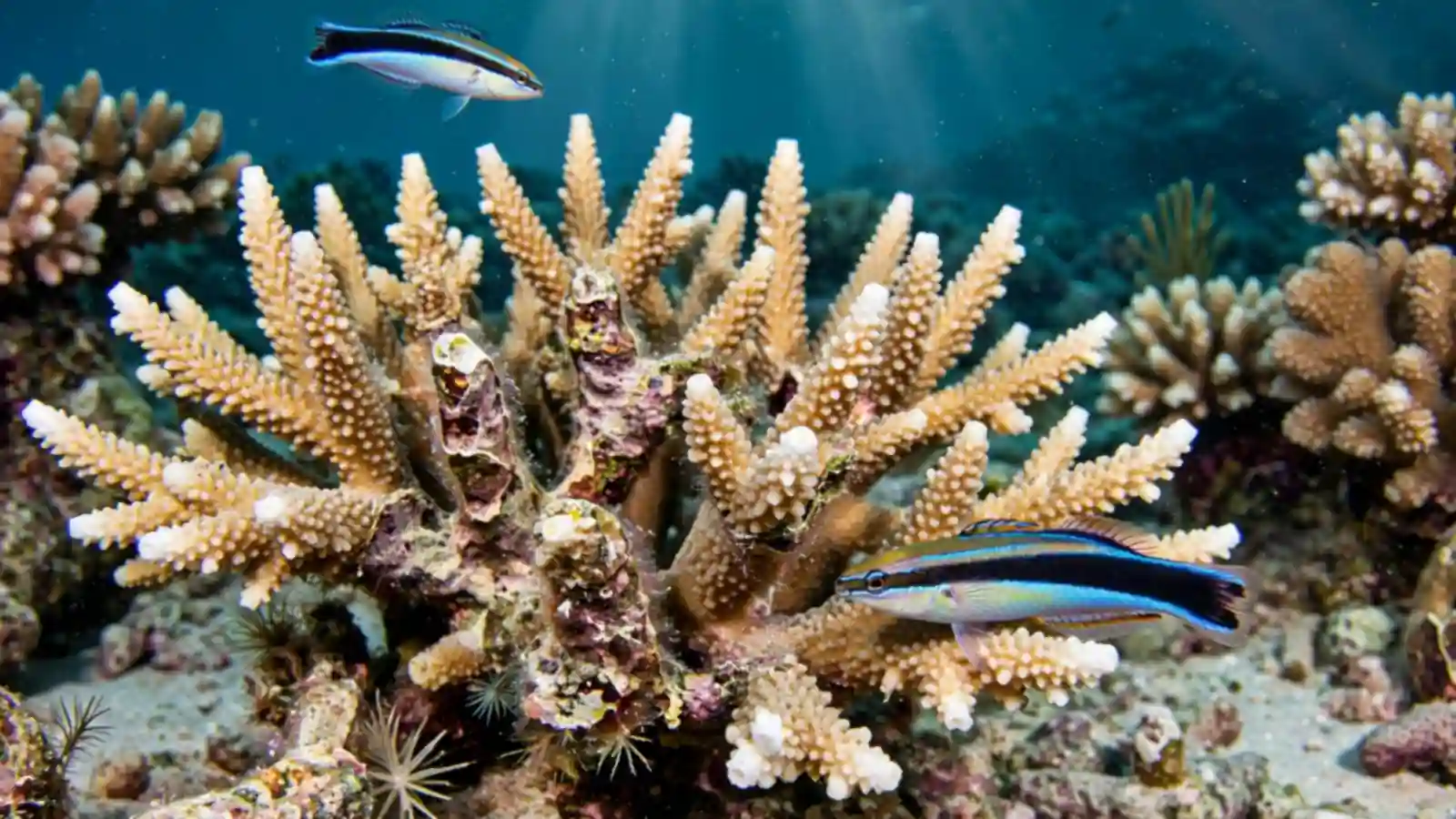
Cleaner wrasses live on coral reefs across the Indo-Pacific, from East Africa to the Pacific islands, in shallow water from the reef flat down to around 40 metres. They favour prominent coral heads and reef edges, where the station is visible from a distance and the clients can find it — a cleaner’s station is always in the open, always in view, and always busy.
The station is the cleaner’s home, and it stays in the same place for its whole life. It will defend its station from other cleaners, advertise it with its dance, and serve the same clients day after day. The reef’s fish know where the stations are, and they visit them the way people visit a doctor — regularly, and when they need it most.
Why Reefs Need Cleaner Wrasses
Reefs need cleaner wrasses because parasites are a real problem, and a fish covered in parasites is a sick fish. Without cleaners, the parasites build up, the fish weaken, and the reef’s predators find easy prey. With cleaners, the fish stay healthy, the parasites stay in check, and the whole reef works better. Experiments that remove cleaners from a reef show the effect within weeks: the fish are sicker, the parasites are more numerous, and the reef is quieter.
There is one more finding worth reporting carefully. A study found that fish cleaned by cleaner wrasses solved tasks faster than fish that were not cleaned — a result that suggests cleaning does more than remove parasites. But it is a study finding, not a general claim, and this guide reports it as such: one study, one result, and a reminder that the cleaner’s work may matter in ways science is only beginning to understand.
Fun Facts
- A busy cleaning station can serve around 2,000 clients a day, and a single cleaner can remove about 1,000 parasites in 4 hours.
- A moray eel will open its jaws wide and let one swim inside to pick parasites from its teeth.
- Cleaners sometimes cheat, biting mucus instead of picking parasites — and cheated clients chase them away and never return.
- The false cleaner blenny mimics the cleaner’s stripe and dance, then bites a chunk out of the client’s fin.
- The blue-black stripe is the cleaner’s uniform: it tells other fish who it is and that it is safe to approach.
- A study found that cleaned fish solved tasks faster than uncleaned fish — a single study finding, not a general claim.
Frequently Asked Questions
What Is a Cleaner Wrasse?
A small reef fish, Labroides dimidiatus, also called the bluestreak cleaner wrasse, that runs cleaning stations on Indo-Pacific coral reefs. It removes parasites, mucus and dead skin from other fish, which pose with flared gills and open mouths while it works.
How Does a Cleaning Station Work?
A cleaner wrasse sets up on a coral head and advertises with a dance. Clients visit, pose with fins spread, gills flared and mouth open, and hold still while the cleaner picks parasites from their skin, gills and mouth. The station is neutral ground — no one eats at the station.
How Many Fish Does a Cleaner Wrasse Clean in a Day?
A busy station can serve around 2,000 clients a day, and a single cleaner wrasse can remove about 1,000 parasites in 4 hours. The day runs from dawn to dusk, with a queue of fish waiting at the coral head for most of it.
Do Cleaner Wrasses Eat Parasites or Mucus?
Both. Parasites are the main course, and mucus is the preferred food — a rich, nutritious layer the cleaner likes best. Cleaners sometimes cheat, biting mucus instead of picking parasites, and cheated clients chase them away and refuse to return.
What Is a False Cleaner Fish?
The false cleaner blenny, Aspidontus taeniatus, which mimics the cleaner wrasse’s blue-black stripe, shape and dance. When a client poses for cleaning, the blenny bites a chunk out of its fin and swims away. It is slightly duller, with a less crisp stripe and a different dance.
Where Do Cleaner Wrasses Live?
On coral reefs across the Indo-Pacific, from East Africa to the Pacific islands, in shallow water from the reef flat down to around 40 metres. They favour prominent coral heads and reef edges, where the station is visible and the clients can find it.
Why Are Cleaner Wrasses Important for Reefs?
Because they control parasites. Without cleaners, parasites build up, fish weaken, and the reef suffers — experiments that remove cleaners show sicker fish within weeks. One study also found cleaned fish solved tasks faster, but that is a single study finding, not a general claim.
Similar Species Worth Exploring
Keep Exploring
Still exploring reef-cleaner country? Meet the whole family in the Wrasse guide, watch another banded icon in the Moorish Idol guide, size up the whole family in the Types of Reef Fish hub, and then come back to the coral head to watch the cleaner wrasse.