Munchkin Cat
Munchkin: short legs, big personality
The Munchkin cat runs like a squirrel, sits like a rabbit, and steals shiny objects like a magpie: the shortest legs in the cat world, wrapped around an oversized personality.
By Emily Carter · Reviewed by our vet team · Updated 21 October 2026 · 10 min read
Lifespan 12–15 yrsWeight 5–10 lbShortest legs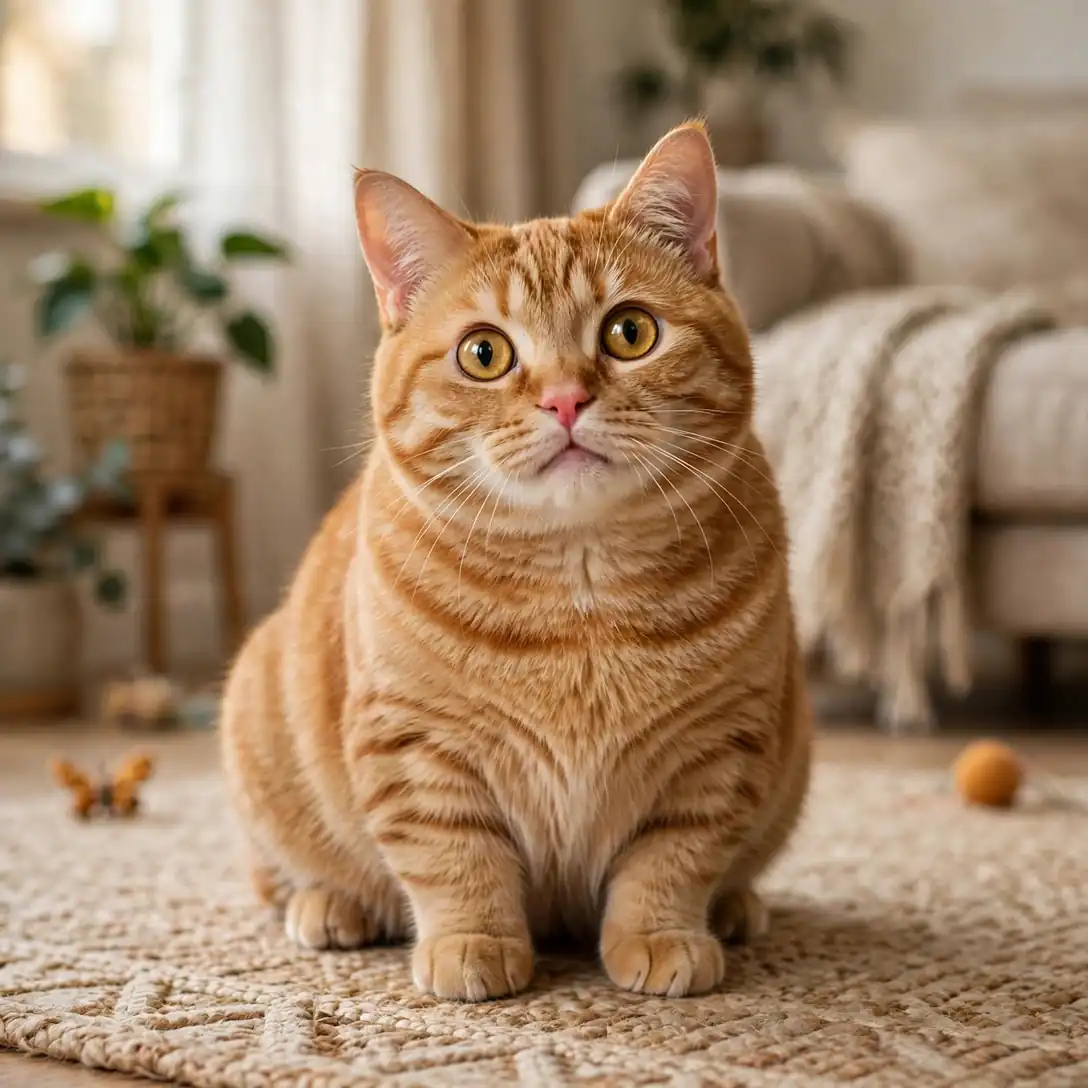
They have the shortest legs in the cat world, yet they run like squirrels, corner like race cars, and steal your jewelry when you are not looking. The Munchkin cat is living proof that great things come in small packages. If you have ever seen a cat built like a dachshund, long in body and low to the ground, you have met a Munchkin.
At a Glance
Size and Weight
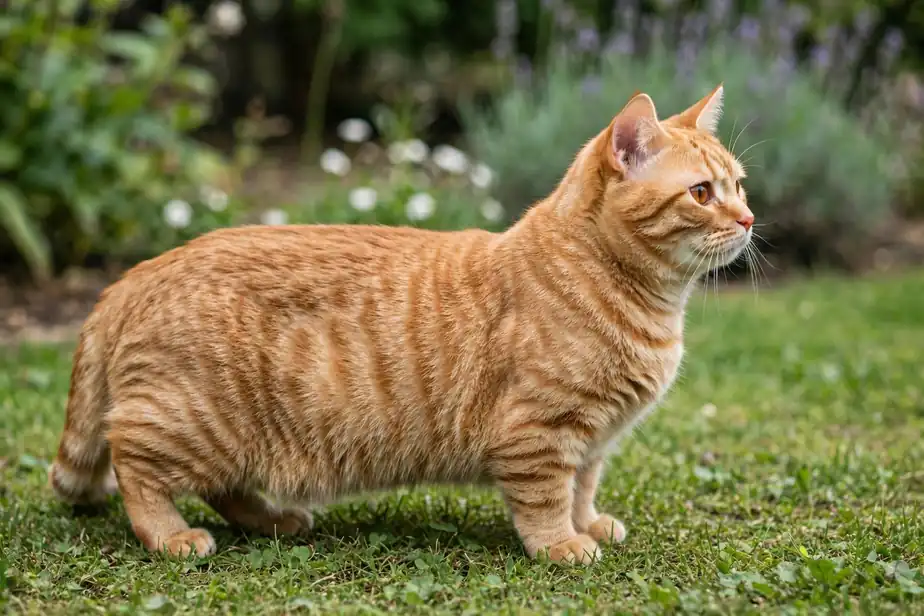
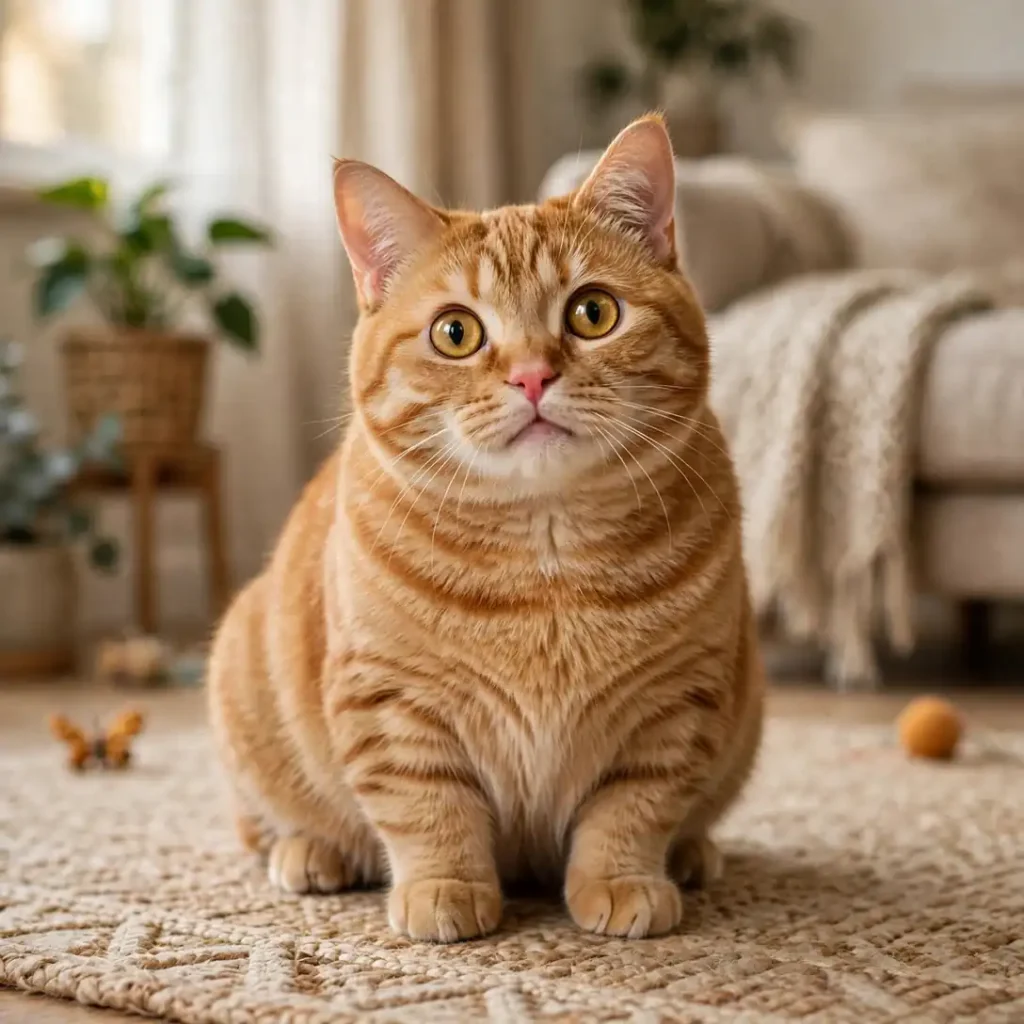
Size is the first thing everyone asks about, so let us settle it clearly. Despite the nickname “sausage cat”, Munchkins do not stay kitten sized forever: their legs stay short for life, but the rest of the body grows to normal adult cat proportions. A full grown Munchkin cat weighs 5 to 10 pounds, and in length, expect about 18 inches from nose to tail tip, though the long body can make them look larger than the scale suggests.
Coat and Colors
If you are wondering what a Munchkin looks like beyond the short legs, the answer is: almost anything. Because the breed is maintained through outcrossing with ordinary domestic cats, Munchkins come in every color and pattern you can imagine, including calico, tabby, solid black, gray, and more. The coat comes in short and longhaired versions.
History and Origins
The short legged cat is not a modern invention. Reports of short legged cats go back further than most people realize: a British veterinary report from 1944 described four generations of short legged cats, including a healthy 8 year old black female.
The modern Munchkin story starts in 1983 in Rayville, Louisiana. A woman named Sandra Hockenedel found a pregnant short legged stray and named her Blackberry. Blackberry’s kittens became the foundation of the breed.
Blackberry’s short legged kittens were bred onward, and the Munchkin developed into an established breed in the decades that followed. The debate around breeding for short legs continues, and honest guides acknowledge it.
From scattered historical reports to one Louisiana stray, the breed is younger than most but its trait is old.
Physical Characteristics
The Munchkin’s short legs result from an autosomal dominant gene that shortens the long bones in the legs: only one parent needs to carry the gene for kittens to inherit short legs. There are three leg lengths, from standard to the lowest ‘rug hugger’. Importantly, the mutation affects only the leg bones: the spine keeps the same form and flexibility as any other domestic cat, which is why Munchkins do not develop the back problems seen in short legged dogs.
Munchkin Personality and Behavior
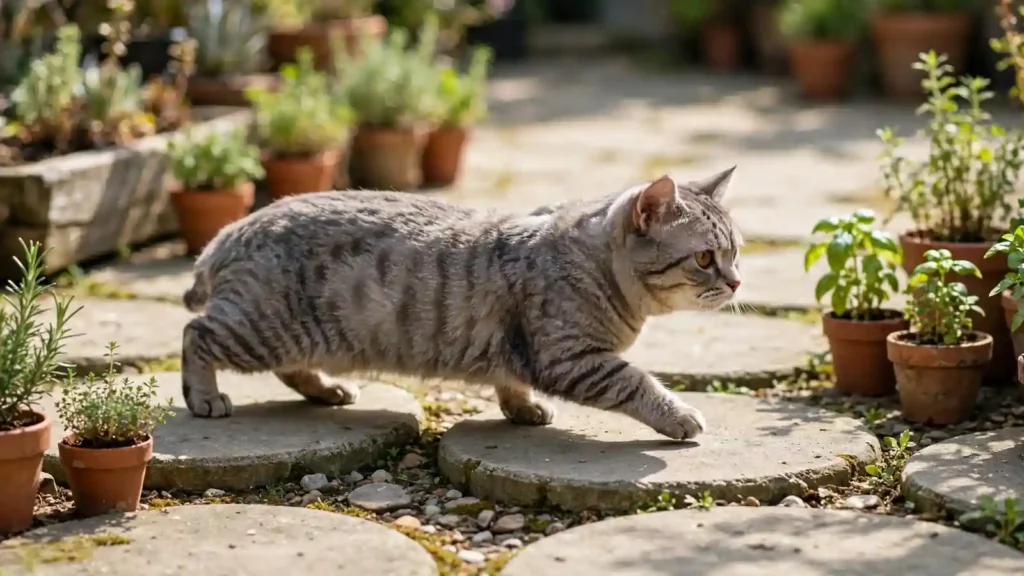
Do not let the short legs fool you: this is one of the most athletic and entertaining cats you will ever meet. Munchkins are playful, curious, and endlessly sociable: they run fast, corner tightly, and can keep up with children and even dogs in a good chase. They are famous for two quirky habits: sitting up on their hind legs like rabbits, and hoarding shiny objects like magpies.
Playful, curious, and endlessly sociable: they run fast and corner tightly, with movement often compared to a ferret.
They sit up on their hind legs like rabbits to get a better view of something interesting.
Like magpies, Munchkins love to collect small shiny objects and stash them away.
- Playful, clever, and affectionate
- Great with children and dogs
- Endlessly entertaining
- Think twice if you want a calm, low energy cat
- Dislikes long hours alone
- The short leg debate deserves honest thought
Care Essentials
Complete and balanced food with weight control: extra weight stresses short legs and joints.
Brush shorthairs once a week and longhairs twice a week; occasional baths, nails, ears, and teeth.
At least two interactive play sessions a day: wand toys, balls, and anything they can chase.
Indoor living with low sided bowls and furniture arranged in stepped stages for climbing.
Nutrition and Diet
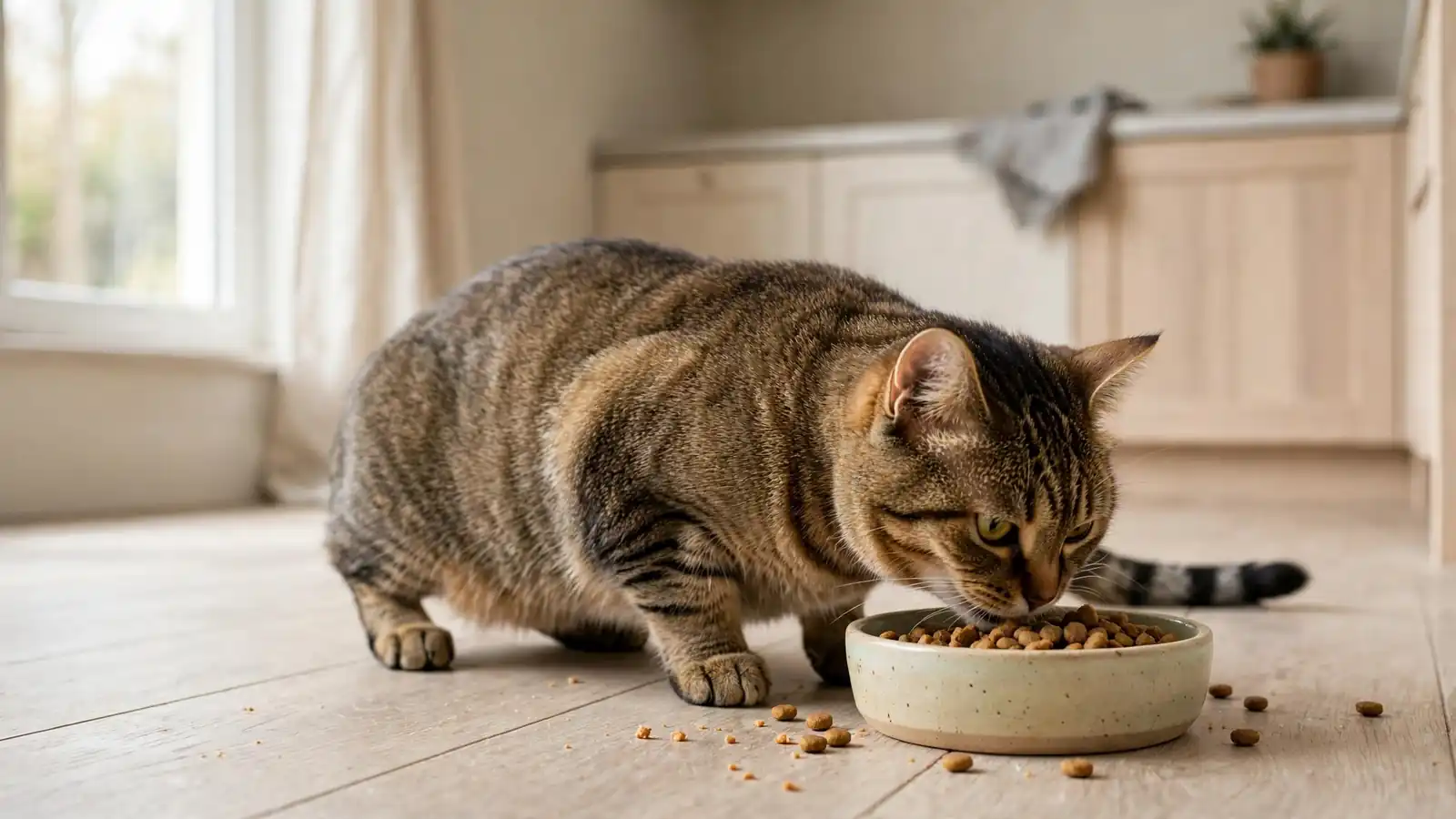
Munchkins have no exotic dietary needs, but weight control matters more for them than for most breeds. Feed a complete and balanced diet appropriate for your Munchkin cat’s age: extra weight puts added stress on short legs and joints and raises the risk of osteoarthritis. An occasional wet food treat adds welcome variety. Never serve cooked chicken bones, which can splinter.
Grooming
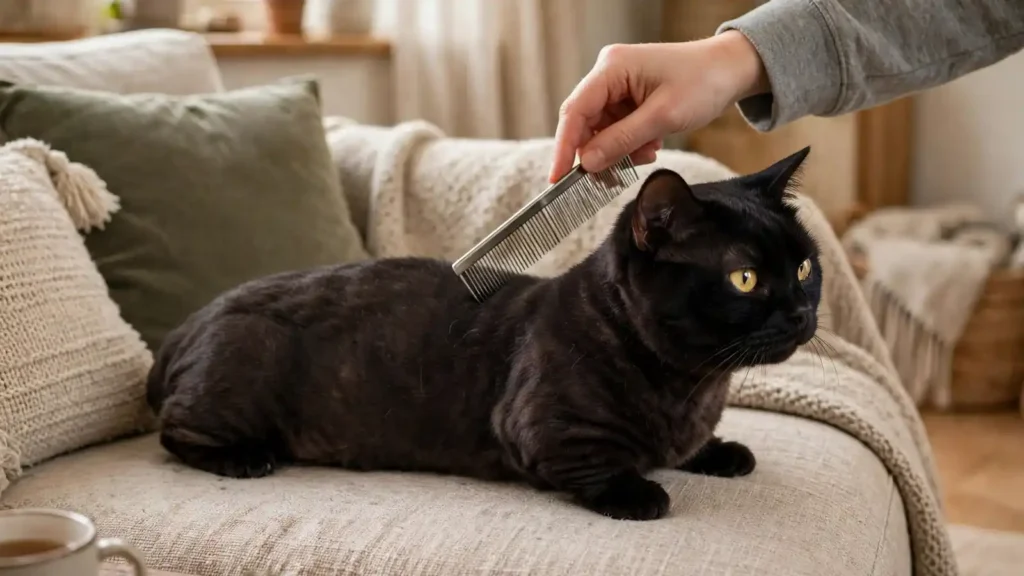
Grooming a Munchkin is refreshingly simple. Brush shorthair Munchkins once a week with a fine tooth comb to remove loose dead hair; longhair Munchkins need combing twice a week to prevent tangles and mats. Bathe occasionally, trim nails regularly, clean ears, and brush teeth. A tall scratching post completes the routine.
Exercise and Enrichment
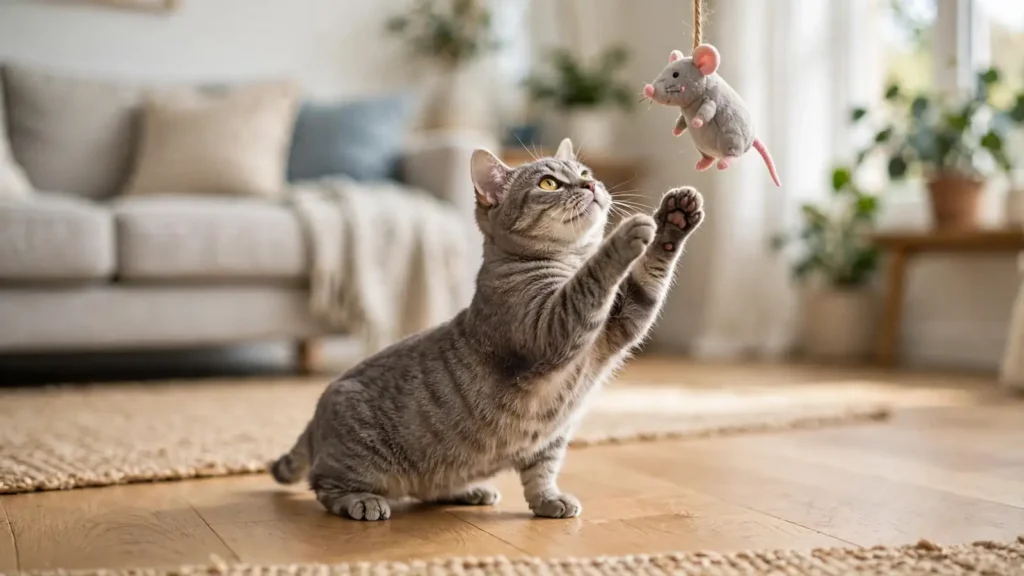
A bored Munchkin is a mischievous Munchkin, so build play into the daily routine. These cats are natural athletes despite their stature: schedule at least two interactive play sessions a day with wand toys, balls, or anything they can chase, and add food puzzles and treat dispensing toys. Because they cannot jump as high in a single leap, arrange furniture or cat trees in stepped stages so they can climb up comfortably.
Health
The Munchkin cat is a relatively healthy breed, but the same mutation that shortens the legs carries some associated risks worth knowing. Yearly vet checkups matter, with bloodwork as your vet advises.
One of the two conditions most often linked to the breed: an inward curvature of the lower spine. Responsible breeders screen and health test their cats.
A deformity where the ribs and sternum do not form properly, the second condition most often linked to the short leg gene. Ask any breeder about it directly.
Some veterinarians also watch for osteoarthritis and degenerative joint disease, particularly as cats age. Weight control is the best prevention you control.
Indoor and Outdoor Living
Indoor life suits the Munchkin best, and most experts strongly recommend it: their small size, short legs, and bold curiosity are a risky combination outside, and they cannot sprint away from danger or scale a fence as quickly as other cats. An indoor home with window perches and climbing stages keeps them happy. If you want to offer outdoor time, a secure catio or harness walks are excellent compromises.
Family Suitability
The Munchkin fits a wide range of households. This breed is ideal for families with children, homes with other pets including dogs, and anyone who wants an interactive, playful companion rather than a lap ornament. They are social cats that dislike being left alone for long hours.
Finding a Breeder or Rescue
Whether you choose a breeder or adoption, do your homework. If buying from a breeder, choose one who health tests breeding cats, is transparent about results, never breeds Munchkin to Munchkin, and provides a written health guarantee. Adoption is a wonderful option too: mixed breed Munchkins and lookalikes regularly appear in shelters and rescues, with the same charming personality at a fraction of the cost.
- Ask for health testing results and a written health guarantee
- The breeder should never breed Munchkin to Munchkin
- Ask about the parents’ health history and the kittens’ living conditions
- Consider adoption and breed specific rescues too
Quick Quiz: Is a Munchkin Right for You?
Answer four questions. Tap yes or no.
Munchkin vs Scottish Fold
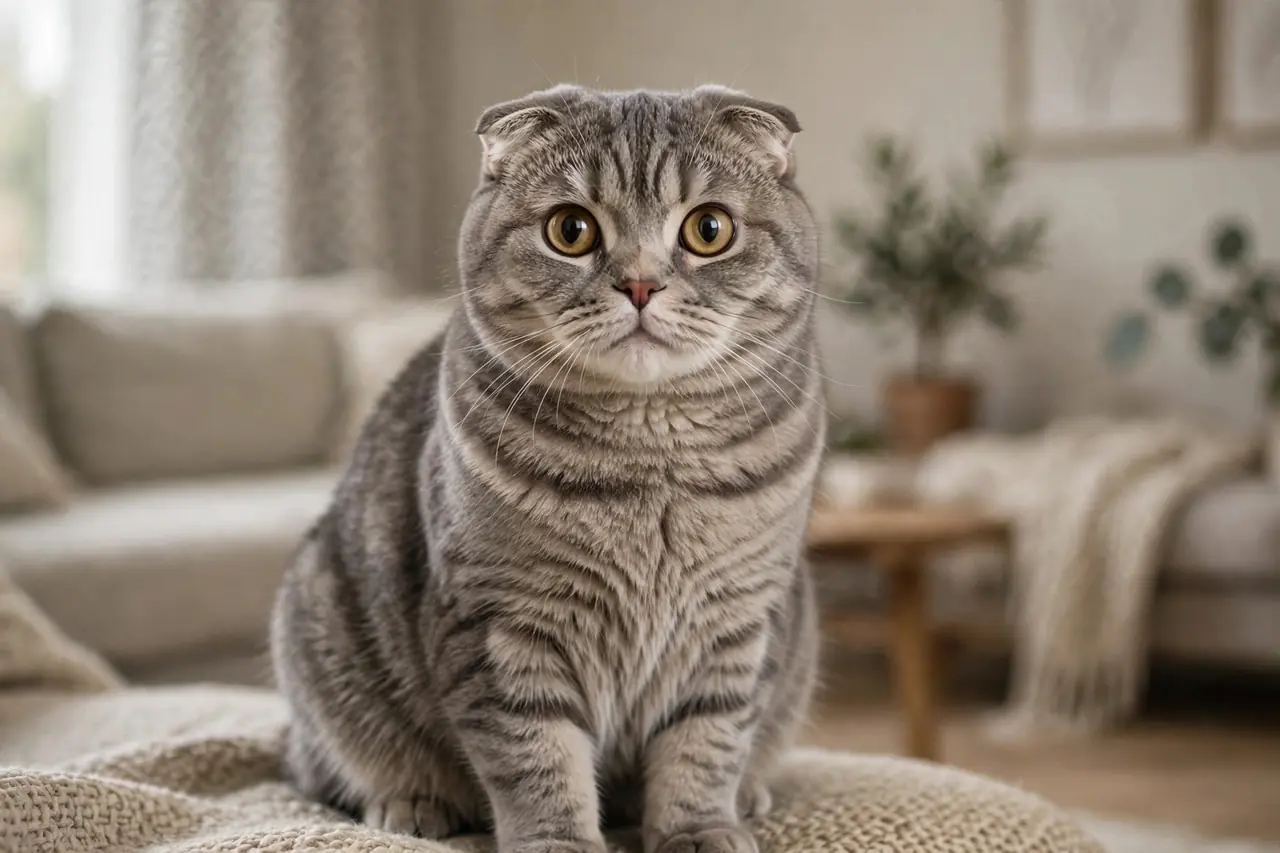
If the Munchkin appeals to you, these breeds share some of its charm: the Scottish Fold matches its playful, people oriented nature in a round, owl like package.
Frequently Asked Questions
Do Munchkin cats stay small forever?
No. Their legs stay short, but the body grows to normal adult size. A full grown Munchkin weighs 5 to 10 pounds with an average length body. Only the legs remain kitten like.
Are Munchkin cats healthy?
Generally yes. They are a relatively healthy breed with no long list of inherited diseases. The main concerns are lordosis and pectus excavatum linked to the short leg gene, plus the joint care that applies to any cat. Weight control and regular vet visits keep most Munchkins thriving.
Can Munchkin cats jump?
Yes, but not as high in a single leap as longer legged cats. They compensate with intelligence, finding stepped routes to high places. Arrange furniture accordingly and they will reach every favorite perch.
Do Munchkin cats get along with dogs?
Very well. Their confident, playful nature and surprising speed let them hold their own, and they are known to befriend everyone in the household, including children and other pets.
The Munchkin cat packs an oversized personality into an undersized frame: playful, clever, affectionate, and endlessly entertaining. Most sources put the Munchkin lifespan at 12 to 15 years, and the biggest factors you control are weight, diet quality, dental care, and regular checkups.
Similar Breeds Worth Exploring
Related Breed Guides
Keep Exploring
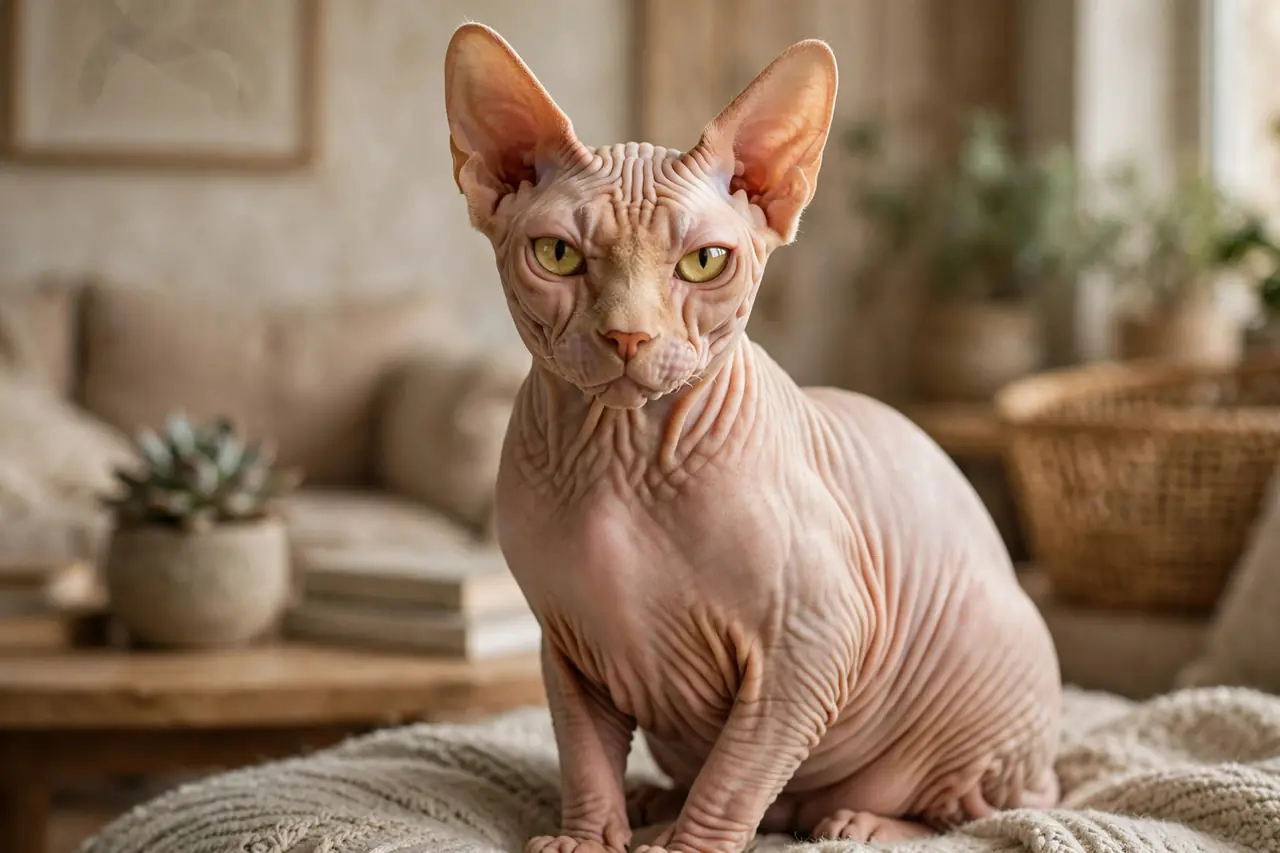
Found this guide helpful? Meet the folded eared Scottish Fold, or the hairless, mischievous Sphynx. Every guide on this site follows the same layout, so the facts you need are always in the same place.