Bigfin Squid
Bigfin Squid: the deep-sea ghost with elbows for arms
The bigfin squid is the deep ocean’s greatest mystery animal. In more than forty years of deep-sea exploration, fewer than a hundred have ever been seen, no adult has ever been caught, and almost everything known about the animal comes from video. What the cameras show is unforgettable: a squid with arms bent at right angles and filaments trailing many times its own body length. Here is what the sightings actually prove — and what nobody knows yet.
By Emily Carter · Reviewed by our vet team · Updated 10 November 2026 · 9 min read
Deepest squid on EarthArms up to 8 m longNo adult ever caught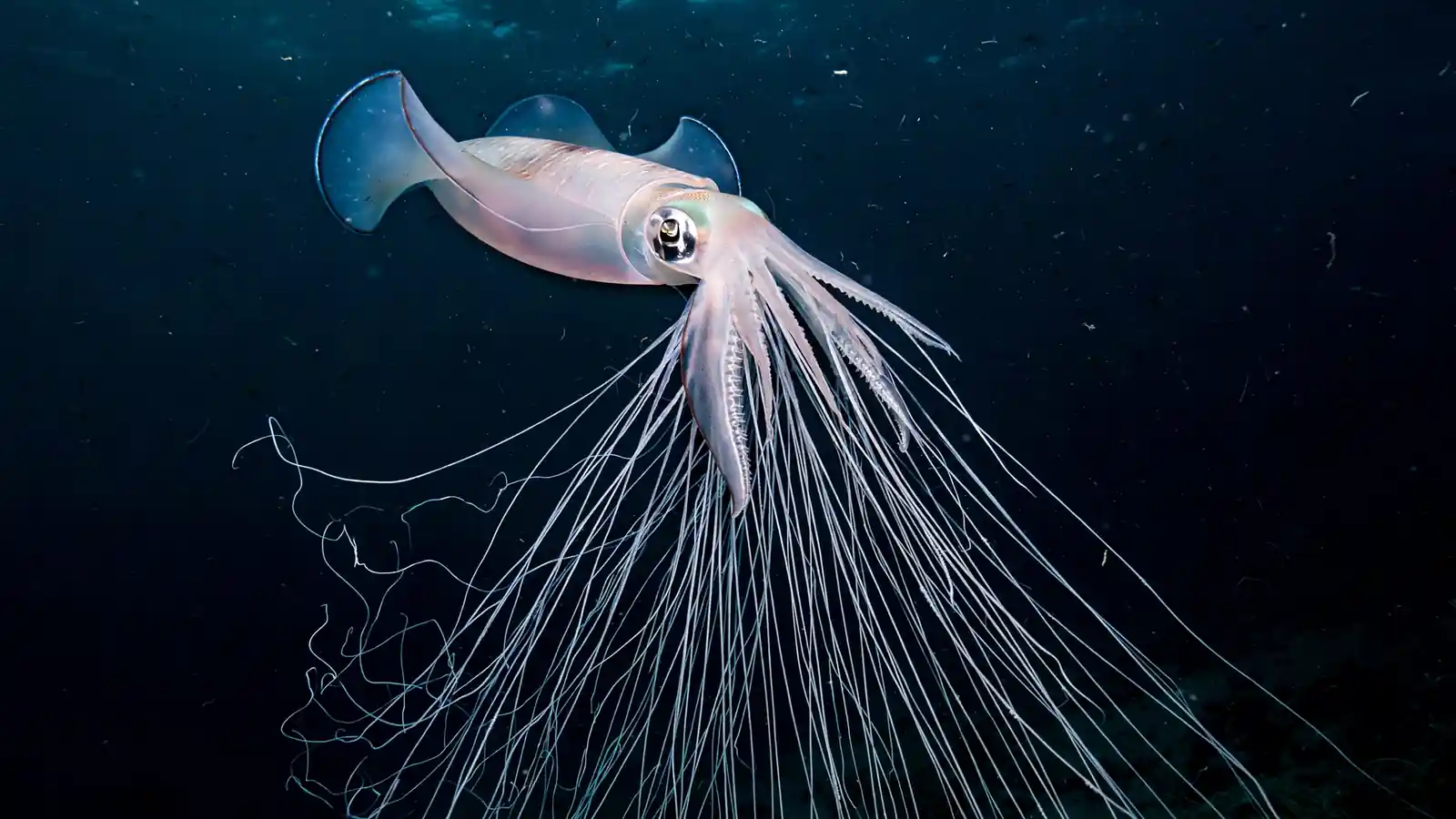
At a Glance
The bigfin squid has been seen alive only a few dozen times in history, and every sighting has made headlines among deep-sea scientists. It is a member of the genus Magnapinna, a group so rarely encountered that the first specimen was collected in 1883 and the animal was not formally described until 1998 — more than a century later.
Adults are known only from video: no adult has ever been caught, weighed or examined in a laboratory. What the footage shows is an animal that looks like nothing else in the ocean — huge fins, arms that bend at right angles, and filaments so long they trail many times the length of its body. This guide gathers what the sightings have actually proven, and is honest about what they have not.
Bigfin Squid Size and Weight
The animal is a study in contrasts: a small body trailing enormous arms. The arms and tentacles reach 4 to 8 metres long, and the thin filaments at their ends can stretch 5 to 20 times the length of the body — so an animal whose mantle is only the size of a hand can trail filaments several metres behind it. The fins are equally oversized for the body, which is why the genus is called Magnapinna, Latin for “large fin”.
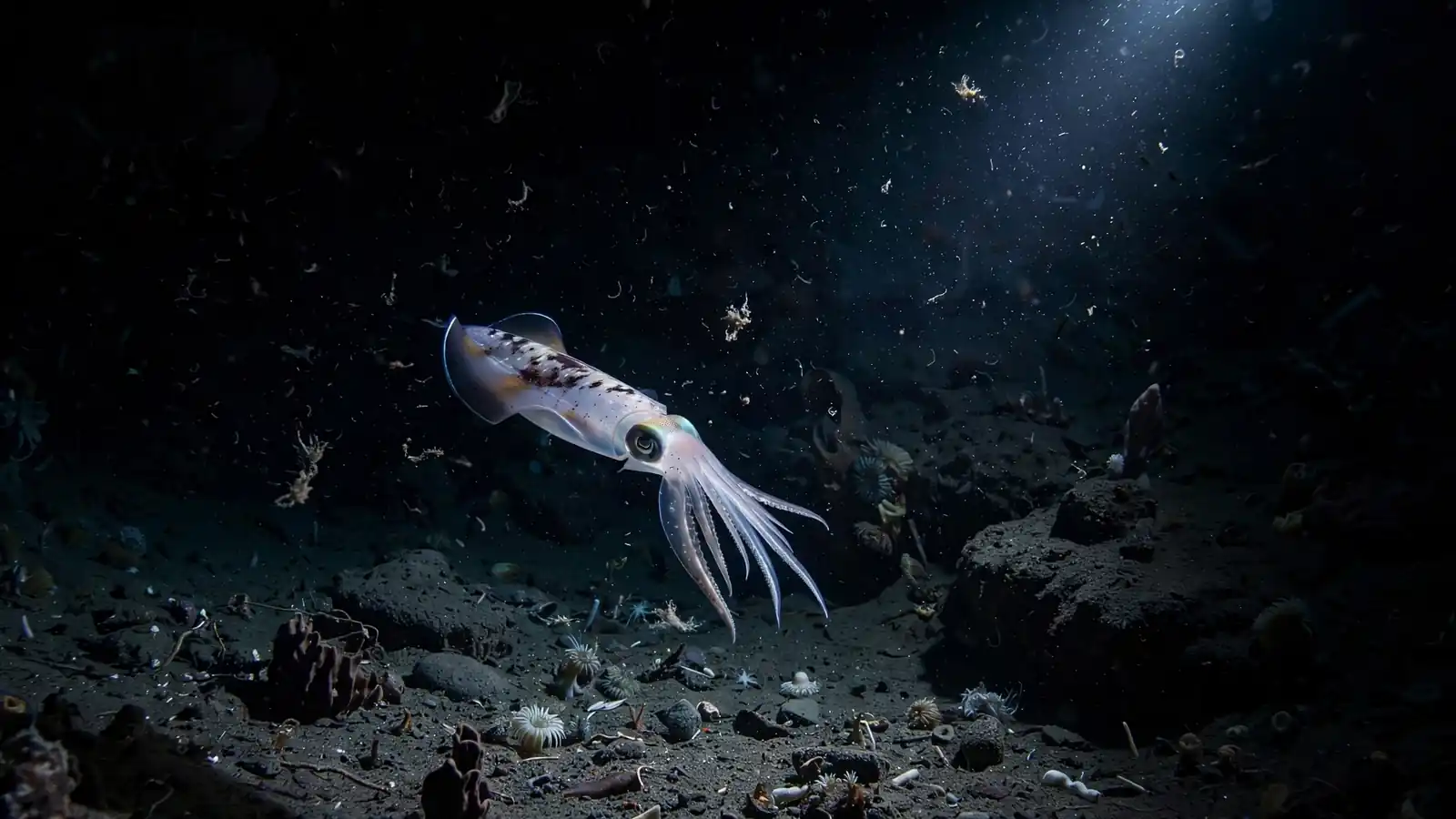
Nobody knows how big a full-grown adult is, because no adult has ever been collected. The best-measured animal is a juvenile filmed in the Philippine Trench in 2021, whose mantle was estimated at about 10 centimetres — roughly the length of a hand. The colossal squid shows what the other extreme looks like: an animal of the same deep world that reaches 10 metres and half a tonne. The species is a different kind of giant — not heavy, but long, trailing its arms through the dark like a kite’s tail.
Weight is therefore a blank in the record books. The animal’s body is slender and probably close to neutrally buoyant, which means it can hang in the water column without swimming. Until a specimen is ever brought up intact, every number about adult size is an estimate drawn from video — and scientists are careful to say so.
Why Do Bigfin Squid Have Elbows?
The animal’s signature feature is the right-angle bend in its arms. Each of the long arms kinks sharply part-way along its length, like an elbow, and from that bend the arm continues as a thin, worm-like filament. The effect is unmistakable on video: no other squid has arms that fold this way, and the “elbows” are the first thing researchers look for when identifying the animal on camera.
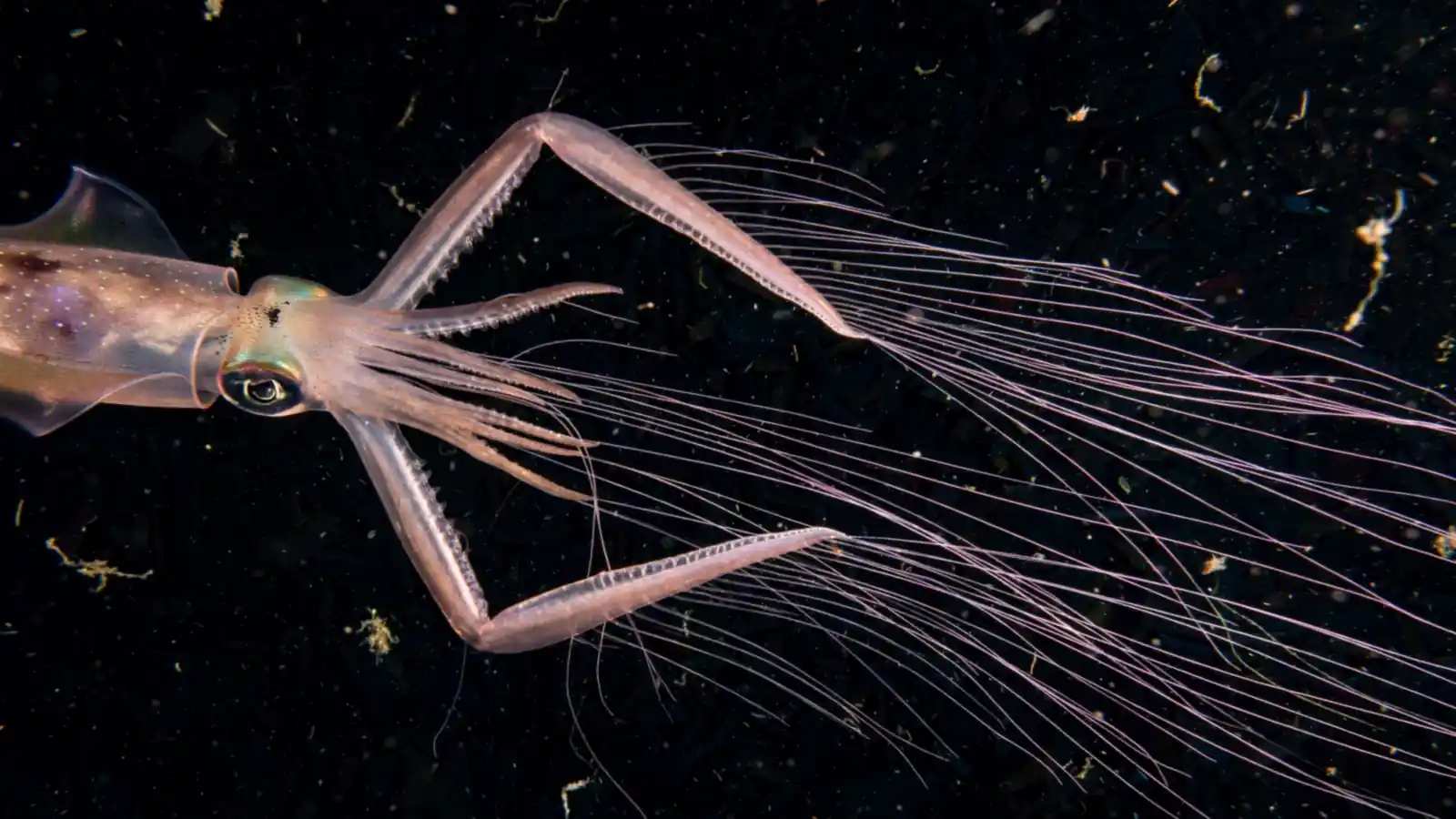
Why the elbows exist is still an open question. The leading idea is that the bend lets the squid spread its filaments into a wide net, holding them out in the water to snare the tiny animals that drift past — a passive trap rather than an active hunt. Another possibility is that the elbows help the animal “walk” its tentacles along the seafloor, as footage from the Tonga Trench in 2024 appeared to show. Both ideas fit the animal’s slow, drifting lifestyle, and neither has been proven, because feeding has never actually been observed.
The filaments themselves are the strangest part of the design. They are 5 to 20 times the body length, far longer than the arms of any other squid, and they carry no suckers along most of their length. Whatever they are for, they are the reason the it looks like no other animal in the sea — a small body trailing a curtain of thread through the dark.
Sightings: Only a Few Dozen Ever Seen
Fewer than a hundred individuals have ever been seen. The research institute MBARI, which has explored the deep sea for four decades, counts only about 70 individuals seen with submersibles or collected in trawls — and it logged just two encounters of its own in that whole time, one off Hawaii in 2001 and another near Davidson Seamount off California in 2026. Every other sighting comes from oil-rig cameras, research submersibles and remotely operated vehicles scattered across the world’s oceans.
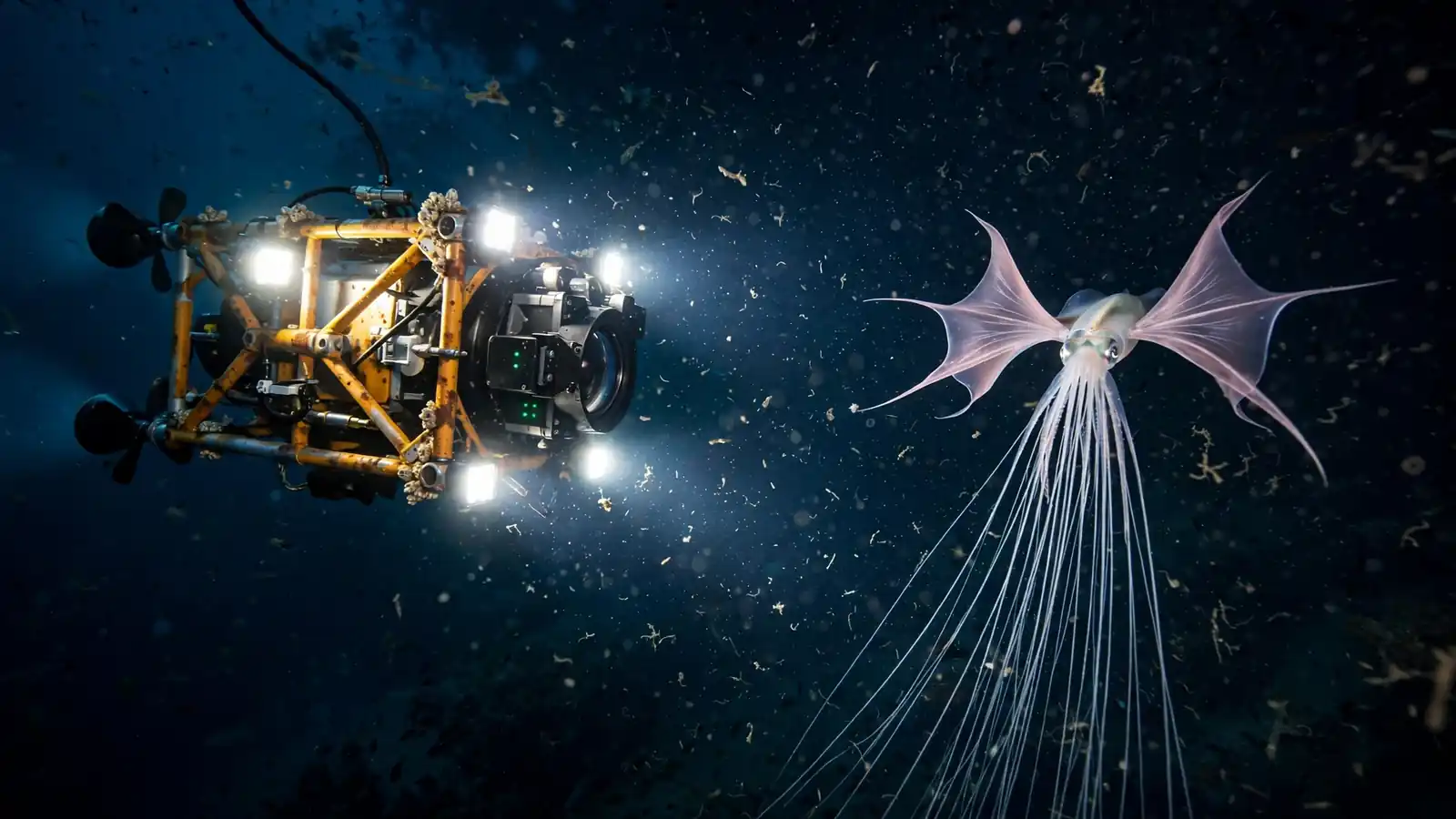
The sightings cluster in a handful of famous moments. The first clear footage came in 2007, when a remotely operated vehicle working around the Perdido oil platform in the Gulf of Mexico filmed a one at 4,735 metres — a video that introduced the animal to the world. Cameras towed through the Great Australian Bight in 2015 and 2017 added five more sightings, the first records in Australian waters. You can read MBARI’s species profile, with the latest sightings for the current count and the newest footage.
The rarity is not because the animal is scarce — it is probably widespread — but because it lives where almost nobody looks. They drift in the open water of the deep ocean, far from the seafloor and far below the reach of most cameras. Each new sighting is therefore a small event in marine science, and each one is studied frame by frame.
The Famous Gulf of Mexico Footage
The video that made the animal famous was filmed by accident. In 2007, a remotely operated vehicle inspecting the Perdido oil platform in the Gulf of Mexico — one of the deepest oil platforms in the world — drifted down to 4,735 metres and found a one hovering in its lights. The footage showed the animal in full: the huge fins, the elbowed arms and the filaments trailing far below its body, all of it hanging motionless in the dark.
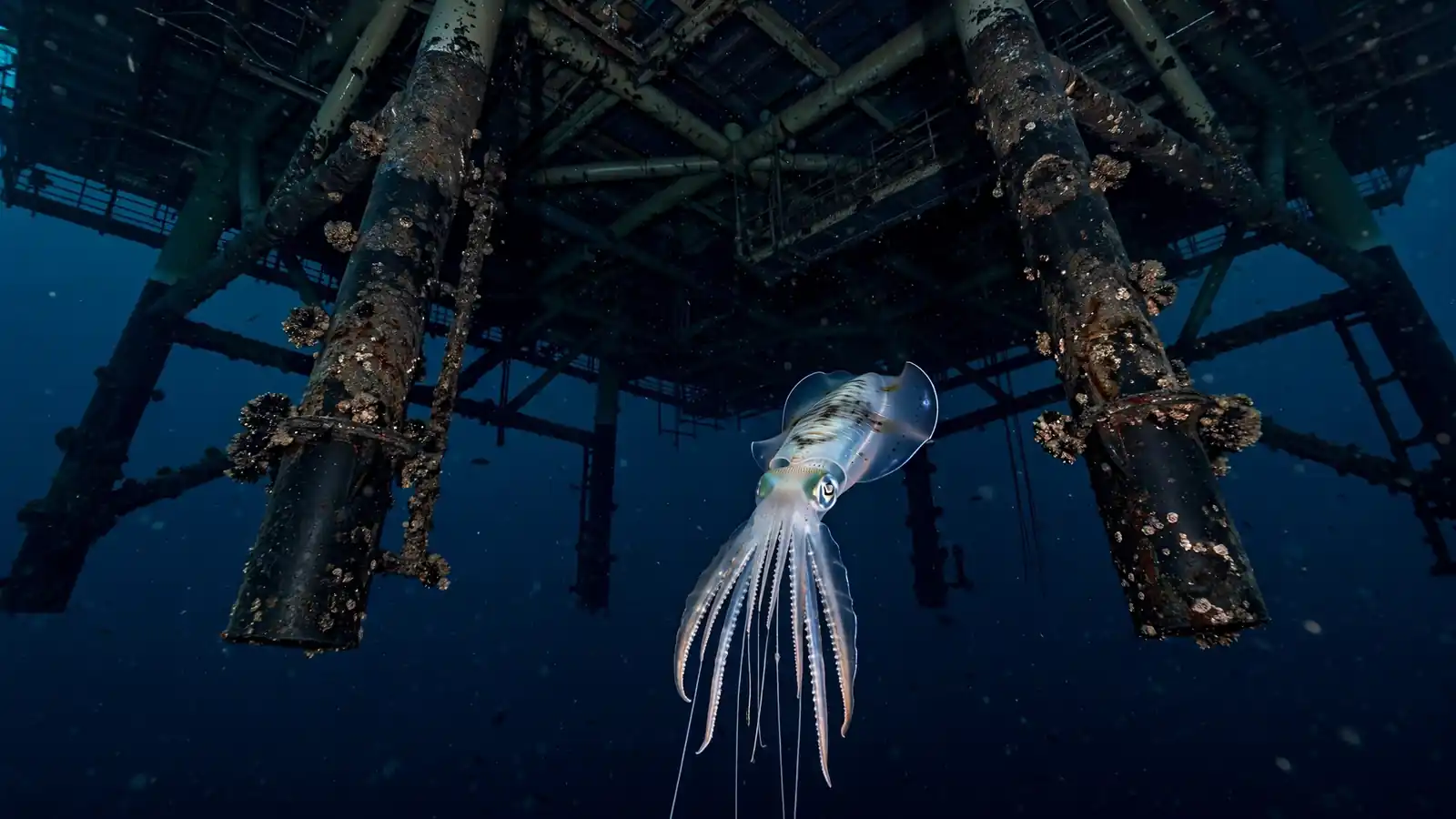
The Perdido video matters because it was the first time scientists could study the animal’s posture and movement. The squid did not flee the vehicle. It held its arms out in a wide fan, filaments drifting, and let the cameras look. That calm, hanging posture is now the classic image of the species — an animal that spends its life suspended in the water column, waiting, rather than swimming or hunting.
Oil platforms have since become unlikely allies of deep-sea science. Their cameras and vehicles work at depths that research ships rarely reach, and the Gulf of Mexico footage remains the clearest view of a one ever recorded. It is also a reminder of how the species is found: not by searching for it, but by being in the right place at the right depth when the animal drifts past.
How Does a One Eat?
Nobody has ever seen a one eat. That is the honest answer, and it is one of the great open questions in deep-sea biology. The animal’s mouth, beak and stomach have never been examined in an adult, and the only evidence is the shape of its arms — which suggests a feeding method unlike that of any other squid.
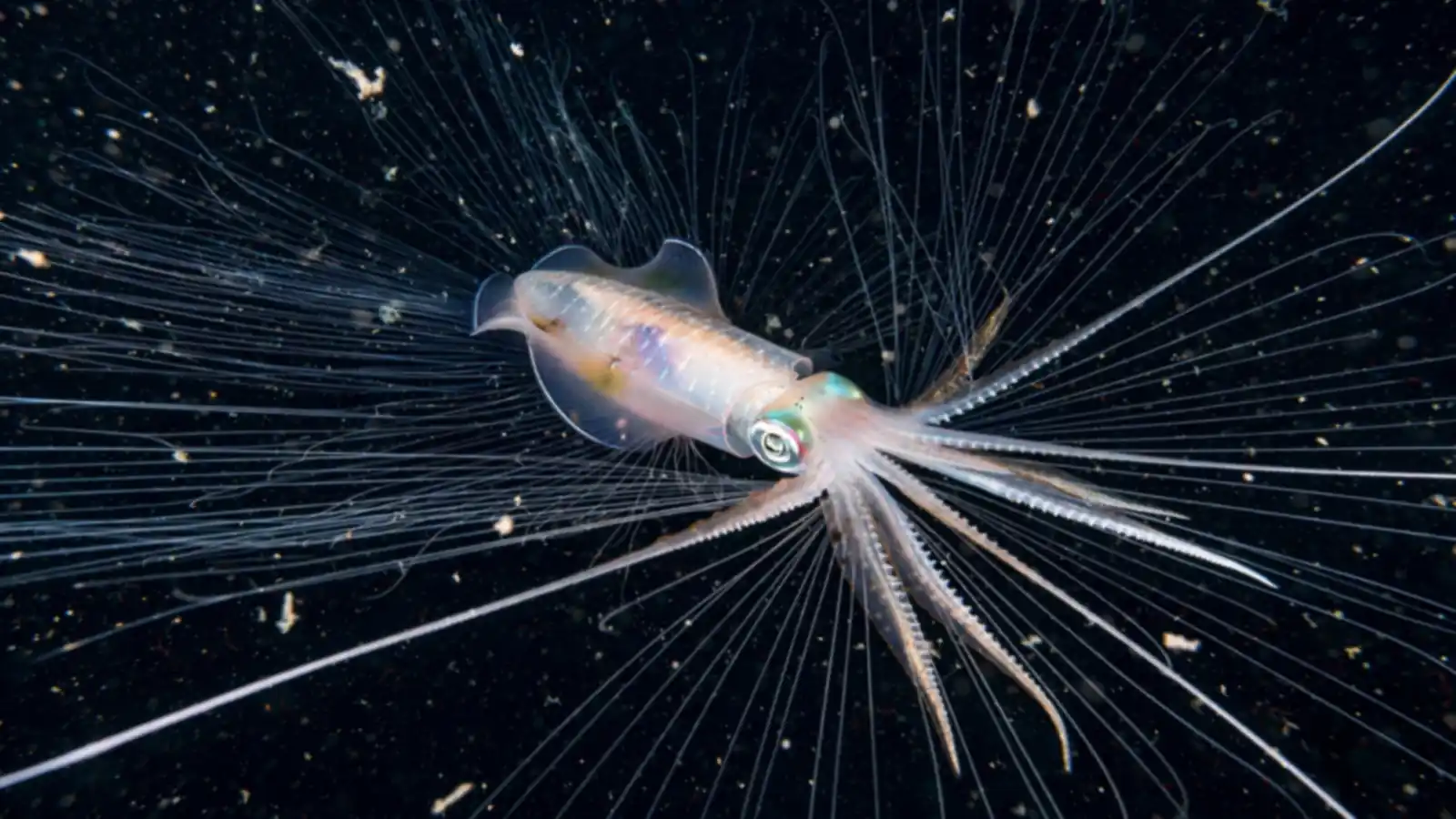
The best guess is that the filaments work like a net. The squid spreads its long, thin tentacles wide and lets tiny animals — small crustaceans, larval fish and other drifting creatures — snag on them, then reels the catch in. It is a passive, energy-saving strategy that fits a world where food is scarce and swimming is expensive. Some researchers think the filaments may be sticky, or that they trail along the seafloor to pick up animals living there.
Until a feeding event is filmed, the question stays open. The mystery is part of what makes the animal so fascinating: an animal can be famous around the world while its most basic daily act — eating — remains entirely unobserved. The next video may finally show it.
Where They Live
They live in the deep open ocean all over the world. Confirmed sightings come from the Gulf of Mexico, the Great Australian Bight, the Philippine Trench, the Atlantic off Brazil and West Africa, the Indian Ocean and the Pacific — a distribution that suggests the genus is found in deep water almost everywhere. They are animals of the water column, not the seafloor, drifting between about 1,600 and 6,200 metres deep.
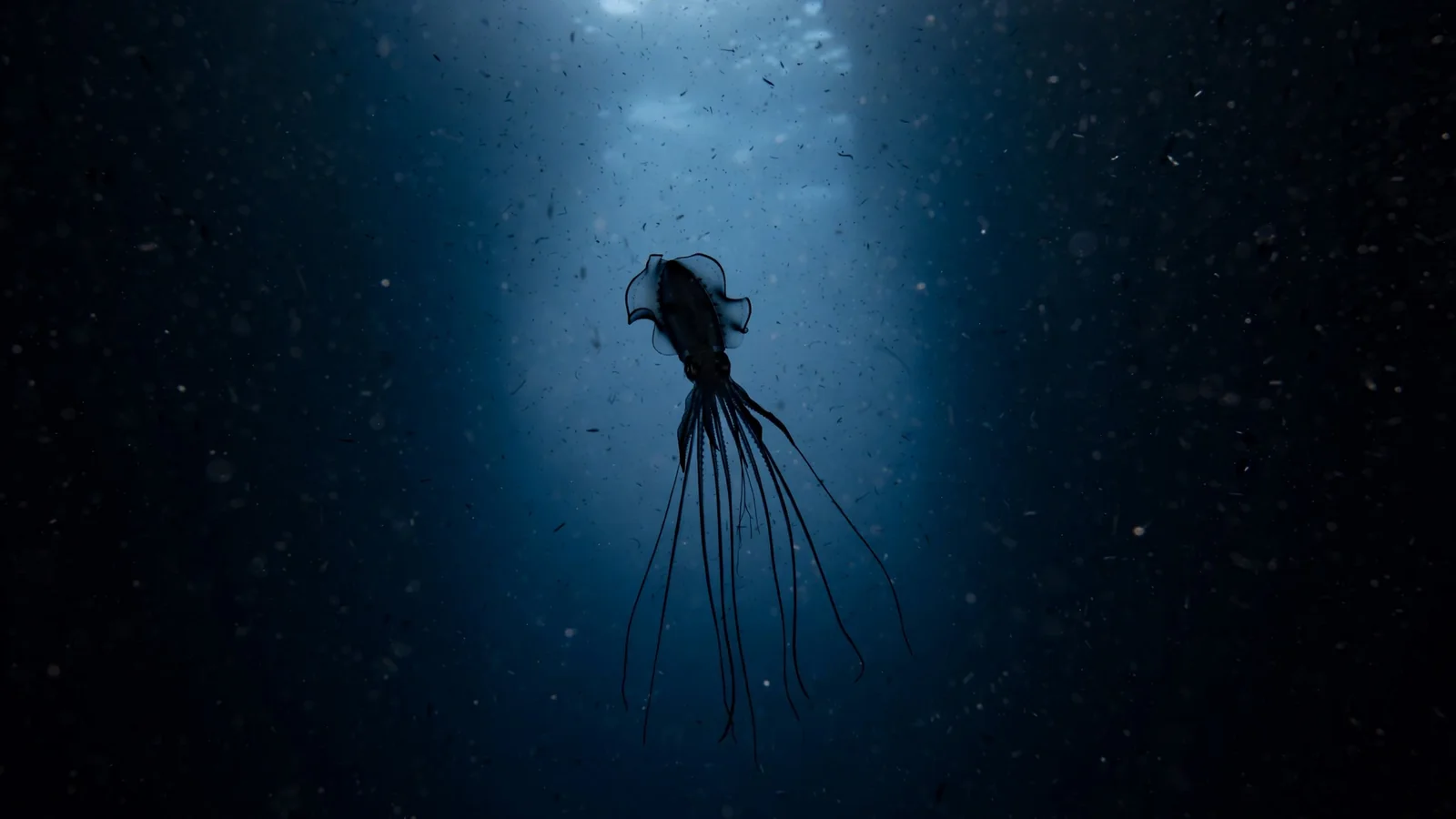
The depth range is what sets the record. In March 2021, during the expedition to document the wreck of the USS Johnston, the submersible Limiting Factor filmed a juvenile specimen in the Philippine Trench at 6,212 metres — the deepest observation of any squid ever recorded, and the first time any squid was seen in the hadal zone, the ocean’s deepest region. That single sighting extended the known depth range of all squid by nearly 1,500 metres.
The young of the species live much shallower than the adults. Their paralarvae — the tiny, transparent young — drift near the surface, and only as they grow do they sink into the deep. It is a life cycle written in depth: born in the light, living in the dark, and seen by humans only when a camera happens to be looking in the right place at the right time.
Fun Facts
- It holds the depth record for squid: one was filmed at 6,212 metres in the Philippine Trench in 2021.
- No adult specimen has ever been collected — adults are known only from video.
- Its arms reach 4 to 8 metres long, with filaments up to 20 times the length of its body.
- The first specimen was collected in 1883, but the animal was not formally described until 1998.
- The famous 2007 footage was filmed by a vehicle inspecting the Perdido oil platform in the Gulf of Mexico.
- MBARI logged only two encounters in four decades of deep-sea exploration — in 2001 and again in 2026.
Frequently Asked Questions
How Big Is a Bigfin Squid?
The arms and tentacles of a specimen reach 4 to 8 metres long, and the thin filaments at their ends can stretch 5 to 20 times the length of the body. The body itself is small: the best-measured animal, a juvenile filmed in the Philippine Trench in 2021, had a mantle of only about 10 centimetres. No adult has ever been collected, so adult size is estimated from video alone.
Why Do Bigfin Squid Have Elbows?
Each of the animal’s long arms bends sharply part-way along its length, like an elbow, and continues as a thin filament. Scientists do not know for certain why, but the leading idea is that the bend lets the squid spread its filaments into a wide net to snare tiny drifting animals. Footage from the Tonga Trench in 2024 also suggested the squid may “walk” its tentacles along the seafloor.
How Deep Do Bigfin Squid Live?
They live between about 1,600 and 6,200 metres deep. The deepest record is 6,212 metres, filmed in the Philippine Trench in March 2021 — the deepest observation of any squid and the first time a squid was seen in the hadal zone, the ocean’s deepest region.
Has a Bigfin Squid Ever Been Caught?
No adult specimen has ever been caught. Only damaged juveniles have ever been collected in trawls, and adults are known purely from video taken by submersibles and remotely operated vehicles. That is why so much about the animal — its weight, its diet, even its full adult size — is still unknown.
How Many Bigfin Squid Have Been Seen?
Fewer than a hundred individuals have ever been seen. The research institute MBARI counts about 70 individuals seen with submersibles or collected in trawls, and it logged only two encounters of its own in four decades of exploration. Most sightings are single animals caught on camera by chance.
What Do Bigfin Squid Eat?
Nobody knows for certain, because feeding has never been observed. The best guess is that the squid spreads its long filaments like a net and snares tiny crustaceans, larval fish and other small drifting animals, then reels them in. Its diet is one of the great open questions about the species.
Where Do Bigfin Squid Live?
They live in the deep open ocean worldwide, between about 1,600 and 6,200 metres deep. Confirmed sightings come from the Gulf of Mexico, the Great Australian Bight, the Philippine Trench, the Atlantic off Brazil and West Africa, the Indian Ocean and the Pacific. The young drift near the surface and sink deeper as they grow.
Similar Species Worth Exploring
Keep Exploring
Still curious about the deep sea’s strangest squid? Meet the colossal squid, the heaviest invertebrate on Earth, or browse every species in our guide to the types of cephalopods. Few animals in the dark are as strange as the bigfin squid.