Whiteleg Shrimp
Whiteleg Shrimp: the world’s most farmed shrimp
The whiteleg shrimp is a warm-water eastern Pacific prawn that became the world’s most farmed shrimp — yet its wild life is a story of estuaries and open sea. This guide follows Litopenaeus vannamei from the mangrove estuaries of Mexico to the offshore waters of Peru, and the farming story stays as context only.
By Emily Carter · Reviewed by our vet team · Updated 10 November 2026 · 10 min read
Native Mexico to PeruWild life in estuaries and open sea53% of farmed crustaceans in 2016
At a Glance
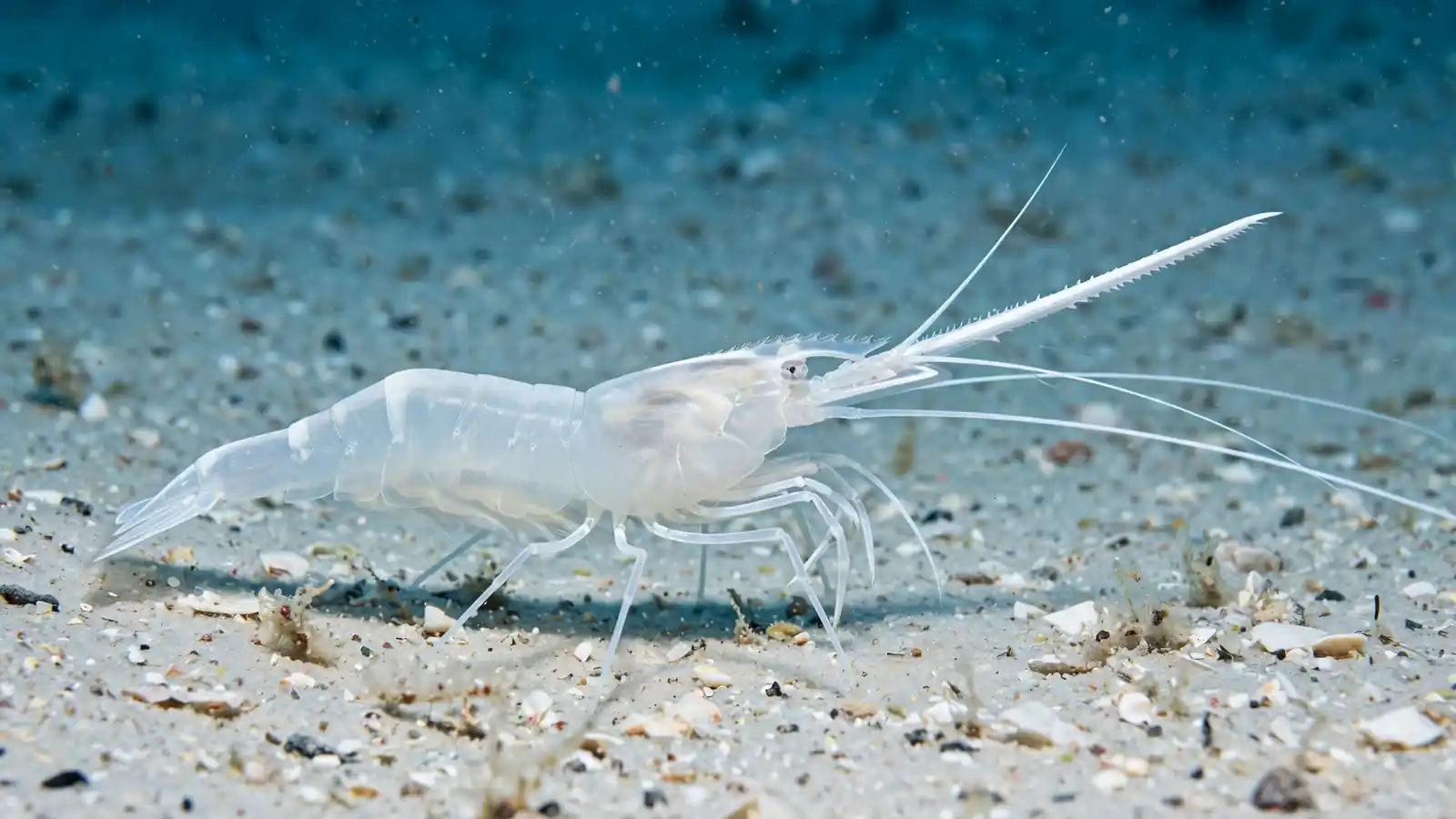
A whiteleg shrimp is a pale, translucent prawn of warm Pacific waters, and it is also the most farmed shrimp in the world — a combination that makes its wild life easy to overlook. The wild animal is a traveller: born in the open sea, raised in the estuary, and grown in the deep water offshore. This is the whole animal, at a glance, before the detail begins.
Whiteleg Shrimp Size: Up to 230 mm
It grows to a maximum of about 230 millimetres long, with a carapace of up to 90 millimetres, and most wild animals are smaller. The body is pale and translucent, with distinctly white legs that give the species its name, and a long rostrum that extends forward from the head.
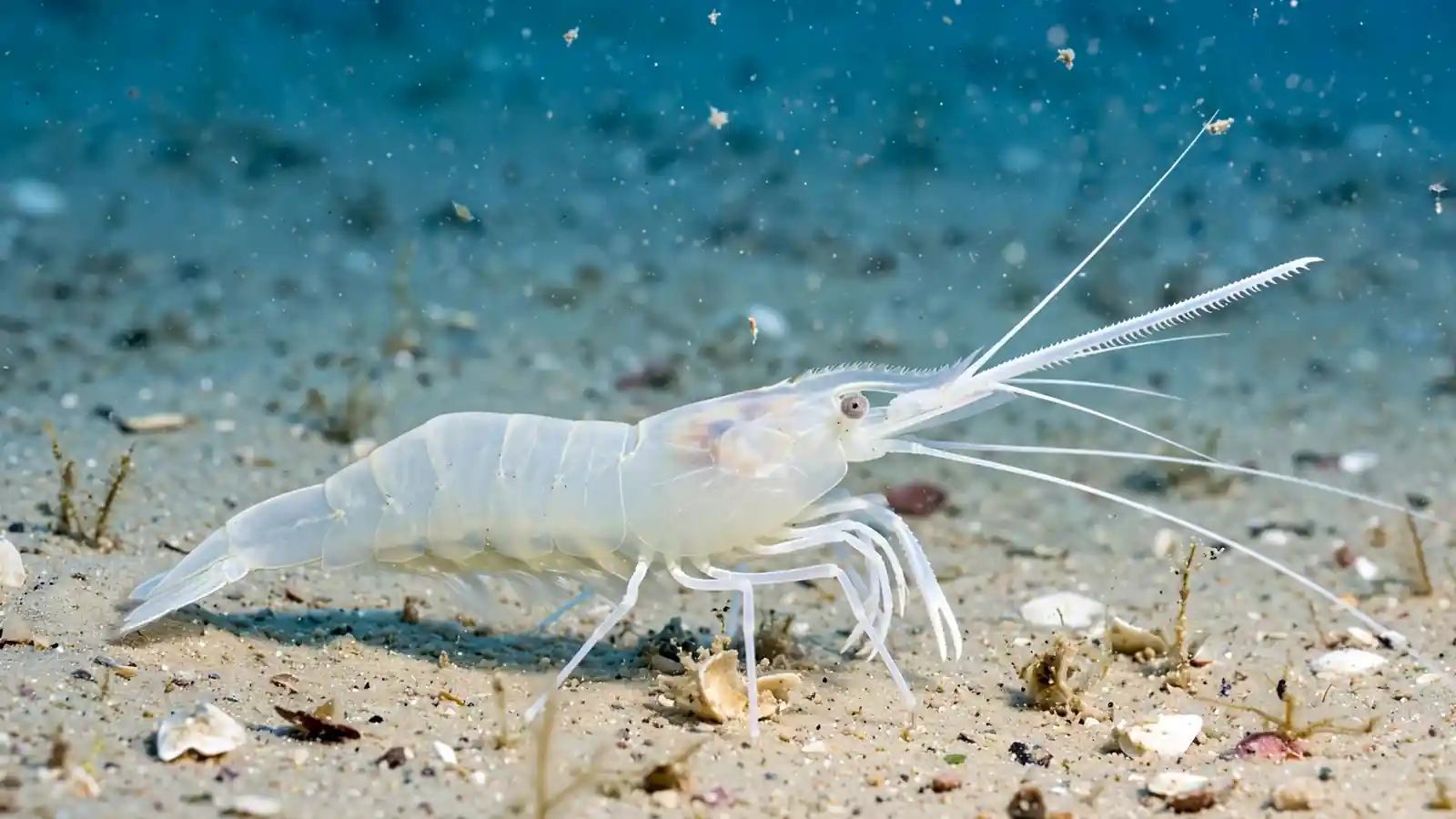
The size is modest for a prawn, and it is the reason the species farms so well: the animal grows fast, breeds readily and tolerates crowded conditions, and a pond of them reaches market size in months. The wild animal grows slower, and the biggest wild ones are found offshore, in the deeper water. Even the biggest are modest animals — a hand’s length of pale shell over a life split between two worlds.
Native Range: From Mexico to Peru
This species is native to the eastern Pacific, from Sonora in Mexico to northern Peru, and it lives in warm coastal waters along that whole range. Warm water is the constant: every part of the wild story, from nursery estuary to offshore breeding ground, plays out along that one warm coast. The range is long but narrow — one coastline, one current system, one unbroken stretch of warm Pacific shore. The native range is the warm edge of the Pacific, where the water stays above twenty degrees and the estuaries are rich with food.

The range is also the reason the species is farmed so widely: it was taken from its native Pacific coast to farms around the world, and it now lives — in ponds, and sometimes as escapees — far beyond the coast it came from. The wild animal, though, is still a creature of the eastern Pacific.
Estuaries to Open Sea: A Two-Part Life
It lives a two-part life. The young are raised in estuaries, in the shallow mangrove waters where the food is rich and the predators are fewer, and the adults move offshore, down to about 72 metres, to live and breed in the open sea. It is a life in two addresses: sheltered shallows first, open water after. The estuary is the nursery, and the open sea is the adult’s home.

The move is a migration in miniature, and it happens every generation. The larvae hatch offshore, drift into the estuaries as juveniles, grow there for weeks, and then return to the sea as adults — a cycle that ties the mangrove forest to the open ocean, and the shrimp to both.
What Do They Eat? Life on the Seabed
It eats detritus, algae and small animals on the seabed, sifting the sediment with its legs and picking out what it can use. Detritus sounds like a poor diet, but on a rich seabed it is a constant one — there is always more sediment to sift. The diet is the diet of a bottom-feeder, and the shrimp spends most of its time on the bottom, walking the sand and feeding as it goes.

For a wider survey of the species, see this species profile. The feeding is slow and steady, and the shrimp’s pale body blends with the sand it walks on, so a feeding one is easy to miss on the seabed. It feeds as it walks, working the sediment grain by grain, and what it cannot use it leaves behind for the next feeder.
The World’s Most Farmed Shrimp: Context, Not a Recipe
This species is the most farmed shrimp in the world, and the figure is striking: in 2016 it accounted for 53 percent of global farmed crustacean production. No other farmed shrimp comes close, and the ponds that produce it now line coasts its wild ancestors never saw. The farming story is context for this guide, not a how-to — this post is about the wild animal, and the farm is only the reason so many people have heard its name.

The farming works because the wild animal is already suited to it: fast growth, tolerance of crowded water, and a diet that can be supplied in a pond. The same traits that make it a successful wild animal — hardiness, adaptability, and a wide tolerance for salt and temperature — make it a successful farm animal too. Hardiness is the thread: the animal that shrugs off a swinging estuary also shrugs off a crowded pond.
Whiteleg Shrimp Taxonomy: Two Names, One Shrimp
This shrimp has two scientific names, and the confusion is real. It was long known as Penaeus vannamei, then moved to Litopenaeus vannamei, and a 2023 proposal reunifies it as Penaeus (Litopenaeus) vannamei. All three names describe the same animal, and the common names are simpler: Pacific white shrimp and king prawn among them. Two scientific names, three common ones, one animal — the labels moved, the shrimp did not.
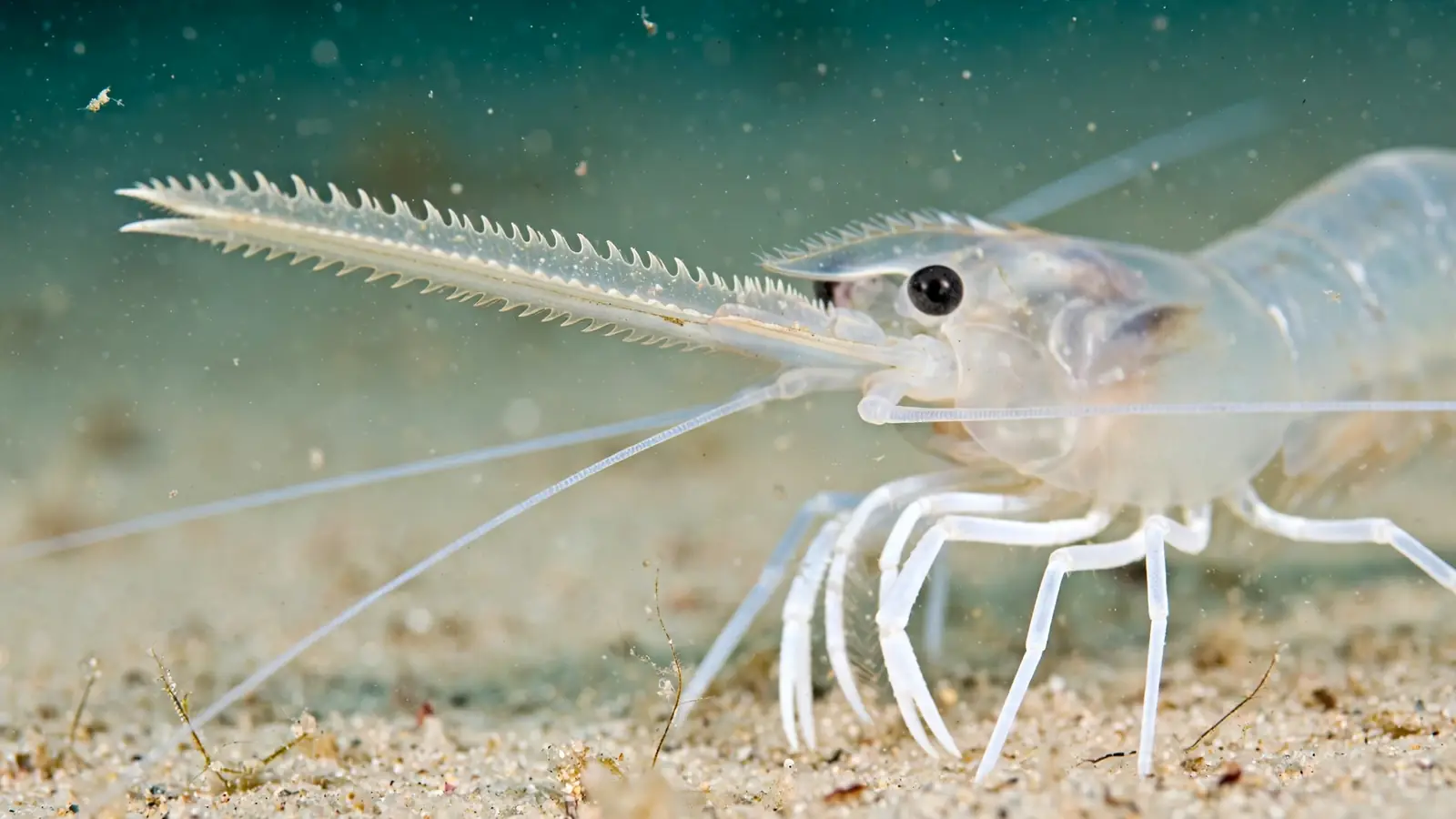
The name matters because the shrimp is traded under all of them, and a buyer who orders Pacific white shrimp may receive Litopenaeus vannamei on the label. The animal itself does not care what it is called — it is a pale prawn of the eastern Pacific, whatever the genus on the paperwork says.
Conservation and Escapees: Life Outside the Farm
The species is not endangered in the wild, and its conservation story is about escapees rather than decline. Farmed shrimp escape from ponds, and where they escape into warm coastal waters they can establish themselves, competing with native shrimps and carrying diseases from the farm.
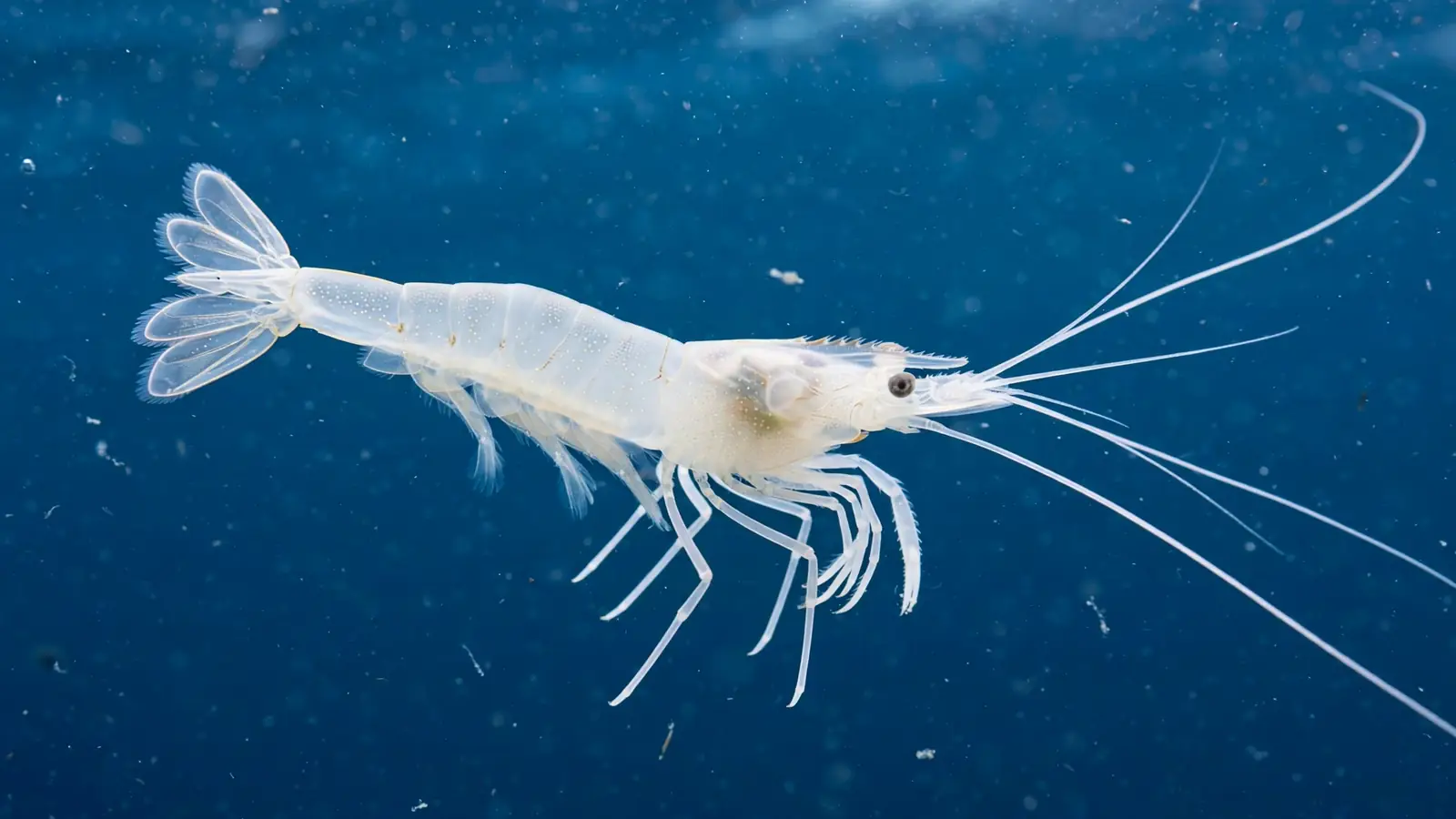
The wild population is still the measure of the species, and the estuaries of Mexico and Peru are where it belongs. The farming story is a human story laid over a wild one, and the wild animal — pale, fast, and at home in the estuary and the open sea — goes on living it. Escapees turn up beyond the native range, but the wild heart of the species still beats between Sonora and northern Peru.
Fun Facts
- This species accounted for 53% of global farmed crustacean production in 2016. That share made it the default shrimp of the world’s ponds within a single generation of farming.
- It grows to a maximum of about 230 mm, with a carapace of up to 90 mm.
- Its legs are distinctly white, which is where the name comes from.
- The young grow up in estuaries, then move offshore to 72 m as adults.
- The species has two scientific names, and a 2023 proposal reunifies them.
- It tolerates a very wide salinity range, which is part of why it farms so well.
Frequently Asked Questions
What Is a Whiteleg Shrimp?
It is a pale, translucent prawn from the eastern Pacific, Litopenaeus vannamei, also called the Pacific white shrimp or king prawn. It is the world’s most farmed shrimp, but its wild life is a story of estuaries and open sea.
Where Do Whiteleg Shrimp Come From?
This species is native to the eastern Pacific, from Sonora in Mexico to northern Peru. It was taken from there to shrimp farms around the world, and it now lives in ponds far beyond its native coast.
How Big Do Whiteleg Shrimp Get?
It grows to a maximum of about 230 millimetres long, with a carapace of up to 90 millimetres. Most wild animals are smaller, and farmed animals reach market size in months.
Why Is the Whiteleg Shrimp the Most Farmed Shrimp in the World?
It grows fast, breeds readily, tolerates crowded water and a wide salinity range, and eats a diet that can be supplied in a pond. In 2016 it accounted for 53 percent of global farmed crustacean production. No other farmed shrimp comes close, and the ponds that produce it now line coasts its wild ancestors never saw.
Where Do Whiteleg Shrimp Live in the Wild?
In the wild, they live in the eastern Pacific. Juveniles grow up in coastal estuaries and mangroves, and adults move offshore, down to about 72 metres, to live and breed in the open sea. It is a life in two addresses: sheltered shallows first, open water after.
What Do Whiteleg Shrimp Eat?
It eats detritus, algae and small animals on the seabed, sifting the sediment with its legs. It is a bottom-feeder, and it spends most of its time walking the sand and feeding as it goes.
Is the Whiteleg Shrimp the Same as the Pacific White Shrimp?
Yes. This species, the Pacific white shrimp and the king prawn are all the same animal, Litopenaeus vannamei. It also appears in the literature as Penaeus vannamei, and a 2023 proposal reunifies the names.
Similar Species Worth Exploring
Keep Exploring
Keep exploring the crustaceans: meet the rock shrimp, the armoured shrimp of the deep sand, or browse the whole family in our guide to the types of crustaceans. Then come back to the estuary, home of the whiteleg shrimp.