Mangrove Snapper
Mangrove Snapper: The Grey Hunter That Grows Up Among the Roots
The mangrove snapper grows from mangrove roots and seagrass to offshore reefs, a grey western Atlantic snapper rarely exceeding 45 cm.
By Emily Carter · Reviewed by our vet team · Updated 10 November 2026 · 9 min read
Rarely over 45 cmMangrove to reefNot IUCN-assessed
At a Glance
The mangrove snapper is the grey ghost of the western Atlantic, a fish that starts life among mangrove roots and ends it on offshore reefs. It is a snapper that changes its whole world as it grows — from the tangled shade of the mangroves to the open water of the wreck — and it does it without ever changing its quiet, watchful nature.
Mangrove Snapper Size: How Big Do They Get?
Most mangrove snappers measure under 45 cm long and weigh less than 4.5 kg, a modest reef fish by snapper standards. The maximum published figures are larger — 89 cm and 20 kg — but one that size is a rare, old fish, and most of the ones anglers catch are half that length. Size, for this species, is a matter of age and place: the fish on the offshore reefs are bigger than the fish in the mangroves.
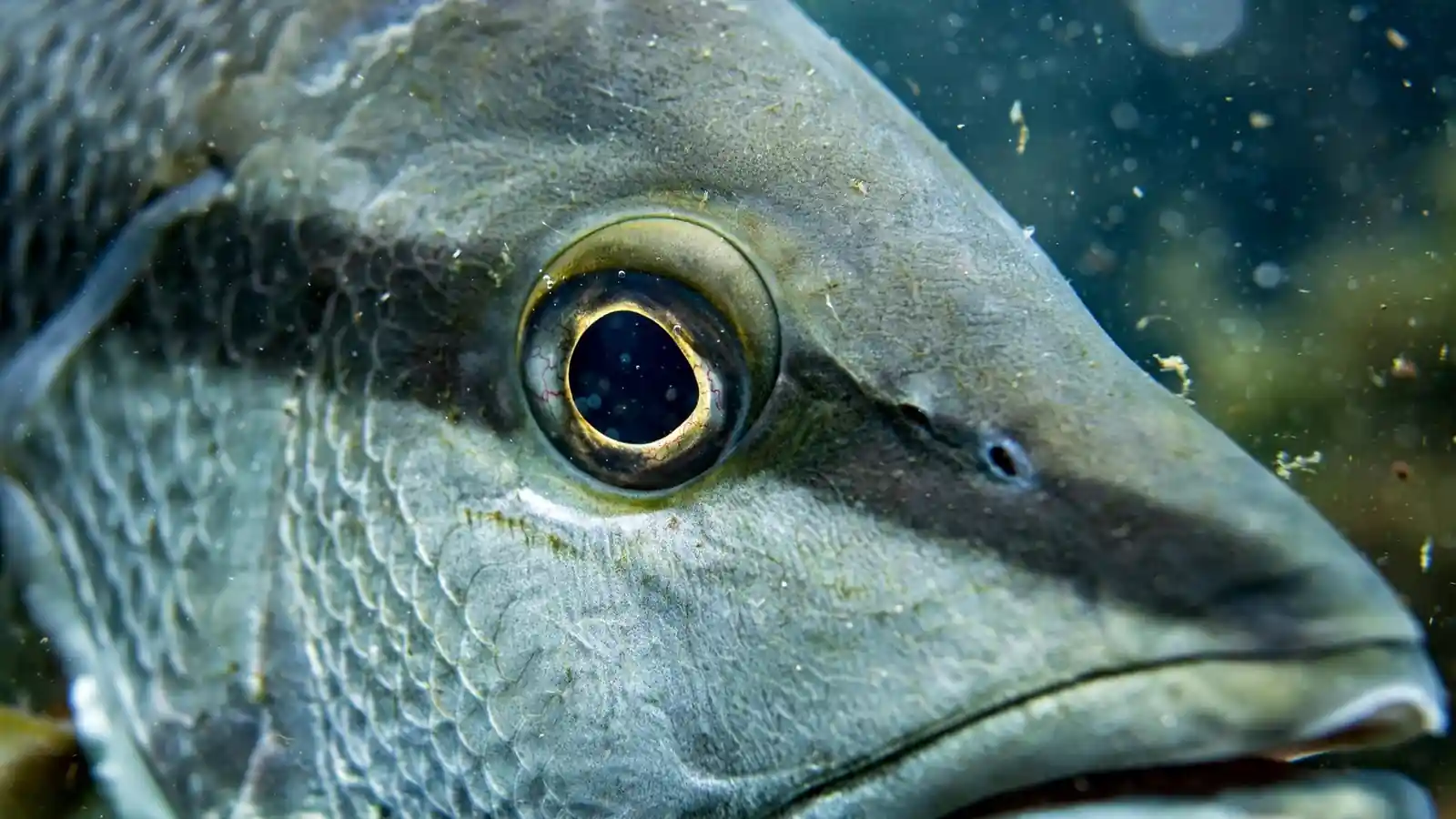
Growth is steady and the life is long. It can live for 25 to 28 years, growing slowly throughout its life, and the largest fish are the oldest ones on the reef. The grey body and the dark stripe through the eye are there from the juvenile stage, so a young fish in the seagrass is as recognisable as an adult on the wreck.
From Mangrove Roots to Offshore Wrecks

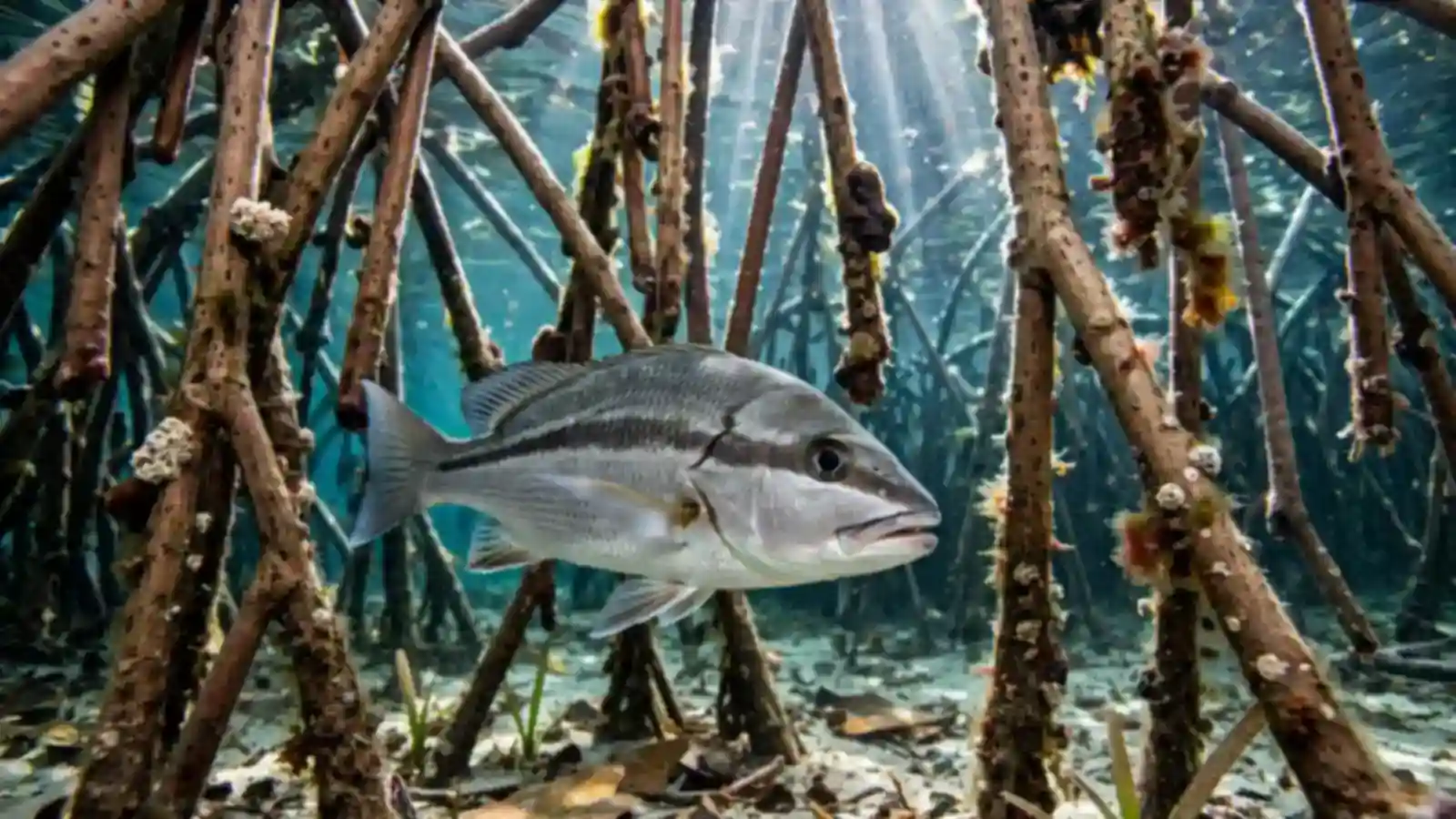
Its life is a journey outward. It starts among the mangrove roots, in the tangled shade where the water is shallow and the cover is thick. As it grows it moves into seagrass beds, then onto the inshore reef, and finally out to the offshore reefs and wrecks, where the biggest fish hold station in the shade of the structure. Each move is a step into deeper, more open water — and each step brings bigger prey and bigger predators.
The journey is the reason for the name. It is named for where it begins, not where it ends, and the fish that anglers catch on an offshore wreck started its life in the roots of a mangrove tree. Without the mangroves, there are no young snappers; without the young snappers, there are no adults on the reef. The whole life cycle is a chain, and the mangrove is the first link.
Where Mangrove Snappers Live
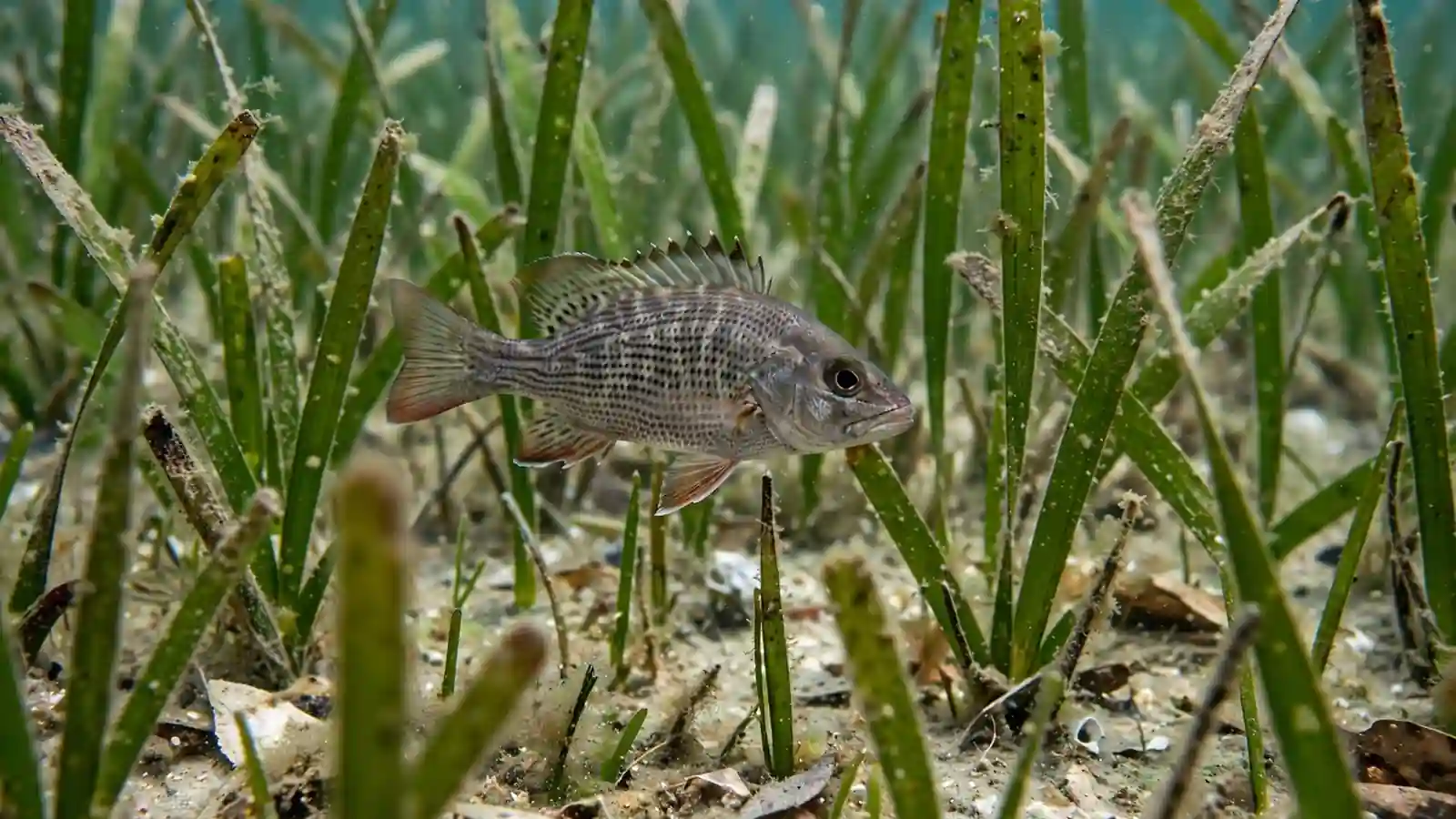
Mangrove snappers live in the western Atlantic, from the south-eastern United States and the Bahamas through the Caribbean to Brazil, in mangroves, seagrass beds, coral reefs and rocky shores. They favour warm, clear water, living from the shallows down to around 180 metres, and they are most at home where there is structure to hide in — roots, reef, wreck, dock, it makes little difference, so long as there is shade. For the full animal facts, see A-Z Animals’ facts.
Young fish live in the mangroves and seagrass, where the cover is dense and the food is plentiful. Adults live on the reef and the wreck, holding station in the shade during the day and hunting at night. Its home is wherever the structure is, and it will move with the tide and the season to find the best of it.
Day and Night
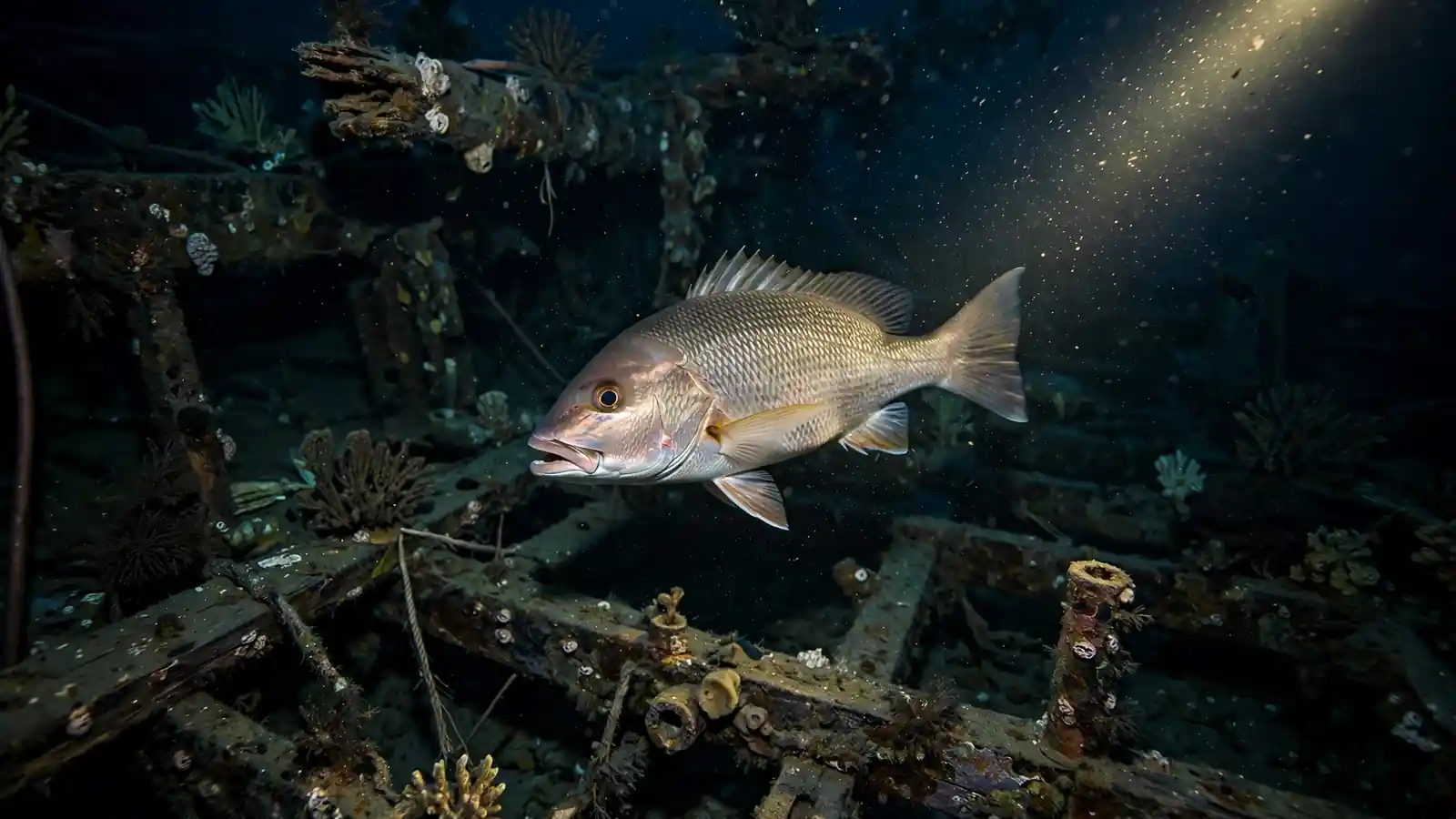
It changes its habits as it grows. Juveniles feed by day, picking at small crustaceans and plankton among the mangrove roots and the seagrass. Adults hunt at night, leaving the shelter of the reef to take fish, crabs and shrimp in the dark water, and returning to the same shelter before dawn. It is a neat division: the young feed when the predators are fewer, the adults feed when the prey is moving.
By day, the adults hold station in the shade of the reef or the wreck, barely moving, watching the water. By night they spread out to hunt, using their large eyes to gather what little light reaches the reef. A diver who visits the same wreck at noon and at midnight sees two different fish — the same snapper, but a different life.
What Do Mangrove Snappers Eat?
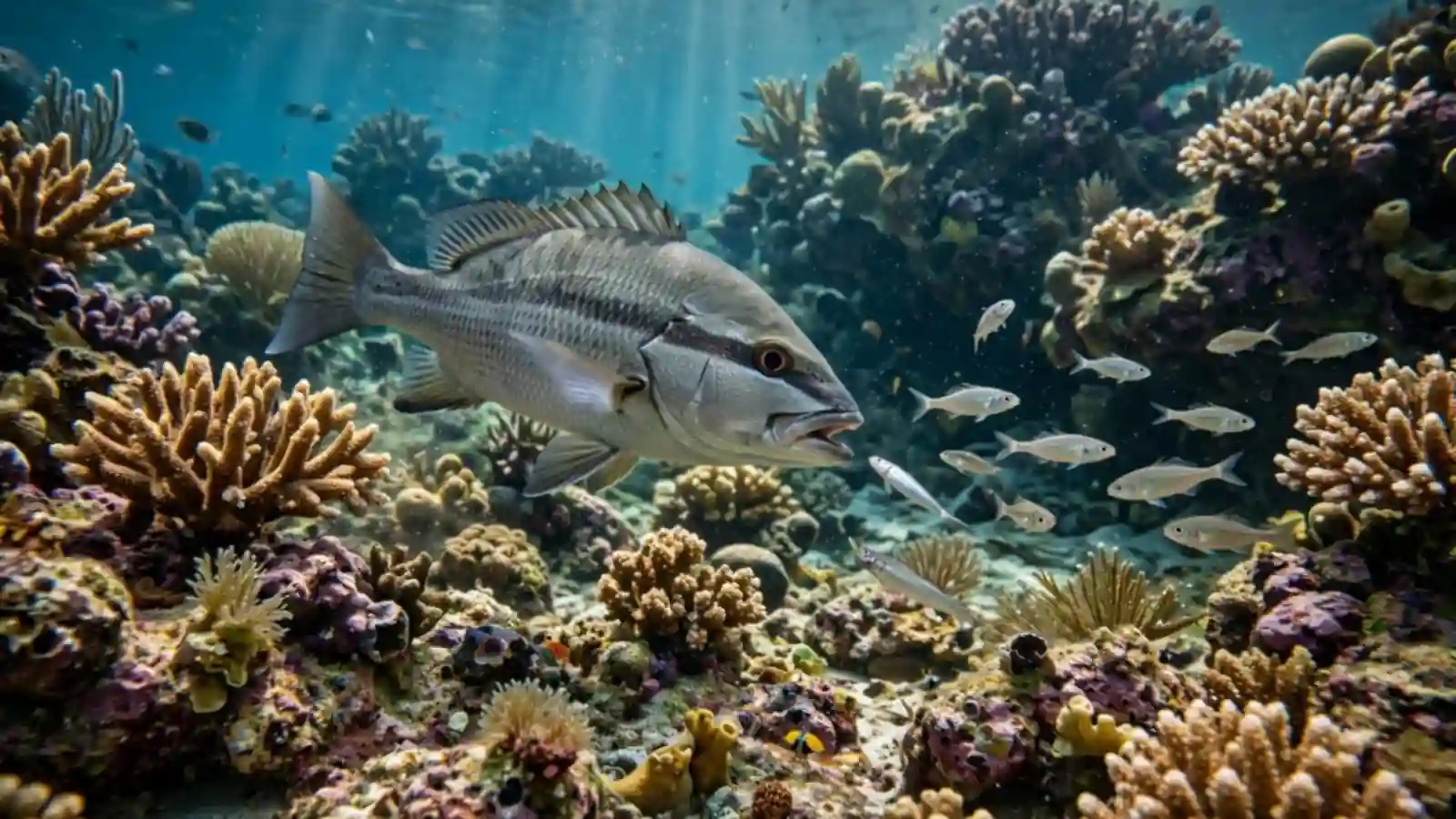
Mangrove snappers eat fish, crabs, shrimp and molluscs, hunting on the reef and over the sand flats at night. They are ambush predators, holding station in the shade and lunging at passing prey, and they are fast enough to catch fish half their size. The diet changes with the place: in the mangroves, small crustaceans; on the reef, fish and crabs; on the wreck, whatever swims past in the dark.
Feeding is busiest at night, when the reef’s small fish are moving and the water is cool. The snapper’s grey body blends with the shadow of the reef, and its dark eye stripe breaks up the outline of its head. It can sit a metre from its prey and still be invisible — and then it is gone, and the prey is gone with it.
Mangrove Snapper vs Yellowtail Snapper
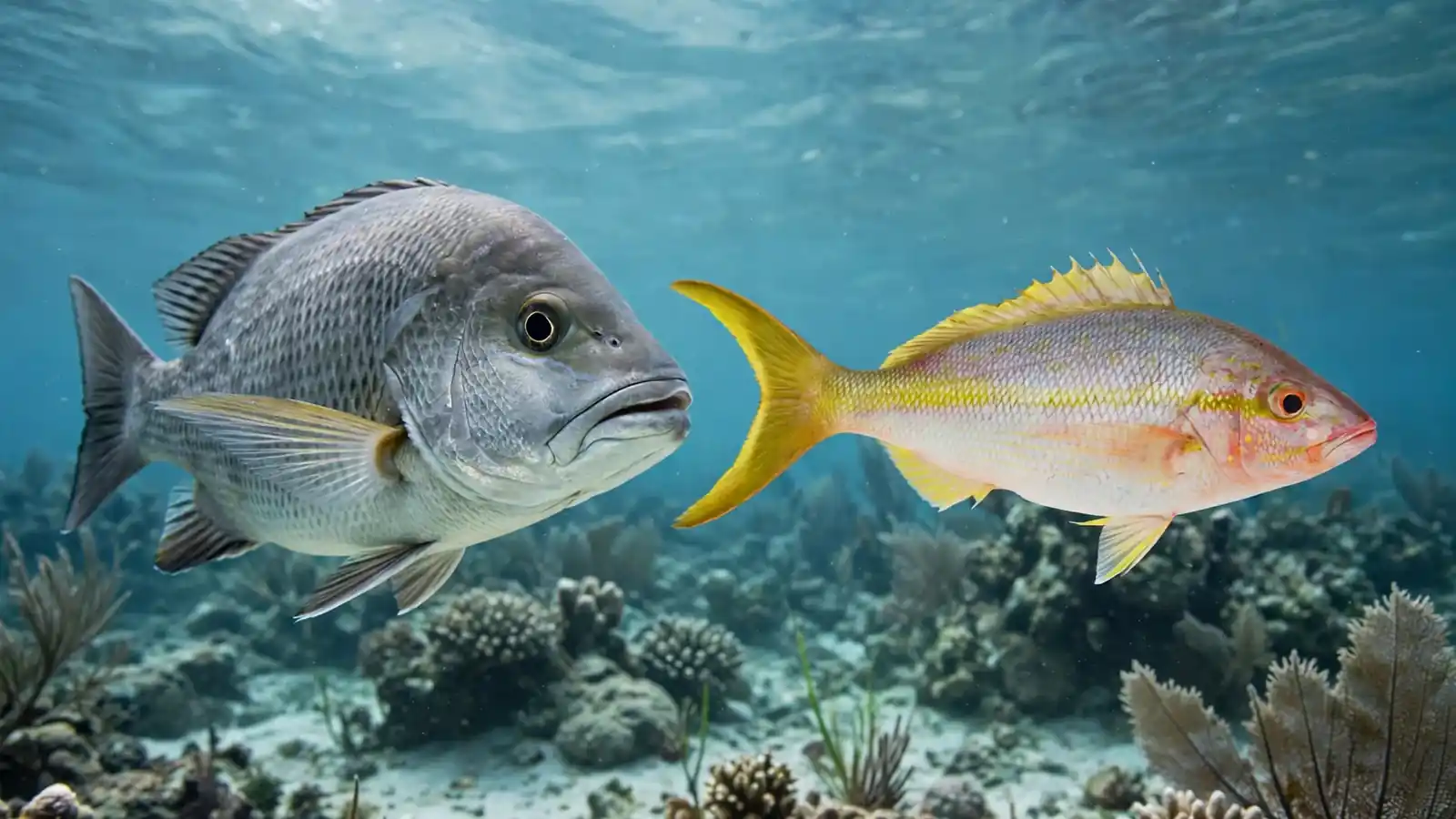
It and the yellowtail snapper share the same reefs, but they are easy to tell apart. It is grey and heavy-bodied, with a dark stripe through the eye, and it hunts on the reef and among the roots. The Yellowtail Snapper is slim and silvery, with a bright yellow tail and a yellow stripe along its flank, and it feeds above the reef at night.
They are both snappers, both western Atlantic reef fish, and both prized by anglers — but they live different lives. It is the root-and-wreck hunter, the yellowtail is the open-water schooler. On a single dive you can often see both: it holding station in the shade below, the yellowtail flashing above the coral.
Conservation Status
It has not been assessed by the IUCN, and this guide prints that plainly: not assessed, not Least Concern. Some pages online call it Least Concern, but that is not from an assessment, and the honest statement is that the species’ status has not been formally judged. It is a gap in the record, and it matters, because a species that has not been assessed is a species that is not being watched.
What is known is that it depends on mangroves, and mangroves are disappearing. Coastal development, aquaculture and pollution have destroyed large areas of mangrove forest across the western Atlantic, and every hectare lost is a nursery lost. The snapper is still common on the reef, but its future depends on the roots where its life begins.
Fun Facts
- Its life is a journey outward — from mangrove roots to seagrass, to the reef, to the offshore wreck.
- Most mangrove snappers are under 45 cm, though the maximum published length is 89 cm.
- Juveniles feed by day among the roots; adults hunt at night on the reef.
- It is also called the gray snapper, its official common name.
- The species has not been assessed by the IUCN — not Least Concern, as some pages claim, but simply not assessed.
- It can live for 25 to 28 years, growing slowly throughout its life.
Frequently Asked Questions
How Big Do Mangrove Snappers Get?
Rarely over 45 cm and 4.5 kg, though the maximum published figures are 89 cm and 20 kg. A mangrove snapper that size is a rare, old fish — most of the ones anglers catch are half that length.
Why Are They Called Mangrove Snappers?
Because they start life among mangrove roots, in the tangled shade where the water is shallow and the cover is thick. The name marks where the fish begins, not where it ends — adults live on offshore reefs and wrecks.
Where Do Mangrove Snappers Live?
In the western Atlantic, from the south-eastern United States and the Bahamas through the Caribbean to Brazil, in mangroves, seagrass beds, coral reefs and rocky shores, from the shallows down to around 180 metres.
What Do Mangrove Snappers Eat?
Fish, crabs, shrimp and molluscs, hunted on the reef and over the sand flats at night. Juveniles feed by day among the roots; adults are ambush predators that hold station in the shade and lunge at passing prey.
Are Mangrove Snappers the Same as Gray Snappers?
Yes. Gray snapper is the official common name for Lutjanus griseus, the same fish as the mangrove snapper. The two names describe one species.
How Long Do Mangrove Snappers Live?
Up to 25 to 28 years. They grow slowly throughout their lives, and the largest fish are the oldest ones on the reef.
What Is the Difference Between a Mangrove Snapper and a Yellowtail Snapper?
The mangrove snapper is grey and heavy-bodied with a dark eye stripe, hunting on the reef and among the roots. The yellowtail snapper is slim and silvery with a bright yellow tail, feeding above the reef at night. They share the same reefs but live different lives.
Similar Species Worth Exploring
Keep Exploring
Still exploring reef-snapper country? Meet the yellow-tailed cousin in the Yellowtail Snapper guide, watch the hunter that stalks its school in the Great Barracuda guide, size up the whole family in the Types of Reef Fish hub, and then come back to the mangrove roots to meet the mangrove snapper.